
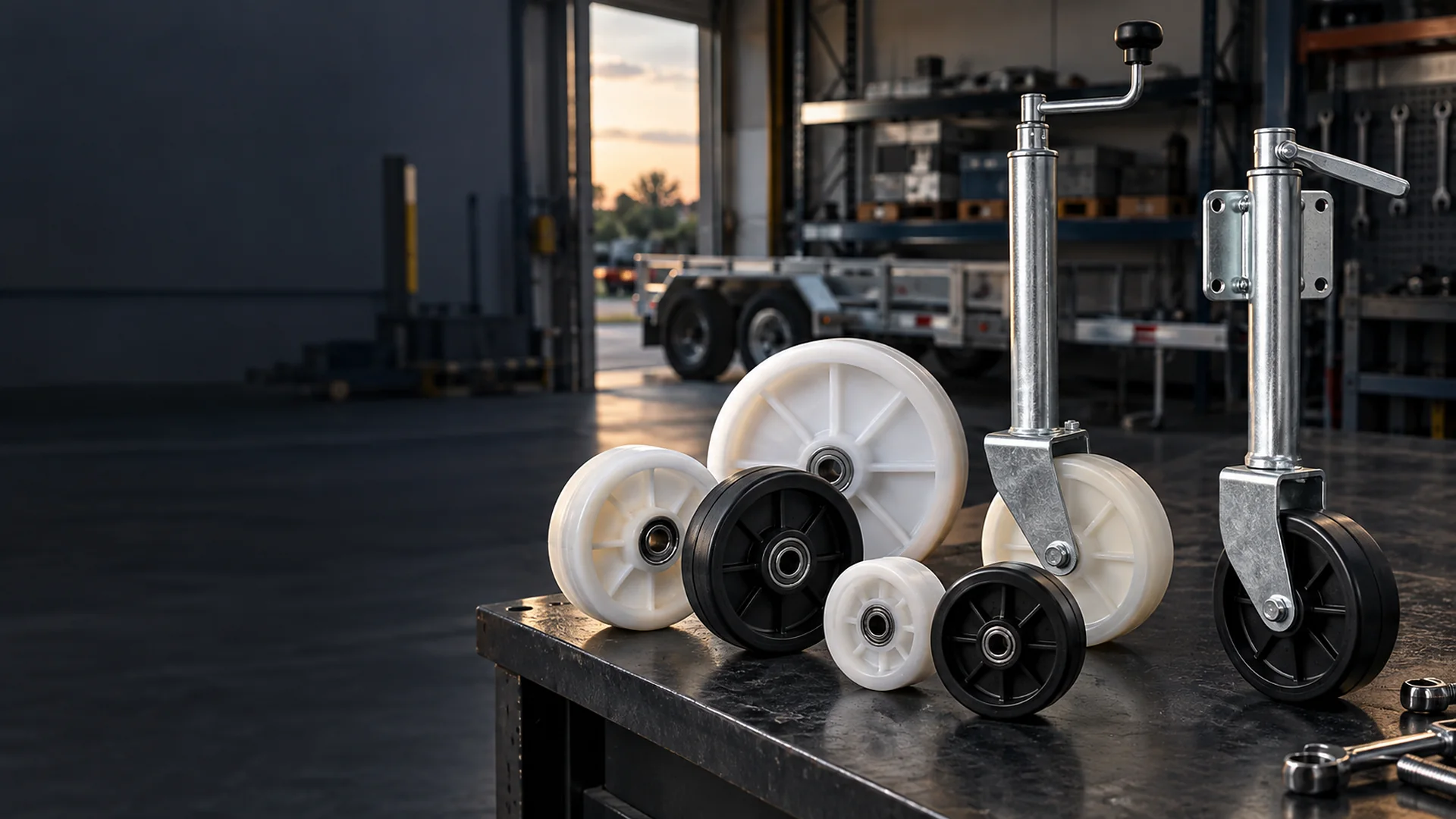
Common Causes of Uneven Wheel Wear on Industrial Carts
A practical buyer guide to industrial cart wheel uneven wear, focused on measurable operating conditions and RFQ-ready decisions.
Where the purchasing risk actually sits
Procurement teams often encounter industrial cart wheel uneven wear as a catalogue term, but the purchasing decision becomes clearer when the term is converted into measurable operating requirements.
In industrial mobility and material-handling equipment, the selection should therefore start with load, floor, wheel geometry, mounting and movement requirements. That keeps a dimensional or material choice connected to the job it must perform rather than to a generic product description.
The common failure is to treat one attractive parameter as the whole specification. Focusing on one attractive feature can hide an interface or duty mismatch. A better purchasing note captures application, load, dimensions, environment, quantity and clear photo/drawing, so suppliers can compare like with like and flag missing dimensions instead of guessing.
Start from duty cycle and real movement
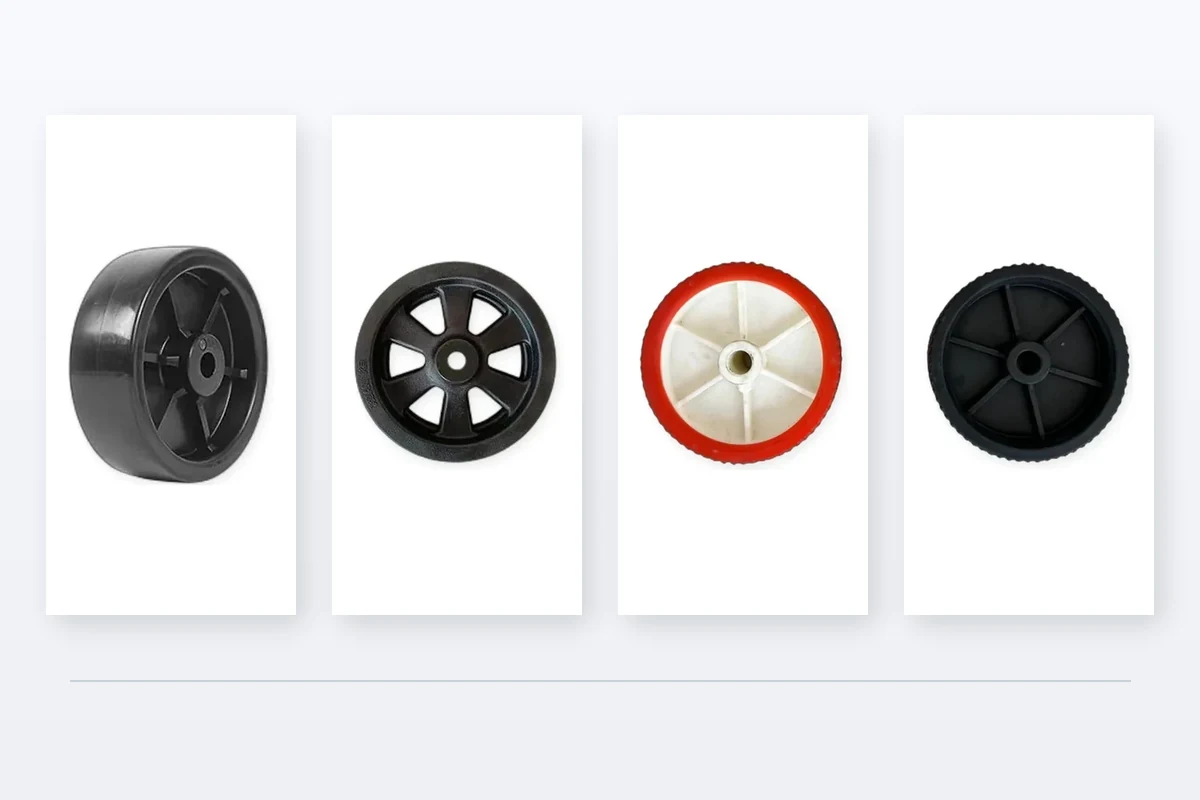
Before comparing products, write the equipment task in one sentence: what must move, what load it carries, where it travels and how often it is repositioned. That description provides context for industrial cart wheel uneven wear without turning one parameter into a universal rule.
For industrial mobility and material-handling equipment, the first review should cover load, floor, wheel geometry, mounting and movement requirements. If a value is not known, mark it for measurement rather than substituting a typical number. The purpose of the RFQ is to close gaps, not hide them.
Capture dimensions before the old part is removed
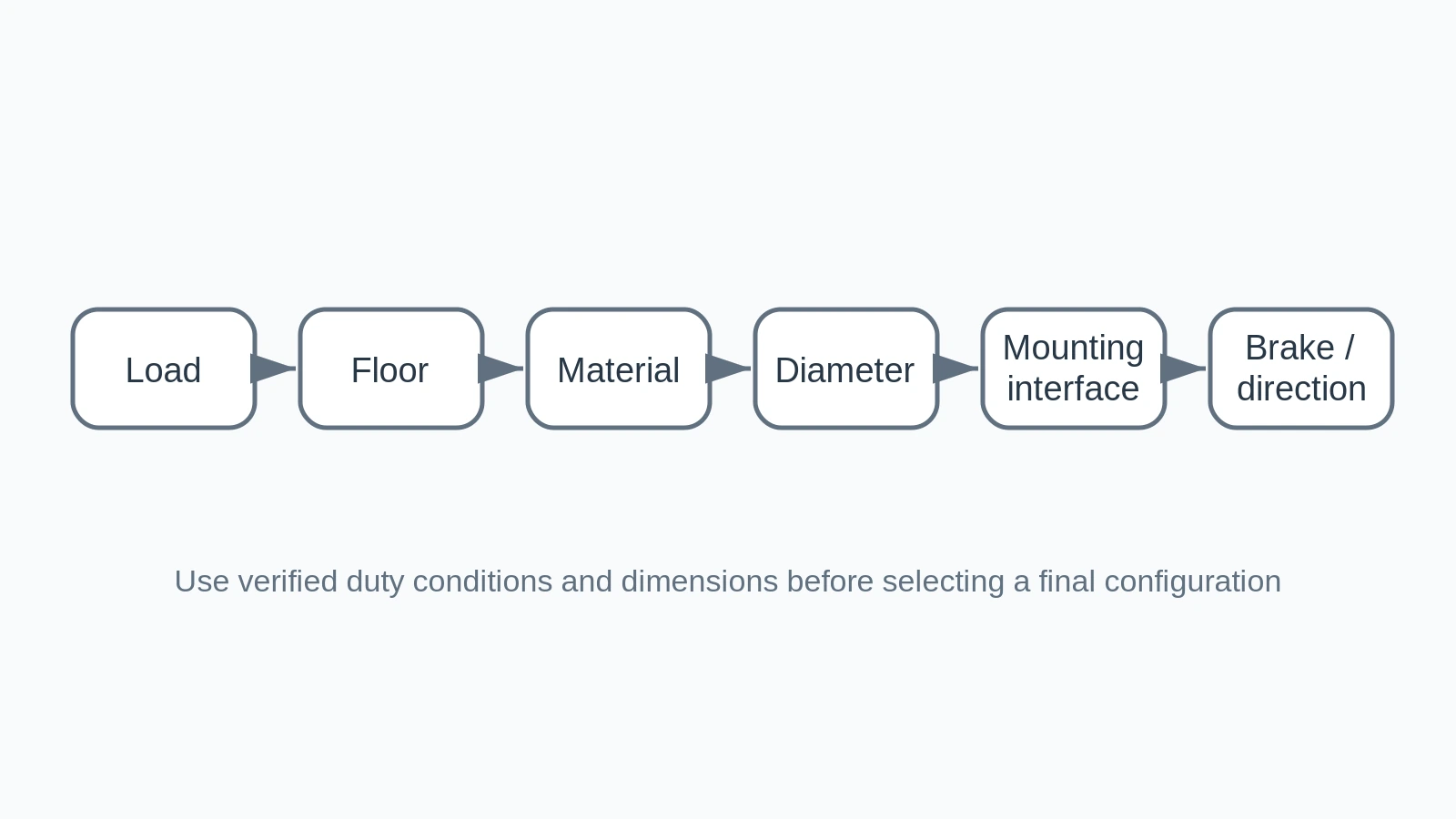
Utbytesarbeten drar nytta av en konsekvent mätrutin. Registrera hjuldiameter och bredd och förflytta dig sedan inåt mot navet: borrning eller lagertyp, axeldiameter, navlängd och distanser. För kompletta enheter, lägg till installerad höjd och monteringsgeometri. Fotografera mätverktyget på plats när en dimension är svår att beskriva.
Använd inte slitet slitbanemönster som enda referens om originaldiametern spelar roll. Ett kraftigt slitet hjul kan få ersättningshjulet att se för stort ut när det verkliga problemet är materialförlust. Likaså kan en böjd gaffel eller improviserad distans ändra den synliga offseten.
Connect load to movement instead of treating it as static
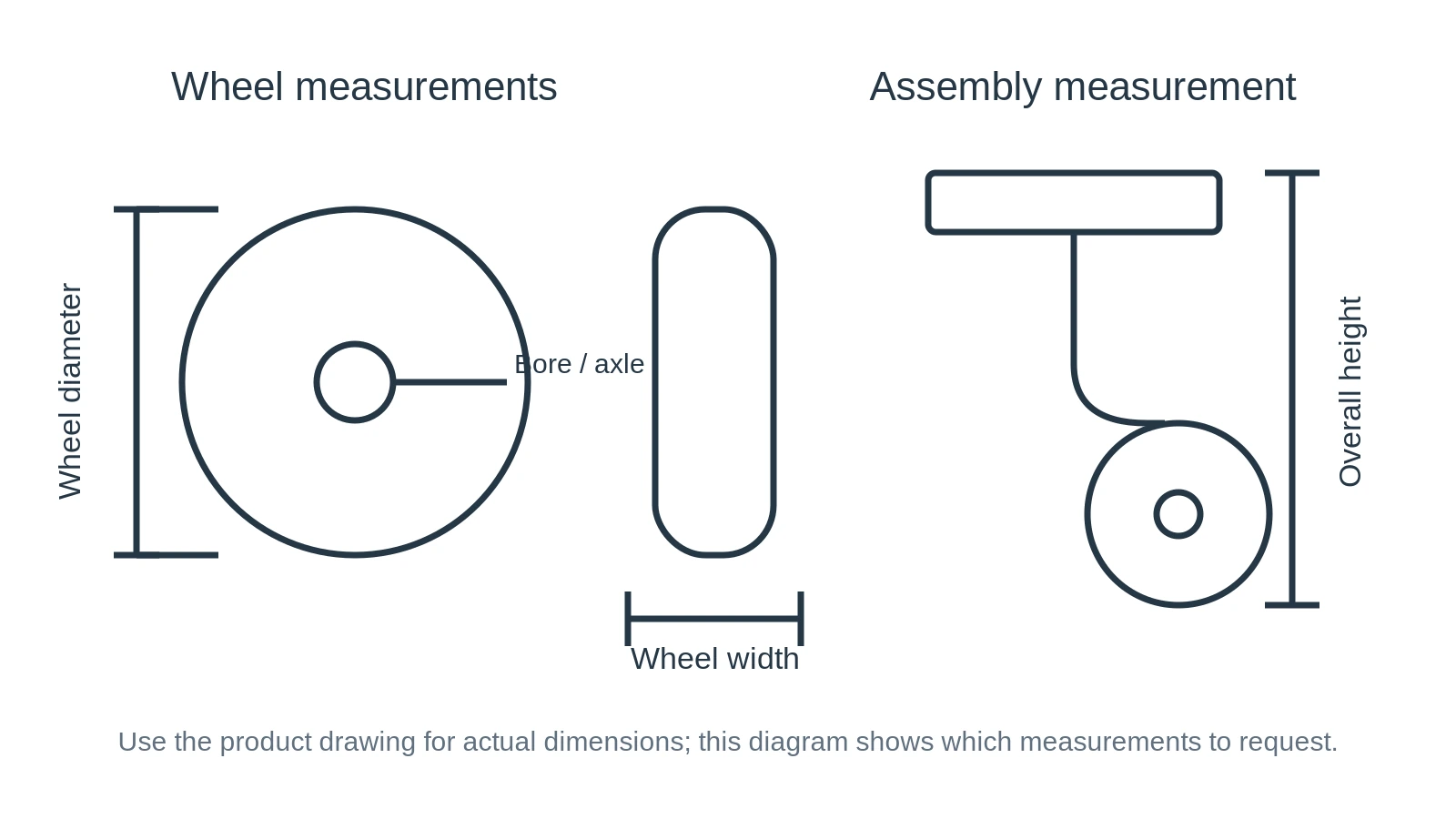
Lastkapaciteten är inte oberoende av hur utrustningen rör sig. En vagn som korsar en tröskel kan skapa stötkrafter som saknas vid statisk parkering. Ett ojämnt golv kan förskjuta lasten från fyra nominella stödpunkter till tre. Ett stödhjul på en släpvagn kan bära en blygsam vertikal dragstångsbelastning men kräva avsevärd manövreringskraft på löst underlag.
Registrera maximal normallast, exceptionell belastning, golv eller mark, körsträcka och hinderfrekvens. Kombinationen ger ett bättre urvalsunderlag än en bruttovikt.
Turn the topic into a comparison matrix
| Question | What to record |
|---|---|
| Duty | What equipment does and how often it moves |
| Load | Dead weight, payload and supporting layout |
| Floor | Surface, joints, debris, water or chemicals |
| Wheel | Diameter, width and material if known |
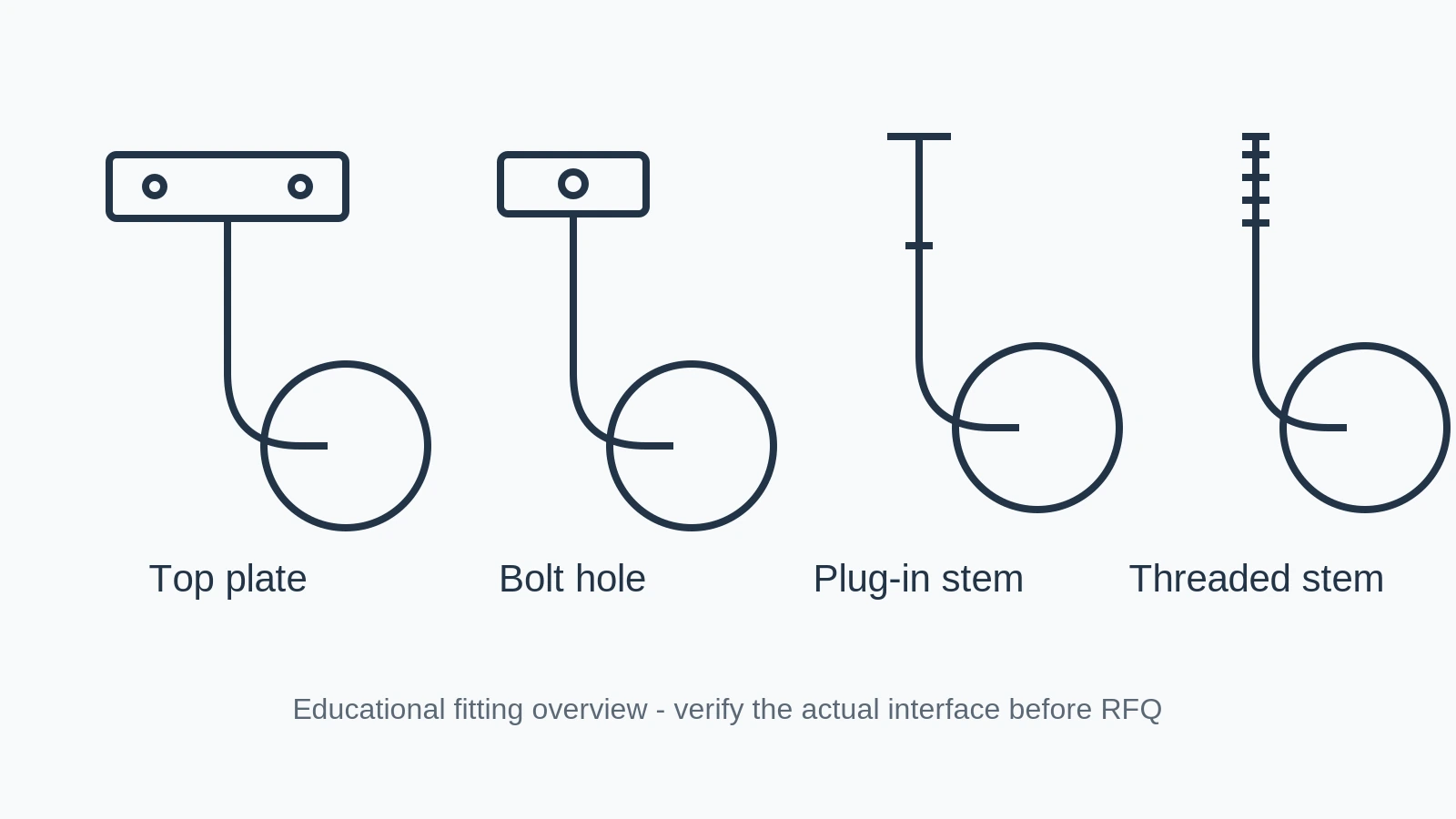
| Interface | Bore/bearing/axle or bracket/tube/stem |
| Control | Brake, lock, folding or steering requirement |
| Commercial | Quantity, sample purpose and destination |
Vanliga fellägen och vad de vanligtvis avslöjar
Focusing on one attractive feature can hide an interface or duty mismatch. Similar symptoms can also come from loose fasteners, worn bearings, misalignment, contaminated floors or a frame that is no longer square. Before blaming wheel material, inspect the mounting and compare wear patterns across positions.
Om bara ett hörn slits snabbt, undersök hörnets belastning och uppriktning. Om alla hjul uppvisar samma skador, granska arbetsbelastning, golv och materialspecifikation. Om slitaget accelererar efter en processändring, registrera den nya föroreningen, rengöringsmedlet, temperaturen eller rörelsemönstret.
Translate the engineering notes into one controlled RFQ line
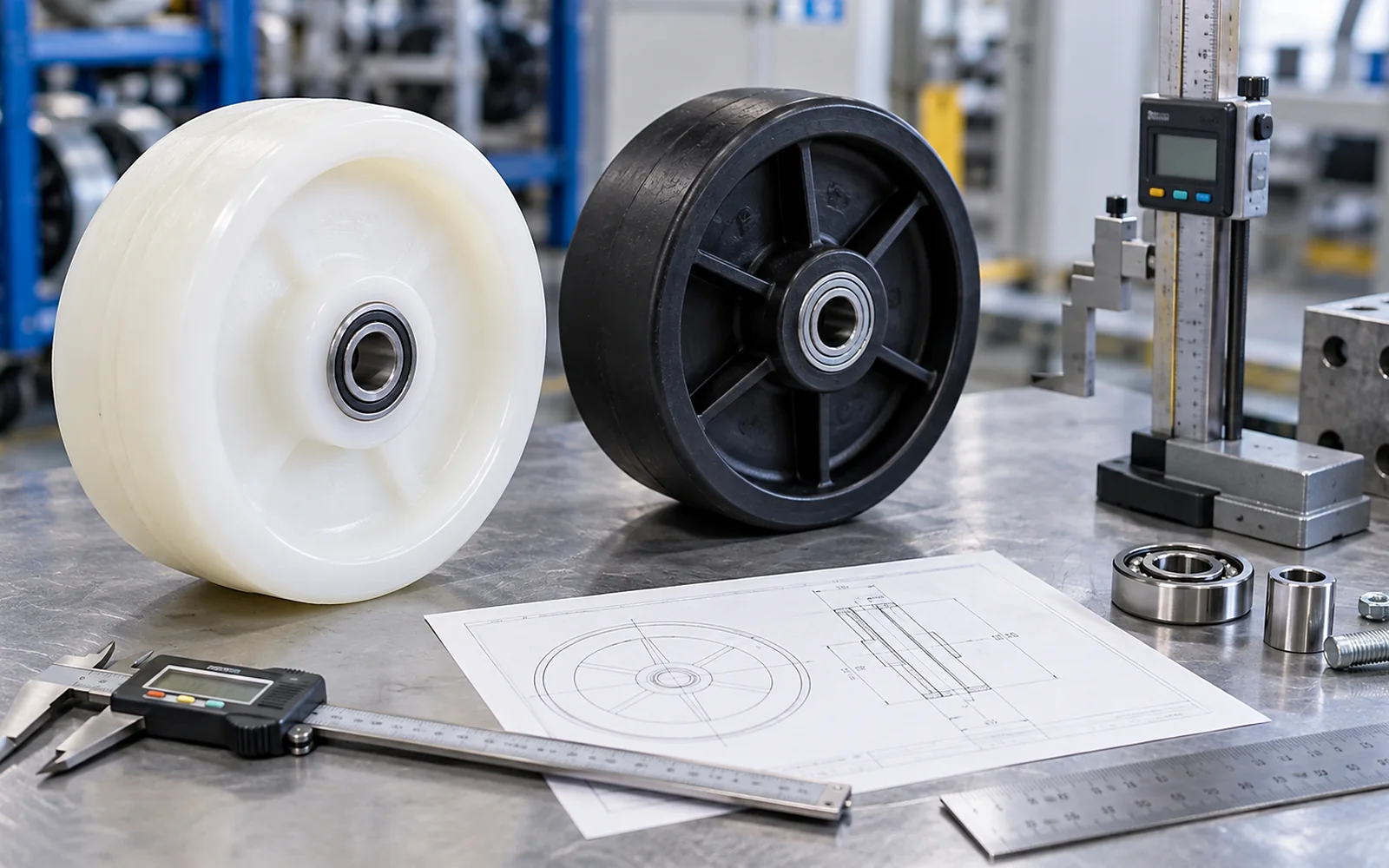
Use one line per configuration and write the requirement so another engineer can understand it without the original conversation. Include application, load, dimensions, environment, quantity and clear photo/drawing. Attach the correct drawing or photo set. If an interface dimension is unknown, say “measurement pending” instead of using a guessed value.
För beställningar med flera modeller, håll kvantiteterna separerade och identifiera vilka dimensioner som delas.
Checklista för beslut
- Är maximal normalbelastning känd?
- Kan stödhjul dela lasten lika?
- Är det verkliga golvet/markplanet beskrivet?
- Mäts hjul- och gränssnittsdimensioner?
- Är kontrollfunktionen tydlig?
- Anges särskilda krav på material/ytbehandling/miljö?
- Är kvantiteten kopplad till rätt modell?
Fortsätt med primär valsida, jämför nuvarande produktfamiljer, eller använd Anbudsformulär.
Vanliga frågor
What is the first thing to confirm for industrial cart wheel uneven wear?
Start with load, floor, wheel geometry, mounting and movement requirements. That gives the rest of the selection a measurable context.
Kan ett foto ersätta mått?
Ett foto underlättar identifieringen, men passformskritiska mått bör fortfarande mätas eller tas från en godkänd ritning.
Bör köparen lägga till en säkerhetsfaktor för lasten?
En säkerhetstillägg används vanligtvis för att hantera ojämlik lastfördelning och driftseffekter, men det lämpliga värdet beror på applikationen och ersätter inte produktklassificeringen.
Vad händer om materialet är okänt?
Ange verksamhetsplats och miljö, tillhandahåll ett prov eller foto och behandla materialet som en bekräftelse snarare än att gissa utifrån färg.
Separate technical approval from quantity changes
If purchasing later changes quantity or consolidates models, do not let that commercial change overwrite the technical specification. Preserve approved dimensions and configuration while updating only the commercial fields that changed.
Anmärkning om inköp på flera platser
When the same cart, machine or trailer operates at several sites, verify that floor, payload and maintenance practices are genuinely similar before standardizing one answer to industrial cart wheel uneven wear. Standardization can simplify inventory, but only when the operating envelope remains compatible across locations. A warehouse with smooth concrete and a yard with expansion joints may justify different wheel decisions even on the same frame.
Use the same measurement names and units across sites and keep one controlled RFQ template. Record load, floor, wheel geometry, mounting and movement requirements. This reduces unit-conversion mistakes and makes supplier comparison more consistent when purchasing consolidates quantities from several facilities.
Idrifttagningsobservation
Commission a new or replacement configuration for industrial cart wheel uneven wear under controlled load and low speed before normal operation. Watch for rubbing, bracket contact, wheel wobble, steering instability, fastener movement and any change in deck or drawbar height. The goal is to test the assumptions made during selection rather than merely confirm that the wheel turns.
For industrial mobility and material-handling equipment, include the most demanding normal floor or ground transition in the initial trial. If the system must cross a threshold, ramp or rough joint, observe it there. Document the result with the same model reference used in the RFQ so future repeat orders have a useful baseline instead of relying on memory.
Underhållsdata värda att behålla
Record wheel position, installation date, duty, reason for replacement and unusual floor events. In a industrial cart wheel uneven wear program, this simple history helps identify whether wear is random, position-specific or linked to a changed environment. A wheel that fails repeatedly at one corner may point to load concentration, alignment or local contamination rather than a general material problem.
Inspect axle, spacers, bearings, bracket and fasteners when the old wheel is removed. Keep measurements that relate directly to application, load, dimensions, environment, quantity and clear photo/drawing. If a component has been modified in service, photograph the change before installing the new item and decide whether the modified condition should become part of the official equipment specification.
Convert the question into measurable inputs
The practical value of “Common Causes of Uneven Wheel Wear on Industrial Carts” is not a universal yes-or-no answer. The useful boundary is the equipment and duty in which the question occurs. Write down wear pattern by wheel position, bearing play, axle condition, mounting alignment, floor debris, route, payload and replacement history. Keeping these fields together makes it possible to distinguish a product-identification question from an engineering selection question and prevents a visually similar part from being treated as automatically interchangeable.
Använd det mest krävande normala tillståndet snarare än en beskrivning av bästa tänkbara scenario. Om utrustningen ibland korsar en tröskel, arbetar utomhus, bär en ojämn nyttolast eller manövreras först efter långa perioder med statisk belastning, inkludera det tillståndet. Målet är ett repeterbart krav som en annan ingenjör eller köpare kan förstå utan att se originalkomponenten.
Build one comparison sheet
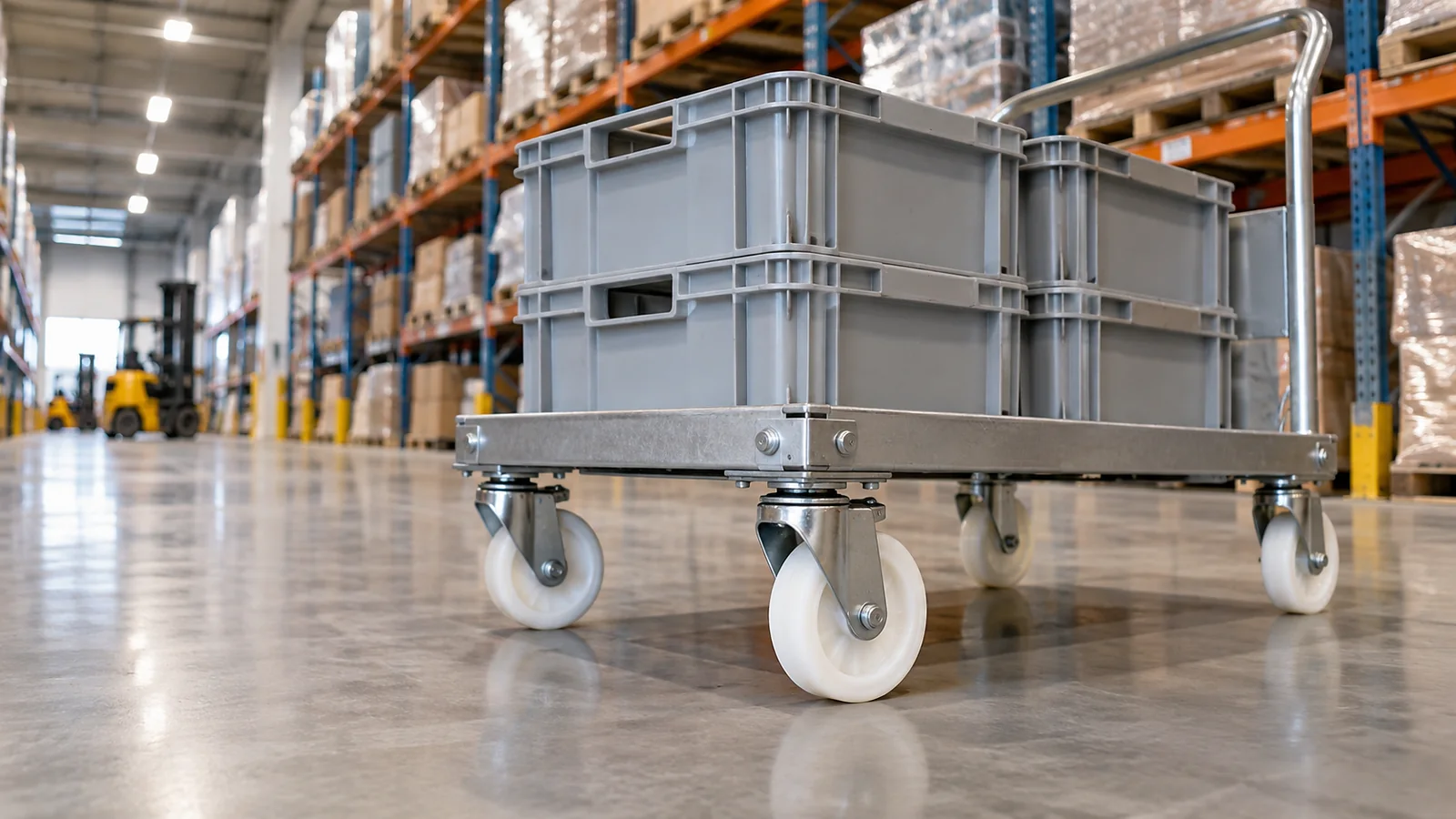
For this topic, record wear pattern by wheel position, bearing play, axle condition, mounting alignment, floor debris, route, payload and replacement history. Use dimensioned photographs where a drawing is unavailable and show the reference points used for each measurement. If the old part is worn, bent or repaired, flag the affected dimension instead of treating the damaged geometry as the design target.
Ett jämförelseblad fungerar bäst med en konfiguration per kolumn eller rad. Håll mätvärden, obligatoriska värden och valfria inställningar separerade. Den enkla separationen minskar risken att ett leverantörsförslag eller ett gammalt katalogvärde kopieras till den obligatoriska specifikationen utan granskning. Det gör det också lättare att granska senare offertrevideringar.
Commissioning should reproduce the real route
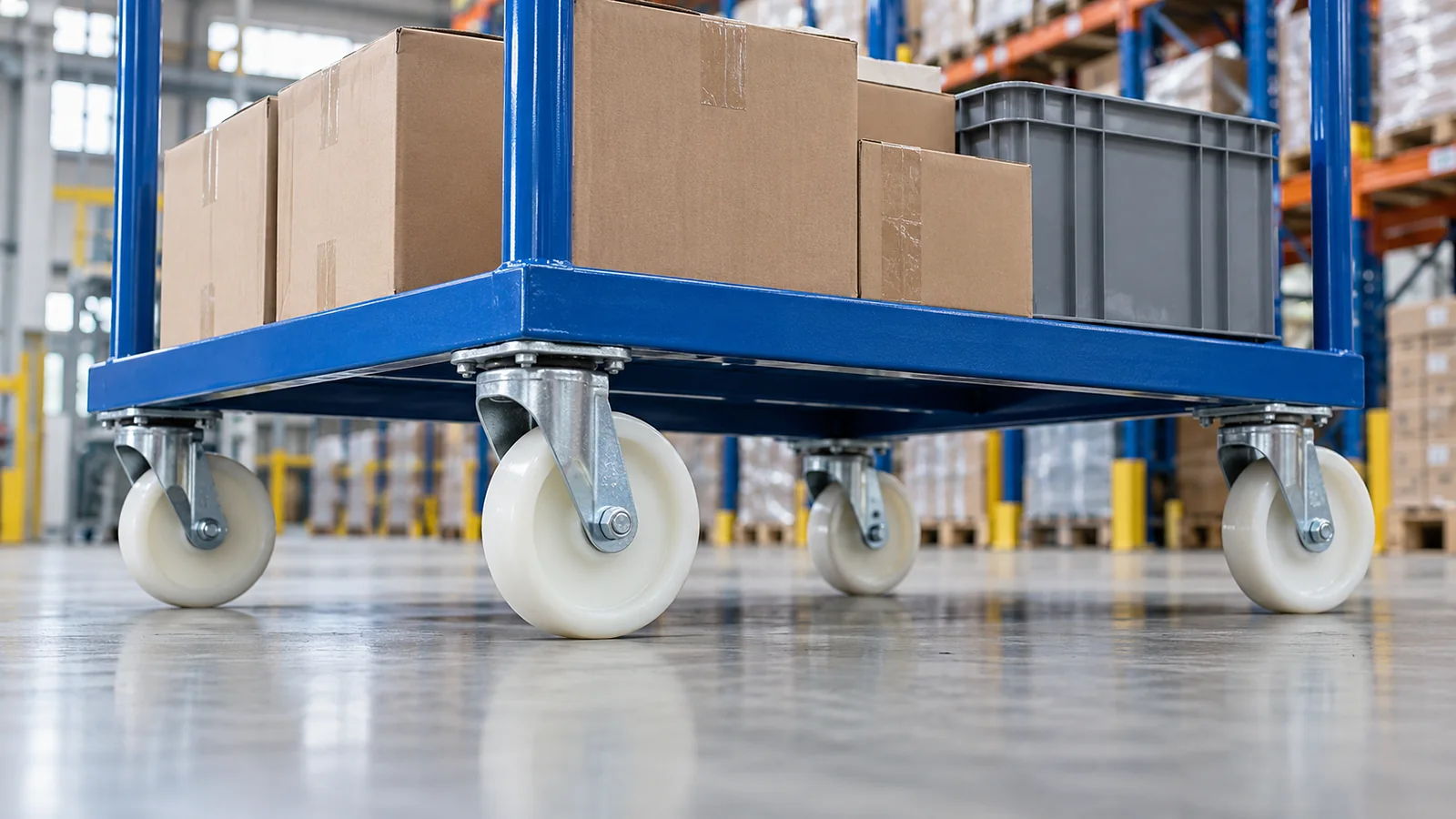
After a candidate is installed, inspect every wheel position rather than only the failed wheel, compare free rotation and side play, then test the cart on the route where the wear developed. The first trial should be slow enough to observe the wheel and mounting rather than merely prove that the equipment can move. Look for rubbing, unexpected side movement, fastener movement, wheel wobble, interference and a change in operator effort.
Om resultatet är otillfredsställande, registrera symtomet innan du ändrar flera variabler samtidigt. En kontrollerad ändring – såsom hjuldiameter, material, monteringsjustering eller styrlayout – ger mer användbar information än att ändra hela enheten och förlora orsaken till det ursprungliga problemet.
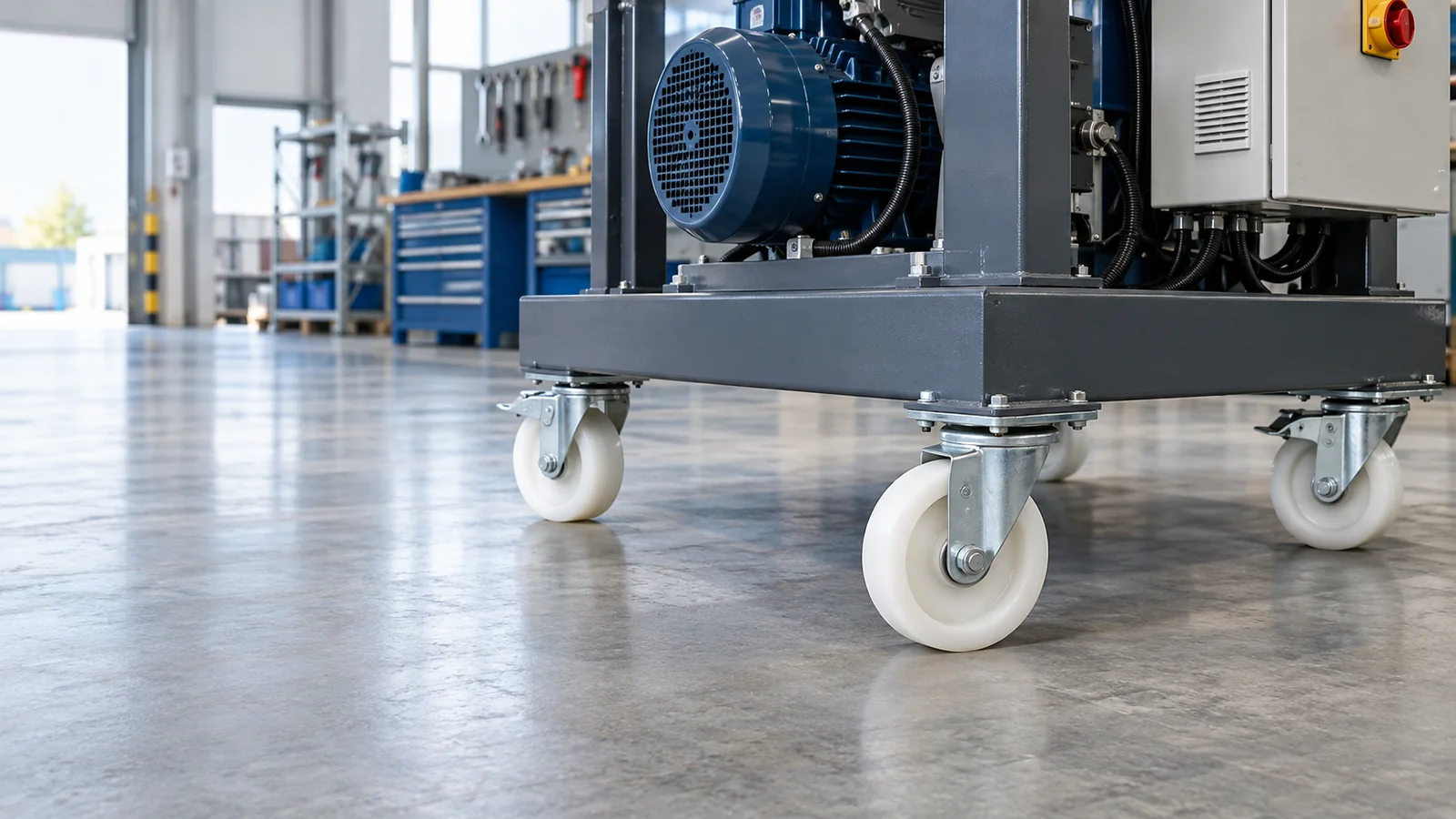
Create a repeat-order baseline
Keep installation date, position, reason for replacement, wear photograph, bearing or axle condition, payload and any floor or route change since the previous service. The record does not need to be long; it needs to be unambiguous. Tie the accepted dimensions and application notes to the model or purchasing reference used on the order. For mixed-model projects, keep each configuration on its own line so a dimension, finish or quantity does not migrate to another item during revisions.
För utvärdering av provet, ange vad provet är avsett att bevisa: fysisk lämplighet, materialbeteende, styrning, bromsning, utseende eller annan definierad punkt. När den frågan är besvarad, uppdatera den kontrollerade posten innan en produktionsorder släpps.
Review triggers that justify a fresh selection
The conclusion in this article should be revisited when one of the original assumptions changes. For “Common Causes of Uneven Wheel Wear on Industrial Carts”, that can include a heavier payload, different floor, new obstacle, altered frame, changed cleaning process, new travel frequency or a revised mounting interface. A repeat order is not automatically a repeat application.
När förhållandena förblir oförändrade blir den tidigare godkännanderapporten värdefull eftersom den minskar upprepat mätarbete. När förhållandena ändras visar samma rapport exakt vilka antaganden som behöver kontrolleras på nytt, snarare än att teamet tvingas börja om från ett fotografi eller minne.
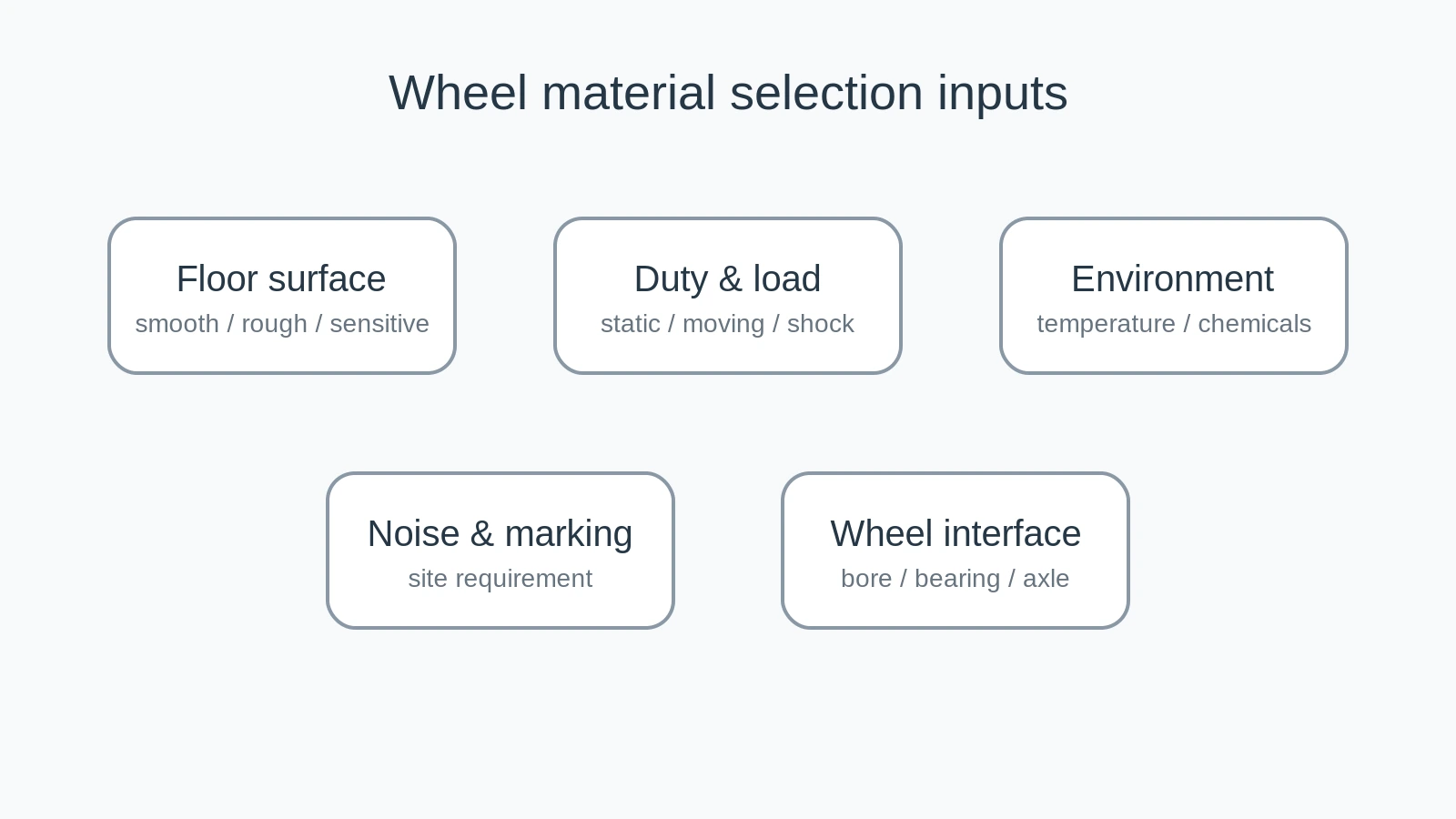
Connect the calculation in “Common Causes of Uneven Wheel Wear on Industrial Carts” to the real travel path
Walk the route and identify the highest normal obstacle, ramp, floor gap and tightest turn. Note whether the trolley is hand-pushed, towed or repositioned only occasionally. These observations help explain why wheel diameter, tread behaviour and steering layout can matter even when the nominal static load appears modest.
For procurement, send the load definition together with wheel dimensions, mounting interface, operating surface and quantity. That package gives the supplier enough context to review a proposed product without forcing the buyer to invent a rating or compatibility statement that the source data does not support.
Make the load assumptions explicit for “Common Causes of Uneven Wheel Wear on Industrial Carts”
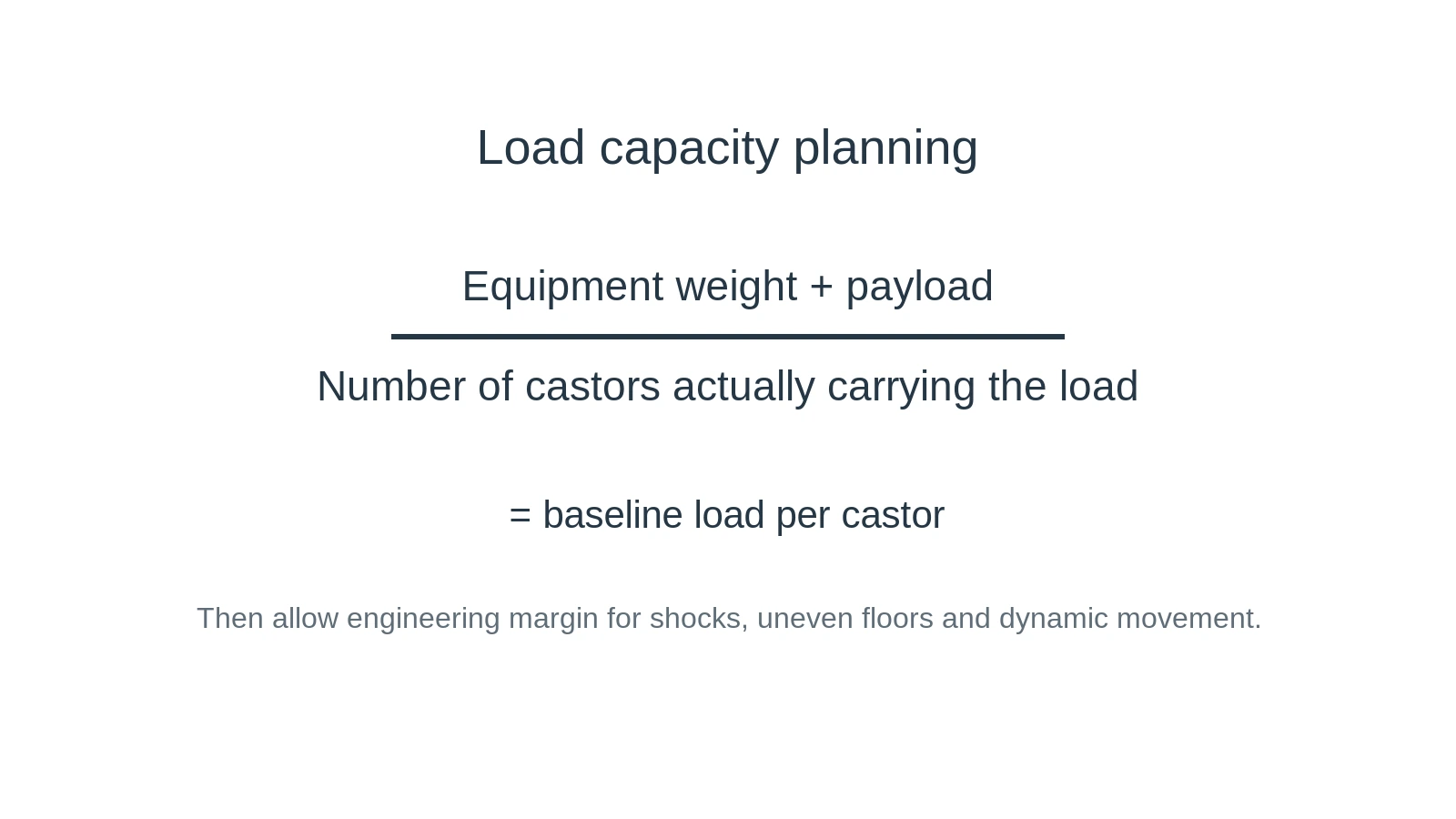
Start with the empty equipment mass, maximum payload and number of supporting points, then consider whether all wheels can realistically share load at the same time. Floors, frame stiffness, ramps and payload position can unload one wheel and concentrate force on another. Record the operating case rather than dividing total mass by wheel count and treating the result as a complete specification.
Dynamic effects such as thresholds and sudden direction changes also matter. The purpose of the calculation is to establish a sensible minimum requirement and identify uncertainty that needs supplier confirmation, not to manufacture a catalogue rating that was never tested for the proposed configuration.
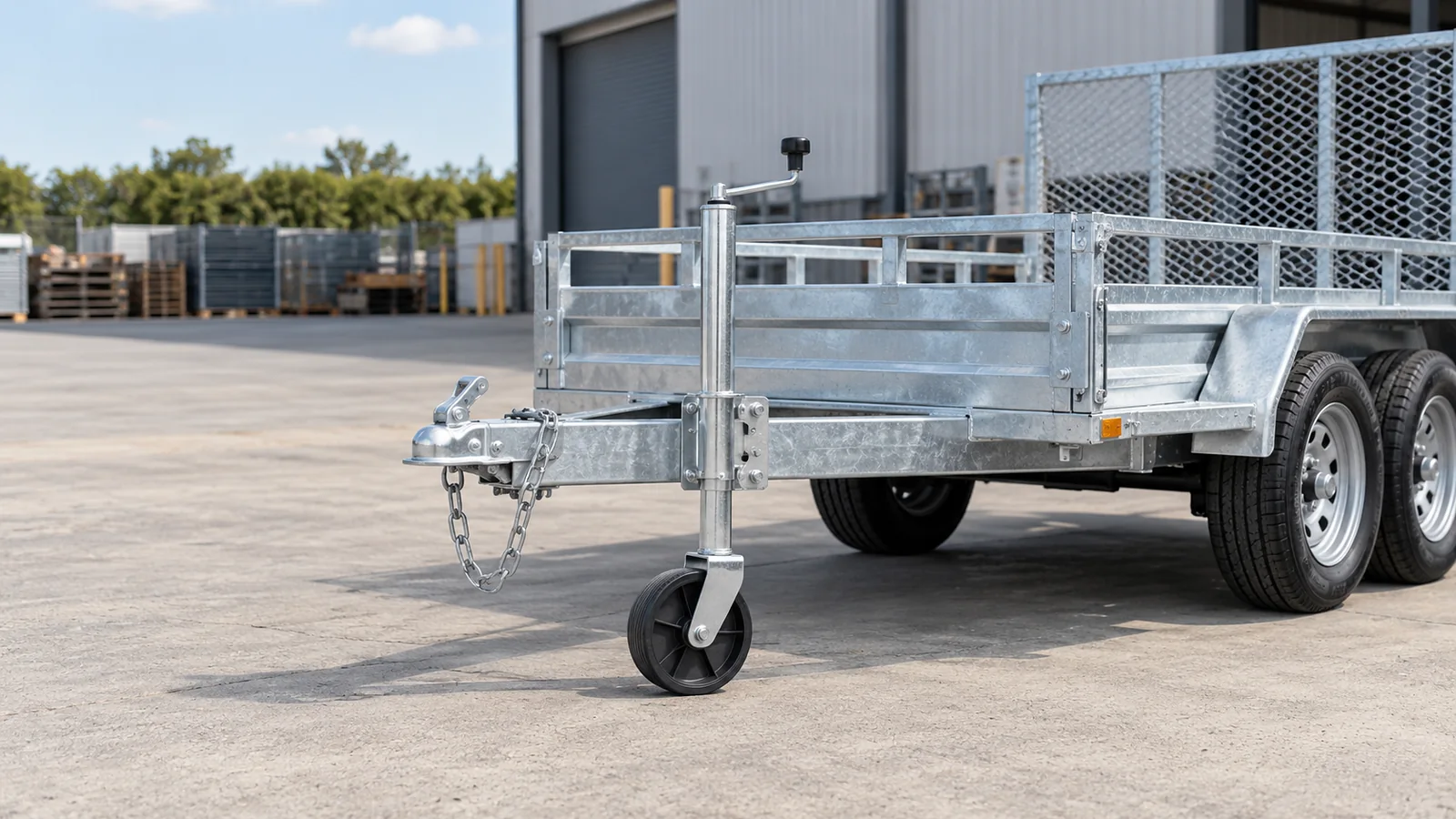
One final purchasing check for Common Causes of Uneven Wheel Wear on Industrial Carts
Innan du omvandlar denna vägledning till en inköpsorder, förvara applikationsinformationen bredvid den begärda komponenten. Ange utrustningstyp, normal och maximal driftsbelastning, hjul- eller aggregatdimensioner, monteringsgränssnitt, golv- eller markförhållanden, kvantitet och det specifika problem som utbytet förväntas lösa. Om en befintlig enhet kopieras, inkludera fotografier från båda sidor och en bild av monteringsområdet.
Om någon dimension eller materialkrav som styr anpassningen kvarstår osäker, låt det vara en bekräftelsepunkt snarare än att fylla luckan med en uppskattning. En kort lista med explicita öppna punkter ger teknik- och inköpsteam en säkrare grund för att jämföra offerter, och det minskar risken att en leverantör tolkar ett generiskt produktnamn annorlunda än utrustningsägaren.
Discuss your industrial cart wheel uneven wear requirement
Skicka in ansökan, last, passformsstyrande mått, kvantitet och eventuella relevanta foton eller ritningar. Vi kommer att använda dessa indata för att begränsa produktfamiljen utan att gissa.