
Produktbeskrivning
Produktparametrar
| Item | OEM Service Tight Tolerance Custom Design Precision CNC Machining Parts |
| Storlek | Customized, according to drawing |
| Technological Design | Process analysis and review of product drawings; Draw up a processing plan; Compile process specification and design and manufacture of process equipment |
| Material | Carbon steel, Stainless steel, Aluminum, Aluminum alloy, Copper alloy, Galvanized steel sheet, Magnesium alloy, Titanium alloy, Special materials, Engineering Plastics… Or Customized |
| Tolerans | +/-0.002mm, 100% QC quality inspection before delivery, can provide quality inspection form testing equipment |
| Processing | Milling, Turning, Drilling, Planing, Fitter, Boring, Grinding, CNC machining, Broaching, Grinding and Honing |
| Heat Treatment | Normalizing, Annealing, Tempered, Aging, Tempering, Quenching |
| Special Processing | EDM, Wire EDM, Electrochemical machining, Laser processing |
| Equipment Support | CNC Machining Center(DMG/MAZAK), CNC Turning Milling Compound Machining Center(DMG), CNC Lathe (STS/Feeler/MAZAK/TAKISAWA), Slow-feeding Wire Cut Machine(SODICK), High Speed NC WEDM Tool(San Guan/Gao Cheng),Milling Machine(GENTIGER/Joint), Grinding Table(Jian De), Surface Grinding Machine(NAGASHIMA/Wang Pan) |
| Yta | Polishing, Sandblasting, Zinc plating, Tin plating, Nickel plating, Gold plating, Silver plating, Copper plating, Alloy plating and Spraying (Painting and powder spraying), Anodizing and electrophoresis, etc. |
| Testing Equipment | CMM (ZEISS/HEXAGON), Roundness Meter (ACCRETECH), Tensile Tester (AIGU), Profilometer (TOKYO), Altimeters (TRIMOS), Hardness Tester (HAIBAO), Microscope(EASSON), Marble Platform(HangZhouI), etc. |
| Min Order Quantity | 1 piece |
| Supply Ability | 100,000 CNC machining parts, 3,000 Sheet metal parts, 50 Module per day |
| Quotation Against | 2D drawings (PDF, JPG, DWG), 3D drawings (STP, IGS) or sample |
| Payment Term | T/T, L/C, D/P, D/A |
Vanliga frågor
Q1:what are our machining equipments?
YY:Our machining equipments include plasticn injection machinies, CNC milling machines, CNC turning machines, stamping machines, hobbing machines, automatic lathe machines, tapping machines, grinding machines, cutting machines and so on
Q2:What’s kinds of information you need for quotation?
YY:You can provide 2D/3D drawing or send your sample to our factory. then we can make according to your sample
Q3:Can we CHINAMFG NDA?
YY:Sure. We never divulge customers’ information to anyone else
Q4:What are the Advantage of your gears and parts?
YY:Our advantage is the competitive and reasonable prices, fast delivery and high quality. Our eployees are responsible-oriented, friendly-oriented,and dilient-oriented.
Our industrial parts products are featured by strict tolerance, smooth finish and long-life performance
Q5:Delivery time?
YY:Ifin Stock:around 3 days after payment. Mass production:around 20-25 days after receipt of deposit(Accurate delivery time depends on specific items and quantities)
Q6:How about the transportation?
YY:You can choose any mode of transportation you want, sea delivery, air delivery or door to door express
/* 10 mars 2571 17:59:20 */!function(){function s(e,r){var a,o={};try{e&&e.split(“,”).forEach(function(e,t){e&&(a=e.match(/(.*?):(.*)$/))&&1
| Condition: | New |
|---|---|
| Certifiering: | ISO9001 |
| Standard: | DIN, ASTM, GOST, GB, JIS, ANSI, BS |
| Prover: |
US$ 10/Styck
1 styck (minsta beställning) | Beställ prov |
|---|
| Anpassning: |
Tillgänglig
|
|
|---|
.shipping-cost-tm .tm-status-off{bakgrund: ingen;fyllning: 0;färg: #1470cc}
|
Fraktkostnad:
Beräknad frakt per enhet. |
om fraktkostnad och beräknad leveranstid. |
|---|
| Betalningsmetod: |
|
|---|---|
|
Första betalningen Full betalning |
| Valuta: | US$ |
|---|
| Retur och återbetalning: | Du kan ansöka om återbetalning upp till 30 dagar efter att du mottagit produkterna. |
|---|
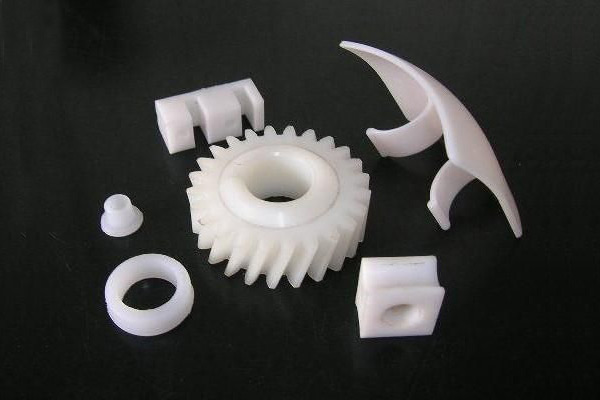
What is the impact of material selection on the performance and durability of injection molded parts?
The material selection for injection molded parts has a significant impact on their performance and durability. The choice of material influences various key factors, including mechanical properties, chemical resistance, thermal stability, dimensional stability, and overall part functionality. Here’s a detailed explanation of the impact of material selection on the performance and durability of injection molded parts:
Mechanical Properties:
The mechanical properties of the material directly affect the part’s strength, stiffness, impact resistance, and fatigue life. Different materials exhibit varying levels of tensile strength, flexural strength, modulus of elasticity, and elongation at break. The selection of a material with appropriate mechanical properties ensures that the injection molded part can withstand the applied forces, vibrations, and operational stresses without failure or deformation.
Chemical Resistance:
The material’s resistance to chemicals and solvents is crucial in applications where the part comes into contact with aggressive substances. Certain materials, such as engineering thermoplastics like ABS (Acrylonitrile Butadiene Styrene) or PEEK (Polyether Ether Ketone), exhibit excellent chemical resistance. Choosing a material with the appropriate chemical resistance ensures that the injection molded part maintains its integrity and functionality when exposed to specific chemicals or environments.
Thermal Stability:
The thermal stability of the material is essential in applications that involve exposure to high temperatures or thermal cycling. Different materials have varying melting points, glass transition temperatures, and heat deflection temperatures. Selecting a material with suitable thermal stability ensures that the injection molded part can withstand the anticipated temperature variations without dimensional changes, warping, or degradation of mechanical properties.
Dimensional Stability:
The dimensional stability of the material is critical in applications where precise tolerances and dimensional accuracy are required. Some materials, such as engineering thermoplastics or filled polymers, exhibit lower coefficients of thermal expansion, minimizing the part’s dimensional changes with temperature variations. Choosing a material with good dimensional stability helps ensure that the injection molded part maintains its shape, size, and critical dimensions over a wide range of operating temperatures.
Part Functionality:
The material selection directly impacts the functionality and performance of the injection molded part. Different materials offer unique properties that can be tailored to meet specific application requirements. For example, materials like polycarbonate (PC) or polypropylene (PP) offer excellent transparency, making them suitable for applications requiring optical clarity, while materials like polyamide (PA) or polyoxymethylene (POM) provide low friction and wear resistance, making them suitable for moving or sliding parts.
Cycle Time and Processability:
The material selection can also affect the cycle time and processability of injection molding. Different materials have different melt viscosities and flow characteristics, which influence the filling and cooling times during the molding process. Materials with good flow properties can fill complex mold geometries more easily, reducing the cycle time and improving productivity. It’s important to select a material that can be effectively processed using the available injection molding equipment and techniques.
Cost Considerations:
The material selection also impacts the overall cost of the injection molded part. Different materials have varying costs, and selecting the most suitable material involves considering factors such as material availability, tooling requirements, processing conditions, and the desired performance characteristics. Balancing the performance requirements with cost considerations is crucial in achieving an optimal material selection that meets the performance and durability requirements within the budget constraints.
Overall, material selection plays a critical role in determining the performance, durability, and functionality of injection molded parts. Careful consideration of mechanical properties, chemical resistance, thermal stability, dimensional stability, part functionality, cycle time, processability, and cost factors helps ensure that the chosen material meets the specific application requirements and delivers the desired performance and durability over the part’s intended service life.
Finns det specifika överväganden vid val av formsprutade delar i applikationer med varierande miljöförhållanden eller branschstandarder?
Ja, det finns specifika överväganden att tänka på när man väljer formsprutade delar för tillämpningar med varierande miljöförhållanden eller branschstandarder. Dessa faktorer spelar en avgörande roll för att säkerställa att de valda delarna kan motstå de specifika driftsförhållandena och uppfylla de erforderliga standarderna. Här är en detaljerad förklaring av övervägandena vid val av formsprutade delar i sådana tillämpningar:
1. Materialval:
Materialvalet för formsprutade delar är avgörande med tanke på varierande miljöförhållanden eller branschstandarder. Olika material erbjuder varierande nivåer av motståndskraft mot faktorer som extrema temperaturer, UV-exponering, kemikalier, fukt eller mekanisk stress. Att förstå de specifika miljöförhållandena och branschkraven är avgörande för att välja ett material som kan motstå dessa förhållanden samtidigt som det uppfyller de nödvändiga standarderna för prestanda, hållbarhet och säkerhet.
2. Temperaturbeständighet:
I applikationer med extrema temperaturvariationer är det viktigt att välja formsprutade delar som tål det specifika temperaturintervallet. Vissa material, såsom tekniska termoplaster, uppvisar utmärkt högtemperaturbeständighet, medan andra kan vara mer lämpade för lågtemperaturmiljöer. Hänsyn bör också tas till potentialen för termisk expansion eller kontraktion, eftersom det kan påverka delarnas dimensionsstabilitet och övergripande prestanda.
3. Kemisk resistens:
I industrier där exponering för kemikalier är vanlig är det avgörande att välja formsprutade delar som kan motstå kemiska angrepp och nedbrytning. Olika material har varierande nivåer av kemisk resistens, och det är viktigt att välja ett material som är kompatibelt med de specifika kemikalier som finns i applikationsmiljön. Hänsyn bör också tas till faktorer som långvarig exponering, koncentration och kontaktfrekvens med kemikalier.
4. UV-stabilitet:
För tillämpningar som utsätts för utomhusmiljöer eller intensiv UV-strålning är det viktigt att välja formsprutade delar med UV-stabilitet. UV-strålning kan orsaka materialnedbrytning, missfärgning eller förlust av mekaniska egenskaper över tid. Material med UV-stabilisatorer eller tillsatser kan ge förbättrad motståndskraft mot UV-strålning, vilket säkerställer delarnas livslängd och prestanda i utomhus- eller UV-exponerade tillämpningar.
5. Mekanisk hållfasthet och slagtålighet:
I tillämpningar där mekanisk stress eller slagtålighet är avgörande är det viktigt att välja formsprutade delar med lämpliga mekaniska egenskaper. Material med hög draghållfasthet, slagtålighet eller seghet kan säkerställa att delarna kan motstå de erforderliga belastningarna, vibrationerna eller stötarna utan att gå sönder. Hänsyn bör också tas till faktorer som utmattningsbeständighet, nötningsbeständighet eller flexibilitet, beroende på de specifika tillämpningskraven.
6. Överensstämmelse med branschstandarder:
När man väljer formsprutade delar för tillämpningar som regleras av branschstandarder eller föreskrifter är det viktigt att säkerställa att de valda delarna uppfyller de erforderliga standarderna. Detta inkluderar standarder för dimensioner, toleranser, säkerhet, brandfarlighet, elektriska egenskaper eller specifika prestandakriterier. Att välja delar som är certifierade eller testade för att uppfylla relevanta branschstandarder hjälper till att säkerställa överensstämmelse och tillförlitlighet i den avsedda tillämpningen.
7. Miljöhänsyn:
I dagens miljömedvetna landskap blir det allt viktigare att beakta hållbarheten och miljöpåverkan hos formsprutade delar. Att välja material som är återvinningsbara eller biologiskt nedbrytbara kan vara i linje med hållbarhetsmål. Dessutom kan utvärdering av faktorer som energiförbrukning under tillverkning, avfallsminskning eller användning av miljövänliga tillverkningsprocesser bidra till miljömässigt ansvarsfulla val.
8. Anpassning och designflexibilitet:
Slutligen kan den designflexibilitet och de anpassningsmöjligheter som erbjuds av formsprutade delar vara fördelaktiga för att uppfylla specifika miljö- eller branschkrav. Formsprutning möjliggör invecklade konstruktioner, komplexa geometrier och införlivande av funktioner som packningar, tätningar eller monteringspunkter. Anpassningsalternativ för färg, textur eller ytfinish kan också övervägas för att möta specifika varumärkes- eller estetiska krav.
Att beakta dessa specifika överväganden vid val av formsprutade delar för applikationer med varierande miljöförhållanden eller branschstandarder säkerställer att de valda delarna är väl lämpade för sin avsedda användning, ger optimal prestanda, hållbarhet och överensstämmelse med de erforderliga standarderna.
What industries and applications commonly utilize injection molded parts?
Injection molded parts find widespread use across various industries and applications due to their versatility, cost-effectiveness, and ability to meet specific design requirements. Here’s a detailed explanation of the industries and applications that commonly utilize injection molded parts:
1. Automotive Industry:
The automotive industry extensively relies on injection molded parts for both interior and exterior components. These parts include dashboards, door panels, bumpers, grilles, interior trim, seating components, electrical connectors, and various engine and transmission components. Injection molding enables the production of lightweight, durable, and aesthetically pleasing parts that meet the stringent requirements of the automotive industry.
2. Consumer Electronics:
Injection molded parts are prevalent in the consumer electronics industry. They are used in the manufacturing of components such as housings, buttons, bezels, connectors, and structural parts for smartphones, tablets, laptops, gaming consoles, televisions, cameras, and other electronic devices. Injection molding allows for the production of parts with precise dimensions, excellent surface finish, and the ability to integrate features like snap fits, hinges, and internal structures.
3. Medicin och hälsovård:
The medical and healthcare industry extensively utilizes injection molded parts for a wide range of devices and equipment. These include components for medical devices, diagnostic equipment, surgical instruments, drug delivery systems, laboratory equipment, and disposable medical products. Injection molding offers the advantage of producing sterile, biocompatible, and precise parts with tight tolerances, ensuring safety and reliability in medical applications.
4. Packaging and Containers:
Injection molded parts are commonly used in the packaging and container industry. These parts include caps, closures, bottles, jars, tubs, trays, and various packaging components. Injection molding allows for the production of lightweight, durable, and visually appealing packaging solutions. The process enables the integration of features such as tamper-evident seals, hinges, and snap closures, contributing to the functionality and convenience of packaging products.
5. Aerospace and Defense:
The aerospace and defense industries utilize injection molded parts for a variety of applications. These include components for aircraft interiors, cockpit controls, avionics, missile systems, satellite components, and military equipment. Injection molding offers the advantage of producing lightweight, high-strength parts with complex geometries, meeting the stringent requirements of the aerospace and defense sectors.
6. Industrial Equipment:
Injection molded parts are widely used in industrial equipment for various applications. These include components for machinery, tools, pumps, valves, electrical enclosures, connectors, and fluid handling systems. Injection molding provides the ability to manufacture parts with excellent dimensional accuracy, durability, and resistance to chemicals, oils, and other harsh industrial environments.
7. Furniture and Appliances:
The furniture and appliance industries utilize injection molded parts for various components. These include handles, knobs, buttons, hinges, decorative elements, and structural parts for furniture, kitchen appliances, household appliances, and white goods. Injection molding enables the production of parts with aesthetic appeal, functional design, and the ability to withstand regular use and environmental conditions.
8. Toys and Recreational Products:
Injection molded parts are commonly found in the toy and recreational product industry. They are used in the manufacturing of plastic toys, games, puzzles, sporting goods, outdoor equipment, and playground components. Injection molding allows for the production of colorful, durable, and safe parts that meet the specific requirements of these products.
9. Electrical and Electronics:
Injection molded parts are widely used in the electrical and electronics industry. They are employed in the production of electrical connectors, switches, sockets, wiring harness components, enclosures, and other electrical and electronic devices. Injection molding offers the advantage of producing parts with excellent dimensional accuracy, electrical insulation properties, and the ability to integrate complex features.
10. Plumbing and Pipe Fittings:
The plumbing and pipe fittings industry relies on injection molded parts for various components. These include fittings, valves, connectors, couplings, and other plumbing system components. Injection molding provides the ability to manufacture parts with precise dimensions, chemical resistance, and robustness, ensuring leak-free connections and long-term performance.
In summary, injection molded parts are utilized in a wide range of industries and applications. The automotive, consumer electronics, medical and healthcare, packaging, aerospace and defense, industrial equipment, furniture and appliances, toys and recreational products, electrical and electronics, and plumbing industries commonly rely on injection molding for the production of high-quality, cost-effective, and functionally optimized parts.


editor by CX 2024-01-30