
韩国永力塑料脚轮有限公司 · 三檀路 | 檀园区 | 安山市 | 京畿道 | 韩国[email protected]
索取报价

What to Send in a Plastic Wheel or Jockey Wheel RFQ
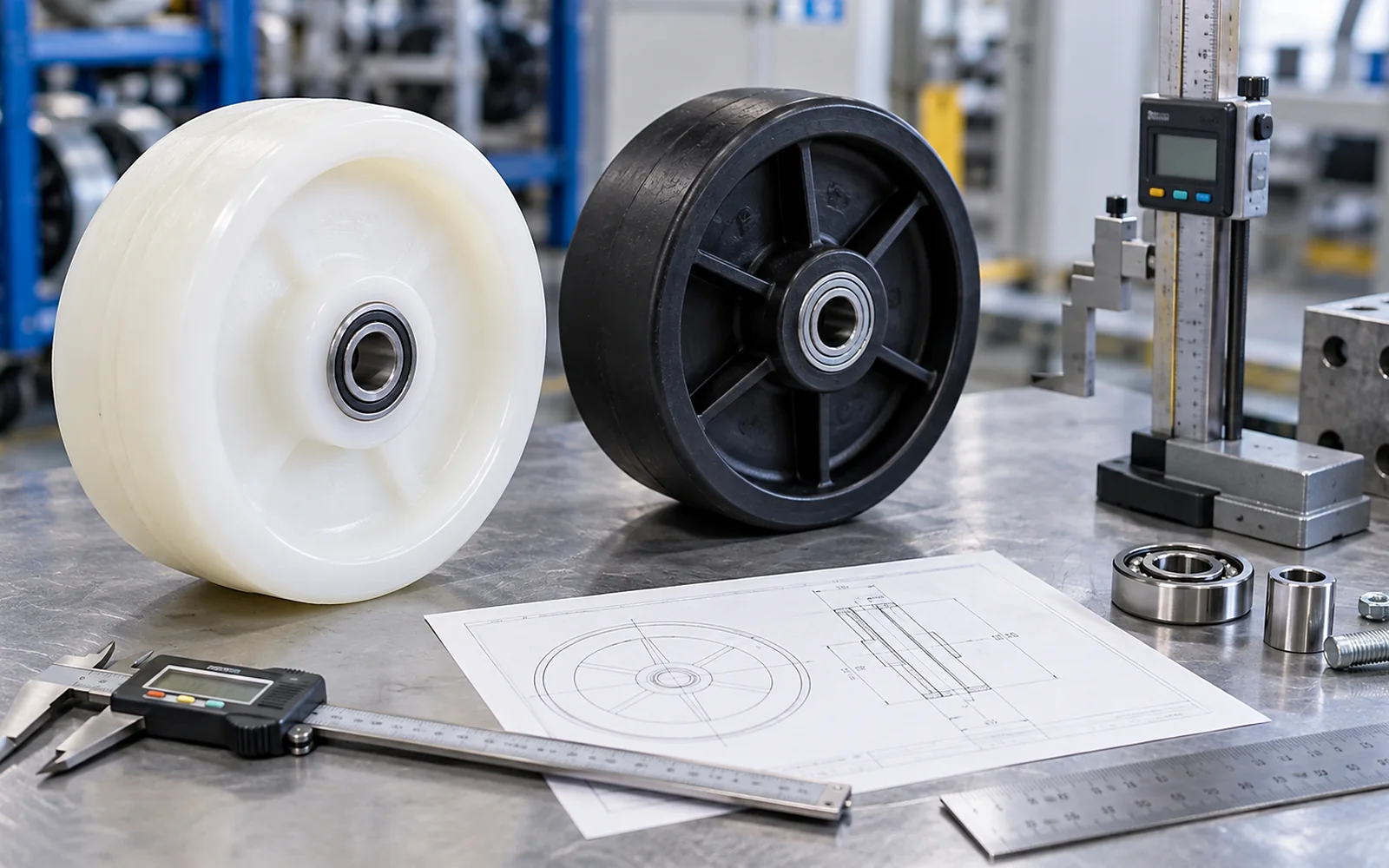
工程说明

What to Send in a Plastic Wheel or Jockey Wheel RFQ

A practical buyer guide to plastic wheel RFQ checklist, focused on measurable operating conditions and RFQ-ready decisions.

Where the purchasing risk actually sits — What to Send in a

Procurement teams often encounter plastic wheel RFQ checklist as a catalogue term, but the purchasing decision becomes clearer when the term is converted into measurable operating requirements.

In replacement programs and OEM enquiries where fit must be established from an existing assembly or drawing, the selection should therefore start with dimensions controlling fit and the relationship between wheel, axle, hub, bracket and frame. That keeps a dimensional or material choice connected to the job it must perform rather than to a generic product description.

The common failure is to treat one attractive parameter as the whole specification. A photograph without scale or diameter without hub information can create a plausible but incompatible replacement. A better purchasing note captures dimensioned photos/drawings, wheel and hub measurements, mounting data, load, environment, quantity and model references, so suppliers can compare like with like and flag missing dimensions instead of guessing.
What to Send in a Plastic Wheel or Jockey Wheel RFQ product or application context

Start from duty cycle and real movement — What to Send in a

Before comparing products, write the equipment task in one sentence: what must move, what load it carries, where it travels and how often it is repositioned. That description provides context for plastic wheel RFQ checklist without turning one parameter into a universal rule.

For replacement programs and OEM enquiries where fit must be established from an existing assembly or drawing, the first review should cover dimensions controlling fit and the relationship between wheel, axle, hub, bracket and frame. If a value is not known, mark it for measurement rather than substituting a typical number. The purpose of the RFQ is to close gaps, not hide them. For What to Send in a Plastic Wheel, use this check as part of the same load, floor, interface and movement record used to compare the shortlisted configurations.

What to Send in a Plastic Wheel or Jockey Wheel RFQ engineering reference

Capture dimensions before the old part is removed — What to Send in a

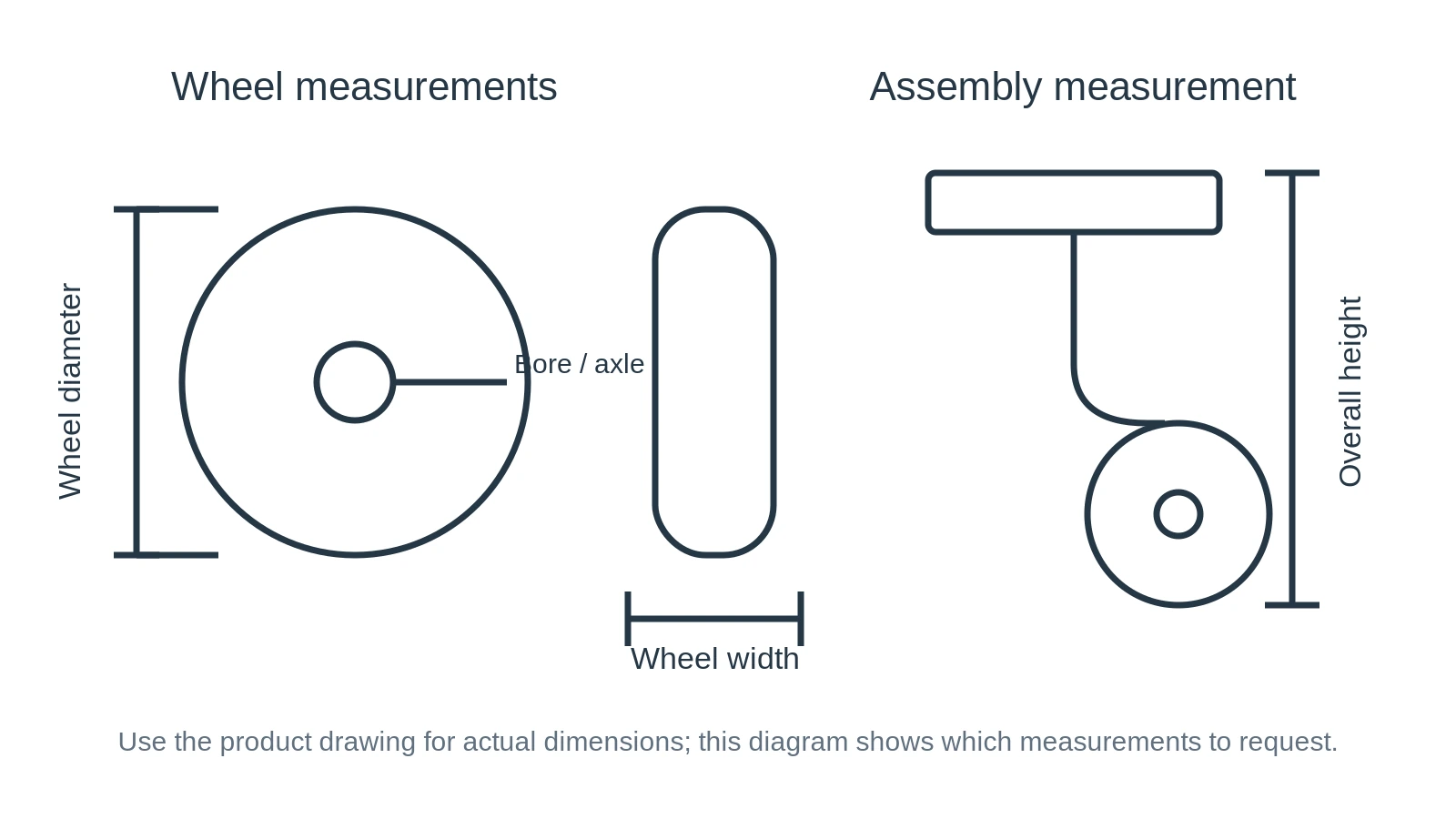
Replacement work benefits from a consistent measurement routine. Record wheel diameter and width, then move inward to the hub: bore or bearing type, axle diameter, hub length and spacers. For complete assemblies, add installed height and mounting geometry. Photograph the measurement tool in place when a dimension is difficult to describe. For What to Send in a Plastic Wheel, use this check as part of the same load, floor, interface and movement record used to compare the shortlisted configurations.
Do not use worn tread as the only reference if original diameter matters. A heavily worn wheel can make the replacement appear too large when the real issue is material loss. Likewise, a bent fork or improvised spacer can change apparent offset. For What to Send in a Plastic Wheel, use this check as part of the same load, floor, interface and movement record used to compare the shortlisted configurations.

车轮和脚轮测量参考

Connect load to movement instead of treating it as static — What to Send in a

Load rating is not independent of how equipment moves. A cart crossing a threshold can create impact forces absent in a static parking condition. An uneven floor can shift load from four nominal support points to three. A trailer jockey wheel may carry a modest vertical drawbar load yet require substantial manoeuvring effort on loose ground. For What to Send in a Plastic Wheel, use this check as part of the same load, floor, interface and movement record used to compare the shortlisted configurations.

记录最大正常载荷、异常载荷、地面类型(地板或地面)、行驶距离和障碍物出现频率。这些指标的组合比单一总重量更能提供有效的选择依据。
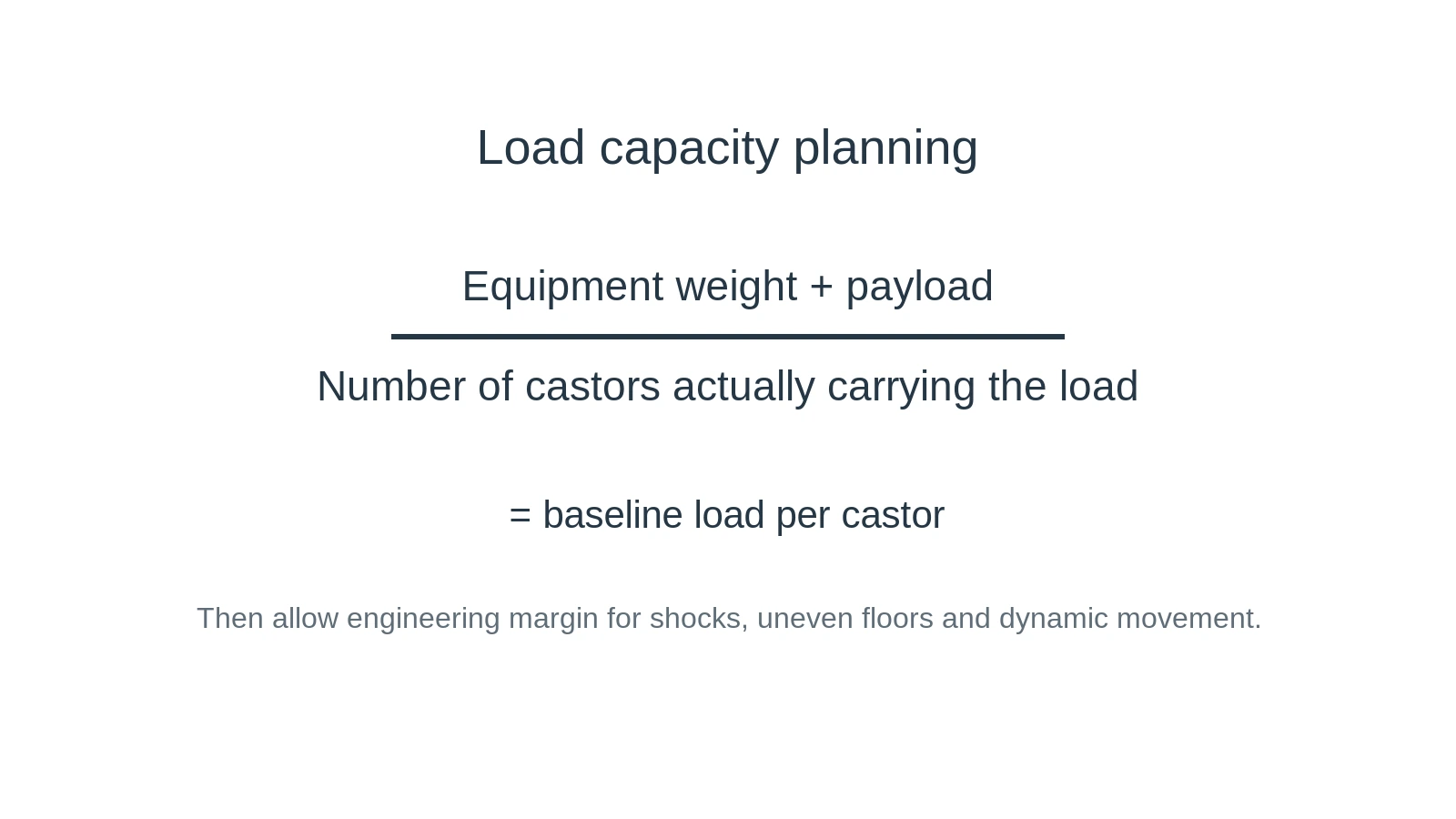
移动设备的概念载荷计算

Turn the topic into a comparison matrix — What to Send in a

Question 要记录什么
Duty What equipment does and how often it moves
加载 Dead weight, payload and supporting layout
地面 Surface, joints, debris, water or chemicals
车轮 Diameter, width and material if known
界面 Bore/bearing/axle or bracket/tube/stem
控制 Brake, lock, folding or steering requirement
商业的 Quantity, sample purpose and destination

Failure patterns to watch in send in a plastic wheel or jockey

A photograph without scale or diameter without hub information can create a plausible but incompatible replacement. Similar symptoms can also come from loose fasteners, worn bearings, misalignment, contaminated floors or a frame that is no longer square. Before blaming wheel material, inspect the mounting and compare wear patterns across positions. For What to Send in a Plastic Wheel, use this check as part of the same load, floor, interface and movement record used to compare the shortlisted configurations.
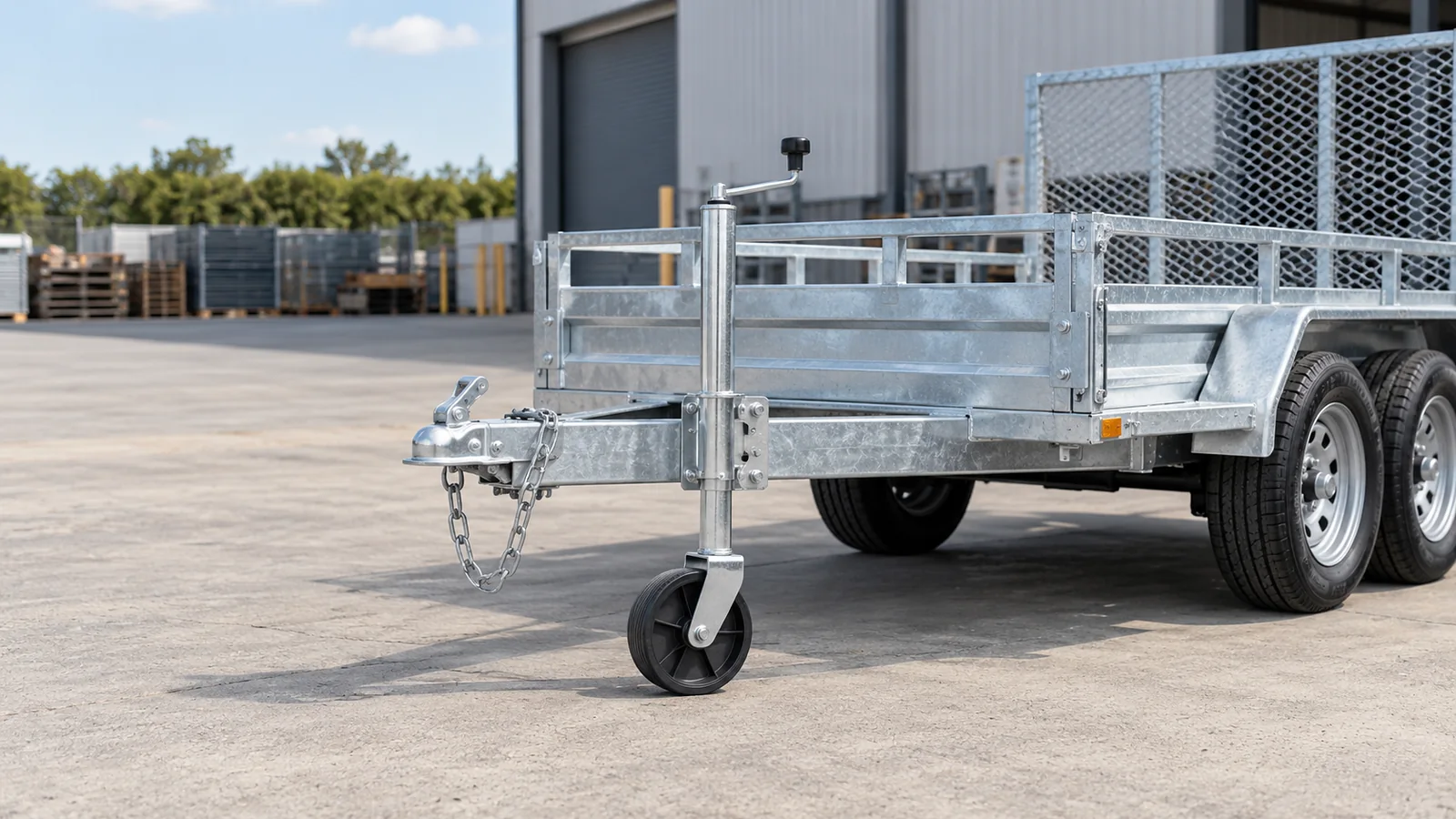
If only one corner wears rapidly, investigate that corner’s load and alignment. If all wheels show the same damage, review duty, floor and material specification. If wear accelerates after a process change, record the new contaminant, cleaning agent, temperature or travel pattern. For What to Send in a Plastic Wheel, use this check as part of the same load, floor, interface and movement record used to compare the shortlisted configurations.
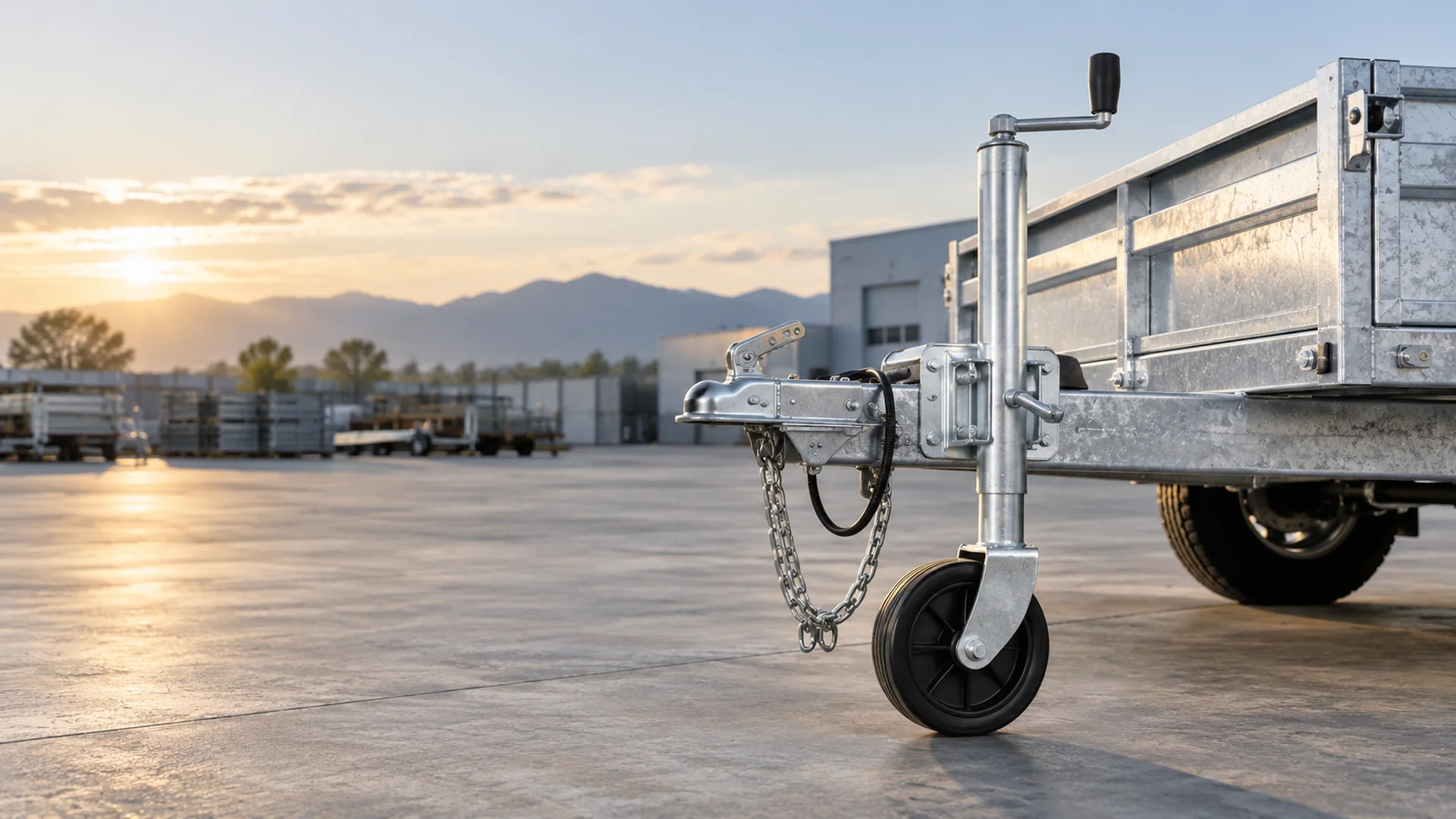
车轮检查示意图

Translate the engineering notes into one controlled RFQ line — What to Send in a

Use one line per configuration and write the requirement so another engineer can understand it without the original conversation. Include dimensioned photos/drawings, wheel and hub measurements, mounting data, load, environment, quantity and model references. Attach the correct drawing or photo set. If an interface dimension is unknown, say “measurement pending” instead of using a guessed value. For What to Send in a Plastic Wheel, use this check as part of the same load, floor, interface and movement record used to compare the shortlisted configurations.
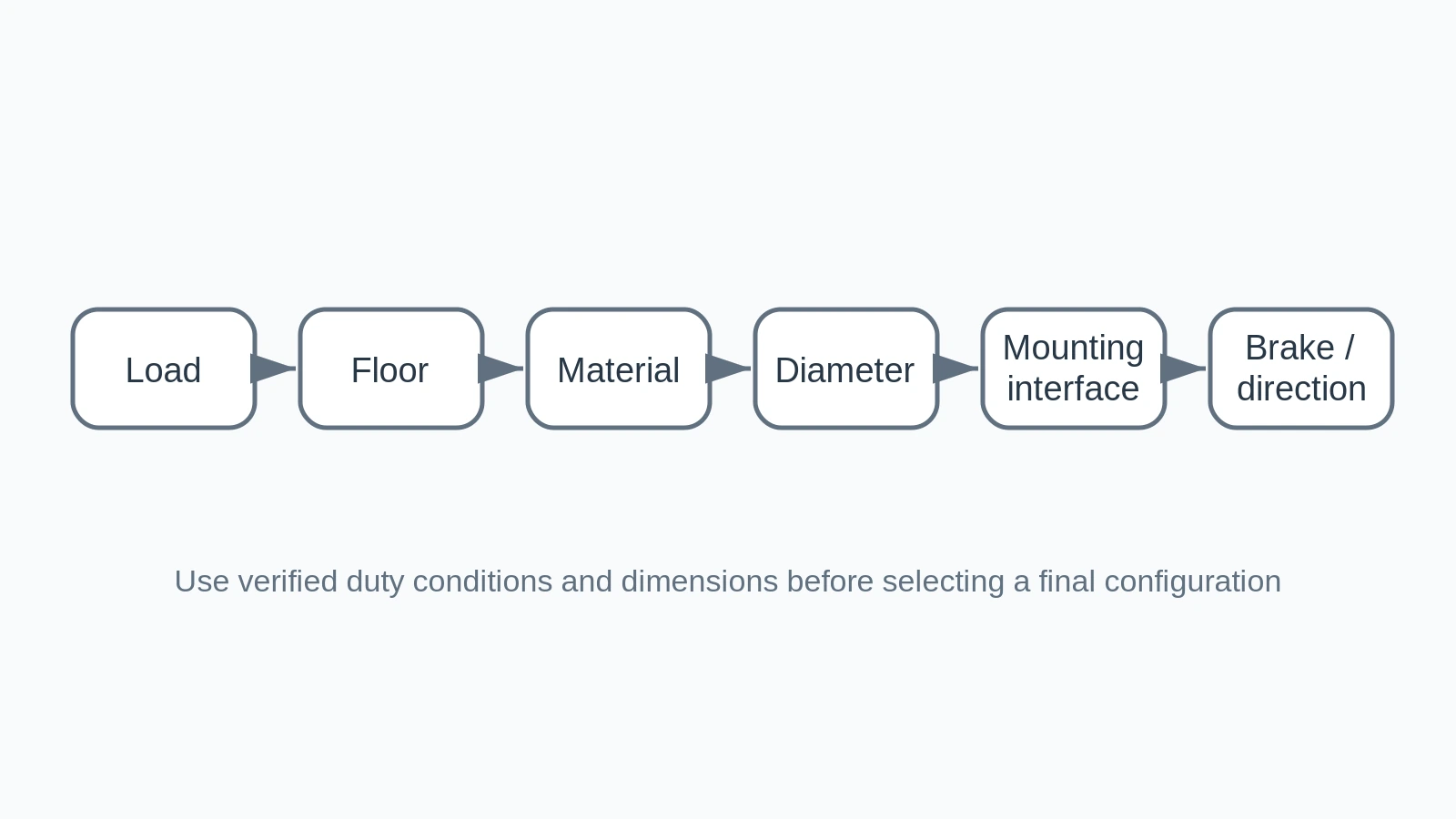
对于多型号订单,请将数量分开,并确定哪些尺寸是共享的。

Send in a Plastic Wheel or Jockey decision checklist

  • 最大正常负荷已知吗?
  • 支撑轮能否均匀分担载荷?
  • 描述的是实际的楼层/地面吗?
  • 是否测量了轮毂和接口的尺寸?
  • 控制功能是否清晰?
  • 是否有特殊的材料/表面处理/环境要求?
  • 数量是否与正确的型号匹配?

继续 主要选择页面, 比较 当前产品系列或者使用 询价单.

实用工程

Turn the topic into an equipment-level decision — What to Send in a

以下几点将本文主题应用于测量、安装和现场观察,而不将通用产品标签视为完整的规格说明。

Separate technical approval from quantity changes — What to Send in a

If purchasing later changes quantity or consolidates models, do not let that commercial change overwrite the technical specification. Preserve approved dimensions and configuration while updating only the commercial fields that changed. For What to Send in a Plastic Wheel, use this check as part of the same load, floor, interface and movement record used to compare the shortlisted configurations.
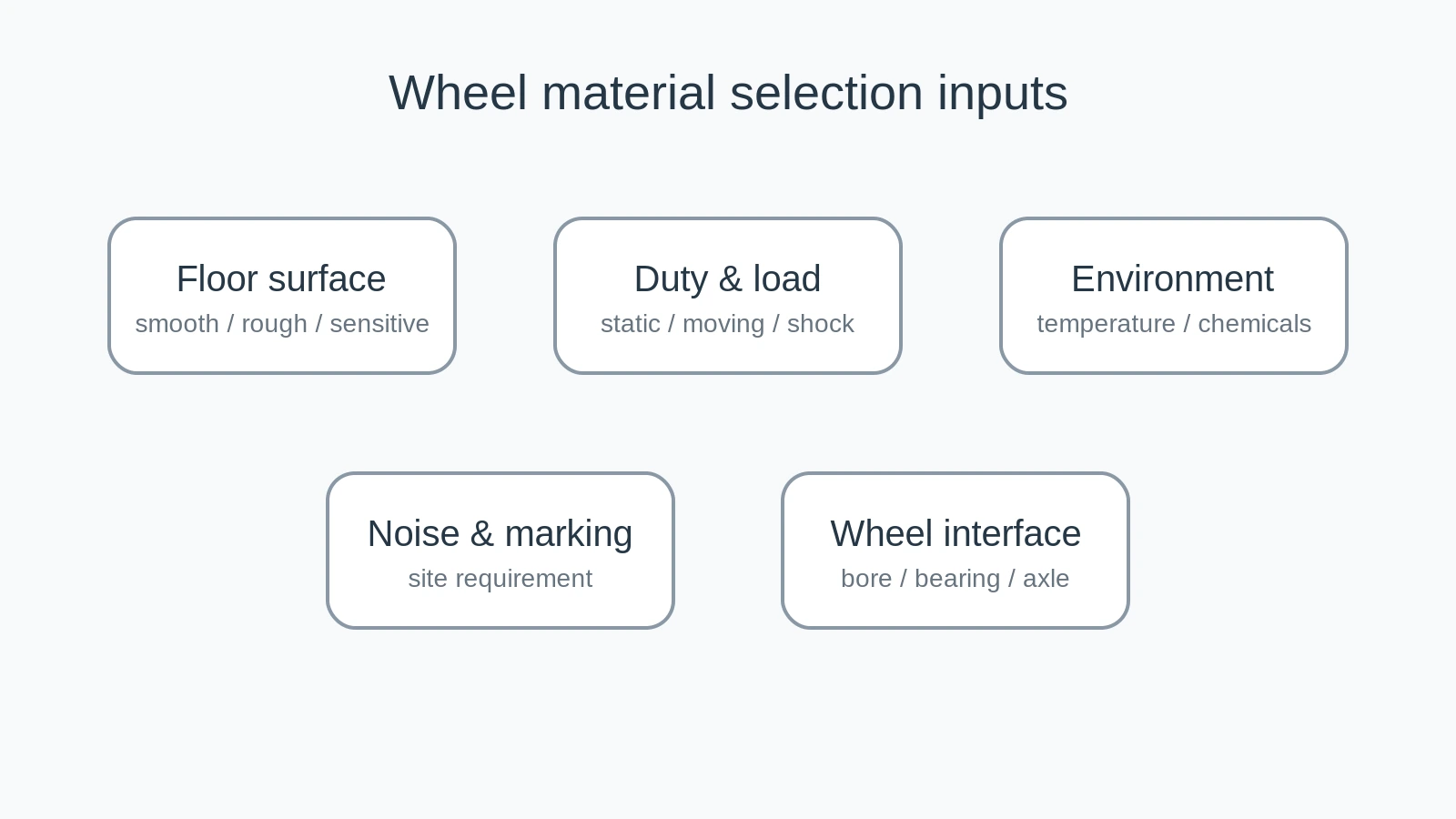
What to observe when applying send in a plastic wheel or jockey

Commission a new or replacement configuration for plastic wheel RFQ checklist under controlled load and low speed before normal operation. Watch for rubbing, bracket contact, wheel wobble, steering instability, fastener movement and any change in deck or drawbar height. The goal is to test the assumptions made during selection rather than merely confirm that the wheel turns.

For replacement programs and OEM enquiries where fit must be established from an existing assembly or drawing, include the most demanding normal floor or ground transition in the initial trial. If the system must cross a threshold, ramp or rough joint, observe it there. Document the result with the same model reference used in the RFQ so future subsequent orders have a useful baseline instead of relying on memory. For What to Send in a Plastic Wheel, use this check as part of the same load, floor, interface and movement record used to compare the shortlisted configurations.
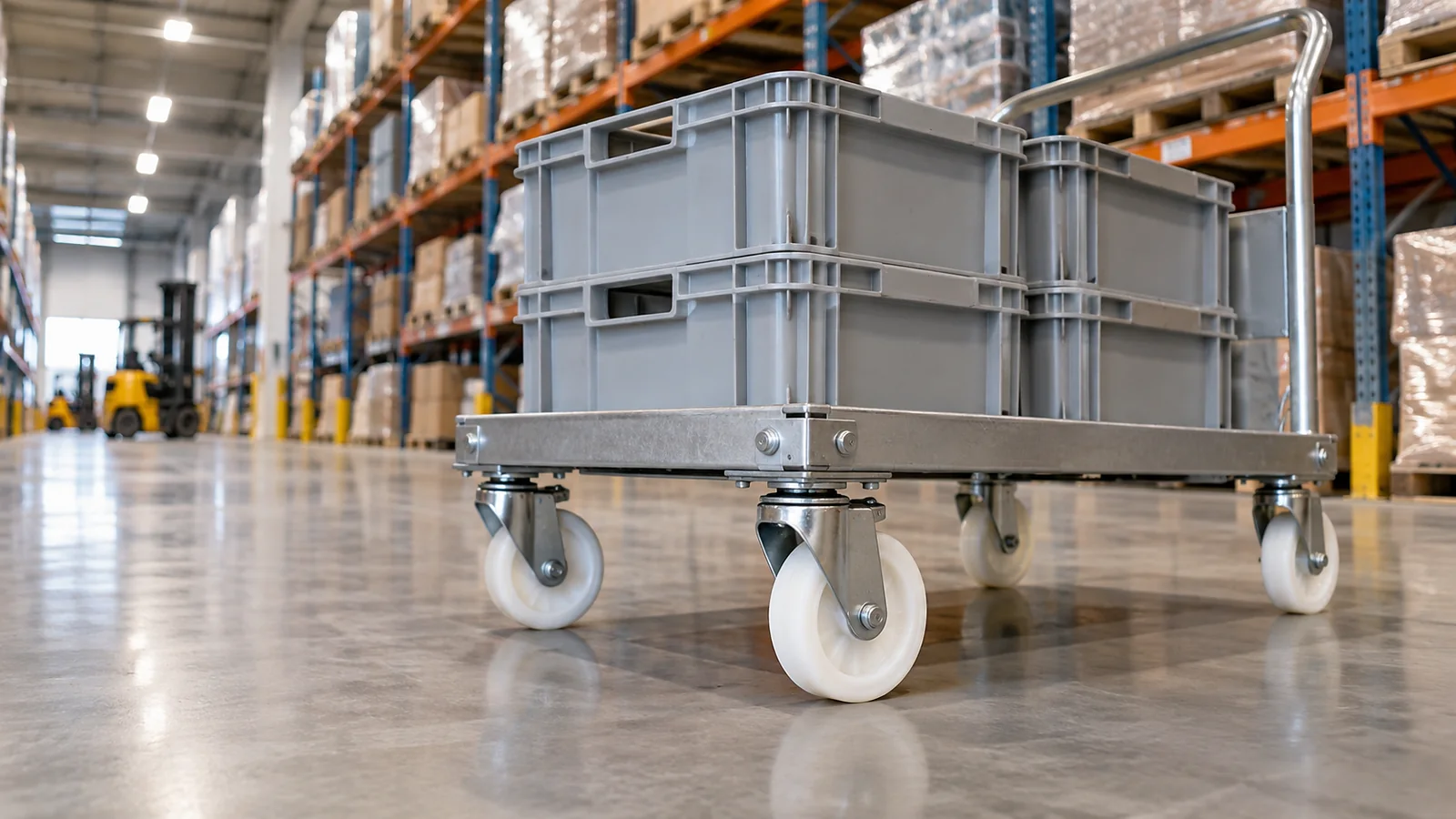
Maintenance records that matter for send in a plastic wheel or jockey

Record wheel position, installation date, duty, reason for replacement and unusual floor events. In a plastic wheel RFQ checklist program, this simple history helps identify whether wear is random, position-specific or linked to a changed environment. A wheel that fails repeatedly at one corner may point to load concentration, alignment or local contamination rather than a general material problem.

Inspect axle, spacers, bearings, bracket and fasteners when the old wheel is removed. Keep measurements that relate directly to dimensioned photos/drawings, wheel and hub measurements, mounting data, load, environment, quantity and model references. If a component has been modified in service, photograph the change before installing the new item and decide whether the modified condition should become part of the official equipment specification. For What to Send in a Plastic Wheel, use this check as part of the same load, floor, interface and movement record used to compare the shortlisted configurations.

Describe the worst normal condition — What to Send in a

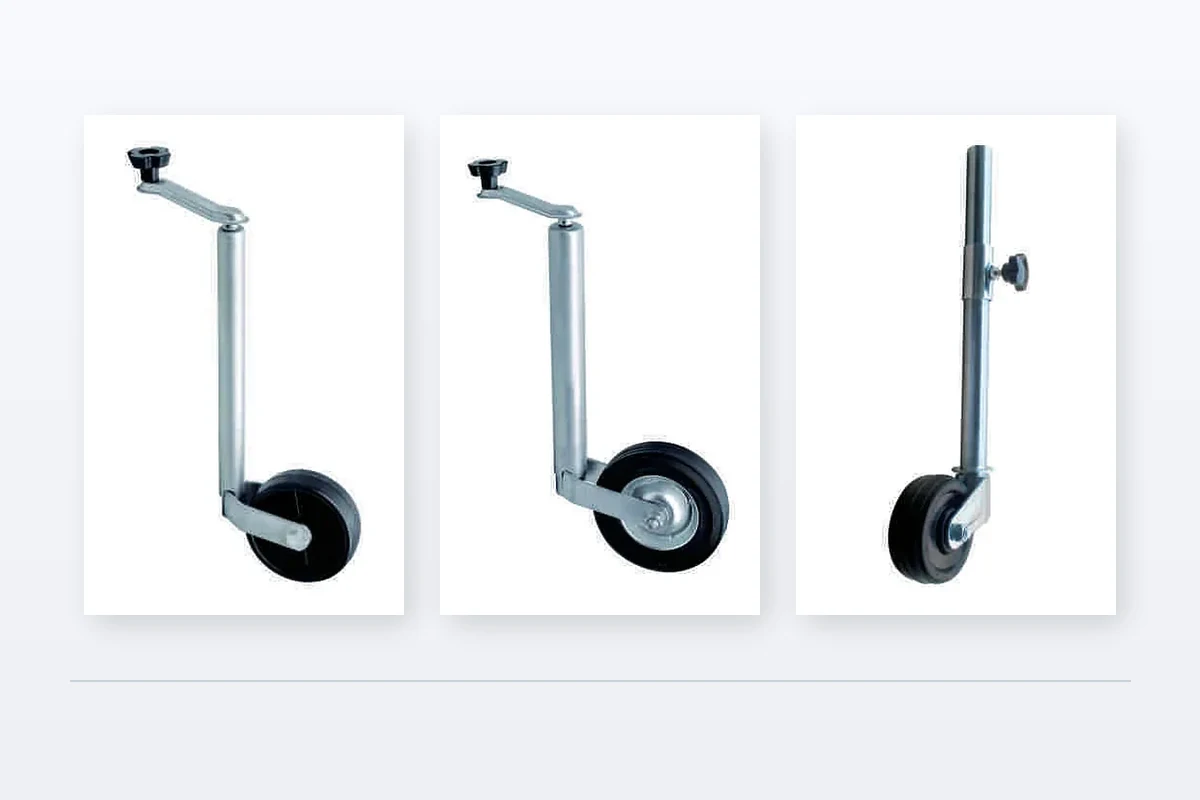
The practical value of “What to Send in a Plastic Wheel or Jockey Wheel RFQ” is not a universal yes-or-no answer. The useful boundary is the equipment and duty in which the question occurs. Write down drawbar support load, wheel size, tube or clamp fit, lifting travel, closed height, folding or swivel clearance, ground condition and manoeuvring frequency. Keeping these fields together makes it possible to distinguish a product-identification question from an engineering selection question and prevents a visually similar part from being treated as automatically interchangeable.

Use the most demanding normal condition rather than a best-case description. If the equipment sometimes crosses a threshold, works outdoors, carries an uneven payload or is manoeuvred only after long periods of static load, include that condition. The objective is a repeatable requirement that another engineer or buyer can understand without seeing the original component. For What to Send in a Plastic Wheel, use this check as part of the same load, floor, interface and movement record used to compare the shortlisted configurations.
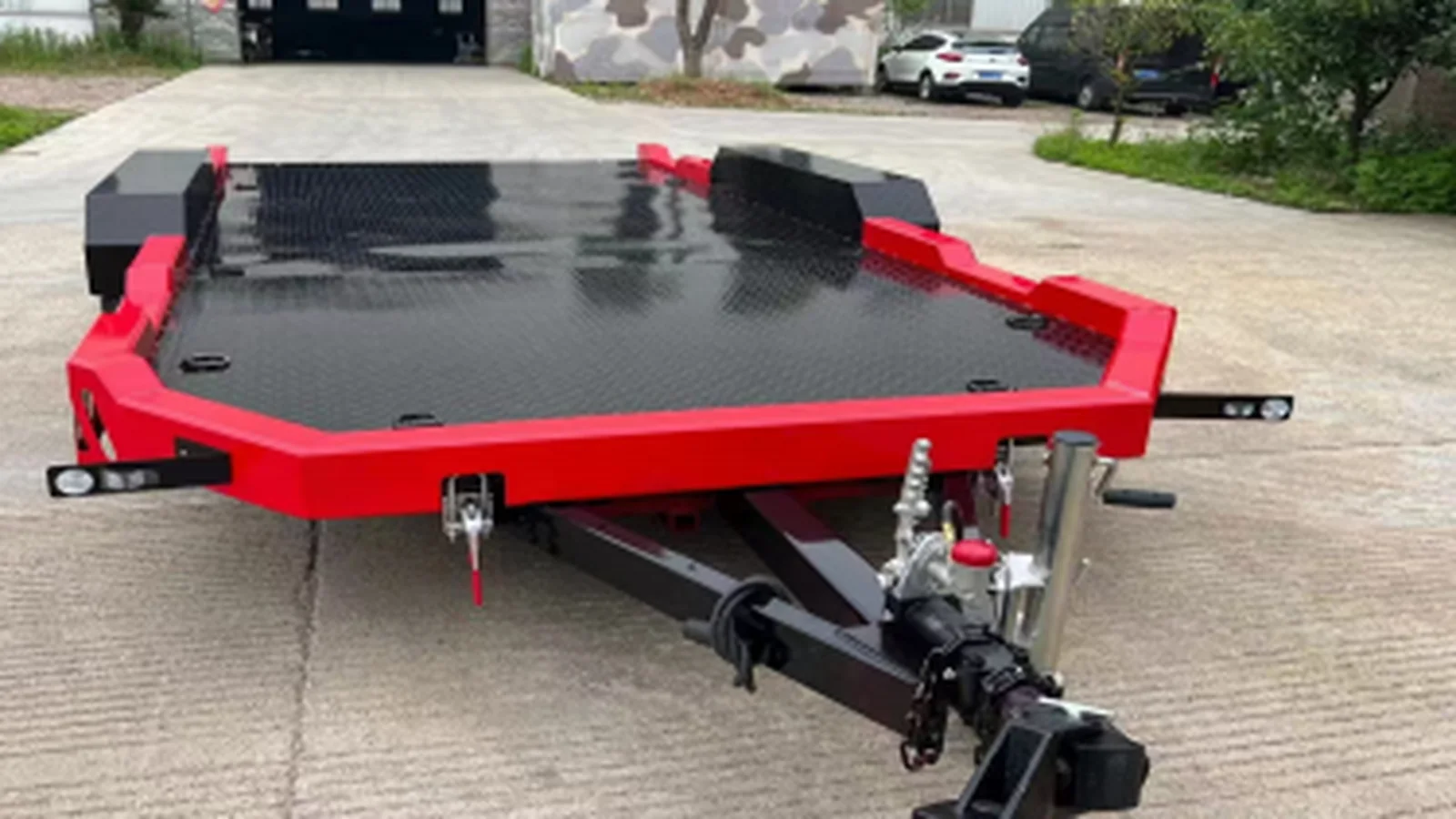
Describe the worst normal condition

Separate identification from specification — What to Send in a

For this topic, record drawbar support load, wheel size, tube or clamp fit, lifting travel, closed height, folding or swivel clearance, ground condition and manoeuvring frequency. Use dimensioned photographs where a drawing is unavailable and show the reference points used for each measurement. If the old part is worn, bent or repaired, flag the affected dimension instead of treating the damaged geometry as the design target. For What to Send in a Plastic Wheel, use this check as part of the same load, floor, interface and movement record used to compare the shortlisted configurations.

A comparison sheet works best with one configuration per column or row. Keep measured values, required values and optional preferences separate. That simple separation reduces the chance that a supplier proposal or an old catalogue value is copied into the required specification without review. It also makes later quotation revisions easier to audit. For What to Send in a Plastic Wheel, use this check as part of the same load, floor, interface and movement record used to compare the shortlisted configurations.

Separate identification from specification

Check the selected configuration in service context — What to Send in a

After a candidate is installed, raise and lower the jack through its usable travel, confirm the wheel carries the support point without interference, then manoeuvre on the normal yard surface and verify the stowed position clears the drawbar and coupling. The first trial should be slow enough to observe the wheel and mounting rather than merely prove that the equipment can move. Look for rubbing, unexpected side movement, fastener movement, wheel wobble, interference and a change in operator effort. For What to Send in a Plastic Wheel, use this check as part of the same load, floor, interface and movement record used to compare the shortlisted configurations.

If the result is unsatisfactory, record the symptom before changing several variables at once. One controlled change—such as wheel diameter, material, mounting alignment or steering layout—gives more useful information than changing the whole assembly and losing the cause of the original problem. For What to Send in a Plastic Wheel, use this check as part of the same load, floor, interface and movement record used to compare the shortlisted configurations.

Check the selected configuration in service context

Test the decision behind “What to Send in a Plastic Wheel or Jockey Wheel RFQ” on the actual parking surface

After installation, make a controlled low-speed manoeuvring check on the surface that normally creates the greatest effort. Observe steering, wheel scrub, fork clearance and any tendency for the mounting to twist or slip. If the trailer is routinely moved across gravel, pavers or drainage channels, include those conditions rather than testing only on workshop concrete. For What to Send in a Plastic Wheel, use this check as part of the same load, floor, interface and movement record used to compare the shortlisted configurations.

A short documented trial provides much more useful purchasing information than a generic statement that one wheel is “better.” Record the accepted configuration, the trailer group, the load condition and any clearance limitation so a later subsequent orders can be checked against the same operating basis. For What to Send in a Plastic Wheel, use this check as part of the same load, floor, interface and movement record used to compare the shortlisted configurations.

Test the decision behind “What to Send in a Plastic Wheel or Jockey Wheel RFQ” on the actual parking surface

Record the installed envelope when applying “What to Send in a Plastic Wheel or Jockey Wheel RFQ”

A jockey wheel must fit more than the nominal tyre diameter. Record tube or clamp size, closed height, required lift, wheel/fork envelope, crank clearance and the path the assembly takes if it folds or swivels for travel. Include the trailer’s actual drawbar load condition and the ground where uncoupled manoeuvring occurs. For What to Send in a Plastic Wheel, use this check as part of the same load, floor, interface and movement record used to compare the shortlisted configurations.

For replacement work, inspect the clamp, tube and mounting area for deformation or previous modification before assuming the old configuration should be copied exactly. If the supplier’s stated load refers to a jack family, do not use it as a substitute for measuring the real application requirement. For What to Send in a Plastic Wheel, use this check as part of the same load, floor, interface and movement record used to compare the shortlisted configurations.

Record the installed envelope when applying “What to Send in a Plastic Wheel or Jockey Wheel RFQ”
决策矩阵

Turn the trailer-support question into four comparable inputs — What to Send in a

Trailer-support questions become easier to resolve when load, ground, interface and operating travel are written down separately. A catalogue title can identify a family, but it cannot describe how the support wheel is loaded, how the trailer is manoeuvred or how much space the mechanism has around the drawbar. For What to Send in a Plastic Wheel, use this check as part of the same load, floor, interface and movement record used to compare the shortlisted configurations.

输入 要记录什么
支持条件 说明实际的鼻梁或支撑载荷,以及车轮是仅用于停车、手动操控还是两者兼有。
地面 描述正常使用中出现的混凝土、铺路、碎石、软土地面、接缝和斜坡。
界面 记录管、夹具、支架或板的尺寸,以及附近连接件和框架部件的位置。
操作范围 测量闭合高度、有效行程、曲柄操作空间以及折叠或旋转所需的路径(如适用)。

Use these inputs to compare alternatives under the same conditions. A larger wheel may improve obstacle geometry but can also change stored clearance. A stronger-looking bracket may still be unsuitable if the clamp or tube does not match. When a brake, swivel or twin-wheel arrangement is involved, describe the function that the operator actually needs rather than requesting a feature from appearance alone. For What to Send in a Plastic Wheel, use this check as part of the same load, floor, interface and movement record used to compare the shortlisted configurations.

For replacement work, photograph the assembly before removal and include a side view that shows the mounting relationship. If the existing part is damaged, identify which dimensions are still trustworthy. During the first controlled installation, operate the mechanism through its usable travel without rushing the test, then load the trailer gradually and confirm that the wheel, handle and structure remain clear through normal manoeuvring. For What to Send in a Plastic Wheel, use this check as part of the same load, floor, interface and movement record used to compare the shortlisted configurations.

How send in a plastic wheel or jockey changes the RFQ

For “What to Send in a Plastic Wheel or Jockey Wheel RFQ”, the RFQ should state the operating fact that drives the question rather than only repeating the product term. Name the equipment, describe the normal and maximum duty, record the fit-controlling dimensions and identify the symptom or objective that prompted the review. If the decision concerns load, include equipment mass and supporting points; if it concerns material, describe floor and environment; if it concerns mounting, provide the interface geometry; and if it concerns a trailer support wheel, include the support condition, ground and available travel.

Keep required values separate from open questions. A supplier can respond much more usefully to “confirm bore and hub length against attached sketch” than to a guessed dimension presented as final. The same principle applies to load ratings, material grades, brake functions and mounting details. Where a value is verified, label it clearly; where it is not, ask for confirmation. That keeps the quotation aligned with the real equipment and makes later technical review easier without adding another repetitive approval or subsequent orders section to the page. For What to Send in a Plastic Wheel, use this check as part of the same load, floor, interface and movement record used to compare the shortlisted configurations.

Engineering decision matrix for What to Send in a Plastic Wheel or Jockey Wheel RFQ

Send in a Plastic Wheel or Jockey FAQ

What is the first thing to confirm for plastic wheel RFQ checklist?

Start with dimensions controlling fit and the relationship between wheel, axle, hub, bracket and frame. That gives the rest of the selection a measurable context.

照片可以代替测量数据吗?

照片有助于识别,但对尺寸要求至关重要的尺寸仍应测量或根据已批准的图纸获取。

买方是否应该在载荷中增加安全系数?

A safety allowance is commonly used to address unequal load sharing and operating effects, but the appropriate value depends on the application and does not replace the product rating. For What to Send in a Plastic Wheel, use this check as part of the same load, floor, interface and movement record used to compare the shortlisted configurations.

如果材料未知怎么办?

说明操作车间和环境,提供样品或照片,并将材料作为确认项目,而不是根据颜色进行猜测。

Discuss your plastic wheel RFQ checklist requirement

请提供申请信息、载荷、适配尺寸、数量以及任何相关的照片或图纸。我们将利用这些信息来缩小产品系列范围,避免猜测。
索取报价

How to Check Wheel Bearing Play Before Installation

工程说明

How to Check Wheel Bearing Play Before Installation

A practical buyer guide to wheel bearing play inspection, focused on measurable operating conditions and RFQ-ready decisions.

What the question is really asking — How to Check Wheel Bearing

The practical value of wheel bearing play inspection appears only when the specification is tied to the equipment that must move, the floor it runs on and the interface that carries the load.

Within replacement programs and OEM enquiries where fit must be established from an existing assembly or drawing, dimensions controlling fit and the relationship between wheel, axle, hub, bracket and frame should be treated as the first engineering checkpoint. Once that is known, wheel diameter, width, material, bearing arrangement and mounting details can be reviewed in a rational order.

Avoid assuming that a larger wheel, harder polymer or heavier bracket automatically solves the problem. A photograph without scale or diameter without hub information can create a plausible but incompatible replacement. The safest RFQ therefore records dimensioned photos/drawings, wheel and hub measurements, mounting data, load, environment, quantity and model references before a configuration is released for quotation.

How to Check Wheel Bearing Play Before Installation product or application context

Build the operating envelope before comparing products — How to Check Wheel Bearing

Before comparing products, write the equipment task in one sentence: what must move, what load it carries, where it travels and how often it is repositioned. That description provides context for wheel bearing play inspection without turning one parameter into a universal rule.

For replacement programs and OEM enquiries where fit must be established from an existing assembly or drawing, the first review should cover dimensions controlling fit and the relationship between wheel, axle, hub, bracket and frame. If a value is not known, mark it for measurement rather than substituting a typical number. The purpose of the RFQ is to close gaps, not hide them. In a How to Check Wheel Bearing Play Before RFQ, this point is most useful when it is stated together with the operating condition and the fit-controlling dimensions.

How to Check Wheel Bearing Play Before Installation engineering reference

Measure the interface that can make or break the replacement — How to Check Wheel Bearing

Replacement work benefits from a consistent measurement routine. Record wheel diameter and width, then move inward to the hub: bore or bearing type, axle diameter, hub length and spacers. For complete assemblies, add installed height and mounting geometry. Photograph the measurement tool in place when a dimension is difficult to describe. In a How to Check Wheel Bearing Play Before RFQ, this point is most useful when it is stated together with the operating condition and the fit-controlling dimensions.

Do not use worn tread as the only reference if original diameter matters. A heavily worn wheel can make the replacement appear too large when the real issue is material loss. Likewise, a bent fork or improvised spacer can change apparent offset. In a How to Check Wheel Bearing Play Before RFQ, this point is most useful when it is stated together with the operating condition and the fit-controlling dimensions.

车轮和脚轮测量参考

Why the same load behaves differently on different floors — How to Check Wheel Bearing

Load rating is not independent of how equipment moves. A cart crossing a threshold can create impact forces absent in a static parking condition. An uneven floor can shift load from four nominal support points to three. A trailer jockey wheel may carry a modest vertical drawbar load yet require substantial manoeuvring effort on loose ground. In a How to Check Wheel Bearing Play Before RFQ, this point is most useful when it is stated together with the operating condition and the fit-controlling dimensions.

记录最大正常载荷、异常载荷、地面类型(地板或地面)、行驶距离和障碍物出现频率。这些指标的组合比单一总重量更能提供有效的选择依据。

移动设备的概念载荷计算

The hub is often the hidden compatibility check

A replacement wheel can have correct outside diameter and still fail because the hub is too long, the bore is wrong or bearing width changes the spacer stack. Measure usable axle length and note whether the old assembly uses bushings, bearings, washers or shoulder spacers.

After installation, the wheel should rotate freely without excessive axial play and without being clamped through a bearing in a way that prevents rotation.

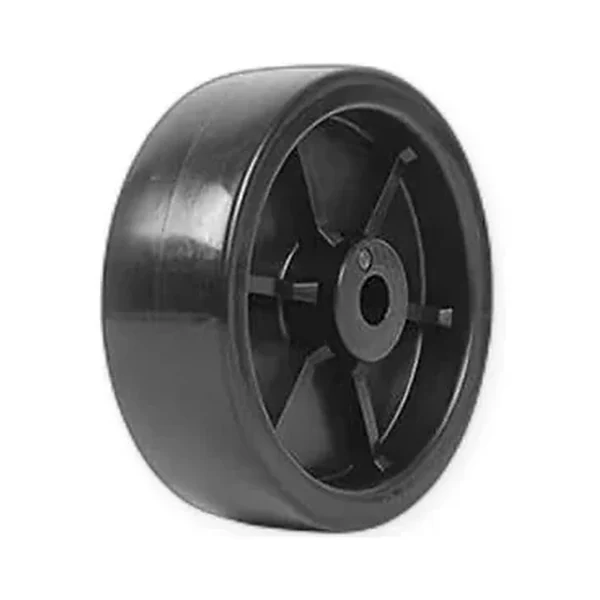
150 mm nylon wheel and hub example

Failure patterns to watch in check wheel bearing play before installation

A photograph without scale or diameter without hub information can create a plausible but incompatible replacement. Similar symptoms can also come from loose fasteners, worn bearings, misalignment, contaminated floors or a frame that is no longer square. Before blaming wheel material, inspect the mounting and compare wear patterns across positions. In a How to Check Wheel Bearing Play Before RFQ, this point is most useful when it is stated together with the operating condition and the fit-controlling dimensions.

If only one corner wears rapidly, investigate that corner’s load and alignment. If all wheels show the same damage, review duty, floor and material specification. If wear accelerates after a process change, record the new contaminant, cleaning agent, temperature or travel pattern. In a How to Check Wheel Bearing Play Before RFQ, this point is most useful when it is stated together with the operating condition and the fit-controlling dimensions.

车轮检查示意图

Write the requirement so another buyer can reproduce it — How to Check Wheel Bearing

Use one line per configuration and write the requirement so another engineer can understand it without the original conversation. Include dimensioned photos/drawings, wheel and hub measurements, mounting data, load, environment, quantity and model references. Attach the correct drawing or photo set. If an interface dimension is unknown, say “measurement pending” instead of using a guessed value. In a How to Check Wheel Bearing Play Before RFQ, this point is most useful when it is stated together with the operating condition and the fit-controlling dimensions.

对于多型号订单,请将数量分开,并确定哪些尺寸是共享的。

Check Wheel Bearing Play Before Installation decision checklist

  • 最大正常负荷已知吗?
  • 支撑轮能否均匀分担载荷?
  • 描述的是实际的楼层/地面吗?
  • 是否测量了轮毂和接口的尺寸?
  • 控制功能是否清晰?
  • 是否有特殊的材料/表面处理/环境要求?
  • 数量是否与正确的型号匹配?

继续 主要选择页面, 比较 当前产品系列或者使用 询价单.

实用工程

Connect selection, installation and observed behaviour — How to Check Wheel Bearing

以下几点将本文主题应用于测量、安装和现场观察,而不将通用产品标签视为完整的规格说明。

Keep one approved reference — How to Check Wheel Bearing

Once a configuration is accepted, retain the approved drawing, model reference and key dimensions together. Future subsequent orders should still confirm that equipment and duty have not changed, but the approved reference reduces ambiguity. In a How to Check Wheel Bearing Play Before RFQ, this point is most useful when it is stated together with the operating condition and the fit-controlling dimensions.

Maintenance records that matter for check wheel bearing play before installation

Record wheel position, installation date, duty, reason for replacement and unusual floor events. In a wheel bearing play inspection program, this simple history helps identify whether wear is random, position-specific or linked to a changed environment. A wheel that fails repeatedly at one corner may point to load concentration, alignment or local contamination rather than a general material problem.

Inspect axle, spacers, bearings, bracket and fasteners when the old wheel is removed. Keep measurements that relate directly to dimensioned photos/drawings, wheel and hub measurements, mounting data, load, environment, quantity and model references. If a component has been modified in service, photograph the change before installing the new item and decide whether the modified condition should become part of the official equipment specification. In a How to Check Wheel Bearing Play Before RFQ, this point is most useful when it is stated together with the operating condition and the fit-controlling dimensions.

What to observe when applying check wheel bearing play before installation

Commission a new or replacement configuration for wheel bearing play inspection under controlled load and low speed before normal operation. Watch for rubbing, bracket contact, wheel wobble, steering instability, fastener movement and any change in deck or drawbar height. The goal is to test the assumptions made during selection rather than merely confirm that the wheel turns.

For replacement programs and OEM enquiries where fit must be established from an existing assembly or drawing, include the most demanding normal floor or ground transition in the initial trial. If the system must cross a threshold, ramp or rough joint, observe it there. Document the result with the same model reference used in the RFQ so future subsequent orders have a useful baseline instead of relying on memory. In a How to Check Wheel Bearing Play Before RFQ, this point is most useful when it is stated together with the operating condition and the fit-controlling dimensions.

Frame the decision around the equipment — How to Check Wheel Bearing

The practical value of “How to Check Wheel Bearing Play Before Installation” is not a universal yes-or-no answer. The useful boundary is the equipment and duty in which the question occurs. Write down wheel diameter, width, bore or bearing, hub length, axle or fixing dimensions, installed height and surrounding clearance. Keeping these fields together makes it possible to distinguish a product-identification question from an engineering selection question and prevents a visually similar part from being treated as automatically interchangeable.

Use the most demanding normal condition rather than a best-case description. If the equipment sometimes crosses a threshold, works outdoors, carries an uneven payload or is manoeuvred only after long periods of static load, include that condition. The objective is a repeatable requirement that another engineer or buyer can understand without seeing the original component. In a How to Check Wheel Bearing Play Before RFQ, this point is most useful when it is stated together with the operating condition and the fit-controlling dimensions.

Frame the decision around the equipment

Collect the dimensions that remove ambiguity — How to Check Wheel Bearing

For this topic, record wheel diameter, width, bore or bearing, hub length, axle or fixing dimensions, installed height and surrounding clearance. Use dimensioned photographs where a drawing is unavailable and show the reference points used for each measurement. If the old part is worn, bent or repaired, flag the affected dimension instead of treating the damaged geometry as the design target. In a How to Check Wheel Bearing Play Before RFQ, this point is most useful when it is stated together with the operating condition and the fit-controlling dimensions.

A comparison sheet works best with one configuration per column or row. Keep measured values, required values and optional preferences separate. That simple separation reduces the chance that a supplier proposal or an old catalogue value is copied into the required specification without review. It also makes later quotation revisions easier to audit. In a How to Check Wheel Bearing Play Before RFQ, this point is most useful when it is stated together with the operating condition and the fit-controlling dimensions.

Collect the dimensions that remove ambiguity

Use a controlled trial before routine service — How to Check Wheel Bearing

After a candidate is installed, compare the new component with the old part and the equipment interface before applying full load; rotate it by hand and check spacer, fastener and side-clearance relationships. The first trial should be slow enough to observe the wheel and mounting rather than merely prove that the equipment can move. Look for rubbing, unexpected side movement, fastener movement, wheel wobble, interference and a change in operator effort. In a How to Check Wheel Bearing Play Before RFQ, this point is most useful when it is stated together with the operating condition and the fit-controlling dimensions.

If the result is unsatisfactory, record the symptom before changing several variables at once. One controlled change—such as wheel diameter, material, mounting alignment or steering layout—gives more useful information than changing the whole assembly and losing the cause of the original problem. In a How to Check Wheel Bearing Play Before RFQ, this point is most useful when it is stated together with the operating condition and the fit-controlling dimensions.

Use a controlled trial before routine service

Use the same checkpoints when the replacement for “How to Check Wheel Bearing Play Before Installation” arrives

The quickest way to catch a mismatch is to compare the received part against the same dimensions recorded at the RFQ stage. Check the fit-controlling interface first, then overall envelope and free movement. Where bearings or sleeves are present, verify that they seat correctly and rotate without binding before the equipment is returned to service. In a How to Check Wheel Bearing Play Before RFQ, this point is most useful when it is stated together with the operating condition and the fit-controlling dimensions.

Keep the accepted measurement sheet with the equipment record. That turns a one-off replacement exercise into a reusable sourcing reference and reduces the risk that a future buyer relies on a photograph or supplier description that omits the dimension that originally controlled fit. In a How to Check Wheel Bearing Play Before RFQ, this point is most useful when it is stated together with the operating condition and the fit-controlling dimensions.

Use the same checkpoints when the replacement for “How to Check Wheel Bearing Play Before Installation” arrives

Turn the inspection for “How to Check Wheel Bearing Play Before Installation” into a usable drawing note

Write measurements in a consistent order and state where each dimension starts and ends. For a loose wheel that normally means outside diameter, tread or wheel width, bore or bearing ID, hub length and any shoulder or spacer detail. For a castor or support assembly, add installed height, plate or tube dimensions, hole spacing, offset, adjustment travel and clearance envelope as relevant. In a How to Check Wheel Bearing Play Before RFQ, this point is most useful when it is stated together with the operating condition and the fit-controlling dimensions.

Photographs should support those dimensions rather than replace them. Include a straight-on side view, the opposite side, the mounting interface and a scale or caliper where practical. Mark uncertain values instead of estimating them from perspective, because a few millimetres at an interface can decide whether a replacement actually fits. In a How to Check Wheel Bearing Play Before RFQ, this point is most useful when it is stated together with the operating condition and the fit-controlling dimensions.

Turn the inspection for “How to Check Wheel Bearing Play Before Installation” into a usable drawing note
决策矩阵

Turn the topic into one controlled equipment-level comparison — How to Check Wheel Bearing

A useful engineering article should end with a decision method, not with a generic recommendation. Start by fixing the application boundary: equipment, load, movement, floor or ground, mounting interface and the outcome the buyer is trying to improve. In a How to Check Wheel Bearing Play Before RFQ, this point is most useful when it is stated together with the operating condition and the fit-controlling dimensions.

输入 要记录什么
Application Name the equipment and describe the normal movement rather than relying on a broad industry label.
加载 Record equipment mass, payload and supporting points under the least favourable normal condition.
Fit Measure the wheel and mounting interface from stable datums and identify any worn or repaired features.
Decision criterion State what the candidate must improve or preserve, such as clearance, steering, floor interaction or service access.

Compare candidates against those same inputs. If one product changes more than one variable, record each change so the result can be interpreted later. A visually similar wheel may use a different material, hub, bearing or mounting geometry, while a dimensionally similar part can still behave differently on the floor. Keeping the comparison structured prevents an attractive single feature from dominating the decision. In a How to Check Wheel Bearing Play Before RFQ, this point is most useful when it is stated together with the operating condition and the fit-controlling dimensions.

The first installation should be a controlled observation rather than a simple pass/fail moment. Check fit before load is applied, then move the equipment at low speed through the normal route and note interference, unusual movement, fastener behaviour and operator effort. Where the result is not satisfactory, capture the symptom before changing the next variable. This creates a practical feedback loop without turning routine purchasing into unsupported engineering assumptions. In a How to Check Wheel Bearing Play Before RFQ, this point is most useful when it is stated together with the operating condition and the fit-controlling dimensions.

How check wheel bearing play before installation changes the RFQ

For “How to Check Wheel Bearing Play Before Installation”, the RFQ should state the operating fact that drives the question rather than only repeating the product term. Name the equipment, describe the normal and maximum duty, record the fit-controlling dimensions and identify the symptom or objective that prompted the review. If the decision concerns load, include equipment mass and supporting points; if it concerns material, describe floor and environment; if it concerns mounting, provide the interface geometry; and if it concerns a trailer support wheel, include the support condition, ground and available travel.

Keep required values separate from open questions. A supplier can respond much more usefully to “confirm bore and hub length against attached sketch” than to a guessed dimension presented as final. The same principle applies to load ratings, material grades, brake functions and mounting details. Where a value is verified, label it clearly; where it is not, ask for confirmation. That keeps the quotation aligned with the real equipment and makes later technical review easier without adding another repetitive approval or subsequent orders section to the page. In a How to Check Wheel Bearing Play Before RFQ, this point is most useful when it is stated together with the operating condition and the fit-controlling dimensions.

Engineering decision matrix for How to Check Wheel Bearing Play Before Installation

Check Wheel Bearing Play Before Installation FAQ

What is the first thing to confirm for wheel bearing play inspection?

Start with dimensions controlling fit and the relationship between wheel, axle, hub, bracket and frame. That gives the rest of the selection a measurable context.

照片可以代替测量数据吗?

照片有助于识别,但对尺寸要求至关重要的尺寸仍应测量或根据已批准的图纸获取。

买方是否应该在载荷中增加安全系数?

A safety allowance is commonly used to address unequal load sharing and operating effects, but the appropriate value depends on the application and does not replace the product rating. In a How to Check Wheel Bearing Play Before RFQ, this point is most useful when it is stated together with the operating condition and the fit-controlling dimensions.

如果材料未知怎么办?

说明操作车间和环境,提供样品或照片,并将材料作为确认项目,而不是根据颜色进行猜测。

Discuss your wheel bearing play inspection requirement

请提供申请信息、载荷、适配尺寸、数量以及任何相关的照片或图纸。我们将利用这些信息来缩小产品系列范围,避免猜测。
索取报价

Common Causes of Uneven Wheel Wear on Industrial Carts

工程说明

Common Causes of Uneven Wheel Wear on Industrial Carts

A practical buyer guide to industrial cart wheel uneven wear, focused on measurable operating conditions and RFQ-ready decisions.

Where the purchasing risk actually sits — Common Causes of Uneven Wheel

Procurement teams often encounter industrial cart wheel uneven wear as a catalogue term, but the purchasing decision becomes clearer when the term is converted into measurable operating requirements.

In industrial mobility and material-handling equipment, the selection should therefore start with load, floor, wheel geometry, mounting and movement requirements. That keeps a dimensional or material choice connected to the job it must perform rather than to a generic product description.

The common failure is to treat one attractive parameter as the whole specification. Focusing on one attractive feature can hide an interface or duty mismatch. A better purchasing note captures application, load, dimensions, environment, quantity and clear photo/drawing, so suppliers can compare like with like and flag missing dimensions instead of guessing.

Common Causes of Uneven Wheel Wear on Industrial Carts product or application context

Start from duty cycle and real movement — Common Causes of Uneven Wheel

Before comparing products, write the equipment task in one sentence: what must move, what load it carries, where it travels and how often it is repositioned. That description provides context for industrial cart wheel uneven wear without turning one parameter into a universal rule.

For industrial mobility and material-handling equipment, the first review should cover load, floor, wheel geometry, mounting and movement requirements. If a value is not known, mark it for measurement rather than substituting a typical number. The purpose of the RFQ is to close gaps, not hide them.

Common Causes of Uneven Wheel Wear on Industrial Carts engineering reference

Capture dimensions before the old part is removed — Common Causes of Uneven Wheel

Replacement work benefits from a consistent measurement routine. Record wheel diameter and width, then move inward to the hub: bore or bearing type, axle diameter, hub length and spacers. For complete assemblies, add installed height and mounting geometry. Photograph the measurement tool in place when a dimension is difficult to describe. For the Common Causes of Uneven Wheel Wear on decision, keep this observation with the dimensions and duty notes rather than treating it as a stand-alone rule.

Do not use worn tread as the only reference if original diameter matters. A heavily worn wheel can make the replacement appear too large when the real issue is material loss. Likewise, a bent fork or improvised spacer can change apparent offset. For the Common Causes of Uneven Wheel Wear on decision, keep this observation with the dimensions and duty notes rather than treating it as a stand-alone rule.

车轮和脚轮测量参考

Connect load to movement instead of treating it as static — Common Causes of Uneven Wheel

Load rating is not independent of how equipment moves. A cart crossing a threshold can create impact forces absent in a static parking condition. An uneven floor can shift load from four nominal support points to three. A trailer jockey wheel may carry a modest vertical drawbar load yet require substantial manoeuvring effort on loose ground. For the Common Causes of Uneven Wheel Wear on decision, keep this observation with the dimensions and duty notes rather than treating it as a stand-alone rule.

记录最大正常载荷、异常载荷、地面类型(地板或地面)、行驶距离和障碍物出现频率。这些指标的组合比单一总重量更能提供有效的选择依据。

移动设备的概念载荷计算

Turn the topic into a comparison matrix — Common Causes of Uneven Wheel

Question 要记录什么
Duty What equipment does and how often it moves
加载 Dead weight, payload and supporting layout
地面 Surface, joints, debris, water or chemicals
车轮 Diameter, width and material if known
界面 Bore/bearing/axle or bracket/tube/stem
控制 Brake, lock, folding or steering requirement
商业的 Quantity, sample purpose and destination

Failure patterns to watch in common causes of uneven wheel wear on

Focusing on one attractive feature can hide an interface or duty mismatch. Similar symptoms can also come from loose fasteners, worn bearings, misalignment, contaminated floors or a frame that is no longer square. Before blaming wheel material, inspect the mounting and compare wear patterns across positions.

If only one corner wears rapidly, investigate that corner’s load and alignment. If all wheels show the same damage, review duty, floor and material specification. If wear accelerates after a process change, record the new contaminant, cleaning agent, temperature or travel pattern. For the Common Causes of Uneven Wheel Wear on decision, keep this observation with the dimensions and duty notes rather than treating it as a stand-alone rule.

车轮检查示意图

Translate the engineering notes into one controlled RFQ line — Common Causes of Uneven Wheel

Use one line per configuration and write the requirement so another engineer can understand it without the original conversation. Include application, load, dimensions, environment, quantity and clear photo/drawing. Attach the correct drawing or photo set. If an interface dimension is unknown, say “measurement pending” instead of using a guessed value.

对于多型号订单,请将数量分开,并确定哪些尺寸是共享的。

Common Causes of Uneven Wheel Wear on decision checklist

  • 最大正常负荷已知吗?
  • 支撑轮能否均匀分担载荷?
  • 描述的是实际的楼层/地面吗?
  • 是否测量了轮毂和接口的尺寸?
  • 控制功能是否清晰?
  • 是否有特殊的材料/表面处理/环境要求?
  • 数量是否与正确的型号匹配?

继续 主要选择页面, 比较 当前产品系列或者使用 询价单.

实用工程

Use measured evidence to narrow the decision — Common Causes of Uneven Wheel

以下几点将本文主题应用于测量、安装和现场观察,而不将通用产品标签视为完整的规格说明。

Separate technical approval from quantity changes — Common Causes of Uneven Wheel

If purchasing later changes quantity or consolidates models, do not let that commercial change overwrite the technical specification. Preserve approved dimensions and configuration while updating only the commercial fields that changed. For the Common Causes of Uneven Wheel Wear on decision, keep this observation with the dimensions and duty notes rather than treating it as a stand-alone rule.

What to observe when applying common causes of uneven wheel wear on

Commission a new or replacement configuration for industrial cart wheel uneven wear under controlled load and low speed before normal operation. Watch for rubbing, bracket contact, wheel wobble, steering instability, fastener movement and any change in deck or drawbar height. The goal is to test the assumptions made during selection rather than merely confirm that the wheel turns.

For industrial mobility and material-handling equipment, include the most demanding normal floor or ground transition in the initial trial. If the system must cross a threshold, ramp or rough joint, observe it there. Document the result with the same model reference used in the RFQ so future subsequent orders have a useful baseline instead of relying on memory.

Maintenance records that matter for common causes of uneven wheel wear on

Record wheel position, installation date, duty, reason for replacement and unusual floor events. In a industrial cart wheel uneven wear program, this simple history helps identify whether wear is random, position-specific or linked to a changed environment. A wheel that fails repeatedly at one corner may point to load concentration, alignment or local contamination rather than a general material problem.

Inspect axle, spacers, bearings, bracket and fasteners when the old wheel is removed. Keep measurements that relate directly to application, load, dimensions, environment, quantity and clear photo/drawing. If a component has been modified in service, photograph the change before installing the new item and decide whether the modified condition should become part of the official equipment specification.

Convert the question into measurable inputs — Common Causes of Uneven Wheel

The practical value of “Common Causes of Uneven Wheel Wear on Industrial Carts” is not a universal yes-or-no answer. The useful boundary is the equipment and duty in which the question occurs. Write down wear pattern by wheel position, bearing play, axle condition, mounting alignment, floor debris, route, payload and replacement history. Keeping these fields together makes it possible to distinguish a product-identification question from an engineering selection question and prevents a visually similar part from being treated as automatically interchangeable.

Use the most demanding normal condition rather than a best-case description. If the equipment sometimes crosses a threshold, works outdoors, carries an uneven payload or is manoeuvred only after long periods of static load, include that condition. The objective is a repeatable requirement that another engineer or buyer can understand without seeing the original component. For the Common Causes of Uneven Wheel Wear on decision, keep this observation with the dimensions and duty notes rather than treating it as a stand-alone rule.

Convert the question into measurable inputs

Build one comparison sheet — Common Causes of Uneven Wheel

For this topic, record wear pattern by wheel position, bearing play, axle condition, mounting alignment, floor debris, route, payload and replacement history. Use dimensioned photographs where a drawing is unavailable and show the reference points used for each measurement. If the old part is worn, bent or repaired, flag the affected dimension instead of treating the damaged geometry as the design target.

A comparison sheet works best with one configuration per column or row. Keep measured values, required values and optional preferences separate. That simple separation reduces the chance that a supplier proposal or an old catalogue value is copied into the required specification without review. It also makes later quotation revisions easier to audit. For the Common Causes of Uneven Wheel Wear on decision, keep this observation with the dimensions and duty notes rather than treating it as a stand-alone rule.

Build one comparison sheet

Commissioning should reproduce the real route — Common Causes of Uneven Wheel

After a candidate is installed, inspect every wheel position rather than only the failed wheel, compare free rotation and side play, then test the cart on the route where the wear developed. The first trial should be slow enough to observe the wheel and mounting rather than merely prove that the equipment can move. Look for rubbing, unexpected side movement, fastener movement, wheel wobble, interference and a change in operator effort.

If the result is unsatisfactory, record the symptom before changing several variables at once. One controlled change—such as wheel diameter, material, mounting alignment or steering layout—gives more useful information than changing the whole assembly and losing the cause of the original problem. For the Common Causes of Uneven Wheel Wear on decision, keep this observation with the dimensions and duty notes rather than treating it as a stand-alone rule.

Commissioning should reproduce the real route

Connect the calculation in “Common Causes of Uneven Wheel Wear on Industrial Carts” to the real travel path

Walk the route and identify the highest normal obstacle, ramp, floor gap and tightest turn. Note whether the trolley is hand-pushed, towed or repositioned only occasionally. These observations help explain why wheel diameter, tread behaviour and steering layout can matter even when the nominal static load appears modest. For the Common Causes of Uneven Wheel Wear on decision, keep this observation with the dimensions and duty notes rather than treating it as a stand-alone rule.

For procurement, send the load definition together with wheel dimensions, mounting interface, operating surface and quantity. That package gives the supplier enough context to review a proposed product without forcing the buyer to invent a rating or compatibility statement that the source data does not support. For the Common Causes of Uneven Wheel Wear on decision, keep this observation with the dimensions and duty notes rather than treating it as a stand-alone rule.

Connect the calculation in “Common Causes of Uneven Wheel Wear on Industrial Carts” to the real travel path

Make the load assumptions explicit for “Common Causes of Uneven Wheel Wear on Industrial Carts”

Start with the empty equipment mass, maximum payload and number of supporting points, then consider whether all wheels can realistically share load at the same time. Floors, frame stiffness, ramps and payload position can unload one wheel and concentrate force on another. Record the operating case rather than dividing total mass by wheel count and treating the result as a complete specification. For the Common Causes of Uneven Wheel Wear on decision, keep this observation with the dimensions and duty notes rather than treating it as a stand-alone rule.

Dynamic effects such as thresholds and sudden direction changes also matter. The purpose of the calculation is to establish a sensible minimum requirement and identify uncertainty that needs supplier confirmation, not to manufacture a catalogue rating that was never tested for the proposed configuration. For the Common Causes of Uneven Wheel Wear on decision, keep this observation with the dimensions and duty notes rather than treating it as a stand-alone rule.

Make the load assumptions explicit for “Common Causes of Uneven Wheel Wear on Industrial Carts”
决策矩阵

Turn the topic into one controlled equipment-level comparison — Common Causes of Uneven Wheel

A useful engineering article should end with a decision method, not with a generic recommendation. Start by fixing the application boundary: equipment, load, movement, floor or ground, mounting interface and the outcome the buyer is trying to improve. For the Common Causes of Uneven Wheel Wear on decision, keep this observation with the dimensions and duty notes rather than treating it as a stand-alone rule.

输入 要记录什么
Application Name the equipment and describe the normal movement rather than relying on a broad industry label.
加载 Record equipment mass, payload and supporting points under the least favourable normal condition.
Fit Measure the wheel and mounting interface from stable datums and identify any worn or repaired features.
Decision criterion State what the candidate must improve or preserve, such as clearance, steering, floor interaction or service access.

Compare candidates against those same inputs. If one product changes more than one variable, record each change so the result can be interpreted later. A visually similar wheel may use a different material, hub, bearing or mounting geometry, while a dimensionally similar part can still behave differently on the floor. Keeping the comparison structured prevents an attractive single feature from dominating the decision. For the Common Causes of Uneven Wheel Wear on decision, keep this observation with the dimensions and duty notes rather than treating it as a stand-alone rule.

The first installation should be a controlled observation rather than a simple pass/fail moment. Check fit before load is applied, then move the equipment at low speed through the normal route and note interference, unusual movement, fastener behaviour and operator effort. Where the result is not satisfactory, capture the symptom before changing the next variable. This creates a practical feedback loop without turning routine purchasing into unsupported engineering assumptions. For the Common Causes of Uneven Wheel Wear on decision, keep this observation with the dimensions and duty notes rather than treating it as a stand-alone rule.

How common causes of uneven wheel wear on changes the RFQ

For “Common Causes of Uneven Wheel Wear on Industrial Carts”, the RFQ should state the operating fact that drives the question rather than only repeating the product term. Name the equipment, describe the normal and maximum duty, record the fit-controlling dimensions and identify the symptom or objective that prompted the review. If the decision concerns load, include equipment mass and supporting points; if it concerns material, describe floor and environment; if it concerns mounting, provide the interface geometry; and if it concerns a trailer support wheel, include the support condition, ground and available travel.

Keep required values separate from open questions. A supplier can respond much more usefully to “confirm bore and hub length against attached sketch” than to a guessed dimension presented as final. The same principle applies to load ratings, material grades, brake functions and mounting details. Where a value is verified, label it clearly; where it is not, ask for confirmation. That keeps the quotation aligned with the real equipment and makes later technical review easier without adding another repetitive approval or subsequent orders section to the page. For the Common Causes of Uneven Wheel Wear on decision, keep this observation with the dimensions and duty notes rather than treating it as a stand-alone rule.

Engineering decision matrix for Common Causes of Uneven Wheel Wear on Industrial Carts

Common Causes of Uneven Wheel Wear on FAQ

What is the first thing to confirm for industrial cart wheel uneven wear?

Start with load, floor, wheel geometry, mounting and movement requirements. That gives the rest of the selection a measurable context.

照片可以代替测量数据吗?

照片有助于识别,但对尺寸要求至关重要的尺寸仍应测量或根据已批准的图纸获取。

买方是否应该在载荷中增加安全系数?

A safety allowance is commonly used to address unequal load sharing and operating effects, but the appropriate value depends on the application and does not replace the product rating. For the Common Causes of Uneven Wheel Wear on decision, keep this observation with the dimensions and duty notes rather than treating it as a stand-alone rule.

如果材料未知怎么办?

说明操作车间和环境,提供样品或照片,并将材料作为确认项目,而不是根据颜色进行猜测。

Discuss your industrial cart wheel uneven wear requirement

请提供申请信息、载荷、适配尺寸、数量以及任何相关的照片或图纸。我们将利用这些信息来缩小产品系列范围,避免猜测。
索取报价

Why Swivel Castors Can Shimmy or Wander Under Load

工程说明

Why Swivel Castors Can Shimmy or Wander Under Load

A practical buyer guide to swivel caster shimmy causes, focused on measurable operating conditions and RFQ-ready decisions.

Why this question matters — Why Swivel Castors Can Shimmy

For an industrial buyer, swivel caster shimmy causes is not a label to choose in isolation. The useful question is how it behaves inside the complete wheel, mounting and duty-cycle decision.

For industrial trolleys, machine bases and mobile frames requiring predictable steering or parking control, begin by confirming mounting geometry, swivel/fixed layout, control function, installed height and clearance. This is usually more useful than comparing nominal product names because two visually similar wheels can behave differently once mounting, floor condition and real load distribution are considered.

This also prevents a frequent sourcing error: choosing from appearance alone. Two brackets can look alike while using different hole patterns, offsets, lock functions or swivel envelopes. Record plate or stem dimensions, fasteners, installed height, wheel layout, lock function, load and quantity in the enquiry so the commercial discussion starts from a technically meaningful baseline.

Why Swivel Castors Can Shimmy or Wander Under Load product or application context

Define the operating condition first — Why Swivel Castors Can Shimmy

Before comparing products, write the equipment task in one sentence: what must move, what load it carries, where it travels and how often it is repositioned. That description provides context for swivel caster shimmy causes without turning one parameter into a universal rule.

For industrial trolleys, machine bases and mobile frames requiring predictable steering or parking control, the first review should cover mounting geometry, swivel/fixed layout, control function, installed height and clearance. If a value is not known, mark it for measurement rather than substituting a typical number. The purpose of the RFQ is to close gaps, not hide them. When applying this to Why Swivel Castors Can Shimmy or Wander, compare candidates against the same equipment record so material, size and interface changes are reviewed consistently.

Why Swivel Castors Can Shimmy or Wander Under Load engineering reference

Measurements that prevent false matches — Why Swivel Castors Can Shimmy

Replacement work benefits from a consistent measurement routine. Record wheel diameter and width, then move inward to the hub: bore or bearing type, axle diameter, hub length and spacers. For complete assemblies, add installed height and mounting geometry. Photograph the measurement tool in place when a dimension is difficult to describe. When applying this to Why Swivel Castors Can Shimmy or Wander, compare candidates against the same equipment record so material, size and interface changes are reviewed consistently.

Do not use worn tread as the only reference if original diameter matters. A heavily worn wheel can make the replacement appear too large when the real issue is material loss. Likewise, a bent fork or improvised spacer can change apparent offset. When applying this to Why Swivel Castors Can Shimmy or Wander, compare candidates against the same equipment record so material, size and interface changes are reviewed consistently.

车轮和脚轮测量参考

Load, floor and movement interact — Why Swivel Castors Can Shimmy

Load rating is not independent of how equipment moves. A cart crossing a threshold can create impact forces absent in a static parking condition. An uneven floor can shift load from four nominal support points to three. A trailer jockey wheel may carry a modest vertical drawbar load yet require substantial manoeuvring effort on loose ground. When applying this to Why Swivel Castors Can Shimmy or Wander, compare candidates against the same equipment record so material, size and interface changes are reviewed consistently.

记录最大正常载荷、异常载荷、地面类型(地板或地面)、行驶距离和障碍物出现频率。这些指标的组合比单一总重量更能提供有效的选择依据。

移动设备的概念载荷计算

Control function must match the movement pattern — Why Swivel Castors Can Shimmy

A wheel brake acts on wheel rotation; a swivel lock controls bracket direction; a total lock may control both. A fixed castor does not swivel. Those functions produce different steering behaviour, so layout depends on aisle length, turning space, operator access and how equipment is parked. When applying this to Why Swivel Castors Can Shimmy or Wander, compare candidates against the same equipment record so material, size and interface changes are reviewed consistently.

Evaluate the wheel layout as a complete vehicle rather than one corner at a time.

Castor mounting and control concepts

Failure patterns to watch in swivel castors can shimmy or wander under

Two brackets can look alike while using different hole patterns, offsets, lock functions or swivel envelopes. Similar symptoms can also come from loose fasteners, worn bearings, misalignment, contaminated floors or a frame that is no longer square. Before blaming wheel material, inspect the mounting and compare wear patterns across positions. When applying this to Why Swivel Castors Can Shimmy or Wander, compare candidates against the same equipment record so material, size and interface changes are reviewed consistently.

If only one corner wears rapidly, investigate that corner’s load and alignment. If all wheels show the same damage, review duty, floor and material specification. If wear accelerates after a process change, record the new contaminant, cleaning agent, temperature or travel pattern. When applying this to Why Swivel Castors Can Shimmy or Wander, compare candidates against the same equipment record so material, size and interface changes are reviewed consistently.

车轮检查示意图

How to write the RFQ line — Why Swivel Castors Can Shimmy

Use one line per configuration and write the requirement so another engineer can understand it without the original conversation. Include plate or stem dimensions, fasteners, installed height, wheel layout, lock function, load and quantity. Attach the correct drawing or photo set. If an interface dimension is unknown, say “measurement pending” instead of using a guessed value. When applying this to Why Swivel Castors Can Shimmy or Wander, compare candidates against the same equipment record so material, size and interface changes are reviewed consistently.

对于多型号订单,请将数量分开,并确定哪些尺寸是共享的。

Swivel Castors Can Shimmy or Wander Under decision checklist

  • 最大正常负荷已知吗?
  • 支撑轮能否均匀分担载荷?
  • 描述的是实际的楼层/地面吗?
  • 是否测量了轮毂和接口的尺寸?
  • 控制功能是否清晰?
  • 是否有特殊的材料/表面处理/环境要求?
  • 数量是否与正确的型号匹配?

继续 主要选择页面, 比较 当前产品系列或者使用 询价单.

实用工程

Translate the technical question into a practical field check — Why Swivel Castors Can Shimmy

以下几点将本文主题应用于测量、安装和现场观察,而不将通用产品标签视为完整的规格说明。

Close the loop with the installation — Why Swivel Castors Can Shimmy

After a sample or first lot is installed, compare real behaviour with the RFQ assumptions. Record interference, unusual wear or movement and feed it into the next purchase specification. That turns one replacement into a controlled maintenance standard. When applying this to Why Swivel Castors Can Shimmy or Wander, compare candidates against the same equipment record so material, size and interface changes are reviewed consistently.

What to observe when applying swivel castors can shimmy or wander under

Commission a new or replacement configuration for swivel caster shimmy causes under controlled load and low speed before normal operation. Watch for rubbing, bracket contact, wheel wobble, steering instability, fastener movement and any change in deck or drawbar height. The goal is to test the assumptions made during selection rather than merely confirm that the wheel turns.

For industrial trolleys, machine bases and mobile frames requiring predictable steering or parking control, include the most demanding normal floor or ground transition in the initial trial. If the system must cross a threshold, ramp or rough joint, observe it there. Document the result with the same model reference used in the RFQ so future subsequent orders have a useful baseline instead of relying on memory. When applying this to Why Swivel Castors Can Shimmy or Wander, compare candidates against the same equipment record so material, size and interface changes are reviewed consistently.

Maintenance records that matter for swivel castors can shimmy or wander under

Record wheel position, installation date, duty, reason for replacement and unusual floor events. In a swivel caster shimmy causes program, this simple history helps identify whether wear is random, position-specific or linked to a changed environment. A wheel that fails repeatedly at one corner may point to load concentration, alignment or local contamination rather than a general material problem.

Inspect axle, spacers, bearings, bracket and fasteners when the old wheel is removed. Keep measurements that relate directly to plate or stem dimensions, fasteners, installed height, wheel layout, lock function, load and quantity. If a component has been modified in service, photograph the change before installing the new item and decide whether the modified condition should become part of the official equipment specification. When applying this to Why Swivel Castors Can Shimmy or Wander, compare candidates against the same equipment record so material, size and interface changes are reviewed consistently.

Start with the operating envelope — Why Swivel Castors Can Shimmy

The practical value of “Why Swivel Castors Can Shimmy or Wander Under Load” is not a universal yes-or-no answer. The useful boundary is the equipment and duty in which the question occurs. Write down swivel and fixed-wheel layout, swivel offset, mounting stiffness, wheelbase, speed, aisle length, floor condition, lock function and load distribution. Keeping these fields together makes it possible to distinguish a product-identification question from an engineering selection question and prevents a visually similar part from being treated as automatically interchangeable.

Use the most demanding normal condition rather than a best-case description. If the equipment sometimes crosses a threshold, works outdoors, carries an uneven payload or is manoeuvred only after long periods of static load, include that condition. The objective is a repeatable requirement that another engineer or buyer can understand without seeing the original component. When applying this to Why Swivel Castors Can Shimmy or Wander, compare candidates against the same equipment record so material, size and interface changes are reviewed consistently.

Start with the operating envelope

Measure from stable datums — Why Swivel Castors Can Shimmy

For this topic, record swivel and fixed-wheel layout, swivel offset, mounting stiffness, wheelbase, speed, aisle length, floor condition, lock function and load distribution. Use dimensioned photographs where a drawing is unavailable and show the reference points used for each measurement. If the old part is worn, bent or repaired, flag the affected dimension instead of treating the damaged geometry as the design target. When applying this to Why Swivel Castors Can Shimmy or Wander, compare candidates against the same equipment record so material, size and interface changes are reviewed consistently.

A comparison sheet works best with one configuration per column or row. Keep measured values, required values and optional preferences separate. That simple separation reduces the chance that a supplier proposal or an old catalogue value is copied into the required specification without review. It also makes later quotation revisions easier to audit. When applying this to Why Swivel Castors Can Shimmy or Wander, compare candidates against the same equipment record so material, size and interface changes are reviewed consistently.

Measure from stable datums

Trial the assumption instead of the photograph — Why Swivel Castors Can Shimmy

After a candidate is installed, push the equipment slowly in straight travel and turning, engage each lock separately, cross the normal floor joints and observe shimmy, pull, wheel scrub, bracket movement and the effort required from the operator. The first trial should be slow enough to observe the wheel and mounting rather than merely prove that the equipment can move. Look for rubbing, unexpected side movement, fastener movement, wheel wobble, interference and a change in operator effort. When applying this to Why Swivel Castors Can Shimmy or Wander, compare candidates against the same equipment record so material, size and interface changes are reviewed consistently.

If the result is unsatisfactory, record the symptom before changing several variables at once. One controlled change—such as wheel diameter, material, mounting alignment or steering layout—gives more useful information than changing the whole assembly and losing the cause of the original problem. When applying this to Why Swivel Castors Can Shimmy or Wander, compare candidates against the same equipment record so material, size and interface changes are reviewed consistently.

Trial the assumption instead of the photograph

Separate component symptoms from system causes in “Why Swivel Castors Can Shimmy or Wander Under Load”

If a cart wanders, shimmies, scrubs or becomes difficult to steer, inspect load distribution, mounting alignment, frame condition, wheel wear and floor joints before replacing one castor by assumption. A loose or distorted mounting surface can reproduce the same symptom after a new component is installed. When applying this to Why Swivel Castors Can Shimmy or Wander, compare candidates against the same equipment record so material, size and interface changes are reviewed consistently.

Document the symptom with the cart loaded in its normal way and note whether it occurs during straight travel, turning, braking or crossing a threshold. That operating context helps purchasing and engineering teams ask for the right interface or function instead of treating every steering complaint as a wheel-material problem. When applying this to Why Swivel Castors Can Shimmy or Wander, compare candidates against the same equipment record so material, size and interface changes are reviewed consistently.

Separate component symptoms from system causes in “Why Swivel Castors Can Shimmy or Wander Under Load”

Check the whole cart geometry when applying “Why Swivel Castors Can Shimmy or Wander Under Load”

Steering behaviour is created by the arrangement of wheels, castors and frame, not by one component in isolation. Record wheelbase, track width, location of fixed and swivel positions, handle or tow point, expected direction changes and the surface where the cart is used. Uneven loading or frame flexibility can make a layout behave differently from a simple diagram. When applying this to Why Swivel Castors Can Shimmy or Wander, compare candidates against the same equipment record so material, size and interface changes are reviewed consistently.

For a lock or brake, define exactly what must be restrained: wheel rotation, swivel rotation, direction, or a combination. Use those functional requirements in the RFQ and verify lever access and release clearance on the real equipment instead of relying on a generic product-family name. When applying this to Why Swivel Castors Can Shimmy or Wander, compare candidates against the same equipment record so material, size and interface changes are reviewed consistently.

Check the whole cart geometry when applying “Why Swivel Castors Can Shimmy or Wander Under Load”
决策矩阵

Separate static arithmetic from the load the wheel sees in service — Why Swivel Castors Can Shimmy

Load questions need more than total equipment mass divided by the number of wheels. Floors are not perfectly flat, frames deflect, payloads shift and thresholds can momentarily transfer more load to fewer supporting points. The purpose of the calculation is therefore to establish a transparent baseline and then identify the conditions that can move the real duty away from that baseline. When applying this to Why Swivel Castors Can Shimmy or Wander, compare candidates against the same equipment record so material, size and interface changes are reviewed consistently.

输入 要记录什么
Equipment mass Include the equipment itself and the maximum payload that will be moved.
Supporting points Identify how many wheels reliably carry load in the least favourable normal condition.
Dynamic events List thresholds, ramps, impacts, turning and towing or hand-pushing that occur in service.
Environment Include floor condition, debris, moisture and temperature where they influence the duty or material choice.

Use one consistent set of assumptions when comparing candidate wheels. If one option is evaluated on a smooth unloaded floor and another on a rough loaded route, the comparison is not meaningful. Wheel diameter and material influence how the assembly interacts with obstacles and the floor, but they do not replace a verified product rating. Where a rating is not available for the exact configuration, keep it open for supplier confirmation rather than extrapolating from a neighbouring size. When applying this to Why Swivel Castors Can Shimmy or Wander, compare candidates against the same equipment record so material, size and interface changes are reviewed consistently.

Commissioning should test the conditions used in the selection discussion. Move the equipment slowly through the most demanding normal floor transition and watch load sharing, wheel tracking, bracket movement and operator effort. If the result is unsatisfactory, document the symptom and change one variable at a time. That makes the next engineering decision more informative than replacing several components at once and losing the original cause. When applying this to Why Swivel Castors Can Shimmy or Wander, compare candidates against the same equipment record so material, size and interface changes are reviewed consistently.

How swivel castors can shimmy or wander under changes the RFQ

For “Why Swivel Castors Can Shimmy or Wander Under Load”, the RFQ should state the operating fact that drives the question rather than only repeating the product term. Name the equipment, describe the normal and maximum duty, record the fit-controlling dimensions and identify the symptom or objective that prompted the review. If the decision concerns load, include equipment mass and supporting points; if it concerns material, describe floor and environment; if it concerns mounting, provide the interface geometry; and if it concerns a trailer support wheel, include the support condition, ground and available travel.

Keep required values separate from open questions. A supplier can respond much more usefully to “confirm bore and hub length against attached sketch” than to a guessed dimension presented as final. The same principle applies to load ratings, material grades, brake functions and mounting details. Where a value is verified, label it clearly; where it is not, ask for confirmation. That keeps the quotation aligned with the real equipment and makes later technical review easier without adding another repetitive approval or subsequent orders section to the page. When applying this to Why Swivel Castors Can Shimmy or Wander, compare candidates against the same equipment record so material, size and interface changes are reviewed consistently.

Engineering decision matrix for Why Swivel Castors Can Shimmy or Wander Under Load

Swivel Castors Can Shimmy or Wander Under FAQ

What is the first thing to confirm for swivel caster shimmy causes?

Start with mounting geometry, swivel/fixed layout, control function, installed height and clearance. That gives the rest of the selection a measurable context.

照片可以代替测量数据吗?

照片有助于识别,但对尺寸要求至关重要的尺寸仍应测量或根据已批准的图纸获取。

买方是否应该在载荷中增加安全系数?

A safety allowance is commonly used to address unequal load sharing and operating effects, but the appropriate value depends on the application and does not replace the product rating. When applying this to Why Swivel Castors Can Shimmy or Wander, compare candidates against the same equipment record so material, size and interface changes are reviewed consistently.

如果材料未知怎么办?

说明操作车间和环境,提供样品或照片,并将材料作为确认项目,而不是根据颜色进行猜测。

Discuss your swivel caster shimmy causes requirement

请提供申请信息、载荷、适配尺寸、数量以及任何相关的照片或图纸。我们将利用这些信息来缩小产品系列范围,避免猜测。
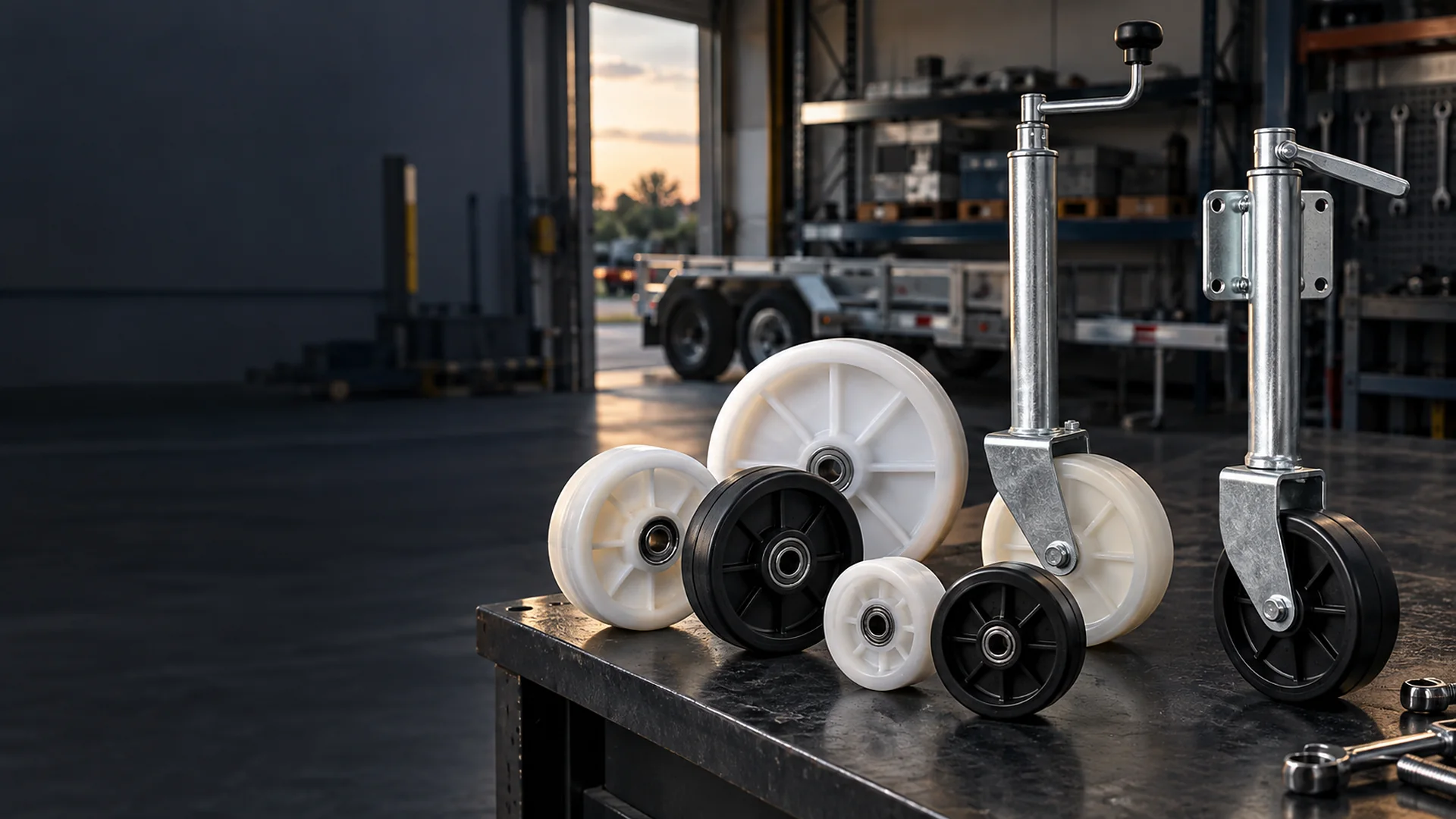
索取报价

How Much Drawbar Clearance Does a Folding Jockey Wheel Need?

工程说明

How Much Drawbar Clearance Does a Folding Jockey Wheel Need?

A practical buyer guide to folding jockey wheel clearance, focused on measurable operating conditions and RFQ-ready decisions.

Why this question matters — How Much Drawbar Clearance Does

For an industrial buyer, folding jockey wheel clearance is not a label to choose in isolation. The useful question is how it behaves inside the complete wheel, mounting and duty-cycle decision.

For trailer drawbars, parked trailers and short-distance manual manoeuvring, begin by confirming drawbar/support load, ground surface, wheel diameter/width, tube or clamp fit, travel and stowed clearance. This is usually more useful than comparing nominal product names because two visually similar wheels can behave differently once mounting, floor condition and real load distribution are considered. For How Much Drawbar Clearance Does a Folding, use this check as part of the same load, floor, interface and movement record used to compare the shortlisted configurations.

This also prevents a frequent sourcing error: choosing from appearance alone. A wheel may roll well but the jack can still be wrong for clamp diameter, retracted height or folding envelope. Record vertical load at support point, ground condition, wheel size, tube/clamp dimensions, travel and quantity in the enquiry so the commercial discussion starts from a technically meaningful baseline. For How Much Drawbar Clearance Does a Folding, use this check as part of the same load, floor, interface and movement record used to compare the shortlisted configurations.

How Much Drawbar Clearance Does a Folding Jockey Wheel Need? product or application context

Define the operating condition first — How Much Drawbar Clearance Does

Before comparing products, write the equipment task in one sentence: what must move, what load it carries, where it travels and how often it is repositioned. That description provides context for folding jockey wheel clearance without turning one parameter into a universal rule.

For trailer drawbars, parked trailers and short-distance manual manoeuvring, the first review should cover drawbar/support load, ground surface, wheel diameter/width, tube or clamp fit, travel and stowed clearance. If a value is not known, mark it for measurement rather than substituting a typical number. The purpose of the RFQ is to close gaps, not hide them. For How Much Drawbar Clearance Does a Folding, use this check as part of the same load, floor, interface and movement record used to compare the shortlisted configurations.

How Much Drawbar Clearance Does a Folding Jockey Wheel Need? engineering reference

Measurements that prevent false matches — How Much Drawbar Clearance Does

Replacement work benefits from a consistent measurement routine. Record wheel diameter and width, then move inward to the hub: bore or bearing type, axle diameter, hub length and spacers. For complete assemblies, add installed height and mounting geometry. Photograph the measurement tool in place when a dimension is difficult to describe. For How Much Drawbar Clearance Does a Folding, use this check as part of the same load, floor, interface and movement record used to compare the shortlisted configurations.

Do not use worn tread as the only reference if original diameter matters. A heavily worn wheel can make the replacement appear too large when the real issue is material loss. Likewise, a bent fork or improvised spacer can change apparent offset. For How Much Drawbar Clearance Does a Folding, use this check as part of the same load, floor, interface and movement record used to compare the shortlisted configurations.

车轮和脚轮测量参考

Load, floor and movement interact — How Much Drawbar Clearance Does

Load rating is not independent of how equipment moves. A cart crossing a threshold can create impact forces absent in a static parking condition. An uneven floor can shift load from four nominal support points to three. A trailer jockey wheel may carry a modest vertical drawbar load yet require substantial manoeuvring effort on loose ground. For How Much Drawbar Clearance Does a Folding, use this check as part of the same load, floor, interface and movement record used to compare the shortlisted configurations.

记录最大正常载荷、异常载荷、地面类型(地板或地面)、行驶距离和障碍物出现频率。这些指标的组合比单一总重量更能提供有效的选择依据。

移动设备的概念载荷计算

Jockey-wheel selection needs two load conversations — How Much Drawbar Clearance Does

The vertical load carried by the jack is one issue; the effort needed to manoeuvre the trailer is another. Ground, diameter and width can dominate the second. A configuration satisfactory on paving may be difficult on gravel even when vertical load is unchanged. For How Much Drawbar Clearance Does a Folding, use this check as part of the same load, floor, interface and movement record used to compare the shortlisted configurations.

还要确认管/夹具直径、提升行程、闭合高度以及折叠或旋转组件所需的空间。

拖车支撑轮家族

Failure patterns to watch in how much drawbar clearance does a folding

A wheel may roll well but the jack can still be wrong for clamp diameter, retracted height or folding envelope. Similar symptoms can also come from loose fasteners, worn bearings, misalignment, contaminated floors or a frame that is no longer square. Before blaming wheel material, inspect the mounting and compare wear patterns across positions. For How Much Drawbar Clearance Does a Folding, use this check as part of the same load, floor, interface and movement record used to compare the shortlisted configurations.

If only one corner wears rapidly, investigate that corner’s load and alignment. If all wheels show the same damage, review duty, floor and material specification. If wear accelerates after a process change, record the new contaminant, cleaning agent, temperature or travel pattern. For How Much Drawbar Clearance Does a Folding, use this check as part of the same load, floor, interface and movement record used to compare the shortlisted configurations.

车轮检查示意图

How to write the RFQ line — How Much Drawbar Clearance Does

Use one line per configuration and write the requirement so another engineer can understand it without the original conversation. Include vertical load at support point, ground condition, wheel size, tube/clamp dimensions, travel and quantity. Attach the correct drawing or photo set. If an interface dimension is unknown, say “measurement pending” instead of using a guessed value. For How Much Drawbar Clearance Does a Folding, use this check as part of the same load, floor, interface and movement record used to compare the shortlisted configurations.

对于多型号订单,请将数量分开,并确定哪些尺寸是共享的。

How Much Drawbar Clearance Does a Folding decision checklist

  • 最大正常负荷已知吗?
  • 支撑轮能否均匀分担载荷?
  • 描述的是实际的楼层/地面吗?
  • 是否测量了轮毂和接口的尺寸?
  • 控制功能是否清晰?
  • 是否有特殊的材料/表面处理/环境要求?
  • 数量是否与正确的型号匹配?

继续 主要选择页面, 比较 当前产品系列或者使用 询价单.

实用工程

Turn the topic into an equipment-level decision — How Much Drawbar Clearance Does

以下几点将本文主题应用于测量、安装和现场观察,而不将通用产品标签视为完整的规格说明。

Close the loop with the installation — How Much Drawbar Clearance Does

After a sample or first lot is installed, compare real behaviour with the RFQ assumptions. Record interference, unusual wear or movement and feed it into the next purchase specification. That turns one replacement into a controlled maintenance standard. For How Much Drawbar Clearance Does a Folding, use this check as part of the same load, floor, interface and movement record used to compare the shortlisted configurations.

What to observe when applying how much drawbar clearance does a folding

Commission a new or replacement configuration for folding jockey wheel clearance under controlled load and low speed before normal operation. Watch for rubbing, bracket contact, wheel wobble, steering instability, fastener movement and any change in deck or drawbar height. The goal is to test the assumptions made during selection rather than merely confirm that the wheel turns.

For trailer drawbars, parked trailers and short-distance manual manoeuvring, include the most demanding normal floor or ground transition in the initial trial. If the system must cross a threshold, ramp or rough joint, observe it there. Document the result with the same model reference used in the RFQ so future subsequent orders have a useful baseline instead of relying on memory. For How Much Drawbar Clearance Does a Folding, use this check as part of the same load, floor, interface and movement record used to compare the shortlisted configurations.

Maintenance records that matter for how much drawbar clearance does a folding

Record wheel position, installation date, duty, reason for replacement and unusual floor events. In a folding jockey wheel clearance program, this simple history helps identify whether wear is random, position-specific or linked to a changed environment. A wheel that fails repeatedly at one corner may point to load concentration, alignment or local contamination rather than a general material problem.

Inspect axle, spacers, bearings, bracket and fasteners when the old wheel is removed. Keep measurements that relate directly to vertical load at support point, ground condition, wheel size, tube/clamp dimensions, travel and quantity. If a component has been modified in service, photograph the change before installing the new item and decide whether the modified condition should become part of the official equipment specification. For How Much Drawbar Clearance Does a Folding, use this check as part of the same load, floor, interface and movement record used to compare the shortlisted configurations.

Describe the worst normal condition — How Much Drawbar Clearance Does

The practical value of “How Much Drawbar Clearance Does a Folding Jockey Wheel Need?” is not a universal yes-or-no answer. The useful boundary is the equipment and duty in which the question occurs. Write down drawbar support load, wheel size, tube or clamp fit, lifting travel, closed height, folding or swivel clearance, ground condition and manoeuvring frequency. Keeping these fields together makes it possible to distinguish a product-identification question from an engineering selection question and prevents a visually similar part from being treated as automatically interchangeable.

Use the most demanding normal condition rather than a best-case description. If the equipment sometimes crosses a threshold, works outdoors, carries an uneven payload or is manoeuvred only after long periods of static load, include that condition. The objective is a repeatable requirement that another engineer or buyer can understand without seeing the original component. For How Much Drawbar Clearance Does a Folding, use this check as part of the same load, floor, interface and movement record used to compare the shortlisted configurations.

Describe the worst normal condition

Separate identification from specification — How Much Drawbar Clearance Does

For this topic, record drawbar support load, wheel size, tube or clamp fit, lifting travel, closed height, folding or swivel clearance, ground condition and manoeuvring frequency. Use dimensioned photographs where a drawing is unavailable and show the reference points used for each measurement. If the old part is worn, bent or repaired, flag the affected dimension instead of treating the damaged geometry as the design target. For How Much Drawbar Clearance Does a Folding, use this check as part of the same load, floor, interface and movement record used to compare the shortlisted configurations.

A comparison sheet works best with one configuration per column or row. Keep measured values, required values and optional preferences separate. That simple separation reduces the chance that a supplier proposal or an old catalogue value is copied into the required specification without review. It also makes later quotation revisions easier to audit. For How Much Drawbar Clearance Does a Folding, use this check as part of the same load, floor, interface and movement record used to compare the shortlisted configurations.

Separate identification from specification

Check the selected configuration in service context — How Much Drawbar Clearance Does

After a candidate is installed, raise and lower the jack through its usable travel, confirm the wheel carries the support point without interference, then manoeuvre on the normal yard surface and verify the stowed position clears the drawbar and coupling. The first trial should be slow enough to observe the wheel and mounting rather than merely prove that the equipment can move. Look for rubbing, unexpected side movement, fastener movement, wheel wobble, interference and a change in operator effort. For How Much Drawbar Clearance Does a Folding, use this check as part of the same load, floor, interface and movement record used to compare the shortlisted configurations.

If the result is unsatisfactory, record the symptom before changing several variables at once. One controlled change—such as wheel diameter, material, mounting alignment or steering layout—gives more useful information than changing the whole assembly and losing the cause of the original problem. For How Much Drawbar Clearance Does a Folding, use this check as part of the same load, floor, interface and movement record used to compare the shortlisted configurations.

Check the selected configuration in service context

Test the decision behind “How Much Drawbar Clearance Does a Folding Jockey Wheel Need?” on the actual parking surface

After installation, make a controlled low-speed manoeuvring check on the surface that normally creates the greatest effort. Observe steering, wheel scrub, fork clearance and any tendency for the mounting to twist or slip. If the trailer is routinely moved across gravel, pavers or drainage channels, include those conditions rather than testing only on workshop concrete. For How Much Drawbar Clearance Does a Folding, use this check as part of the same load, floor, interface and movement record used to compare the shortlisted configurations.

A short documented trial provides much more useful purchasing information than a generic statement that one wheel is “better.” Record the accepted configuration, the trailer group, the load condition and any clearance limitation so a later subsequent orders can be checked against the same operating basis. For How Much Drawbar Clearance Does a Folding, use this check as part of the same load, floor, interface and movement record used to compare the shortlisted configurations.

Test the decision behind “How Much Drawbar Clearance Does a Folding Jockey Wheel Need?” on the actual parking surface

Record the installed envelope when applying “How Much Drawbar Clearance Does a Folding Jockey Wheel Need?”

A jockey wheel must fit more than the nominal tyre diameter. Record tube or clamp size, closed height, required lift, wheel/fork envelope, crank clearance and the path the assembly takes if it folds or swivels for travel. Include the trailer’s actual drawbar load condition and the ground where uncoupled manoeuvring occurs. For How Much Drawbar Clearance Does a Folding, use this check as part of the same load, floor, interface and movement record used to compare the shortlisted configurations.

For replacement work, inspect the clamp, tube and mounting area for deformation or previous modification before assuming the old configuration should be copied exactly. If the supplier’s stated load refers to a jack family, do not use it as a substitute for measuring the real application requirement. For How Much Drawbar Clearance Does a Folding, use this check as part of the same load, floor, interface and movement record used to compare the shortlisted configurations.

Record the installed envelope when applying “How Much Drawbar Clearance Does a Folding Jockey Wheel Need?”
决策矩阵

Turn the trailer-support question into four comparable inputs — How Much Drawbar Clearance Does

Trailer-support questions become easier to resolve when load, ground, interface and operating travel are written down separately. A catalogue title can identify a family, but it cannot describe how the support wheel is loaded, how the trailer is manoeuvred or how much space the mechanism has around the drawbar. For How Much Drawbar Clearance Does a Folding, use this check as part of the same load, floor, interface and movement record used to compare the shortlisted configurations.

输入 要记录什么
支持条件 说明实际的鼻梁或支撑载荷,以及车轮是仅用于停车、手动操控还是两者兼有。
地面 描述正常使用中出现的混凝土、铺路、碎石、软土地面、接缝和斜坡。
界面 记录管、夹具、支架或板的尺寸,以及附近连接件和框架部件的位置。
操作范围 测量闭合高度、有效行程、曲柄操作空间以及折叠或旋转所需的路径(如适用)。

Use these inputs to compare alternatives under the same conditions. A larger wheel may improve obstacle geometry but can also change stored clearance. A stronger-looking bracket may still be unsuitable if the clamp or tube does not match. When a brake, swivel or twin-wheel arrangement is involved, describe the function that the operator actually needs rather than requesting a feature from appearance alone. For How Much Drawbar Clearance Does a Folding, use this check as part of the same load, floor, interface and movement record used to compare the shortlisted configurations.

For replacement work, photograph the assembly before removal and include a side view that shows the mounting relationship. If the existing part is damaged, identify which dimensions are still trustworthy. During the first controlled installation, operate the mechanism through its usable travel without rushing the test, then load the trailer gradually and confirm that the wheel, handle and structure remain clear through normal manoeuvring. For How Much Drawbar Clearance Does a Folding, use this check as part of the same load, floor, interface and movement record used to compare the shortlisted configurations.

How how much drawbar clearance does a folding changes the RFQ

For “How Much Drawbar Clearance Does a Folding Jockey Wheel Need?”, the RFQ should state the operating fact that drives the question rather than only repeating the product term. Name the equipment, describe the normal and maximum duty, record the fit-controlling dimensions and identify the symptom or objective that prompted the review. If the decision concerns load, include equipment mass and supporting points; if it concerns material, describe floor and environment; if it concerns mounting, provide the interface geometry; and if it concerns a trailer support wheel, include the support condition, ground and available travel.

Keep required values separate from open questions. A supplier can respond much more usefully to “confirm bore and hub length against attached sketch” than to a guessed dimension presented as final. The same principle applies to load ratings, material grades, brake functions and mounting details. Where a value is verified, label it clearly; where it is not, ask for confirmation. That keeps the quotation aligned with the real equipment and makes later technical review easier without adding another repetitive approval or subsequent orders section to the page. For How Much Drawbar Clearance Does a Folding, use this check as part of the same load, floor, interface and movement record used to compare the shortlisted configurations.

Engineering decision matrix for How Much Drawbar Clearance Does a Folding Jockey Wheel Need?

How Much Drawbar Clearance Does a Folding FAQ

What is the first thing to confirm for folding jockey wheel clearance?

首先考虑牵引杆/支撑载荷、地面状况、车轮直径/宽度、管材或夹具配合、行程和存放间隙。这为后续的选择提供了可衡量的依据。

照片可以代替测量数据吗?

照片有助于识别,但对尺寸要求至关重要的尺寸仍应测量或根据已批准的图纸获取。

买方是否应该在载荷中增加安全系数?

A safety allowance is commonly used to address unequal load sharing and operating effects, but the appropriate value depends on the application and does not replace the product rating. For How Much Drawbar Clearance Does a Folding, use this check as part of the same load, floor, interface and movement record used to compare the shortlisted configurations.

如果材料未知怎么办?

说明操作车间和环境,提供样品或照片,并将材料作为确认项目,而不是根据颜色进行猜测。

Discuss your folding jockey wheel clearance requirement

请提供申请信息、载荷、适配尺寸、数量以及任何相关的照片或图纸。我们将利用这些信息来缩小产品系列范围,避免猜测。
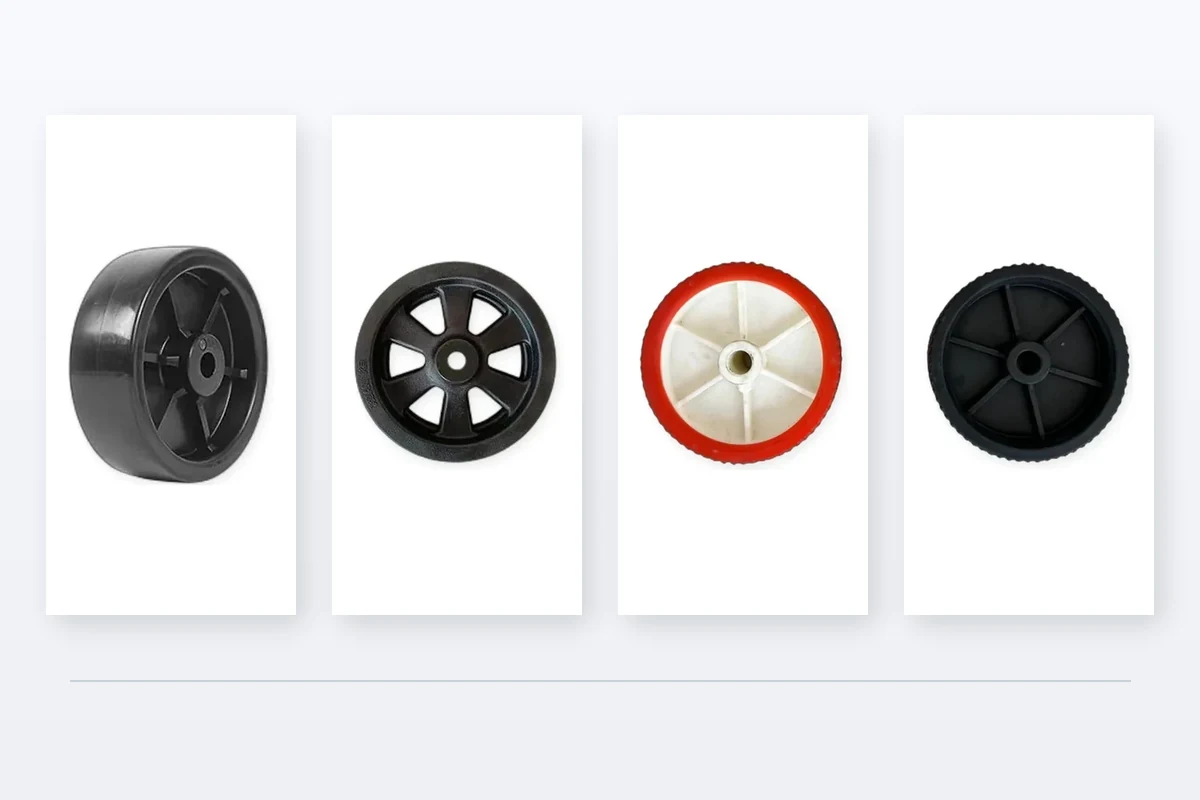
索取报价

管径和夹具配合:支撑轮更换检查

工程说明

管径和夹具配合:支撑轮更换检查

一份实用的导轮管直径夹具适配购买指南,重点关注可测量的操作条件和询价准备决策。

这个问题真正想问的是——管径和夹具配合

只有当导轮管直径夹具配合的规格与必须移动的设备、设备运行的地面以及承载负载的接口联系起来时,导轮管直径夹具配合的实际价值才会显现出来。

在拖车牵引杆、停放的拖车和短距离手动操作中,牵引杆/支撑载荷、地面状况、车轮直径/宽度、管材或夹具配合、行驶和存放间隙应作为首要的工程检查点。一旦确定了这些参数,就可以按合理的顺序检查车轮直径、宽度、材料、轴承布置和安装细节。

不要想当然地认为更大的轮子、更硬的聚合物或更重的支架就能自动解决问题。轮子滚动顺畅,但千斤顶的夹具直径、缩回高度或折叠尺寸可能仍然不匹配。因此,最稳妥的询价流程是在发布配置方案进行报价之前,记录支撑点的垂直载荷、地面状况、轮子尺寸、管材/夹具尺寸、行程和数量。

管径和夹具配合:支撑轮更换检查产品或应用背景

在比较产品之前,先确定操作范围——例如管径和夹具配合。

在比较产品之前,请用一句话概括设备的用途:需要移动什么,承载什么载荷,移动路线以及移动频率。这样的描述能够为导轮管径夹具的配合提供背景信息,而不会将单一参数变成通用规则。

对于拖车牵引杆、停放的拖车和短距离手动操作,首次评估应涵盖牵引杆/支撑载荷、地面状况、车轮直径/宽度、管材或夹具配合、行程和存放间隙。如果某个数值未知,请标记待测,而不是用一个典型值代替。询价的目的是为了弥补差距,而不是掩盖差距。在“管材直径”和“夹具配合”部分,请将测量结果记录在实际设备状况旁边,以便确保产品指南与可衡量的采购决策挂钩。

管径和夹具配合:支撑轮更换检查工程参考

测量可能决定更换成败的接口——管径和夹具配合度

更换工作需要一套统一的测量流程。记录车轮直径和宽度,然后向内测量轮毂:孔径或轴承类型、轴径、轮毂长度和垫片。对于完整的组件,还要加上安装高度和安装几何形状。如果某个尺寸难以描述,请拍摄测量工具在安装位置的照片。在“管径和夹紧配合”部分,将测量结果与实际设备状况一起记录,以便确保产品指南与可衡量的采购决策挂钩。

如果原轮径很重要,则不要仅以磨损胎面作为参考。严重磨损的轮子会使替换件看起来过大,而真正的问题是材料损耗。同样,弯曲的前叉或临时加装的垫片也会改变轮距的视觉效果。在“管径和夹紧配合”部分,应将结果与实际设备状况并列记录,以便确保产品指南与可衡量的采购决策挂钩。

车轮和脚轮测量参考

为什么同样的载荷在不同楼层表现不同——管径和夹具配合

额定载荷与设备的移动方式密切相关。例如,推车越过门槛时会产生冲击力,而静止停放时则不会出现这种情况。不平整的地面会导致载荷从四个标称支撑点转移到三个。拖车支撑轮可能承受较小的垂直牵引杆载荷,但在松软地面上行驶时却需要相当大的操作力。在“管径和夹具配合”部分,应将结果记录在实际设备状况旁边,以便确保产品指南与可衡量的采购决策挂钩。

记录最大正常载荷、异常载荷、地面类型(地板或地面)、行驶距离和障碍物出现频率。这些指标的组合比单一总重量更能提供有效的选择依据。

移动设备的概念载荷计算

选择支撑轮需要考虑两个负载因素——管径和夹具配合。

千斤顶承受的垂直载荷是一个问题;操纵拖车所需的力是另一个问题。地面状况、直径和宽度可能对后者起决定性作用。即使垂直载荷不变,在铺装路面上适用的配置在碎石路面上也可能难以操作。在“管径和夹具配合”部分,应将结果与实际设备状况一起记录,以便确保本指南与可衡量的采购决策挂钩。

还要确认管/夹具直径、提升行程、闭合高度以及折叠或旋转组件所需的空间。

拖车支撑轮家族

管径和夹具配合方面的失效模式需要注意

即使轮子滚动顺畅,千斤顶的夹具直径、缩回高度或折叠尺寸也可能不匹配。类似的症状也可能来自紧固件松动、轴承磨损、未对准、地面污染或框架不再方正。在怀疑轮子材质之前,请检查安装情况并比较不同位置的磨损模式。在“管径和夹具配合”部分,将结果与实际设备状况一起记录下来,以便确保产品指南与可衡量的采购决策挂钩。

如果只有一个角磨损迅速,则应检查该角的载荷和对准情况。如果所有轮子都出现相同的损坏,则应检查其工作状态、地面状况和材料规格。如果工艺变更后磨损加剧,则应记录新的污染物、清洁剂、温度或运行模式。在“管径和夹紧配合”部分,应将结果记录在实际设备状况旁边,以便将产品指南与可衡量的采购决策联系起来。

车轮检查示意图

请将需求描述清楚,以便其他买家能够复现——管径和夹具配合

每个配置使用一行,并详细描述需求,以便其他工程师无需参考之前的对话也能理解。内容包括支撑点的垂直载荷、地面状况、轮径、管材/夹具尺寸、行程和数量。附上正确的图纸或照片。如果接口尺寸未知,请注明“待测量”,不要使用猜测值。在“管材直径和夹具配合”部分,将测量结果记录在实际设备状况旁边,以确保产品指南与可衡量的采购决策挂钩。

对于多型号订单,请将数量分开,并确定哪些尺寸是共享的。

管径和夹具配合决策清单

  • 最大正常负荷已知吗?
  • 支撑轮能否均匀分担载荷?
  • 描述的是实际的楼层/地面吗?
  • 是否测量了轮毂和接口的尺寸?
  • 控制功能是否清晰?
  • 是否有特殊的材料/表面处理/环境要求?
  • 数量是否与正确的型号匹配?

继续 主要选择页面, 比较 当前产品系列或者使用 询价单.

实用工程

将工程问题置于实际操作环境中——管径和夹具配合

以下几点将本文主题应用于测量、安装和现场观察,而不将通用产品标签视为完整的规格说明。

保留一份经批准的参考资料——管径和夹具配合

配置一旦被接受,请将已批准的图纸、型号参考和关键尺寸一并保存。后续订单仍需确认设备和用途未发生变化,但已批准的参考信息可以减少歧义。在“管径和夹紧配合”部分,将结果记录在实际设备状况旁边,以便产品指南与可衡量的采购决策保持一致。

维护记录对管径和夹具配合至关重要

记录车轮位置、安装日期、用途、更换原因以及异常地面事件。在支撑轮管径夹具配合程序中,这些简单的历史记录有助于确定磨损是随机的、特定位置的还是与环境变化相关的。如果车轮的某一角反复出现故障,则可能表明存在载荷集中、对准问题或局部污染,而不是材料本身的问题。

拆卸旧车轮后,检查车轴、垫片、轴承、支架和紧固件。记录与支撑点垂直载荷、地面状况、车轮尺寸、管材/夹具尺寸、行程和数量直接相关的测量数据。如果某个部件在使用过程中被改装过,请在安装新部件之前拍摄改装后的照片,并决定是否将改装后的状态纳入正式的设备规格。在“管材直径和夹具配合”部分,将结果记录在实际设备状态旁边,以便确保产品指南与可衡量的采购决策挂钩。

应用管径和夹具配合时应注意的事项

在正常运行前,应在受控负载和低速条件下,对支撑轮管径夹具的全新或替换配置进行测试。注意观察是否存在摩擦、支架接触、车轮摆动、转向不稳定、紧固件移动以及甲板或牵引杆高度的任何变化。目标是检验选型过程中所做的假设,而不仅仅是确认车轮是否转动。

对于拖车牵引杆、停放的拖车和短距离手动操作,初始试验中应包含最复杂的普通地面或地板过渡。如果系统必须越过门槛、坡道或粗糙接缝,则应在此处进行观察。使用询价单 (RFQ) 中使用的相同型号参考记录结果,以便后续订单拥有有效的基准,而无需依赖记忆。在“管径和夹具配合”部分,应将结果与实际设备状况并列记录,以确保产品指南与可衡量的采购决策挂钩。

在比较部件之前,先确定边界——管径和夹具配合。

“管径和夹具配合:支撑轮更换检查”的实际价值并非简单的“是”或“否”就能概括。其有效界定取决于问题发生的设备和工况。应记录牵引杆支撑载荷、车轮尺寸、管径或夹具配合方式、提升行程、闭合高度、折叠或旋转间隙、地面状况以及操作频率。将这些信息集中记录,有助于区分产品识别问题和工程选型问题,并防止将外观相似的零件误认为可互换。

使用最严苛的正常工况描述,而非最佳工况描述。如果设备有时会超出阈值、在户外作业、承载不均匀的有效载荷,或仅在长时间静载荷后才进行操作,则应包含这些工况。目标是确保其他工程师或采购人员无需查看原始部件即可理解可重复的要求。在“管径和夹紧配合”部分,将结果记录在实际设备工况旁边,以便确保产品指南与可衡量的采购决策挂钩。

在比较各部分之前,先确定边界。

值得记录的测量和观察结果——管径和夹具配合

对于此主题,请记录牵引杆支撑载荷、车轮尺寸、管状或夹具配合、提升行程、闭合高度、折叠或旋转间隙、地面状况和操作频率。如果没有图纸,请使用带尺寸标注的照片,并标明每次测量所用的参考点。如果旧零件磨损、弯曲或已修复,请标记受影响的尺寸,而不是将损坏的几何形状作为设计目标。在“管径”和“夹具配合”中,将结果记录在实际设备状况旁边,以便将产品指南与可衡量的采购决策联系起来。

对比表最好每列或每行只列出一种配置。务必将测量值、所需值和可选参数分开。这种简单的区分可以降低供应商报价或旧目录值未经审核就被复制到所需规格中的风险。同时,也便于后续报价修订的审核。在“管径和卡箍配合”部分,将结果记录在实际设备状况旁边,以确保产品指南与可衡量的采购决策紧密相关。

值得记录的测量和观察结果

首次安装测试的一个实用方法是——检查管径和夹具的配合情况。

安装好候选部件后,在可用行程范围内升降千斤顶,确认车轮支撑点无干涉,然后在正常场地地面上进行操作,并验证收起位置是否与牵引杆和联轴器保持间隙。首次试运行速度应足够慢,以便观察车轮和安装情况,而不仅仅是证明设备可以移动。注意是否存在摩擦、意外侧向移动、紧固件移动、车轮摆动、干涉以及操作员操作力度的变化。在“管径和夹具配合”部分,将结果与实际设备状况一起记录,以便将产品指南与可衡量的采购决策联系起来。

如果结果不理想,请在同时更改多个变量之前记录症状。单独更改一个变量(例如轮毂直径、材料、安装对准或转向布局)比更改整个组件并丢失原始问题的原因更能提供有用的信息。在“管径和夹具配合”部分,将结果与实际设备状况一起记录,以便将产品指南与可衡量的采购决策联系起来。

一个有用的首次安装测试

在实际停车表面上测试“管径和夹具配合:支撑轮更换检查”背后的决策。

安装完成后,在通常会产生最大阻力的路面上进行低速受控行驶测试。观察转向情况、车轮磨损情况、前叉间隙以及安装件是否有扭转或滑动的趋势。如果拖车经常在碎石、铺路石或排水沟上行驶,则应将这些路况纳入测试范围,而不仅仅在车间混凝土路面上进行测试。在“管径和夹具配合”部分,将测试结果与实际设备状况并列记录,以便确保产品指南与可衡量的采购决策相符。

一份简短且有记录的试验报告比笼统地说某个轮子“更好”更能提供有用的采购信息。记录下已接受的配置、拖车组别、负载情况以及任何间隙限制,以便后续订单可以依据相同的操作标准进行核对。在“管径和夹具配合”部分,将结果与实际设备状况并列记录,确保产品指南与可衡量的采购决策挂钩。

在实际停车表面上测试“管径和夹具配合:支撑轮更换检查”背后的决策。

在应用“管径和夹具配合:支撑轮更换检查”时,记录已安装的包络线。

支撑轮的直径必须大于标称轮胎直径。记录管材或夹具尺寸、闭合高度、所需提升高度、轮/叉包角、曲柄间隙以及组件在折叠或旋转行驶时的路径。记录拖车的实际牵引杆负载情况以及脱钩操作的地面情况。在“管材直径和夹具配合”部分,将结果记录在实际设备状况旁边,以便产品指南与可衡量的采购决策挂钩。

对于更换工作,在假定可以完全复制旧配置之前,应检查夹具、管材和安装区域是否存在变形或先前的改动。如果供应商提供的载荷是指某个千斤顶系列,则不要将其作为测量实际应用需求的替代。在“管径和夹具配合”部分,将结果记录在实际设备状况旁边,以便将产品指南与可衡量的采购决策联系起来。

在应用“管径和夹具配合:支撑轮更换检查”时,记录已安装的包络线。
决策矩阵

将拖车支架问题分解为四个可比较的输入参数——管径和夹具配合度

如果将负载、地面、接口和操作行程分别记录下来,拖车支撑问题就更容易解决。产品目录标题可以识别产品系列,但无法描述支撑轮的负载方式、拖车的操控方式或机构在牵引杆周围的空间大小。在“管径和夹具配合”部分,应将结果记录在实际设备状况旁边,以便产品指南与可衡量的采购决策挂钩。

输入 要记录什么
支持条件 说明实际的鼻梁或支撑载荷,以及车轮是仅用于停车、手动操控还是两者兼有。
地面 描述正常使用中出现的混凝土、铺路、碎石、软土地面、接缝和斜坡。
界面 记录管、夹具、支架或板的尺寸,以及附近连接件和框架部件的位置。
操作范围 测量闭合高度、有效行程、曲柄操作空间以及折叠或旋转所需的路径(如适用)。

利用这些输入信息,在相同条件下比较不同的方案。更大的轮子可以改善障碍物几何形状,但也可能改变预留的间隙。即使支架看起来更坚固,如果夹具或管材不匹配,也可能仍然不适用。当涉及制动器、旋转装置或双轮装置时,应描述操作员实际需要的功能,而不是仅仅根据外观提出要求。在“管材直径和夹具配合”部分,将结果记录在实际设备状况旁边,以便产品指南与可衡量的采购决策挂钩。

对于更换工作,请在拆卸前拍摄组件照片,并包含一张显示安装关系的侧视图。如果现有部件已损坏,请确定哪些尺寸仍然可靠。在首次受控安装过程中,请操作机构完成其可用行程,不要急于测试,然后逐步装载拖车,并确认在正常操作过程中,车轮、把手和结构保持畅通。在“管径和夹具配合”部分,请将结果与实际设备状况一起记录,以便将产品指南与可衡量的采购决策联系起来。

管径和夹具配合如何影响询价

对于“管径和夹具配合:支撑轮更换检查”,询价单应明确指出引发该问题的运行情况,而不仅仅是重复产品名称。请说明设备名称,描述正常和最大工况,记录控制配合的尺寸,并明确引发此次检查的症状或目标。如果决策与负载有关,请包含设备质量和支撑点;如果与材料有关,请描述地面和环境;如果与安装有关,请提供接口几何形状;如果与拖车支撑轮有关,请包含支撑状况、地面情况和可用行程。

将所需数值与待定问题分开。供应商对“请根据附图确认孔径和轮毂长度”的回复远比对一个被当作最终尺寸的猜测性尺寸的回复更有价值。同样的原则也适用于额定载荷、材料等级、制动功能和安装细节。如果某个数值已验证,请清晰标注;如果尚未验证,请要求确认。这样可以确保报价与实际设备相符,并简化后续的技术审核,而无需在页面上添加重复的审批或后续订单部分。在“管径和夹紧配合”部分,将结果记录在实际设备状况旁边,以便确保产品指南与可衡量的采购决策紧密相关。

管径和夹具配合的工程决策矩阵:导轮更换检查

管径和夹具配合常见问题解答

确认导轮管直径夹具是否合适的第一要务是什么?

首先考虑牵引杆/支撑载荷、地面状况、车轮直径/宽度、管材或夹具配合、行程和存放间隙。这为后续的选择提供了可衡量的依据。

照片可以代替测量数据吗?

照片有助于识别,但对尺寸要求至关重要的尺寸仍应测量或根据已批准的图纸获取。

买方是否应该在载荷中增加安全系数?

安全裕量通常用于解决负载分配不均和运行影响,但合适的裕量取决于具体应用,不能替代产品额定值。在“管径和夹紧配合”部分,应将结果记录在实际设备状况旁边,以便产品指南与可衡量的采购决策挂钩。

如果材料未知怎么办?

说明操作车间和环境,提供样品或照片,并将材料作为确认项目,而不是根据颜色进行猜测。

讨论您的导轮管直径夹具配合要求

请提供申请信息、载荷、适配尺寸、数量以及任何相关的照片或图纸。我们将利用这些信息来缩小产品系列范围,避免猜测。
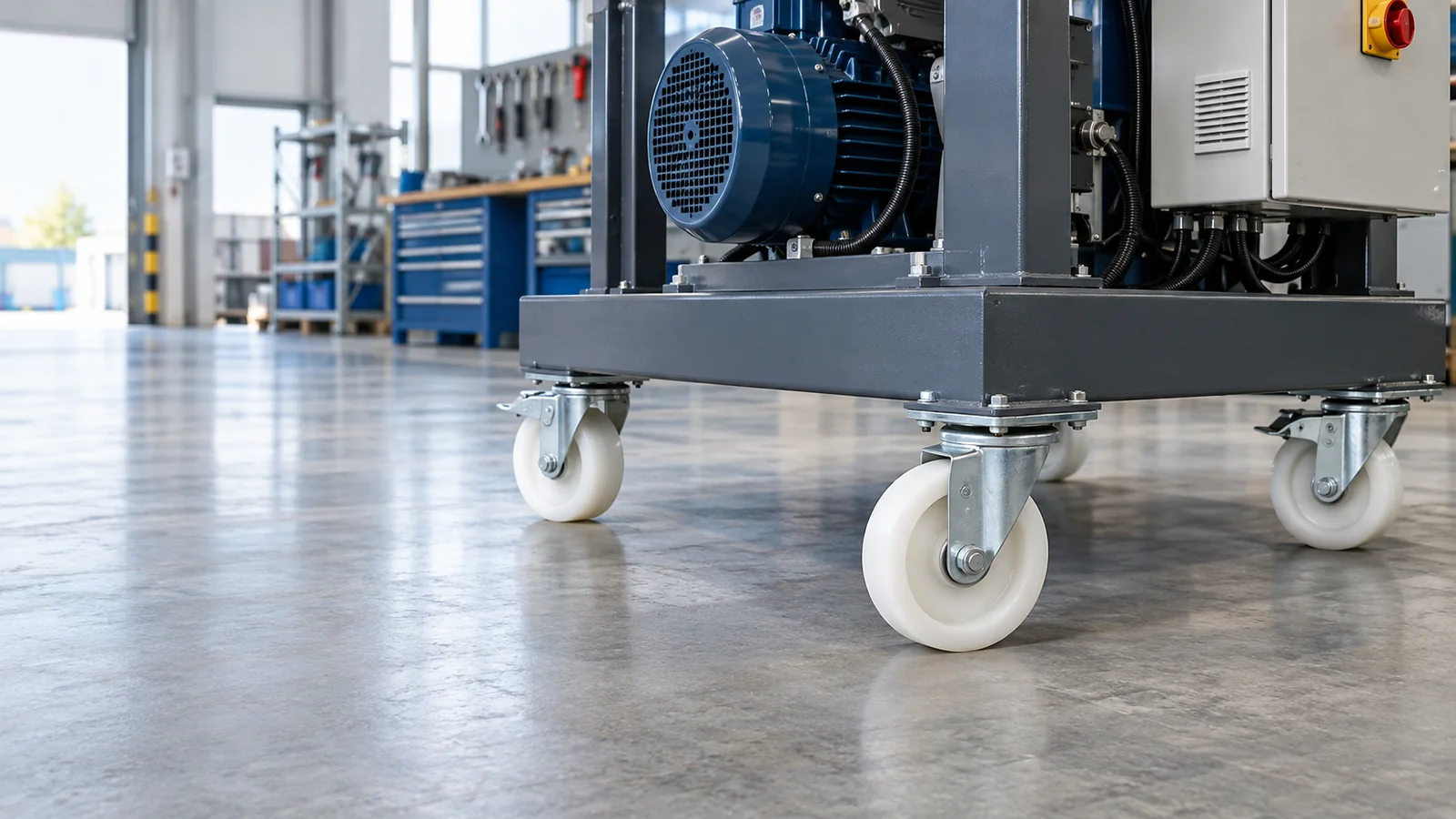
索取报价

How Closed Height and Travel Affect Jockey Wheel Installation

工程说明

How Closed Height and Travel Affect Jockey Wheel Installation

A practical buyer guide to jockey wheel closed height travel, focused on measurable operating conditions and RFQ-ready decisions.

Where the purchasing risk actually sits — How Closed Height and Travel

Procurement teams often encounter jockey wheel closed height travel as a catalogue term, but the purchasing decision becomes clearer when the term is converted into measurable operating requirements.

In trailer drawbars, parked trailers and short-distance manual manoeuvring, the selection should therefore start with drawbar/support load, ground surface, wheel diameter/width, tube or clamp fit, travel and stowed clearance. That keeps a dimensional or material choice connected to the job it must perform rather than to a generic product description.

The common failure is to treat one attractive parameter as the whole specification. A wheel may roll well but the jack can still be wrong for clamp diameter, retracted height or folding envelope. A better purchasing note captures vertical load at support point, ground condition, wheel size, tube/clamp dimensions, travel and quantity, so suppliers can compare like with like and flag missing dimensions instead of guessing.

How Closed Height and Travel Affect Jockey Wheel Installation product or application context

Start from duty cycle and real movement — How Closed Height and Travel

Before comparing products, write the equipment task in one sentence: what must move, what load it carries, where it travels and how often it is repositioned. That description provides context for jockey wheel closed height travel without turning one parameter into a universal rule.

For trailer drawbars, parked trailers and short-distance manual manoeuvring, the first review should cover drawbar/support load, ground surface, wheel diameter/width, tube or clamp fit, travel and stowed clearance. If a value is not known, mark it for measurement rather than substituting a typical number. The purpose of the RFQ is to close gaps, not hide them. In a How Closed Height and Travel Affect Jockey RFQ, this point is most useful when it is stated together with the operating condition and the fit-controlling dimensions.

How Closed Height and Travel Affect Jockey Wheel Installation engineering reference

Capture dimensions before the old part is removed — How Closed Height and Travel

Replacement work benefits from a consistent measurement routine. Record wheel diameter and width, then move inward to the hub: bore or bearing type, axle diameter, hub length and spacers. For complete assemblies, add installed height and mounting geometry. Photograph the measurement tool in place when a dimension is difficult to describe. In a How Closed Height and Travel Affect Jockey RFQ, this point is most useful when it is stated together with the operating condition and the fit-controlling dimensions.

Do not use worn tread as the only reference if original diameter matters. A heavily worn wheel can make the replacement appear too large when the real issue is material loss. Likewise, a bent fork or improvised spacer can change apparent offset. In a How Closed Height and Travel Affect Jockey RFQ, this point is most useful when it is stated together with the operating condition and the fit-controlling dimensions.

车轮和脚轮测量参考

Connect load to movement instead of treating it as static — How Closed Height and Travel

Load rating is not independent of how equipment moves. A cart crossing a threshold can create impact forces absent in a static parking condition. An uneven floor can shift load from four nominal support points to three. A trailer jockey wheel may carry a modest vertical drawbar load yet require substantial manoeuvring effort on loose ground. In a How Closed Height and Travel Affect Jockey RFQ, this point is most useful when it is stated together with the operating condition and the fit-controlling dimensions.

记录最大正常载荷、异常载荷、地面类型(地板或地面)、行驶距离和障碍物出现频率。这些指标的组合比单一总重量更能提供有效的选择依据。

移动设备的概念载荷计算

Jockey-wheel selection needs two load conversations — How Closed Height and Travel

The vertical load carried by the jack is one issue; the effort needed to manoeuvre the trailer is another. Ground, diameter and width can dominate the second. A configuration satisfactory on paving may be difficult on gravel even when vertical load is unchanged. In a How Closed Height and Travel Affect Jockey RFQ, this point is most useful when it is stated together with the operating condition and the fit-controlling dimensions.

还要确认管/夹具直径、提升行程、闭合高度以及折叠或旋转组件所需的空间。

拖车支撑轮家族

Failure patterns to watch in how closed height and travel affect jockey

A wheel may roll well but the jack can still be wrong for clamp diameter, retracted height or folding envelope. Similar symptoms can also come from loose fasteners, worn bearings, misalignment, contaminated floors or a frame that is no longer square. Before blaming wheel material, inspect the mounting and compare wear patterns across positions. In a How Closed Height and Travel Affect Jockey RFQ, this point is most useful when it is stated together with the operating condition and the fit-controlling dimensions.

If only one corner wears rapidly, investigate that corner’s load and alignment. If all wheels show the same damage, review duty, floor and material specification. If wear accelerates after a process change, record the new contaminant, cleaning agent, temperature or travel pattern. In a How Closed Height and Travel Affect Jockey RFQ, this point is most useful when it is stated together with the operating condition and the fit-controlling dimensions.

车轮检查示意图

Translate the engineering notes into one controlled RFQ line — How Closed Height and Travel

Use one line per configuration and write the requirement so another engineer can understand it without the original conversation. Include vertical load at support point, ground condition, wheel size, tube/clamp dimensions, travel and quantity. Attach the correct drawing or photo set. If an interface dimension is unknown, say “measurement pending” instead of using a guessed value. In a How Closed Height and Travel Affect Jockey RFQ, this point is most useful when it is stated together with the operating condition and the fit-controlling dimensions.

对于多型号订单,请将数量分开,并确定哪些尺寸是共享的。

How Closed Height and Travel Affect Jockey decision checklist

  • 最大正常负荷已知吗?
  • 支撑轮能否均匀分担载荷?
  • 描述的是实际的楼层/地面吗?
  • 是否测量了轮毂和接口的尺寸?
  • 控制功能是否清晰?
  • 是否有特殊的材料/表面处理/环境要求?
  • 数量是否与正确的型号匹配?

继续 主要选择页面, 比较 当前产品系列或者使用 询价单.

实用工程

Connect selection, installation and observed behaviour — How Closed Height and Travel

以下几点将本文主题应用于测量、安装和现场观察,而不将通用产品标签视为完整的规格说明。

Separate technical approval from quantity changes — How Closed Height and Travel

If purchasing later changes quantity or consolidates models, do not let that commercial change overwrite the technical specification. Preserve approved dimensions and configuration while updating only the commercial fields that changed. In a How Closed Height and Travel Affect Jockey RFQ, this point is most useful when it is stated together with the operating condition and the fit-controlling dimensions.

What to observe when applying how closed height and travel affect jockey

Commission a new or replacement configuration for jockey wheel closed height travel under controlled load and low speed before normal operation. Watch for rubbing, bracket contact, wheel wobble, steering instability, fastener movement and any change in deck or drawbar height. The goal is to test the assumptions made during selection rather than merely confirm that the wheel turns.

For trailer drawbars, parked trailers and short-distance manual manoeuvring, include the most demanding normal floor or ground transition in the initial trial. If the system must cross a threshold, ramp or rough joint, observe it there. Document the result with the same model reference used in the RFQ so future subsequent orders have a useful baseline instead of relying on memory. In a How Closed Height and Travel Affect Jockey RFQ, this point is most useful when it is stated together with the operating condition and the fit-controlling dimensions.

Maintenance records that matter for how closed height and travel affect jockey

Record wheel position, installation date, duty, reason for replacement and unusual floor events. In a jockey wheel closed height travel program, this simple history helps identify whether wear is random, position-specific or linked to a changed environment. A wheel that fails repeatedly at one corner may point to load concentration, alignment or local contamination rather than a general material problem.

Inspect axle, spacers, bearings, bracket and fasteners when the old wheel is removed. Keep measurements that relate directly to vertical load at support point, ground condition, wheel size, tube/clamp dimensions, travel and quantity. If a component has been modified in service, photograph the change before installing the new item and decide whether the modified condition should become part of the official equipment specification. In a How Closed Height and Travel Affect Jockey RFQ, this point is most useful when it is stated together with the operating condition and the fit-controlling dimensions.

Frame the decision around the equipment — How Closed Height and Travel

The practical value of “How Closed Height and Travel Affect Jockey Wheel Installation” is not a universal yes-or-no answer. The useful boundary is the equipment and duty in which the question occurs. Write down drawbar support load, wheel size, tube or clamp fit, lifting travel, closed height, folding or swivel clearance, ground condition and manoeuvring frequency. Keeping these fields together makes it possible to distinguish a product-identification question from an engineering selection question and prevents a visually similar part from being treated as automatically interchangeable.

Use the most demanding normal condition rather than a best-case description. If the equipment sometimes crosses a threshold, works outdoors, carries an uneven payload or is manoeuvred only after long periods of static load, include that condition. The objective is a repeatable requirement that another engineer or buyer can understand without seeing the original component. In a How Closed Height and Travel Affect Jockey RFQ, this point is most useful when it is stated together with the operating condition and the fit-controlling dimensions.

Frame the decision around the equipment

Collect the dimensions that remove ambiguity — How Closed Height and Travel

For this topic, record drawbar support load, wheel size, tube or clamp fit, lifting travel, closed height, folding or swivel clearance, ground condition and manoeuvring frequency. Use dimensioned photographs where a drawing is unavailable and show the reference points used for each measurement. If the old part is worn, bent or repaired, flag the affected dimension instead of treating the damaged geometry as the design target. In a How Closed Height and Travel Affect Jockey RFQ, this point is most useful when it is stated together with the operating condition and the fit-controlling dimensions.

A comparison sheet works best with one configuration per column or row. Keep measured values, required values and optional preferences separate. That simple separation reduces the chance that a supplier proposal or an old catalogue value is copied into the required specification without review. It also makes later quotation revisions easier to audit. In a How Closed Height and Travel Affect Jockey RFQ, this point is most useful when it is stated together with the operating condition and the fit-controlling dimensions.

Collect the dimensions that remove ambiguity

Use a controlled trial before routine service — How Closed Height and Travel

After a candidate is installed, raise and lower the jack through its usable travel, confirm the wheel carries the support point without interference, then manoeuvre on the normal yard surface and verify the stowed position clears the drawbar and coupling. The first trial should be slow enough to observe the wheel and mounting rather than merely prove that the equipment can move. Look for rubbing, unexpected side movement, fastener movement, wheel wobble, interference and a change in operator effort. In a How Closed Height and Travel Affect Jockey RFQ, this point is most useful when it is stated together with the operating condition and the fit-controlling dimensions.

If the result is unsatisfactory, record the symptom before changing several variables at once. One controlled change—such as wheel diameter, material, mounting alignment or steering layout—gives more useful information than changing the whole assembly and losing the cause of the original problem. In a How Closed Height and Travel Affect Jockey RFQ, this point is most useful when it is stated together with the operating condition and the fit-controlling dimensions.

Use a controlled trial before routine service

Test the decision behind “How Closed Height and Travel Affect Jockey Wheel Installation” on the actual parking surface

After installation, make a controlled low-speed manoeuvring check on the surface that normally creates the greatest effort. Observe steering, wheel scrub, fork clearance and any tendency for the mounting to twist or slip. If the trailer is routinely moved across gravel, pavers or drainage channels, include those conditions rather than testing only on workshop concrete. In a How Closed Height and Travel Affect Jockey RFQ, this point is most useful when it is stated together with the operating condition and the fit-controlling dimensions.

A short documented trial provides much more useful purchasing information than a generic statement that one wheel is “better.” Record the accepted configuration, the trailer group, the load condition and any clearance limitation so a later subsequent orders can be checked against the same operating basis. In a How Closed Height and Travel Affect Jockey RFQ, this point is most useful when it is stated together with the operating condition and the fit-controlling dimensions.

Test the decision behind “How Closed Height and Travel Affect Jockey Wheel Installation” on the actual parking surface

Record the installed envelope when applying “How Closed Height and Travel Affect Jockey Wheel Installation”

A jockey wheel must fit more than the nominal tyre diameter. Record tube or clamp size, closed height, required lift, wheel/fork envelope, crank clearance and the path the assembly takes if it folds or swivels for travel. Include the trailer’s actual drawbar load condition and the ground where uncoupled manoeuvring occurs. In a How Closed Height and Travel Affect Jockey RFQ, this point is most useful when it is stated together with the operating condition and the fit-controlling dimensions.

For replacement work, inspect the clamp, tube and mounting area for deformation or previous modification before assuming the old configuration should be copied exactly. If the supplier’s stated load refers to a jack family, do not use it as a substitute for measuring the real application requirement. In a How Closed Height and Travel Affect Jockey RFQ, this point is most useful when it is stated together with the operating condition and the fit-controlling dimensions.

Record the installed envelope when applying “How Closed Height and Travel Affect Jockey Wheel Installation”
决策矩阵

Turn the trailer-support question into four comparable inputs — How Closed Height and Travel

Trailer-support questions become easier to resolve when load, ground, interface and operating travel are written down separately. A catalogue title can identify a family, but it cannot describe how the support wheel is loaded, how the trailer is manoeuvred or how much space the mechanism has around the drawbar. In a How Closed Height and Travel Affect Jockey RFQ, this point is most useful when it is stated together with the operating condition and the fit-controlling dimensions.

输入 要记录什么
支持条件 说明实际的鼻梁或支撑载荷,以及车轮是仅用于停车、手动操控还是两者兼有。
地面 描述正常使用中出现的混凝土、铺路、碎石、软土地面、接缝和斜坡。
界面 记录管、夹具、支架或板的尺寸,以及附近连接件和框架部件的位置。
操作范围 测量闭合高度、有效行程、曲柄操作空间以及折叠或旋转所需的路径(如适用)。

Use these inputs to compare alternatives under the same conditions. A larger wheel may improve obstacle geometry but can also change stored clearance. A stronger-looking bracket may still be unsuitable if the clamp or tube does not match. When a brake, swivel or twin-wheel arrangement is involved, describe the function that the operator actually needs rather than requesting a feature from appearance alone. In a How Closed Height and Travel Affect Jockey RFQ, this point is most useful when it is stated together with the operating condition and the fit-controlling dimensions.

For replacement work, photograph the assembly before removal and include a side view that shows the mounting relationship. If the existing part is damaged, identify which dimensions are still trustworthy. During the first controlled installation, operate the mechanism through its usable travel without rushing the test, then load the trailer gradually and confirm that the wheel, handle and structure remain clear through normal manoeuvring. In a How Closed Height and Travel Affect Jockey RFQ, this point is most useful when it is stated together with the operating condition and the fit-controlling dimensions.

How how closed height and travel affect jockey changes the RFQ

For “How Closed Height and Travel Affect Jockey Wheel Installation”, the RFQ should state the operating fact that drives the question rather than only repeating the product term. Name the equipment, describe the normal and maximum duty, record the fit-controlling dimensions and identify the symptom or objective that prompted the review. If the decision concerns load, include equipment mass and supporting points; if it concerns material, describe floor and environment; if it concerns mounting, provide the interface geometry; and if it concerns a trailer support wheel, include the support condition, ground and available travel.

Keep required values separate from open questions. A supplier can respond much more usefully to “confirm bore and hub length against attached sketch” than to a guessed dimension presented as final. The same principle applies to load ratings, material grades, brake functions and mounting details. Where a value is verified, label it clearly; where it is not, ask for confirmation. That keeps the quotation aligned with the real equipment and makes later technical review easier without adding another repetitive approval or subsequent orders section to the page. In a How Closed Height and Travel Affect Jockey RFQ, this point is most useful when it is stated together with the operating condition and the fit-controlling dimensions.

Engineering decision matrix for How Closed Height and Travel Affect Jockey Wheel Installation

How Closed Height and Travel Affect Jockey FAQ

What is the first thing to confirm for jockey wheel closed height travel?

首先考虑牵引杆/支撑载荷、地面状况、车轮直径/宽度、管材或夹具配合、行程和存放间隙。这为后续的选择提供了可衡量的依据。

照片可以代替测量数据吗?

照片有助于识别,但对尺寸要求至关重要的尺寸仍应测量或根据已批准的图纸获取。

买方是否应该在载荷中增加安全系数?

A safety allowance is commonly used to address unequal load sharing and operating effects, but the appropriate value depends on the application and does not replace the product rating. In a How Closed Height and Travel Affect Jockey RFQ, this point is most useful when it is stated together with the operating condition and the fit-controlling dimensions.

如果材料未知怎么办?

说明操作车间和环境,提供样品或照片,并将材料作为确认项目,而不是根据颜色进行猜测。

Discuss your jockey wheel closed height travel requirement

请提供申请信息、载荷、适配尺寸、数量以及任何相关的照片或图纸。我们将利用这些信息来缩小产品系列范围,避免猜测。
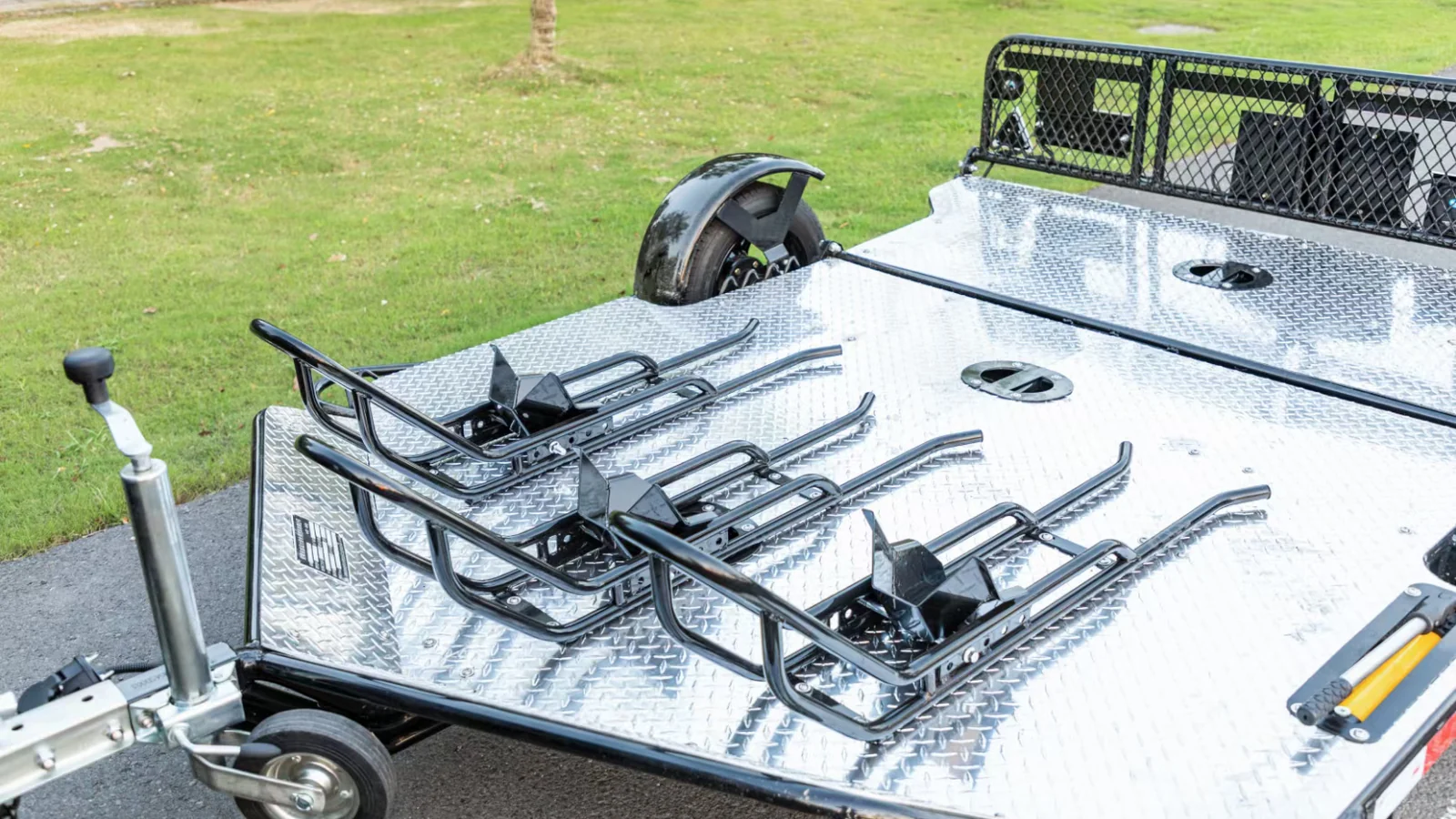
索取报价

Single vs Twin Jockey Wheels on Gravel and Soft Ground

工程说明

Single vs Twin Jockey Wheels on Gravel and Soft Ground

A practical buyer guide to single vs twin jockey wheel soft ground, focused on measurable operating conditions and RFQ-ready decisions.

What the question is really asking — Single vs Twin Jockey Wheels

The practical value of single vs twin jockey wheel soft ground appears only when the specification is tied to the equipment that must move, the floor it runs on and the interface that carries the load.

在拖车牵引杆、停放的拖车和短距离手动操作中,牵引杆/支撑载荷、地面状况、车轮直径/宽度、管材或夹具配合、行驶和存放间隙应作为首要的工程检查点。一旦确定了这些参数,就可以按合理的顺序检查车轮直径、宽度、材料、轴承布置和安装细节。

不要想当然地认为更大的轮子、更硬的聚合物或更重的支架就能自动解决问题。轮子滚动顺畅,但千斤顶的夹具直径、缩回高度或折叠尺寸可能仍然不匹配。因此,最稳妥的询价流程是在发布配置方案进行报价之前,记录支撑点的垂直载荷、地面状况、轮子尺寸、管材/夹具尺寸、行程和数量。

Single vs Twin Jockey Wheels on Gravel and Soft Ground product or application context

Build the operating envelope before comparing products — Single vs Twin Jockey Wheels

Before comparing products, write the equipment task in one sentence: what must move, what load it carries, where it travels and how often it is repositioned. That description provides context for single vs twin jockey wheel soft ground without turning one parameter into a universal rule.

For trailer drawbars, parked trailers and short-distance manual manoeuvring, the first review should cover drawbar/support load, ground surface, wheel diameter/width, tube or clamp fit, travel and stowed clearance. If a value is not known, mark it for measurement rather than substituting a typical number. The purpose of the RFQ is to close gaps, not hide them. When applying this to Single vs Twin Jockey Wheels on Gravel, compare candidates against the same equipment record so material, size and interface changes are reviewed consistently.

Single vs Twin Jockey Wheels on Gravel and Soft Ground engineering reference

Measure the interface that can make or break the replacement — Single vs Twin Jockey Wheels

Replacement work benefits from a consistent measurement routine. Record wheel diameter and width, then move inward to the hub: bore or bearing type, axle diameter, hub length and spacers. For complete assemblies, add installed height and mounting geometry. Photograph the measurement tool in place when a dimension is difficult to describe. When applying this to Single vs Twin Jockey Wheels on Gravel, compare candidates against the same equipment record so material, size and interface changes are reviewed consistently.

Do not use worn tread as the only reference if original diameter matters. A heavily worn wheel can make the replacement appear too large when the real issue is material loss. Likewise, a bent fork or improvised spacer can change apparent offset. When applying this to Single vs Twin Jockey Wheels on Gravel, compare candidates against the same equipment record so material, size and interface changes are reviewed consistently.

车轮和脚轮测量参考

Why the same load behaves differently on different floors — Single vs Twin Jockey Wheels

Load rating is not independent of how equipment moves. A cart crossing a threshold can create impact forces absent in a static parking condition. An uneven floor can shift load from four nominal support points to three. A trailer jockey wheel may carry a modest vertical drawbar load yet require substantial manoeuvring effort on loose ground. When applying this to Single vs Twin Jockey Wheels on Gravel, compare candidates against the same equipment record so material, size and interface changes are reviewed consistently.

记录最大正常载荷、异常载荷、地面类型(地板或地面)、行驶距离和障碍物出现频率。这些指标的组合比单一总重量更能提供有效的选择依据。

移动设备的概念载荷计算

Jockey-wheel selection needs two load conversations — Single vs Twin Jockey Wheels

The vertical load carried by the jack is one issue; the effort needed to manoeuvre the trailer is another. Ground, diameter and width can dominate the second. A configuration satisfactory on paving may be difficult on gravel even when vertical load is unchanged. When applying this to Single vs Twin Jockey Wheels on Gravel, compare candidates against the same equipment record so material, size and interface changes are reviewed consistently.

还要确认管/夹具直径、提升行程、闭合高度以及折叠或旋转组件所需的空间。

拖车支撑轮家族

Failure patterns to watch in single vs twin jockey wheels on gravel

A wheel may roll well but the jack can still be wrong for clamp diameter, retracted height or folding envelope. Similar symptoms can also come from loose fasteners, worn bearings, misalignment, contaminated floors or a frame that is no longer square. Before blaming wheel material, inspect the mounting and compare wear patterns across positions. When applying this to Single vs Twin Jockey Wheels on Gravel, compare candidates against the same equipment record so material, size and interface changes are reviewed consistently.

If only one corner wears rapidly, investigate that corner’s load and alignment. If all wheels show the same damage, review duty, floor and material specification. If wear accelerates after a process change, record the new contaminant, cleaning agent, temperature or travel pattern. When applying this to Single vs Twin Jockey Wheels on Gravel, compare candidates against the same equipment record so material, size and interface changes are reviewed consistently.

车轮检查示意图

Write the requirement so another buyer can reproduce it — Single vs Twin Jockey Wheels

Use one line per configuration and write the requirement so another engineer can understand it without the original conversation. Include vertical load at support point, ground condition, wheel size, tube/clamp dimensions, travel and quantity. Attach the correct drawing or photo set. If an interface dimension is unknown, say “measurement pending” instead of using a guessed value. When applying this to Single vs Twin Jockey Wheels on Gravel, compare candidates against the same equipment record so material, size and interface changes are reviewed consistently.

对于多型号订单,请将数量分开,并确定哪些尺寸是共享的。

Single vs Twin Jockey Wheels on Gravel decision checklist

  • 最大正常负荷已知吗?
  • 支撑轮能否均匀分担载荷?
  • 描述的是实际的楼层/地面吗?
  • 是否测量了轮毂和接口的尺寸?
  • 控制功能是否清晰?
  • 是否有特殊的材料/表面处理/环境要求?
  • 数量是否与正确的型号匹配?

继续 主要选择页面, 比较 当前产品系列或者使用 询价单.

实用工程

Translate the technical question into a practical field check — Single vs Twin Jockey Wheels

以下几点将本文主题应用于测量、安装和现场观察,而不将通用产品标签视为完整的规格说明。

Keep one approved reference — Single vs Twin Jockey Wheels

Once a configuration is accepted, retain the approved drawing, model reference and key dimensions together. Future subsequent orders should still confirm that equipment and duty have not changed, but the approved reference reduces ambiguity. When applying this to Single vs Twin Jockey Wheels on Gravel, compare candidates against the same equipment record so material, size and interface changes are reviewed consistently.

Maintenance records that matter for single vs twin jockey wheels on gravel

Record wheel position, installation date, duty, reason for replacement and unusual floor events. In a single vs twin jockey wheel soft ground program, this simple history helps identify whether wear is random, position-specific or linked to a changed environment. A wheel that fails repeatedly at one corner may point to load concentration, alignment or local contamination rather than a general material problem.

Inspect axle, spacers, bearings, bracket and fasteners when the old wheel is removed. Keep measurements that relate directly to vertical load at support point, ground condition, wheel size, tube/clamp dimensions, travel and quantity. If a component has been modified in service, photograph the change before installing the new item and decide whether the modified condition should become part of the official equipment specification. When applying this to Single vs Twin Jockey Wheels on Gravel, compare candidates against the same equipment record so material, size and interface changes are reviewed consistently.

What to observe when applying single vs twin jockey wheels on gravel

Commission a new or replacement configuration for single vs twin jockey wheel soft ground under controlled load and low speed before normal operation. Watch for rubbing, bracket contact, wheel wobble, steering instability, fastener movement and any change in deck or drawbar height. The goal is to test the assumptions made during selection rather than merely confirm that the wheel turns.

For trailer drawbars, parked trailers and short-distance manual manoeuvring, include the most demanding normal floor or ground transition in the initial trial. If the system must cross a threshold, ramp or rough joint, observe it there. Document the result with the same model reference used in the RFQ so future subsequent orders have a useful baseline instead of relying on memory. When applying this to Single vs Twin Jockey Wheels on Gravel, compare candidates against the same equipment record so material, size and interface changes are reviewed consistently.

Start with the operating envelope — Single vs Twin Jockey Wheels

The practical value of “Single vs Twin Jockey Wheels on Gravel and Soft Ground” is not a universal yes-or-no answer. The useful boundary is the equipment and duty in which the question occurs. Write down drawbar support load, wheel size, tube or clamp fit, lifting travel, closed height, folding or swivel clearance, ground condition and manoeuvring frequency. Keeping these fields together makes it possible to distinguish a product-identification question from an engineering selection question and prevents a visually similar part from being treated as automatically interchangeable.

Use the most demanding normal condition rather than a best-case description. If the equipment sometimes crosses a threshold, works outdoors, carries an uneven payload or is manoeuvred only after long periods of static load, include that condition. The objective is a repeatable requirement that another engineer or buyer can understand without seeing the original component. When applying this to Single vs Twin Jockey Wheels on Gravel, compare candidates against the same equipment record so material, size and interface changes are reviewed consistently.

Start with the operating envelope

Measure from stable datums — Single vs Twin Jockey Wheels

For this topic, record drawbar support load, wheel size, tube or clamp fit, lifting travel, closed height, folding or swivel clearance, ground condition and manoeuvring frequency. Use dimensioned photographs where a drawing is unavailable and show the reference points used for each measurement. If the old part is worn, bent or repaired, flag the affected dimension instead of treating the damaged geometry as the design target. When applying this to Single vs Twin Jockey Wheels on Gravel, compare candidates against the same equipment record so material, size and interface changes are reviewed consistently.

A comparison sheet works best with one configuration per column or row. Keep measured values, required values and optional preferences separate. That simple separation reduces the chance that a supplier proposal or an old catalogue value is copied into the required specification without review. It also makes later quotation revisions easier to audit. When applying this to Single vs Twin Jockey Wheels on Gravel, compare candidates against the same equipment record so material, size and interface changes are reviewed consistently.

Measure from stable datums

Trial the assumption instead of the photograph — Single vs Twin Jockey Wheels

After a candidate is installed, raise and lower the jack through its usable travel, confirm the wheel carries the support point without interference, then manoeuvre on the normal yard surface and verify the stowed position clears the drawbar and coupling. The first trial should be slow enough to observe the wheel and mounting rather than merely prove that the equipment can move. Look for rubbing, unexpected side movement, fastener movement, wheel wobble, interference and a change in operator effort. When applying this to Single vs Twin Jockey Wheels on Gravel, compare candidates against the same equipment record so material, size and interface changes are reviewed consistently.

If the result is unsatisfactory, record the symptom before changing several variables at once. One controlled change—such as wheel diameter, material, mounting alignment or steering layout—gives more useful information than changing the whole assembly and losing the cause of the original problem. When applying this to Single vs Twin Jockey Wheels on Gravel, compare candidates against the same equipment record so material, size and interface changes are reviewed consistently.

Trial the assumption instead of the photograph

Test the decision behind “Single vs Twin Jockey Wheels on Gravel and Soft Ground” on the actual parking surface

After installation, make a controlled low-speed manoeuvring check on the surface that normally creates the greatest effort. Observe steering, wheel scrub, fork clearance and any tendency for the mounting to twist or slip. If the trailer is routinely moved across gravel, pavers or drainage channels, include those conditions rather than testing only on workshop concrete. When applying this to Single vs Twin Jockey Wheels on Gravel, compare candidates against the same equipment record so material, size and interface changes are reviewed consistently.

A short documented trial provides much more useful purchasing information than a generic statement that one wheel is “better.” Record the accepted configuration, the trailer group, the load condition and any clearance limitation so a later subsequent orders can be checked against the same operating basis. When applying this to Single vs Twin Jockey Wheels on Gravel, compare candidates against the same equipment record so material, size and interface changes are reviewed consistently.

Test the decision behind “Single vs Twin Jockey Wheels on Gravel and Soft Ground” on the actual parking surface

Record the installed envelope when applying “Single vs Twin Jockey Wheels on Gravel and Soft Ground”

A jockey wheel must fit more than the nominal tyre diameter. Record tube or clamp size, closed height, required lift, wheel/fork envelope, crank clearance and the path the assembly takes if it folds or swivels for travel. Include the trailer’s actual drawbar load condition and the ground where uncoupled manoeuvring occurs. When applying this to Single vs Twin Jockey Wheels on Gravel, compare candidates against the same equipment record so material, size and interface changes are reviewed consistently.

For replacement work, inspect the clamp, tube and mounting area for deformation or previous modification before assuming the old configuration should be copied exactly. If the supplier’s stated load refers to a jack family, do not use it as a substitute for measuring the real application requirement. When applying this to Single vs Twin Jockey Wheels on Gravel, compare candidates against the same equipment record so material, size and interface changes are reviewed consistently.

Record the installed envelope when applying “Single vs Twin Jockey Wheels on Gravel and Soft Ground”
决策矩阵

Turn the trailer-support question into four comparable inputs — Single vs Twin Jockey Wheels

Trailer-support questions become easier to resolve when load, ground, interface and operating travel are written down separately. A catalogue title can identify a family, but it cannot describe how the support wheel is loaded, how the trailer is manoeuvred or how much space the mechanism has around the drawbar. When applying this to Single vs Twin Jockey Wheels on Gravel, compare candidates against the same equipment record so material, size and interface changes are reviewed consistently.

输入 要记录什么
支持条件 说明实际的鼻梁或支撑载荷,以及车轮是仅用于停车、手动操控还是两者兼有。
地面 描述正常使用中出现的混凝土、铺路、碎石、软土地面、接缝和斜坡。
界面 记录管、夹具、支架或板的尺寸,以及附近连接件和框架部件的位置。
操作范围 测量闭合高度、有效行程、曲柄操作空间以及折叠或旋转所需的路径(如适用)。

Use these inputs to compare alternatives under the same conditions. A larger wheel may improve obstacle geometry but can also change stored clearance. A stronger-looking bracket may still be unsuitable if the clamp or tube does not match. When a brake, swivel or twin-wheel arrangement is involved, describe the function that the operator actually needs rather than requesting a feature from appearance alone. When applying this to Single vs Twin Jockey Wheels on Gravel, compare candidates against the same equipment record so material, size and interface changes are reviewed consistently.

For replacement work, photograph the assembly before removal and include a side view that shows the mounting relationship. If the existing part is damaged, identify which dimensions are still trustworthy. During the first controlled installation, operate the mechanism through its usable travel without rushing the test, then load the trailer gradually and confirm that the wheel, handle and structure remain clear through normal manoeuvring. When applying this to Single vs Twin Jockey Wheels on Gravel, compare candidates against the same equipment record so material, size and interface changes are reviewed consistently.

How single vs twin jockey wheels on gravel changes the RFQ

For “Single vs Twin Jockey Wheels on Gravel and Soft Ground”, the RFQ should state the operating fact that drives the question rather than only repeating the product term. Name the equipment, describe the normal and maximum duty, record the fit-controlling dimensions and identify the symptom or objective that prompted the review. If the decision concerns load, include equipment mass and supporting points; if it concerns material, describe floor and environment; if it concerns mounting, provide the interface geometry; and if it concerns a trailer support wheel, include the support condition, ground and available travel.

Keep required values separate from open questions. A supplier can respond much more usefully to “confirm bore and hub length against attached sketch” than to a guessed dimension presented as final. The same principle applies to load ratings, material grades, brake functions and mounting details. Where a value is verified, label it clearly; where it is not, ask for confirmation. That keeps the quotation aligned with the real equipment and makes later technical review easier without adding another repetitive approval or subsequent orders section to the page. When applying this to Single vs Twin Jockey Wheels on Gravel, compare candidates against the same equipment record so material, size and interface changes are reviewed consistently.

Engineering decision matrix for Single vs Twin Jockey Wheels on Gravel and Soft Ground

Single vs Twin Jockey Wheels on Gravel FAQ

What is the first thing to confirm for single vs twin jockey wheel soft ground?

首先考虑牵引杆/支撑载荷、地面状况、车轮直径/宽度、管材或夹具配合、行程和存放间隙。这为后续的选择提供了可衡量的依据。

照片可以代替测量数据吗?

照片有助于识别,但对尺寸要求至关重要的尺寸仍应测量或根据已批准的图纸获取。

买方是否应该在载荷中增加安全系数?

A safety allowance is commonly used to address unequal load sharing and operating effects, but the appropriate value depends on the application and does not replace the product rating. When applying this to Single vs Twin Jockey Wheels on Gravel, compare candidates against the same equipment record so material, size and interface changes are reviewed consistently.

如果材料未知怎么办?

说明操作车间和环境,提供样品或照片,并将材料作为确认项目,而不是根据颜色进行猜测。

Discuss your single vs twin jockey wheel soft ground requirement

请提供申请信息、载荷、适配尺寸、数量以及任何相关的照片或图纸。我们将利用这些信息来缩小产品系列范围,避免猜测。
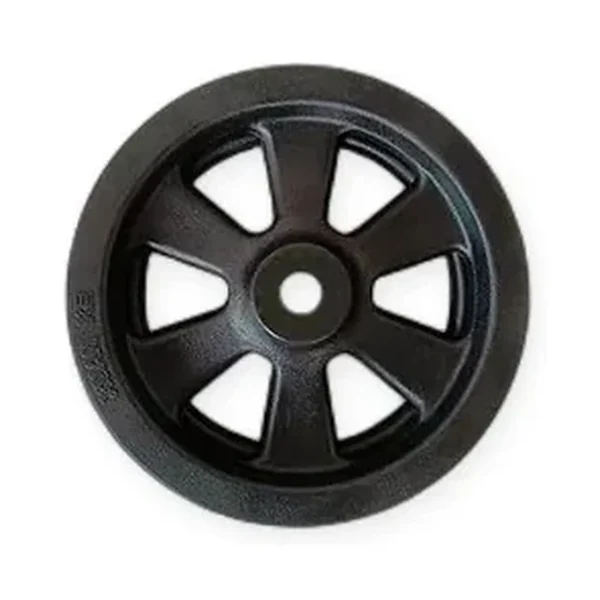
索取报价

6 Inch vs 8 Inch Jockey Wheels for Firm and Uneven Ground

工程说明

6 Inch vs 8 Inch Jockey Wheels for Firm and Uneven Ground

A practical buyer guide to 6 inch vs 8 inch jockey wheel ground, focused on measurable operating conditions and RFQ-ready decisions.

Why this question matters — 6 Inch vs 8 Inch

For an industrial buyer, 6 inch vs 8 inch jockey wheel ground is not a label to choose in isolation. The useful question is how it behaves inside the complete wheel, mounting and duty-cycle decision.

For trailer drawbars, parked trailers and short-distance manual manoeuvring, begin by confirming drawbar/support load, ground surface, wheel diameter/width, tube or clamp fit, travel and stowed clearance. This is usually more useful than comparing nominal product names because two visually similar wheels can behave differently once mounting, floor condition and real load distribution are considered. For the 6 Inch vs 8 Inch Jockey Wheels decision, keep this observation with the dimensions and duty notes rather than treating it as a stand-alone rule.

This also prevents a frequent sourcing error: choosing from appearance alone. A wheel may roll well but the jack can still be wrong for clamp diameter, retracted height or folding envelope. Record vertical load at support point, ground condition, wheel size, tube/clamp dimensions, travel and quantity in the enquiry so the commercial discussion starts from a technically meaningful baseline. For the 6 Inch vs 8 Inch Jockey Wheels decision, keep this observation with the dimensions and duty notes rather than treating it as a stand-alone rule.

6 Inch vs 8 Inch Jockey Wheels for Firm and Uneven Ground product or application context

Define the operating condition first — 6 Inch vs 8 Inch

Before comparing products, write the equipment task in one sentence: what must move, what load it carries, where it travels and how often it is repositioned. That description provides context for 6 inch vs 8 inch jockey wheel ground without turning one parameter into a universal rule.

For trailer drawbars, parked trailers and short-distance manual manoeuvring, the first review should cover drawbar/support load, ground surface, wheel diameter/width, tube or clamp fit, travel and stowed clearance. If a value is not known, mark it for measurement rather than substituting a typical number. The purpose of the RFQ is to close gaps, not hide them. For the 6 Inch vs 8 Inch Jockey Wheels decision, keep this observation with the dimensions and duty notes rather than treating it as a stand-alone rule.

6 Inch vs 8 Inch Jockey Wheels for Firm and Uneven Ground engineering reference

Measurements that prevent false matches — 6 Inch vs 8 Inch

Replacement work benefits from a consistent measurement routine. Record wheel diameter and width, then move inward to the hub: bore or bearing type, axle diameter, hub length and spacers. For complete assemblies, add installed height and mounting geometry. Photograph the measurement tool in place when a dimension is difficult to describe. For the 6 Inch vs 8 Inch Jockey Wheels decision, keep this observation with the dimensions and duty notes rather than treating it as a stand-alone rule.

Do not use worn tread as the only reference if original diameter matters. A heavily worn wheel can make the replacement appear too large when the real issue is material loss. Likewise, a bent fork or improvised spacer can change apparent offset. For the 6 Inch vs 8 Inch Jockey Wheels decision, keep this observation with the dimensions and duty notes rather than treating it as a stand-alone rule.

车轮和脚轮测量参考

Load, floor and movement interact — 6 Inch vs 8 Inch

Load rating is not independent of how equipment moves. A cart crossing a threshold can create impact forces absent in a static parking condition. An uneven floor can shift load from four nominal support points to three. A trailer jockey wheel may carry a modest vertical drawbar load yet require substantial manoeuvring effort on loose ground. For the 6 Inch vs 8 Inch Jockey Wheels decision, keep this observation with the dimensions and duty notes rather than treating it as a stand-alone rule.

记录最大正常载荷、异常载荷、地面类型(地板或地面)、行驶距离和障碍物出现频率。这些指标的组合比单一总重量更能提供有效的选择依据。

移动设备的概念载荷计算

Diameter changes geometry before it changes performance

Larger wheels reduce the relative height of a small obstacle compared with wheel radius. That geometric advantage can make joints or gaps easier to cross, but it also changes installed height, fork size and clearance around the equipment. A larger diameter is a system change, not a free upgrade.

Compare 150 mm and 200 mm wheel examples only as size references. Suitability still depends on load, axle/bearing arrangement, bracket and floor. For trailer support, wider or twin-wheel arrangements can also change ground contact.

200 mm nylon wheel size example

Failure patterns to watch in 6 inch vs 8 inch jockey wheels

A wheel may roll well but the jack can still be wrong for clamp diameter, retracted height or folding envelope. Similar symptoms can also come from loose fasteners, worn bearings, misalignment, contaminated floors or a frame that is no longer square. Before blaming wheel material, inspect the mounting and compare wear patterns across positions. For the 6 Inch vs 8 Inch Jockey Wheels decision, keep this observation with the dimensions and duty notes rather than treating it as a stand-alone rule.

If only one corner wears rapidly, investigate that corner’s load and alignment. If all wheels show the same damage, review duty, floor and material specification. If wear accelerates after a process change, record the new contaminant, cleaning agent, temperature or travel pattern. For the 6 Inch vs 8 Inch Jockey Wheels decision, keep this observation with the dimensions and duty notes rather than treating it as a stand-alone rule.

车轮检查示意图

How to write the RFQ line — 6 Inch vs 8 Inch

Use one line per configuration and write the requirement so another engineer can understand it without the original conversation. Include vertical load at support point, ground condition, wheel size, tube/clamp dimensions, travel and quantity. Attach the correct drawing or photo set. If an interface dimension is unknown, say “measurement pending” instead of using a guessed value. For the 6 Inch vs 8 Inch Jockey Wheels decision, keep this observation with the dimensions and duty notes rather than treating it as a stand-alone rule.

对于多型号订单,请将数量分开,并确定哪些尺寸是共享的。

6 Inch vs 8 Inch Jockey Wheels decision checklist

  • 最大正常负荷已知吗?
  • 支撑轮能否均匀分担载荷?
  • 描述的是实际的楼层/地面吗?
  • 是否测量了轮毂和接口的尺寸?
  • 控制功能是否清晰?
  • 是否有特殊的材料/表面处理/环境要求?
  • 数量是否与正确的型号匹配?

继续 主要选择页面, 比较 当前产品系列或者使用 询价单.

实用工程

Use measured evidence to narrow the decision — 6 Inch vs 8 Inch

以下几点将本文主题应用于测量、安装和现场观察,而不将通用产品标签视为完整的规格说明。

Close the loop with the installation — 6 Inch vs 8 Inch

After a sample or first lot is installed, compare real behaviour with the RFQ assumptions. Record interference, unusual wear or movement and feed it into the next purchase specification. That turns one replacement into a controlled maintenance standard. For the 6 Inch vs 8 Inch Jockey Wheels decision, keep this observation with the dimensions and duty notes rather than treating it as a stand-alone rule.

What to observe when applying 6 inch vs 8 inch jockey wheels

Commission a new or replacement configuration for 6 inch vs 8 inch jockey wheel ground under controlled load and low speed before normal operation. Watch for rubbing, bracket contact, wheel wobble, steering instability, fastener movement and any change in deck or drawbar height. The goal is to test the assumptions made during selection rather than merely confirm that the wheel turns.

For trailer drawbars, parked trailers and short-distance manual manoeuvring, include the most demanding normal floor or ground transition in the initial trial. If the system must cross a threshold, ramp or rough joint, observe it there. Document the result with the same model reference used in the RFQ so future subsequent orders have a useful baseline instead of relying on memory. For the 6 Inch vs 8 Inch Jockey Wheels decision, keep this observation with the dimensions and duty notes rather than treating it as a stand-alone rule.

Maintenance records that matter for 6 inch vs 8 inch jockey wheels

Record wheel position, installation date, duty, reason for replacement and unusual floor events. In a 6 inch vs 8 inch jockey wheel ground program, this simple history helps identify whether wear is random, position-specific or linked to a changed environment. A wheel that fails repeatedly at one corner may point to load concentration, alignment or local contamination rather than a general material problem.

Inspect axle, spacers, bearings, bracket and fasteners when the old wheel is removed. Keep measurements that relate directly to vertical load at support point, ground condition, wheel size, tube/clamp dimensions, travel and quantity. If a component has been modified in service, photograph the change before installing the new item and decide whether the modified condition should become part of the official equipment specification. For the 6 Inch vs 8 Inch Jockey Wheels decision, keep this observation with the dimensions and duty notes rather than treating it as a stand-alone rule.

Convert the question into measurable inputs — 6 Inch vs 8 Inch

The practical value of “6 Inch vs 8 Inch Jockey Wheels for Firm and Uneven Ground” is not a universal yes-or-no answer. The useful boundary is the equipment and duty in which the question occurs. Write down drawbar support load, wheel size, tube or clamp fit, lifting travel, closed height, folding or swivel clearance, ground condition and manoeuvring frequency. Keeping these fields together makes it possible to distinguish a product-identification question from an engineering selection question and prevents a visually similar part from being treated as automatically interchangeable.

Use the most demanding normal condition rather than a best-case description. If the equipment sometimes crosses a threshold, works outdoors, carries an uneven payload or is manoeuvred only after long periods of static load, include that condition. The objective is a repeatable requirement that another engineer or buyer can understand without seeing the original component. For the 6 Inch vs 8 Inch Jockey Wheels decision, keep this observation with the dimensions and duty notes rather than treating it as a stand-alone rule.

Convert the question into measurable inputs

Build one comparison sheet — 6 Inch vs 8 Inch

For this topic, record drawbar support load, wheel size, tube or clamp fit, lifting travel, closed height, folding or swivel clearance, ground condition and manoeuvring frequency. Use dimensioned photographs where a drawing is unavailable and show the reference points used for each measurement. If the old part is worn, bent or repaired, flag the affected dimension instead of treating the damaged geometry as the design target. For the 6 Inch vs 8 Inch Jockey Wheels decision, keep this observation with the dimensions and duty notes rather than treating it as a stand-alone rule.

A comparison sheet works best with one configuration per column or row. Keep measured values, required values and optional preferences separate. That simple separation reduces the chance that a supplier proposal or an old catalogue value is copied into the required specification without review. It also makes later quotation revisions easier to audit. For the 6 Inch vs 8 Inch Jockey Wheels decision, keep this observation with the dimensions and duty notes rather than treating it as a stand-alone rule.

Build one comparison sheet

Commissioning should reproduce the real route — 6 Inch vs 8 Inch

After a candidate is installed, raise and lower the jack through its usable travel, confirm the wheel carries the support point without interference, then manoeuvre on the normal yard surface and verify the stowed position clears the drawbar and coupling. The first trial should be slow enough to observe the wheel and mounting rather than merely prove that the equipment can move. Look for rubbing, unexpected side movement, fastener movement, wheel wobble, interference and a change in operator effort. For the 6 Inch vs 8 Inch Jockey Wheels decision, keep this observation with the dimensions and duty notes rather than treating it as a stand-alone rule.

If the result is unsatisfactory, record the symptom before changing several variables at once. One controlled change—such as wheel diameter, material, mounting alignment or steering layout—gives more useful information than changing the whole assembly and losing the cause of the original problem. For the 6 Inch vs 8 Inch Jockey Wheels decision, keep this observation with the dimensions and duty notes rather than treating it as a stand-alone rule.

Commissioning should reproduce the real route

Test the decision behind “6 Inch vs 8 Inch Jockey Wheels for Firm and Uneven Ground” on the actual parking surface

After installation, make a controlled low-speed manoeuvring check on the surface that normally creates the greatest effort. Observe steering, wheel scrub, fork clearance and any tendency for the mounting to twist or slip. If the trailer is routinely moved across gravel, pavers or drainage channels, include those conditions rather than testing only on workshop concrete. For the 6 Inch vs 8 Inch Jockey Wheels decision, keep this observation with the dimensions and duty notes rather than treating it as a stand-alone rule.

A short documented trial provides much more useful purchasing information than a generic statement that one wheel is “better.” Record the accepted configuration, the trailer group, the load condition and any clearance limitation so a later subsequent orders can be checked against the same operating basis. For the 6 Inch vs 8 Inch Jockey Wheels decision, keep this observation with the dimensions and duty notes rather than treating it as a stand-alone rule.

Test the decision behind “6 Inch vs 8 Inch Jockey Wheels for Firm and Uneven Ground” on the actual parking surface

Record the installed envelope when applying “6 Inch vs 8 Inch Jockey Wheels for Firm and Uneven Ground”

A jockey wheel must fit more than the nominal tyre diameter. Record tube or clamp size, closed height, required lift, wheel/fork envelope, crank clearance and the path the assembly takes if it folds or swivels for travel. Include the trailer’s actual drawbar load condition and the ground where uncoupled manoeuvring occurs. For the 6 Inch vs 8 Inch Jockey Wheels decision, keep this observation with the dimensions and duty notes rather than treating it as a stand-alone rule.

For replacement work, inspect the clamp, tube and mounting area for deformation or previous modification before assuming the old configuration should be copied exactly. If the supplier’s stated load refers to a jack family, do not use it as a substitute for measuring the real application requirement. For the 6 Inch vs 8 Inch Jockey Wheels decision, keep this observation with the dimensions and duty notes rather than treating it as a stand-alone rule.

Record the installed envelope when applying “6 Inch vs 8 Inch Jockey Wheels for Firm and Uneven Ground”
决策矩阵

Turn the trailer-support question into four comparable inputs — 6 Inch vs 8 Inch

Trailer-support questions become easier to resolve when load, ground, interface and operating travel are written down separately. A catalogue title can identify a family, but it cannot describe how the support wheel is loaded, how the trailer is manoeuvred or how much space the mechanism has around the drawbar. For the 6 Inch vs 8 Inch Jockey Wheels decision, keep this observation with the dimensions and duty notes rather than treating it as a stand-alone rule.

输入 要记录什么
支持条件 说明实际的鼻梁或支撑载荷,以及车轮是仅用于停车、手动操控还是两者兼有。
地面 描述正常使用中出现的混凝土、铺路、碎石、软土地面、接缝和斜坡。
界面 记录管、夹具、支架或板的尺寸,以及附近连接件和框架部件的位置。
操作范围 测量闭合高度、有效行程、曲柄操作空间以及折叠或旋转所需的路径(如适用)。

Use these inputs to compare alternatives under the same conditions. A larger wheel may improve obstacle geometry but can also change stored clearance. A stronger-looking bracket may still be unsuitable if the clamp or tube does not match. When a brake, swivel or twin-wheel arrangement is involved, describe the function that the operator actually needs rather than requesting a feature from appearance alone. For the 6 Inch vs 8 Inch Jockey Wheels decision, keep this observation with the dimensions and duty notes rather than treating it as a stand-alone rule.

For replacement work, photograph the assembly before removal and include a side view that shows the mounting relationship. If the existing part is damaged, identify which dimensions are still trustworthy. During the first controlled installation, operate the mechanism through its usable travel without rushing the test, then load the trailer gradually and confirm that the wheel, handle and structure remain clear through normal manoeuvring. For the 6 Inch vs 8 Inch Jockey Wheels decision, keep this observation with the dimensions and duty notes rather than treating it as a stand-alone rule.

How 6 inch vs 8 inch jockey wheels changes the RFQ

For “6 Inch vs 8 Inch Jockey Wheels for Firm and Uneven Ground”, the RFQ should state the operating fact that drives the question rather than only repeating the product term. Name the equipment, describe the normal and maximum duty, record the fit-controlling dimensions and identify the symptom or objective that prompted the review. If the decision concerns load, include equipment mass and supporting points; if it concerns material, describe floor and environment; if it concerns mounting, provide the interface geometry; and if it concerns a trailer support wheel, include the support condition, ground and available travel.

Keep required values separate from open questions. A supplier can respond much more usefully to “confirm bore and hub length against attached sketch” than to a guessed dimension presented as final. The same principle applies to load ratings, material grades, brake functions and mounting details. Where a value is verified, label it clearly; where it is not, ask for confirmation. That keeps the quotation aligned with the real equipment and makes later technical review easier without adding another repetitive approval or subsequent orders section to the page. For the 6 Inch vs 8 Inch Jockey Wheels decision, keep this observation with the dimensions and duty notes rather than treating it as a stand-alone rule.

Engineering decision matrix for 6 Inch vs 8 Inch Jockey Wheels for Firm and Uneven Ground

6 Inch vs 8 Inch Jockey Wheels FAQ

What is the first thing to confirm for 6 inch vs 8 inch jockey wheel ground?

首先考虑牵引杆/支撑载荷、地面状况、车轮直径/宽度、管材或夹具配合、行程和存放间隙。这为后续的选择提供了可衡量的依据。

照片可以代替测量数据吗?

照片有助于识别,但对尺寸要求至关重要的尺寸仍应测量或根据已批准的图纸获取。

买方是否应该在载荷中增加安全系数?

A safety allowance is commonly used to address unequal load sharing and operating effects, but the appropriate value depends on the application and does not replace the product rating. For the 6 Inch vs 8 Inch Jockey Wheels decision, keep this observation with the dimensions and duty notes rather than treating it as a stand-alone rule.

如果材料未知怎么办?

说明操作车间和环境,提供样品或照片,并将材料作为确认项目,而不是根据颜色进行猜测。

Discuss your 6 inch vs 8 inch jockey wheel ground requirement

请提供申请信息、载荷、适配尺寸、数量以及任何相关的照片或图纸。我们将利用这些信息来缩小产品系列范围,避免猜测。

索取报价

Castor Mounting Failures: What to Check Around the Fixing Surface

工程说明

Castor Mounting Failures: What to Check Around the Fixing Surface

A practical buyer guide to caster mounting failure causes, focused on measurable operating conditions and RFQ-ready decisions.

Where the purchasing risk actually sits — Castor Mounting Failures

Procurement teams often encounter caster mounting failure causes as a catalogue term, but the purchasing decision becomes clearer when the term is converted into measurable operating requirements.

In industrial trolleys, machine bases and mobile frames requiring predictable steering or parking control, the selection should therefore start with mounting geometry, swivel/fixed layout, control function, installed height and clearance. That keeps a dimensional or material choice connected to the job it must perform rather than to a generic product description.

The common failure is to treat one attractive parameter as the whole specification. Two brackets can look alike while using different hole patterns, offsets, lock functions or swivel envelopes. A better purchasing note captures plate or stem dimensions, fasteners, installed height, wheel layout, lock function, load and quantity, so suppliers can compare like with like and flag missing dimensions instead of guessing.

Castor Mounting Failures: What to Check Around the Fixing Surface product or application context

Start from duty cycle and real movement — Castor Mounting Failures

Before comparing products, write the equipment task in one sentence: what must move, what load it carries, where it travels and how often it is repositioned. That description provides context for caster mounting failure causes without turning one parameter into a universal rule.

For industrial trolleys, machine bases and mobile frames requiring predictable steering or parking control, the first review should cover mounting geometry, swivel/fixed layout, control function, installed height and clearance. If a value is not known, mark it for measurement rather than substituting a typical number. The purpose of the RFQ is to close gaps, not hide them. In Castor Mounting Failures, record the result beside the actual equipment condition so the article guidance remains tied to a measurable sourcing decision.

Castor Mounting Failures: What to Check Around the Fixing Surface engineering reference

Capture dimensions before the old part is removed — Castor Mounting Failures

Replacement work benefits from a consistent measurement routine. Record wheel diameter and width, then move inward to the hub: bore or bearing type, axle diameter, hub length and spacers. For complete assemblies, add installed height and mounting geometry. Photograph the measurement tool in place when a dimension is difficult to describe. In Castor Mounting Failures, record the result beside the actual equipment condition so the article guidance remains tied to a measurable sourcing decision.

Do not use worn tread as the only reference if original diameter matters. A heavily worn wheel can make the replacement appear too large when the real issue is material loss. Likewise, a bent fork or improvised spacer can change apparent offset. In Castor Mounting Failures, record the result beside the actual equipment condition so the article guidance remains tied to a measurable sourcing decision.

车轮和脚轮测量参考

Connect load to movement instead of treating it as static — Castor Mounting Failures

Load rating is not independent of how equipment moves. A cart crossing a threshold can create impact forces absent in a static parking condition. An uneven floor can shift load from four nominal support points to three. A trailer jockey wheel may carry a modest vertical drawbar load yet require substantial manoeuvring effort on loose ground. In Castor Mounting Failures, record the result beside the actual equipment condition so the article guidance remains tied to a measurable sourcing decision.

记录最大正常载荷、异常载荷、地面类型(地板或地面)、行驶距离和障碍物出现频率。这些指标的组合比单一总重量更能提供有效的选择依据。

移动设备的概念载荷计算

Turn the topic into a comparison matrix — Castor Mounting Failures

Question 要记录什么
Duty What equipment does and how often it moves
加载 Dead weight, payload and supporting layout
地面 Surface, joints, debris, water or chemicals
车轮 Diameter, width and material if known
界面 Bore/bearing/axle or bracket/tube/stem
控制 Brake, lock, folding or steering requirement
商业的 Quantity, sample purpose and destination

Failure patterns to watch in castor mounting failures

Two brackets can look alike while using different hole patterns, offsets, lock functions or swivel envelopes. Similar symptoms can also come from loose fasteners, worn bearings, misalignment, contaminated floors or a frame that is no longer square. Before blaming wheel material, inspect the mounting and compare wear patterns across positions. In Castor Mounting Failures, record the result beside the actual equipment condition so the article guidance remains tied to a measurable sourcing decision.

If only one corner wears rapidly, investigate that corner’s load and alignment. If all wheels show the same damage, review duty, floor and material specification. If wear accelerates after a process change, record the new contaminant, cleaning agent, temperature or travel pattern. In Castor Mounting Failures, record the result beside the actual equipment condition so the article guidance remains tied to a measurable sourcing decision.

车轮检查示意图

Translate the engineering notes into one controlled RFQ line — Castor Mounting Failures

Use one line per configuration and write the requirement so another engineer can understand it without the original conversation. Include plate or stem dimensions, fasteners, installed height, wheel layout, lock function, load and quantity. Attach the correct drawing or photo set. If an interface dimension is unknown, say “measurement pending” instead of using a guessed value. In Castor Mounting Failures, record the result beside the actual equipment condition so the article guidance remains tied to a measurable sourcing decision.

对于多型号订单,请将数量分开,并确定哪些尺寸是共享的。

Castor Mounting Failures decision checklist

  • 最大正常负荷已知吗?
  • 支撑轮能否均匀分担载荷?
  • 描述的是实际的楼层/地面吗?
  • 是否测量了轮毂和接口的尺寸?
  • 控制功能是否清晰?
  • 是否有特殊的材料/表面处理/环境要求?
  • 数量是否与正确的型号匹配?

继续 主要选择页面, 比较 当前产品系列或者使用 询价单.

实用工程

Put the engineering question into a real operating context — Castor Mounting Failures

以下几点将本文主题应用于测量、安装和现场观察,而不将通用产品标签视为完整的规格说明。

Separate technical approval from quantity changes — Castor Mounting Failures

If purchasing later changes quantity or consolidates models, do not let that commercial change overwrite the technical specification. Preserve approved dimensions and configuration while updating only the commercial fields that changed. In Castor Mounting Failures, record the result beside the actual equipment condition so the article guidance remains tied to a measurable sourcing decision.

What to observe when applying castor mounting failures

Commission a new or replacement configuration for caster mounting failure causes under controlled load and low speed before normal operation. Watch for rubbing, bracket contact, wheel wobble, steering instability, fastener movement and any change in deck or drawbar height. The goal is to test the assumptions made during selection rather than merely confirm that the wheel turns.

For industrial trolleys, machine bases and mobile frames requiring predictable steering or parking control, include the most demanding normal floor or ground transition in the initial trial. If the system must cross a threshold, ramp or rough joint, observe it there. Document the result with the same model reference used in the RFQ so future subsequent orders have a useful baseline instead of relying on memory. In Castor Mounting Failures, record the result beside the actual equipment condition so the article guidance remains tied to a measurable sourcing decision.

Maintenance records that matter for castor mounting failures

Record wheel position, installation date, duty, reason for replacement and unusual floor events. In a caster mounting failure causes program, this simple history helps identify whether wear is random, position-specific or linked to a changed environment. A wheel that fails repeatedly at one corner may point to load concentration, alignment or local contamination rather than a general material problem.

Inspect axle, spacers, bearings, bracket and fasteners when the old wheel is removed. Keep measurements that relate directly to plate or stem dimensions, fasteners, installed height, wheel layout, lock function, load and quantity. If a component has been modified in service, photograph the change before installing the new item and decide whether the modified condition should become part of the official equipment specification. In Castor Mounting Failures, record the result beside the actual equipment condition so the article guidance remains tied to a measurable sourcing decision.

Define the boundary before comparing parts — Castor Mounting Failures

The practical value of “Castor Mounting Failures: What to Check Around the Fixing Surface” is not a universal yes-or-no answer. The useful boundary is the equipment and duty in which the question occurs. Write down swivel and fixed-wheel layout, swivel offset, mounting stiffness, wheelbase, speed, aisle length, floor condition, lock function and load distribution. Keeping these fields together makes it possible to distinguish a product-identification question from an engineering selection question and prevents a visually similar part from being treated as automatically interchangeable.

Use the most demanding normal condition rather than a best-case description. If the equipment sometimes crosses a threshold, works outdoors, carries an uneven payload or is manoeuvred only after long periods of static load, include that condition. The objective is a repeatable requirement that another engineer or buyer can understand without seeing the original component. In Castor Mounting Failures, record the result beside the actual equipment condition so the article guidance remains tied to a measurable sourcing decision.

在比较各部分之前,先确定边界。

Measurements and observations worth recording — Castor Mounting Failures

For this topic, record swivel and fixed-wheel layout, swivel offset, mounting stiffness, wheelbase, speed, aisle length, floor condition, lock function and load distribution. Use dimensioned photographs where a drawing is unavailable and show the reference points used for each measurement. If the old part is worn, bent or repaired, flag the affected dimension instead of treating the damaged geometry as the design target. In Castor Mounting Failures, record the result beside the actual equipment condition so the article guidance remains tied to a measurable sourcing decision.

A comparison sheet works best with one configuration per column or row. Keep measured values, required values and optional preferences separate. That simple separation reduces the chance that a supplier proposal or an old catalogue value is copied into the required specification without review. It also makes later quotation revisions easier to audit. In Castor Mounting Failures, record the result beside the actual equipment condition so the article guidance remains tied to a measurable sourcing decision.

值得记录的测量和观察结果

A useful first-installation test — Castor Mounting Failures

After a candidate is installed, push the equipment slowly in straight travel and turning, engage each lock separately, cross the normal floor joints and observe shimmy, pull, wheel scrub, bracket movement and the effort required from the operator. The first trial should be slow enough to observe the wheel and mounting rather than merely prove that the equipment can move. Look for rubbing, unexpected side movement, fastener movement, wheel wobble, interference and a change in operator effort. In Castor Mounting Failures, record the result beside the actual equipment condition so the article guidance remains tied to a measurable sourcing decision.

If the result is unsatisfactory, record the symptom before changing several variables at once. One controlled change—such as wheel diameter, material, mounting alignment or steering layout—gives more useful information than changing the whole assembly and losing the cause of the original problem. In Castor Mounting Failures, record the result beside the actual equipment condition so the article guidance remains tied to a measurable sourcing decision.

一个有用的首次安装测试

Separate component symptoms from system causes in “Castor Mounting Failures: What to Check Around the Fixing Surface”

If a cart wanders, shimmies, scrubs or becomes difficult to steer, inspect load distribution, mounting alignment, frame condition, wheel wear and floor joints before replacing one castor by assumption. A loose or distorted mounting surface can reproduce the same symptom after a new component is installed. In Castor Mounting Failures, record the result beside the actual equipment condition so the article guidance remains tied to a measurable sourcing decision.

Document the symptom with the cart loaded in its normal way and note whether it occurs during straight travel, turning, braking or crossing a threshold. That operating context helps purchasing and engineering teams ask for the right interface or function instead of treating every steering complaint as a wheel-material problem. In Castor Mounting Failures, record the result beside the actual equipment condition so the article guidance remains tied to a measurable sourcing decision.

Separate component symptoms from system causes in “Castor Mounting Failures: What to Check Around the Fixing Surface”

Check the whole cart geometry when applying “Castor Mounting Failures: What to Check Around the Fixing Surface”

Steering behaviour is created by the arrangement of wheels, castors and frame, not by one component in isolation. Record wheelbase, track width, location of fixed and swivel positions, handle or tow point, expected direction changes and the surface where the cart is used. Uneven loading or frame flexibility can make a layout behave differently from a simple diagram. In Castor Mounting Failures, record the result beside the actual equipment condition so the article guidance remains tied to a measurable sourcing decision.

For a lock or brake, define exactly what must be restrained: wheel rotation, swivel rotation, direction, or a combination. Use those functional requirements in the RFQ and verify lever access and release clearance on the real equipment instead of relying on a generic product-family name. In Castor Mounting Failures, record the result beside the actual equipment condition so the article guidance remains tied to a measurable sourcing decision.

Check the whole cart geometry when applying “Castor Mounting Failures: What to Check Around the Fixing Surface”
决策矩阵

Turn the topic into one controlled equipment-level comparison — Castor Mounting Failures

A useful engineering article should end with a decision method, not with a generic recommendation. Start by fixing the application boundary: equipment, load, movement, floor or ground, mounting interface and the outcome the buyer is trying to improve. In Castor Mounting Failures, record the result beside the actual equipment condition so the article guidance remains tied to a measurable sourcing decision.

输入 要记录什么
Application Name the equipment and describe the normal movement rather than relying on a broad industry label.
加载 Record equipment mass, payload and supporting points under the least favourable normal condition.
Fit Measure the wheel and mounting interface from stable datums and identify any worn or repaired features.
Decision criterion State what the candidate must improve or preserve, such as clearance, steering, floor interaction or service access.

Compare candidates against those same inputs. If one product changes more than one variable, record each change so the result can be interpreted later. A visually similar wheel may use a different material, hub, bearing or mounting geometry, while a dimensionally similar part can still behave differently on the floor. Keeping the comparison structured prevents an attractive single feature from dominating the decision. In Castor Mounting Failures, record the result beside the actual equipment condition so the article guidance remains tied to a measurable sourcing decision.

The first installation should be a controlled observation rather than a simple pass/fail moment. Check fit before load is applied, then move the equipment at low speed through the normal route and note interference, unusual movement, fastener behaviour and operator effort. Where the result is not satisfactory, capture the symptom before changing the next variable. This creates a practical feedback loop without turning routine purchasing into unsupported engineering assumptions. In Castor Mounting Failures, record the result beside the actual equipment condition so the article guidance remains tied to a measurable sourcing decision.

How castor mounting failures changes the RFQ

For “Castor Mounting Failures: What to Check Around the Fixing Surface”, the RFQ should state the operating fact that drives the question rather than only repeating the product term. Name the equipment, describe the normal and maximum duty, record the fit-controlling dimensions and identify the symptom or objective that prompted the review. If the decision concerns load, include equipment mass and supporting points; if it concerns material, describe floor and environment; if it concerns mounting, provide the interface geometry; and if it concerns a trailer support wheel, include the support condition, ground and available travel.

Keep required values separate from open questions. A supplier can respond much more usefully to “confirm bore and hub length against attached sketch” than to a guessed dimension presented as final. The same principle applies to load ratings, material grades, brake functions and mounting details. Where a value is verified, label it clearly; where it is not, ask for confirmation. That keeps the quotation aligned with the real equipment and makes later technical review easier without adding another repetitive approval or subsequent orders section to the page. In Castor Mounting Failures, record the result beside the actual equipment condition so the article guidance remains tied to a measurable sourcing decision.

Engineering decision matrix for Castor Mounting Failures: What to Check Around the Fixing Surface

Castor Mounting Failures FAQ

What is the first thing to confirm for caster mounting failure causes?

Start with mounting geometry, swivel/fixed layout, control function, installed height and clearance. That gives the rest of the selection a measurable context.

照片可以代替测量数据吗?

照片有助于识别,但对尺寸要求至关重要的尺寸仍应测量或根据已批准的图纸获取。

买方是否应该在载荷中增加安全系数?

A safety allowance is commonly used to address unequal load sharing and operating effects, but the appropriate value depends on the application and does not replace the product rating. In Castor Mounting Failures, record the result beside the actual equipment condition so the article guidance remains tied to a measurable sourcing decision.

如果材料未知怎么办?

说明操作车间和环境,提供样品或照片,并将材料作为确认项目,而不是根据颜色进行猜测。

Discuss your caster mounting failure causes requirement

请提供申请信息、载荷、适配尺寸、数量以及任何相关的照片或图纸。我们将利用这些信息来缩小产品系列范围,避免猜测。

索取报价