
Product Description
Facotry Manufacture Customised Molded Water Faucet Pipe Fitting OEM Plastic Mould Part
Product Description
| Product Name: | Facotry Manufacture Customised Molded Water Faucet Pipe Fitting OEM Plastic Mould Part |
| Product No.: | SP08-0002 |
| Shaping Mode: | Plastic injection molding |
| Product Material: | PA+GF30 |
| Product Feature: | Flame retardant, high temperature resistance, ultra-precision dimensions |
| Product Used for: | Connecting water pipe, pipe fittings |
| Product Application: | Medical, Argriculture, Industrial, Home Use, Automotive, Commodity |
| Product Type: | Plastic moulding, injection molding part, customized moulding part, plastic part |
| Product Color: | White, or customised as clients’ requirements |
| Min. Tolerance: | +_0.02mm |
| Product Mould Life: | 100 thousand~300 thousand times |
| Mould Warranty Period: | 1 year or 100 thousand shots(in this period, if the mold have any problem, we will offer the parts or service by free, but it does’t include the problems caused by wrong operation) |
| Ejection system: | Motor/hydraulic cylinder/stripping plate/angle pin, etc…. |
| Cooling system: | Water cooling or Beryllium bronze cooling, etc. |
| Optional plastic materials: | ABS, PPS, GPPS, HIPS, AS, MS, PMMA, PC, PA6, PA66, PA+GF, PVC, PP, PE, TPE, TPU, TPR, LCP, PBT, PETG, PC/ABS, POM, PC, PPE, PPO, etc…… |
| Product Mould base: | Standard mould base, LKM, HASCO, DME,etc…… |
| Fast mold design: | We can be within 1-3 working days after getting customer’s drawings. |
| Mould testing: | All of the moulds can be well tested before the shipments. Videos testing the moulds are available. |
| Mould Lead time: | Plastic moulds: 3- 4 weeks after getting the mould design confirmation. |
| Product Minimum order: | Small orders can be accepted. |
| Mould making service: | OEM/ODM service is available. |
| Product Packing: | Opp bag+Carton outside, or as clients’ requirements |
| Mould Safe packing: | In strong wooden pallets to avoid any damages during long transportation. |
| Mould HS Code: | 848571090 |
| Quality System | ISO9001,SGS,TS16949 |
| Specification | Depends on clients’ requirements |
| Origin | HangZhou, China |
Detailed Photos
Similar Products
Click Here To View More>>>
Company Profile
SENPO PRECISION Tooling Co., Ltd., Foreign Joint Ventures, was established in 2013. It focuses on the application and development of engineering plastics and focuses on high-quality engineering plastics
precision parts and precision molds R&D, design and manufacturing,
with a number of independent intellectual property rights.
The company’s products focus on passenger cars, commercial vehicles,
new energy vehicles, high-end kitchen and bathroom appliances and other fields, providing customers with core components with high safety and important functionality. The product series includes automobile engine peripheral parts, automobile transmission system parts, automobile braking system parts, new energy vehicle parts, household water heater functional parts, household water purifier functional parts, precision industrial parts, etc.
In the context of “replacing steel with plastic”, the company aims to provide products with greater use value, is committed to the localization of high-end precision injection molded parts, and has established long-term and stable cooperative relationships with many internationally companies.
DEVELOPING HangZhouSTONE & HISTORY
|
*2014 Founded YAMANAMI, YAMANAMI was the original company name. *2015 Invested 2 TOPZEN CNC machines for tooling & machining business. *2016 Invested another 2 TOPZEN CNC machines for business increasing. *2017 Invested 2 FANUC high speed CNC machines for tooling business. *2018 Invested 1 SODICK wire cut machine for precision tooling business. |
*2019 Registered SENPO, specializes in global tooling & engineering services. *2571 Invested 1 CROMA CMM measuring machine for precision tooling business. *2571 Invested 3 CHINAMFG mirror EDM machines for precision tooling business. *2571 Invested 3 new injection molding machines for product production business.
*2571 Stop investing and focus on current customer services and developing new clients.
|
**FACTORY EQUIPMENT LIST
|
NAME |
BRAND |
COUNTRY OF ORIGINAL | STROKE | PRECISION | QTY |
| CNC Machine | MAKINO F5 | Japan | 900 * 500 mm | 0.0015mm | 1 |
| CNC Machine | FANUC α-T14iFb | Japan | 600 * 450 mm | 0.005mm | 2 |
| CNC Machine | TOPZEN850 | ZheJiang | 800 * 500 mm | 0.01mm | 2 |
| CNC Machine | TOPZEN650 | ZheJiang | 600 * 500 mm | 0.01mm | 1 |
| CNC Machine | TOPZEN1165 | ZheJiang | 1100 * 650 mm | 0.01mm | 1 |
| EDM Machine | MITSUBISHI | Japan | 400 * 300 mm | 0.002mm | 3 |
| EDM Machine | KYOUMEN | China | 350*250 mm | 0.01mm | 3 |
| EDM Machine | TAIYI | ZheJiang | 650*450 mm | 0.01mm | 1 |
| CMM Measuring Machine | HEXAGON | Sweden | 800 * 600 mm | 0.002mm | 1 |
| Project Measuring Machine | 3D FAMILY | ZheJiang | 300*200 mm | 0.002mm | 1 |
| Height Measuring Instrument | Mitutoyo | Japan | 350 mm | 0.001mm | 1 |
| Wire Cut Machine | SODICK | Japan | 400 * 350 mm | 0.001mm | 1 |
| Grinding Machine | ELITE | Korea | 400* 300 mm | 0.0005mm | 1 |
| Grinding Machine | PENGJING | China | 400* 250 mm | 0.001mm | 2 |
| Milling Machine | TAIYI | ZheJiang | 800* 400 mm | 0.02mm | 2 |
| Injection Machine | HAITIAN | China | 250TON | NA | 2 |
| Injection Machine | SUMITOMO |
Japan |
180TON | NA | 2 |
We mainly provide the following services:
*CNC machining services
*Sheet mental fabrication
*3D printing services
*plastic injection molding
*3D scHangZhou services
*3D design services
*Silicone rubber mold casting services and other
rapid prototyping services
Cooperative Enterprises
Our Advantages
| Confidentiality |
|
|
| Initiative communication |
Through many years cooperation with our partners, we are confident to provide you satisfied quality with a reasonable price. Not only providing satisfied quality and on-time delivery, but we also have a dedicated and initiative staff for every issue happened in the process. | |
| Efficient service | For some urgent issues, we provide 7*24 hours for timely feedback.We will reply your mail within 12 hours or earlier since our team members are energetic and all using smartphone devices.Please add our or for better communication. | |
| Advantage in price | We are also happy to follow up your other projects which need outsourcing service, what we think is to save your plant visit cost and transportation cost etc. Our team’s goal is to work hard to find out the best price with good quality products for our customers and achieve more trust and confidence on both sides |
1.Really a one-stop solution for product design, prototype, mold making, injection molding, and assembly.
2.Really a one-stop solution from plastic, silicone, metal, brass, and sheet metal. We work together and focus on the product, saving time on communication.
3.The professional engineering team tracks the project.
4.Competitive price, because we have a great, understanding of different processes and intelligent process management.
Quality warranty:
1. Lifetime sales-after service for all injection moulds.
2. 24Hourse reply on all questions and comments.
3. Mould steel life time quality warranty.(40HRC steel 100K shots warranty, 45HRC steel 1000K shots warranty).
4. CNC machined and prototype according to drawing and 100% size checked before shipment.
5. Material certification, dimension report, checklist for design, mould shipment will send by our engineering team accordingly.
Packaging & Shipping
Delivery time:
**24~48hours for any RFQ
** 3~5days for small qty CNC machined component and prototype
**4 weeks for all injection molds which sizes smaller than 450*450mm
**5~6 weeks for all injection mold which size smaller than 800*800mm
**Samples 4~7days to CHINAMFG by DHL Fedex TNT, etc…
Our Services
|
Product Engineerng Services |
Mold Manufacturing Services |
Product Manufacturing Services |
|
1.Plastic & metal product 3D design support, optimizing. 2.Plastic & metal product engineering DFM, solution. 3.Plastic & metal prototype manufacturing, testing. |
1.Plastic & die casting mold DFM, design, mold flow.
2.Plastic & die casting mold manufacturing. 3.Plastic & die casting mold injection molding. |
1.Plastic & metal part secondary process.
2.Plastic & metal part surface treatment. 3.Plastic & metal product assembly. |
FAQ:
Q1: Are you trading company or manufacturer ?
A1: We are manufacturer, and SENPON Precision Mould is established in 2013 with our own worshop and office
Q2: Where is your factory located?
A2: Our factory is located in Shajing, HangZhou City, ZheJiang Province, China. And it is 20 minutes from HangZhou airport
by taxi directly to our factory.
Q3: How about quality control in your factory?
A3: We believe “Quality is above everything”. We have professional team to control the quality. Our QC team mainly do the following procedures:
A) Design Optimize control
B) Mould steel hardness Inspection
C) Mould assembly Inspection
D) Mould trial report and samples Inspection
E) Final inspection for mould & packing before shipment. If you have another questions, pls feel free to contact us.
Q4: If i provide you 3d drawing of my product, can you quote the price & make the mould as per the 3d drawing?
A4:Yes. DWG, DXF, STEP, IGS and X_T files can all be used to quote price, and making mould as per your drawings can save time and money in producing your parts.
Q5: What type of plastic material is best for my design/component?
A5: Plastic Materials selection depends on the application of your products. We will give you some suggestion after we checked the function of your component. And we can make the trail mould with different materials according to your requirements.
Q6: What kind of moulds can you make?
A6: We can make all kinds of plastic injection moulds. For example:
Household parts mould : Plastic Basket Mould, Plastic Storage Box Mould, Chair &Table Mould, etc…
Appliance parts mould: Fan Mould,Air Conditioner Mould,Washing Machine Mould,TV Mould,Cooler Mould etc….
Automotive parts mould :Bumper Mould, Grill Mould,Interior Parts Mould,etc….
Thin-wall parts mould: Food Container Mould,Ice-Cream Mould, Cup Mould,etc..
Industry parts mould:Plastic Pallet Moulds, Dustbin Moulds,Crate MouldS, Transportation Moulds,etc…
Pipe Fitting Mould: Collapsible Core Elbow Mould, PPR Pipe Fitting Mould,PVC Pipe Fitting Mould, Tee Mould,etc…
We Customized the Plastic Injection Moulds according customers requirements. If you would like to make the Injection Moulds, Welcome! And send us inquiry!
Q7: What about your payment terms?
A7: 50% deposit, and the balance will be paid before shipment.
Q8: How long to finish a mould?
A8: Mostly will be finished in 3~4 weeks, but some complex and big mould will spent more time. According to your order quantity,
the delivery time will be different.
Q9: How long of the mould warranty period?
A9: The mould warranty period is for 1 year(but damage caused by human factors or accident are not included on the scope of warranty), and destroied parts will be supplementary delivered free.
/* March 10, 2571 17:59:20 */!function(){function s(e,r){var a,o={};try{e&&e.split(“,”).forEach(function(e,t){e&&(a=e.match(/(.*?):(.*)$/))&&1
| Material: | PA+GF30, PP |
|---|---|
| Application: | Medical, Household, Agricultural |
| Product Feature: | Flame Retardant, High Temperature Resistance |
| Product Color: | White, or Customization |
| Product Material: | PA+GF30 |
| Application Scope: | Medical, Agriculture, Industrial, Home Use |
| Customization: |
Available
|
|
|---|
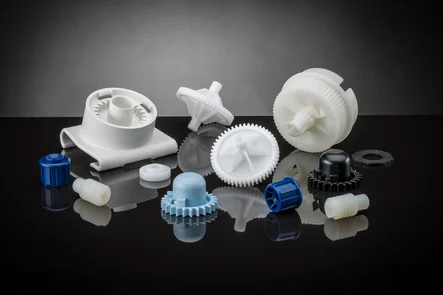
Can you provide examples of products or equipment that incorporate injection molded parts?
Yes, there are numerous products and equipment across various industries that incorporate injection molded parts. Injection molding is a widely used manufacturing process that enables the production of complex and precise components. Here are some examples of products and equipment that commonly incorporate injection molded parts:
1. Electronics and Consumer Devices:
– Mobile phones and smartphones: These devices typically have injection molded plastic casings, buttons, and connectors.
– Computers and laptops: Injection molded parts are used for computer cases, keyboard keys, connectors, and peripheral device housings.
– Appliances: Products such as televisions, refrigerators, washing machines, and vacuum cleaners often incorporate injection molded components for their casings, handles, buttons, and control panels.
– Audio equipment: Speakers, headphones, and audio players often use injection molded parts for their enclosures and buttons.
2. Automotive Industry:
– Cars and Trucks: Injection molded parts are extensively used in the automotive industry. Examples include dashboard panels, door handles, interior trim, steering wheel components, air vents, and various under-the-hood components.
– Motorcycle and Bicycle Parts: Many motorcycle and bicycle components are manufactured using injection molding, including fairings, handle grips, footrests, instrument panels, and engine covers.
– Automotive Lighting: Headlights, taillights, turn signals, and other automotive lighting components often incorporate injection molded lenses, housings, and mounts.
3. Medical and Healthcare:
– Medical Devices: Injection molding is widely used in the production of medical devices such as syringes, IV components, surgical instruments, respiratory masks, implantable devices, and diagnostic equipment.
– Laboratory Equipment: Many laboratory consumables, such as test tubes, petri dishes, pipette tips, and specimen containers, are manufactured using injection molding.
– Dental Equipment: Dental tools, orthodontic devices, and dental prosthetics often incorporate injection molded components.
4. Packaging Industry:
– Bottles and Containers: Plastic bottles and containers used for food, beverages, personal care products, and household chemicals are commonly produced using injection molding.
– Caps and Closures: Injection molded caps and closures are widely used in the packaging industry for bottles, jars, and tubes.
– Thin-Walled Packaging: Injection molding is used to produce thin-walled packaging products such as trays, cups, and lids for food and other consumer goods.
5. Toys and Games:
– Many toys and games incorporate injection molded parts. Examples include action figures, building blocks, puzzles, board game components, and remote-controlled vehicles.
6. Industrial Equipment and Tools:
– Industrial machinery: Injection molded parts are used in various industrial equipment and machinery, including components for manufacturing machinery, conveyor systems, and robotic systems.
– Power tools: Many components of power tools, such as housing, handles, switches, and guards, are manufactured using injection molding.
– Hand tools: Injection molded parts are incorporated into a wide range of hand tools, including screwdrivers, wrenches, pliers, and cutting tools.
These are just a few examples of products and equipment that incorporate injection molded parts. The versatility of injection molding allows for its application in a wide range of industries, enabling the production of high-quality components with complex geometries and precise specifications.
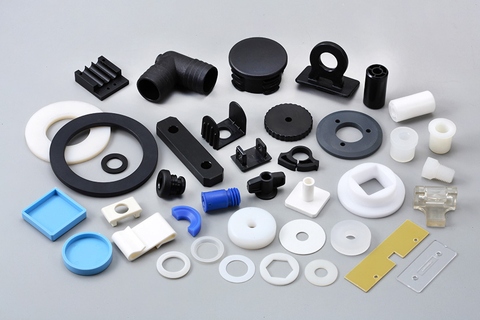
Can you describe the various post-molding processes, such as assembly or secondary operations, for injection molded parts?
Post-molding processes play a crucial role in the production of injection molded parts. These processes include assembly and secondary operations that are performed after the initial molding stage. Here’s a detailed explanation of the various post-molding processes for injection molded parts:
1. Assembly:
Assembly involves joining multiple injection molded parts together to create a finished product or sub-assembly. The assembly process can include various techniques such as mechanical fastening (screws, clips, or snaps), adhesive bonding, ultrasonic welding, heat staking, or solvent welding. Assembly ensures that the individual molded parts are securely combined to achieve the desired functionality and structural integrity of the final product.
2. Surface Finishing:
Surface finishing processes are performed to enhance the appearance, texture, and functionality of injection molded parts. Common surface finishing techniques include painting, printing (such as pad printing or screen printing), hot stamping, laser etching, or applying specialized coatings. These processes can add decorative features, branding elements, or improve the surface properties of the parts, such as scratch resistance or UV protection.
3. Machining or Trimming:
In some cases, injection molded parts may require additional machining or trimming to achieve the desired final dimensions or remove excess material. This can involve processes such as CNC milling, drilling, reaming, or turning. Machining or trimming is often necessary when tight tolerances, specific geometries, or critical functional features cannot be achieved solely through the injection molding process.
4. Welding or Joining:
Welding or joining processes are used to fuse or bond injection molded parts together. Common welding techniques for plastic parts include ultrasonic welding, hot plate welding, vibration welding, or laser welding. These processes create strong and reliable joints between the molded parts, ensuring structural integrity and functionality in the final product.
5. Insertion of Inserts:
Insertion involves placing metal or plastic inserts into the mold cavity before the injection molding process. These inserts can provide additional strength, reinforce threaded connections, or serve as mounting points for other components. Inserts can be placed manually or using automated equipment, and they become permanently embedded in the molded parts during the molding process.
6. Overmolding or Two-Shot Molding:
Overmolding or two-shot molding processes allow for the creation of injection molded parts with multiple layers or materials. In overmolding, a second material is molded over a pre-existing substrate, providing enhanced functionality, aesthetics, or grip. Two-shot molding involves injecting two different materials into different sections of the mold to create a single part with multiple colors or materials. These processes enable the integration of multiple materials or components into a single injection molded part.
7. Deflashing or Deburring:
Deflashing or deburring processes involve removing excess flash or burrs that may be present on the molded parts after the injection molding process. Flash refers to the excess material that extends beyond the parting line of the mold, while burrs are small protrusions or rough edges caused by the mold features. Deflashing or deburring ensures that the molded parts have smooth edges and surfaces, improving their appearance, functionality, and safety.
8. Inspection and Quality Control:
Inspection and quality control processes are performed to ensure that the injection molded parts meet the required specifications and quality standards. This can involve visual inspection, dimensional measurement, functional testing, or other specialized testing methods. Inspection and quality control processes help identify any defects, inconsistencies, or deviations that may require rework or rejection of the parts, ensuring that only high-quality parts are used in the final product or assembly.
9. Packaging and Labeling:
Once the post-molding processes are complete, the injection molded parts are typically packaged and labeled for storage, transportation, or distribution. Packaging can include individual part packaging, bulk packaging, or custom packaging based on specific requirements. Labeling may involve adding product identification, barcodes, or instructions for proper handling or usage.
These post-molding processes are vital in achieving the desired functionality, appearance, and quality of injection molded parts. They enable the integration of multiple components, surface finishing, dimensional accuracy, and assembly of the final products or sub-assemblies.
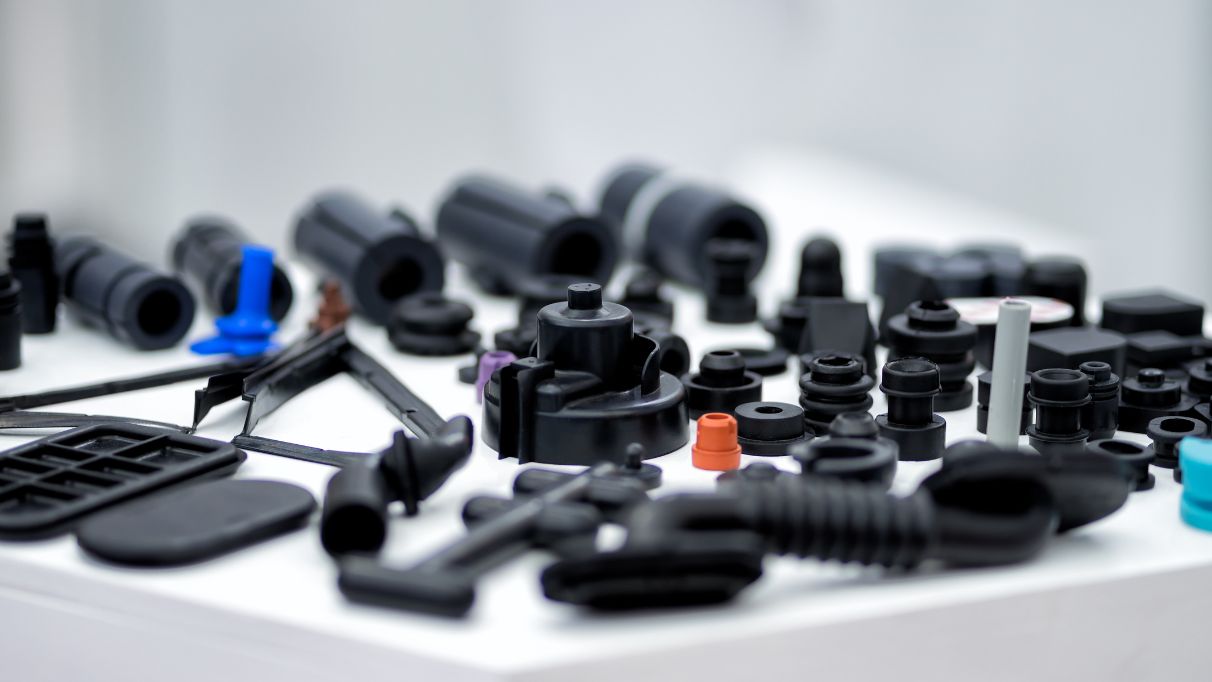
Can you describe the range of materials that can be used for injection molding?
Injection molding offers a wide range of materials that can be used to produce parts with diverse properties and characteristics. The choice of material depends on the specific requirements of the application, including mechanical properties, chemical resistance, thermal stability, transparency, and cost. Here’s a description of the range of materials commonly used for injection molding:
1. Thermoplastics:
Thermoplastics are the most commonly used materials in injection molding due to their versatility, ease of processing, and recyclability. Some commonly used thermoplastics include:
- Polypropylene (PP): PP is a lightweight and flexible thermoplastic with excellent chemical resistance and low cost. It is widely used in automotive parts, packaging, consumer products, and medical devices.
- Polyethylene (PE): PE is a versatile thermoplastic with excellent impact strength and chemical resistance. It is used in various applications, including packaging, pipes, automotive components, and toys.
- Polystyrene (PS): PS is a rigid and transparent thermoplastic with good dimensional stability. It is commonly used in packaging, consumer goods, and disposable products.
- Polycarbonate (PC): PC is a transparent and impact-resistant thermoplastic with high heat resistance. It finds applications in automotive parts, electronic components, and optical lenses.
- Acrylonitrile Butadiene Styrene (ABS): ABS is a versatile thermoplastic with a good balance of strength, impact resistance, and heat resistance. It is commonly used in automotive parts, electronic enclosures, and consumer products.
- Polyvinyl Chloride (PVC): PVC is a durable and flame-resistant thermoplastic with good chemical resistance. It is used in a wide range of applications, including construction, electrical insulation, and medical tubing.
- Polyethylene Terephthalate (PET): PET is a strong and lightweight thermoplastic with excellent clarity and barrier properties. It is commonly used in packaging, beverage bottles, and textile fibers.
2. Engineering Plastics:
Engineering plastics offer enhanced mechanical properties, heat resistance, and dimensional stability compared to commodity thermoplastics. Some commonly used engineering plastics in injection molding include:
- Polyamide (PA/Nylon): Nylon is a strong and durable engineering plastic with excellent wear resistance and low friction properties. It is used in automotive components, electrical connectors, and industrial applications.
- Polycarbonate (PC): PC, mentioned earlier, is also considered an engineering plastic due to its exceptional impact resistance and high-temperature performance.
- Polyoxymethylene (POM/Acetal): POM is a high-strength engineering plastic with low friction and excellent dimensional stability. It finds applications in gears, bearings, and precision mechanical components.
- Polyphenylene Sulfide (PPS): PPS is a high-performance engineering plastic with excellent chemical resistance and thermal stability. It is used in electrical and electronic components, automotive parts, and industrial applications.
- Polyetheretherketone (PEEK): PEEK is a high-performance engineering plastic with exceptional heat resistance, chemical resistance, and mechanical properties. It is commonly used in aerospace, medical, and industrial applications.
3. Thermosetting Plastics:
Thermosetting plastics undergo a chemical crosslinking process during molding, resulting in a rigid and heat-resistant material. Some commonly used thermosetting plastics in injection molding include:
- Epoxy: Epoxy resins offer excellent chemical resistance and mechanical properties. They are commonly used in electrical components, adhesives, and coatings.
- Phenolic: Phenolic resins are known for their excellent heat resistance and electrical insulation properties. They find applications in electrical switches, automotive parts, and consumer goods.
- Urea-formaldehyde (UF) and Melamine-formaldehyde (MF): UF and MF resins are used for molding electrical components, kitchenware, and decorative laminates.
4. Elastomers:
Elastomers, also known as rubber-like materials, are used to produce flexible and elastic parts. They provide excellent resilience, durability, and sealing properties. Some commonly used elastomers in injection molding include:
- Thermoplastic Elastomers (TPE): TPEs are a class of materials that combine the characteristics of rubber and plastic. They offer flexibility, good compression set, and ease of processing. TPEs find applications in automotive components, consumer products, and medical devices.
- Silicone: Silicone elastomers provide excellent heat resistance, electrical insulation, and biocompatibility. They are commonly used in medical devices, automotive seals, and household products.
- Styrene Butadiene Rubber (SBR): SBR is a synthetic elastomer with good abrasion resistance and low-temperature flexibility. It is used in tires, gaskets, and conveyor belts.
- Ethylene Propylene Diene Monomer (EPDM): EPDM is a durable elastomer with excellent weather resistance and chemical resistance. It finds applications in automotive seals, weatherstripping, and roofing membranes.
5. Composites:
Injection molding can also be used to produce parts made of composite materials, which combine two or more different types of materials to achieve specific properties. Commonly used composite materials in injection molding include:
- Glass-Fiber Reinforced Plastics (GFRP): GFRP combines glass fibers with thermoplastics or thermosetting resins to enhance mechanical strength, stiffness, and dimensional stability. It is used in automotive components, electrical enclosures, and sporting goods.
- Carbon-Fiber Reinforced Plastics (CFRP): CFRP combines carbon fibers with thermosetting resins to produce parts with exceptional strength, stiffness, and lightweight properties. It is commonly used in aerospace, automotive, and high-performance sports equipment.
- Metal-Filled Plastics: Metal-filled plastics incorporate metal particles or fibers into thermoplastics to achieve properties such as conductivity, electromagnetic shielding, or enhanced weight and feel. They are used in electrical connectors, automotive components, and consumer electronics.
These are just a few examples of the materials used in injection molding. There are numerous other specialized materials available, each with its own unique properties, such as flame retardancy, low friction, chemical resistance, or specific certifications for medical or food-contact applications. The selection of the material depends on the desired performance, cost considerations, and regulatory requirements of the specific application.


editor by CX 2024-02-20