
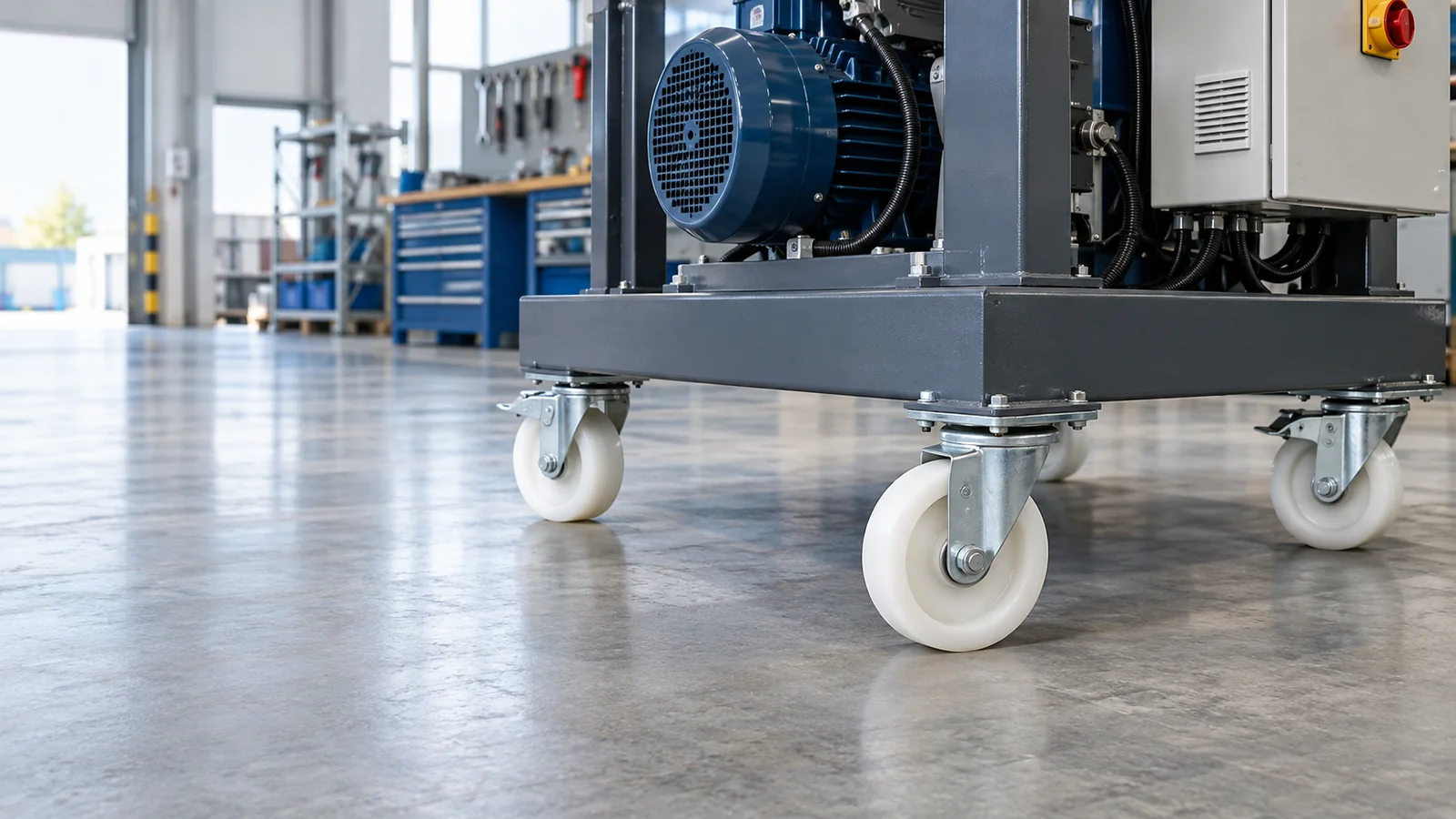
Frein de roue vs blocage total : qu’est-ce qui est réellement bloqué ?
Un guide d'achat pratique comparant les roulettes à frein et les roulettes à blocage total, axé sur des conditions de fonctionnement mesurables et des décisions prêtes pour les demandes de devis.
La question porte en réalité sur le principe du freinage par roue ou du blocage total.
L'intérêt pratique du frein de roue par rapport au blocage total des roulettes n'apparaît que lorsque la spécification est liée à l'équipement qui doit se déplacer, au sol sur lequel il roule et à l'interface qui supporte la charge.
Pour les chariots industriels, les bâtis de machines et les châssis mobiles nécessitant une direction ou un contrôle de stationnement précis, la géométrie de montage, la configuration pivotante/fixe, la fonction de commande, la hauteur d'installation et le dégagement doivent être considérés comme le premier point de contrôle technique. Une fois ces éléments définis, le diamètre, la largeur et le matériau des roues, la disposition des roulements et les détails de montage peuvent être examinés de manière logique.
Évitez de supposer qu'une roue plus grande, un polymère plus dur ou un support plus lourd résolvent automatiquement le problème. Deux supports peuvent se ressembler, tout en utilisant des configurations de perçage, des déports, des systèmes de verrouillage ou des angles de pivotement différents. Par conséquent, une demande de devis fiable doit mentionner les dimensions de la platine ou de la tige, les fixations, la hauteur d'installation, la disposition des roues, le système de verrouillage, la charge et la quantité avant de soumettre une configuration pour devis.
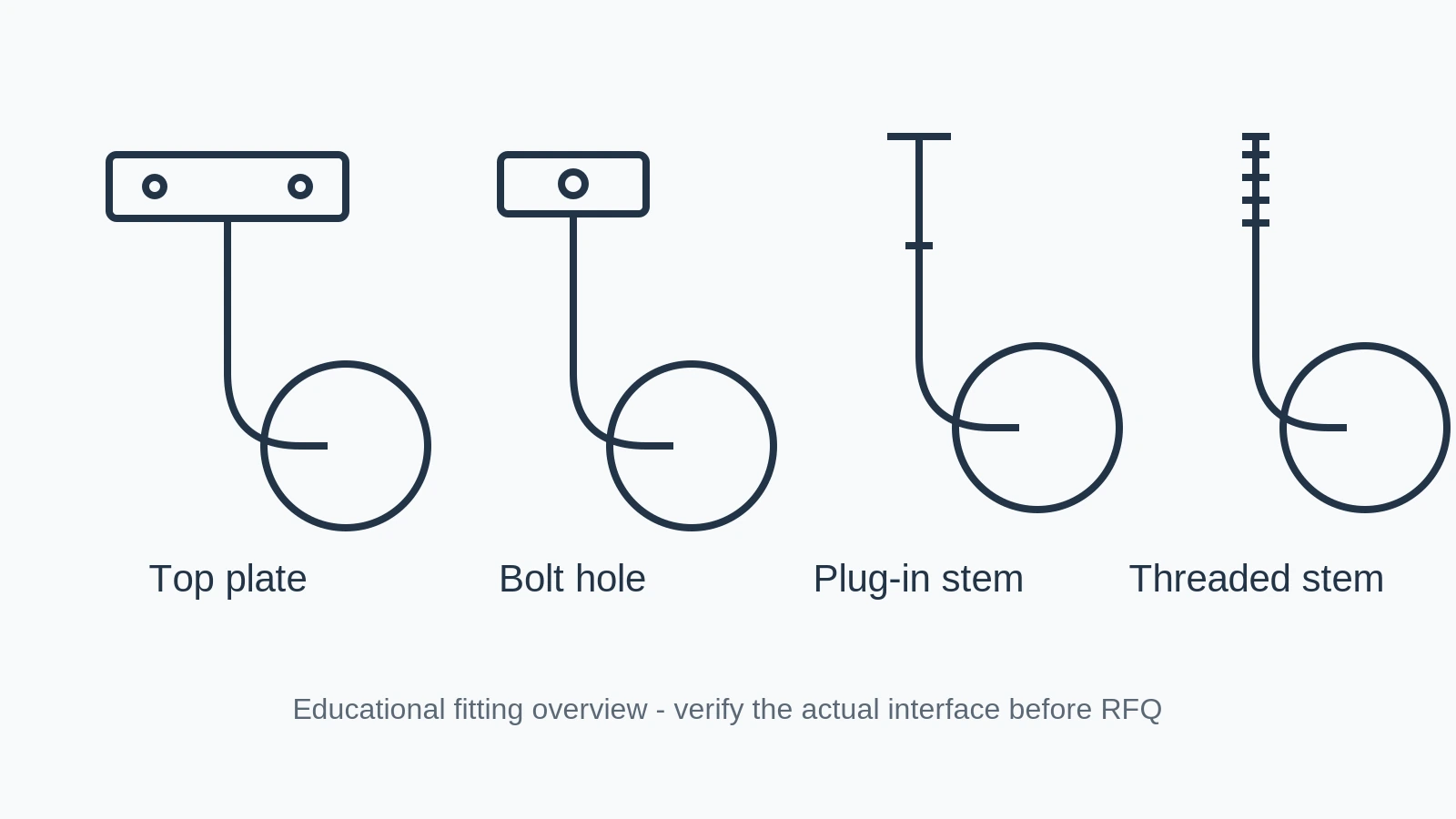
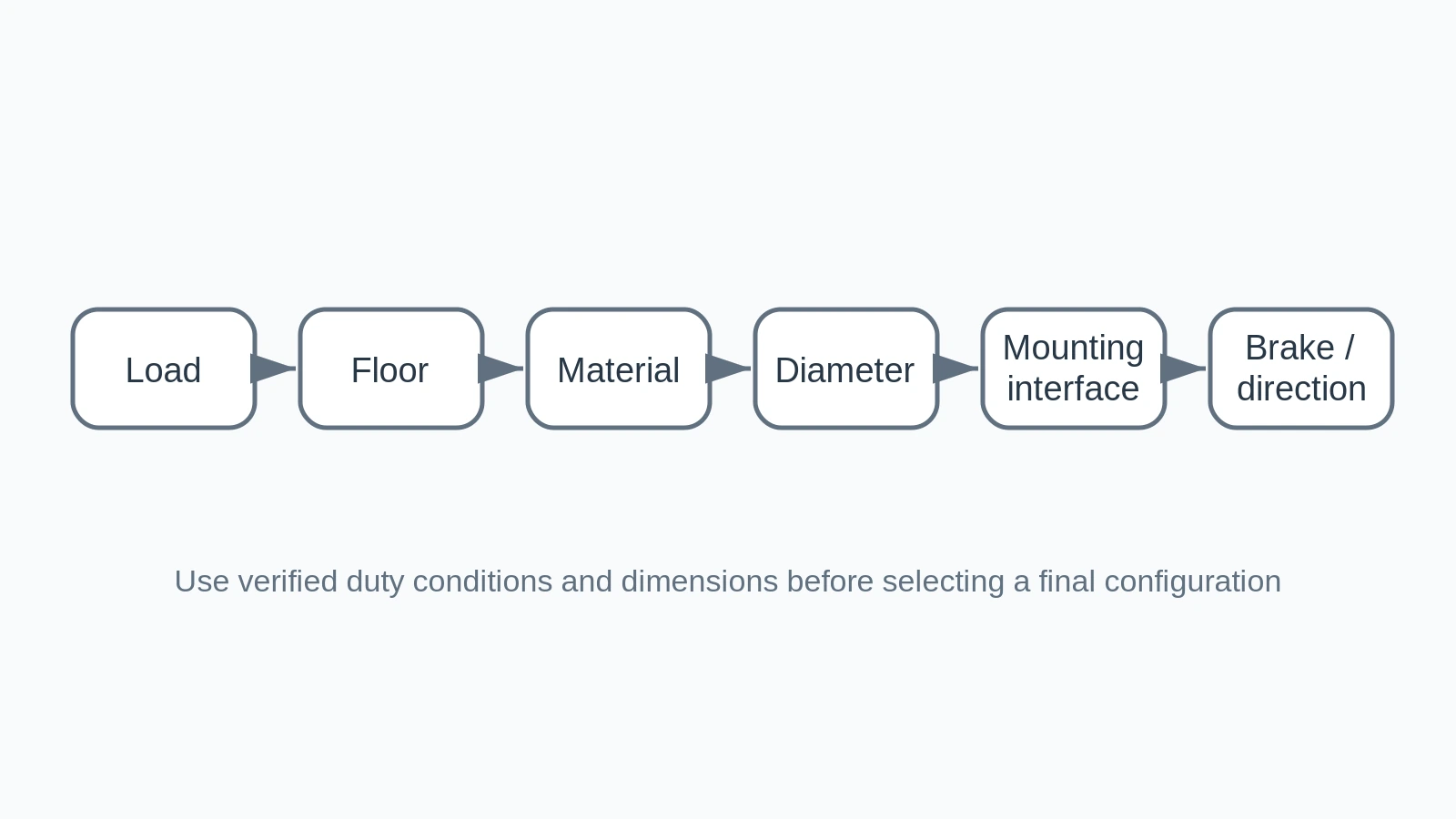
Définir la plage de fonctionnement avant de comparer les produits — Frein de roue vs Blocage total
Avant de comparer les produits, décrivez la fonction de l'équipement en une phrase : ce qui doit se déplacer, la charge supportée, le parcours et la fréquence des repositionnements. Cette description permet de comparer les roulettes avec frein et les roulettes à blocage total sans ériger un paramètre en règle générale.
Pour les chariots industriels, les bâtis de machines et les châssis mobiles nécessitant une direction ou un contrôle de stationnement précis, la première analyse doit porter sur la géométrie de montage, la configuration pivotante/fixe, la fonction de commande, la hauteur d'installation et le dégagement. Si une valeur est inconnue, il convient de la noter pour une mesure préalable plutôt que d'utiliser une valeur standard. L'objectif de la demande de devis est de combler les lacunes, et non de les masquer. Concernant le choix entre frein de roue et blocage total, cette vérification doit être intégrée à l'analyse des charges, du sol, des interfaces et des mouvements utilisée pour comparer les configurations présélectionnées.
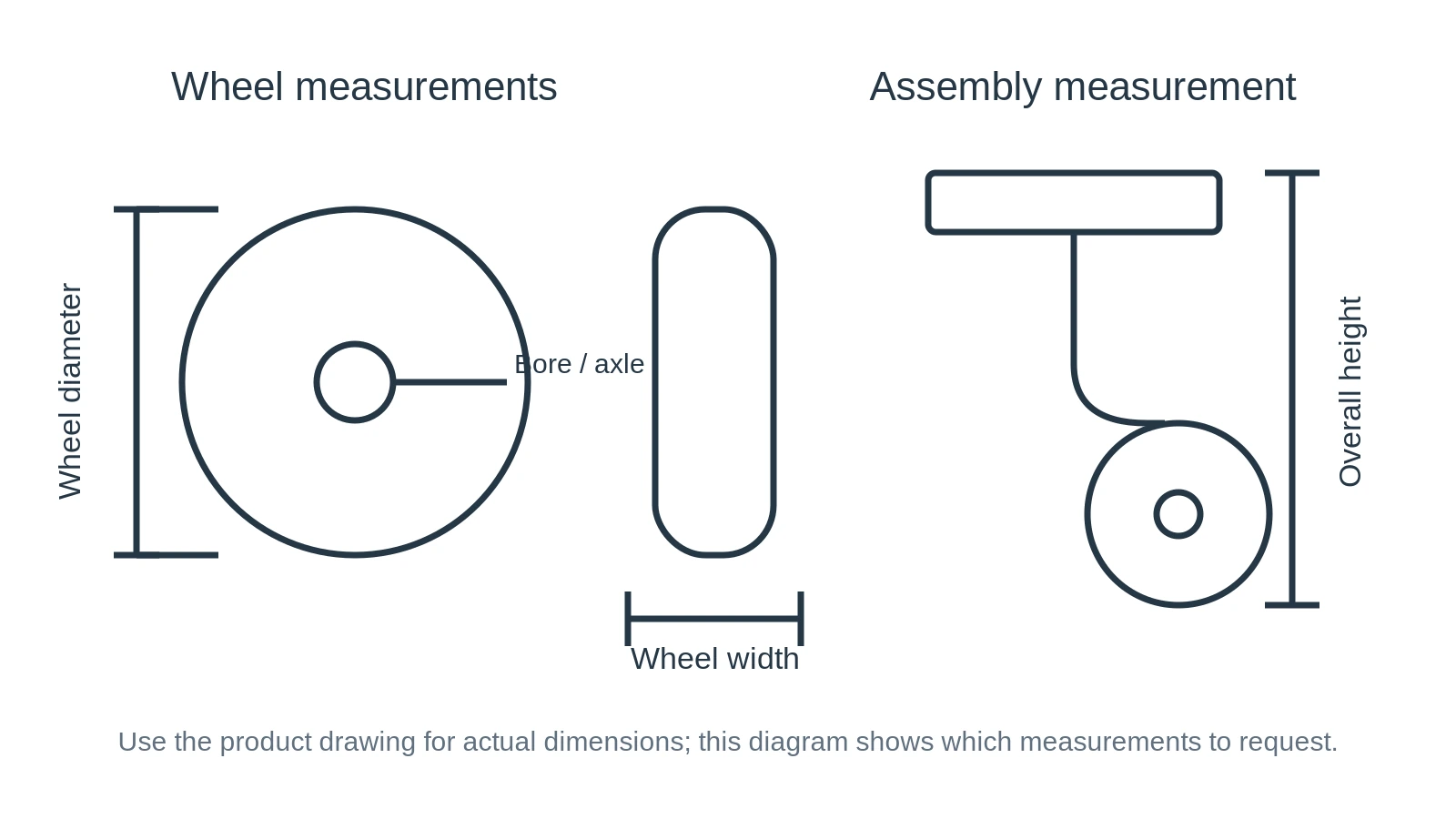
Mesurez l'interface qui peut faire toute la différence pour le remplacement : frein de roue ou blocage total ?
Les opérations de remplacement nécessitent une procédure de mesure systématique. Notez le diamètre et la largeur de la roue, puis examinez le moyeu : type d’alésage ou de roulement, diamètre de l’essieu, longueur du moyeu et entretoises. Pour les ensembles complets, ajoutez la hauteur installée et la géométrie de montage. Photographiez l’outil de mesure en place lorsqu’une dimension est difficile à décrire. Pour comparer le freinage de roue et le blocage total, utilisez cette vérification dans le cadre de la même documentation relative à la charge, au sol, à l’interface et aux mouvements que celle utilisée pour comparer les configurations présélectionnées.
N'utilisez pas l'usure de la bande de roulement comme seule référence si le diamètre d'origine est important. Une roue très usée peut donner l'impression que la roue de remplacement est trop grande alors que le problème réel est une perte de matière. De même, une fourche tordue ou une entretoise improvisée peuvent modifier le déport apparent. Pour comparer le freinage par roue et le blocage total, utilisez cette vérification dans le cadre de la même analyse de charge, de sol, d'interface et de mouvement que celle utilisée pour comparer les configurations présélectionnées.
Pourquoi une même charge se comporte différemment selon les étages — Freinage des roues vs Blocage total
La capacité de charge dépend des mouvements de l'équipement. Le passage d'un chariot sur un seuil peut engendrer des forces d'impact absentes lors d'un stationnement statique. Un sol irrégulier peut déplacer la charge de quatre points d'appui nominaux à trois. La roue jockey d'une remorque peut supporter une charge verticale modeste sur la barre d'attelage, tout en nécessitant un effort de manœuvre important sur un terrain meuble. Pour comparer le freinage des roues et le blocage total, utilisez cette vérification dans le cadre de l'analyse des charges, du sol, des interfaces et des mouvements utilisée pour comparer les configurations présélectionnées.
Enregistrez la charge normale maximale, la charge exceptionnelle, le type de sol (au sol ou ailleurs), la distance parcourue et la fréquence des obstacles. Cette combinaison offre une base de sélection plus pertinente qu'un poids brut unique.
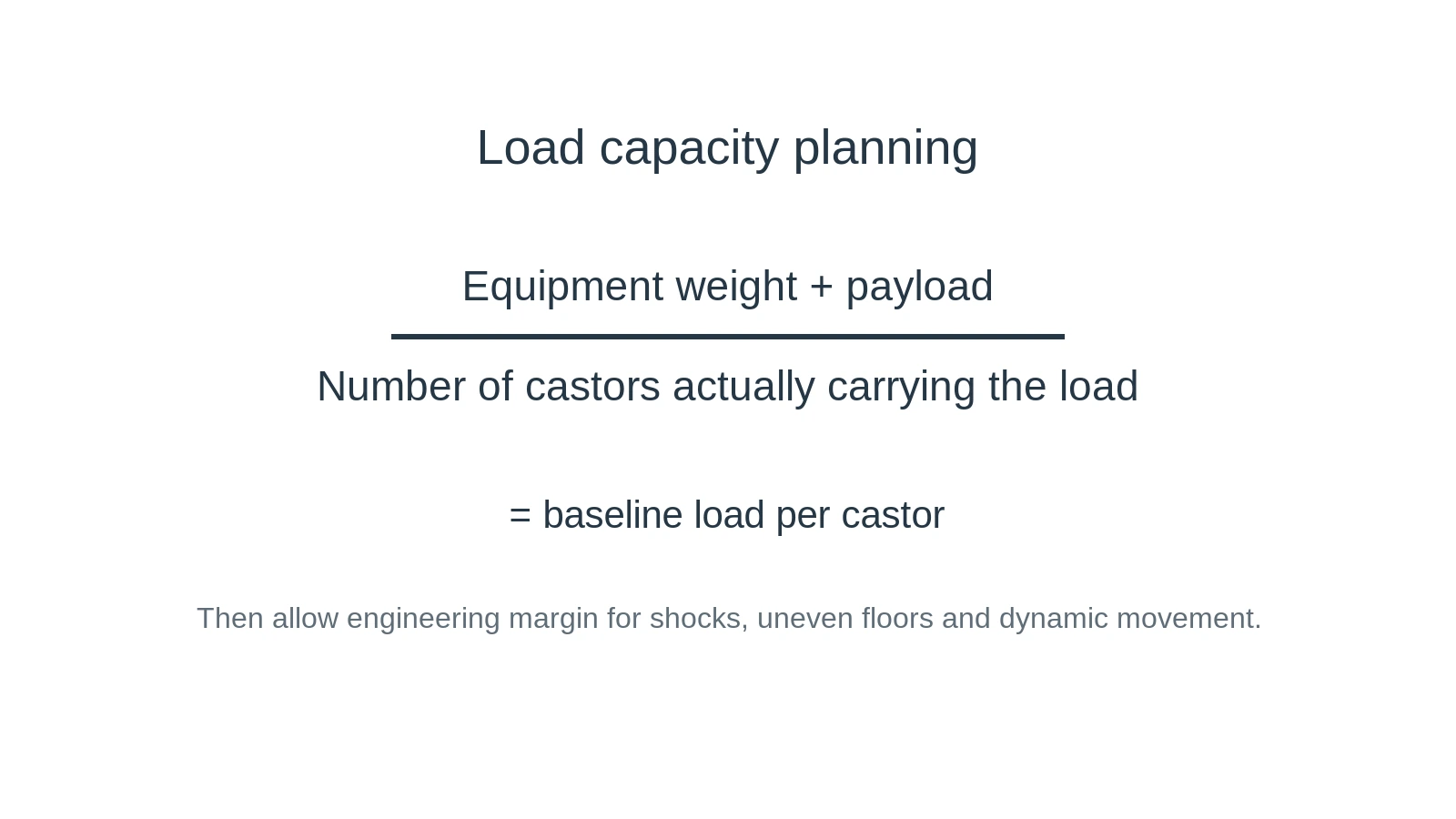
La fonction de contrôle doit correspondre au mouvement : frein de roue ou blocage total.
Un frein de roue agit sur la rotation de la roue ; un verrou de pivot contrôle la direction du support ; un blocage total peut contrôler les deux. Une roulette fixe ne pivote pas. Ces fonctions induisent des comportements de direction différents, la configuration dépend donc de la longueur de l'allée, de l'espace de braquage, de l'accès pour l'opérateur et du mode de stationnement de l'équipement. Pour comparer le frein de roue et le blocage total, utilisez cette vérification dans le cadre de la même analyse des charges, du sol, des interfaces et des mouvements que celle utilisée pour comparer les configurations présélectionnées.
Évaluez la configuration des roues comme celle d'un véhicule complet plutôt que coin par coin.
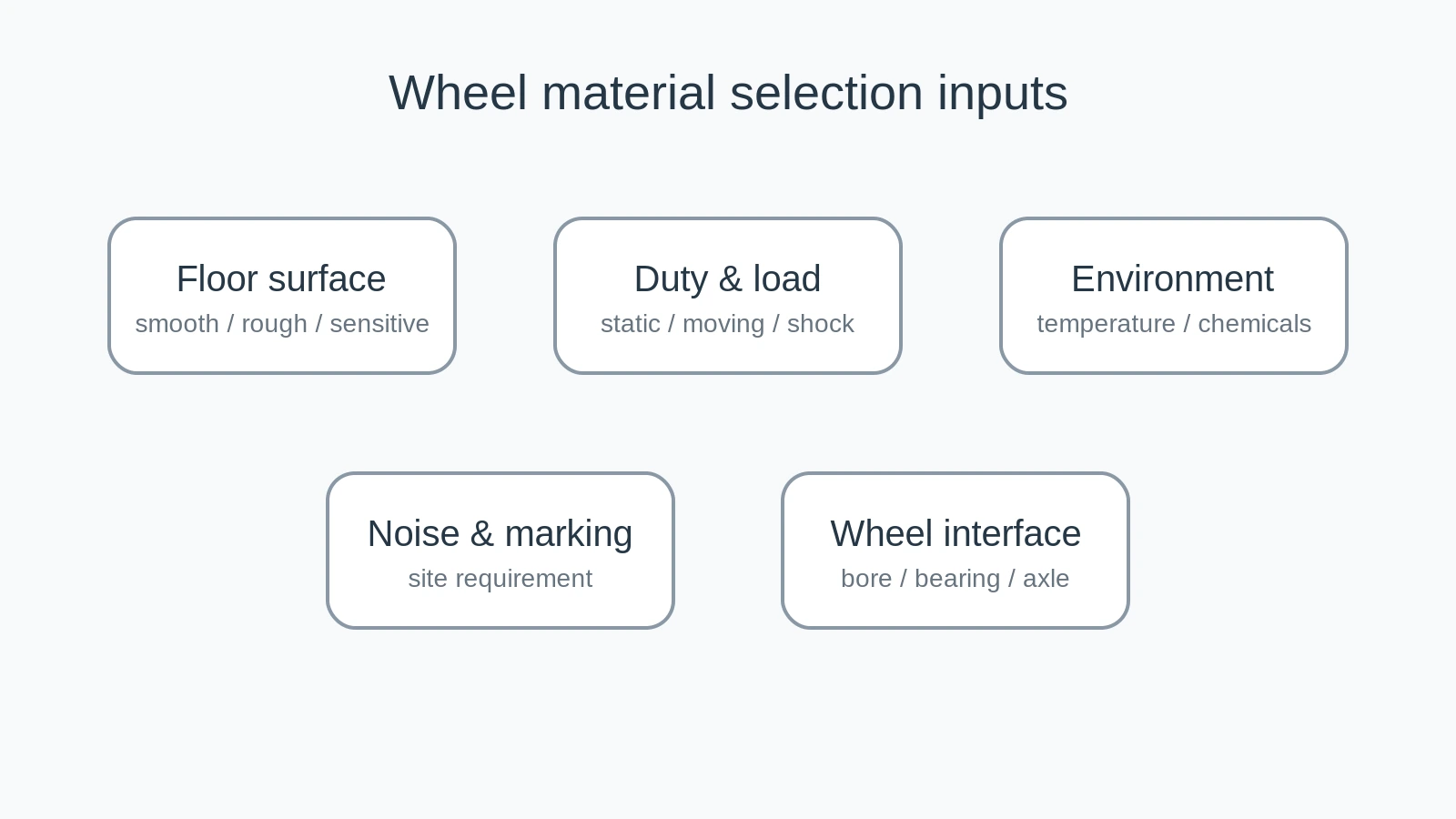
Modes de défaillance à surveiller lors du freinage de roue par rapport au blocage total
Deux supports peuvent se ressembler malgré des configurations de perçage, des décalages, des systèmes de verrouillage ou des angles de pivotement différents. Des symptômes similaires peuvent également provenir de fixations desserrées, de roulements usés, d'un mauvais alignement, de sols contaminés ou d'un châssis non d'équerre. Avant d'incriminer le matériau de la roue, inspectez la fixation et comparez l'usure selon les positions. Pour comparer le freinage de roue et le blocage total, effectuez cette vérification en même temps que l'analyse de la charge, du sol, de l'interface et des mouvements utilisée pour comparer les configurations présélectionnées.
Si un seul coin s'use rapidement, examinez sa charge et son alignement. Si toutes les roues présentent les mêmes dommages, vérifiez les spécifications de service, de sol et de matériau. Si l'usure s'accélère après une modification du processus, notez le nouveau contaminant, l'agent de nettoyage, la température ou le type de déplacement. Pour comparer le freinage des roues et le blocage total, utilisez ce contrôle dans le cadre de la même analyse de charge, de sol, d'interface et de mouvement que celle utilisée pour comparer les configurations présélectionnées.
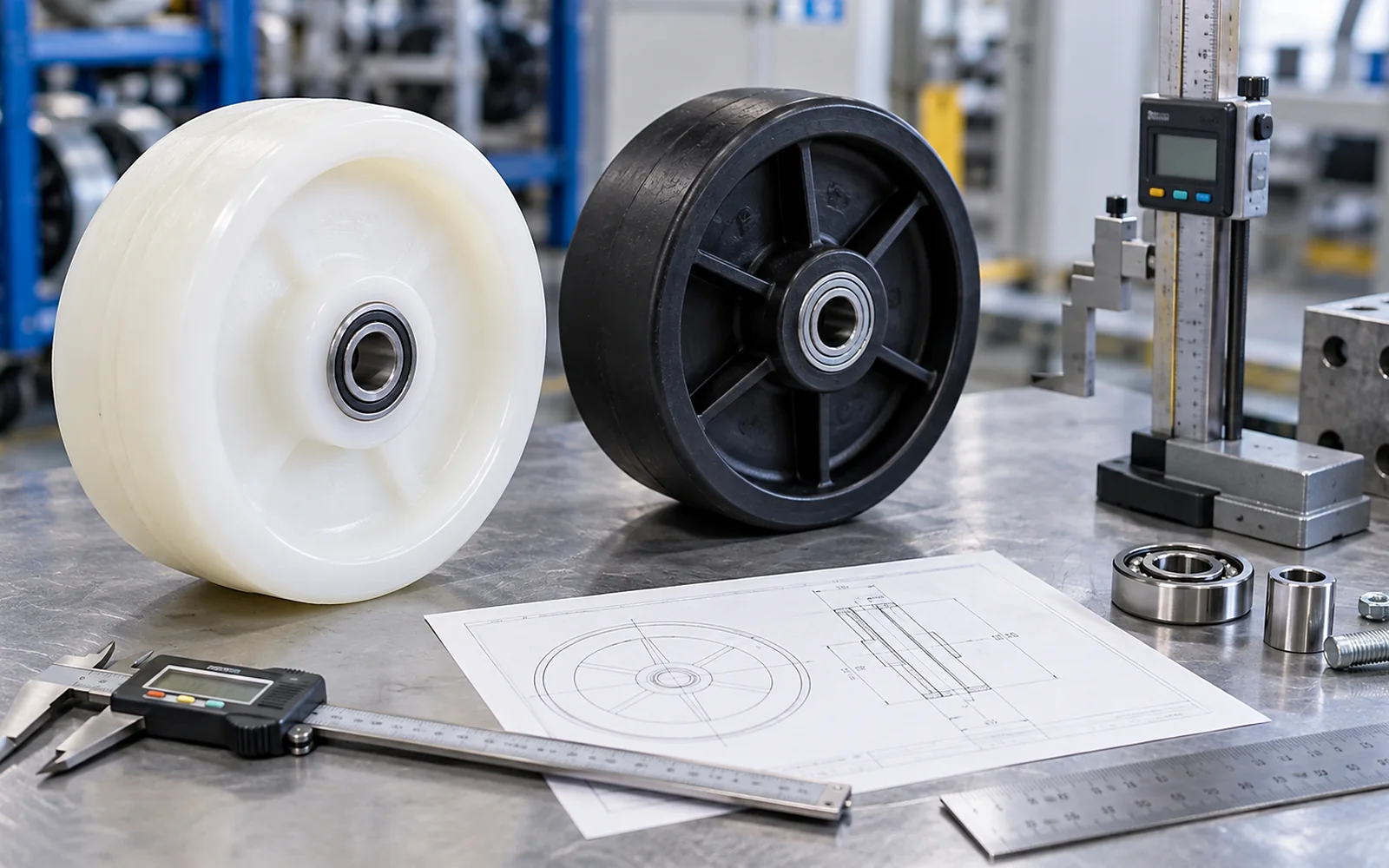
Décrivez l'exigence de manière à ce qu'un autre acheteur puisse la reproduire : Frein de roue vs Blocage total
Utilisez une ligne par configuration et rédigez l'exigence de manière à ce qu'un autre ingénieur puisse la comprendre sans avoir à consulter la conversation initiale. Indiquez les dimensions de la plaque ou de la tige, les fixations, la hauteur d'installation, la disposition des roues, la fonction de verrouillage, la charge et la quantité. Joignez le schéma ou les photos correspondants. Si une dimension d'interface est inconnue, indiquez « mesure en cours » plutôt que de donner une valeur approximative. Pour la comparaison entre le frein de roue et le verrouillage total, utilisez cette vérification dans le cadre des mêmes données relatives à la charge, au sol, à l'interface et au mouvement utilisées pour comparer les configurations présélectionnées.
Pour les commandes multimodèles, veuillez séparer les quantités et identifier les dimensions communes.
Liste de contrôle pour décider entre frein de roue et blocage total
- La charge normale maximale est-elle connue ?
- Les roues de support peuvent-elles répartir la charge de manière égale ?
- Le sol/l'étage réel est-il décrit ?
- Les dimensions des roues et de l'interface sont-elles mesurées ?
- La fonction de contrôle est-elle claire ?
- Des exigences particulières en matière de matériaux, de finitions ou d'environnement sont-elles précisées ?
- La quantité est-elle associée au bon modèle ?
Continuez avec le page de sélection primaire, comparer familles de produits actuelles, ou utilisez le Formulaire de demande de prix.
Transformez le sujet en une décision au niveau de l'équipement : frein de roue ou blocage total ?
Les points ci-dessous appliquent le sujet de l'article à la mesure, à l'installation et à l'observation sur le terrain sans considérer une étiquette de produit générique comme une spécification complète.
Conservez une référence approuvée : Frein de roue vs Blocage total
Une fois une configuration acceptée, conservez le plan approuvé, la référence du modèle et les dimensions clés. Les commandes ultérieures devront toujours confirmer que l'équipement et sa fonction n'ont pas changé, mais la référence approuvée réduit toute ambiguïté. Pour la comparaison entre le freinage des roues et le blocage total, utilisez cette vérification dans le cadre du même enregistrement de charge, de sol, d'interface et de mouvement utilisé pour comparer les configurations présélectionnées.
Les données d'entretien pertinentes pour le freinage par rapport au blocage total des roues sont les suivantes : frein de roue ou blocage total.
Consignez la position de la roue, sa date d'installation, son utilisation, le motif de son remplacement et tout événement inhabituel au sol. Dans le cadre d'un programme de gestion des roulettes (avec ou sans frein), cet historique simple permet de déterminer si l'usure est aléatoire, liée à une position spécifique ou à un changement d'environnement. Une roue qui présente des défaillances répétées au niveau d'un même coin peut indiquer une concentration de charge, un problème d'alignement ou une contamination locale plutôt qu'un problème général de matériau.
Lors du démontage de l'ancienne roue, inspectez l'essieu, les entretoises, les roulements, le support et les fixations. Notez les mesures relatives aux dimensions de la platine ou de la tige, aux fixations, à la hauteur d'installation, à la configuration de la roue, au fonctionnement du blocage, à la charge et à la quantité. Si un composant a été modifié en service, photographiez la modification avant d'installer le nouvel élément et déterminez si cette modification doit être intégrée aux spécifications officielles de l'équipement. Pour la comparaison entre le freinage de roue et le blocage total, utilisez cette vérification dans le cadre de l'analyse des charges, du sol, de l'interface et des mouvements utilisée pour comparer les configurations présélectionnées.
Que faut-il observer lors du freinage de la roue par rapport au blocage total ? ...
Avant toute utilisation normale, effectuez un test de freinage de roue ou de blocage total sous charge contrôlée et à basse vitesse. Surveillez les frottements, les contacts avec les supports, le jeu de la roue, l'instabilité de la direction, le mouvement des fixations et toute variation de la hauteur du plateau ou du timon. L'objectif est de vérifier les hypothèses formulées lors de la sélection, et non simplement de confirmer la rotation de la roue.
Pour les chariots industriels, les bâtis de machines et les châssis mobiles nécessitant une direction ou un contrôle de stationnement prévisibles, incluez la transition de sol normale la plus exigeante lors de l'essai initial. Si le système doit franchir un seuil, une rampe ou un joint rugueux, observez son comportement à cet endroit. Documentez le résultat en utilisant la même référence de modèle que celle de la demande de devis afin que les commandes ultérieures disposent d'une base de référence utile, sans avoir à se fier à sa mémoire. Pour le contrôle du freinage des roues par rapport au blocage total, utilisez ce test dans le cadre de la même documentation relative à la charge, au sol, à l'interface et au mouvement que celle utilisée pour comparer les configurations présélectionnées.
Décrivez la pire situation normale : freinage de roue ou blocage total ?
La question « Frein de roue ou blocage total : qu’est-ce qui est réellement bloqué ? » n’a pas d’intérêt pratique et ne se résume pas à une réponse par oui ou par non. Le contexte et l’application de la question sont déterminants. Il convient de préciser la configuration des roues (pivotantes et fixes), le déport de pivotement, la rigidité de montage, l’empattement, la vitesse, la longueur de l’allée, l’état du sol, la fonction de blocage et la répartition de la charge. Le regroupement de ces informations permet de distinguer une question d’identification de produit d’une question de sélection technique et évite de considérer comme interchangeables des pièces visuellement similaires.
Utilisez la condition normale la plus exigeante plutôt qu'une description optimale. Si l'équipement franchit parfois un seuil, fonctionne en extérieur, supporte une charge utile irrégulière ou n'est manœuvré qu'après de longues périodes de charge statique, tenez compte de cette condition. L'objectif est de définir une exigence reproductible qu'un autre ingénieur ou acheteur puisse comprendre sans avoir à examiner le composant d'origine. Pour le contrôle du freinage des roues par rapport au blocage total, utilisez-le dans le cadre de la même documentation relative à la charge, au sol, à l'interface et aux mouvements que celle utilisée pour comparer les configurations présélectionnées.
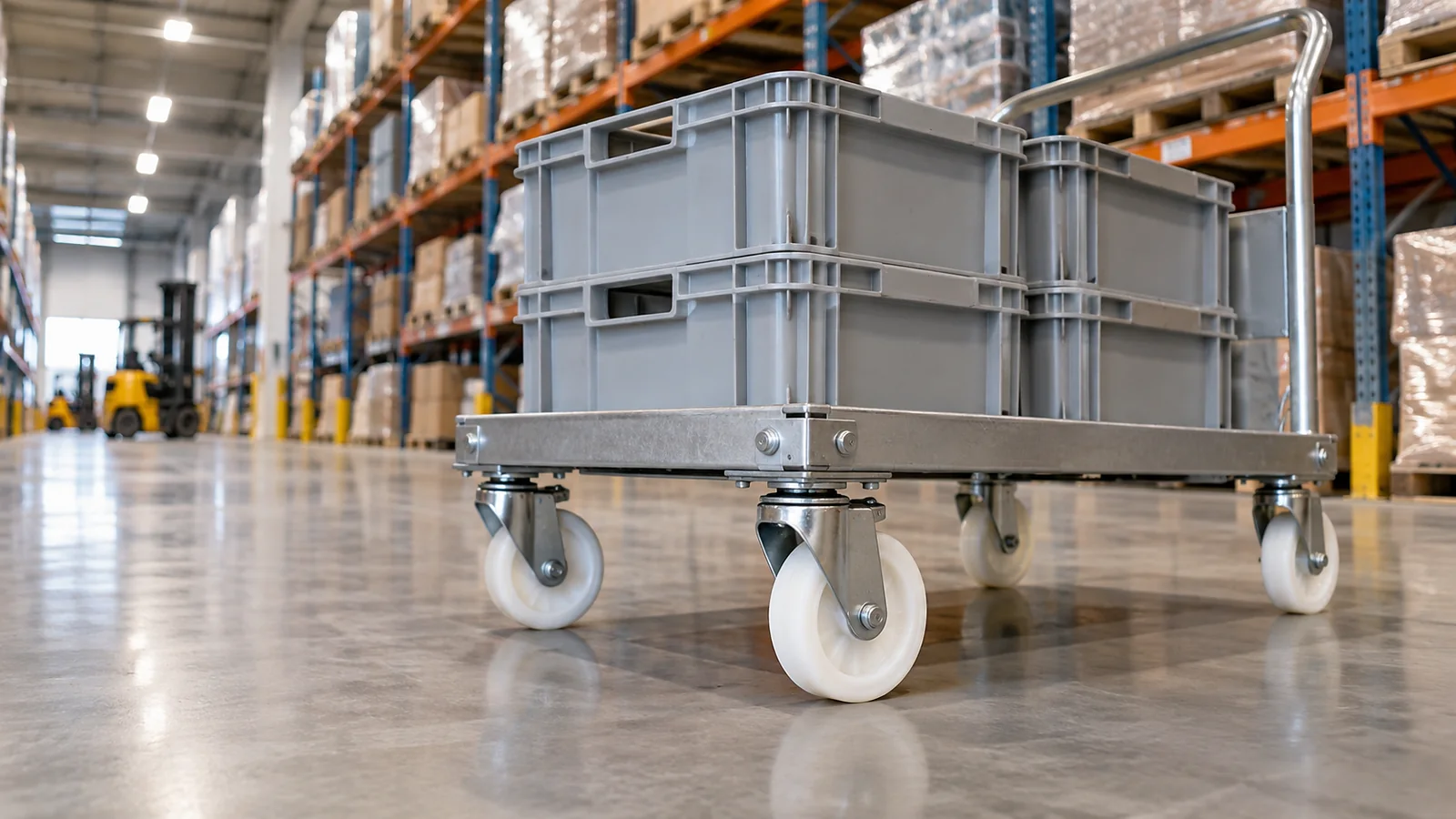
Identification distincte des spécifications — Frein de roue vs Blocage total
Pour ce sujet, consignez la disposition des roues fixes et pivotantes, le déport de pivotement, la rigidité de montage, l'empattement, la vitesse, la longueur de l'allée, l'état du sol, le fonctionnement du verrouillage et la répartition de la charge. Utilisez des photographies cotées lorsqu'un dessin n'est pas disponible et indiquez les points de référence utilisés pour chaque mesure. Si l'ancienne pièce est usée, tordue ou réparée, signalez la dimension affectée au lieu de considérer la géométrie endommagée comme cible de conception. Pour la comparaison entre le frein de roue et le verrouillage total, utilisez cette vérification dans le cadre de la même documentation relative à la charge, au sol, à l'interface et au mouvement que celle utilisée pour comparer les configurations présélectionnées.
Un tableau comparatif est plus efficace avec une configuration par colonne ou par ligne. Veillez à bien séparer les valeurs mesurées, les valeurs requises et les préférences optionnelles. Cette simple séparation réduit le risque qu'une proposition fournisseur ou une ancienne valeur de catalogue soit copiée sans vérification dans le cahier des charges. Elle facilite également le contrôle des révisions de devis ultérieures. Pour la comparaison entre le freinage des roues et le blocage total, utilisez cette vérification dans le cadre du même enregistrement de charge, de sol, d'interface et de mouvement utilisé pour comparer les configurations présélectionnées.

Vérifiez la configuration sélectionnée dans le contexte du service : Frein de roue ou blocage total
Une fois l'équipement installé, déplacez-le lentement en ligne droite et en virage, actionnez chaque verrou séparément, franchissez les joints de sol habituels et observez les vibrations, la traction, le frottement des roues, le mouvement des supports et l'effort requis de l'opérateur. Le premier essai doit être suffisamment lent pour observer la roue et le montage, et non pas simplement pour vérifier que l'équipement peut se déplacer. Recherchez les frottements, les mouvements latéraux inattendus, le mouvement des fixations, le balancement des roues, les interférences et toute variation de l'effort de l'opérateur. Pour comparer le freinage des roues et le blocage total, utilisez ce contrôle dans le cadre de la même analyse de charge, de sol, d'interface et de mouvement que celle utilisée pour comparer les configurations présélectionnées.
Si le résultat est insatisfaisant, notez le symptôme avant de modifier plusieurs variables simultanément. Une modification contrôlée (diamètre des roues, matériau, alignement du montage ou configuration de la direction, par exemple) fournit des informations plus utiles que le remplacement de l'ensemble complet, au risque de perdre la cause du problème initial. Pour la comparaison entre le freinage des roues et le blocage total, utilisez ce contrôle dans le cadre de l'enregistrement des charges, du plancher, de l'interface et des mouvements utilisé pour comparer les configurations présélectionnées.
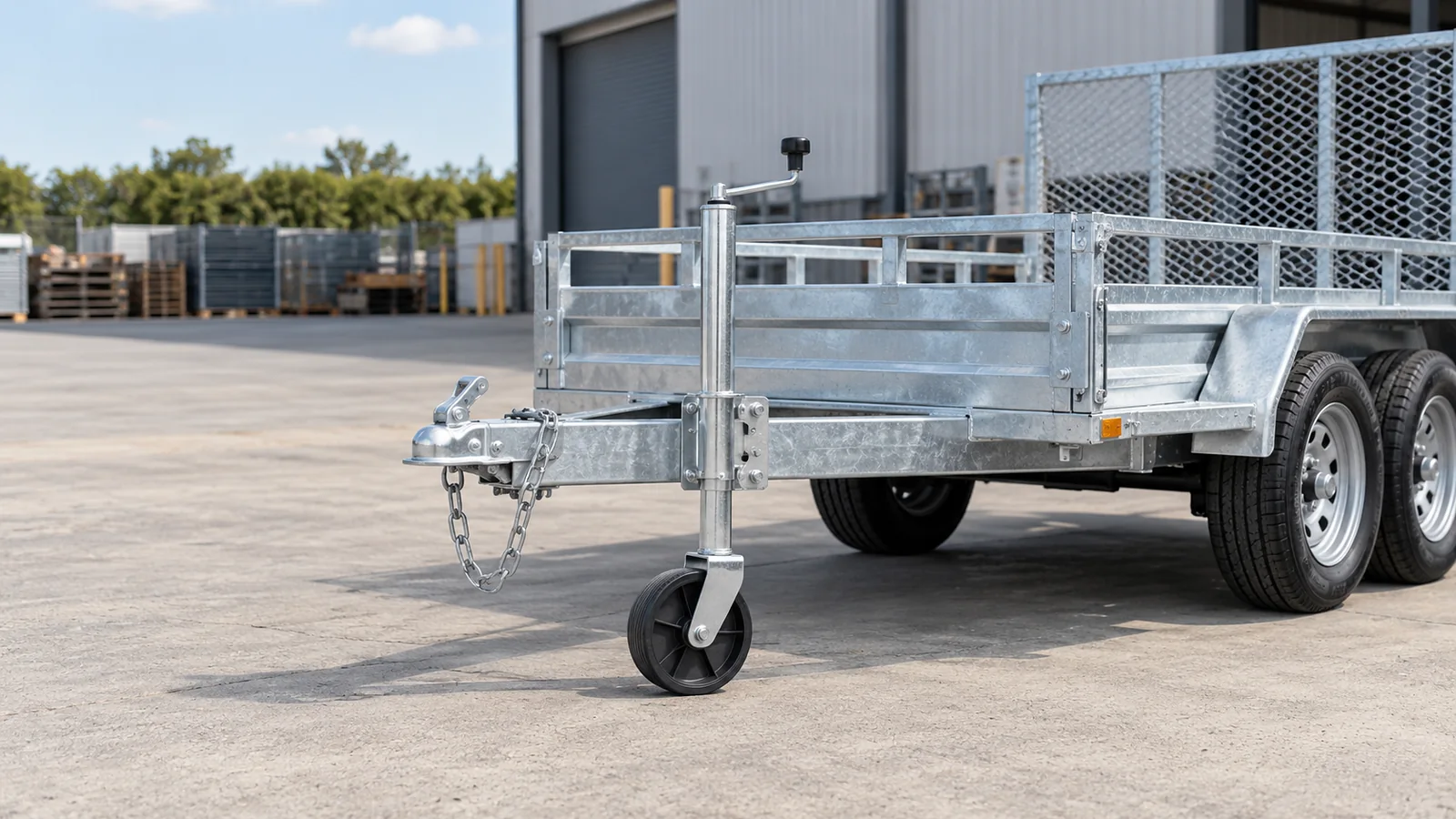
Distinguer les symptômes des composants des causes systémiques dans « Frein de roue vs blocage total : qu'est-ce qui est réellement bloqué ? »
Si un chariot dévie de sa trajectoire, oscille, frotte ou devient difficile à diriger, vérifiez la répartition de la charge, l'alignement des fixations, l'état du châssis, l'usure des roues et les joints du sol avant de remplacer une roulette par défaut. Une surface de montage desserrée ou déformée peut reproduire le même symptôme après l'installation d'une nouvelle pièce. Pour comparer le freinage des roues et le blocage total, effectuez cette vérification dans le cadre de l'analyse de la charge, du sol, de l'interface et des mouvements utilisée pour comparer les configurations présélectionnées.
Documentez le problème avec le chariot chargé normalement et indiquez s'il se produit en ligne droite, en virage, au freinage ou lors du franchissement d'un seuil. Ce contexte d'utilisation permet aux équipes d'achat et d'ingénierie de demander l'interface ou la fonction appropriée au lieu de considérer chaque problème de direction comme un défaut de matériau de la roue. Pour le contrôle du freinage par rapport au blocage total, utilisez cette vérification dans le cadre de la même documentation relative à la charge, au sol, à l'interface et aux mouvements utilisée pour comparer les configurations présélectionnées.
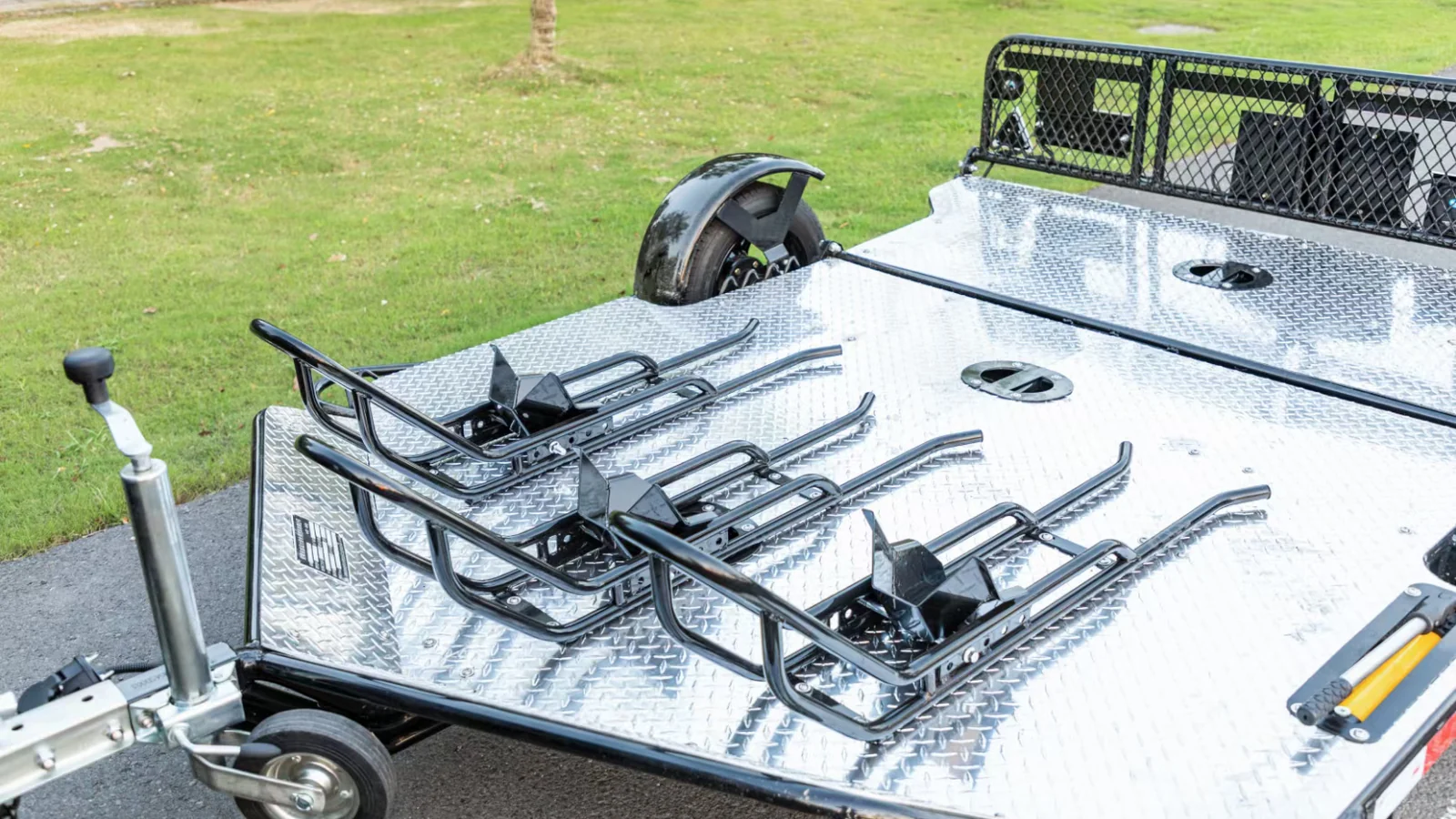
Vérifiez la géométrie complète du chariot lors de l'application de la fonction « Frein de roue vs blocage total : qu'est-ce qui est réellement bloqué ? »
Le comportement de la direction est déterminé par la disposition des roues, des roulettes et du châssis, et non par un seul composant isolé. Notez l'empattement, la voie, l'emplacement des points fixes et pivotants, la poignée ou le point de remorquage, les changements de direction prévus et la surface sur laquelle le chariot est utilisé. Une charge inégale ou la flexibilité du châssis peuvent modifier le comportement du chariot par rapport à un simple schéma. Pour la comparaison entre le freinage des roues et le blocage total, effectuez cette vérification dans le cadre des mêmes données relatives à la charge, au sol, à l'interface et aux mouvements que celles utilisées pour comparer les configurations présélectionnées.
Pour un système de blocage ou de freinage, définissez précisément ce qui doit être empêché : rotation de la roue, rotation du pivot, direction ou une combinaison de ces éléments. Utilisez ces exigences fonctionnelles dans la demande de devis et vérifiez l’accès au levier et le dégagement nécessaire au déverrouillage sur l’équipement réel, plutôt que de vous fier à une dénomination générique de gamme de produits. Pour comparer un frein de roue et un blocage total, effectuez cette vérification dans le cadre de la même documentation relative à la charge, au sol, à l’interface et aux mouvements utilisée pour comparer les configurations présélectionnées.
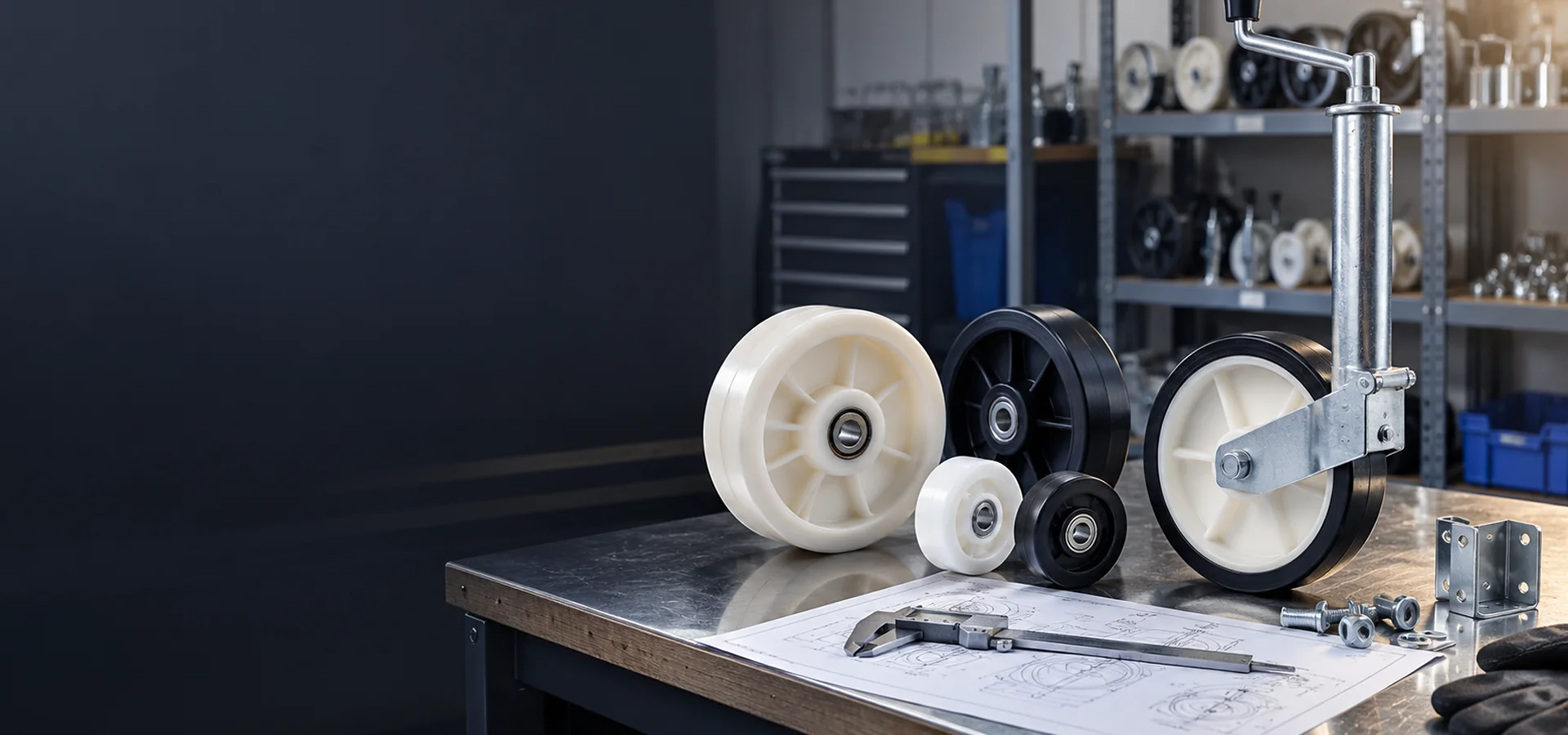
Transformez le sujet en une comparaison contrôlée au niveau de l'équipement : frein de roue contre blocage total.
Un article technique pertinent devrait se conclure par une méthode de décision, et non par une recommandation générique. Commencez par définir les limites de l'application : équipement, charge, mouvement, sol, interface de montage et résultat que l'acheteur cherche à améliorer. Pour comparer le freinage des roues et le blocage total, utilisez cette vérification dans le cadre des mêmes données relatives à la charge, au sol, à l'interface et au mouvement que celles utilisées pour comparer les configurations présélectionnées.
| Saisir | Que faut-il enregistrer ? |
|---|---|
| Application | Nommez l'équipement et décrivez son mouvement normal plutôt que de vous fier à une appellation industrielle générale. |
| Charger | Enregistrer la masse de l'équipement, la charge utile et les points d'appui dans les conditions normales les moins favorables. |
| Ajuster | Mesurez la roue et l'interface de montage à partir de points de référence stables et identifiez toute usure ou réparation. |
| Critère de décision | Indiquez ce que le candidat doit améliorer ou préserver, comme par exemple le dégagement, la direction, l'interaction avec l'étage ou l'accès aux services. |
Comparez les candidats en fonction des mêmes paramètres. Si un produit modifie plusieurs variables, consignez chaque modification afin de pouvoir interpréter le résultat ultérieurement. Une roue d'apparence similaire peut utiliser un matériau, un moyeu, un roulement ou une géométrie de montage différents, tandis qu'une pièce de dimensions similaires peut se comporter différemment au sol. Une comparaison structurée évite qu'une caractéristique attrayante ne domine la décision. Pour le frein de roue par rapport au blocage total, utilisez cette vérification dans le cadre de la même analyse des charges, du sol, de l'interface et des mouvements que celle utilisée pour comparer les configurations présélectionnées.
La première installation doit faire l'objet d'une observation contrôlée plutôt que d'un simple test de réussite/échec. Vérifiez l'ajustement avant la mise en charge, puis déplacez l'équipement à faible vitesse sur son trajet habituel et notez les interférences, les mouvements anormaux, le comportement des fixations et l'effort de l'opérateur. Si le résultat n'est pas satisfaisant, notez le problème avant de modifier la variable suivante. Cela crée une boucle de rétroaction pratique sans transformer les achats de routine en hypothèses d'ingénierie non étayées. Pour le frein de roue par rapport au blocage total, utilisez cette vérification dans le cadre de la même documentation sur la charge, le sol, l'interface et le mouvement utilisée pour comparer les configurations présélectionnées.
Comment le freinage sur roue par rapport au blocage total influence la demande de devis
Pour la question « Frein de roue ou blocage total : qu’est-ce qui est réellement bloqué ? », la demande de devis doit préciser le contexte opérationnel qui motive la question, plutôt que de se contenter de répéter la terminologie du produit. Indiquez le nom de l’équipement, décrivez son utilisation normale et maximale, consignez les dimensions critiques et précisez le problème ou l’objectif ayant motivé l’examen. Si la décision concerne la charge, indiquez la masse de l’équipement et ses points d’appui ; si elle concerne le matériau, décrivez le sol et l’environnement ; si elle concerne le montage, fournissez la géométrie de l’interface ; et si elle concerne une roue de support de remorque, indiquez les conditions d’appui, le type de sol et le débattement disponible.
Distinguez clairement les valeurs requises des questions en suspens. Un fournisseur sera bien plus utile pour répondre à une question comme « Veuillez confirmer la longueur de l'alésage et du moyeu par rapport au schéma joint » qu'à une dimension approximative présentée comme définitive. Ce principe s'applique également aux charges admissibles, aux nuances de matériaux, aux fonctions de freinage et aux détails de montage. Lorsqu'une valeur est vérifiée, indiquez-le clairement ; dans le cas contraire, demandez une confirmation. Cela permet de garantir la cohérence du devis avec l'équipement réel et de faciliter les vérifications techniques ultérieures, sans ajouter une section supplémentaire de validation ou de commandes. Pour la comparaison entre le freinage sur roue et le blocage total, utilisez cette vérification dans le cadre de la même fiche technique (charge, sol, interface et mouvement) utilisée pour comparer les configurations présélectionnées.
FAQ Frein de roue vs Blocage total
Quelle est la première chose à vérifier pour le frein de roue par rapport au blocage total de la roue pivotante ?
Commencez par analyser la géométrie de montage, la configuration pivotante/fixe, la fonction de commande, la hauteur d'installation et le dégagement. Cela permettra de contextualiser le reste de la sélection.
Une photo peut-elle remplacer des mesures ?
Une photo facilite l'identification, mais les dimensions critiques pour l'ajustement doivent tout de même être mesurées ou relevées sur un dessin approuvé.
L'acheteur doit-il ajouter un coefficient de sécurité à la charge ?
Une marge de sécurité est généralement appliquée pour compenser la répartition inégale de la charge et les effets de fonctionnement, mais sa valeur appropriée dépend de l'application et ne remplace pas les caractéristiques du produit. Pour comparer le freinage des roues et le blocage total, utilisez cette vérification dans le cadre des mêmes données de charge, de sol, d'interface et de mouvement utilisées pour comparer les configurations présélectionnées.
Que se passe-t-il si le matériau est inconnu ?
Indiquez l'étage et l'environnement d'exploitation, fournissez un échantillon ou une photo et considérez le matériau comme un élément de confirmation plutôt que de deviner d'après la couleur.
Discutez de vos besoins en matière de freins de roue et de blocage total des roulettes.
Veuillez nous envoyer la demande, les données de charge, les dimensions de compatibilité, la quantité et toute photo ou illustration pertinente. Ces informations nous permettront de cibler la gamme de produits sans procéder par suppositions.