
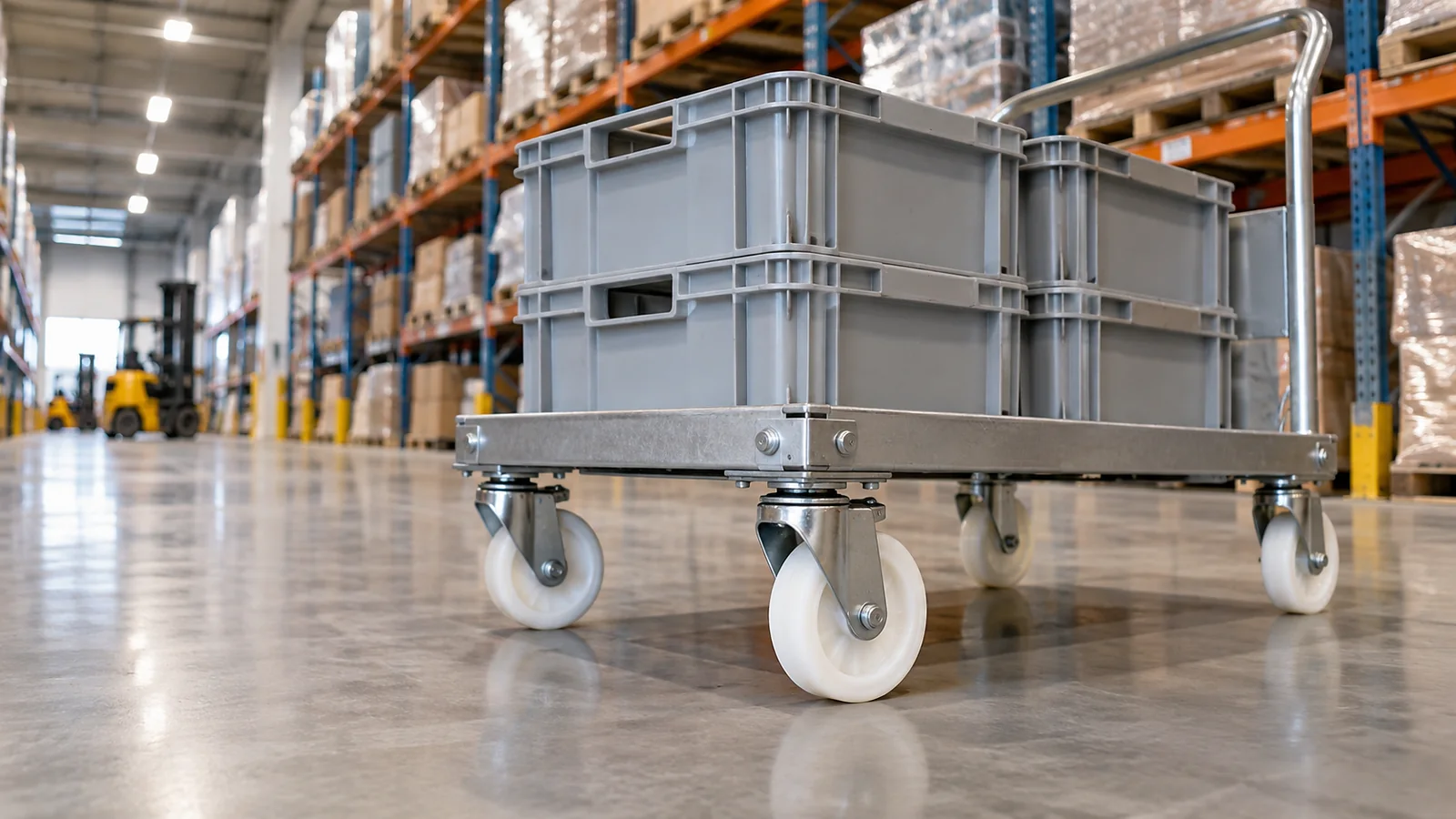
Roues pour équipements de manutention
Le choix des roues pour les engins de manutention nécessite de prendre en compte simultanément la charge, le type de sol, le montage et les caractéristiques de manœuvre.
Commencez par le type d'équipement, et non par son nom dans le catalogue : Roues pour équipements de manutention
Les équipes d'approvisionnement rencontrent souvent l'expression « roues pour équipements de manutention » dans les catalogues, mais la décision d'achat devient plus claire lorsque cette expression est convertie en exigences opérationnelles mesurables.
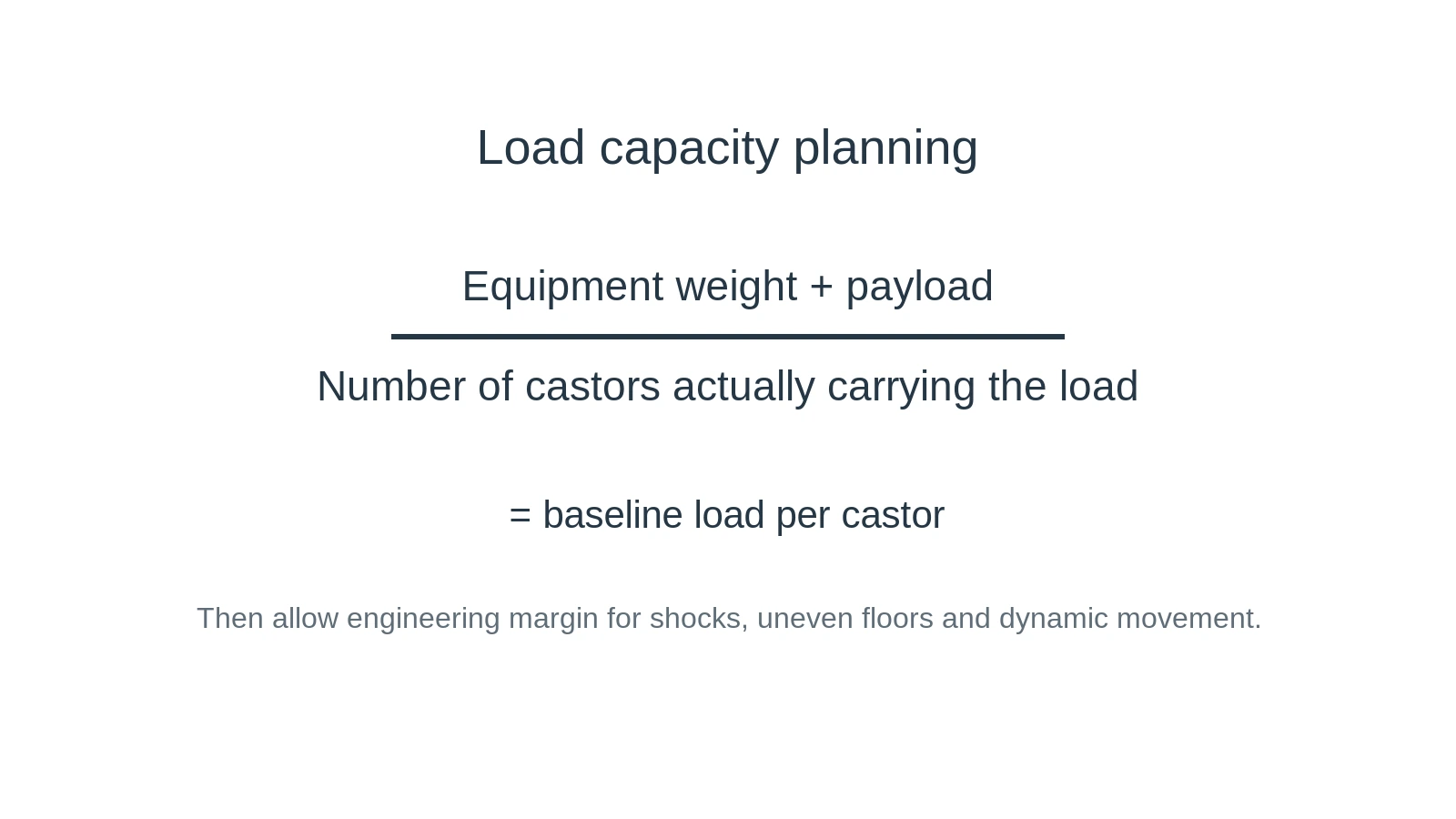
Pour les roues destinées aux engins de manutention, le choix doit donc commencer par le poids à vide, la charge maximale supportée et le nombre de points d'appui. Cela permet de lier le choix des dimensions ou des matériaux à la tâche à accomplir plutôt qu'à une description générique du produit.
L'erreur fréquente consiste à considérer un seul paramètre attractif comme l'ensemble des spécifications. Les chocs dynamiques, les irrégularités du sol ou la torsion du châssis peuvent concentrer la charge sur un nombre de roues inférieur aux prévisions. Un cahier des charges plus complet mentionne le poids de l'équipement, sa charge utile, le nombre de roues, sa vitesse de déplacement, les transitions de sol et son angle de braquage, permettant ainsi aux fournisseurs de comparer des produits similaires et de signaler les dimensions manquantes au lieu de procéder par suppositions. Pour les roues destinées aux équipements de manutention, utilisez ce critère afin de restreindre le choix de la gamme avant de considérer une configuration particulière comme adaptée à l'équipement.
Sol et schéma de déplacement — Roues pour équipements de manutention
Un même chariot peut se comporter différemment sur du béton poli, un sol en résine, de l'asphalte, des pavés ou un sol compacté. Notez la distance maximale parcourue, le rayon de braquage typique, les seuils et les rampes. Les roues dures roulent efficacement sur les sols lisses adaptés, tandis que d'autres matériaux ou géométries peuvent être envisagés lorsque le bruit, les chocs ou la protection de la surface sont plus importants. Pour les roues destinées à la manutention, utilisez ce critère afin de restreindre le choix de la gamme avant de considérer une configuration particulière comme adaptée à l'équipement.
Ne masquez pas un sol irrégulier par un calcul de charge optimiste. Si le châssis peut osciller au niveau des joints, tenez compte d'une répartition imparfaite de la charge et vérifiez que le support et la roue restent conformes à leur usage prévu. Pour les roues destinées à la manutention, utilisez ce critère pour affiner votre choix de gamme avant de considérer une configuration particulière comme adaptée à l'équipement.
Montage et dégagement — Roues pour équipements de manutention
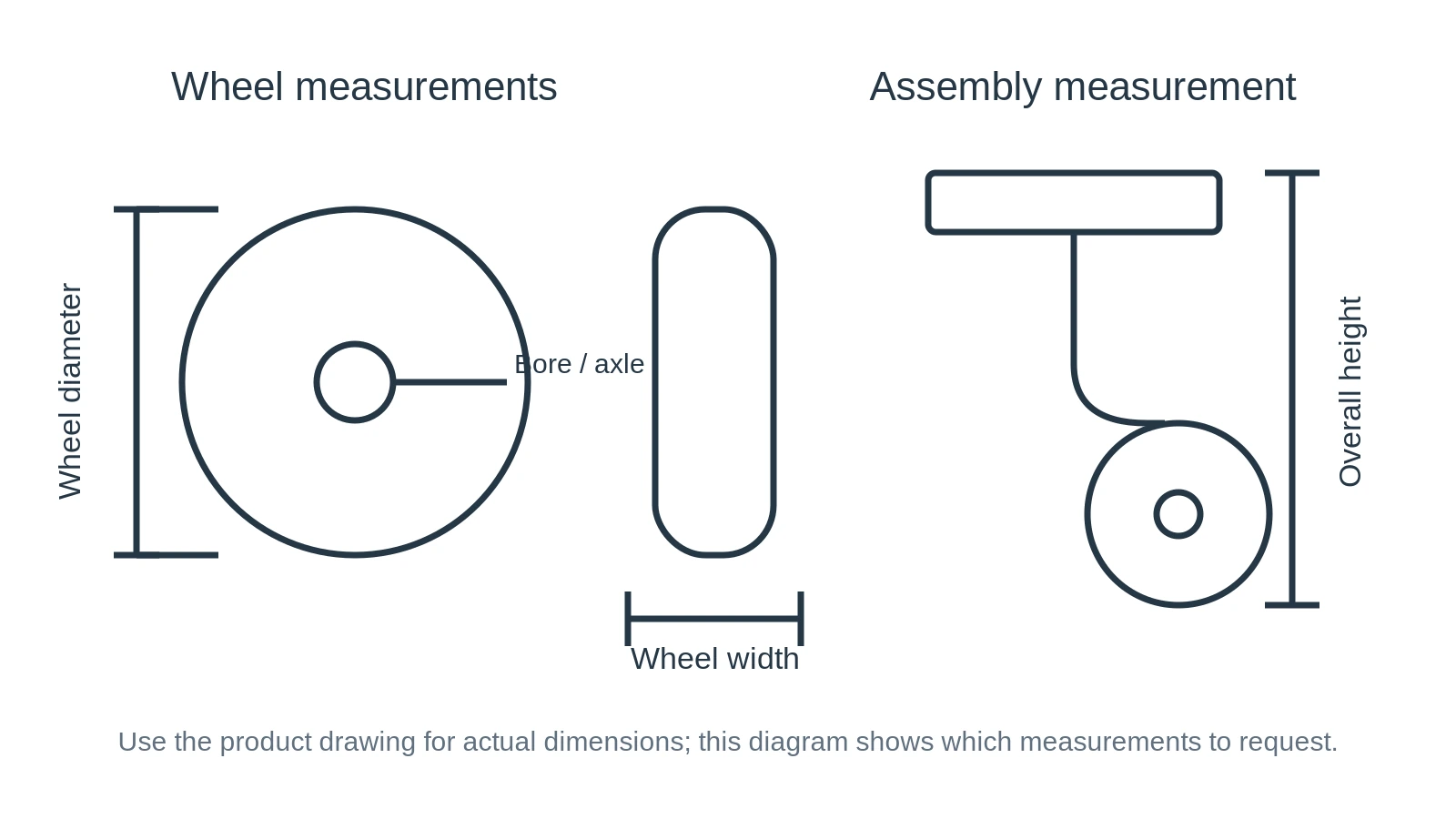
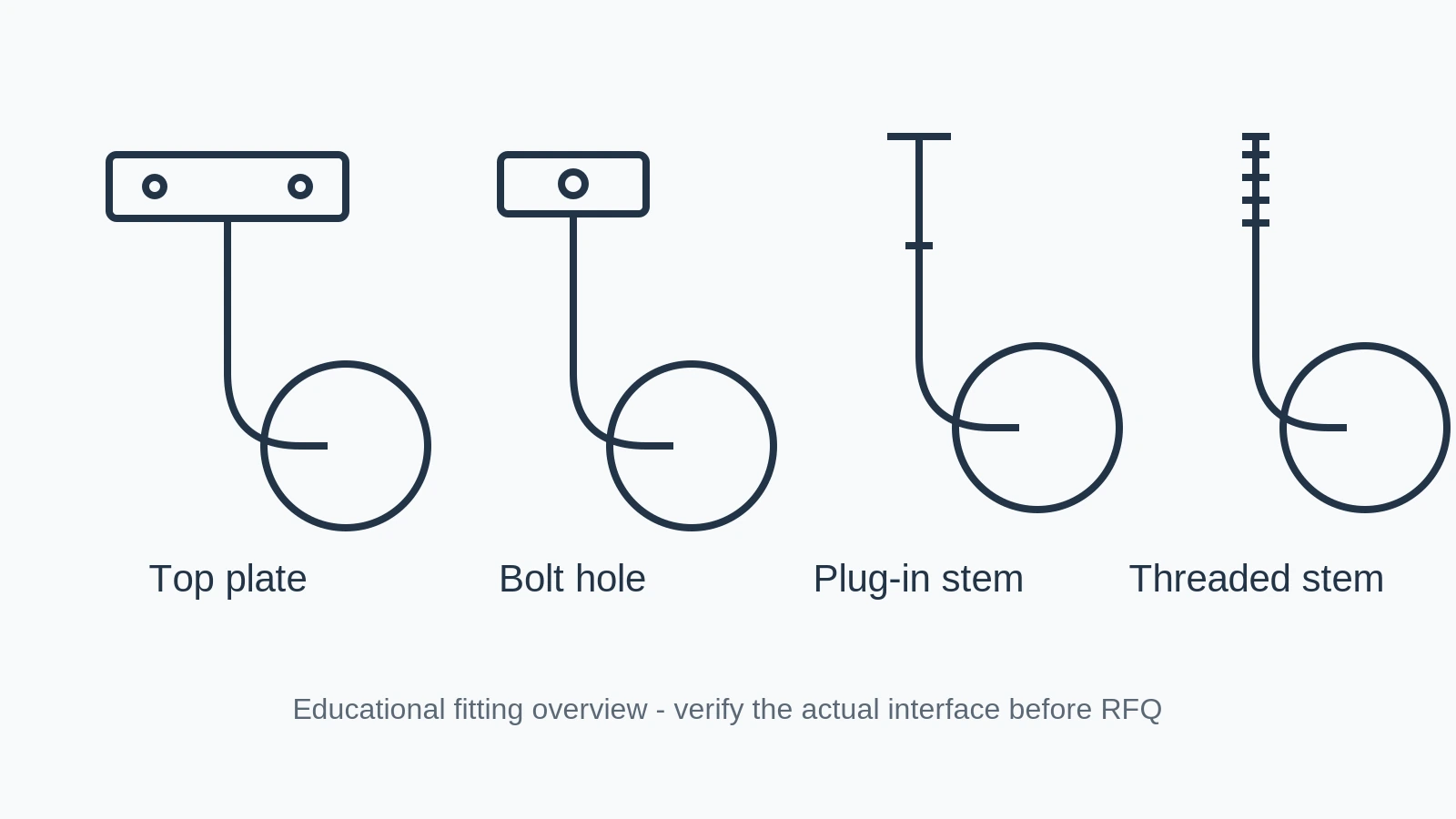
Mesurez l'interface reliant la roue ou le support à l'équipement. L'entraxe des trous de fixation, le diamètre des trous de boulons, les dimensions de la tige filetée, la taille du collier de serrage, l'ajustement axe/alésage et la hauteur d'installation permettent de déterminer la compatibilité. Vérifiez également la zone de déplacement lors de la rotation d'une roue ou du repli d'un cric. Pour les roues destinées à la manutention, utilisez ce critère afin de restreindre le choix de la gamme avant de considérer une configuration particulière comme adaptée à l'équipement.
Les protections, chemins de câbles, attelages de remorque et éléments structuraux environnants doivent figurer sur les plans ou les photographies. Un composant qui s'intègre parfaitement à l'établi peut néanmoins entrer en collision lors des virages, des manœuvres de rétraction ou du passage sur une rampe. Pour les équipements de manutention sur roues, ce critère permet de restreindre le choix de la gamme avant d'évaluer la compatibilité d'une configuration avec l'équipement.
Matériau et diamètre des roues — Roues pour équipements de manutention
Le choix du matériau doit tenir compte du sol et de l'environnement réels. Le nylon et le polypropylène sont des thermoplastiques rigides, mais leur qualité, la disposition des roulements, la contamination et la température peuvent en modifier l'adéquation. Un diamètre plus important améliore généralement la géométrie de franchissement d'obstacles et la garde au sol, mais peut augmenter la hauteur d'installation ou nécessiter des fourches plus grandes. Pour les roues destinées aux équipements de manutention, ce critère permet de restreindre le choix à une famille de matériaux avant d'évaluer la compatibilité d'une configuration avec l'équipement.
Lors de la comparaison de deux diamètres, vérifiez l'encombrement total de l'ensemble plutôt que la seule taille de la roue.
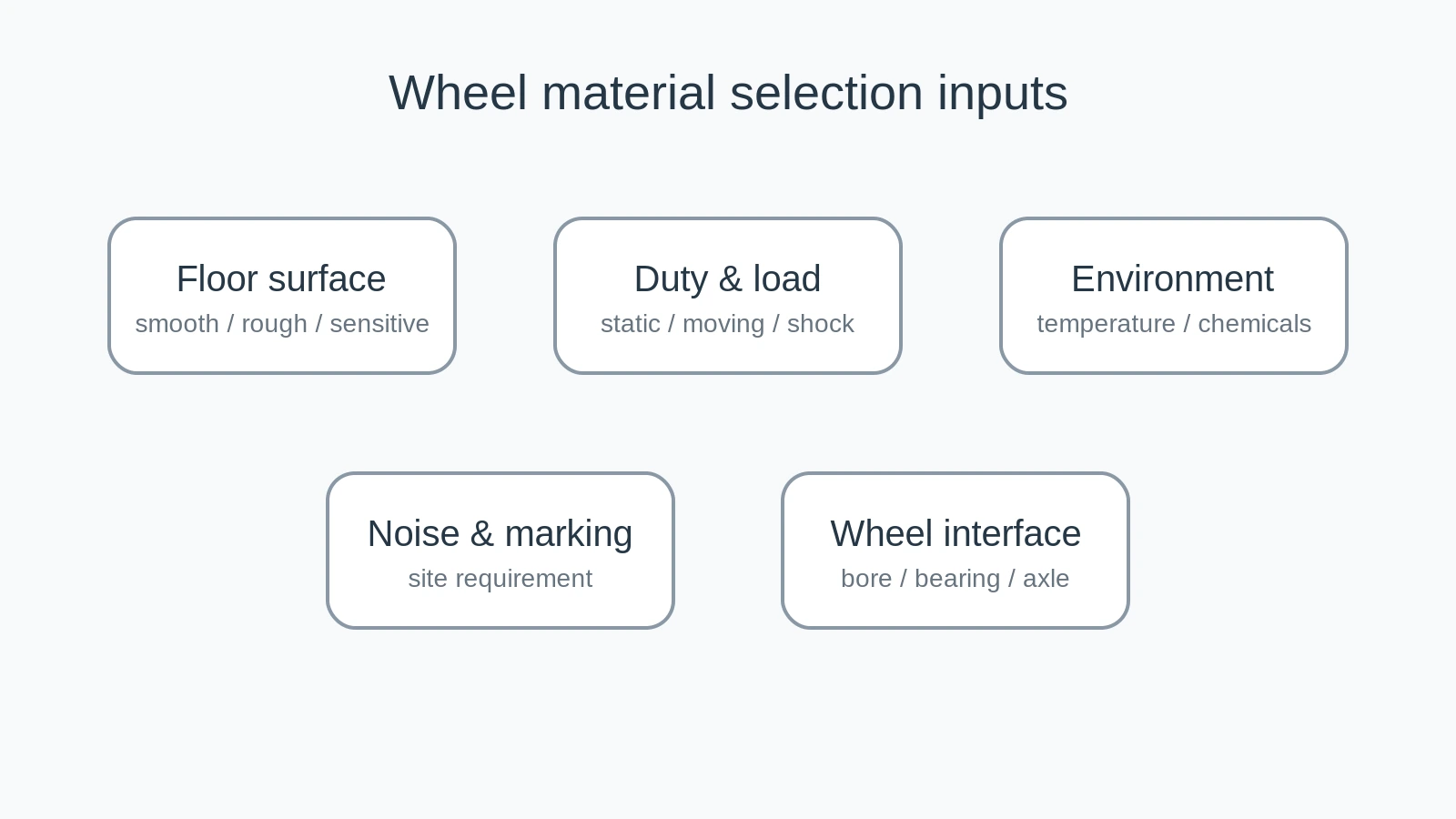
Revue d'intégration — Roues pour équipements de manutention
| Vérifier | Question à répondre |
|---|---|
| Charger | Quelle masse un point d'appui peut-il raisonnablement percevoir ? |
| Voyage | L'équipement est-il principalement stationnaire, poussé à la main, remorqué ou fréquemment repositionné ? |
| Sol | Quels joints, débris, rampes, eau ou produits chimiques sont présents ? |
| Interface | Quelles dimensions déterminent la hauteur de fixation et la hauteur d'installation ? |
| Contrôle | Faut-il un frein de roue, un blocage de pivotement, un blocage directionnel ou un mouvement libre ? |
| Service | Comment inspecter et remplacer la roue, le roulement ou l'ensemble ? |
Préparation des demandes de prix — Roues pour équipements de manutention
- Masse totale de l'équipement et de la charge utile
- Nombre de roues/assemblages et disposition
- Diamètre, largeur et hauteur installée de la roue existante
- Dimensions ou dessin de montage
- Description du sol et hauteur des obstacles
- Modèle de mouvement et besoins de freinage
- Quantité et destination
Examiner guide de sélection, comparer les offres roues en plastique, ou envoyez des détails via le page de demande de devis.
Questions fréquentes — Roues pour équipements de manutention
Pourquoi un châssis à quatre roues ne supporte-t-il parfois que trois roues ?
Les irrégularités du sol et la rigidité du cadre peuvent décharger un coin, augmentant ainsi la charge sur les autres.
Une roue plus grande réduit-elle toujours la force de poussée ?
Un diamètre plus important peut faciliter le franchissement d'obstacles, mais le type de roulement, le matériau, le sol, la charge et l'alignement influencent également l'effort.
Que doit montrer une photo de remplacement ?
Montrer le coin de l'équipement, la roue ou l'ensemble de côté, la face de montage et une échelle sur les dimensions critiques.
Quand une roue jumelée est-elle utile ?
Les configurations à roues jumelées modifient le contact avec le sol et la géométrie de l'ensemble, mais ne sont pas automatiquement meilleures ; vérifiez les besoins en matière de charge, de surface et de direction.
Mise en service et maintenance – Roues pour équipements de manutention
Après l'installation, vérifiez l'équipement à basse vitesse et sous charge contrôlée avant toute intervention de maintenance courante. Observez la réactivité de la direction, le parallélisme des roues, la fixation des éléments de fixation et tout contact avec la structure environnante. Les registres de maintenance doivent indiquer la position des roues, leur configuration et la raison de leur remplacement afin de distinguer l'usure normale des problèmes récurrents de surcharge ou d'alignement. Pour les roues destinées aux équipements de manutention, utilisez ce critère pour affiner votre choix de gamme avant de considérer une configuration particulière comme adaptée à l'équipement.
Traduire la demande en données mesurables — Roues pour équipements de manutention
Pour les roues des engins de manutention, tenez compte des transitions de sol, de la répartition de la charge, de la disposition des roues et des déplacements répétés. Ces variables influencent le choix pratique, même pour deux engins d'apparence similaire. Notez les conditions de fonctionnement normales les plus défavorables, et pas seulement le trajet le plus facile, et précisez si l'engin est déplacé en continu, par intermittence ou uniquement lors de la maintenance.
Lorsqu'un châssis comporte plusieurs roues, vérifiez que le châssis et le sol permettent une répartition uniforme de la charge. Un nombre nominal de roues ne garantit pas une charge égale. Les surfaces de montage, la rigidité du châssis et le niveau du sol peuvent concentrer la charge sur un nombre réduit de points d'appui. Pour les roues destinées à la manutention, utilisez ce critère pour affiner votre choix de gamme avant de considérer une configuration particulière comme adaptée à l'équipement.
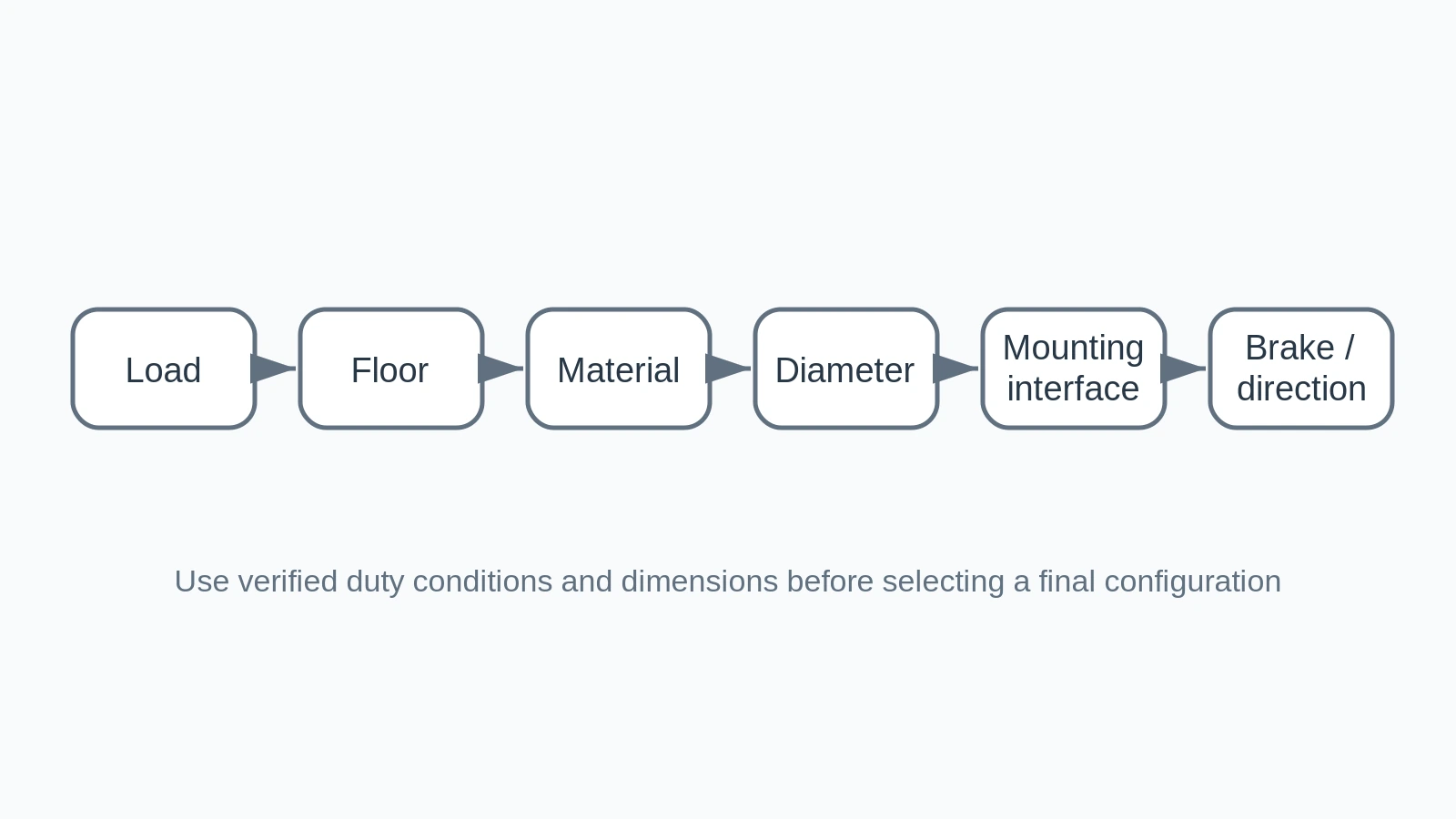
Mise en service de la roue sélectionnée sur le parcours réel — Roues pour équipements de manutention
Lors de la première installation, il convient d'observer la zone à basse vitesse et sous charge contrôlée. Vérifiez le déplacement en ligne droite, les virages, le dégagement, le suivi de voie, la fixation et tout contact avec la structure environnante. Incluez à l'essai le seuil, la rampe ou le joint de sol le plus exigeant. Pour le support de remorque, tenez compte de la surface utilisée lors du stationnement et des manœuvres manuelles. Concernant les roues pour engins de manutention, utilisez ce critère pour affiner votre choix de gamme avant de considérer une configuration particulière comme adaptée à l'équipement.
Consignez tout élément nécessitant un réglage avant la mise en service. Ceci permet de constituer un dossier de réception pratique et de distinguer un problème d'utilisation d'une usure normale ultérieure. Pour les roues destinées à la manutention, utilisez ce critère afin de restreindre le choix de la gamme avant de considérer une configuration particulière comme adaptée à l'équipement.
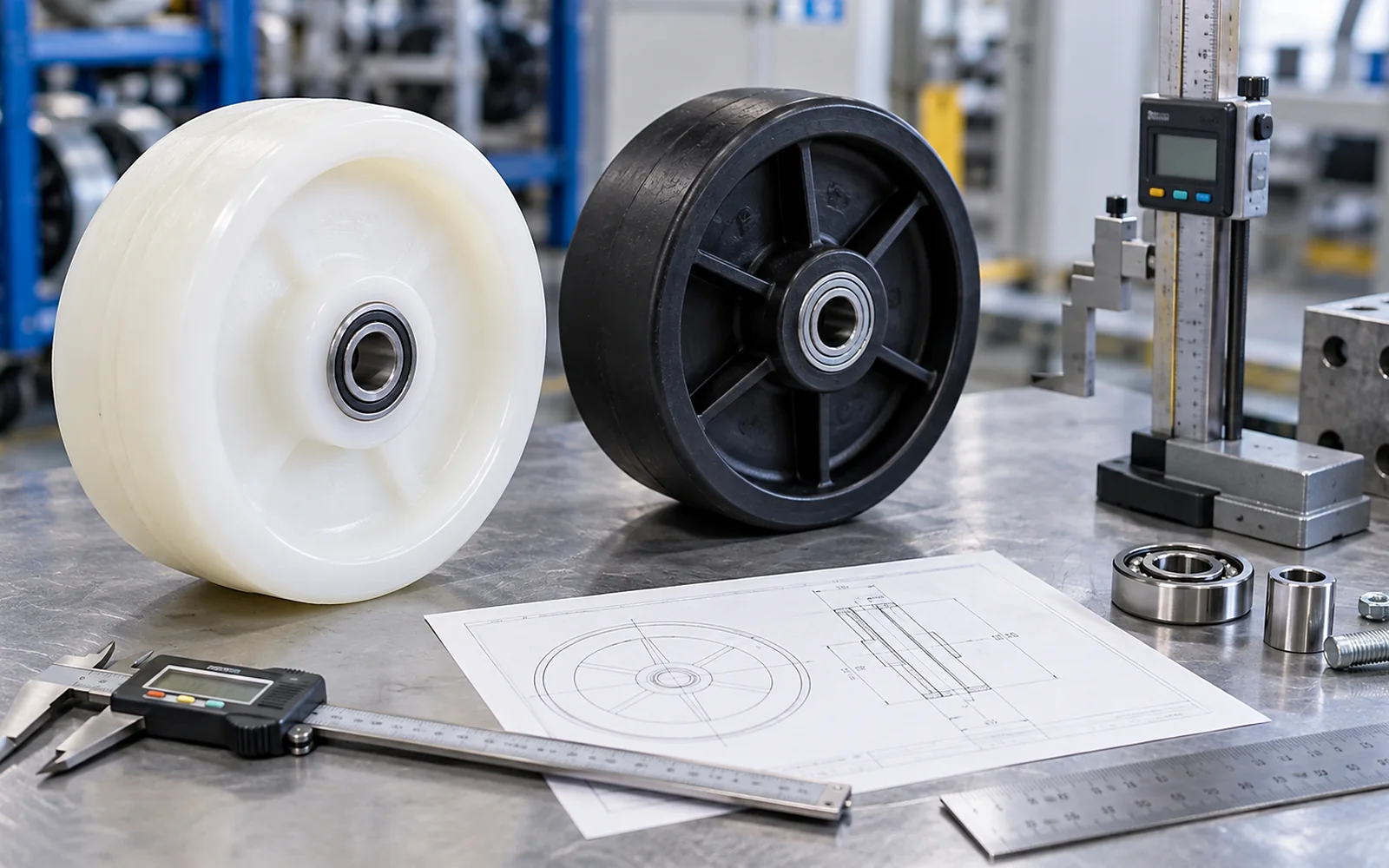
Synchronisez les dossiers de candidature et d'achat — Roues pour équipements de manutention
Lorsqu'une roue (dimensions, matériau, type de montage ou fonction de commande) change, mettez à jour simultanément la demande de devis et la fiche technique. Une simple photo ne suffit pas à décrire la nouvelle configuration. Une note concise précisant les dimensions, la charge et la quantité facilite grandement le suivi des commandes ultérieures et évite que d'anciennes hypothèses ne soient utilisées après une modification des conditions d'exploitation. Pour les roues destinées aux équipements de manutention, utilisez ce critère pour affiner votre choix au niveau de la gamme avant de considérer une configuration particulière comme adaptée à l'équipement.
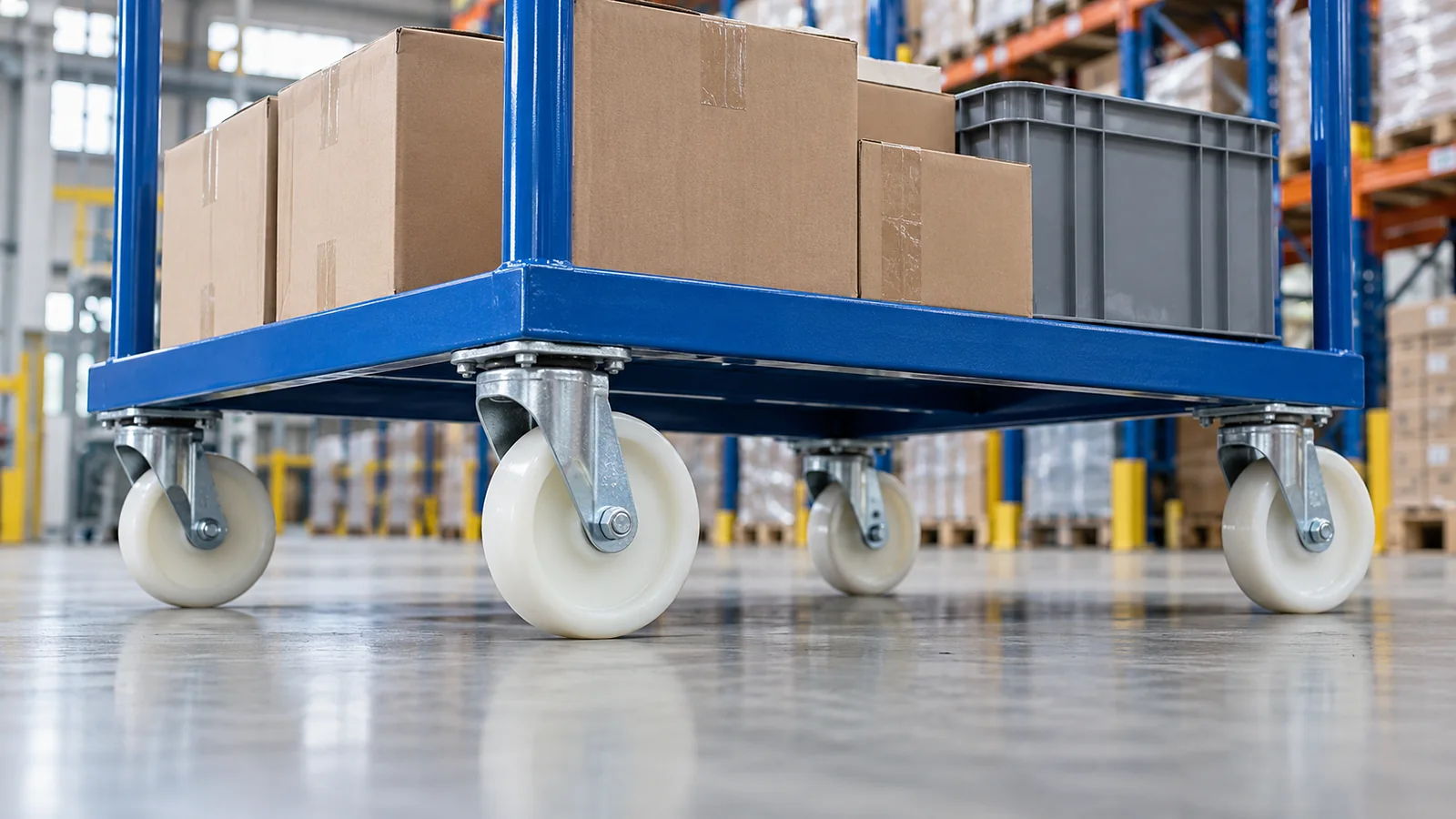
Créer une procédure de transfert reproductible pour les roues destinées aux équipements de manutention.
Avant la livraison de la roue ou du support sélectionné pour les engins de manutention, conservez les dimensions d'interface approuvées, le cas de charge, la surface de fonctionnement, la quantité et des photos d'application dans le dossier de l'équipement. En cas de remplacement, conservez également la pièce d'origine jusqu'à ce qu'un premier essai ait été effectué sur la machine. Cela facilitera les achats ultérieurs et permettra de distinguer l'usure normale d'une modification de l'équipement ou du trajet d'utilisation.
Après la mise en service, consignez toute limitation de dégagement, tout comportement de direction, tout point d'impact inhabituel ou toute observation de maintenance susceptible d'avoir une incidence sur des commandes ultérieures. L'objectif n'est pas de rédiger un long rapport d'inspection, mais de conserver les informations essentielles expliquant pourquoi la configuration retenue convient à cet équipement et où une substitution future nécessiterait un nouvel examen. Pour les équipements de manutention sur roues, utilisez ce point pour affiner votre choix au niveau de la gamme avant de considérer une configuration individuelle comme adaptée à l'équipement.
Préparer une demande de devis pour des roues destinées à des équipements de manutention.
Veuillez nous communiquer la demande, la quantité et les dimensions que vous connaissez déjà. Les détails essentiels manquants pourront être examinés avant l'établissement du devis.