
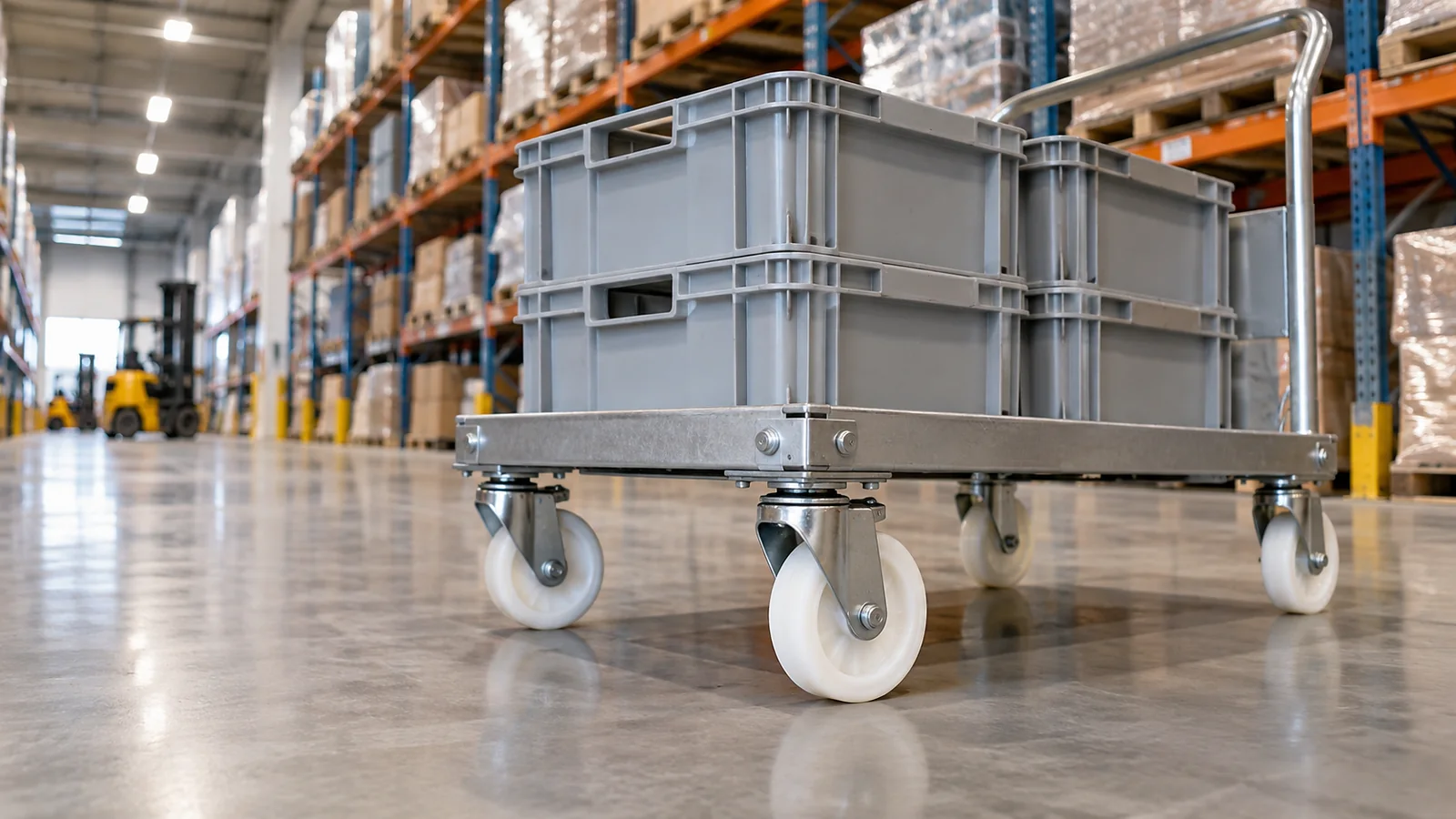
Cara Menentukan Jumlah Berat Troli dan Pengagihan Beban dalam RFQ
Panduan pembeli praktikal untuk RFQ pengagihan beban troli, tertumpu pada keadaan operasi yang boleh diukur dan keputusan sedia untuk RFQ.
Mengapa soalan ini penting — Cara Menentukan Jumlah Troli
Bagi pembeli industri, RFQ pengagihan beban troli bukanlah label untuk dipilih secara berasingan. Persoalan yang berguna ialah bagaimana ia bertindak dalam keputusan roda, pemasangan dan kitaran tugas yang lengkap.
Untuk peralatan mudah alih yang melintasi sambungan konkrit, ambang, tanjakan atau keadaan lantai campuran, mulakan dengan mengesahkan jumlah jisim, titik sokongan, taburan beban sebenar, geometri halangan dan diameter roda. Ini biasanya lebih berguna daripada membandingkan nama produk nominal kerana dua roda yang serupa secara visual boleh bertindak secara berbeza sebaik sahaja pemasangan, keadaan lantai dan taburan beban sebenar dipertimbangkan.
Ini juga menghalang ralat penyumberan yang kerap: memilih daripada penampilan sahaja. Pembahagian statik yang ideal boleh mengurangkan beban pada satu roda apabila rangka bergoyang atau melintasi halangan. Rekodkan berat mati, muatan, susun atur sokongan, ketidakteraturan lantai, corak pergerakan dan elaun keselamatan dalam pertanyaan supaya perbincangan komersial bermula dari garis dasar yang bermakna dari segi teknikal.
Tentukan keadaan operasi terlebih dahulu — Cara Menentukan Jumlah Troli
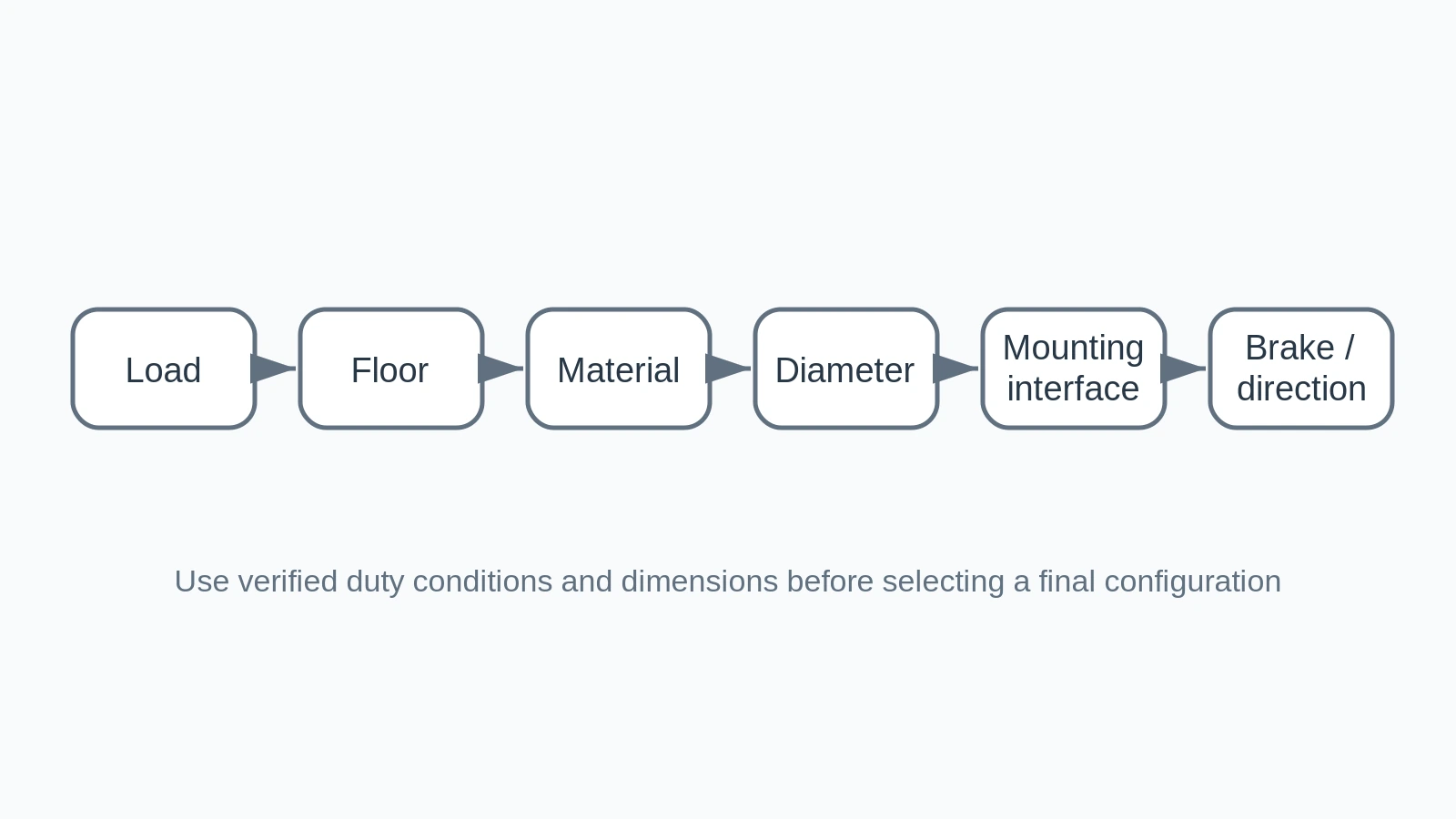
Sebelum membandingkan produk, tulis tugasan peralatan dalam satu ayat: apa yang mesti bergerak, beban yang dibawanya, ke mana ia bergerak dan berapa kerap ia diletakkan semula. Huraian tersebut memberikan konteks untuk RFQ pengagihan beban troli tanpa mengubah satu parameter menjadi peraturan universal.
Bagi peralatan mudah alih yang melintasi sambungan konkrit, ambang, tanjakan atau keadaan lantai campuran, semakan pertama harus merangkumi jumlah jisim, titik sokongan, taburan beban sebenar, geometri halangan dan diameter roda. Jika sesuatu nilai tidak diketahui, tandakannya untuk pengukuran dan bukannya menggantikannya dengan nombor biasa. Tujuan RFQ adalah untuk menutup jurang, bukan menyembunyikannya. Dalam Cara Menentukan Jumlah Berat Troli dan, rekodkan hasilnya di sebelah keadaan peralatan sebenar supaya panduan artikel kekal terikat dengan keputusan penyumberan yang boleh diukur.
Ukuran yang menghalang padanan palsu — Cara Menentukan Jumlah Troli
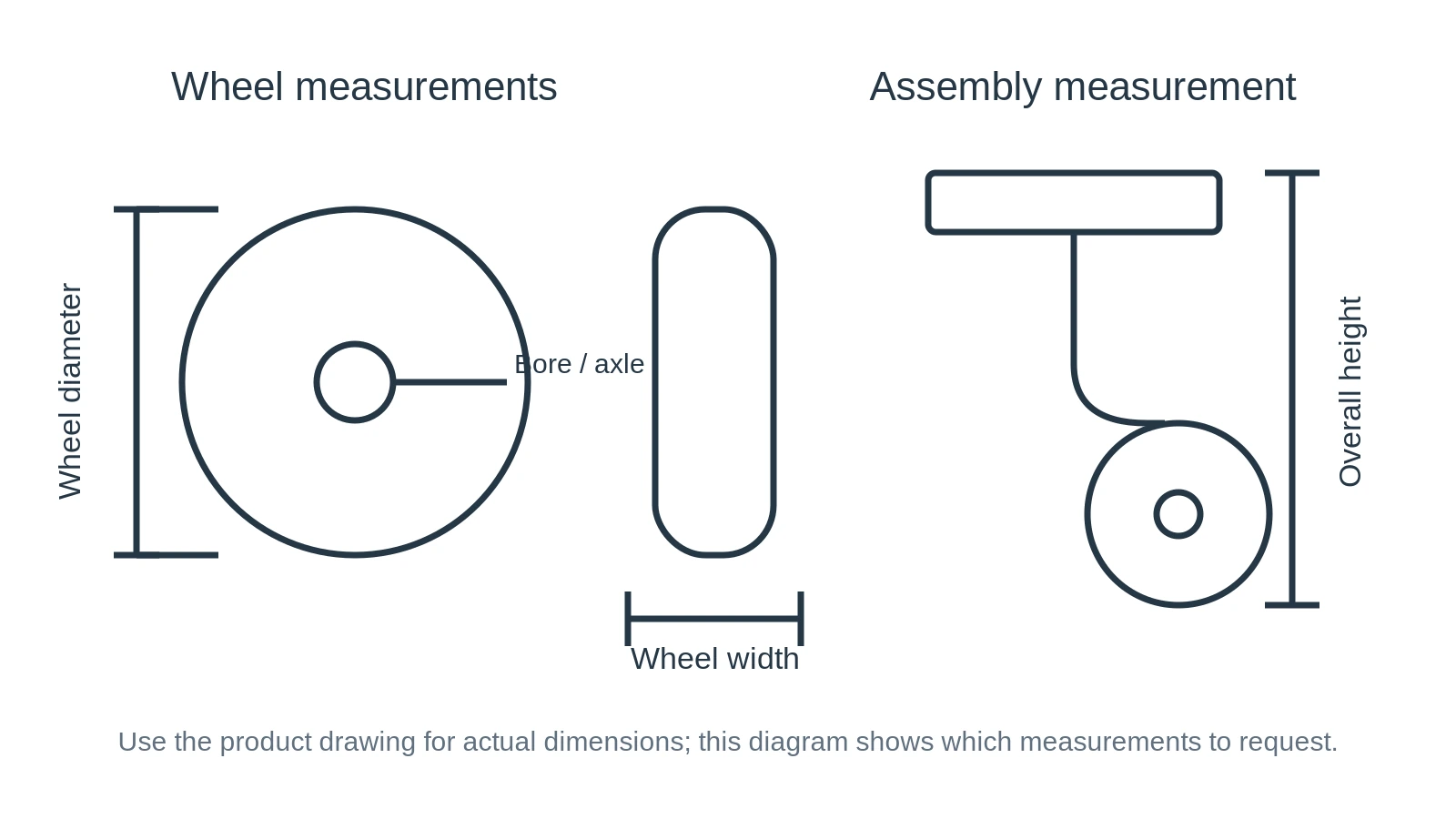
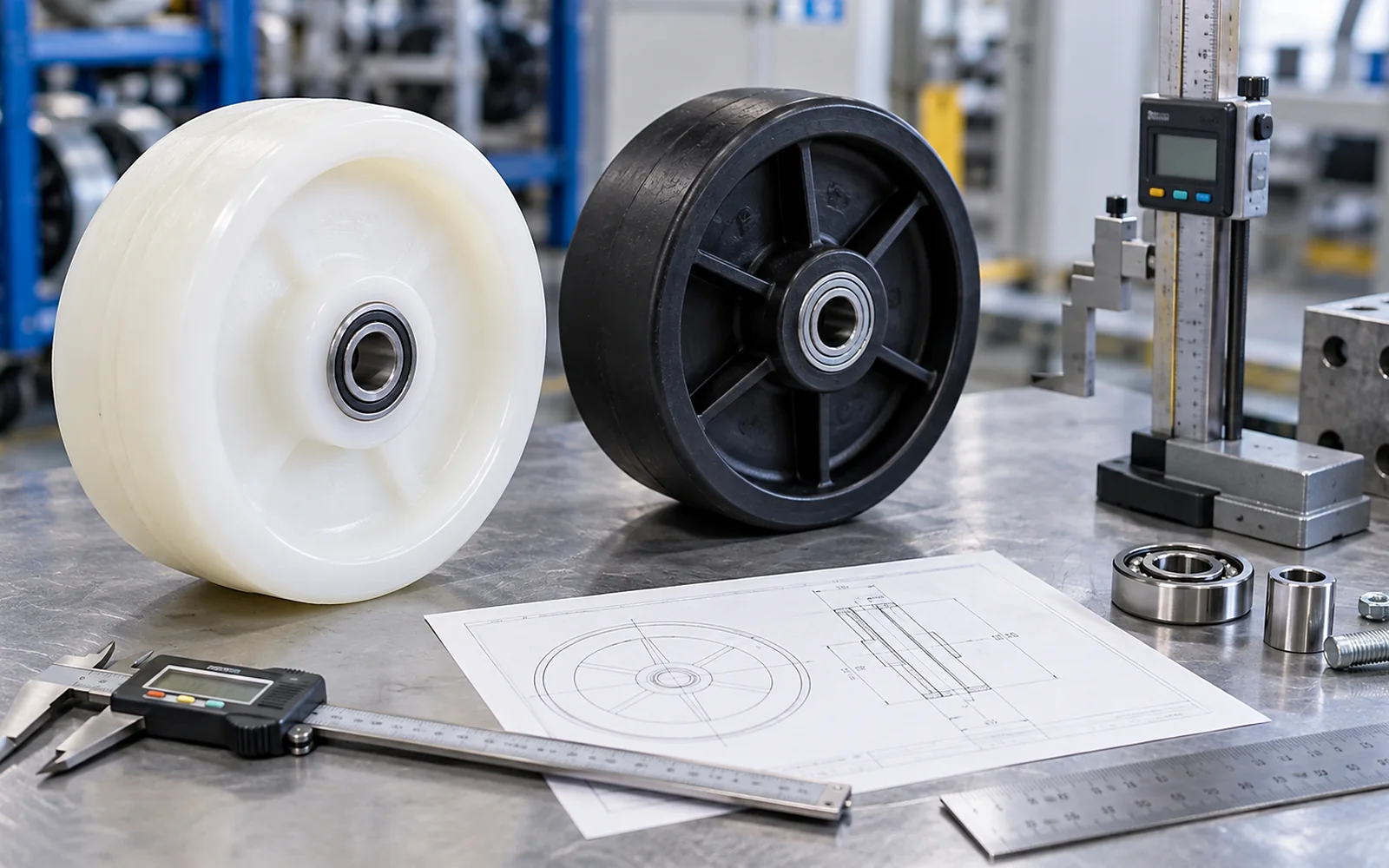
Kerja penggantian mendapat manfaat daripada rutin pengukuran yang konsisten. Rekodkan diameter dan lebar roda, kemudian gerakkan ke dalam ke hab: jenis lubang atau galas, diameter gandar, panjang hab dan penjarak. Untuk pemasangan yang lengkap, tambahkan ketinggian yang dipasang dan geometri pelekap. Gambarkan alat pengukur di tempatnya apabila dimensi sukar untuk diterangkan. Dalam Cara Menentukan Jumlah Berat Troli dan, rekodkan hasilnya di sebelah keadaan peralatan sebenar supaya panduan artikel kekal terikat dengan keputusan penyumberan yang boleh diukur.
Jangan gunakan tapak yang haus sebagai satu-satunya rujukan jika diameter asal penting. Roda yang haus teruk boleh menjadikan pengganti kelihatan terlalu besar sedangkan masalah sebenar adalah kehilangan bahan. Begitu juga, garpu yang bengkok atau spacer buatan sendiri boleh mengubah ofset ketara. Dalam Cara Menentukan Jumlah Berat Troli dan, rekodkan hasilnya di sebelah keadaan peralatan sebenar supaya panduan artikel kekal terikat dengan keputusan penyumberan yang boleh diukur.
Beban, lantai dan pergerakan berinteraksi — Cara Menentukan Jumlah Troli
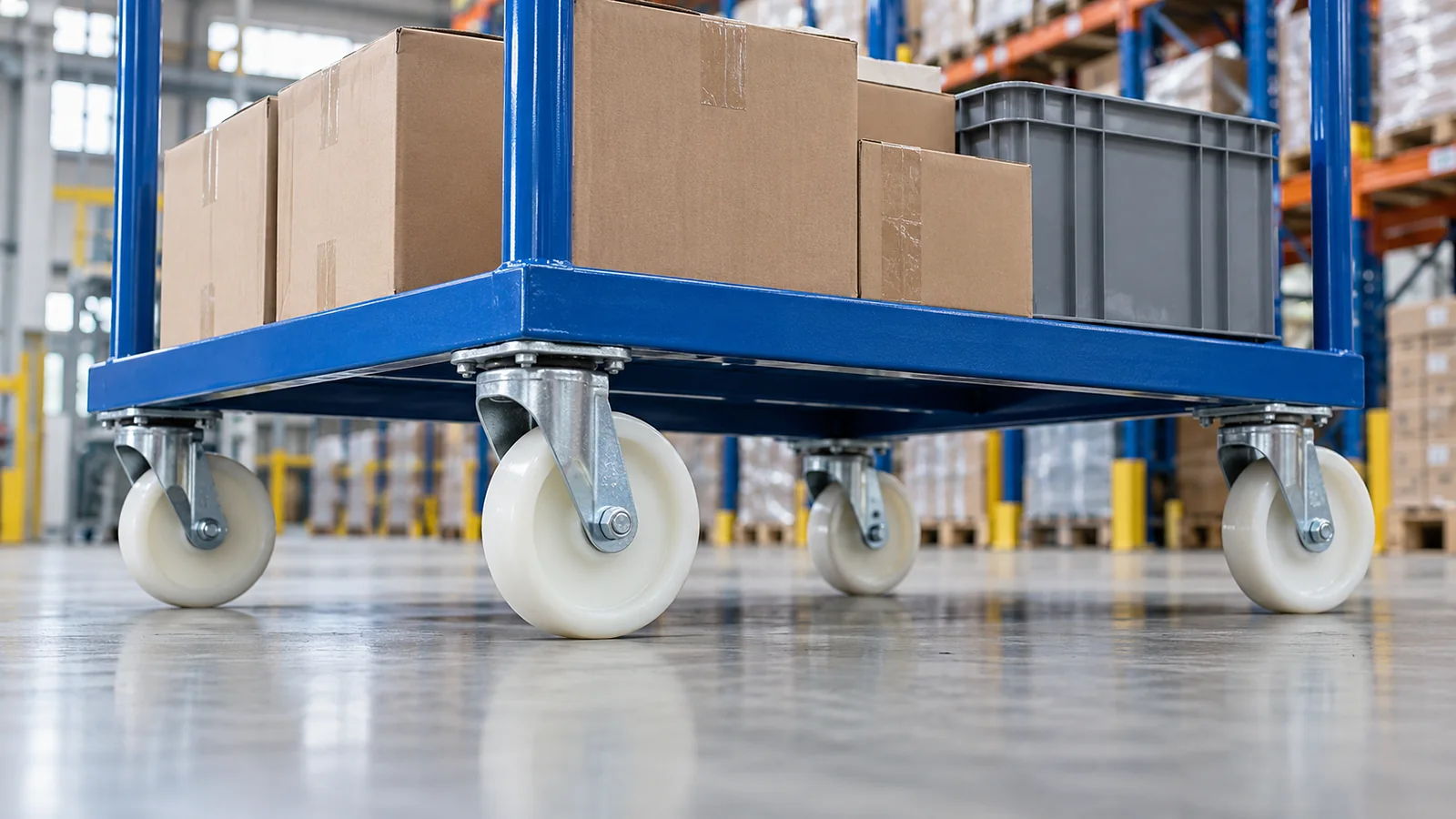
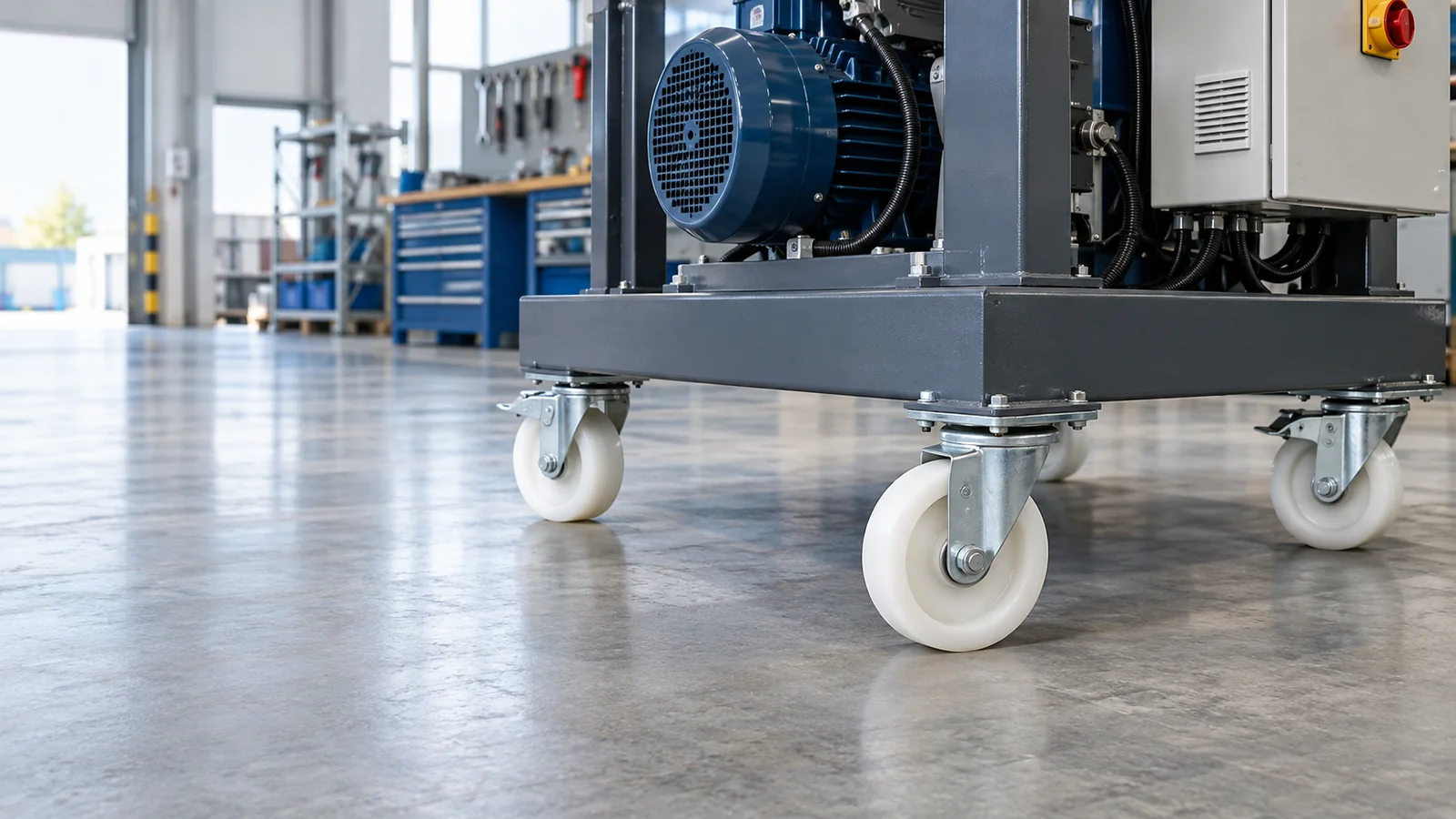
Kadar beban tidak bergantung pada bagaimana peralatan bergerak. Troli yang melintasi ambang boleh menghasilkan daya hentaman yang tidak wujud dalam keadaan parkir statik. Lantai yang tidak rata boleh mengalihkan beban dari empat titik sokongan nominal kepada tiga. Roda joki treler mungkin membawa beban palang penarik menegak yang sederhana namun memerlukan usaha manuver yang besar di atas tanah yang longgar. Dalam Cara Menentukan Jumlah Berat Troli dan, rekodkan hasilnya di sebelah keadaan peralatan sebenar supaya panduan artikel kekal terikat dengan keputusan penyumberan yang boleh diukur.
Rekodkan beban normal maksimum, beban luar biasa, lantai atau tanah, jarak perjalanan dan kekerapan halangan. Gabungan ini memberikan asas pemilihan yang lebih baik daripada satu berat kasar.
Tukarkan topik tersebut kepada matriks perbandingan — Cara Menentukan Jumlah Troli
| Soalan | Apa yang perlu direkodkan |
|---|---|
| Kewajipan | Peralatan apa yang berfungsi dan berapa kerap ia bergerak |
| Muatan | Berat mati, muatan dan susun atur sokongan |
| Lantai | Permukaan, sambungan, serpihan, air atau bahan kimia |
| Roda | Diameter, lebar dan bahan jika diketahui |
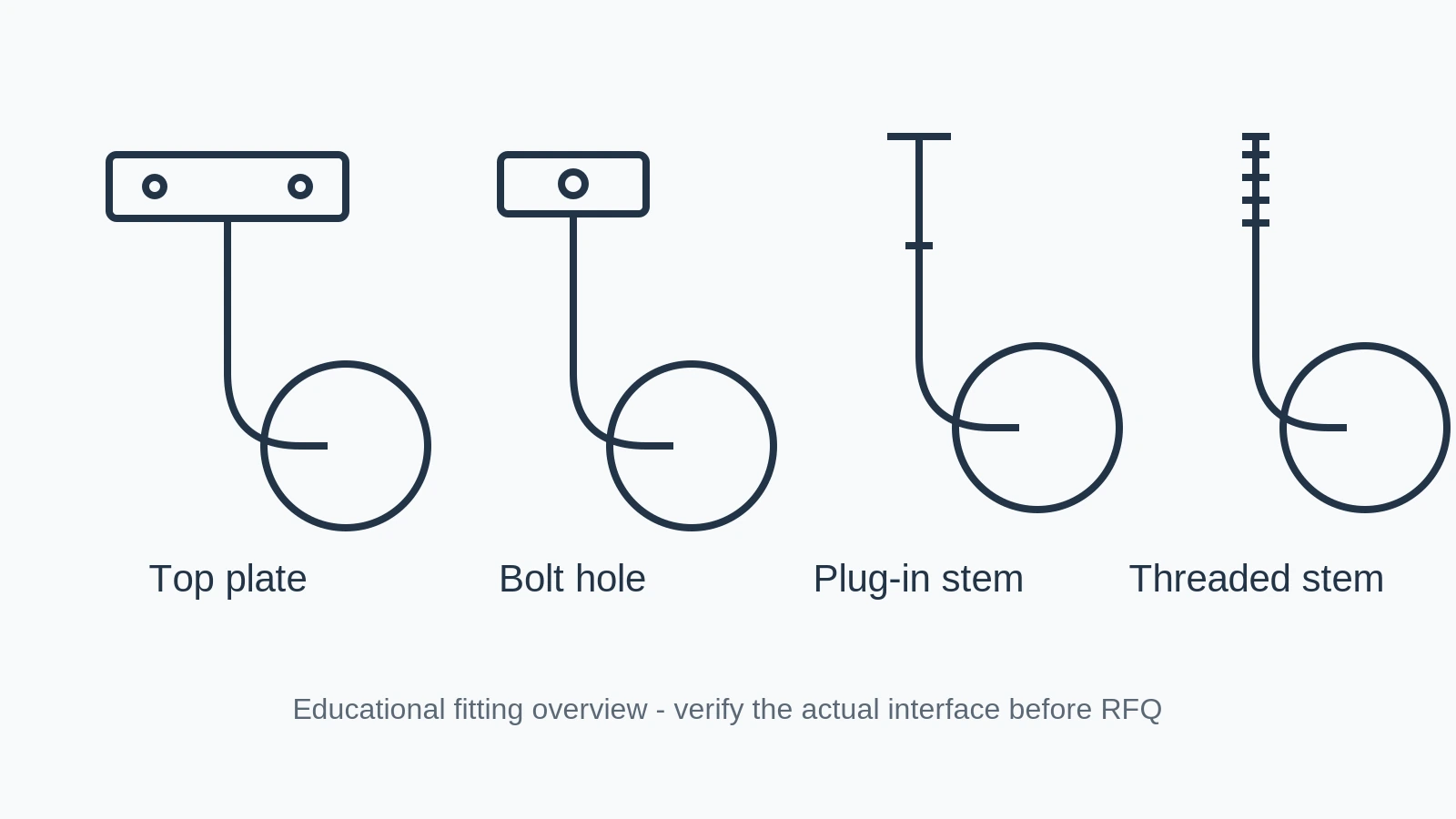
| Antara muka | Lubang/galas/gandar atau pendakap/tiub/batang |
| Kawalan | Keperluan brek, kunci, lipatan atau stereng |
| Komersial | Kuantiti, tujuan sampel dan destinasi |
Corak kegagalan yang perlu diperhatikan dalam menentukan jumlah berat troli dan pengagihan beban
Pembahagian statik yang ideal boleh mengurangkan beban pada satu roda apabila bingkai bergoyang atau melintasi halangan. Simptom yang serupa juga boleh datang daripada pengikat yang longgar, galas haus, jajaran yang tidak betul, lantai yang tercemar atau bingkai yang tidak lagi berbentuk segi empat sama. Sebelum menyalahkan bahan roda, periksa pemasangan dan bandingkan corak haus merentasi kedudukan. Dalam Cara Menentukan Jumlah Berat Troli dan, rekodkan hasilnya di sebelah keadaan peralatan sebenar supaya panduan artikel kekal terikat dengan keputusan penyumberan yang boleh diukur.
Jika hanya satu sudut yang haus dengan cepat, siasat beban dan penjajaran sudut tersebut. Jika semua roda menunjukkan kerosakan yang sama, semak tugas, spesifikasi lantai dan bahan. Jika haus memecut selepas perubahan proses, catatkan bahan cemar, agen pembersih, suhu atau corak pergerakan baharu. Dalam Cara Menentukan Jumlah Berat Troli dan, catatkan hasilnya di sebelah keadaan peralatan sebenar supaya panduan artikel kekal terikat dengan keputusan penyumberan yang boleh diukur.
Cara menulis baris RFQ — Cara Menentukan Jumlah Troli
Gunakan satu baris bagi setiap konfigurasi dan tulis keperluan tersebut supaya jurutera lain dapat memahaminya tanpa perbualan asal. Sertakan berat mati, muatan, susun atur sokongan, ketidakteraturan lantai, corak pergerakan dan elaun keselamatan. Lampirkan lukisan atau set foto yang betul. Jika dimensi antara muka tidak diketahui, sebutkan "pengukuran sedang menunggu" dan bukannya menggunakan nilai yang diteka. Dalam Cara Menentukan Jumlah Berat Troli dan, rekodkan hasilnya di sebelah keadaan peralatan sebenar supaya panduan artikel kekal terikat dengan keputusan penyumberan yang boleh diukur.
Untuk pesanan berbilang model, asingkan kuantiti dan kenal pasti dimensi yang dikongsi.
Tentukan senarai semak keputusan Jumlah Berat Troli dan Pengagihan Beban
- Adakah beban normal maksimum diketahui?
- Bolehkah roda penyokong berkongsi beban secara sama rata?
- Adakah lantai/tanah sebenar diterangkan?
- Adakah dimensi roda dan antara muka diukur?
- Adakah fungsi kawalan jelas?
- Adakah keperluan bahan/kemasan/persekitaran khas dinyatakan?
- Adakah kuantiti dilampirkan pada model yang betul?
Teruskan dengan halaman pilihan utama, bandingkan keluarga produk semasa, atau gunakan Borang RFQ.
Letakkan soalan kejuruteraan dalam konteks operasi sebenar — Cara Menentukan Jumlah Troli
Perkara di bawah mengaplikasikan topik artikel kepada pengukuran, pemasangan dan pemerhatian lapangan tanpa menganggap label produk generik sebagai spesifikasi lengkap.
Tutup gelung dengan pemasangan — Cara Menentukan Jumlah Troli
Selepas sampel atau lot pertama dipasang, bandingkan tingkah laku sebenar dengan andaian RFQ. Rekodkan gangguan, haus atau pergerakan yang luar biasa dan masukkannya ke dalam spesifikasi pembelian seterusnya. Ini menjadikan satu penggantian menjadi standard penyelenggaraan terkawal. Dalam Cara Menentukan Jumlah Berat Troli dan, rekodkan hasilnya di sebelah keadaan peralatan sebenar supaya panduan artikel kekal terikat dengan keputusan penyumberan yang boleh diukur.
Apa yang perlu diperhatikan semasa menggunakan, nyatakan jumlah berat troli dan pengagihan beban
Tauliahkan konfigurasi baharu atau gantian untuk RFQ pengagihan beban troli di bawah beban terkawal dan kelajuan rendah sebelum operasi biasa. Perhatikan geseran, sentuhan pendakap, goyangan roda, ketidakstabilan stereng, pergerakan pengikat dan sebarang perubahan pada ketinggian dek atau palang penarik. Matlamatnya adalah untuk menguji andaian yang dibuat semasa pemilihan dan bukan sekadar mengesahkan bahawa roda berputar.
Untuk peralatan mudah alih yang melintasi sambungan konkrit, ambang, tanjakan atau keadaan lantai campuran, sertakan peralihan lantai atau tanah biasa yang paling mencabar dalam percubaan awal. Jika sistem mesti melintasi ambang, tanjakan atau sambungan kasar, perhatikan di sana. Dokumentasikan keputusan dengan rujukan model yang sama yang digunakan dalam RFQ supaya pesanan seterusnya pada masa hadapan mempunyai garis dasar yang berguna dan bukannya bergantung pada ingatan. Dalam Cara Menentukan Jumlah Berat Troli dan, rekodkan keputusan di sebelah keadaan peralatan sebenar supaya panduan artikel kekal terikat dengan keputusan penyumberan yang boleh diukur.
Rekod penyelenggaraan yang penting untuk menentukan jumlah berat troli dan pengagihan beban
Rekodkan kedudukan roda, tarikh pemasangan, tugas, sebab penggantian dan kejadian lantai yang luar biasa. Dalam program RFQ pengagihan beban troli, sejarah ringkas ini membantu mengenal pasti sama ada haus adalah rawak, khusus kedudukan atau dikaitkan dengan persekitaran yang berubah. Roda yang gagal berulang kali di satu sudut mungkin menunjukkan kepekatan beban, penjajaran atau pencemaran setempat dan bukannya masalah bahan umum.
Periksa gandar, spacer, galas, pendakap dan pengikat apabila roda lama ditanggalkan. Simpan ukuran yang berkaitan secara langsung dengan berat mati, muatan, susun atur sokongan, ketidakteraturan lantai, corak pergerakan dan elaun keselamatan. Jika komponen telah diubah suai semasa perkhidmatan, gambar perubahan tersebut sebelum memasang item baharu dan tentukan sama ada keadaan yang diubah suai harus menjadi sebahagian daripada spesifikasi peralatan rasmi. Dalam Cara Menentukan Jumlah Berat Troli dan, rekodkan hasilnya di sebelah keadaan peralatan sebenar supaya panduan artikel kekal terikat dengan keputusan penyumberan yang boleh diukur.
Tentukan sempadan sebelum membandingkan bahagian — Cara Menentukan Jumlah Troli
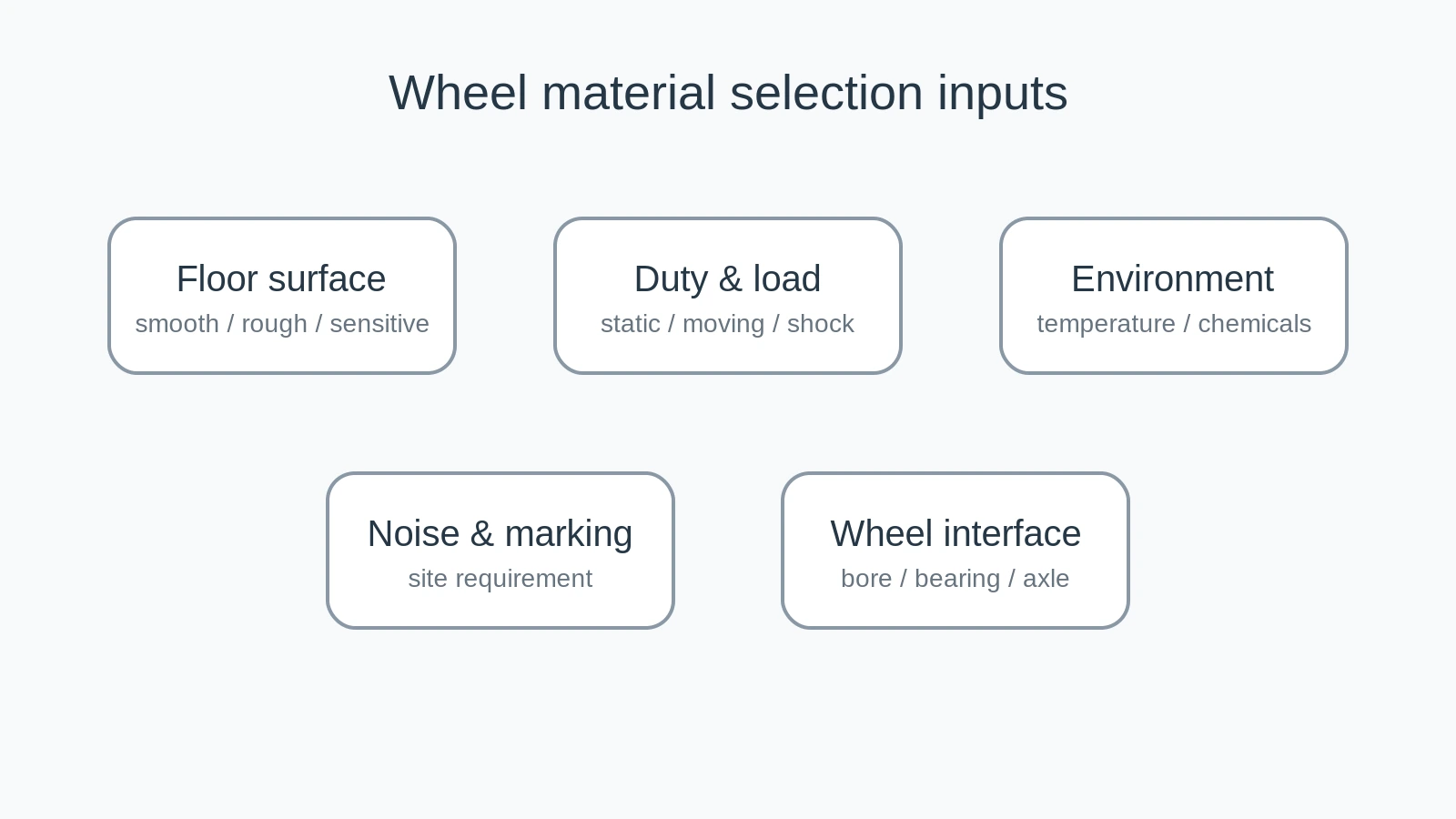
Nilai praktikal bagi “Cara Menentukan Jumlah Berat Troli dan Pengagihan Beban dalam RFQ” bukanlah jawapan ya atau tidak yang universal. Batasan yang berguna ialah peralatan dan tugas di mana soalan tersebut muncul. Tuliskan diameter roda, lebar, lubang atau galas, panjang hab, dimensi gandar atau penetapan, ketinggian yang dipasang dan kelegaan sekeliling. Mengekalkan medan ini bersama-sama membolehkan soalan pengenalpastian produk membezakan soalan pemilihan kejuruteraan dan menghalang bahagian yang serupa secara visual daripada dianggap boleh ditukar ganti secara automatik.
Gunakan keadaan normal yang paling mencabar dan bukannya penerangan kes terbaik. Jika peralatan kadangkala melepasi ambang, berfungsi di luar, membawa muatan yang tidak sekata atau hanya dikendalikan selepas tempoh beban statik yang lama, sertakan keadaan tersebut. Objektifnya ialah keperluan yang boleh diulang yang boleh difahami oleh jurutera atau pembeli lain tanpa melihat komponen asal. Dalam Cara Menentukan Jumlah Berat Troli dan, rekodkan hasilnya di sebelah keadaan peralatan sebenar supaya panduan artikel kekal terikat dengan keputusan penyumberan yang boleh diukur.
Pengukuran dan pemerhatian yang perlu direkodkan — Cara Menentukan Jumlah Troli
Untuk topik ini, rekodkan diameter roda, lebar, lubang atau galas, panjang hab, dimensi gandar atau penetapan, ketinggian yang dipasang dan kelegaan sekeliling. Gunakan gambar berdimensi jika lukisan tidak tersedia dan tunjukkan titik rujukan yang digunakan untuk setiap ukuran. Jika bahagian lama haus, bengkok atau dibaiki, tandakan dimensi yang terjejas dan bukannya menganggap geometri yang rosak sebagai sasaran reka bentuk. Dalam Cara Menentukan Jumlah Berat Troli dan, rekodkan hasilnya di sebelah keadaan peralatan sebenar supaya panduan artikel kekal terikat dengan keputusan penyumberan yang boleh diukur.
Helaian perbandingan berfungsi paling baik dengan satu konfigurasi setiap lajur atau baris. Pastikan nilai yang diukur, nilai yang diperlukan dan pilihan pilihan berasingan. Pemisahan mudah itu mengurangkan kemungkinan cadangan pembekal atau nilai katalog lama disalin ke dalam spesifikasi yang diperlukan tanpa semakan. Ia juga memudahkan audit semakan sebut harga kemudian. Dalam Cara Menentukan Jumlah Berat Troli dan, rekodkan hasilnya di sebelah keadaan peralatan sebenar supaya panduan artikel kekal terikat dengan keputusan penyumberan yang boleh diukur.
Ujian pemasangan pertama yang berguna — Cara Menentukan Jumlah Troli
Selepas calon dipasang, bandingkan komponen baharu dengan bahagian lama dan antara muka peralatan sebelum mengenakan beban penuh; putarkannya dengan tangan dan periksa hubungan spacer, pengikat dan jarak sisi. Percubaan pertama harus cukup perlahan untuk memerhatikan roda dan pemasangan dan bukan sekadar membuktikan bahawa peralatan boleh bergerak. Cari geseran, pergerakan sisi yang tidak dijangka, pergerakan pengikat, goyangan roda, gangguan dan perubahan dalam usaha pengendali. Dalam Cara Menentukan Jumlah Berat Troli dan, rekodkan hasilnya di sebelah keadaan peralatan sebenar supaya panduan artikel kekal terikat dengan keputusan penyumberan yang boleh diukur.
Jika hasilnya tidak memuaskan, rekodkan simptom tersebut sebelum mengubah beberapa pembolehubah sekaligus. Satu perubahan terkawal—seperti diameter roda, bahan, penjajaran pemasangan atau susun atur stereng—memberikan maklumat yang lebih berguna daripada mengubah keseluruhan pemasangan dan kehilangan punca masalah asal. Dalam Cara Menentukan Jumlah Berat Troli dan, rekodkan hasilnya di sebelah keadaan peralatan sebenar supaya panduan artikel kekal terikat dengan keputusan penyumberan yang boleh diukur.
Hubungkan pengiraan dalam “Cara Menentukan Jumlah Berat Troli dan Pengagihan Beban dalam RFQ” dengan laluan perjalanan sebenar
Berjalan di laluan tersebut dan kenal pasti halangan normal tertinggi, tanjakan, jurang lantai dan selekoh paling sempit. Perhatikan sama ada troli ditolak dengan tangan, ditunda atau diposisikan semula hanya sekali-sekala. Pemerhatian ini membantu menjelaskan mengapa diameter roda, tingkah laku bunga dan susun atur stereng boleh menjadi penting walaupun beban statik nominal kelihatan sederhana. Dalam Cara Menentukan Jumlah Berat Troli dan, rekodkan hasilnya di sebelah keadaan peralatan sebenar supaya panduan artikel kekal terikat dengan keputusan penyumberan yang boleh diukur.
Untuk perolehan, hantarkan definisi beban bersama-sama dengan dimensi roda, antara muka pemasangan, permukaan operasi dan kuantiti. Pakej tersebut memberikan pembekal konteks yang mencukupi untuk menyemak produk yang dicadangkan tanpa memaksa pembeli mereka-reka pernyataan penarafan atau keserasian yang tidak disokong oleh data sumber. Dalam Cara Menentukan Jumlah Berat Troli dan, rekodkan hasilnya di sebelah keadaan peralatan sebenar supaya panduan artikel kekal terikat dengan keputusan penyumberan yang boleh diukur.
Pastikan andaian beban jelas untuk “Cara Menentukan Jumlah Berat Troli dan Pengagihan Beban dalam RFQ”
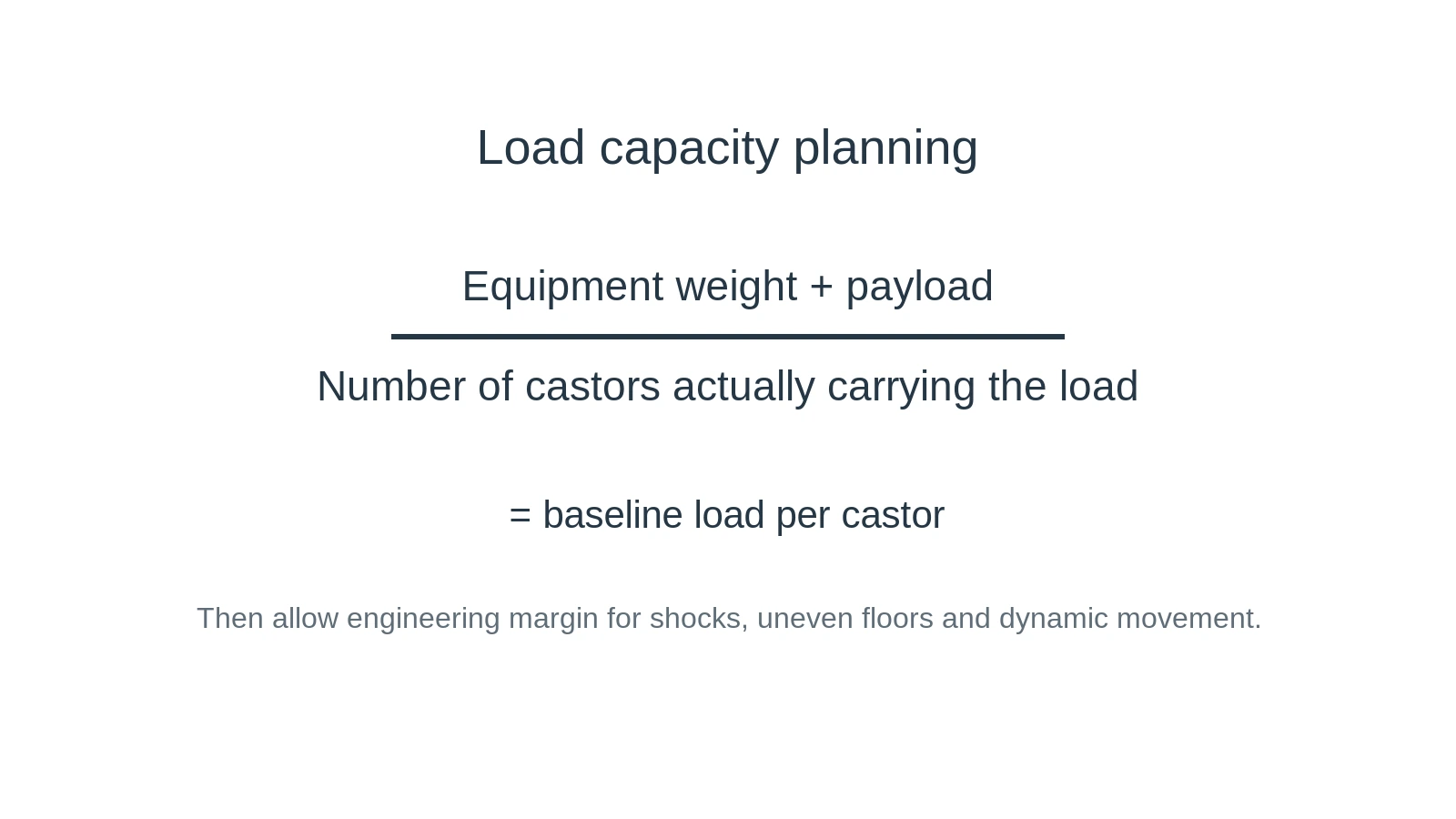
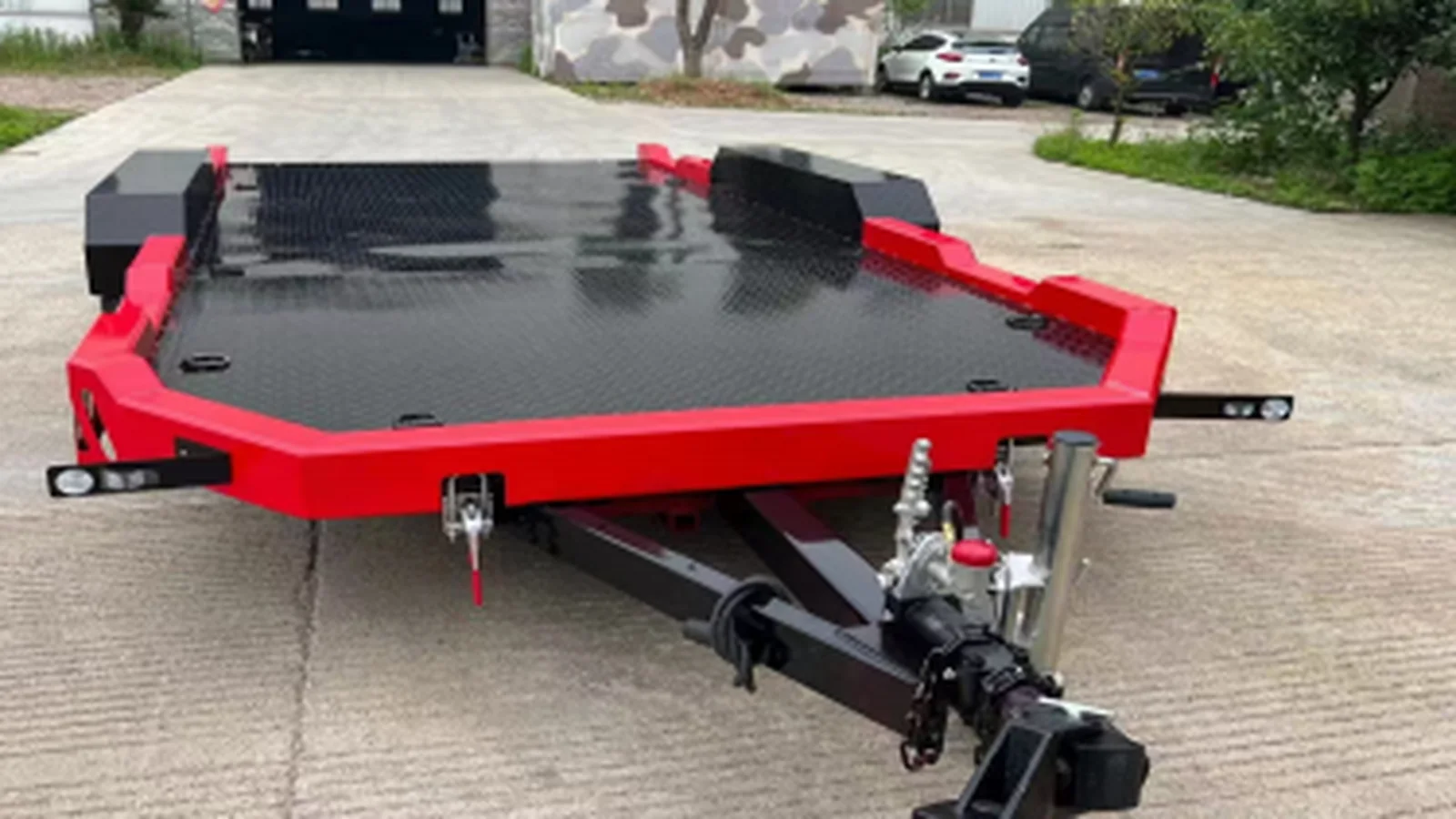
Mulakan dengan jisim peralatan kosong, muatan maksimum dan bilangan titik sokongan, kemudian pertimbangkan sama ada semua roda boleh berkongsi beban secara realistik pada masa yang sama. Lantai, kekakuan rangka, tanjakan dan kedudukan muatan boleh memunggah satu roda dan menumpukan daya pada roda yang lain. Rekodkan kes operasi dan bukannya membahagikan jumlah jisim dengan kiraan roda dan menganggap hasilnya sebagai spesifikasi lengkap. Dalam Cara Menentukan Jumlah Berat Troli dan, rekodkan hasilnya di sebelah keadaan peralatan sebenar supaya panduan artikel kekal terikat dengan keputusan penyumberan yang boleh diukur.
Kesan dinamik seperti ambang dan perubahan arah secara tiba-tiba juga penting. Tujuan pengiraan adalah untuk menetapkan keperluan minimum yang munasabah dan mengenal pasti ketidakpastian yang memerlukan pengesahan pembekal, bukan untuk mengeluarkan penarafan katalog yang tidak pernah diuji untuk konfigurasi yang dicadangkan. Dalam Cara Menentukan Jumlah Berat Troli dan, rekodkan hasilnya di sebelah keadaan peralatan sebenar supaya panduan artikel kekal terikat dengan keputusan penyumberan yang boleh diukur.
Asingkan aritmetik statik daripada beban yang dilihat oleh roda semasa digunakan — Cara Menentukan Jumlah Troli
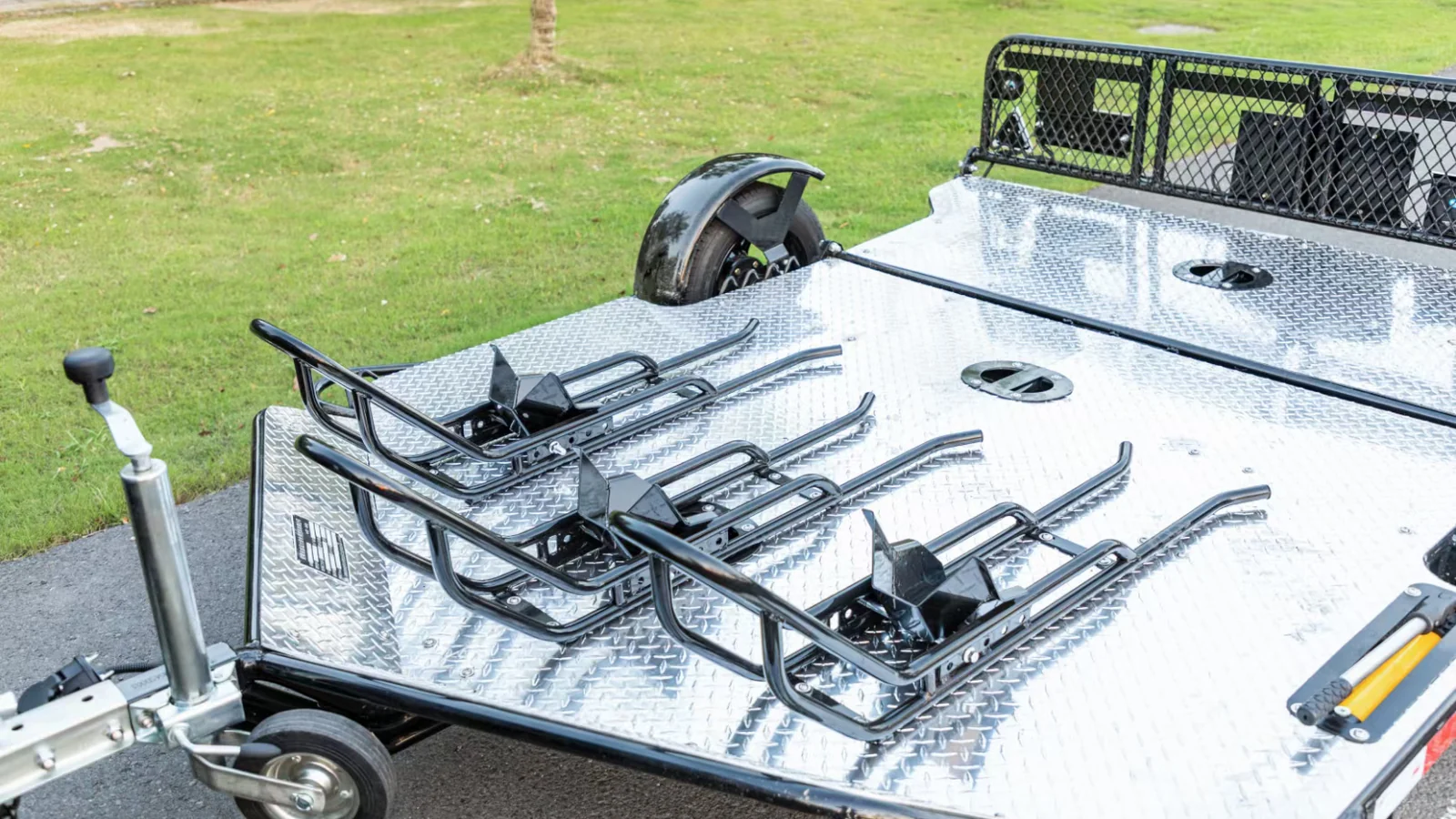
Soalan beban memerlukan lebih daripada jumlah jisim peralatan dibahagikan dengan bilangan roda. Lantai tidak rata sempurna, bingkai terpesong, muatan beralih dan ambang boleh memindahkan lebih banyak beban seketika ke titik sokongan yang lebih sedikit. Oleh itu, tujuan pengiraan adalah untuk mewujudkan garis dasar yang telus dan kemudian mengenal pasti keadaan yang boleh mengalihkan tugas sebenar daripada garis dasar tersebut. Dalam Cara Menentukan Jumlah Berat Troli dan, rekodkan hasilnya di sebelah keadaan peralatan sebenar supaya panduan artikel kekal terikat dengan keputusan penyumberan yang boleh diukur.
| Input | Apa yang perlu direkodkan |
|---|---|
| Jisim peralatan | Sertakan peralatan itu sendiri dan muatan maksimum yang akan dipindahkan. |
| Titik sokongan | Kenal pasti berapa banyak roda yang boleh membawa beban dengan andal dalam keadaan normal yang paling tidak menggalakkan. |
| Peristiwa dinamik | Senaraikan ambang, tanjakan, hentaman, pusingan dan penundaan atau tolakan tangan yang berlaku dalam perkhidmatan. |
| Alam Sekitar | Termasuk keadaan lantai, serpihan, kelembapan dan suhu di mana ia mempengaruhi pilihan tugas atau bahan. |
Gunakan satu set andaian yang konsisten apabila membandingkan roda calon. Jika satu pilihan dinilai pada lantai yang licin dan tidak dimuatkan dan satu lagi pada laluan yang kasar, perbandingan itu tidak bermakna. Diameter roda dan bahan mempengaruhi cara pemasangan berinteraksi dengan halangan dan lantai, tetapi ia tidak menggantikan penarafan produk yang disahkan. Jika penarafan tidak tersedia untuk konfigurasi yang tepat, pastikan ia terbuka untuk pengesahan pembekal dan bukannya membuat ekstrapolasi daripada saiz bersebelahan. Dalam Cara Menentukan Jumlah Berat Troli dan, rekodkan hasilnya di sebelah keadaan peralatan sebenar supaya panduan artikel kekal terikat dengan keputusan penyumberan yang boleh diukur.
Pentauliahan harus menguji keadaan yang digunakan dalam perbincangan pemilihan. Gerakkan peralatan secara perlahan-lahan melalui peralihan lantai biasa yang paling mencabar dan perkongsian beban pantau, penjejakan roda, pergerakan pendakap dan usaha pengendali. Jika hasilnya tidak memuaskan, dokumentasikan simptom dan ubah satu pembolehubah pada satu masa. Ini menjadikan keputusan kejuruteraan seterusnya lebih bermaklumat daripada menggantikan beberapa komponen sekaligus dan kehilangan punca asal. Dalam Cara Menentukan Jumlah Berat Troli dan, rekodkan hasilnya di sebelah keadaan peralatan sebenar supaya panduan artikel kekal terikat dengan keputusan penyumberan yang boleh diukur.
Bagaimana menentukan jumlah berat troli dan pengagihan beban mengubah RFQ
Untuk “Cara Menentukan Jumlah Berat Troli dan Pengagihan Beban dalam RFQ”, RFQ harus menyatakan fakta operasi yang mendorong persoalan dan bukan hanya mengulangi istilah produk. Namakan peralatan, huraikan tugas normal dan maksimum, catatkan dimensi kawalan kesesuaian dan kenal pasti simptom atau objektif yang mendorong semakan. Jika keputusan berkaitan beban, sertakan jisim peralatan dan titik sokongan; jika berkaitan bahan, huraikan lantai dan persekitaran; jika berkaitan pemasangan, berikan geometri antara muka; dan jika berkaitan roda sokongan treler, sertakan keadaan sokongan, tanah dan pergerakan yang tersedia.
Pastikan nilai yang diperlukan berasingan daripada soalan terbuka. Pembekal boleh memberi respons yang lebih berguna untuk "mengesahkan panjang lubang dan hab terhadap lakaran yang dilampirkan" berbanding dimensi yang diteka yang dibentangkan sebagai muktamad. Prinsip yang sama terpakai untuk penarafan beban, gred bahan, fungsi brek dan butiran pemasangan. Jika nilai disahkan, labelkannya dengan jelas; jika tidak, minta pengesahan. Ini memastikan sebut harga sejajar dengan peralatan sebenar dan memudahkan semakan teknikal kemudian tanpa menambah kelulusan berulang atau bahagian pesanan berikutnya pada halaman. Dalam Cara Menentukan Jumlah Berat Troli dan, rekodkan hasilnya di sebelah keadaan peralatan sebenar supaya panduan artikel kekal terikat dengan keputusan penyumberan yang boleh diukur.
Tentukan Jumlah Berat Troli dan Pengagihan Beban Soalan Lazim
Apakah perkara pertama yang perlu disahkan untuk RFQ pengagihan beban troli?
Mulakan dengan jumlah jisim, titik sokongan, taburan beban sebenar, geometri halangan dan diameter roda. Itu memberikan konteks yang boleh diukur kepada pemilihan yang selebihnya.
Bolehkah foto menggantikan ukuran?
Foto membantu pengenalpastian, tetapi dimensi kritikal kesesuaian masih harus diukur atau diambil daripada lukisan yang diluluskan.
Patutkah pembeli menambah faktor keselamatan pada muatan?
Elaun keselamatan biasanya digunakan untuk menangani perkongsian beban dan kesan operasi yang tidak sama rata, tetapi nilai yang sesuai bergantung pada aplikasi dan tidak menggantikan penarafan produk. Dalam Cara Menentukan Jumlah Berat Troli dan, rekodkan hasilnya di sebelah keadaan peralatan sebenar supaya panduan artikel kekal terikat dengan keputusan penyumberan yang boleh diukur.
Bagaimana jika bahan tersebut tidak diketahui?
Nyatakan tingkat operasi dan persekitaran, berikan sampel atau foto dan anggap bahan sebagai item pengesahan dan bukannya meneka berdasarkan warna.
Bincangkan keperluan RFQ pengagihan beban troli anda
Hantar permohonan, muat, dimensi kawalan kesesuaian, kuantiti dan sebarang foto atau lukisan yang berkaitan. Kami akan menggunakan input tersebut untuk menyempitkan keluarga produk tanpa meneka.