
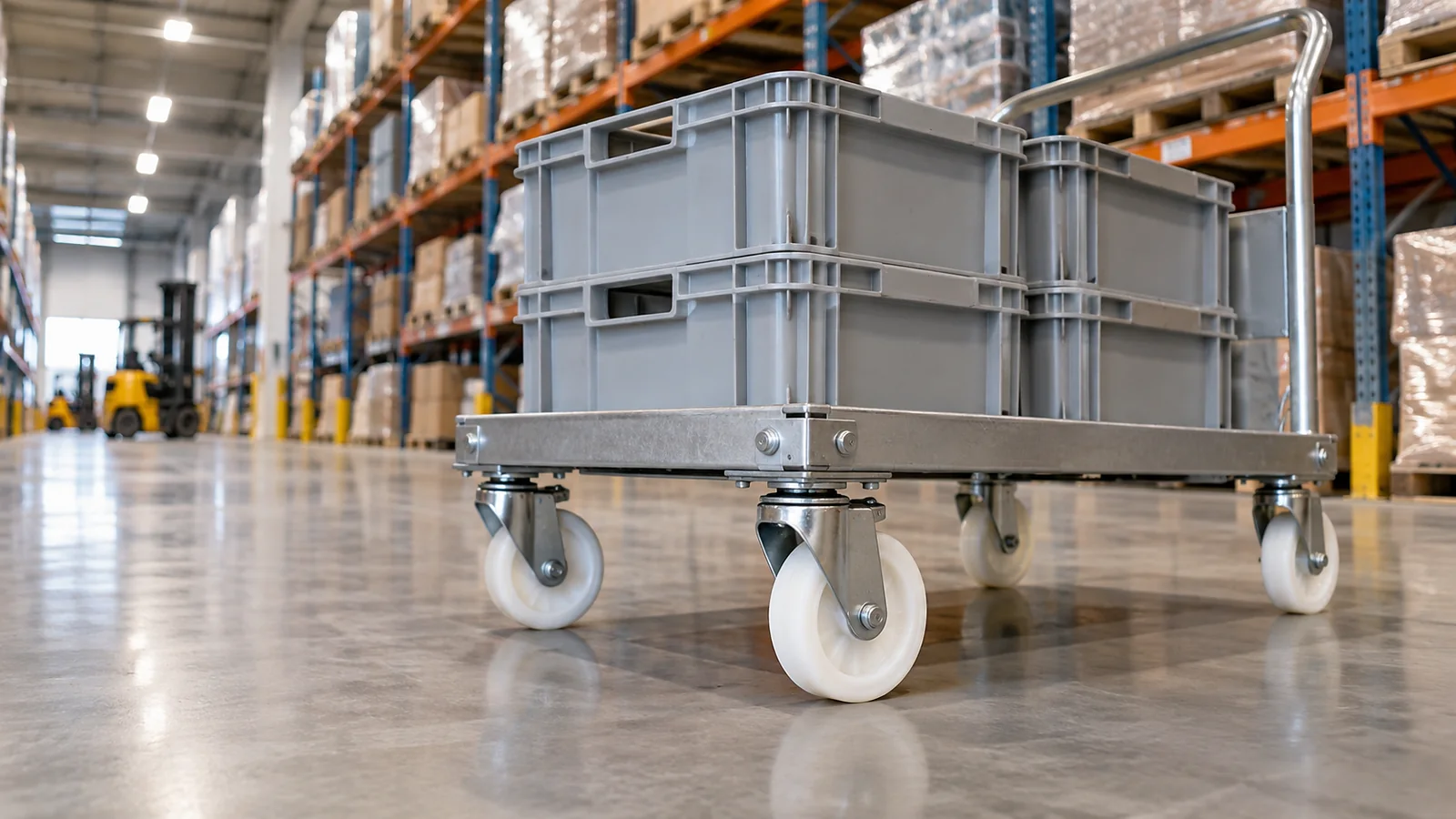
Как указать общий вес тележки и распределение нагрузки в запросе коммерческого предложения.
A practical buyer guide to cart load distribution RFQ, focused on measurable operating conditions and RFQ-ready decisions.
Why this question matters — How to Specify Total Cart
For an industrial buyer, cart load distribution RFQ is not a label to choose in isolation. The useful question is how it behaves inside the complete wheel, mounting and duty-cycle decision.
For mobile equipment crossing concrete joints, thresholds, ramps or mixed floor conditions, begin by confirming total mass, supporting points, real load distribution, obstacle geometry and wheel diameter. This is usually more useful than comparing nominal product names because two visually similar wheels can behave differently once mounting, floor condition and real load distribution are considered.
This also prevents a frequent sourcing error: choosing from appearance alone. An ideal static division can understate the load on one wheel when the frame rocks or crosses an obstacle. Record dead weight, payload, supporting layout, floor irregularities, travel pattern and safety allowance in the enquiry so the commercial discussion starts from a technically meaningful baseline.
Define the operating condition first — How to Specify Total Cart
Before comparing products, write the equipment task in one sentence: what must move, what load it carries, where it travels and how often it is repositioned. That description provides context for cart load distribution RFQ without turning one parameter into a universal rule.
For mobile equipment crossing concrete joints, thresholds, ramps or mixed floor conditions, the first review should cover total mass, supporting points, real load distribution, obstacle geometry and wheel diameter. If a value is not known, mark it for measurement rather than substituting a typical number. The purpose of the RFQ is to close gaps, not hide them. In How to Specify Total Cart Weight and, record the result beside the actual equipment condition so the article guidance remains tied to a measurable sourcing decision.
Measurements that prevent false matches — How to Specify Total Cart
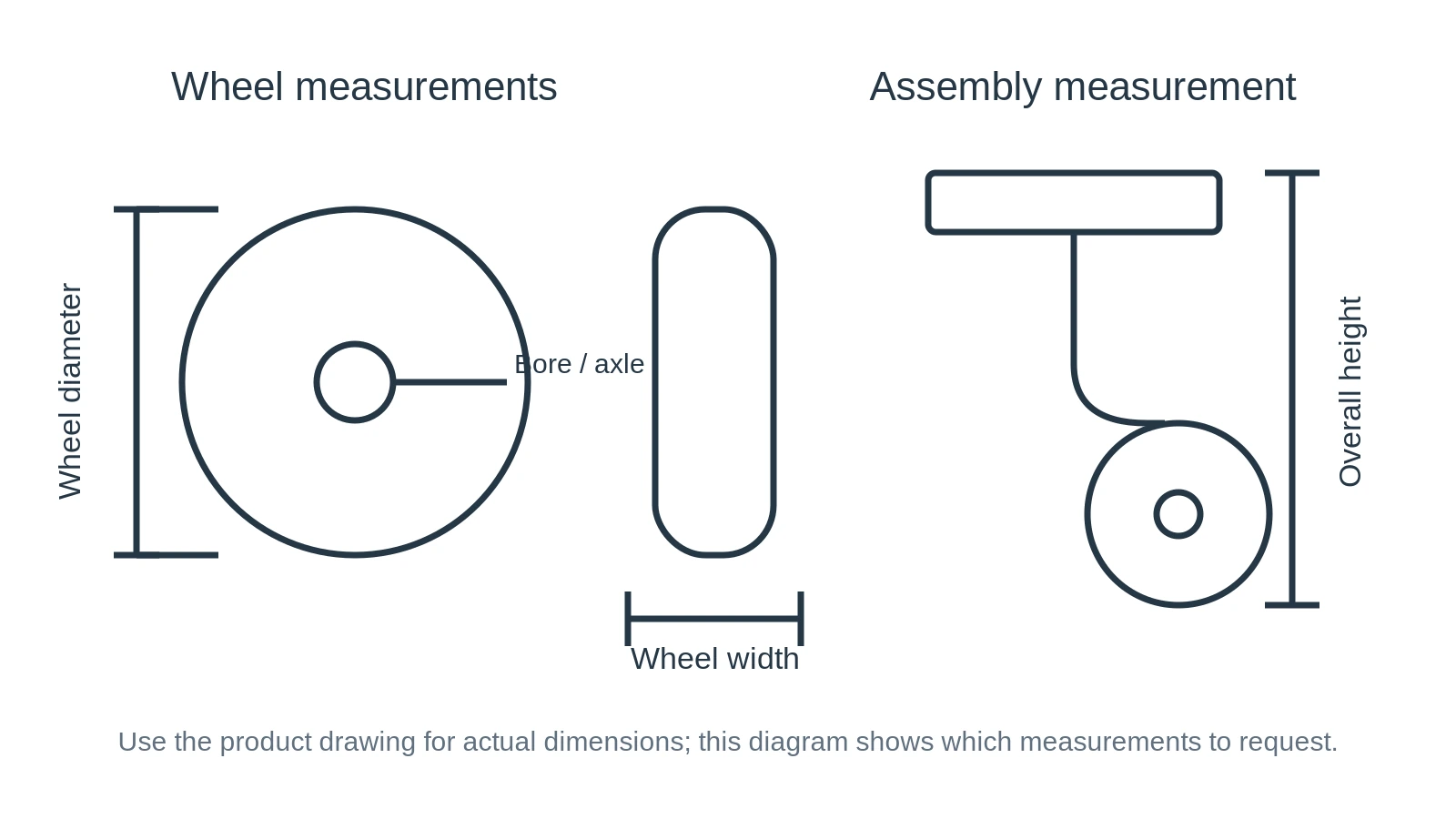
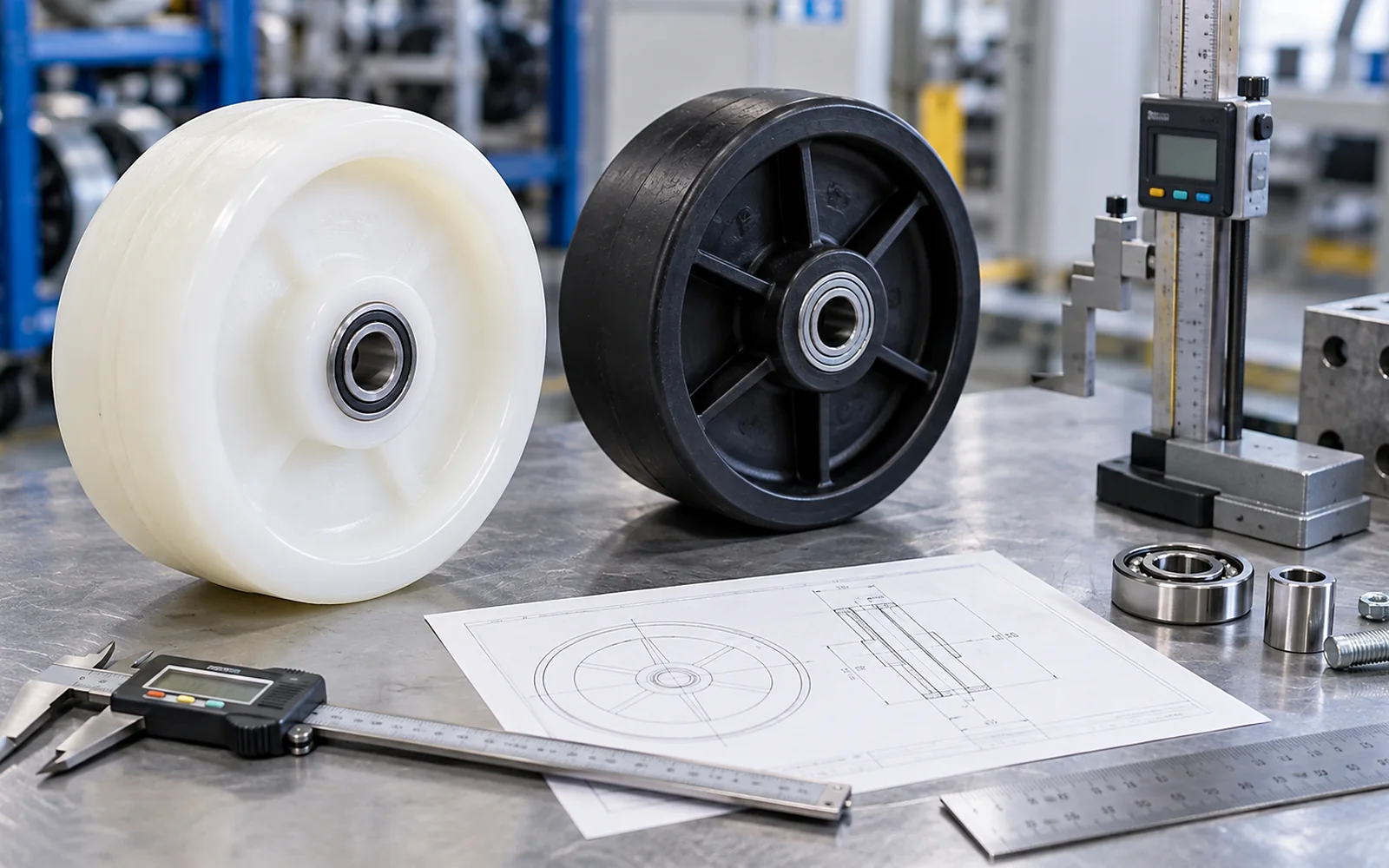
Replacement work benefits from a consistent measurement routine. Record wheel diameter and width, then move inward to the hub: bore or bearing type, axle diameter, hub length and spacers. For complete assemblies, add installed height and mounting geometry. Photograph the measurement tool in place when a dimension is difficult to describe. In How to Specify Total Cart Weight and, record the result beside the actual equipment condition so the article guidance remains tied to a measurable sourcing decision.
Do not use worn tread as the only reference if original diameter matters. A heavily worn wheel can make the replacement appear too large when the real issue is material loss. Likewise, a bent fork or improvised spacer can change apparent offset. In How to Specify Total Cart Weight and, record the result beside the actual equipment condition so the article guidance remains tied to a measurable sourcing decision.

Load, floor and movement interact — How to Specify Total Cart
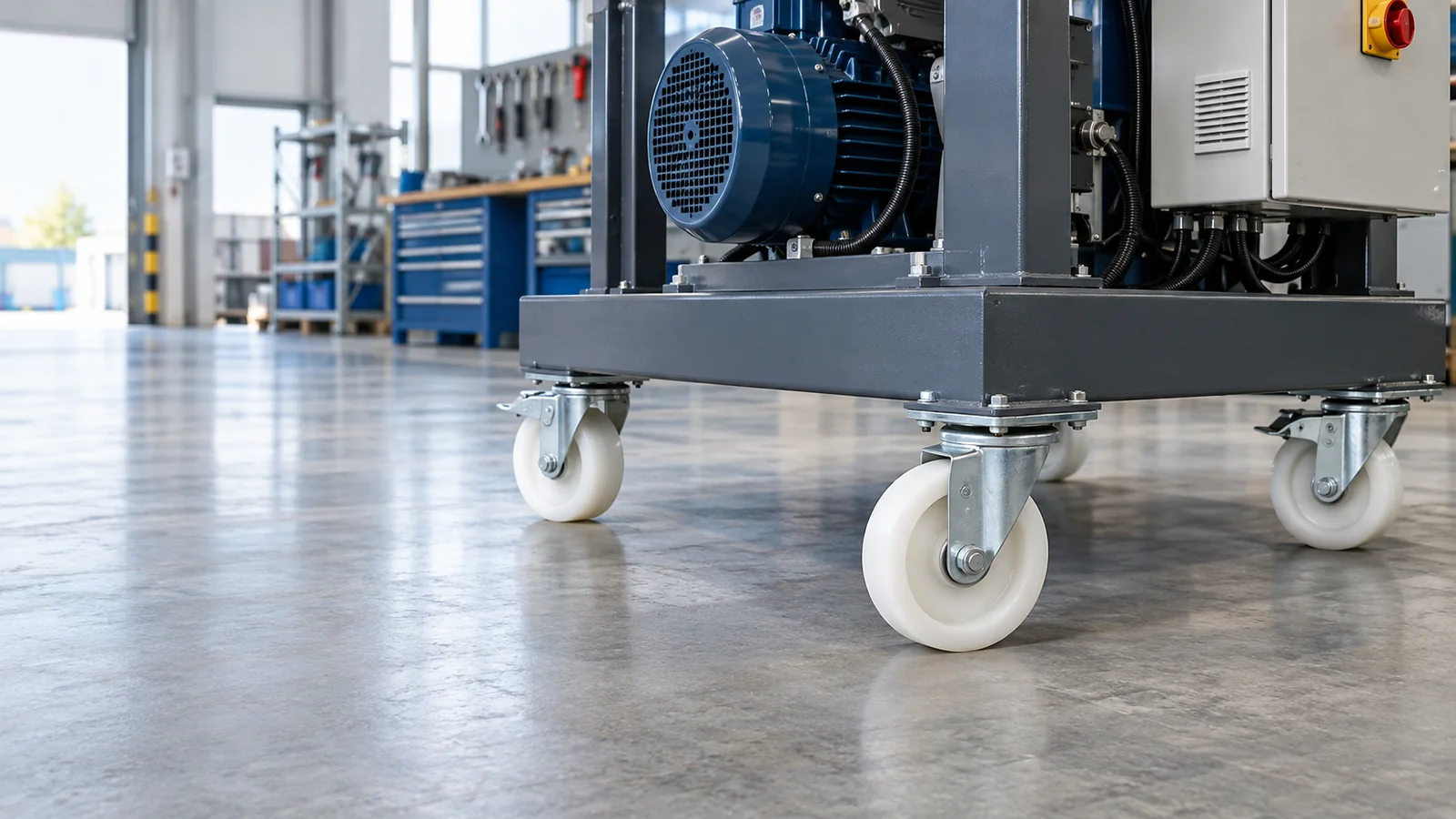
Load rating is not independent of how equipment moves. A cart crossing a threshold can create impact forces absent in a static parking condition. An uneven floor can shift load from four nominal support points to three. A trailer jockey wheel may carry a modest vertical drawbar load yet require substantial manoeuvring effort on loose ground. In How to Specify Total Cart Weight and, record the result beside the actual equipment condition so the article guidance remains tied to a measurable sourcing decision.
Зафиксируйте максимальную нормальную нагрузку, исключительную нагрузку, тип пола (наземный или полу), пройденное расстояние и частоту препятствий. Комбинированный подход обеспечивает более надежную основу для выбора, чем простое указание общего веса.
Turn the topic into a comparison matrix — How to Specify Total Cart
| Вопрос | Что записывать |
|---|---|
| Долг | Какое оборудование выполняет свои функции и как часто оно перемещается. |
| Нагрузка | Собственный вес, полезная нагрузка и компоновка опор. |
| Пол | Поверхность, стыки, мусор, вода или химические вещества |
| Колесо | Диаметр, ширина и материал (если известен) |
| Интерфейс | Отверстие/подшипник/ось или кронштейн/трубка/шток |
| Контроль | Требования к тормозам, блокировке, складыванию или рулевому управлению |
| Коммерческий | Количество, примерная цель и место назначения. |
Failure patterns to watch in specify total cart weight and load distribution
An ideal static division can understate the load on one wheel when the frame rocks or crosses an obstacle. Similar symptoms can also come from loose fasteners, worn bearings, misalignment, contaminated floors or a frame that is no longer square. Before blaming wheel material, inspect the mounting and compare wear patterns across positions. In How to Specify Total Cart Weight and, record the result beside the actual equipment condition so the article guidance remains tied to a measurable sourcing decision.
If only one corner wears rapidly, investigate that corner’s load and alignment. If all wheels show the same damage, review duty, floor and material specification. If wear accelerates after a process change, record the new contaminant, cleaning agent, temperature or travel pattern. In How to Specify Total Cart Weight and, record the result beside the actual equipment condition so the article guidance remains tied to a measurable sourcing decision.
How to write the RFQ line — How to Specify Total Cart
Use one line per configuration and write the requirement so another engineer can understand it without the original conversation. Include dead weight, payload, supporting layout, floor irregularities, travel pattern and safety allowance. Attach the correct drawing or photo set. If an interface dimension is unknown, say “measurement pending” instead of using a guessed value. In How to Specify Total Cart Weight and, record the result beside the actual equipment condition so the article guidance remains tied to a measurable sourcing decision.
При заказе нескольких моделей храните количество отдельно и укажите, какие размеры являются общими.
Specify Total Cart Weight and Load Distribution decision checklist
- Известна ли максимальная нормальная нагрузка?
- Могут ли опорные колеса равномерно распределять нагрузку?
- Описан ли реальный пол/земля?
- Измеряются ли размеры колеса и соединительных элементов?
- Функция управления понятна?
- Указаны ли особые требования к материалам/отделке/окружающей среде?
- Указано ли количество для правильной модели?
Продолжить с страница основного выбора, сравнивать текущие семейства продуктовили использовать Форма запроса коммерческого предложения.
Put the engineering question into a real operating context — How to Specify Total Cart
Приведенные ниже пункты относятся к теме статьи и касаются измерений, установки и полевых наблюдений, не рассматривая типовую этикетку продукта как полную спецификацию.
Close the loop with the installation — How to Specify Total Cart
After a sample or first lot is installed, compare real behaviour with the RFQ assumptions. Record interference, unusual wear or movement and feed it into the next purchase specification. That turns one replacement into a controlled maintenance standard. In How to Specify Total Cart Weight and, record the result beside the actual equipment condition so the article guidance remains tied to a measurable sourcing decision.
What to observe when applying specify total cart weight and load distribution
Commission a new or replacement configuration for cart load distribution RFQ under controlled load and low speed before normal operation. Watch for rubbing, bracket contact, wheel wobble, steering instability, fastener movement and any change in deck or drawbar height. The goal is to test the assumptions made during selection rather than merely confirm that the wheel turns.
For mobile equipment crossing concrete joints, thresholds, ramps or mixed floor conditions, include the most demanding normal floor or ground transition in the initial trial. If the system must cross a threshold, ramp or rough joint, observe it there. Document the result with the same model reference used in the RFQ so future subsequent orders have a useful baseline instead of relying on memory. In How to Specify Total Cart Weight and, record the result beside the actual equipment condition so the article guidance remains tied to a measurable sourcing decision.
Maintenance records that matter for specify total cart weight and load distribution
Record wheel position, installation date, duty, reason for replacement and unusual floor events. In a cart load distribution RFQ program, this simple history helps identify whether wear is random, position-specific or linked to a changed environment. A wheel that fails repeatedly at one corner may point to load concentration, alignment or local contamination rather than a general material problem.
Inspect axle, spacers, bearings, bracket and fasteners when the old wheel is removed. Keep measurements that relate directly to dead weight, payload, supporting layout, floor irregularities, travel pattern and safety allowance. If a component has been modified in service, photograph the change before installing the new item and decide whether the modified condition should become part of the official equipment specification. In How to Specify Total Cart Weight and, record the result beside the actual equipment condition so the article guidance remains tied to a measurable sourcing decision.
Define the boundary before comparing parts — How to Specify Total Cart
The practical value of “How to Specify Total Cart Weight and Load Distribution in an RFQ” is not a universal yes-or-no answer. The useful boundary is the equipment and duty in which the question occurs. Write down wheel diameter, width, bore or bearing, hub length, axle or fixing dimensions, installed height and surrounding clearance. Keeping these fields together makes it possible to distinguish a product-identification question from an engineering selection question and prevents a visually similar part from being treated as automatically interchangeable.
Use the most demanding normal condition rather than a best-case description. If the equipment sometimes crosses a threshold, works outdoors, carries an uneven payload or is manoeuvred only after long periods of static load, include that condition. The objective is a repeatable requirement that another engineer or buyer can understand without seeing the original component. In How to Specify Total Cart Weight and, record the result beside the actual equipment condition so the article guidance remains tied to a measurable sourcing decision.
Measurements and observations worth recording — How to Specify Total Cart
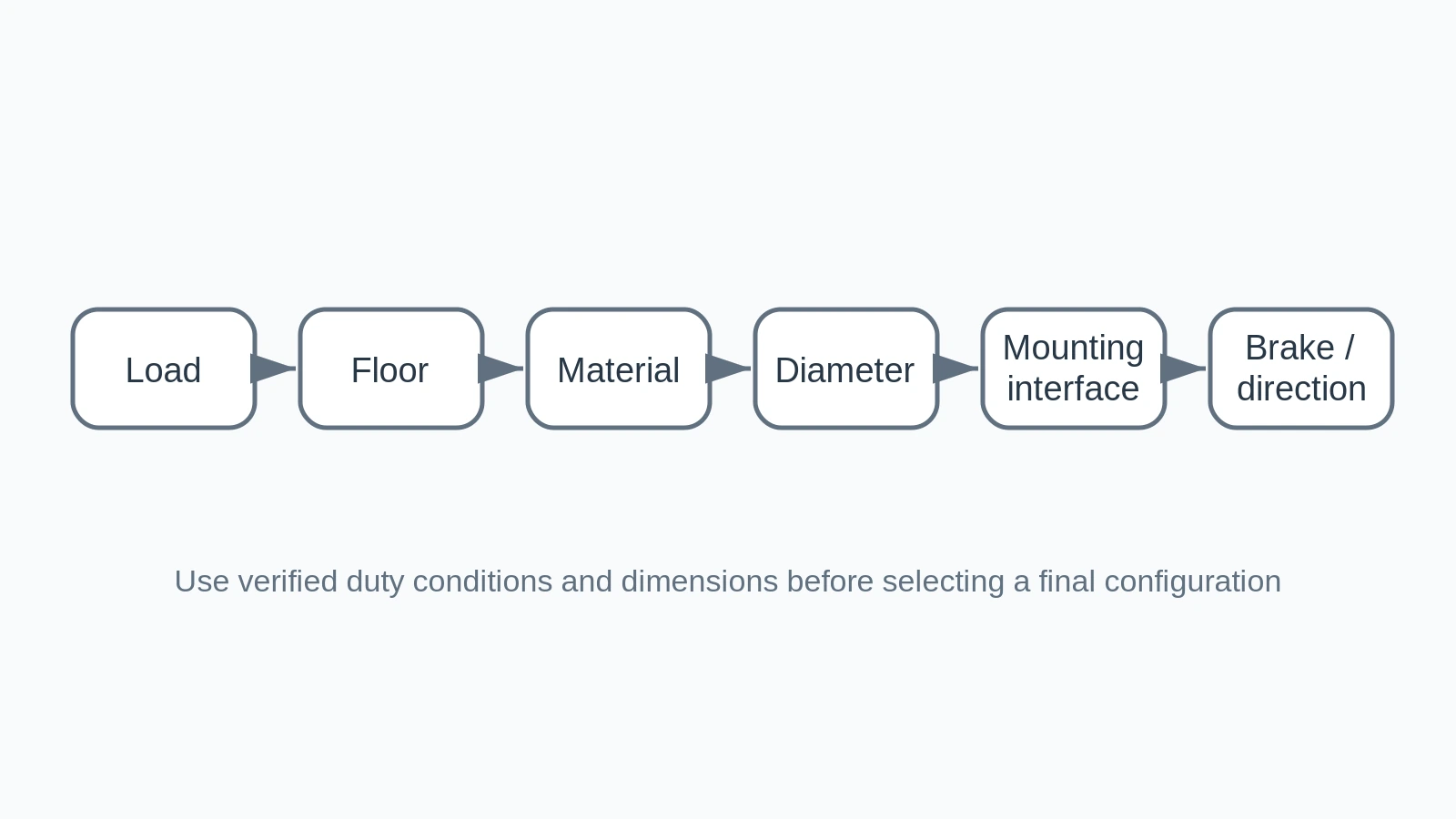
For this topic, record wheel diameter, width, bore or bearing, hub length, axle or fixing dimensions, installed height and surrounding clearance. Use dimensioned photographs where a drawing is unavailable and show the reference points used for each measurement. If the old part is worn, bent or repaired, flag the affected dimension instead of treating the damaged geometry as the design target. In How to Specify Total Cart Weight and, record the result beside the actual equipment condition so the article guidance remains tied to a measurable sourcing decision.
A comparison sheet works best with one configuration per column or row. Keep measured values, required values and optional preferences separate. That simple separation reduces the chance that a supplier proposal or an old catalogue value is copied into the required specification without review. It also makes later quotation revisions easier to audit. In How to Specify Total Cart Weight and, record the result beside the actual equipment condition so the article guidance remains tied to a measurable sourcing decision.
A useful first-installation test — How to Specify Total Cart
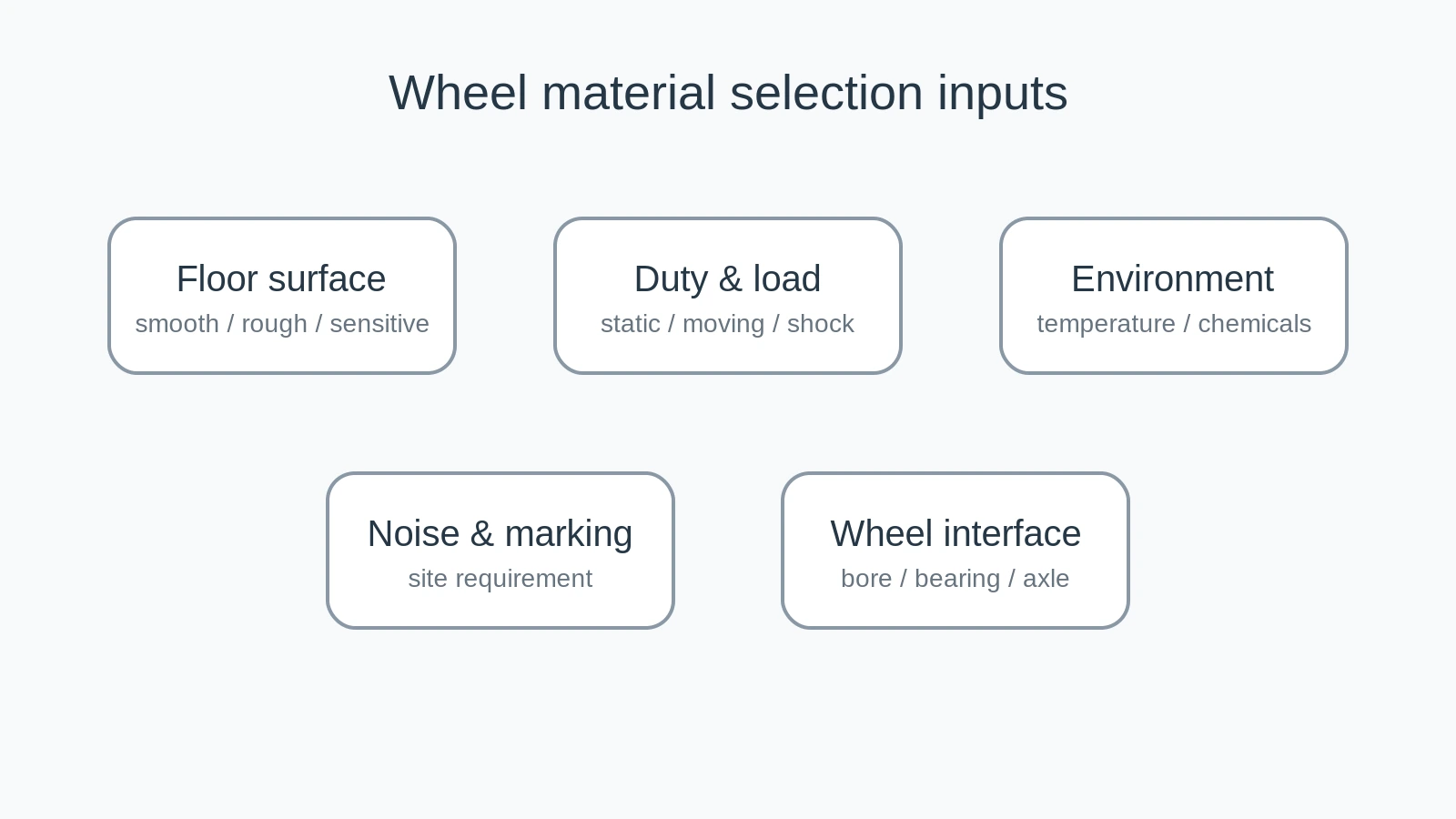
After a candidate is installed, compare the new component with the old part and the equipment interface before applying full load; rotate it by hand and check spacer, fastener and side-clearance relationships. The first trial should be slow enough to observe the wheel and mounting rather than merely prove that the equipment can move. Look for rubbing, unexpected side movement, fastener movement, wheel wobble, interference and a change in operator effort. In How to Specify Total Cart Weight and, record the result beside the actual equipment condition so the article guidance remains tied to a measurable sourcing decision.
If the result is unsatisfactory, record the symptom before changing several variables at once. One controlled change—such as wheel diameter, material, mounting alignment or steering layout—gives more useful information than changing the whole assembly and losing the cause of the original problem. In How to Specify Total Cart Weight and, record the result beside the actual equipment condition so the article guidance remains tied to a measurable sourcing decision.
Connect the calculation in “How to Specify Total Cart Weight and Load Distribution in an RFQ” to the real travel path
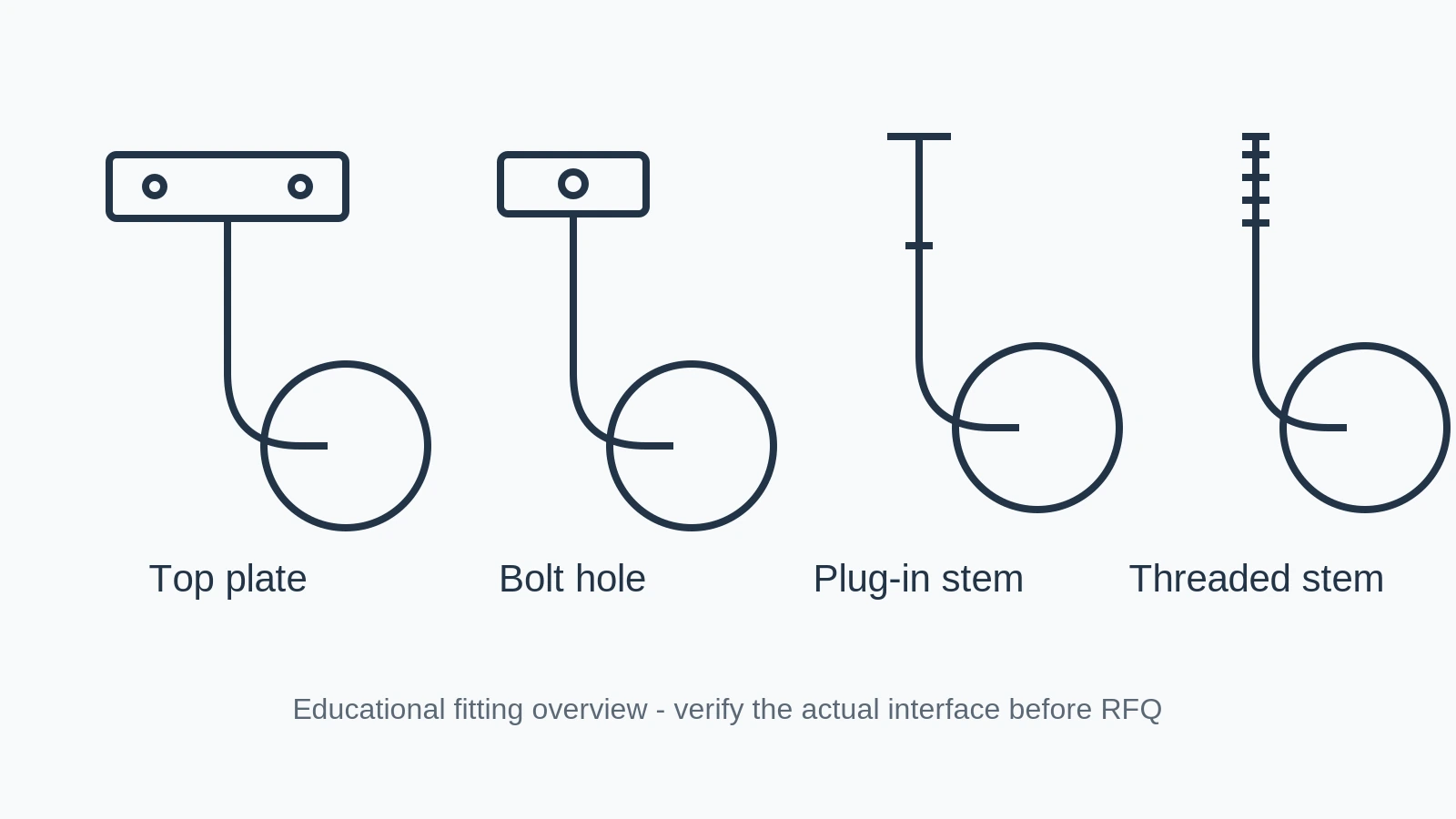
Walk the route and identify the highest normal obstacle, ramp, floor gap and tightest turn. Note whether the trolley is hand-pushed, towed or repositioned only occasionally. These observations help explain why wheel diameter, tread behaviour and steering layout can matter even when the nominal static load appears modest. In How to Specify Total Cart Weight and, record the result beside the actual equipment condition so the article guidance remains tied to a measurable sourcing decision.
For procurement, send the load definition together with wheel dimensions, mounting interface, operating surface and quantity. That package gives the supplier enough context to review a proposed product without forcing the buyer to invent a rating or compatibility statement that the source data does not support. In How to Specify Total Cart Weight and, record the result beside the actual equipment condition so the article guidance remains tied to a measurable sourcing decision.
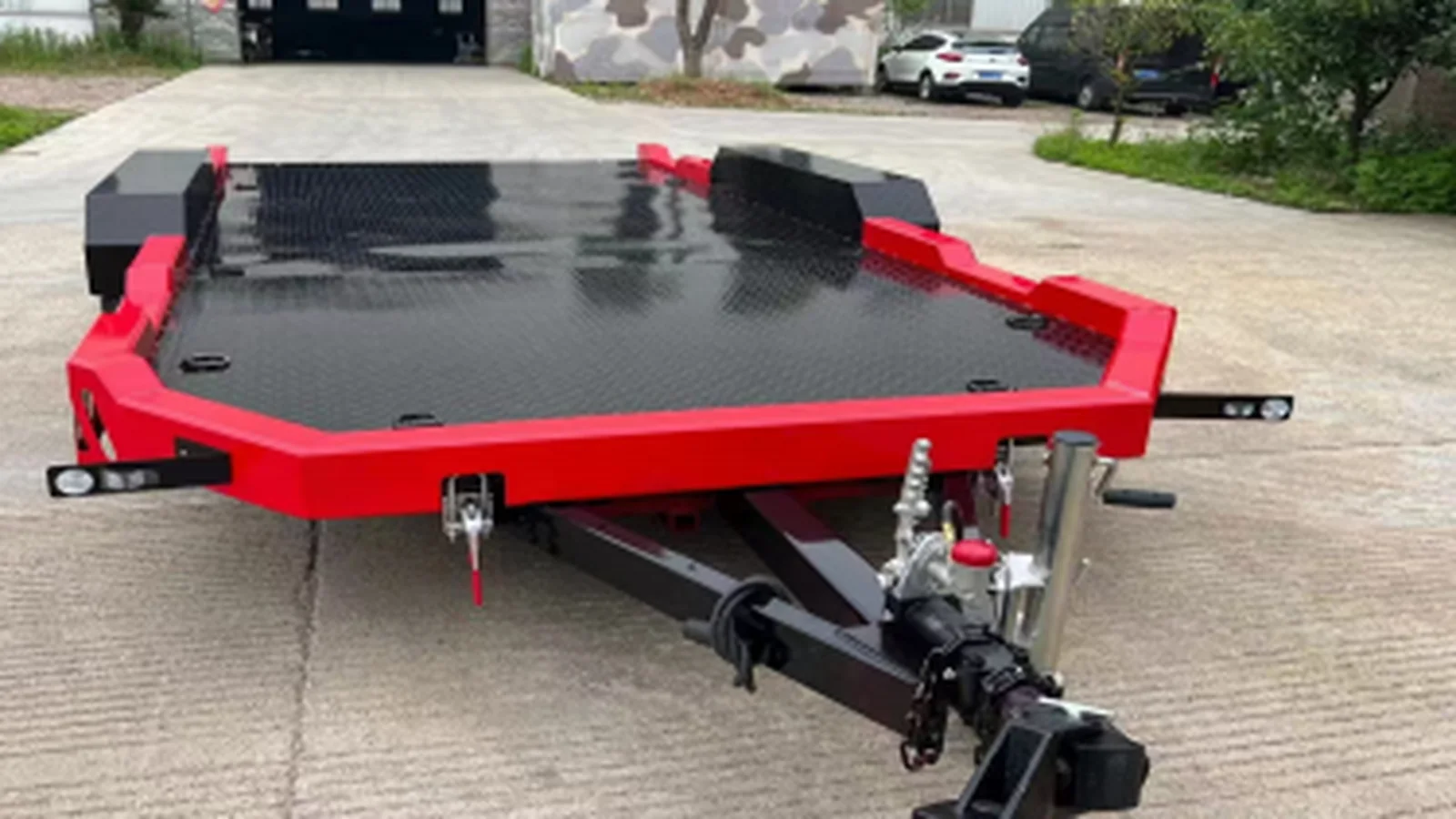
Make the load assumptions explicit for “How to Specify Total Cart Weight and Load Distribution in an RFQ”
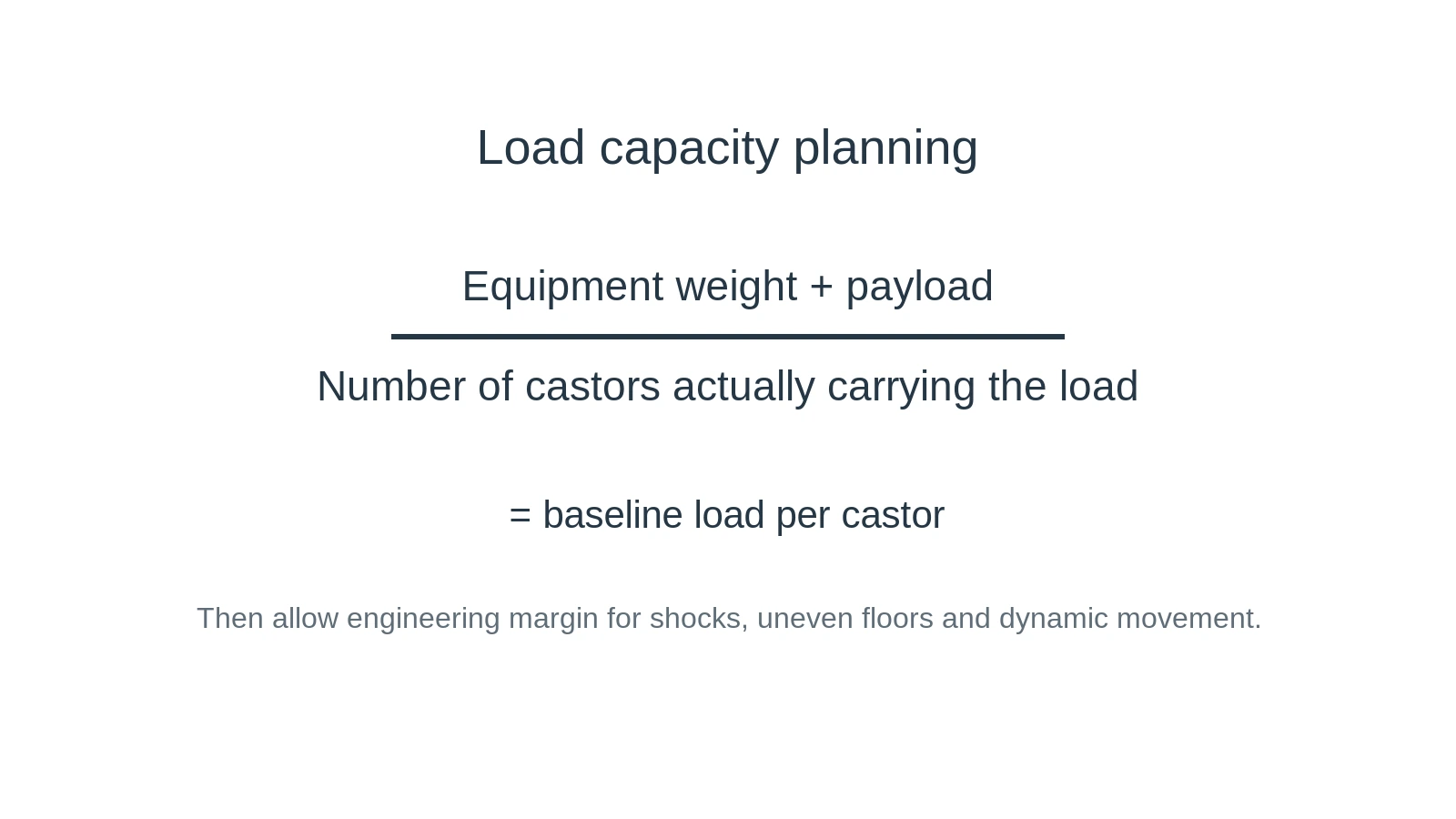
Start with the empty equipment mass, maximum payload and number of supporting points, then consider whether all wheels can realistically share load at the same time. Floors, frame stiffness, ramps and payload position can unload one wheel and concentrate force on another. Record the operating case rather than dividing total mass by wheel count and treating the result as a complete specification. In How to Specify Total Cart Weight and, record the result beside the actual equipment condition so the article guidance remains tied to a measurable sourcing decision.
Dynamic effects such as thresholds and sudden direction changes also matter. The purpose of the calculation is to establish a sensible minimum requirement and identify uncertainty that needs supplier confirmation, not to manufacture a catalogue rating that was never tested for the proposed configuration. In How to Specify Total Cart Weight and, record the result beside the actual equipment condition so the article guidance remains tied to a measurable sourcing decision.
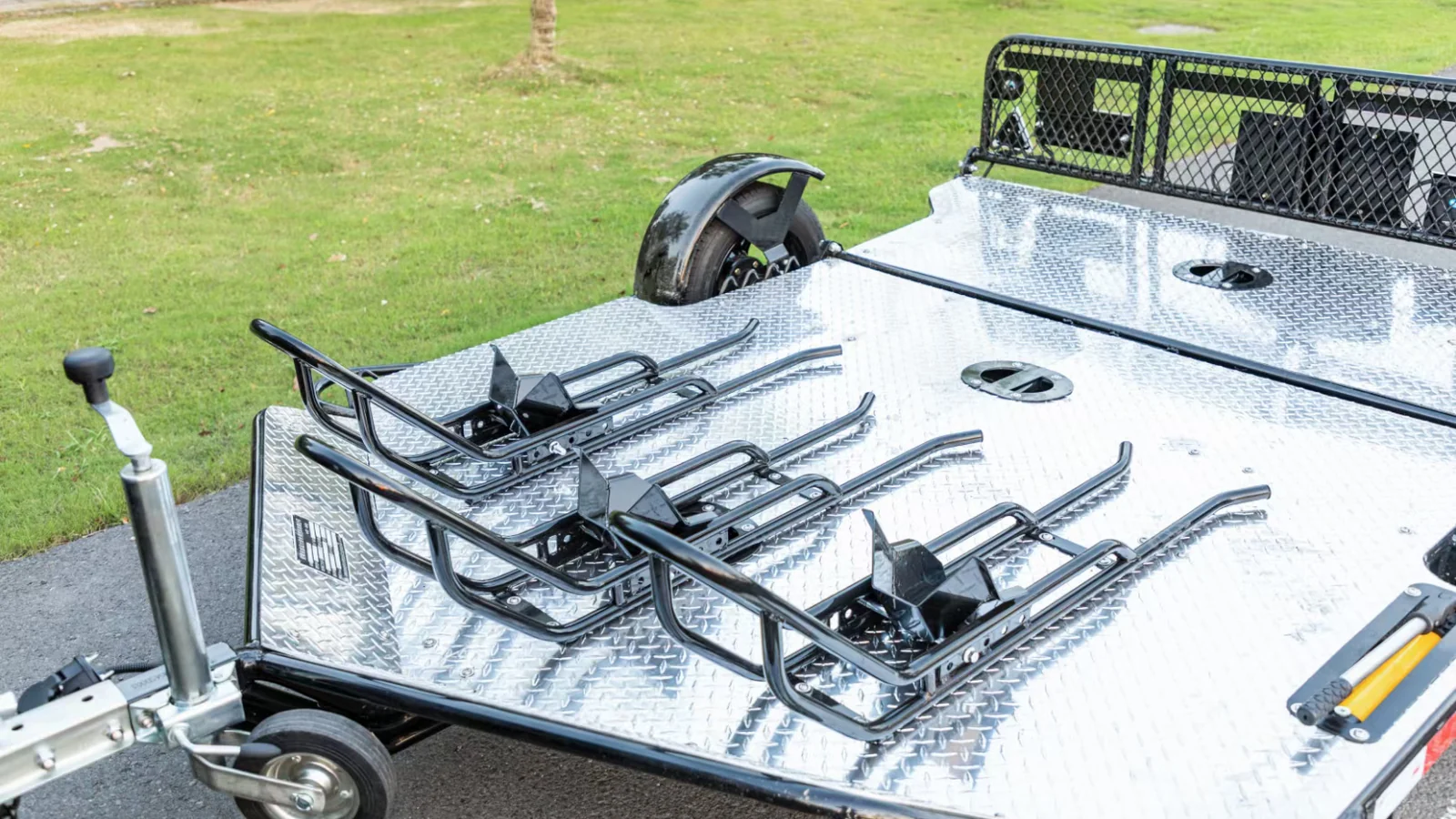
Separate static arithmetic from the load the wheel sees in service — How to Specify Total Cart
Load questions need more than total equipment mass divided by the number of wheels. Floors are not perfectly flat, frames deflect, payloads shift and thresholds can momentarily transfer more load to fewer supporting points. The purpose of the calculation is therefore to establish a transparent baseline and then identify the conditions that can move the real duty away from that baseline. In How to Specify Total Cart Weight and, record the result beside the actual equipment condition so the article guidance remains tied to a measurable sourcing decision.
| Вход | Что записывать |
|---|---|
| Масса оборудования | Укажите само оборудование и максимальную полезную нагрузку, которую необходимо переместить. |
| В поддержку аргументов | Определите, сколько колес надежно несут груз в наименее благоприятных нормальных условиях. |
| Динамические события | Перечислите пороги, пандусы, удары, повороты, а также буксировку или ручное перемещение, которые происходят в процессе эксплуатации. |
| Среда | Учитывайте состояние пола, наличие мусора, влажность и температуру, поскольку они влияют на функциональность или выбор материала. |
Use one consistent set of assumptions when comparing candidate wheels. If one option is evaluated on a smooth unloaded floor and another on a rough loaded route, the comparison is not meaningful. Wheel diameter and material influence how the assembly interacts with obstacles and the floor, but they do not replace a verified product rating. Where a rating is not available for the exact configuration, keep it open for supplier confirmation rather than extrapolating from a neighbouring size. In How to Specify Total Cart Weight and, record the result beside the actual equipment condition so the article guidance remains tied to a measurable sourcing decision.
Commissioning should test the conditions used in the selection discussion. Move the equipment slowly through the most demanding normal floor transition and watch load sharing, wheel tracking, bracket movement and operator effort. If the result is unsatisfactory, document the symptom and change one variable at a time. That makes the next engineering decision more informative than replacing several components at once and losing the original cause. In How to Specify Total Cart Weight and, record the result beside the actual equipment condition so the article guidance remains tied to a measurable sourcing decision.
How specify total cart weight and load distribution changes the RFQ
For “How to Specify Total Cart Weight and Load Distribution in an RFQ”, the RFQ should state the operating fact that drives the question rather than only repeating the product term. Name the equipment, describe the normal and maximum duty, record the fit-controlling dimensions and identify the symptom or objective that prompted the review. If the decision concerns load, include equipment mass and supporting points; if it concerns material, describe floor and environment; if it concerns mounting, provide the interface geometry; and if it concerns a trailer support wheel, include the support condition, ground and available travel.
Keep required values separate from open questions. A supplier can respond much more usefully to “confirm bore and hub length against attached sketch” than to a guessed dimension presented as final. The same principle applies to load ratings, material grades, brake functions and mounting details. Where a value is verified, label it clearly; where it is not, ask for confirmation. That keeps the quotation aligned with the real equipment and makes later technical review easier without adding another repetitive approval or subsequent orders section to the page. In How to Specify Total Cart Weight and, record the result beside the actual equipment condition so the article guidance remains tied to a measurable sourcing decision.
Specify Total Cart Weight and Load Distribution FAQ
What is the first thing to confirm for cart load distribution RFQ?
Начните с общей массы, точек опоры, реального распределения нагрузки, геометрии препятствий и диаметра колес. Это позволит измерить остальные параметры.
Может ли фотография заменить измерения?
Фотография помогает в идентификации, но критически важные размеры все равно следует измерять или брать по утвержденному чертежу.
Должен ли покупатель добавить запас прочности при погрузке?
A safety allowance is commonly used to address unequal load sharing and operating effects, but the appropriate value depends on the application and does not replace the product rating. In How to Specify Total Cart Weight and, record the result beside the actual equipment condition so the article guidance remains tied to a measurable sourcing decision.
А что, если материал неизвестен?
Укажите производственные условия и окружающую среду, предоставьте образец или фотографию и рассматривайте материал как подтверждающий, а не как приблизительный по цвету.
Discuss your cart load distribution RFQ requirement
Отправьте описание товара, информацию о нагрузке, габаритные размеры, определяющие соответствие, количество и любые соответствующие фотографии или чертежи. Мы используем эти данные, чтобы сузить круг подходящих товаров, не прибегая к догадкам.