
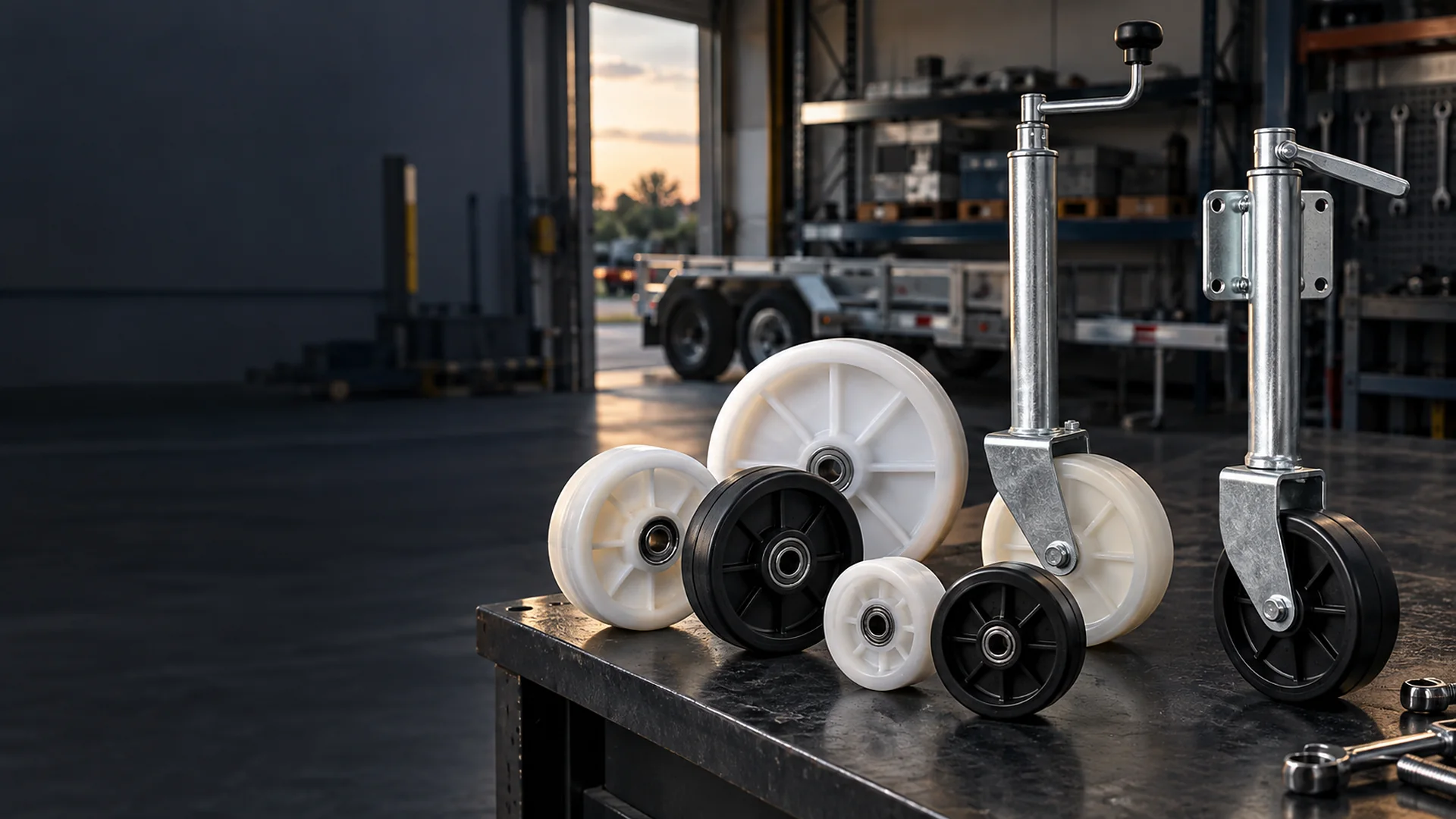
How to Choose Plastic Castors & Wheels
A buyer-focused method for how to choose castor wheels, emphasizing measurable application data rather than visual matching.
Choose Plastic Castors & Wheels: the core decision
How to Choose Plastic Castors & Wheels becomes manageable when you begin with load, floor, material, diameter, mounting and control function in that order. The goal is not to find the product with the most impressive single specification; it is to choose a configuration whose load, geometry and operating environment agree.
The practical value of how to choose castor wheels appears only when the specification is tied to the equipment that must move, the floor it runs on and the interface that carries the load.
Within industrial carts, equipment bases and trailer support systems, load, floor, material, diameter, mounting and control function in that order should be treated as the first engineering checkpoint. Once that is known, wheel diameter, width, material, bearing arrangement and mounting details can be reviewed in a rational order.
Avoid assuming that a larger wheel, harder polymer or heavier bracket automatically solves the problem. Nominal ratings or dimensions lose meaning when the mounting or duty condition is different. The safest RFQ therefore records weight, layout, floor, movement pattern, dimensions, environment and quantity before a configuration is released for quotation. On How to Choose Plastic Castors & Wheels, use this point to narrow the family-level choice before treating any individual configuration as a fit for the equipment.
Measurements that control choose plastic castors & wheels
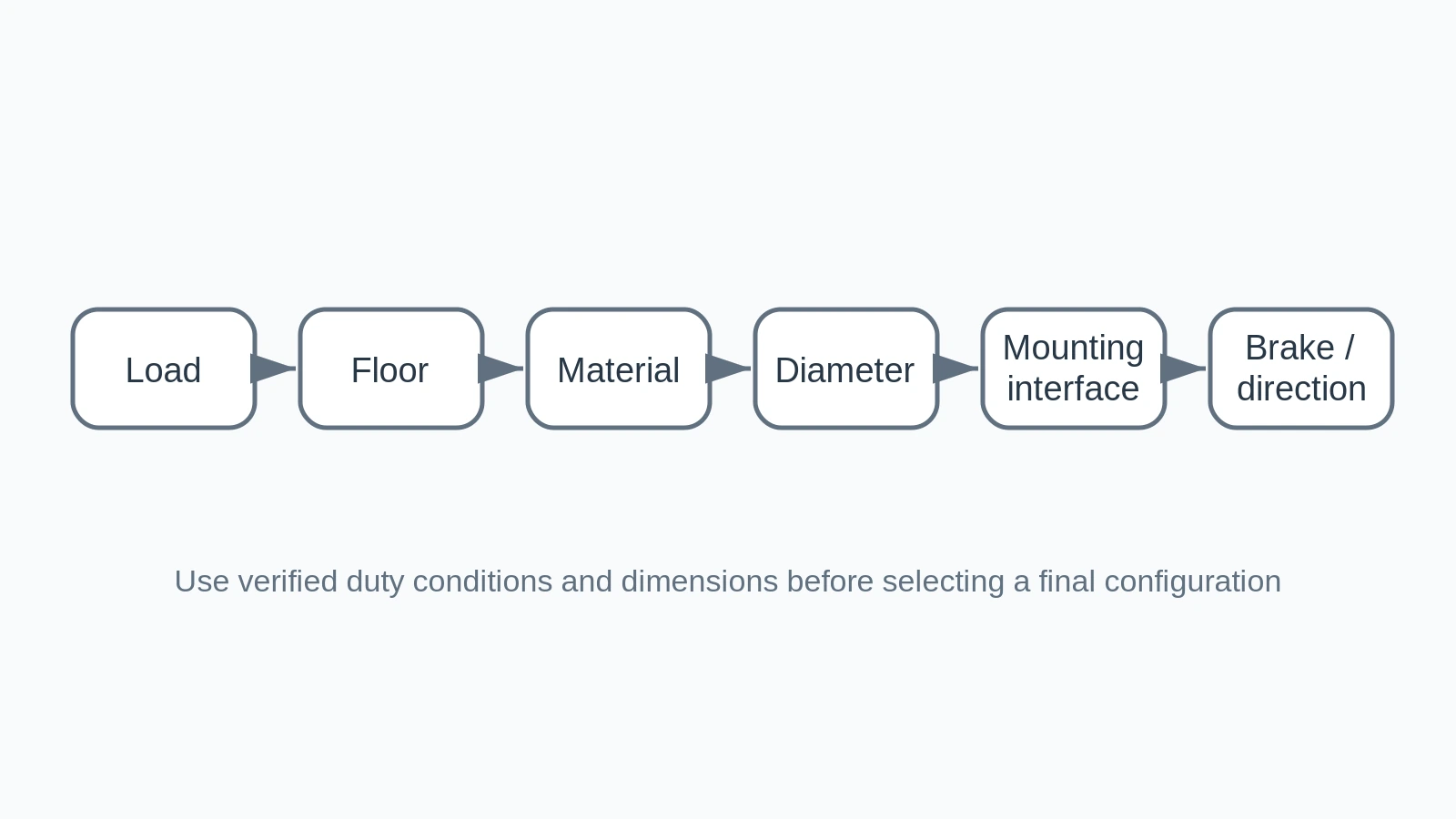
For a loose wheel, record wheel diameter, width, bore or bearing type, axle diameter, hub length and spacers. For a complete castor or support assembly, add installed height, plate dimensions or tube diameter, bolt-hole spacing, offset and space for swivel, brake or folding movement. On How to Choose Plastic Castors & Wheels, use this point to narrow the family-level choice before treating any individual configuration as a fit for the equipment.
Neem de afmetingen waar mogelijk vanaf stabiele metalen referentiepunten. Versleten loopvlakken, verbogen beugels en geïmproviseerde ringen kunnen de schijnbare afmetingen van een oude constructie vertekenen.
Load assumptions for choose plastic castors & wheels
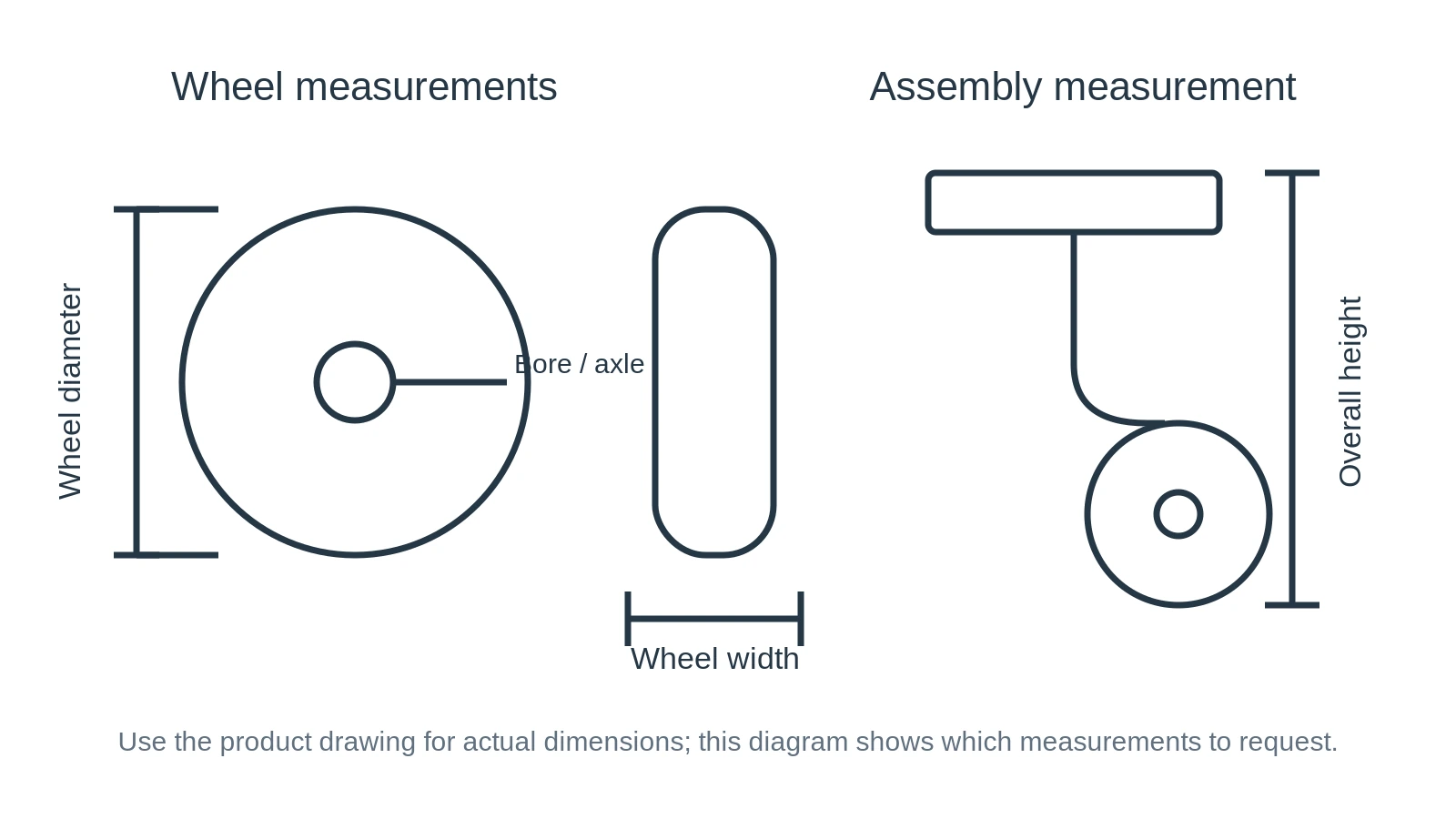
A first-pass load calculation uses equipment dead weight plus maximum payload and divides by the number of reliably supporting wheels. In real equipment, floor and frame can prevent equal load sharing, so a safety allowance is normally required. Impacts at joints, ramps or thresholds can raise instantaneous loads above a quiet static condition. On How to Choose Plastic Castors & Wheels, use this point to narrow the family-level choice before treating any individual configuration as a fit for the equipment.
Bij neuswielen moet u het brutogewicht van de aanhanger niet verwarren met de belasting die rust op het bevestigingspunt van de dissel.
Material and floor interaction in choose plastic castors & wheels
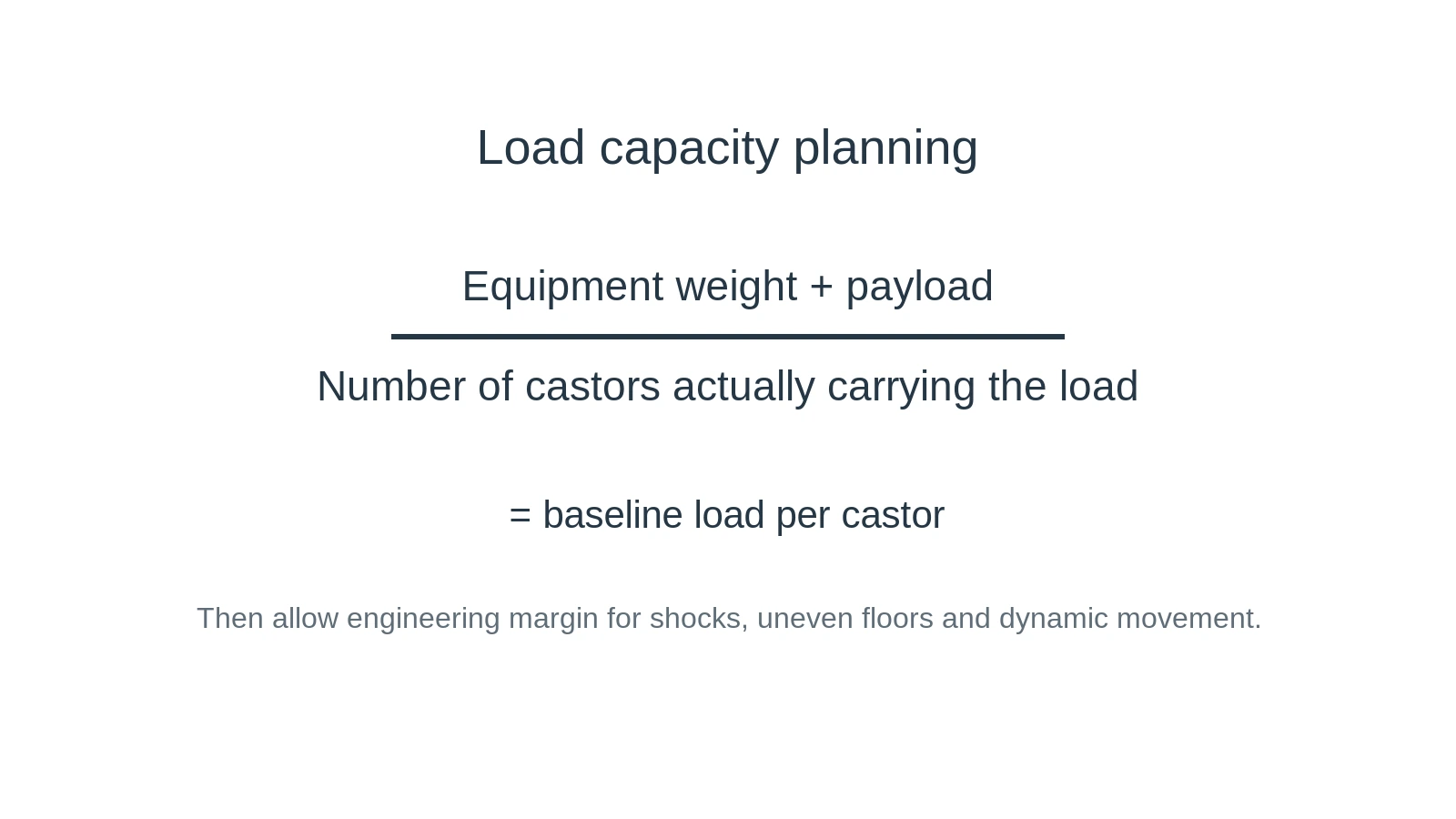
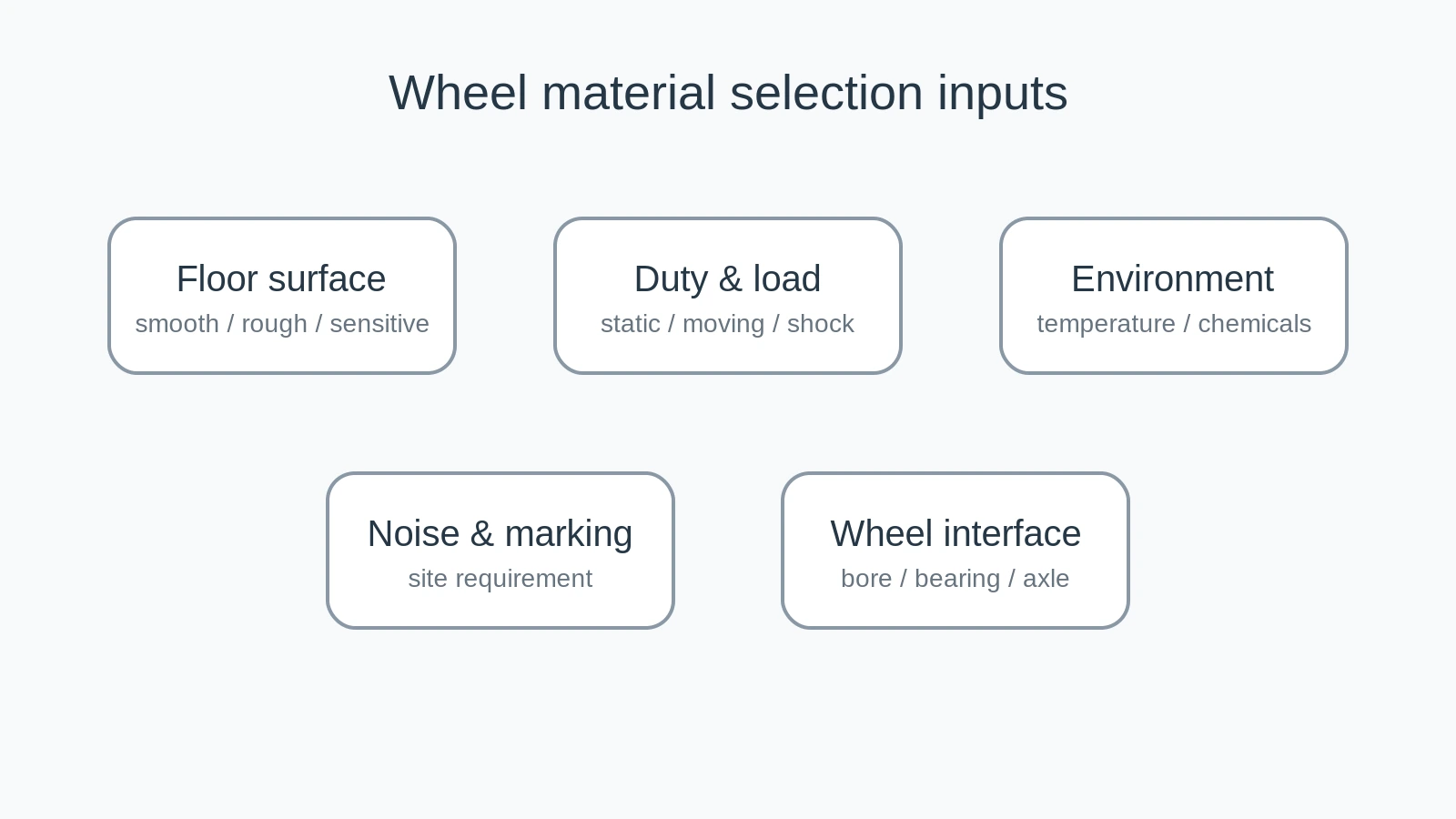
Hard thermoplastic wheels such as nylon and polypropylene can suit many industrial duties, but are not interchangeable in every environment. Exact polymer grade, floor finish, contamination, chemicals, temperature and noise objective matter. If non-marking behaviour or wash-down chemistry is important, include it as a requirement rather than assuming it from colour. On How to Choose Plastic Castors & Wheels, use this point to narrow the family-level choice before treating any individual configuration as a fit for the equipment.
Mounting and control factors for choose plastic castors & wheels
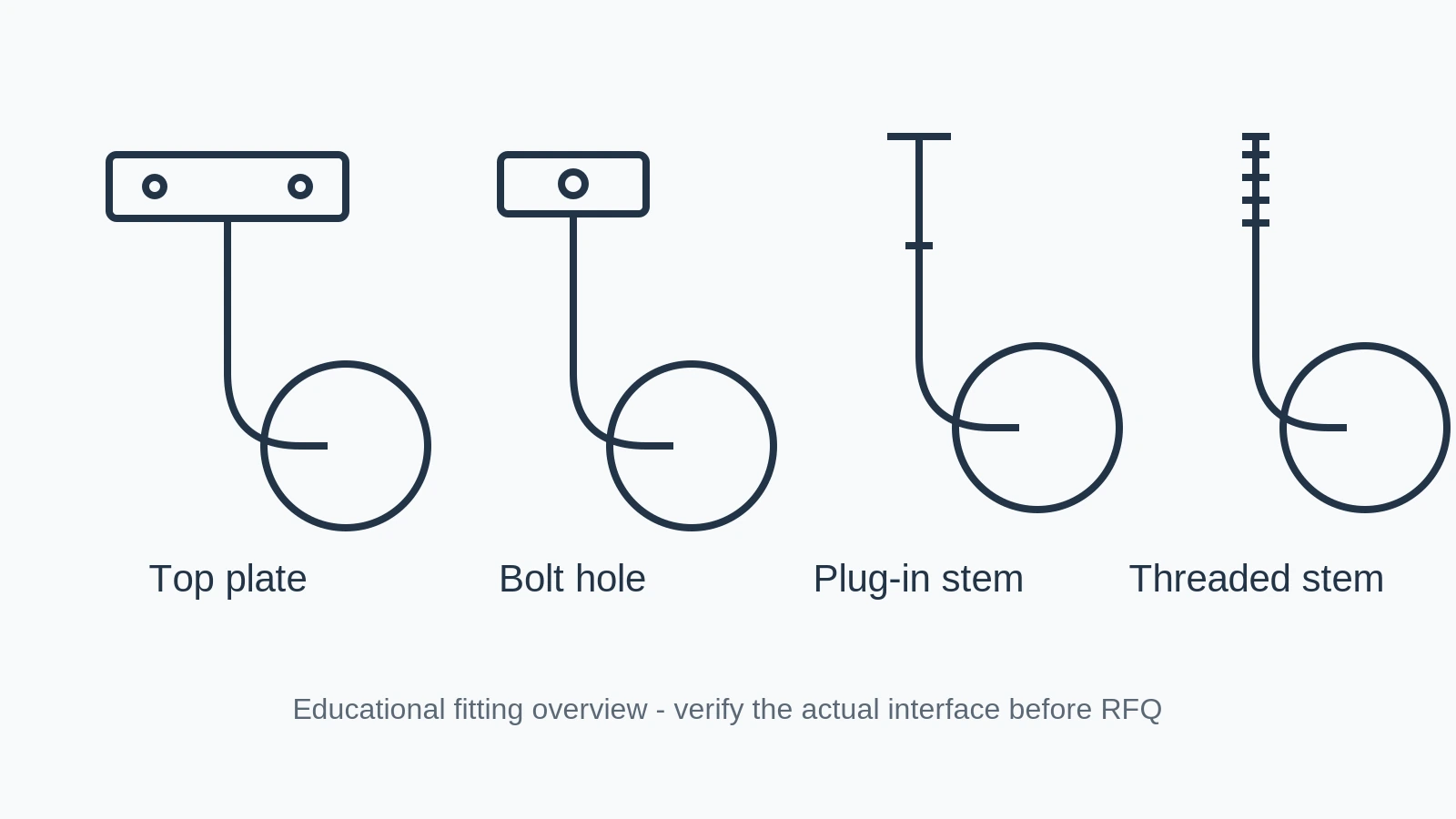
Wheel-only products, fixed castors, swivel castors, brakeable castors and trailer-jack assemblies solve different movement problems. The mounting style must match the frame and the control function must match how equipment is operated. A wheel brake, swivel lock and total lock are not equivalent functions. On How to Choose Plastic Castors & Wheels, use this point to narrow the family-level choice before treating any individual configuration as a fit for the equipment.
A comparison worksheet for choose plastic castors & wheels
| Veld | Neem een opname op voordat u een offerte aanvraagt. |
|---|---|
| Apparatuur | Type, eigen gewicht en maximaal laadvermogen |
| Indeling | Aantal en positie van de steunwielen |
| Wiel | Diameter, breedte, materiaal indien bekend |
| Interface | Boring/lager/as of plaat/buis/stangafmetingen |
| Beweging | Afgelegde afstand, draaipatroon, snelheid en frequentie |
| Vloer | Oppervlakte, voegen, hellingen, puin, water/chemicaliën |
| Controle | Rem- of vergrendelingsfunctie |
| Commercieel | Hoeveelheid, bestemming en doel van het monster |
Put choose plastic castors & wheels into the RFQ
Put one configuration on each RFQ line and attach the photos or drawings that belong to that line. Avoid sending one mixed image set for several different wheels unless every item is clearly labelled. If an unknown dimension affects fit, mark it as “to be confirmed” rather than inserting an assumption. On How to Choose Plastic Castors & Wheels, use this point to narrow the family-level choice before treating any individual configuration as a fit for the equipment.
Gebruik de producthub, beoordeling aanvraagrichtlijnen, of ga naar de offerteformulier wanneer de basisafmetingen gereed zijn.
Choose Plastic Castors & Wheels questions
Moet ik eerst selecteren op materiaal of op lading?
Begin met het bepalen van de belasting en controleer vervolgens of het materiaal geschikt is voor de vloer en de omgeving.
Is de wieldiameter gelijk aan de inbouwhoogte?
Nee. De inbouwhoogte is inclusief de beugel of vork en is van belang voor de waterpasstelling en de vrije ruimte van de apparatuur.
Wat als ik alleen een oud voorbeeld heb?
Fotografeer het voordat u het demonteert en meet de afmetingen voor de juiste pasvorm, waarbij u slijtage of aanpassingen noteert.
Kan een leverancier ontbrekende afmetingen bepalen?
Een leverancier kan opties voorstellen, maar de cruciale afmetingen voor de pasvorm moeten door de koper worden opgemeten of goedgekeurd.
Recording the choose plastic castors & wheels decision
Keep technical and commercial decisions synchronized. If engineering changes wheel diameter, material or mounting, update the RFQ line description as well as the drawing. If purchasing consolidates models, preserve each model’s dimensions and quantity separately. This reduces cross-model errors during quotation and later revisions. On How to Choose Plastic Castors & Wheels, use this point to narrow the family-level choice before treating any individual configuration as a fit for the equipment.
Vergelijk bij volgende bestellingen de nieuwe vereisten met de eerder goedgekeurde configuratie in plaats van dezelfde productnaam te gebruiken.
Build a repeatable choose plastic castors & wheels worksheet
Use how to choose plastic castors & wheels as a worksheet rather than a one-time reading exercise. Put each candidate configuration in a column and keep the application assumptions in a fixed block above the comparison: equipment weight or support load, supporting points, floor or ground, travel pattern, mounting envelope and required control functions. This makes missing information visible and prevents one candidate from being evaluated under an easier duty description than another.
Where a value is unknown, mark it for confirmation. An explicit open item is more useful than an estimated dimension that later becomes embedded in a purchase order. On How to Choose Plastic Castors & Wheels, use this point to narrow the family-level choice before treating any individual configuration as a fit for the equipment.
Confirm the interface before optional choose plastic castors & wheels features
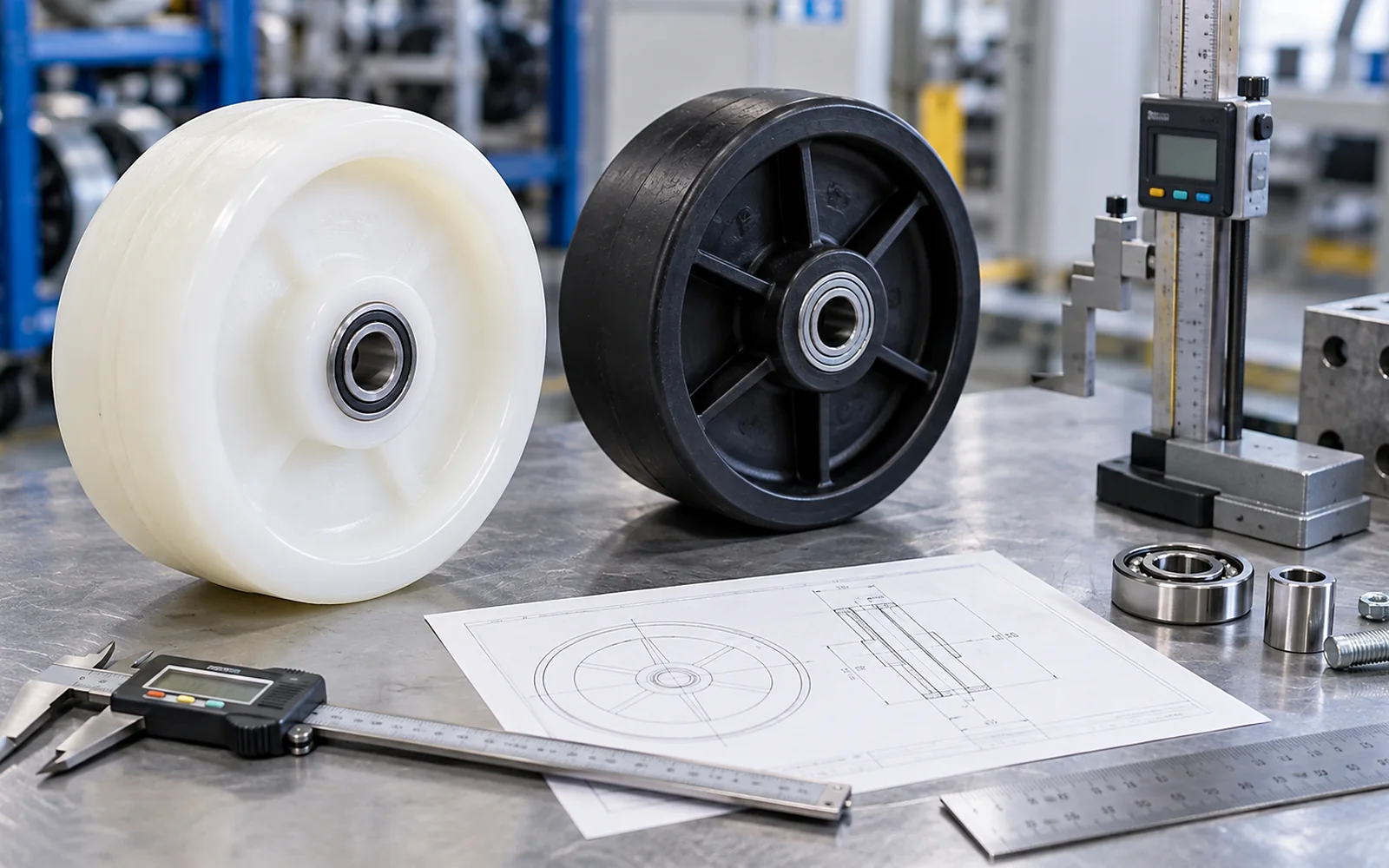
Optional materials, finishes and brake functions cannot rescue an incorrect mounting interface. Measure the bore, hub, axle, plate, stem, tube or clamp dimensions that actually locate the part on the equipment. Also record installed height and nearby clearance where the wheel or assembly moves through a swivel, folding or lifting path. On How to Choose Plastic Castors & Wheels, use this point to narrow the family-level choice before treating any individual configuration as a fit for the equipment.
For replacement work, photograph the old part while it is still installed. The relationship between the wheel, frame and fasteners is often more informative than a loose part photographed on a bench. On How to Choose Plastic Castors & Wheels, use this point to narrow the family-level choice before treating any individual configuration as a fit for the equipment.
Validate choose plastic castors & wheels assumptions during commissioning
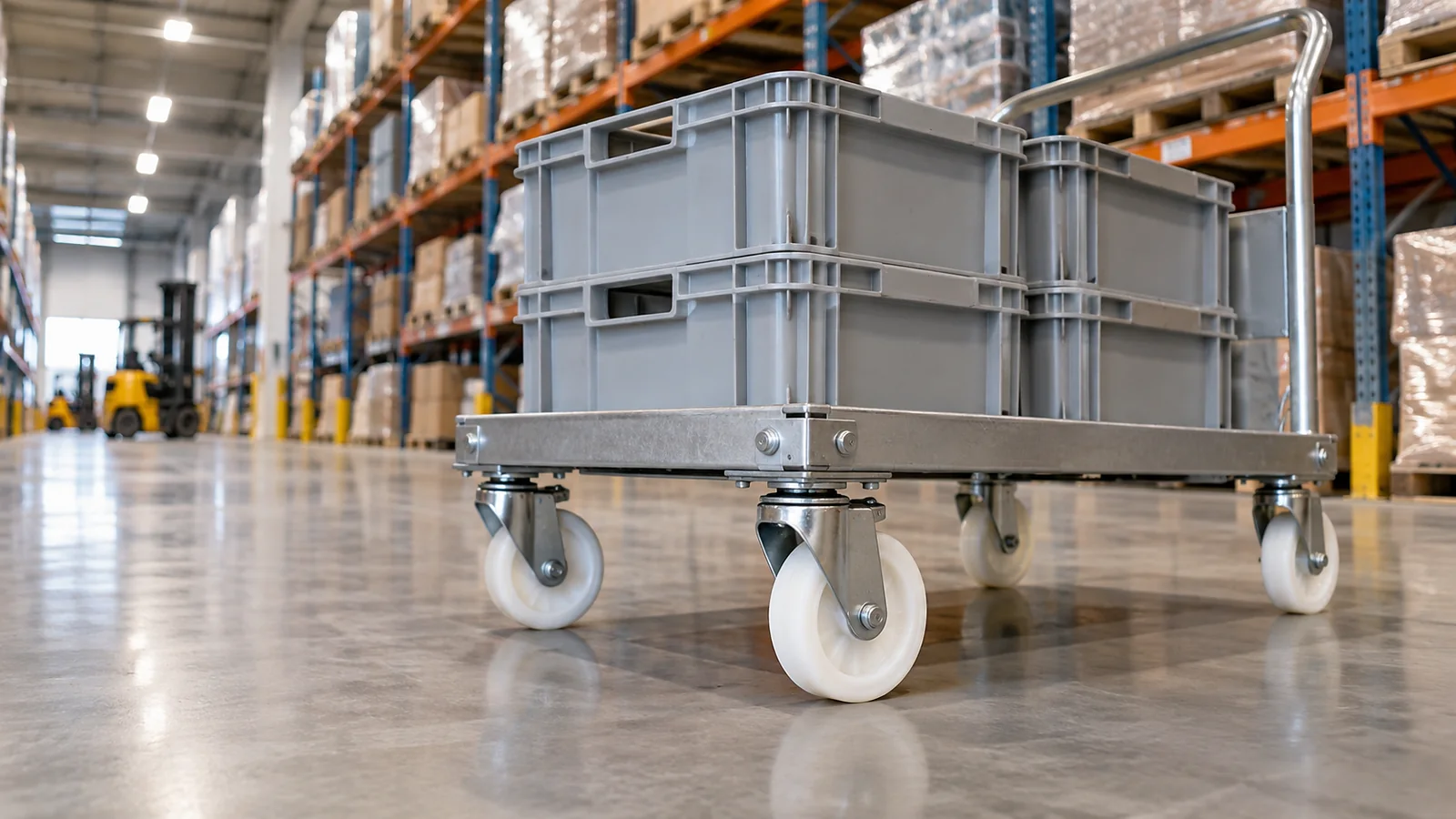
After installation, observe the first movement under controlled load. Look for binding, wheel wobble, unexpected steering effort, bracket movement, rubbing and interference. Cross the normal floor joints or ground transitions that matter to the application rather than testing only on a clean flat area. On How to Choose Plastic Castors & Wheels, use this point to narrow the family-level choice before treating any individual configuration as a fit for the equipment.
Document any adjustment and keep the accepted configuration with the equipment record. That gives maintenance and purchasing a useful reference when wear appears or the same part is requested again. On How to Choose Plastic Castors & Wheels, use this point to narrow the family-level choice before treating any individual configuration as a fit for the equipment.
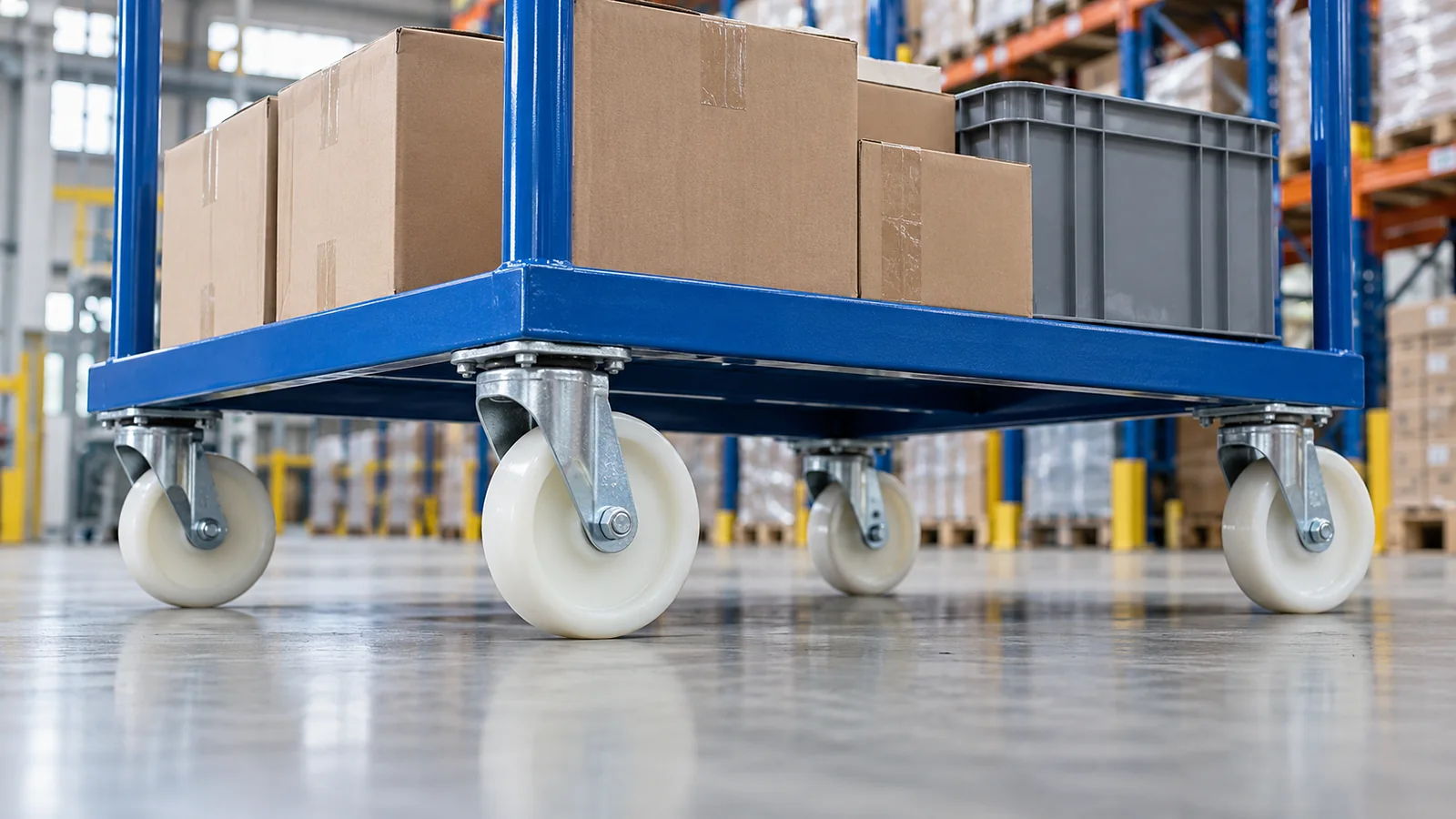
Use this how to choose castor wheels checklist in your RFQ
Send the load, dimensions, operating conditions and quantity relevant to how to choose castor wheels so the product review can start from measurable inputs.