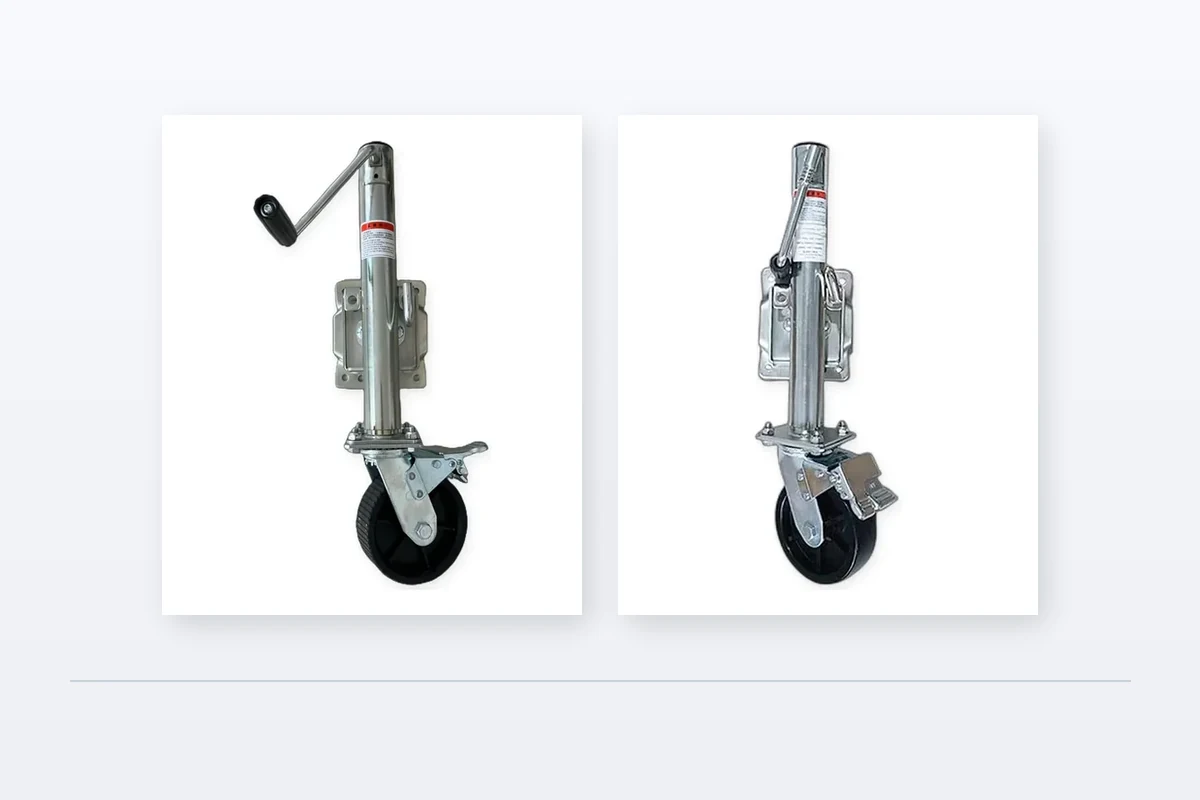
6 inch nylon rembare neuswielconstructie
6 inch nylon rembare steunwielconstructie voor B2B-apparatuur of trailerondersteuningsprojecten. Specificeer de pasvormcontrole-interface,…
Configuratie bekijken →
Brakeable jockey-wheel assemblies add wheel-level parking control. Brake presence does not replace correct load, mounting or ground selection.
The practical value of Braked Jockey Wheel Assemblies appears only when the specification is tied to the equipment that must move, the floor it runs on and the interface that carries the load.
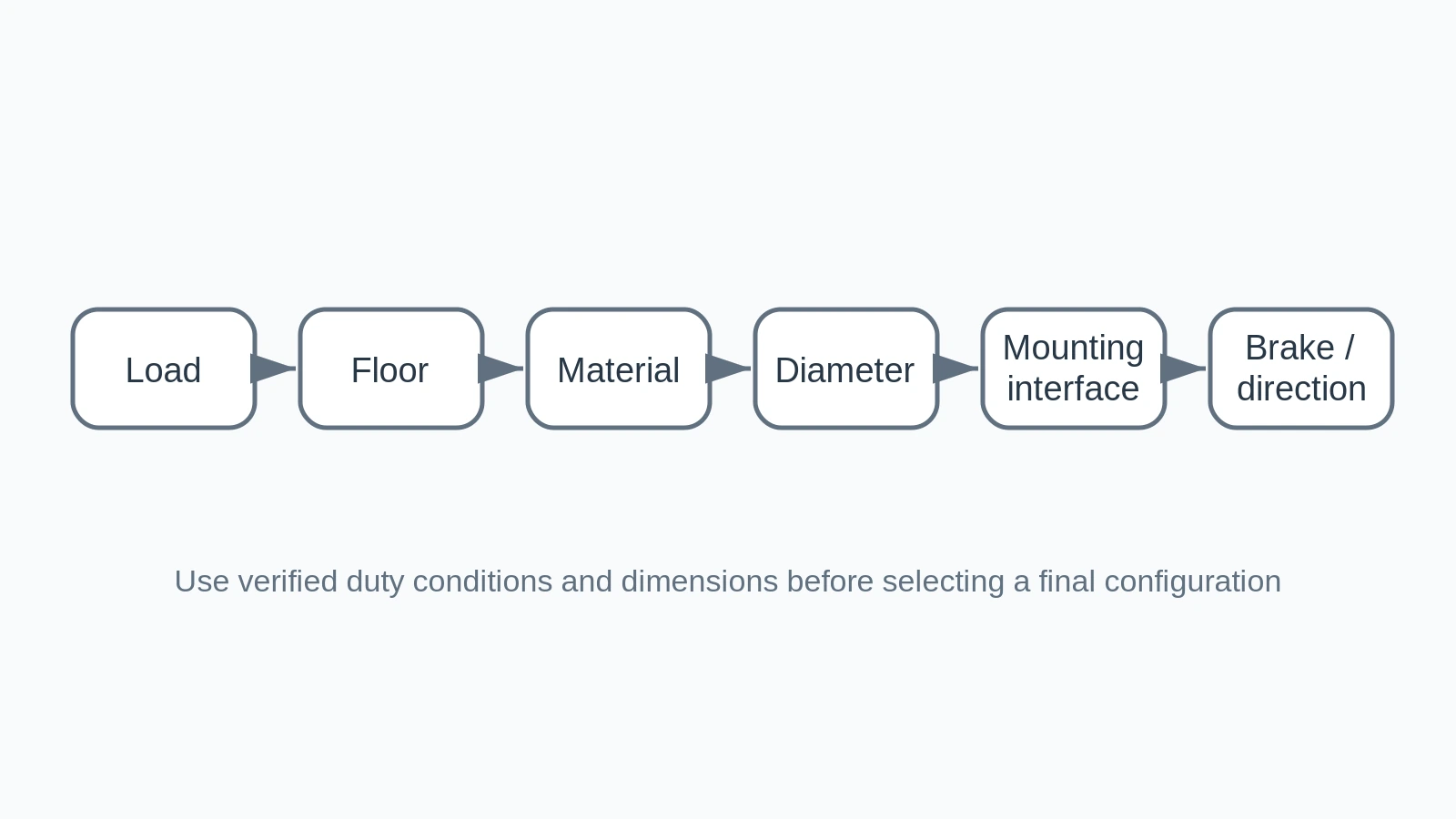
Within controlled trailer support, the actual load and fit-controlling dimensions should be treated as the first engineering checkpoint. Once that is known, wheel diameter, width, material, bearing arrangement and mounting details can be reviewed in a rational order.
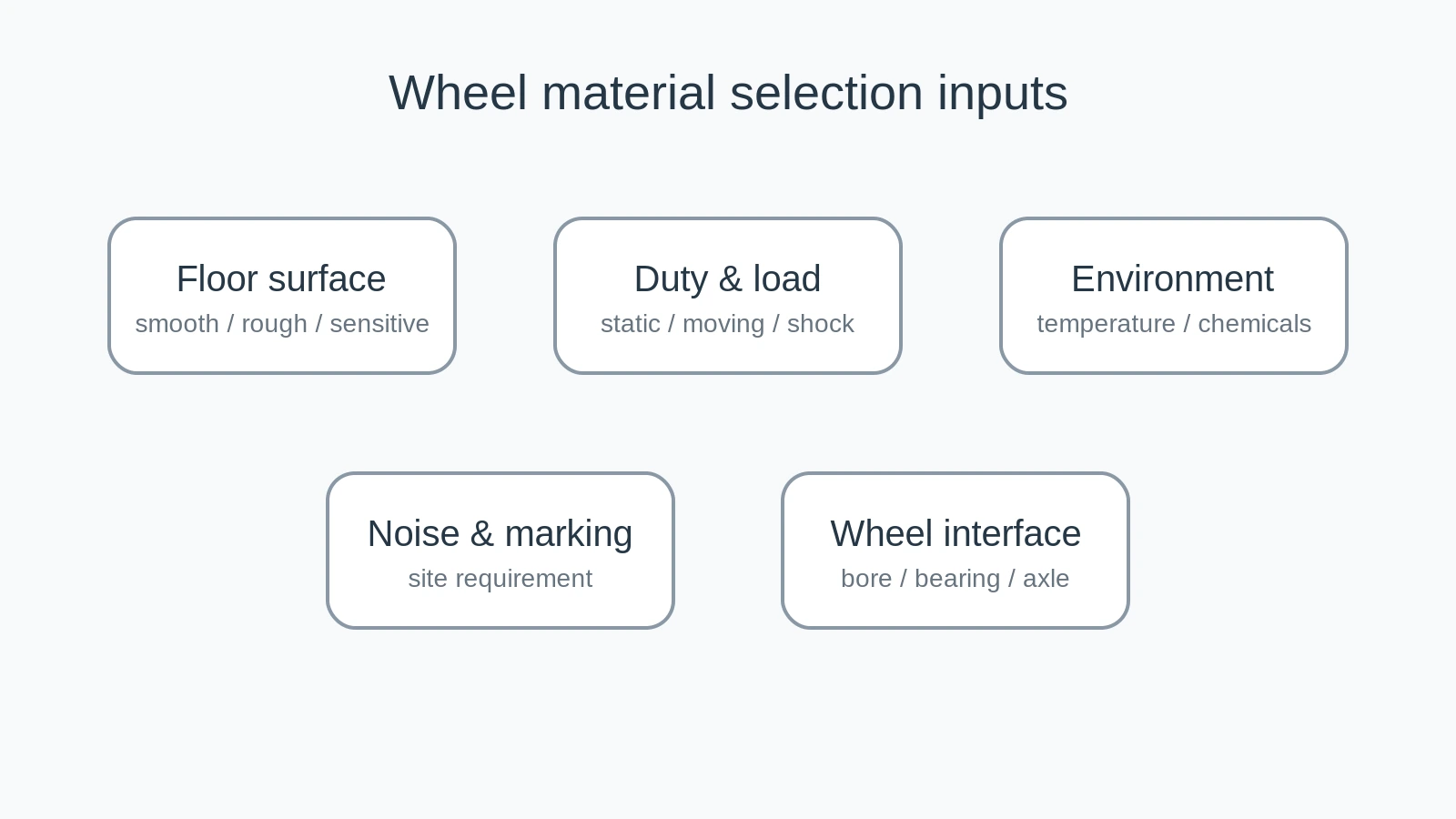
Avoid assuming that a larger wheel, harder polymer or heavier bracket automatically solves the problem. A material or wheel-size label cannot confirm compatibility by itself. The safest RFQ therefore records load, floor, wheel diameter/width, mounting interface, braking need and quantity before a configuration is released for quotation. On Braked Jockey Wheel Assemblies, use this point to narrow the family-level choice before treating any individual configuration as a fit for the equipment.

The live product grid below contains the current configurations represented in this site. Use the grid as a starting point, then compare exact mounting and duty conditions instead of selecting from appearance alone. On Braked Jockey Wheel Assemblies, use this point to narrow the family-level choice before treating any individual configuration as a fit for the equipment.

6 inch nylon rembare steunwielconstructie voor B2B-apparatuur of trailerondersteuningsprojecten. Specificeer de pasvormcontrole-interface,…
Configuratie bekijken →
6 inch PP rembare steunwielconstructie voor B2B-apparatuur of trailerondersteuningsprojecten. Specificeer de pasvormcontrole-interface,…
Configuratie bekijken →Shortlisting this family is most reliable when every candidate is compared against the same application description. Record wheel diameter, width, material, bore or bearing arrangement, hub length and real load per supporting point before comparing catalogue names or photographs. This keeps the decision tied to the equipment rather than to one attractive feature. On Braked Jockey Wheel Assemblies, use this point to narrow the family-level choice before treating any individual configuration as a fit for the equipment.
For replacement work, add floor condition, joints or thresholds, axle retention and the amount of side clearance available inside the bracket or frame. Where an existing part is worn, bent or repaired, identify the dimensions that may no longer represent the intended geometry. A measured drawing or dimensioned photograph is more useful than treating visible wear as the design target. On Braked Jockey Wheel Assemblies, use this point to narrow the family-level choice before treating any individual configuration as a fit for the equipment.
When several configurations are being compared, keep required values and optional preferences in separate columns. If a fit-controlling number is not available, leave it as a confirmation item in the RFQ instead of borrowing a value from another size or series. On Braked Jockey Wheel Assemblies, use this point to narrow the family-level choice before treating any individual configuration as a fit for the equipment.
Use the Braked Jockey Wheel Assemblies page to narrow material and geometry before comparing individual configurations. For wheel-only items, the final selection still depends on the equipment-side axle or bearing interface, hub space and the floor route. Compare candidates at the same carried load and with the same assumptions about joints, ramps, debris and manoeuvring. If a material property, bearing arrangement or load rating is not shown for a particular configuration, keep it as an RFQ confirmation point rather than treating the family description as a specification for every wheel in the range.

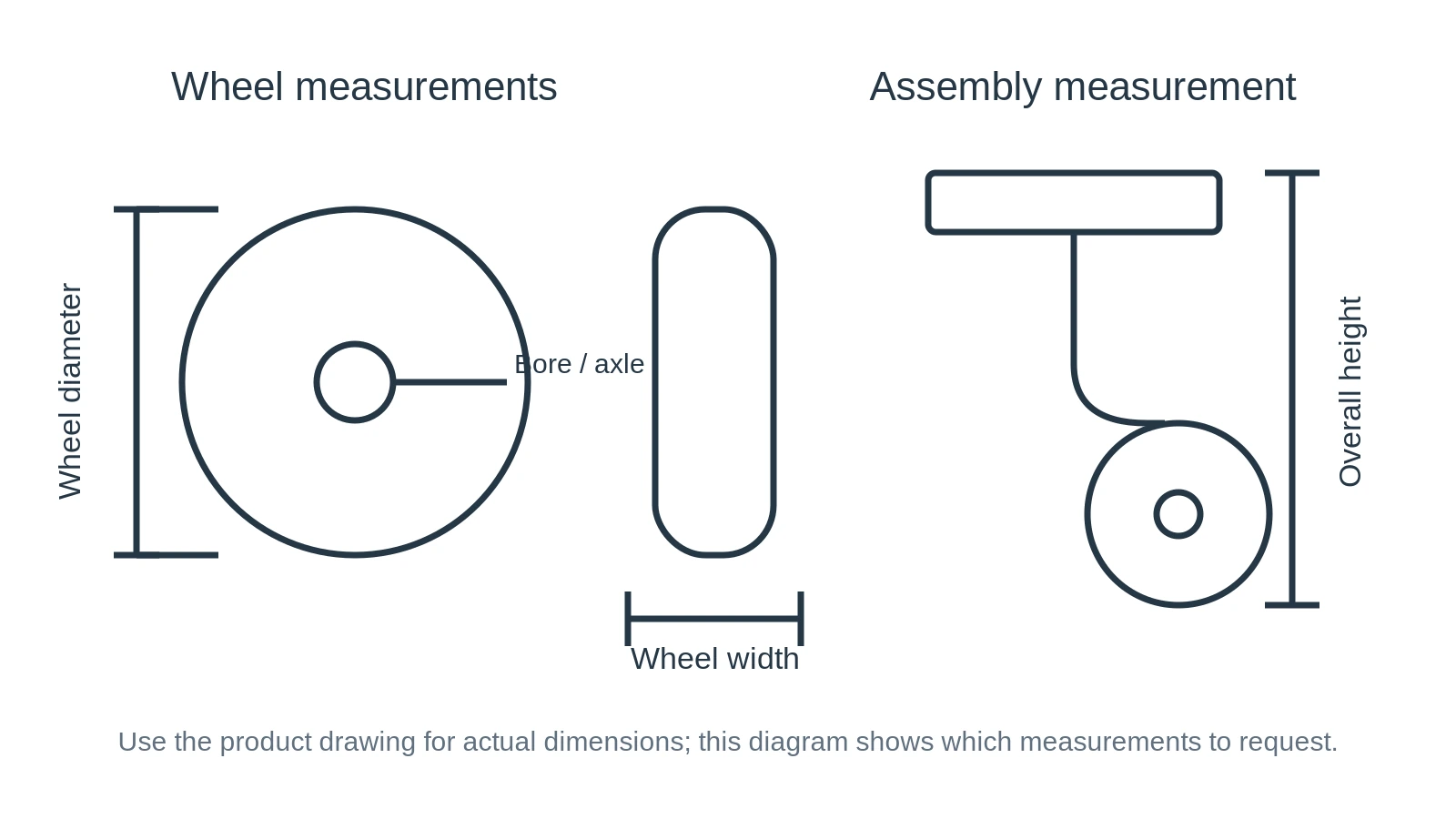
| Variabele | Waarom het belangrijk is |
|---|---|
| Belasting per steunpunt | Frames verdelen de totale massa niet altijd gelijkmatig, vooral niet op oneffen vloeren. |
| Wieldiameter | Wijzigt de bodemvrijheid en de geometrie voor het overbruggen van obstakels. |
| Wielbreedte | Verandert het contactoppervlak en kan van belang zijn op een zachtere ondergrond. |
| Materiaal | Beïnvloedt de hardheid, de interactie met de vloer en de geschiktheid voor de omgeving. |
| Boring / lager / as | Regelt de installatie van alleen de wielen, zonder zijdelingse belasting of geïmproviseerde afstandhouders. |
| Beugel / buis / plaat | Regelt de pasvorm van de complete montage en de speling in de nabije omgeving. |
| Rem-/vergrendelingsfunctie | Moet overeenkomen met de feitelijke parkeer- of rijrichtingsregelvereisten. |

Braked Jockey Wheel Assemblies can appear in controlled trailer support, but the correct configuration is always application-specific. Material handling equipment may spend most of its time on smooth concrete, while trailer support wheels may roll over paving, compacted ground or gravel for short manoeuvring distances. Those are different design conditions.
Describe ramps, floor joints, wash-down, debris, outdoor exposure and expected travel in the enquiry. If the equipment is already in service, a short video can reveal interference or steering behaviour that a static photograph does not show. On Braked Jockey Wheel Assemblies, use this point to narrow the family-level choice before treating any individual configuration as a fit for the equipment.

Do not select a polymer only by colour. Confirm the required material family and, where chemical exposure or unusual temperatures matter, state the environment so the exact grade can be reviewed. For wheel-only replacements, the axle and hub interface is as important as diameter; for complete assemblies, plate, tube or clamp dimensions control whether the product can be mounted safely. On Braked Jockey Wheel Assemblies, use this point to narrow the family-level choice before treating any individual configuration as a fit for the equipment.
Where a custom configuration is required, send the existing drawing or a dimensioned sketch. A dimensioned enquiry is faster to evaluate than a request for a visually similar product. On Braked Jockey Wheel Assemblies, use this point to narrow the family-level choice before treating any individual configuration as a fit for the equipment.

Gebruik voor een uitgebreidere methode onze Gids voor het kiezen van wielen En meetgidsVoor werkzaamheden die zich richten op trailers, de pagina voor het aanvragen van een aanhanger Voegt controles toe voor bodemvrijheid en vrije ruimte in opgeborgen toestand.
Nee. Belasting, breedte, materiaal, lager-/as- of beugelinterface en gebruiksomstandigheden moeten nog worden beoordeeld.
Stuur een foto en beschrijf de vloer, de belasting en de omgevingsomstandigheden. Het materiaal mag niet op basis van de kleur worden bepaald.
Gemengde modellen kunnen commercieel worden beoordeeld. Houd elke configuratie op een aparte regel bij met de hoeveelheid en afmetingen.
Deze website is bedoeld voor B2B-project- en productieaanvragen, niet voor de aankoop van 1-2 stuks door particulieren. Betaalde proefmonsters kunnen worden aangevraagd voor nieuwe projecten.
Stuur ons de toepassing, de gewenste hoeveelheid en de afmetingen die u al weet. Ontbrekende, cruciale pasvormdetails kunnen vóór de offerteaanvraag worden gecontroleerd.