China Plastic injection mould manufacture customized car parts plastic injection mold plastic beads mold wholesaler
Product Quantity: WS001
Plastic Modling Kind: injection
Processing Services: Moulding, Reducing, Injection
Solution: Plastic Injection Elements
Services: One particular-cease Support
Substance: Plastic, Ab muscles, PP, PE, HDPE, Personal computer
Surface complete: Custom Finish
Shipping time: thirty Days
Function: High Precision
Colour: Custom made Coloration, black, white
Dimension: Custom-made Measurement
Application: family, Electronic original, health care, Sector
Drawing Structure: Phase, STP, IGS, STL, CAD, PDF, DWG, DXF and Other
Port: HangZhou
Organization Profile 25+ Years Mold & Injection EncounterOne particular-quit plastic injection service, Supplying ODM & OEM servicePlastic injection mould, blow mould, rotational mold, cuttingAssembly, Packaging, inspection and Shipping and delivery Principal productsPlastic injection mould, Large precision cnc anodized Aluminum turning milling machined portion machining provider Plastic injection elements including medical plastic parts, electronic, pet components.DesignWe have specialist engineers design team, and can use CAD, Professional-E, UG, Solidworks etc.Ahead of the project started1, If you have 3D Action/IGES/X-T drawing or 2d drawing, make sure you directly ship to us ahead of quotation, then we will do DFM and CZPT layout for you.2, If you only have samples with out drawings, make sure you right offer us samples, we can style 3D for you, and quotation. Specification
| item | value |
| Place of Origin | China |
| ZheJiang |
| Brand Identify | WahShing |
| Model Variety | WS001 |
| Plastic Modling Kind | injection |
| Processing Service | Moulding, Reducing, Injection |
| Product | Plastic Injection Parts |
| Dienst | One-quit Service |
| Materiaal | Plastic, Abs, PP, PE, HDPE, Pc |
| Surface end | Custom Finish |
| Delivery time | 15 Times |
| Feature | High Precision |
| Color | Custom Coloration, black, white |
| Size | Customized Size |
| Application | household, Digital authentic, medical, Business |
| Drawing Format | STEP, STP, IGS, Excellent good quality plastic injection molding electrical drill part STL, CAD, PDF, DWG, DXF and Other |
High quality Guarantee1, Working tightly with diverse raw materials suppliers.2, Preserve and hold your mildew for totally free, and keep your mildew in very good condition.3, We are CZPT and we will not likely use your mold to make any areas for other men and women. Post quotation inside 24 hours Why Choose Us FAQ 1. who are we?We are primarily based in ZheJiang , China, begin from 2013,market to North The usa(forty.00%),Domestic Market(22.00%),Western Europe(twenty.00%),Jap Asia(3.00%),Central The us(3.00%),South The usa(2.00%),Oceania(2.00%),Mid East(2.00%),Northern Europe(2.00%),Southern Europe(2.00%),South Asia(2.00%). There are complete about fifty one-a hundred men and women in our office.2. how can we guarantee top quality?Often a pre-manufacturing sample prior to mass productionAlways closing Inspection ahead of shipment3.what can you buy from us?Foldable Pet Bottle,Hair Remover,LED Huge Dimension Dog Leash,Snowman Middle-measurement Pet Leash, Layout customized precision mold for injecting items cheap spare elements plastic injection moulding CZPT Pet Bottle With Meals Container4. why need to you get from us not from other suppliers?HangZhou Haochuang Plastic Technology Co. LTD . Have huge expertise in the pet grooming that can market and runs our professional pet grooming company.Even though we are currently being an engineer and inventor above ten many years.We put at your all the required.5. what solutions can we provide?Recognized Shipping and delivery Conditions: FOB,CFR,CIF,EXW,FAS,CIP,FCA,CPT,DEQ,DDP,DDU,Convey Shipping,DAF,DES;Accepted Payment Currency:USD,EUR,HKD,CNYAccepted Payment Kind: T/T,L/C,D/P D/A,MoneyGram,Credit history Card,PayPal,Western Union,Money,EscrowLanguage Spoken:English, FEATHER Cheap Manufacturing facility Direct Sales Inject Machine Mold Provider Custom made Injection Molding Plastic Parts Chinese
Benefits of Injection Molded Parts in Design
Injection molded parts are manufactured from a variety of plastics. You can order samples of your desired product or download CAD drawings free of charge. For more information, visit our product catalog. There are numerous benefits of using injection molded products in your designs. Here are some of them. Injection molded products are cost-effective and highly customizable.
Design for manufacturability
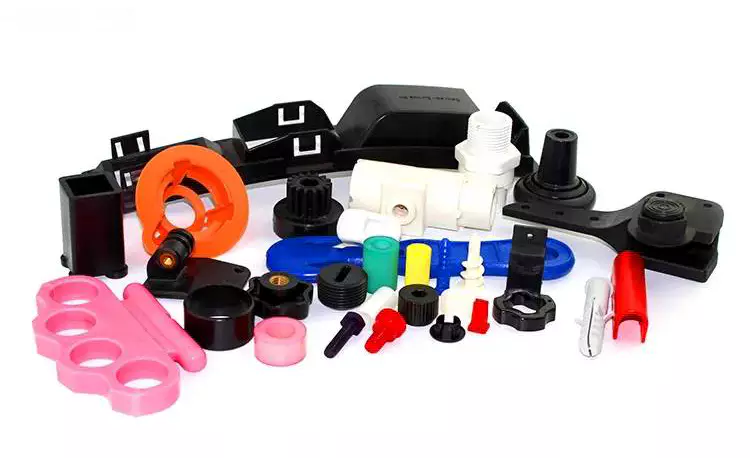 Design for manufacturability (DFMA) is an important part of the design process for injection-molded parts. This process helps to minimize costs and streamline the production process. It also helps in the prevention of problems during the manufacturing process. The process involves several steps that include part geometry, location of critical surfaces, material selection, and dimensioning. It is also crucial to consider the colors and tolerances, which can help to minimize scrap rates.
Design for manufacturability is a vital early stage in the development process to ensure that the product is cost-effective and repeatable. It begins with a thorough understanding of the purpose for which the part is intended. The design process should take into account every aspect of the part, including the material section, tool design, and the production process.
DFM includes guidelines to ensure that the design meets the manufacturing requirements. These guidelines can include good manufacturing practices, as well as good design principles. Good design focuses on the quantity and quality of parts, as well as the complexity of their surfaces and tolerances. The process also focuses on mechanical and optical properties.
Injection molding design for manufacturability can save resources and time. It also reduces the costs of assembly. An injection molder conducts a detailed analysis of these design elements before starting the tooling process. This is not a standalone principle; it should be used in conjunction with other design optimization techniques.
Ideally, a product should be designed for optimum manufacture. This means that it should not have too many parts, or too few. To minimize this, the designer should choose a model that is easy to mold. Also, a design that does not require too many machine operations and minimizes risks.
Plastics used in injection molding
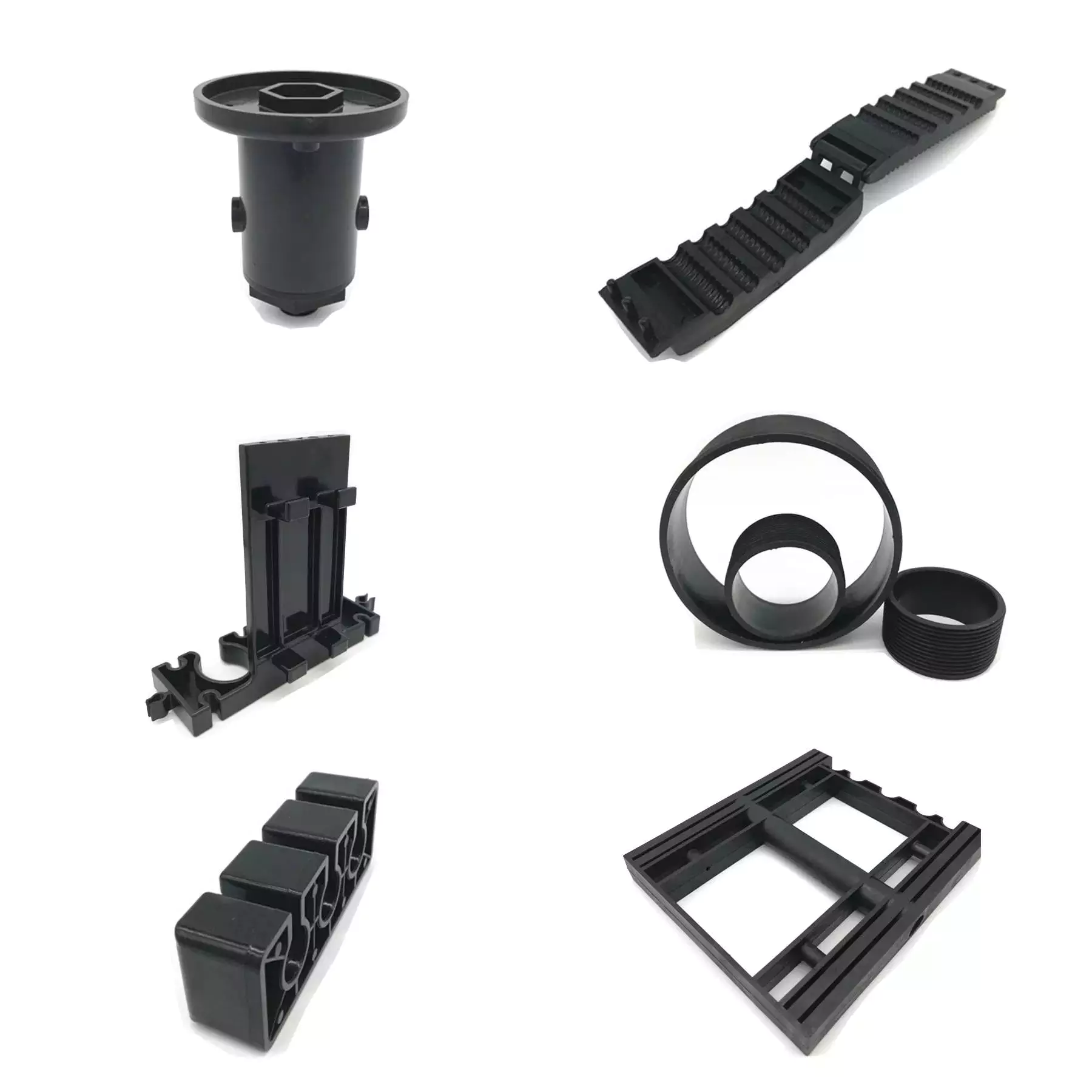 Injection molding is a very versatile process that uses various types of plastic polymers. These plastics are extremely flexible and can be molded to take on any shape, color, and finish. They can also be customized to contain design elements, text, and safety instructions. Plastics are also lightweight, easily recycled, and can be hermetically sealed to prevent moisture from getting into the product.
Plastics are categorized according to their properties, which can be helpful in selecting the right plastic for a particular application. Different materials have different degrees of hardness, which is important when it comes to molding applications. Some are harder than others, while others are more flexible. Plastics are ranked according to their Shore hardness, which was developed by CZPT.
Polystyrene is one of the most common plastics used in injection molding. However, it has a few disadvantages. While it is a good choice for simple products that do not require high strength and are prone to breakage, it is not ideal for items that need to be resistant to heat and pressure.
While many types of plastics are used in injection molding, choosing the right material is very important. The right material can make a big difference in the performance of your product and the cost of your product. Make sure to talk with your injection molding supplier to determine which plastic is right for your project. You should look for a plastic with a high impact rating and FDA approval.
Another commonly used plastic is PMMA, or polystyrene. This plastic is affordable and has a glass-like finish. It is often used for food and beverage packaging and can be easily recycled. This material is also used in textiles.Characteristics of polypropylene
Polypropylene injection molded parts offer an array of benefits, including a high degree of rigidity, excellent thermal stability, low coefficient of friction, and chemical resistance. These plastics are available in two main types, homopolymers and copolymers. Both types offer superior hardness and tensile strength. However, the material does not have the same fire-resistance as PE plastics.
Polypropylene is a colorless, odorless, crystalline solid. It is highly resistant to a variety of chemicals and is shatter-resistant. Its properties make it a great choice for many industrial applications, including packaging and containers for liquids. The material is also highly durable and can last for a very long time without breaking. In addition, it does not absorb or retain moisture, making it ideal for outdoor and laboratory applications.
Polypropylene is widely used for injection molding, and its low cost, flexibility, and resistance to chemical attack make it a popular choice. This material is also a great electrical insulator and has excellent thermal expansion coefficient. However, it is not biodegradable. Luckily, it can be recycled.
During the molding process, the temperature of the mold is a significant factor. Its morphology is related to the temperature and flow field, and a clear correlation between the two factors is essential. If you can control the temperature and flow, you can optimize your manufacturing process and eliminate costly trial-and-error procedures.
Polypropylene is an excellent electrical insulator and has a high dielectric coefficient. It can also be sterilized and resist high temperatures. Although it is less rigid than polyethylene, it is a good choice for applications where electrical insulation is necessary.
Texture of injection molded parts
 Texture design is a common feature of injection molded parts, which helps to raise the perceived value of the vehicle. While traditional manufacturing processes can produce limited textures, additive manufacturing allows for infinite designs. For example, a design that looks like a wood grain pattern may be printed on an aluminum car part.
Texture is important because it can improve the strength of the part and enhance its adhesion to other surfaces. Moreover, textured parts can resist damage from contact and fingerprints. This makes them more durable and a good option for further molding operations. Injection molding processes usually follow a set of standards from the Society of Plastics Industry, which define different types of surface finishes.
Textured plastic injection molded parts may have various types of surfaces, including wood grain, leather, sand, or stipple. Choosing the right surface texture is crucial for enhancing the appearance of the part, but it must also be compatible with its function. Different materials have different chemical and physical properties, which can influence the type of texture. Moreover, the melting temperature of the material is important for its surface finish. The additives used in the process can also have an impact on the surface finish.
Texture can also vary between manufacturers and types of components. Some textures are flat, while others are rough. The top row corresponds to A3 and B4 in flatness, while the bottom row shows rough surfaces. These rough surfaces may damage sensitive testing equipment. However, some textures may have near equivalence with each other, namely SPI D-3 and MT-11020.
The type of texture that is applied to injection molded parts can affect the minimum draft angle required for the parts to be ejected. Parts with light texture tend to be smoother than parts with heavy textures, while parts with heavy textures require a higher draft angle. The draft angle for heavy textures should be between five and 12 degrees. It is best to consider this early in the design process and consult with the injection molder to get a good idea of the necessary draft angles.


editor by czh2023-02-15
China Plastic Injection Mold for Usb Charger injection molded car parts
Model Quantity: GRW-200
Shaping Manner: Plastic Injection Mould, Plastic Injection Mould
Item Materials: Plastic, Plastic
Item: Home Equipment, Household Item
Mould identify: Plastic Injection Mold for Usb Charger
Mould Material: NAK80,S136,H13 ,718H,P20,and so on
Plastic Material: PP, Computer, PS, POM, PE, PU, PVC, Customized plastic components injection molding expert OEM thermoform plastic insert mildew goods producer provider Abs, PMMA, and so on
Offer Ability: about two hundred sets per month
Packing: Wood boxes
Use: Health-related,Vehicle, Electronical plastic areas,and so on
Quality: large high quality
Packaging Particulars: carton box packing Plastic Injection Mildew for Usb Charger
Port: HangZhou
Plastic Injection Mildew for Usb Charger
| Shaping Manner | Plastic injection mould |
| Mould Material | SKD-11 Steel |
| Solution Material for molding | Abs, PP, PE, PET, PVC, PMMA, POM, , and so forth. |
| Steel of Main/Cavity | S136, SKD61, Customized Plastic Injection Mould Manufacturing facility Mould Making In China Injection Mould For Very clear Plastic Molding Clear Elements NAK80, H13, and so on. |
| Design and style Computer software | CAD,UG-NX, etc. |
| Surface Finish | Polishing, Chrome, Stria, Frosted, and so on. |
| Lifestyle Support | 100,000-500,000 shots |
| Runner System | Chilly Runner |
| Cavity Number | one cavity, 2 cavities, 4 cavities, 6 cavities or 8 cavities |
Plastic Injection Mold for Usb Charger
If you are interested in plastic injection CZPT just present us your item genuine images or drawing to us examine if we could make,
we can make the moulds according to your real merchandise samples so that we can keep the CZPT concluded item as same as yours.
For much more particulars and want to get a good cost please contact me by 18571781671.
FAQ—Is GRW only a buying and selling firm ?
No, custom made mildew plastic injection molding tailored Ab muscles PP Computer injection CZPT plastic case we are professional maker since 2007.
—Can GRW do OEM support ?
Of course, we can supply OEM service to broaden our market place.
—How about the guarantee ?
GRW machines has 1 yr waranty besides putting on parts like balde with out warranty, other elements are free to alter if there is worn-out in 1 year. Specialized support is available for the duration of your every day maintainance.
—About distributor or wholesale once-a-year sales rebate?
GRW offers a extremely competitive rebate plan for our distributors. For far more information , please get in touch with us.
—Quality certificates ,market place entrance ticket ?
GRW equipment obtained ISO acceptance and will utilize for far more certificates in long term market place calls for.
Our CompaniesObtain advice
If you are not positive which product is the greatest choice inside you funds, remember to send us the parameter or wire, it’s our pleasure to make a recommendation and comparison designs to you.
Following Sale Service
Really don’t fear, we are right here to assist.GRW gives total life time following sale assistance to our consumers which includes procedure advice, elements alternative, maintainance help. Just come to feel free of charge to get in touch with us!
Specialized Assist
In some situations, skilled complex help will be required , this sort of as parameter meter established-up for difficult-to method wires. GRW engineers are below for your assistan
OEM
GRW gives OEM companies to our buyers.
Contact informationIf you are fascinated in Plastic Injection Mould for Usb Charger, Personalized injection CZPT maker moulding support for medical parts with lengthy thread Ab muscles
Wechat: Shine_tianT
Designing Injection Molded Parts
Injection molded parts are a great way to produce fast, reliable parts without having to spend much time on post-processing. Whether you’re designing a small component or a large vehicle, you can expect your parts to be ready to use right away. Because of their high-speed production cycles, you can expect your parts to be delivered within 30 to 90 seconds.
Design considerations for injection molded parts
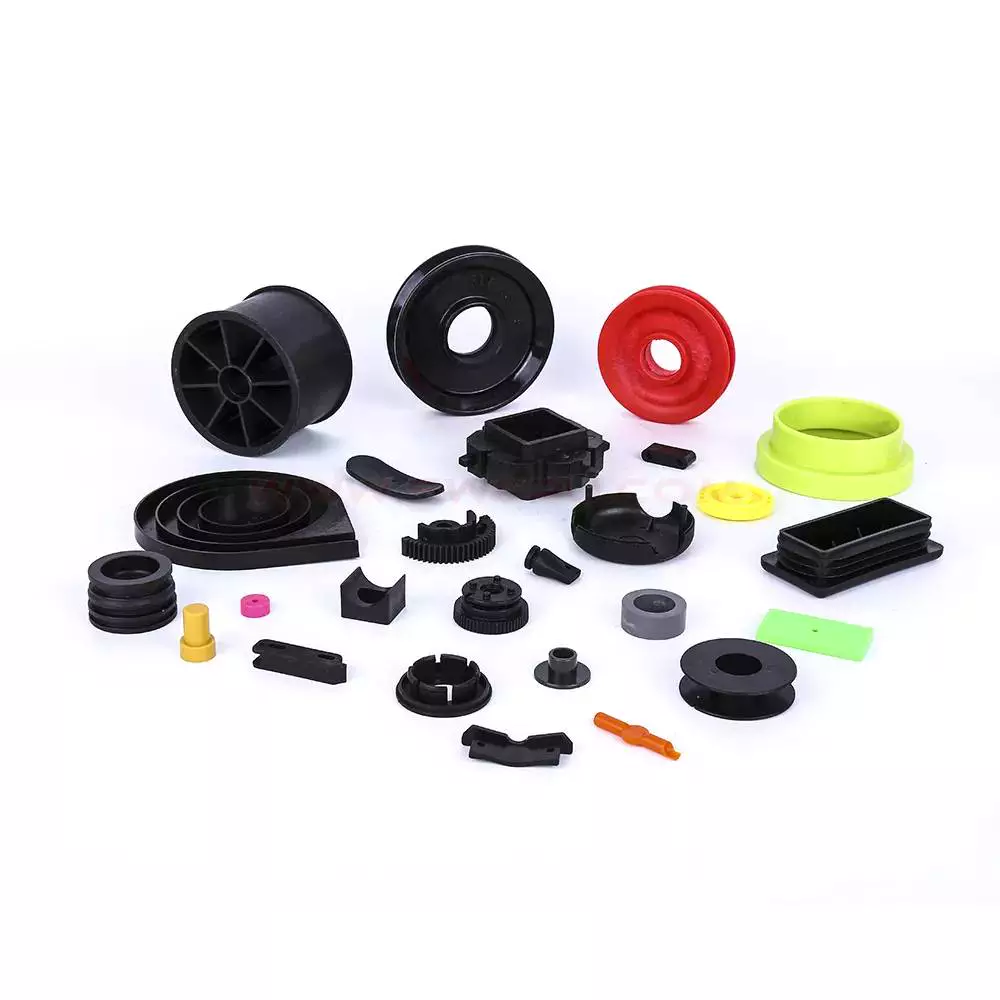 When developing a medical device, there are several design considerations to be made to create a quality injection molded part. Typically, product designers want to minimize the amount of material needed to fill the part while still maintaining the structural integrity of the product. To this end, injection molded parts often have ribs to stiffen the relatively thin walls. However, improper placement of ribs or projections can create molding problems.
Design considerations for injection molded parts include the overall shape and finish of the part. There are several ways to make the part look better. One way is to make the surface smoother and less pronounced. This will help the material flow evenly throughout the mold and minimize the risk of parting lines. Another way to reduce the risk of sink marks is to reduce the thickness of ribs relative to the nominal wall thickness of the part.
A common problem encountered when designing injection molded parts is sink marks. These can be difficult to avoid. A molder may not be willing to guarantee the product’s surface is sink-free, so designers must make sure that sink marks are minimized. To prevent these problems, the design of the parts should be as simple as possible.
Injection molded parts can also have complex geometries, and the design process is incredibly flexible. A good molder will be able to reproduce complex parts at low cost. To get the best possible results, designers should discuss the design and process with the molder. They should also discuss with the molder any critical tolerance specifications. The designer should also consider reworking the mold if necessary.
The wall thickness of a plastic injection molded part should be consistent. This is important because it influences the part’s functionality and performance. An uneven wall thickness can result in sink marks, voids, and other undesirable effects. It may also result in excessive plastic pressure or cause air traps.
Materials used in injection molded parts
When designing a product, materials used in injection molding are an important factor in the end result. These materials vary in strength, reusability, and cost. Understanding these differences is essential for ensuring the best product. In addition, understanding the characteristics of these materials can help you plan your budget and determine which ones are right for your application.
Choosing the wrong material can have serious consequences. In addition to premature component failure, the wrong choice can also increase your cost. To avoid such an occurrence, it’s a good idea to seek expert advice. Expert consultations can help you understand the factors that are important for your particular plastic molding project.
Fortron PPS: This thermoplastic resin offers excellent strength, toughness, and chemical resistance. It’s also stiff and durable, which makes it ideal for demanding industrial applications. Other common plastics include Nylon 6/6, which is strong and lightweight. Its high melting point makes it a great replacement for metal in certain environments. It also offers desirable chemical and electrical properties. PEEK is another common material used in injection molding.
ABS: Another engineering grade thermoplastic, ABS offers excellent heat resistance and chemical resistance. The disadvantage of ABS is its oil-based composition. As a result, ABS production creates noxious fumes. Nylon is another popular plastic for injection molding. Nylon is used in many different applications, from electrical applications to various kinds of apparel.
Injection moulding is a process where raw material is injected through a mold under high pressure. The mold then shapes the polymer into a desired shape. These moulds can have one or multiple cavities. This enables manufacturers to create different geometries of parts using a single mould. Most injection moulds are made from tool steel, but stainless steel and aluminium are also used for certain applications.
Characteristics of injection molded parts
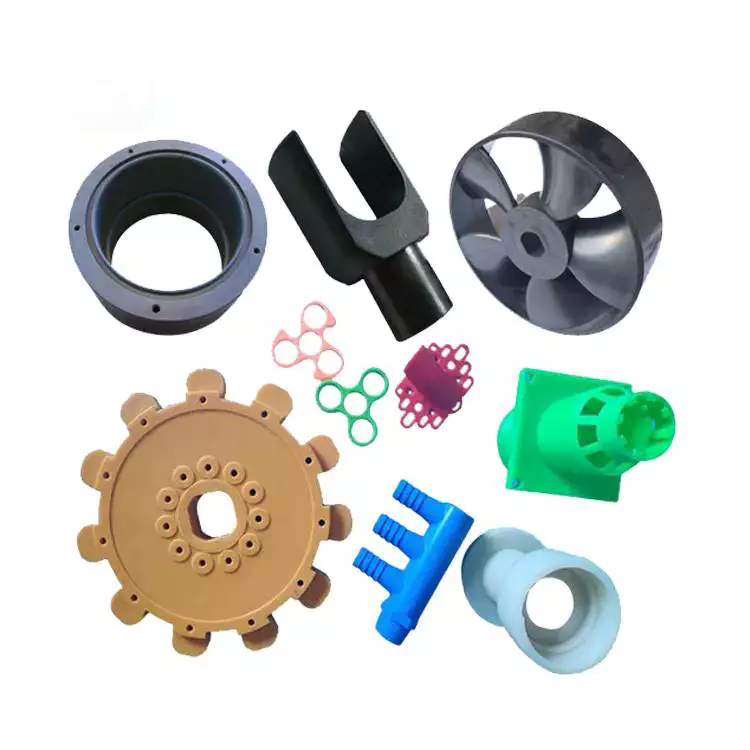 Injection molded parts exhibit a range of mechanical and physical properties. These properties affect the performance of the parts. For example, they can affect electrical conductivity. Also, the degree of filling in the parts can determine their mechanical properties. Some studies have even found that filling content can affect the dimensional accuracy of the parts.
To ensure the highest quality of the molded parts, it is important to inspect the machines and processes used to manufacture them. Proper maintenance can prevent mistakes and prolong the service life of the components. Moreover, it is essential to clean and lubricate the machine and its components. This will also reduce the possibility of mold errors.
The temperature and pressure characteristics of the injection mold can be characterized with the help of a simulation tool. For example, in a simulation environment, the injection pressure can be set as a profile and is equal to the pressure in the flow front. Moreover, the maximum injection pressure can be set as a value with minimum dependence on the flow rate. The temperature of the material used in the injection mold should be within a recommended range.
The temperature and pressure of the mold cavity must be monitored to ensure proper ejection. The temperature of the injection mold cavity is usually set at a temperature slightly above the ejection temperature. This can be manually or automatically. If the temperature is too high, the part will not be able to eject. The rapid temperature change can cause the part to warp. The same applies to the cooling time of the mold and cavity.
The thickness of the molded part should be uniform. If the injection mold does not conform to the required thickness, sink marks may be visible. A minimum of 2.5 mm between the outer and inner diameters is required for proper ejection.
Common problems encountered
There are several common problems encountered during the production of injection-molded parts. One of the most common of these is sink marks. These appear on the surface of the part and are a result of uneven cooling of the plastic within the mold. This problem can be caused by poor mold design, insufficient cooling time, and/or low injection pressure.
The first common problem occurs when the mold is not tightly clamped. This causes the molten plastic to be forced out of the mold. Other problems may occur due to the wrong clamping pressure or temperature. In these cases, the clamping force should be increased or the mold design should be revised to allow the plastic to flow properly through it. In addition, a poor quality mold may cause flash or burrs.
Another common problem is wavy patterning. These two defects can affect the appearance and functionality of the part. To avoid these problems, work with an experienced injection molding manufacturer who has experience in these types of parts. They will be able to troubleshoot and minimize any potential risks.
One of the most common problems encountered in injection molding is discoloration. A discolored part will be black or rust-colored. This problem is caused by an excess of air in the mold cavity, and can be avoided by reducing the injection speed. Ventilation systems can also be adjusted to minimize the chances of these problems.
Defective molds can cause a negative impact on the bottom line. By understanding the common problems encountered during injection molding, you can better avoid these problems and make your products as attractive as possible.
Fasteners used in injection molded parts
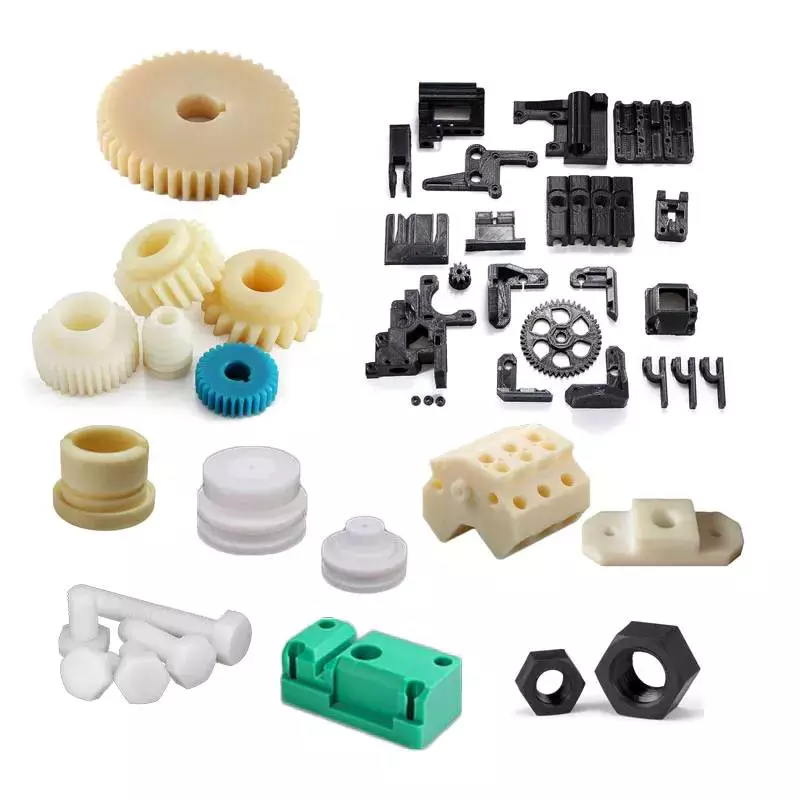 Injection molded parts often use fasteners for securing fastener elements in place. As shown in FIGS. 7 and 8 (two separate views), the fastener elements are integrated with the molded product, and they extend from one side. The fastener elements are designed to engage loop elements in the overlying layer. The palm-tree shaped fasteners are especially well-suited for this purpose, as their three-dimensional sides engage more loops than flat sides. These features result in a more secure closure.
When fasteners are used in injection molded parts, the plastic is injected into a mold, with the fastener integrated. In addition to self-tapping screws, other plastic fasteners can include moulded or pre-drilled pilot holes. This method avoids the need for a secondary assembly step and ensures an easy fit. These screws also have other advantages, including a smaller thread profile and lower radial stress, which prevents boss damage.
Another type of fastener commonly used in injection molded parts is a boss. This type of fastener is typically larger than the nut and the pilot hole. An undersized boss can lead to warpage during the injection molding process and cause a product to fail in the field.
Another type of fastener used in injection molded parts is a thread insert, which is usually a stainless steel A2 wire. There are different versions of this fastener for different materials, including carbon fiber reinforced plastic. And the fastener can be modified to adjust the size of the hole.
These fasteners are used in many different types of injection molded parts. Some parts are used to fix a variety of cosmetic issues, such as minor sinks. While these are not defects, they may not look perfect, and they can affect the overall appearance of a product. If you want to improve the appearance of an injection molded part, you can add fibers and glass fibers, as well as colorants.
editor by czh2023-02-15
China PA66GF30 turbine wheel parts high precision plastic mouldinjection molding injection molded part design
Model Variety: Photographs
Use: Widely
Packing: Plastic Bag+Carton Box
MOQ: 1pcs/set
Colors: Offered
Drawing Format: 3D.STP. Step . IGS . PRT . X_T
Area treatment method: Polish. Etched. Texture
Keyword: plastic injection mold
Service: OEMODM
Packaging Specifics: OPP bag+CartonPA66GF30 turbine wheel elements substantial precision plastic mould/injection molding
Port: HangZhou
PA66GF30 turbine wheel components substantial precision plastic mould/injection moldingThere are numerous variables that affect injection mold construction and mildew techniques, mainly such as the subsequent facets:1. Cavity format. The number and arrangement of cavities shall be determined according to the geometric structure of plastic areas, dimensional accuracy demands, batch dimensions, mold manufacturing issues, mildew cost, and many others.2. Determine the parting surface. The place of parting floor shall be conducive to mold processing, exhaust demoulding and molding functions to guarantee the surface top quality of plastic parts.3. Establish the pouring program (the condition, position and dimension of the primary runner, runner and gate) and the exhaust method (the approach of exhaust, the position and dimension of the exhaust slot).4. Choose the ejection strategy (ejector rod, pipe jacking, press plate, combined ejection), High top quality custom-made UV resistant battery holder injection molding components with Abs and computer content and establish the aspect concave therapy strategy and core pulling technique.5. Decide the cooling and heating methods, the shape and position of the heating and cooling groove, and the installation position of the heating component.6. In accordance to the injection mould content, energy calculation or empirical information, decide the mildew element thickness, total dimensions, all round framework and all link, positioning and CZPT elements positions.7. Figure out the structural type of principal molding areas and structural members.8. Contemplating the toughness of each and every component of the mould, determine the working proportions of the molded areas. FAQ Q1: Are you a investing company or manufacturing unit? A: We are direct factory with more than 100 personnel as nicely approximate 3,five hundred square meters workshop location, in HangZhou, China. Factory’s price tag is decrease,welcome to assessQ2: How can I get the quotation? A: We will submit the quotation in 24 several hours if acquiring comprehensive information in the course of functioning days. In get to quotation for you earlier, Customized high precision Plastic Injection Molding Plastic CNC Machining Companies Plastic Mold Injection make sure you provide us the pursuing data together with your inquiry: 1)3D Stage of Data files and 2d Drawings 2) Content requirement 3) Floor therapy 4) Quantity (for every buy/permonth/yearly)5) Any particular requires or specifications, this kind of as packing, labels, shipping and delivery, and so on.Q3: What shall we do if we do not have drawings? A: Please send your sample to our manufacturing facility,then we can copy or offer you greater remedies. Make sure you ship us images or drafts with dimensions(Length,Hight,Width),CAD or 3D file will be created for you if placed purchase. Q4: Do you offer samples? Is it free of charge or additional? A: Indeed we offer free of charge sample but do not find the money for the shipping cost. Q5: ls your organization presently participating in any Customer Certification Program? A: 3C certification, Achieve,ROHS,PRO65. Q6: Do you supply assembly service? A: We supply products style and 3D print services, we have 15 injection machines and 2 assembly traces, we can offer production run and assembly services. Q7: How do you supply right after-revenue provider? A: We provide right after-sales services in 2 a long time right after percustomer gets the mold. If the mould is damaged inside 2 many years, Personalized plastic injection part we can send out the new alternative mould fittings for cost-free. Greatest Offering
Advantages of Injection Moulding
Whether you’re considering an injection molded part for your next project or need to replace an existing one, there are a few factors you should consider. These include design, surface finishes, tooling costs, and material compatibility. Understanding these factors can help you make the right decision. Read on to learn more about the advantages of injection molding and how to get started.
Design factors
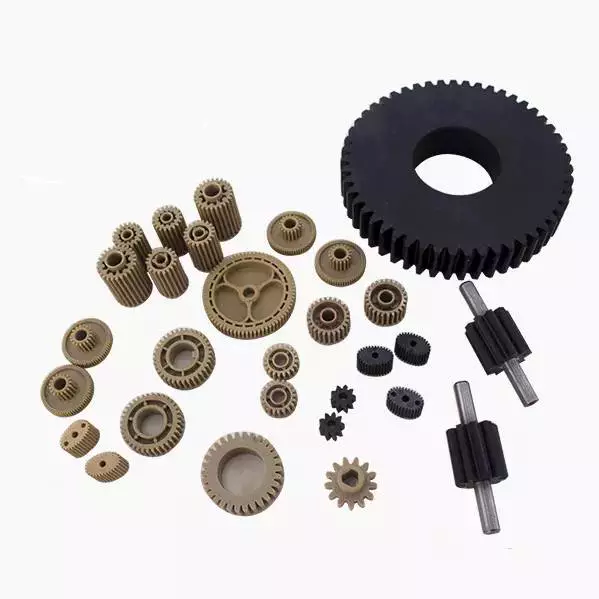 One of the most critical design factors for injection molded parts is the wall thickness. The wall thickness affects many key characteristics of the part, from its surface finish to its structural integrity. Proper consideration of this factor can prevent costly delays due to mold issues or mold modifications. To avoid this problem, product designers must carefully consider the functional requirements of the part to determine the minimum and nominal wall thickness. In addition, they must also consider acceptable stress levels, since parts with excessively thin walls may require excessive plastic pressure and may create air traps.
Another factor to consider when designing a part is its ejection and release capabilities. If the part is released from the mold, the tools should be able to slide the plastic out. Injection molds usually have two sides, one of which is ejectable, and another that remains in the mold. In some cases, special features are required to prevent part release, such as a ramp or a gusset. These design features can increase the design flexibility, but they can also increase the cost of the mold.
When designing injection molded parts, the engineering team first determines the key design elements. These elements will make sure the injection process goes as smoothly as possible. This includes factors like wall thickness, rib design, boss design, corner transition, and weld line, among others. The engineering team will then perform a design for manufacturability analysis and, if all is well, can start building and testing the mold.
Material compatibility
Several factors can affect material compatibility of injection molded parts. When molding plastic parts, it is important to choose a material that is compatible with the part’s intended purpose. Many injection molding processes require that the two main plastic materials used are compatible with each other. This is the case in overmolding and two-shot injection molding.
The material you use to make an injection molded part will significantly impact the tolerance of the finished product. This is why material selection is as important as the design of the part. Many types of plastic resins can be used for injection molding. In addition, many of these resins can be modified or strengthened by adding additives, fillers, and stabilizers. This flexibility allows product teams to tailor the material to achieve desired performance characteristics.
One of the most common thermoplastics is polypropylene. It is extremely durable and has good impact strength and moisture resistance. This material is also recyclable and does not react with food.
Tooling costs
One of the largest costs for manufacturing injection molded parts is tooling. For an OEM, tooling costs can range from $15K per part for a simple part to $500K for a mold with complex geometry. Tooling costs vary based on the type of steel used and the production volume of the part.
To get a reasonable estimate, companies should have a final design, preliminary design, and sample part to hand when requesting quotes. The dimensions and complexity of the cavity in a mold are crucial in determining the tooling cost, as are the part tolerances. Part tolerances are based on the area covered by the part and its functions within the mold.
The type of mold you need can also impact your tooling costs. Injection molding machines can accommodate many different kinds of molds. Some molds are made from a single mold, while others require multiple molds. Some molds can be complicated, making them unmanufacturable, which in turn drives up the cost of tooling.
The costs for tooling for injection molding are not well known, but they do add up quickly. Many product development teams tend to consider the cost of the injection molding process in terms of direct materials, machine time, and labor, but that cost model often fails to take into account additional components.
Surface finishes
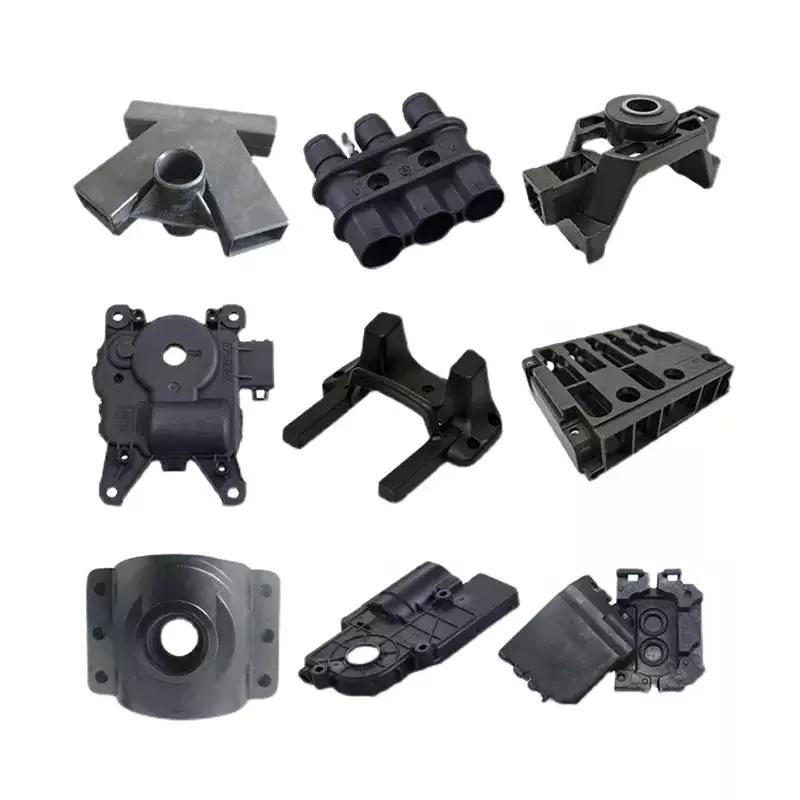 Surface finishes on injection molded parts are often used to mask defects, hide wear and tear, or enhance a product’s appearance. These finishes can also be useful when the product will come in contact with people’s hands. The surface texture you choose will depend on your desired functionality as well as the way you want to use the product. Generally, rougher textures provide better grip while masking minor molding imperfections. However, they can also make a product more difficult to release from the mold. This means that you may have to increase the draft angle of the mold. In order to get the best surface finish, the toolmaker and product designer must collaborate closely early in the design process.
There are several different surface finishes that can be used for injection molded parts. One type is known as the B-grade finish, and is compatible with a wide variety of injection molding plastics. Another type of finish is called a stone polishing process, and is ideal for parts that have no aesthetic value.
Overhangs
The injection moulding industry refers to overhangs on injection molded parts as “undercuts,” and these can lead to design instability. To minimize undercuts, the design must be parallel to the part’s surface. If an undercut is present, a zigzag parting line can be used.
The overhang is typically a few millimeters shorter than the surface of the mold. It is generally made from a lower-cost plastic material than the part’s surface area. The material used for the overhang should have sufficient strength to fulfill its function. An overhang will also help to prevent the piece from deforming or cracking.
Injection molding can create overhangs around the perimeter of a part. Overhangs are not always necessary; they can be added to parts as desired. Adding an overhang, however, will add substantial tooling costs. As a result, it is better to minimize the overall thickness of a design. However, in some cases an overhang can be useful to make the part look more attractive.
For parts with complex geometries, there are a few options for overhangs. Some manufacturers use side-action molds to form more complex shapes.
CNC machining
CNC machining of injection molded parts is a process that helps manufacturers achieve precise surfaces and shapes for their products. This process typically begins with the milling of the tooling, which is typically made of aluminum or steel. This tooling is then placed in a CNC mill. This machine carves the negative of the final plastic part, making it possible to achieve specific surface finishes. The process can be adapted to create a part with a complex structure or special features.
CNC machining allows the manufacturer to produce high-performance parts. This is possible because MIM parts do not experience induced stresses or internal pressure during the manufacturing process. Furthermore, the parts produced by MIM are more durable than CNC parts. Despite their advantages, CNC machining has its limitations, especially when it comes to design freedom and intricacy. This factor is largely dependent on the software used by the manufacturer or designer.
One drawback of CNC machining is its higher cost. Compared to injection molding, CNC machining is more expensive per part. The reason is that the initial mold cost is relatively high and is spread over a large number of parts. Once the injection molding process has been completed, the cost of the parts produced by this process becomes more competitive with those produced by machined parts. However, the cost gap increases with the volume of parts produced. This cost crossover generally occurs in quantities of at least 100 parts and can reach a maximum of 5000 parts.
Production volume
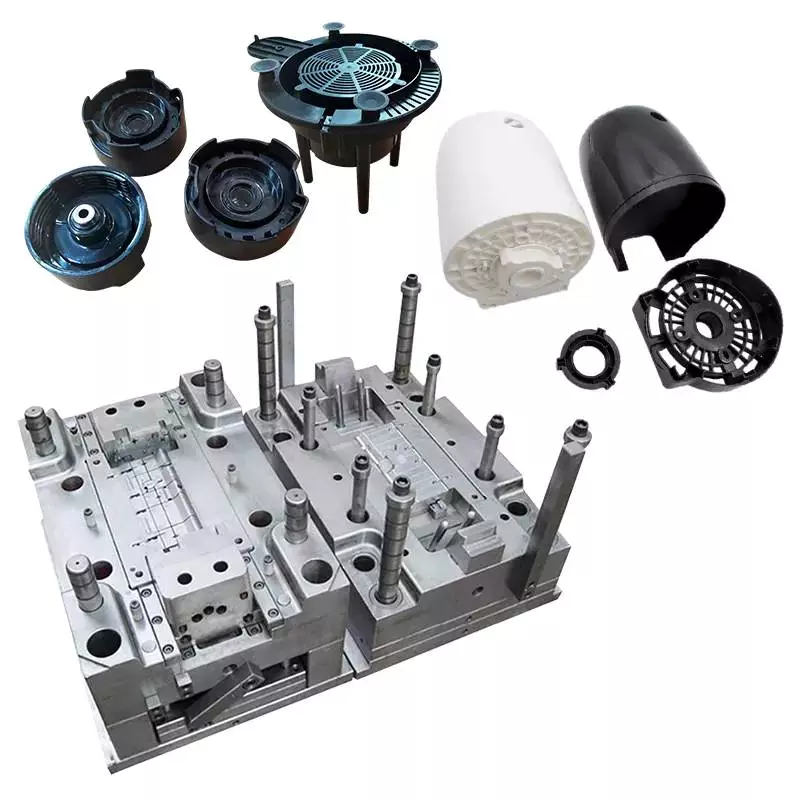 The production volume of injection molded parts varies depending on the material being used. Large volumes of parts are expensive to produce, while small quantities can be produced for low cost. Injection molding requires a precise mold, which is CNC-machined from tool steel or aluminum. The mold has a negative of the part that is injected, a runner system, and internal water cooling channels to aid in cooling the part. Recent advances in 3D printing materials have made it possible to produce molds for low-volume injection molding. Previously, this was not financially viable due to the high cost of traditional mold making.
A mold is used to produce plastic parts. The molding process is very fast, with each cycle taking anywhere from 30 seconds to 90 seconds. After a part is molded, it is removed from the mold and placed on a holding container or conveyor belt. Injection molded parts are generally ready for use right away and require minimal post-processing. Injection molded parts have a similar design to a photograph, since the geometry is directly transferred to the part’s surface texture.
When selecting a plastic mold, it is important to determine the volume that the part will be produced at. If the volume is low, softer plastics may be used. However, as the part is molded over, its performance characteristics may degrade. In low-volume production, it is important to consider the overall complexity of the part. This includes the part’s draft, wall thickness, and surface finish.
editor by czh2023-02-15
China OEMODM Customized Plastic Housing Cover Shell Mold Maker Plastic Injection Mold Parts injection molding aluminum parts
Product Amount: Custom made
Plastic Modling Sort: injection
Processing Provider: Moulding, Moulding, injection molding
Product Material: Plastic, Stomach muscles /Personal computer /TPE /PP/nylon/POM/PMMA/PA and ect
Certification: ISO9001
Plastic cavity: Multi or single Cavity
Provider: A single end support
Product: Plastic injection molded components
Port: HangZhou, HangZhou, China
Why Pick Us Company Profile FULAIER specializes in plastic moulds / products improvement and production in excess of 15 years Our strong design and style functionality geared up with the innovative application of CAD/CAM/CAE/Solidworks/Pro-E/UG, serving from solution conceptual style, Custom made creation plastic injection mold Abs PBT PVC RA66 large precision moulding elements bottle bracket boxes auto plastic parts structure design and style to the complete 1-end solution. We have wealthy encounter in mould/ item style and mass generation with exceptional administration and rigorous good quality control. All of these assure the very best quality, quickest shipping time and competitive price tag and professional service to customers. FULAIER functions closely with the buyer for any particulars specifications, considering as customer’s situation to make projects effectively. We are all set to turn into your most satisfied associate to support your developing organization.
| Undertaking Handle Flow | | | |
| Action one | Customer RFQ | Step 2 | Quotation |
| Action three | Buyer get | Stage 4 | Go over the very best solution |
| Phase five | Format drawing | Stage 6 | Depth design |
| Phase seven | Drawing acceptance | Stage 8 | Materials buy |
| Action nine | NC programming | Action ten | Mildew production |
| Stage eleven | Mould sampling and correction | Stage 12 | Sent T1 sample to customer with inspection report |
| Phase thirteen | Customer feedbacks | Action 14 | Correction |
| Phase 15 | Customer acceptance | Phase sixteen | 1st batch creation |
*15 years professional crew:We have the skilled engineer groups and sales teams, mostof them have far more than 15 a long time experience in mold-makingindustry and injection market, specially for family, electronics and automotive items. *Innovative gear:We have the substantial top quality CNC and EDM equipment from HAAS, DME precision injection mold for multi cavity plastic molding merchandise and components MOKRON, OKUMA, AGIE, MAKINO, this sort of as: 4-axis and 5- axis CNC equipment, can offer stable and accurate processing ability. *Fast supply time:For little prototype mould: 10 times For complex mold:20-thirty times. For prototype:3-5 days. For mold design: 2-5 times. *One cease support:We supply merchandise design and style and 3D print support, we have more than 22 sets injection equipment and 3 aseembly strains, Large Precision Injection Custom made Plastic Mold Merchandise Polycarbonate Abdominal muscles Acrylic Areas Provider CZPT we can offer creation operate, merchandise assembly and Item packaging for immediate sale services. *Substantial top quality and factory cost:We have lSO9001 International Good quality Management Technique, aswell as Chinese Generation Cost Manage Expertise, So we canhelp you help save about 20%~30% Producing price when youcompare with others. *Substantial pace right after-product sales service:We provide good after-sale support within 5 several years right after consumer obtain the mildew, Supply 16 hour online session, Most of our buyers perform with us much more than fifteen a long time and even now have faith in ,satisfy and do with us. FAQ
Injection Molded Parts – Design Considerations
If you want to produce high-quality Injection molded parts, there are several factors to consider before the design process. These factors include the Surface finish, Material compatibility, and Tooling fabrication. This article will focus on some of these factors. Ultimately, you can save time and money by designing the parts in-house.
Design considerations
 When creating a new part, or updating an existing part, design considerations for injection molded parts are critical. The decisions you make in these early stages of development can have a profound effect on the final product, and they can also have substantial cost and timing implications. In this guide, we’ll explore key design considerations, including how to maximize the efficiency of the injection molding process. We’ll also touch on how to optimize gate placement and parting lines.
To ensure a successful injection molding process, part design must balance structural integrity and plastic fill volume. This means creating parts with relatively thin walls that have adequate support and avoid warping or sinking. To do this, injection molded parts often feature ribs or projections to strengthen the walls. However, too thin of a wall can result in excessive plastic pressure and air traps.
One of the most important design considerations for injection molded parts is the direction of the parting line. For many applications, a parting line is obvious, but for others it’s a little less obvious. The first step in designing an injection mold is to determine which direction it should open.
Another critical design consideration is the part’s ejection. If a part isn’t ejected properly, it will stick to the mold. A part that has too many undercuts or ribs will end up stuck on the mold’s side, making it difficult to eject it from the mold. A part that has a draft angle of at least five degrees is much easier to eject.
Another important design consideration for an injection molded part is the type of plastic used. Some plastics do not tolerate undercuts. However, some materials are able to tolerate undercuts of up to five percent. Undercuts are not ideal and can increase the complexity and cost of the injection mold.
Another design consideration for injection molded parts is the radius of edges. Sharp corners can create high molded-in stresses and can lead to failure points. A radius eliminates this stress by redistributing the stress more evenly throughout the part. This also facilitates flow of the material through the mold.
Surface finish
Injection molded parts are often finished with additional processing in order to improve their aesthetic quality. There are a variety of finishing processes, including machining and sanding, which give injected molded parts a particular look, feel, or texture. The surface finish of a plastic part affects both its aesthetics and its functionality. According to the Society of Plastics Industry, certain standards for surface finish are essential to the aesthetics and durability of plastic parts.
Surface finish of injection molded parts depends on the primary design goal. For instance, some designs may need a part to be aesthetically pleasing while others may want to enhance its functionality. Surface texture is often used by designers and engineers to achieve different aesthetic goals, such as improving the product’s perceived value. A textured surface may also help hide imperfections and improve the part’s non-slip qualities.
Surface finish is a critical aspect of plastic injection molding. It can affect material selection, tooling, and other process decisions. It is important to determine the desired surface finish early in the design phase. A skilled plastic injection molder can assist you in making this decision. In addition to determining the finish you need, a skilled molder can help you decide the best material for the job.
The PIA classification system defines four basic grades for surface finish. There are subcategories for each grade. Group A surface finish is smooth, and grade B and C finishes are textured. The former is the most common and economical finish and is most suitable for industrial parts. It can hide deformations and tooling marks, and is the least expensive finish type.
Surface finish of injection molded parts can vary greatly, and can be crucial to the performance and appearance of the part. Some companies prefer plastic parts with a glossy finish, while others prefer a textured surface for aesthetic reasons. While the former may be better for aesthetic purposes, rougher surfaces are often preferred for functional or mechanical parts.
Material compatibility
 Material compatibility is important for the durability of your injection molded parts. You can use multiple materials in the same part by mixing resins. This is an ideal solution for parts that require adhesion, friction, or wear. Fast Radius can simplify the material selection process, optimize part design, and speed up production.
ABS is a thermoplastic polymer that can withstand a range of temperatures. Its low melting point means that it is easy to mold, and it has good chemical and moisture resistance. ABS also has good impact strength, and is highly durable. It is easy to recycle. Nylon is another versatile material for injection molding. It can be used for car tires, electrical components, and various apparel.
When choosing the material for your injection molded parts, keep in mind that the type of resin will determine their tolerance. Injection molding is compatible with a wide range of plastic resins. Some materials are more suitable than others for certain applications, and many plastics can be modified with stabilizers or additives to improve their properties. This flexibility allows the product development team to customize materials to achieve the performance characteristics they desire.
Polyamides are another great option for injection molding parts. Both natural and synthetic varieties of these plastics have excellent properties. However, they have some drawbacks. For instance, nylon injection molding is difficult and can result in inadequate filling. However, Nylon injection molding has many benefits, including high impact resistance and heat resistance.
Polybutylene terephthalate (PBT) is a high-molecular-weight polymer with excellent mechanical and chemical resistance. It is a good choice for components in the medical, automotive, and lighting industries. Its low water absorption and low flammability make it suitable for many applications.
Polyurethane (TPU) is another polymer option. It has excellent resistance to abrasion, chemicals, greases, and oils. It also has high temperature resistance, and is suitable for ozone environments. However, TPU is more expensive than TPE and requires drying before processing. Moreover, it has a short shelf life.
Tooling fabrication
 Tooling fabrication for injection-molded parts is an important component of the manufacturing process. The right design of the mold can reduce the cost and time required for a finished product. For instance, choosing the right type of core for the mold can reduce the amount of material used in the part, which is necessary to produce a high-quality product. It is also important to choose a design that is easy to mill into a mold.
Injection molding requires a mold with precise geometries. The mold tool must be constructed accurately and carefully to achieve the desired precision. It can be the biggest investment in the manufacturing process, but it is also critical to the success of a project. Large volume and high-precision parts often require more complex tooling, as they require the highest level of precision.
Tool steels typically used for injection moulding include H-13 and 420 stainless steel. Both of these materials are strong enough to produce parts of comparable hardness to wrought parts. These materials have low elongation values, so they are ideal for constructing injection moulding tools. Some of these steels also have excellent dimensional accuracy and are ideally suited for high-precision tool fabrication.
The process of plastic injection molding requires precise measuring and tooling fabrication. The mold must have the proper lead angle and space for the material to deform. Undercuts must be no larger than 5% of the diameter. Moreover, the injection molded part should be free of stripping or undercuts. Ideally, it should have a lead angle of 30o to 45o.
Various plastics can be used in the process of injection molding. The process can be used to produce cosmetic and end-use parts. Materials used in the molding process include silicone rubber and thermoplastics. If the part requires additional reinforcement, it can be reinforced with fibers, mineral particles, or flame retardant agents.
Increasingly advanced technologies have streamlined the process of tooling fabrication for injection moulded parts. The process has improved with the use of computer aided design, additive manufacturing, and CNC lathes. Approximately 15% of the cost of a finished injection molded part is spent on tooling fabrication.
editor by czh2023-02-15
China OEM Plastic Injection Molding Parts Customized Plastic Electronic Enclosure Parts Injection Mould Service manufacturer
Design Quantity: Plastic Injection Mildew one hundred ten
Shaping Manner: Plastic Injection Mould
Item Materials: Plastic
Material Experience: PP/Laptop/Abs/PVC/PTFE/POM/PE/Polyamide/PBT
Colors Obtainable: Pantone/RAL and other customized colors
Area End: Texture/Sandy/MT/YS/SPI/EDM finish/easy/glossy
Certifications: ISO9 pictures
Mildew materials: Metal (2738 and P20)
Packaging Details: Wood box packaging of injection mould.Export Products Pallet Packing
Port: ZheJiang port
China CZPT Company Make Inexpensive Expert Plastic injection mold1. Commence from part style examination.2. Mold style drawing and DFM report obtainable so you can see how is the mold likely to be before mold creating.3. If product is complicated,moldflow report will be current as properly.4. In house mildew generating shop make certain you mould quality under properly management.5. Typically it normally takes 20-forty days to make mould,precise time relies upon on part layout.6. Injection molded areas can be various material these kinds of as Ab muscles/Personal computer/PP/HDPE/POM/PA6/PA6+GF/PVC/NYLON/PMMA/PET Ect.7. HangZhou Zetuo can also offer various area treatment for injection molded areas.8. Frequently use surface treatment for injection molded components as:Texture/Sandy/MT/YS/SPI/EDM complete/easy/glossy/VDI.9. Beside creating injection molded components,we also give printing,welding,assembly and packing services.
| Make injection molds and make plastic injection molding areas | | |
| Plastic Supplies: | PS, Stomach muscles, PP, PVC, PMMA, PBT, Computer, POM, PA66, PA6, PBT+GF, Computer/Abs, PEEK, HDPE, TPU, PET, PPO,…etc. | | |
| Other materials: | Rubber, Slilconce rubber, LSR,Aluminum, Zinc,Copper…Metal…etc. | | |
| Quality: | RoSH and SGS regular | | |
| Feature: | Non marking and Non flash | | |
| Size: | According to your 2nd or 3D Drawing | | |
| Color,Quantity,Device value,Tooling value,Tooling dimension: | To be discussed | | |
| Package: | Standard exported Picket box packed, Fumigation method(on essential) | | |
| Mold Creating Direct Time: | T1, 4-5 months, Component measurement report (upon essential). | | |
| Export Country: | Europe, The us, Australian, British isles, Canada, France, Germany, Custom made Plastic Injection Molding Plastic Portion Injection CZPT Italy, Japan…etc.: | | |
| To be talked about | In-Mould Decoration, Injection Mould, Plastic Mildew, Overmould, 2K Mould, Die-Casting Mould, Thermoset Mould, Stack Mould,Interchangeable Mould,Collapsible Core Mould, Die Sets, Compression Mold, Chilly Runner Program LSR Mildew,…etc. | | |
| Mould Base: | Hasco Regular, European Standard, Globe Common | | |
| Mould Foundation Content: | LKM, FUTA, HASCO, DME,…etc. Or as for each Customer’s Requirment. | | |
| Surface Finish: | Texture(MT regular), Large gloss sprucing | | |
| Cavity/Core Steel: | P20, 2311, H13, 2344, Starvax 420, 236, AdC3, S136, 2312, 2379, 2316, 2083, Nak80, 2767 …etc. | | |
| Hot/ Cold Runner | HUSKY, INCOE, YDDO, HASCO, DME, MoldMaster, Injection CZPT goods manufacturers injekshan molding thoroughly clean place moulding SZOMK manufacturing facility Masterflow, Mastip, ZheJiang produced brand…etc. | | |
| Mould Life: | 5,000 to 1,000,000 Shots. (In accordance to your working surroundings.) | | |
| Design & System Softwares: | CAD, CAM, CAE, Pro-E, UG, Soild performs, Moldflow, CATIA….and many others. | | |
| Equipments: | High velocity CNC, Normal CNC, EDM, Wire Reducing, WEDM, Grinder, Plastic Injection Molding Device for trial out mold from fifty-3000Tavailable. | | |
Our Provider Item drawing designWe Provide Solution Design and style Provider As Customer’s Ask for.
Mildew DesignWe will talk&exchange the opinion with buyers during Mould Deisgn
Mould MakingStart to manufacture, we will sent photos to demonstrate tooling method.
Supply solution samplesOnce the sample complete,we will ship the sample to client affirm
Mass Injection moldingAfter client verified the sample, we will start mass production plastic items.
AssemblyWe Also Supply Assembly Services For Our Consumer.
PrintingWe Also Supply Silk Screen Printing, Pad Printing, Warmth Transfer Print Services. Packaging BoxWe also make the packaging box as consumer ask for. Produce goodsWe are loading our customers’ merchandise into containers and sending them to them
Our Business HangZhou Zetuo Plastic Items Co., LtdOur organization is situated in HangZhou CZPT Town, HangZhou, ZHangZhoug Province. Full supporting services, hassle-free transportation and professional staff provide you protected and certain support and excellent qualityWe have expert engineering group which has more than 5 engineers who is good at plastic injection mould design and style, plastic injection molding process as well as steel stamping functions.Product sales team are thoughtful and good at comprehension your thought and details, where assist to make your perform significantly eaiser. 24*7 comminication support, each time you want us, we are here for you.
Our company has In-property tooling store- fully outfitted 6000 square toes device place,generating confident your molds creating in home, delivering cost-free mould routine upkeep,and also mold mend perform if you want.Meanwhile ninety ton – 1100 ton injection molding equipment 20 sets,30000 sq. ft injection molding room such as 250 sq. ft M7 course clean space.We can generate components from .01pound to 13 lbs.
We can create all sorts of plastic injection molds, all varieties of plastic parts can be personalized, Cnc Precision Machined Plasticpom Device Components Plastic Spacer Assistance injection molds created in China quite comprehending of the market, at current we have established excellent relations of cooperation with 58 nations, the principal markets: The united states, Europe, Australia and the Middle East.
Now the main solution varieties are: Vehicle plastic parts, food and CZPT goods, plastic packaging products, family appliances, plastic components, digital merchandise, stationery, household requirements and so on. If you have the products you are fascinated in, make sure you explain to me the requirements you need to have.
FAQ FAQ About Plastic Injection CZPT Tooling.Q1: What type of molds do you make? Plastic injection mould, Die casting mold or some thing else?A1: Mostly plastic mildew injection and Die casting mildew.Could allso make stamping molds according to our customer’s specifications.Q2: What kinds of information do you acknowledge (drawings)?A2: STP, IGS, DXF, DWG, Cad Crucial PPT, STL, X_T, CATIA, UG data files, and many others.Q3: What type of metal do you use for plastic mouldings?A3: P20, 718, 8407, NAK80, H13, S136, DIN 1.2738, DIN 1.2344, and so forth.This fall: Can you supply the metal and warmth-treatment method certificate?A4: Indeed, no issue.Q5: Can you make the texture / textual content / heat_remedy /nitriding for the inejction mildew plastic?A5: Indeed, no dilemma.Q6: How prolonged is the lead-time for a plastic injection mould?A6: It relies upon on the mold’s dimension and complexity. Typically twenty five~forty five days.Q7: Do you make spare elements for your consumer?A7: Yes, we will provide spare parts if necessary.Q8: How do you pack the china plastic moulds?A8: Picket box.1st : Daub rust preventive oil on the mildew.2nd : We pack the mildew with skinny plastic movie to steer clear of humidity.Third : We place this plastic movie packed mold in a wood box, and fix it avoid any movement.
How do we operate:cooperation processes:Q: How lengthy is your shipping and delivery time?A: Typically, it requires 15 to 35 functioning days after obtaining your advance payment. The specific shipping time relies upon on the products and the quantity of your get.Q: Do you give samples ? is it totally free or additional ?A: Yes, we could provide the sample free of charge of cost after the molds finished.If you want some things which we alread made to evaluate our functions,then we can ship,the price of freight paid out by consumer.Q: What is your terms of payment ?A: Plastic mold Payment: fifty% T/T in advance , International Normal Injection Mold Regular Parts Self Lubricating Xihu (West Lake) Dis. Bushes Xihu (West Lake) Dis. Sleeve 50% paid out when samples verified ahead of mass creation.Plastic areas payment: 50% T/T in advance , 50% T/T equilibrium prior to shipment (Categorical shipping and delivery and Air shipping and delivery).Plastic components payment: 50% T/T in progress , 50% T/T stability paid towards duplicate of BL (Sea shipping)
Importance of Wall Thickness in Injection Molded Parts
When designing injection molded parts, it is important to keep the wall thickness uniform. Uneven wall thickness can lead to warping and sinking. To minimize these problems, injection molded parts should have a wall thickness of 40 to 60 percent of the adjacent wall. The thickness of the wall should also fit within the range recommended for the resin that is being used. If the wall thickness is too thick, it should be cored out. Unnecessary wall thickness alters the dimensions of the part, reduces its strength, and may require post-process machining.
Designing out sharp corners on injection molded parts
Designing out sharp corners on injection molded components can be a challenging process. There are several factors to consider that impact how much corner radius you need to design out. A general rule is to use a radius that is about 0.5 times the thickness of the adjacent wall. This will prevent sharp corners from occurring on a part that is manufactured from injection molding.
Sharp corners can obstruct the flow of plastic melt into the mold and create flaws on parts. They can also cause stress concentration, which can compromise the strength of the part. To avoid this, sharp corners should be designed out. Adding radii to the corners is also an effective way to avoid sharp angles.
Another common problem is the presence of overhangs. Injection molding parts with overhangs tend to have side-action cores, which enter from the top or bottom. As a result, the cost of making these parts goes up quickly. Moreover, the process of solidification and cooling takes up more than half of the injection molding cycle. This makes it more cost-effective to design parts with minimal overhangs.
Undercuts on injection molded parts should be designed with a greater radius, preferably one or two times the part’s wall thickness. The inside radius of corners should be at least 0.5 times the wall thickness and the outside radius should be 1.5 times the wall thickness. This will help maintain a consistent wall thickness throughout the part. Avoiding undercuts is also important for easy ejection from the mold. If undercuts are present, they can cause a part to stick inside the mold after it has cooled.
Keeping wall thickness uniform is another important issue when designing plastic parts. Inconsistent wall thickness will increase the chance of warping and other defects.
Adding inserts to injection molded parts
Adding inserts to injection molded parts can be a cost-effective way to enhance the functionality of your products. Inserts are usually manufactured from a wide range of materials, including stainless steel, brass, aluminum, bronze, copper, Monel, nickel/nickel alloy, and more. Selecting the right material for your parts depends on the application. Choosing the correct material can help prevent defects and keep production cycles short. The insert material should be durable and resist deformation during the injection molding process. It must also be thin enough to provide the desired grip and have a proper mold depth.
The benefits of adding inserts to injection molded parts include the ability to design parts with unique shapes. These parts can be aesthetically pleasing, while still remaining durable and resistant to wear and tear. In addition, insert molding allows products to have a good external finish. In addition to being cost-effective, insert molding is considered a more efficient manufacturing method than other conventional methods.
Adding inserts to injection molded parts is an excellent way to enhance the strength and performance of your products. There are many different types of inserts, including threaded nuts, bushings, pins, and blades. Some types are even available with knurled outer surfaces that help them adhere to plastic.
In addition to being cost-effective, insert molding is environmentally friendly and compatible with many types of materials. Typical inserts are made of metal or plastic. Depending on the application, stiffening inserts may also be made from wood.
Importance of uniform wall thickness
The uniformity of wall thickness is an essential factor in the plastic injection molding process. It not only provides the best processing results, but also ensures that the molded part is consistently balanced. This uniformity is especially important for plastics, since they are poor heat conductors. Moreover, if the wall thickness of an injection molded part varies, air will trap and the part will exhibit a poorly balanced filling pattern.
Uniform wall thickness also helps reduce shrinkage. Different materials have different shrinkage rates. For instance, thick parts take longer time to cool than thin ones. As the part’s thickness increases, cooling time doubles. This relationship is due to the one-dimensional heat conduction equation, which shows that heat flows from the center of the part toward the cooling channel. However, this relationship does not hold for all types of plastics.
The general rule for maintaining uniform wall thickness in injection molded parts is that walls should be no thicker than 3mm. In some cases, thicker walls can be used, but they will significantly increase production time and detract from the part’s aesthetic appeal and functionality. Furthermore, the thickness of adjacent walls should be no thicker than 40-60% of each other.
The uniformity of wall thickness is critical to the overall quality and efficiency of the injection molding process. An uneven wall thickness can cause twisting, warping, cracking, and even collapse. A uniform wall thickness also reduces residual stress and shrinkage. Injection molded parts are more stable when the wall thickness is uniform.
An injection molded part with thick walls can be problematic, especially when the molded parts are shaped like a cube. A non-uniform wall thickness can result in problems and costly retooling. Fortunately, there are solutions to this problem. The first step is to understand the problem areas and take action.
Using 3D printing to fabricate molds
The use of 3D printed molds allows manufacturers to manufacture a wide range of injection molded parts. However, 3D-printed molds are not as strong as those made from metallic materials. This means that they do not withstand high temperatures, which can degrade them. As such, they are not suitable for projects that require smooth finishing. In order to reduce this risk, 3D-printed molds can be treated with ceramic coatings.
Using 3D printing to fabricate injection molds can help reduce costs and lead times, allowing manufacturers to bring their products to market faster. This process also has the advantage of being highly efficient, as molds made using 3D printing can be designed to last for many years.
The first step in fabricating an injection mold is to design a design. This design can be complex or simple, depending on the part. The design of the mold can be intricate. A simple example of a mold would be a red cup, with an interior and exterior. The interior portion would have a large cone of material protruding from the other side.
Injection molding is an effective way to produce thousands of parts. However, many engineering companies do not have access to expensive 3D printers. To solve this problem, companies should consider using outside suppliers. In addition to speeding up the manufacturing process, 3D printing can reduce the cost of sample parts.
Plastic injection molding still remains the most popular method for high volume production. However, this process requires a large up-front capital investment and takes a while to adapt. Its advantages include the ability to use multiple molds at once, minimal material wastage, and precision dosing. With an increasing number of materials available, 3D printing can be a smart option for companies looking to manufacture a variety of plastic parts.
editor by czh2023-02-15
China OEM Manufacturer Customized ABS PP PC Large Custom Injection Molding Molded Plastic Parts joining injection molded parts
Product Variety: Seal/OEM/ODM
Shaping Manner: Plastic Injection Mould
Product Materials: Plastic
Item: Vehicle Mould
Solution Identify: Vacuum Forming Goods
Substance: Ab muscles, PMMA,PET, Computer,PP, And so forth
Mould material: P20/718/738/NAK80/S136, Etc
Method: Vacuum Thermo-forming
Lead time: 7-10 times for 1st sample
Floor therapy: Texture/Sand/MT/YS/SPI
Use: R&D of plastic parts
Key phrase: Injection Modling
Drawing Format: Stage/STP/IGS/X-T/STL/CAD
Provider: Plastic Injection Mould
Packaging Specifics: as the consumers specifications.
Port: GuangZhou
VR Item description Higher Precision Bike Spare Areas Digital Merchandise Plastic Injection CZPT Vehicle Spare Components Company For Mouldone. Specialist producer/Service2. Watertight&Scratch-off3. Numerous shape, layout and measurement as customer require4. Certification: ISO9001, TS169495.Maker: above eighteen a long time manufacturing experience6.Reduced Price tag, High good quality, Tough, Quick Supply
| Product Identify | Custom Plastic Parts | | | |
| Materiaal | PP/PE/PS/Abdominal muscles/PA/PA with GF/POM | | | |
| Standard | ISO9001:2015 | | | |
| Mold Substance | P20/718/738/NAK80/S136 | | | |
| ODM plastic injection molding | | | |
| Plastic Components: | PS, Abdominal muscles, PP, PVC, PMMA, PBT, Computer, POM, PA66, PA6, PBT+GF, Laptop/Abs, PEEK, HDPE, TPU, PET, PPO,…etc. | | | |
| Standard: | ISO9001:2015 | | | |
| Other components: | Rubber, Aluminum, Copper, SS304…Metal…etc. | | | |
| Quality: | RoSH and SGS standard | | | |
| Feature: | Non marking and Non flash | | | |
| Size: | According to your 2nd, 3D Drawing | | | |
| Color,Quantity,Unit cost,Tooling expense,Tooling dimension: | To be talked about | | | |
| Package: | Standard carton, exported Picket box packed, Fumigation approach(on essential) | | | |
| Mold Building Lead Time: | T1, 4-5 weeks, Portion measurement report (on necessary). | | | |
| Export Nation: | America, Japan, Australian, Automotive Areas Plastic injection molding manufacture for injection moulds United kingdom, Canada, France, Germany, Italy…etc.: | | | |
| Experience: | 13 several years expertise in plastic injection mold generating and plastic prouducts make. | | | |
| To be mentioned | In-Mildew Decoration, Injection Mould, Plastic Mould, Overmould, 2K Mould, Die-Casting Mould, Thermoset Mould, Stack Mildew, Interchangeable Mold, Collapsible Core Mold, Die Sets, Compression Mildew, Chilly Runner Technique LSR Mould,…etc. | | | |
| Mould Foundation: | Hasco Common, LKM Normal, European Common, | | | |
| Mould Foundation Materials: | LKM, FUTA, HASCO, DME,…etc. Or as for each Customer’s Requirment. | | | |
| Surface Finish: | Texture(MT common), High gloss sprucing | | | |
| Cavity/Core Metal: | P20, 2311, H13, 2344, Starvax 420, 236, AdC3, S136, 2312, 2379, 2316, 2083, Nak80, 2767 …etc. | | | |
| Hot/ Cold Runner | HUSKY, INCOE, YDDO, HASCO, DME, Custom made higher quality vehicle mould maker plastic injection molding car components plastic injection molding MoldMaster, Masterflow, Mastip, ZheJiang created brand…etc. | | | |
| Mould Daily life: | 5,000 to 1,000,000 Photographs. (According to your doing work environment.) | | | |
| Design & Program | CAD, CAM, CAE, Pro-E, UG, Soild performs, Moldflow, CATIA….etc. | | | |
| Equipments: | High velocity CNC, Standard CNC, EDM, Wire Reducing, WEDM, Grinder, Plastic Injection Molding Device for trial out mildew from 50-1000T obtainable. | | | |
Metal&plastic custom made parts services You should Get in touch with US<<<<<<< Be aware: we do the process of injection molding, rapid prototyping, vacuum forming 3 procedure solutions. Goods are also manufactured according to 3D/CAD drawings. If you have any drawings, you should deliver them to us. We will provide you with expert services. Our companies Our Company place of work atmosphere and Our Certificates Exhibition Deal & Shipping Our Associates Our unique experience in intricate and very technical tooling & molding programs introduced us a quite very good popularity amid our buyers. FAQ one. Are you a trading firm or a manufacturer?We are a manufacturer as you can see our workshop as previously mentioned.2. What sort of trade phrases can you do?EX-Functions,FOB,CIF,DDP DDUthree. What is your terms of payment?fifty% Mildew cost deposit,equilibrium mildew cost +fifty% generation price paid when samples confimed,Equilibrium generation expense paid in opposition to copyof B/L. We take T/T,West Union, Trade assurancefour. Do you support OEM ?Of course, we can produce by technological drawings or samples.five. How about your shipping time?Normally, it get 40 times ( 30 times do mold and ten days do mass manufacturing).6.Are the drawings safe?Of course,we will indicator a DNA. Advocate Goods Title goes listed here.Semi-Automatic PET Bottle Blowing Machine Bottle Generating Device Bottle Moulding MachinePET Bottle Producing Equipment is suitable for making PET plastic containers and bottles in all designs.
Design Considerations for Injection Molded Parts
There are many factors to consider when designing a component for injection molding. These include design factors, materials, overhangs, and process. Understanding these factors will make it easier to choose the right part for the application. In this article, we’ll go over several of the most common design considerations.
Design factors
 To get the best results from your injection molded parts, you must ensure that they meet certain design factors. These factors can help you achieve consistent parts and reduce cost. These guidelines can also help you to avoid common defects. One of the most common defects is warping, which is caused by the unintended warping of the part as it cools.
When designing injection molded parts, the draft angle is critical. Increasing the draft angle allows the part to emerge cleanly from the mold and reduces stress concentration. This can improve the part’s function and speed up the production process. In addition, it ensures a uniform surface finish. Incorrect draft angles can result in parts that are not functional and can cost you money. If your product team doesn’t pay attention to these design factors, they could end up destroying expensive molds and producing a high number of rejects.
Ribs are another design factor that should be taken into consideration. Rib height should be less than three times the thickness of the part’s wall. This will prevent sink marks and minimize the chances of the ribs sticking inside the mold.
Materialen
There are many options when it comes to materials for injection molded parts. Choosing the right material will affect how well it performs in your particular application. If you need a large part to be flexible and sturdy, then a plastic with good flow properties will work best. Injection molded plastics come in a variety of different resins. Choose the one that best meets your application’s needs, considering its main functionality and the desired appearance. You may also want to choose a material that is UV resistant, heat resistant, flexible, and food safe.
Polymers that are suitable for injection molding include polycarbonate and polypropylene. These materials are flexible and strong, and can be used to create parts with high-level details. These materials are also lightweight and inexpensive. Despite being flexible, they are not suitable for high-stress applications.
During the molding process, the injected material must be cooled, otherwise it will expand again. This is why you need to keep the temperature of the mould at 80 degrees Celsius or less.
Process
Injection molding is the process of creating plastic parts. The plastic is melted in a mold and then forced to cool. It then solidifies into the desired shape. During the cooling process, the plastic can shrink, so it is important to pack the material tightly in the mold to prevent visible shrinkage. When the mold is completed, it cannot be opened until the required cooling time has passed. This time can be estimated based on the thermodynamic properties of plastic and the maximum wall thickness of the part.
The mold must be precisely designed and tested. The process can be repeated many times, which makes it ideal for mass production. It is also one of the fastest ways to scale production. The more parts a mold can produce, the lower its cost per piece. This is one of the benefits of injection molding.
Injection molding parts are used for many industries, including appliances, electronics, packaging, and medical devices. They can be made to have complicated shapes.
Overhangs
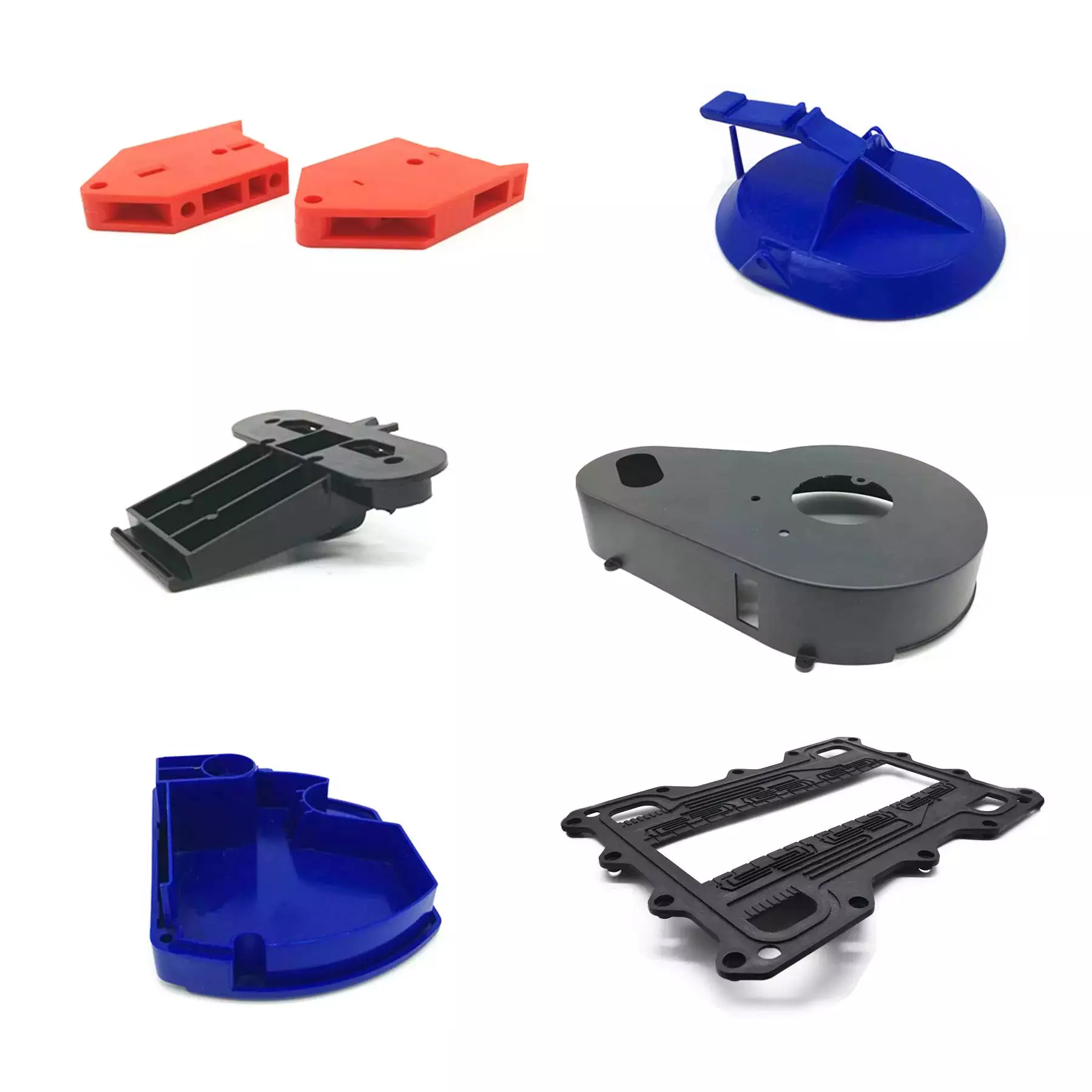 Overhangs are areas of extra material that surround the surface of an injection molded part. This extra material is typically made of inexpensive material that is edged or glued on the part’s surface. The overhang material can be easily separated from the blank using a simple cutting process.
The amount of material needed for an overhang is dependent on the shape of the part and the amount of surface area. Generally, an overhang is less than 15 percent of the cost of the part. Usually, the material used should be able to fulfill the overhang’s function and differentiate it from the material in the form flachen area.
Overhangs on injection molded parts should be avoided because they may cause the design to become unstable. To avoid this problem, consider designing your part so that the sides and edges are parallel to one another. This will help ensure that the part will be free of undercuts and overhangs.
Overhangs on injection molded parts can be avoided by ensuring that the parts are designed with tolerances in mind. For example, an overhang in an injection molded part can cause a mold to have an overhang that is too small for the machine. This can cause problems in the manufacturing process, and it can result in a costly mold.
Cost
Injection molding costs can vary depending on the complexity of the part, the size and the type of plastic. Parts with complex geometries may require additional design work and tooling. Larger parts can also cost more than small ones. The amount of time spent designing and producing them is also important.
To reduce the cost of injection molding, a manufacturer must consider two major factors: tooling and the material used. The plastic used for injection molding has several different properties, which will impact the part price. For instance, plastics with a lot of glass fibers will reduce the amount of time necessary to repair the mold. Another factor to consider is the thermal properties of the material.
The next major factor in the cost of injection molded parts is the material of the injection mold. While most of these molds are made of steel, the type and grade of steel used is important. Injection molds are also required to have nearly wear-free interior cavities. This is necessary to maintain tight tolerances.
Another factor that contributes to the cost of injection molded parts is the cost of bulk material. This material costs money and requires expensive electricity to process. Typically, the more parts you produce, the lower the cost per pound. Storage of bulk material is also a significant expense. Therefore, a quicker cycle time will reduce storage costs.
Reliability
While manufacturing involves some degree of variation, the variation should be within acceptable limits. This is essential if you want to produce high-quality, dimensionally stable parts. A reliable manufacturing process involves precise control over mold tooling and part design. It also requires repeatability in both quality and production processes.
A reliable injection molding process also focuses on detecting defects early in the production process. Invisible hazards, such as air pockets, mold materials compromised by overheating, and more, can lead to failure. These defects will most likely not be discovered by simple visual inspection and may not come to light until after warranty claims are filed from the field. By finding the defects in the early stages, manufacturers can maximize productivity and reduce costs by minimizing the number of replacement parts needed.
The process of building a custom mould for plastic components is highly skilled. A perfect mould will eliminate potential defects and ensure that the production process is reliable. Traditionally, this process relied on trial and error, which added time and money to the production process.
Design for manufacturability
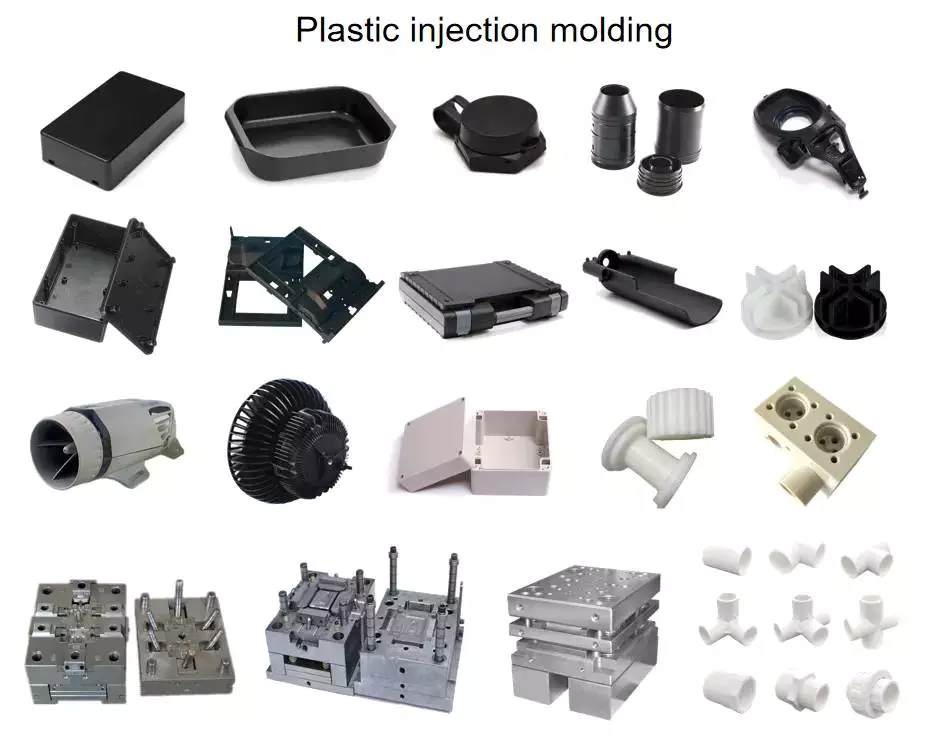 When designing injection molded parts, it is imperative to keep in mind their manufacturability. Injection molding allows for complex geometries and multiple functions to be combined into a single part. For example, a hinged part can have a single mold that can produce two different halves. This also decreases the overall volume of the part.
Injection molded parts do not typically undergo post-processing. However, the mold itself can be finished to various degrees. If the mold is rough, it can cause friction during the ejection process and require a larger draft angle. Detailed finishing procedures are outlined by the Society of Plastics Industry.
The process of designing injection molds is very exacting. Any errors in the mold design can lead to out-of-spec parts and costly repair. Therefore, the process of Design for Manufacturability (DFM) validation is a key step early in the injection molding process. Fictiv’s DFM feedback process can identify design challenges and provide early feedback to minimize lead times and improve quality.
The surface of an injection molded part can develop sink marks, which occur when the material has not fully solidified when it is ejected from the mold. Parts with thick walls or ribs are more prone to sinking. Another common defect in plastic injection molding is drag marks, which occur when walls scrape against one another during ejection. In addition to sink marks, parts with holes or exposed edges can form knit lines.
editor by czh2023-02-15
China OEM Customized ABS Injection Molded Plastic Parts joining injection molded parts
Product Number: STK- PLA pictures
| OEM Support Supplied | Sure |
Goods Demonstrate Plasic Automotive Automobile Frame
Custom-made Plastic Plate Abdominal muscles Plastic Injection Molding Situation OEM/ODM Injection Plastic Plugs
Custom Fabrication Plastic Situation for Health-related Machine
Custom manufactured Plastic hinges
Plastic Housing for Automotive OEM Plastic Shower Spray Heads Plastic Protect for Electronics Our Support Prototyping Mildew Creating
Injection Molding
Our Organization Office Showroom Packing & Shipping and delivery one. PE Bag 2. Appropriate carton size 3. Shock bubble movie four. Skilled placement 5.Cross Carbboard Box 6. Total package Our Certifications FAQ Q: Are you trading company or maker ?A: We are manufacturing unit. We are knowledgeable manufcturer, have our personal factory and warehouse.
Q: How lengthy is your supply time?A: Typically it is 5-10 times if the items are in stock. or it is fifteen-30 times for the OEM Elements, it is according to quantity.
Q: Do you provide samples ? is it free of charge or added ?A: Yes, we could supply the sample for free of charge charge but do not shell out the expense of freight.
Q: What is your phrases of payment ?A: Our preferntial payment expression is T/T CZPT Tooling : 50% down payment, fifty% harmony towards the sample acceptance. Mass Production: fifty% down payment , fifty% in opposition to the B/L duplicate
Q: What do we want if you want a quotation?A: Remember to kindly deliver us your 2d & 3D drawing of your merchandise. The need to have the detail specifications as follows : 1. Materials 2. Surface area treatment 3. Approximated generation quantity Q: How do I know about the generation ?A: We will double validate your requirements and ship you the samples prior to the mass manufacturing . In the course of the mass production , we will hold you informed of any progress.Aside from, 2571 Brother Pe Style Put Personalized vehicle components plastic injection molding CZPT parts spare elements instrument equipment price we will do 100% good quality inspection ahead of cargo Q:How do we know about the deliery status ?A: We will immediately advise you the monitoring number as soon as we get it from shipping and delivery agent. Aside from, we will update the latest shipping details. You should really feel free to make contact with me via the earlier mentioned information if you have any query.
Designing Injection Molded Parts
Injection molded parts are designed to work together to form a whole. While the small plastic toys like Legos aren’t typically fabricated for assembly, these products still require precision measurements. For this reason, the designs of injection molded parts should be perfected for manufacturing. The designs should also minimize error potential.
Design considerations for injection molded parts
When designing injection molded parts, it’s essential to consider the wall thickness of the part. Ideally, the wall thickness is uniform across the entire part. This allows the entire mold cavity to fill without restriction, and reduces the risk of defects. Parts that don’t have uniform wall thickness will have high stresses at the boundary between two sections, increasing the risk of cracks, warping, and twisting. To avoid such stresses, designers can consider tapering or rounding the edges of the part to eliminate stress concentration.
The wall thickness of the injection molded part is important because it affects many key characteristics. Therefore, it is critical to take proper care in choosing the wall thickness to avoid costly delays caused by mold problems or mold modification. The nominal wall thickness should be determined based on the function and stress requirements of the part. Similarly, the minimum wall thickness should be calculated based on acceptable stress. Too thin a wall can result in air traps and excessive plastic pressure.
Injection molded parts that have sharp corners are a common cause of defects. Sharp corners create stress concentrations, poor flow patterns, and increased injection mold wear. To minimize these problems, designers should keep inside corners and outside corners at half the wall thickness. This will help minimize stress and ensure the integrity of the part.
Another important design consideration for injection molded parts is the thickness of the ribs. They should be at least two-thirds of the outer wall. Thicker ribs may result in sink marks on the outer surface. Undercuts also complicate the mold design and increase the cost of the part.
Tolerance variation is also an important consideration. It depends on materials, process control, and tool design. Tolerance variation varies from molder to molder, and designers should discuss critical tolerance requirements with molders. If the part has to be manufactured to a particular tolerance, designers should consider options for mold revisions to minimize the tolerance variance. Additionally, designers may need to intentionally design extra clearance. To compensate for such variation, the molder may remove some steel or modify the design. In some cases, interference can be solved by welding.
Design considerations for injection molded parts should be discussed with material science professionals early in the design process. This is critical because changes to the mold design can be costly. Therefore, achieving the best possible result is critical. By following design guidelines, manufacturers can avoid common defects. A uniform wall thickness is also important because non-uniform thickness can lead to warping the part as it cools.
Another important factor for injection molded parts is the flowability of the material in the mold cavity. The resin should be able to flow easily around rounded corners. For example, a molded part with a curved undercut will not eject properly from the mold if there’s no space between the two sides. For this reason, designers should consider the flowability of the molded material before deciding on a design.
Adding a runner system to an injection molding machine
There are two main types of runner systems: hot runner systems and cold runner systems. In a hot runner system, a runner nozzle delivers the molten plastic into the mold cavity. A cold runner system does not require the use of a nozzle and acts as a conduit for the molten plastic.
The design of a hot runner mold should balance the activity of plastic solution and mold cavities. Ideally, a mold with two cavities is better balanced than one with three. However, it is important to remember that a three-cavity mold requires a manifold balance of human activities.
Plastic mold runner systems are crucial for ensuring consistent fill rates and pressure. Whether you are producing single or multiple-cavity plastic parts, a runner system will keep your processes consistent. When choosing a runner system, make sure you have the right one for your application.
Hot runner systems can reduce cycle times by as much as 10 to 30 percent. They help improve quality control and minimize material waste by keeping the plastic molten throughout the molding process. Moreover, they help save on plastic raw materials and energy. These features make them ideal for large production lines.
A hot runner system can also help prevent overfilling a cavity. Make sure that the volume of the hot runner is equal to the volume of the mold cavity. Otherwise, the plastic solution will be trapped inside the hot runner for too long and decompose.
Hot runner systems come in many varieties. One type of hot runner system is called the sprue hot runner system. This system uses a mechanical valve to open and close a nozzle. This type of hot runner is more effective and efficient than a general-purpose hot runner. However, it is also more expensive.
In a three-plate mold, the runner system is positioned between the core and cavity plates. When the mold is opened, the runner system automatically separates from the molded part. This eliminates the need for manual labor, but increases the cost of tooling.
The runner system is important for producing parts that are both thin and thick. The runner should be narrow but large so as not to create voids and improve the overall performance of the final product. Runner systems are also important for reducing the amount of energy needed to form and regrind the material.
A hot runner system is one way to improve the speed and accuracy of plastic molding. It helps avoid problems with waste by reducing the amount of plastic wasted. Furthermore, a hot runner system also prevents expensive repairs. By adding a runner system to an injection molding system, you will ensure better quality and precision, and avoid unnecessary downtime and costly repairs.
Hot runner systems are ideal for high-volume productions. However, they require a higher level of maintenance. In addition, hot runner systems are difficult to clean and often leave waste material. Hidden runners may also be inconvenient to remove, especially when changing materials or colors. They can also lead to sticking issues if they are made from thermally sensitive materials.
Using a thermally isolated cold injection unit
Thermostatic control of temperature in an injection molding process can make a significant impact on part quality. High mold temperatures should be regulated by using a temperature-controlled cooling unit. These devices are equipped with pumping systems and internal heaters. The temperature of the injected plastic determines the plastic’s flow characteristics and shrinkage. Temperature also influences the surface finish, dimensional stability, and physical properties of the finished product.
A thermally isolated cold injection unit allows mold operators to mold parts at lower temperatures than a conventional injection molding machine. The injection mold itself is composed of two steel halves. The two halves are connected by a mechanical hinge. During injection molding, a small amount of plastic is forced into the mold cavity. The injected plastic is then allowed to cool into a solid state. The molded part then falls out of the mold halves. The injected part then enters a bin to be collected.
The heat/cool injection molding process can improve the aesthetics of molded parts significantly. The effects of this technique are particularly apparent with amorphous resins, which do not form a skin during the injection phase. The molded parts have a higher gloss than with conventional molding techniques.
This process requires less clamping force than conventional injection molding and offers more design freedom. It also increases process capacity and materials savings. The process control for this process is more complex, with variables such as the amount of melt injection, water pressure, and water injection delay time.
The angle of repose is another criterion. A low angle indicates that the pellets are free-flowing, while an angle above 45deg indicates that the pellets are not free-flowing. This is important when processing nylon resins.
Plastic injection molding has made huge advances in recent decades. Today, most injection molds fall into one of two types: hot runner and cold runner. Each has its advantages and disadvantages. Understanding how they differ will help you decide which method is right for you.
Injection molding is a highly effective manufacturing process that gives manufacturers a competitive edge over their competition. Using this process produces high-quality plastic and metal parts with minimal waste and a low cycle time. The process is also extremely accurate and produces products with the perfect blend of flexibility and strength.
editor by czh2023-02-15
China ODM OEM High Precision Molding Mobile Phone Parts Manufacturer Custom Case Plastic Injection molding For Iphone 14 injection moulding for parts
Design Variety: OEM
Plastic Modling Variety: injection
Processing Provider: Moulding
Item identify: Injection Molding For Iphone fourteen
Mould content: P20/718/738/NAK80/S136/2738/2316
Plastic components substance: Abdominal muscles/Pc/PP/HDPE/POM/PA6/PA6+GF/PVC/NYLON/PMMA
Search term: Mould Make Cell Mobile phone Circumstance
Software: Mobile Telephone Situations
Method: Injection Creating Plastic Element
Tolerance: . Photographs
| Runner | Hot Runner Cold Runner |
| Keyword | Mold Make Mobile Mobile phone Scenario |
| Plastic substance | ABS/PP/PS/PE/PVC/PA6/PA66/Personal computer/TPU/TR |
Choose Higher Quality Worldwide Common Mold Metal strictly Custom-made Single/Multiple Cavities,Different Form and Sizes for cell cellphone stand & China Low cost Economic Excellent High quality Plastic daily requirements Injection Molds circumstance Organization Profile
Benefits of Injection Molded Parts in Design
Injection molded parts are manufactured from a variety of plastics. You can order samples of your desired product or download CAD drawings free of charge. For more information, visit our product catalog. There are numerous benefits of using injection molded products in your designs. Here are some of them. Injection molded products are cost-effective and highly customizable.
Design for manufacturability
Design for manufacturability (DFMA) is an important part of the design process for injection-molded parts. This process helps to minimize costs and streamline the production process. It also helps in the prevention of problems during the manufacturing process. The process involves several steps that include part geometry, location of critical surfaces, material selection, and dimensioning. It is also crucial to consider the colors and tolerances, which can help to minimize scrap rates.
Design for manufacturability is a vital early stage in the development process to ensure that the product is cost-effective and repeatable. It begins with a thorough understanding of the purpose for which the part is intended. The design process should take into account every aspect of the part, including the material section, tool design, and the production process.
DFM includes guidelines to ensure that the design meets the manufacturing requirements. These guidelines can include good manufacturing practices, as well as good design principles. Good design focuses on the quantity and quality of parts, as well as the complexity of their surfaces and tolerances. The process also focuses on mechanical and optical properties.
Injection molding design for manufacturability can save resources and time. It also reduces the costs of assembly. An injection molder conducts a detailed analysis of these design elements before starting the tooling process. This is not a standalone principle; it should be used in conjunction with other design optimization techniques.
Ideally, a product should be designed for optimum manufacture. This means that it should not have too many parts, or too few. To minimize this, the designer should choose a model that is easy to mold. Also, a design that does not require too many machine operations and minimizes risks.
Plastics used in injection molding
Injection molding is a very versatile process that uses various types of plastic polymers. These plastics are extremely flexible and can be molded to take on any shape, color, and finish. They can also be customized to contain design elements, text, and safety instructions. Plastics are also lightweight, easily recycled, and can be hermetically sealed to prevent moisture from getting into the product.
Plastics are categorized according to their properties, which can be helpful in selecting the right plastic for a particular application. Different materials have different degrees of hardness, which is important when it comes to molding applications. Some are harder than others, while others are more flexible. Plastics are ranked according to their Shore hardness, which was developed by CZPT.
Polystyrene is one of the most common plastics used in injection molding. However, it has a few disadvantages. While it is a good choice for simple products that do not require high strength and are prone to breakage, it is not ideal for items that need to be resistant to heat and pressure.
While many types of plastics are used in injection molding, choosing the right material is very important. The right material can make a big difference in the performance of your product and the cost of your product. Make sure to talk with your injection molding supplier to determine which plastic is right for your project. You should look for a plastic with a high impact rating and FDA approval.
Another commonly used plastic is PMMA, or polystyrene. This plastic is affordable and has a glass-like finish. It is often used for food and beverage packaging and can be easily recycled. This material is also used in textiles.Characteristics of polypropylene
Polypropylene injection molded parts offer an array of benefits, including a high degree of rigidity, excellent thermal stability, low coefficient of friction, and chemical resistance. These plastics are available in two main types, homopolymers and copolymers. Both types offer superior hardness and tensile strength. However, the material does not have the same fire-resistance as PE plastics.
Polypropylene is a colorless, odorless, crystalline solid. It is highly resistant to a variety of chemicals and is shatter-resistant. Its properties make it a great choice for many industrial applications, including packaging and containers for liquids. The material is also highly durable and can last for a very long time without breaking. In addition, it does not absorb or retain moisture, making it ideal for outdoor and laboratory applications.
Polypropylene is widely used for injection molding, and its low cost, flexibility, and resistance to chemical attack make it a popular choice. This material is also a great electrical insulator and has excellent thermal expansion coefficient. However, it is not biodegradable. Luckily, it can be recycled.
During the molding process, the temperature of the mold is a significant factor. Its morphology is related to the temperature and flow field, and a clear correlation between the two factors is essential. If you can control the temperature and flow, you can optimize your manufacturing process and eliminate costly trial-and-error procedures.
Polypropylene is an excellent electrical insulator and has a high dielectric coefficient. It can also be sterilized and resist high temperatures. Although it is less rigid than polyethylene, it is a good choice for applications where electrical insulation is necessary.
Texture of injection molded parts
Texture design is a common feature of injection molded parts, which helps to raise the perceived value of the vehicle. While traditional manufacturing processes can produce limited textures, additive manufacturing allows for infinite designs. For example, a design that looks like a wood grain pattern may be printed on an aluminum car part.
Texture is important because it can improve the strength of the part and enhance its adhesion to other surfaces. Moreover, textured parts can resist damage from contact and fingerprints. This makes them more durable and a good option for further molding operations. Injection molding processes usually follow a set of standards from the Society of Plastics Industry, which define different types of surface finishes.
Textured plastic injection molded parts may have various types of surfaces, including wood grain, leather, sand, or stipple. Choosing the right surface texture is crucial for enhancing the appearance of the part, but it must also be compatible with its function. Different materials have different chemical and physical properties, which can influence the type of texture. Moreover, the melting temperature of the material is important for its surface finish. The additives used in the process can also have an impact on the surface finish.
Texture can also vary between manufacturers and types of components. Some textures are flat, while others are rough. The top row corresponds to A3 and B4 in flatness, while the bottom row shows rough surfaces. These rough surfaces may damage sensitive testing equipment. However, some textures may have near equivalence with each other, namely SPI D-3 and MT-11020.
The type of texture that is applied to injection molded parts can affect the minimum draft angle required for the parts to be ejected. Parts with light texture tend to be smoother than parts with heavy textures, while parts with heavy textures require a higher draft angle. The draft angle for heavy textures should be between five and 12 degrees. It is best to consider this early in the design process and consult with the injection molder to get a good idea of the necessary draft angles.
editor by czh2023-02-15
China Most competitive Car Interior Parts Car steering wheel parts mold injection plastic platingplastic chrome plating injection molding machine parts and functions
Model Variety: Vehicle
Plastic Modling Sort: Mould
Processing Service: Moulding
Materials: Stomach muscles
Software: Industrial Plastic Parts
Services: Tailored OEM
Utilization: Vehicle Interior Elements
Certificate: ISO9001,CE
Solution title: Car Inside Areas
Area end: Sleek
Feature: Eco-helpful
Packing: Carton Box
Plastic areas materials: Ab muscles Sheet
Packaging Particulars: PE bag, Carton
Port: HangZhou
Most aggressive Vehicle Inside Areas Automobile steering wheel components mould injection plastic platingplastic chrome plating Specification
| Materiaal | ABS |
| Plastic Plating | Chrome |
| Usage | Car components |
| Craft: | Injection–Plastic Plating |
Packing & Delivery To far better make sure the protection of your goods, specialist, environmentally helpful, practical and efficient packaging providers will be supplied. Organization Profile FAQ 1. Q: Are you a investing firm or a company? What variety of provider can you offer?A: We are the producer. Our firm has mold design, High top quality expert components precision plastic injection mold molding created CZPT tooling company maker injection molding and floor plating companies. 2.Q: Do you offer OEM or ODM?A: Of course, we give OEM or ODM. 3. Q: How extended can the injection mold be accomplished?A: Generally it requires about twenty days to complete. 4.Q: How about mildew modification?A: You can explain to us your feedback on the samples soon after you receive them. If any size is various from the drawing, we will modifythe mould for free on our aspect, and then make a new sample. 5. Q: How about the ownership of the injection mould?A: The customer compensated for the mould, so it all belongs to the customer. 6.Q: What is the tonnage and design sort of your injection molding device?A: Our injection molding device is up to 800 tons, HaiTian injection molding equipment. 7. Q: What materials do your electroplating have? Can it go RoHS certification?A: Plastics are electroplated with chrome, nickel, 2571 large temperature Injection Molding Components PTFE PEEK Connector Block Straw Connecting Creating Blocks matte, gun coloration, trivalent white chrome, trivalent black chrome, pearl nickel,pearl chrome, and so forth. 8. Q: What is your payment approach?A: Our payment methods are: T/T, Personalized plastic areas plastic enclosure extrude mildew OEM style rapidly customization plastic injection molds Alipay, Trade Assurrance, L/C at sight, Western Union. 9.Q: What is your shipping and delivery technique?A: Massive portions of merchandise are shipped by sea, and little portions and urgent goods are despatched by express. 10. Q: How do you control the high quality of our merchandise?A: We are 100% operator inspected in injection molding. In the course of electroplating, the top quality staff will check the electroplatinglayer, the adhesion of electroplating, injection molding mold custom injection molding elements for toy automobiles moulding plastic elements manufacture and so forth., and one hundred% inspection before packaging.
Injection Molded Parts – Design Considerations
If you want to produce high-quality Injection molded parts, there are several factors to consider before the design process. These factors include the Surface finish, Material compatibility, and Tooling fabrication. This article will focus on some of these factors. Ultimately, you can save time and money by designing the parts in-house.
Design considerations
When creating a new part, or updating an existing part, design considerations for injection molded parts are critical. The decisions you make in these early stages of development can have a profound effect on the final product, and they can also have substantial cost and timing implications. In this guide, we’ll explore key design considerations, including how to maximize the efficiency of the injection molding process. We’ll also touch on how to optimize gate placement and parting lines.
To ensure a successful injection molding process, part design must balance structural integrity and plastic fill volume. This means creating parts with relatively thin walls that have adequate support and avoid warping or sinking. To do this, injection molded parts often feature ribs or projections to strengthen the walls. However, too thin of a wall can result in excessive plastic pressure and air traps.
One of the most important design considerations for injection molded parts is the direction of the parting line. For many applications, a parting line is obvious, but for others it’s a little less obvious. The first step in designing an injection mold is to determine which direction it should open.
Another critical design consideration is the part’s ejection. If a part isn’t ejected properly, it will stick to the mold. A part that has too many undercuts or ribs will end up stuck on the mold’s side, making it difficult to eject it from the mold. A part that has a draft angle of at least five degrees is much easier to eject.
Another important design consideration for an injection molded part is the type of plastic used. Some plastics do not tolerate undercuts. However, some materials are able to tolerate undercuts of up to five percent. Undercuts are not ideal and can increase the complexity and cost of the injection mold.
Another design consideration for injection molded parts is the radius of edges. Sharp corners can create high molded-in stresses and can lead to failure points. A radius eliminates this stress by redistributing the stress more evenly throughout the part. This also facilitates flow of the material through the mold.
Surface finish
Injection molded parts are often finished with additional processing in order to improve their aesthetic quality. There are a variety of finishing processes, including machining and sanding, which give injected molded parts a particular look, feel, or texture. The surface finish of a plastic part affects both its aesthetics and its functionality. According to the Society of Plastics Industry, certain standards for surface finish are essential to the aesthetics and durability of plastic parts.
Surface finish of injection molded parts depends on the primary design goal. For instance, some designs may need a part to be aesthetically pleasing while others may want to enhance its functionality. Surface texture is often used by designers and engineers to achieve different aesthetic goals, such as improving the product’s perceived value. A textured surface may also help hide imperfections and improve the part’s non-slip qualities.
Surface finish is a critical aspect of plastic injection molding. It can affect material selection, tooling, and other process decisions. It is important to determine the desired surface finish early in the design phase. A skilled plastic injection molder can assist you in making this decision. In addition to determining the finish you need, a skilled molder can help you decide the best material for the job.
The PIA classification system defines four basic grades for surface finish. There are subcategories for each grade. Group A surface finish is smooth, and grade B and C finishes are textured. The former is the most common and economical finish and is most suitable for industrial parts. It can hide deformations and tooling marks, and is the least expensive finish type.
Surface finish of injection molded parts can vary greatly, and can be crucial to the performance and appearance of the part. Some companies prefer plastic parts with a glossy finish, while others prefer a textured surface for aesthetic reasons. While the former may be better for aesthetic purposes, rougher surfaces are often preferred for functional or mechanical parts.
Material compatibility
Material compatibility is important for the durability of your injection molded parts. You can use multiple materials in the same part by mixing resins. This is an ideal solution for parts that require adhesion, friction, or wear. Fast Radius can simplify the material selection process, optimize part design, and speed up production.
ABS is a thermoplastic polymer that can withstand a range of temperatures. Its low melting point means that it is easy to mold, and it has good chemical and moisture resistance. ABS also has good impact strength, and is highly durable. It is easy to recycle. Nylon is another versatile material for injection molding. It can be used for car tires, electrical components, and various apparel.
When choosing the material for your injection molded parts, keep in mind that the type of resin will determine their tolerance. Injection molding is compatible with a wide range of plastic resins. Some materials are more suitable than others for certain applications, and many plastics can be modified with stabilizers or additives to improve their properties. This flexibility allows the product development team to customize materials to achieve the performance characteristics they desire.
Polyamides are another great option for injection molding parts. Both natural and synthetic varieties of these plastics have excellent properties. However, they have some drawbacks. For instance, nylon injection molding is difficult and can result in inadequate filling. However, Nylon injection molding has many benefits, including high impact resistance and heat resistance.
Polybutylene terephthalate (PBT) is a high-molecular-weight polymer with excellent mechanical and chemical resistance. It is a good choice for components in the medical, automotive, and lighting industries. Its low water absorption and low flammability make it suitable for many applications.
Polyurethane (TPU) is another polymer option. It has excellent resistance to abrasion, chemicals, greases, and oils. It also has high temperature resistance, and is suitable for ozone environments. However, TPU is more expensive than TPE and requires drying before processing. Moreover, it has a short shelf life.
Tooling fabrication
Tooling fabrication for injection-molded parts is an important component of the manufacturing process. The right design of the mold can reduce the cost and time required for a finished product. For instance, choosing the right type of core for the mold can reduce the amount of material used in the part, which is necessary to produce a high-quality product. It is also important to choose a design that is easy to mill into a mold.
Injection molding requires a mold with precise geometries. The mold tool must be constructed accurately and carefully to achieve the desired precision. It can be the biggest investment in the manufacturing process, but it is also critical to the success of a project. Large volume and high-precision parts often require more complex tooling, as they require the highest level of precision.
Tool steels typically used for injection moulding include H-13 and 420 stainless steel. Both of these materials are strong enough to produce parts of comparable hardness to wrought parts. These materials have low elongation values, so they are ideal for constructing injection moulding tools. Some of these steels also have excellent dimensional accuracy and are ideally suited for high-precision tool fabrication.
The process of plastic injection molding requires precise measuring and tooling fabrication. The mold must have the proper lead angle and space for the material to deform. Undercuts must be no larger than 5% of the diameter. Moreover, the injection molded part should be free of stripping or undercuts. Ideally, it should have a lead angle of 30o to 45o.
Various plastics can be used in the process of injection molding. The process can be used to produce cosmetic and end-use parts. Materials used in the molding process include silicone rubber and thermoplastics. If the part requires additional reinforcement, it can be reinforced with fibers, mineral particles, or flame retardant agents.
Increasingly advanced technologies have streamlined the process of tooling fabrication for injection moulded parts. The process has improved with the use of computer aided design, additive manufacturing, and CNC lathes. Approximately 15% of the cost of a finished injection molded part is spent on tooling fabrication.
editor by czh2023-02-15
China Mold For Making Soft Plastic Injection Molding Plastic Fishing Molds Lure Swimming Bait Molds Soft Plastic with high quality
Product Quantity: CTC-001
Shaping Manner: Plastic Injection Mould
Product Substance: Aluminium
Product: Vehicle Mould
Merchandise identify: Custom made Plastic Item Plastic Areas Injection Molding Services
Materials: Ab muscles/PP/PA/Personal computer/POM/PET
Shade: Custom made Color
Drawing Format: Phase
Size: Customized Measurement
Shipping Time: fifteen-twenty Days
Procedure: Injection CZPT Plastic Part
Key word: Custom Plastic Injection Mould
Support: OEM/ODM/OBM, Personalized Logo / Packaging, 3D design drafting
Floor treatment method: Texture/Sandy/MT/YS/SPI/EDM finish/easy/shiny/VDI
Packaging Specifics: Plastic components will be packaged with plastic baggage and brown corrugated cartons
Port: HangZhou,HangZhou,HONGKONG
Items Description
| Quotation | According to your drawing(dimension, materials, thickness, processing content, and necessary technology, and so forth) |
| OEM | Mold Design,Mildew Creating,Molding Provider,Printing,Welding,Assembly,Custom made Packaging Box, Customized Plastic Injection Molding Plastic Component Moulding, Injection Molding Manufacturer And so forth. |
| Materiaal | ABS/Laptop/PP/HDPE/POM/PA6/PA6+GF/PVC/NYLON/PMMA/PET |
| Application | All kinds of autos,machinery,residence appliance,electronic items,electric equipment,stationery,computers,energy switches,miniatureswitcher,architecture,commodity and AV tools,hardware and plastic molds,sporting activities gear and items,and a lot more. |
| Surface Treatment | Texture/Sandy/MT/YS/SPI/EDM complete/smooth/shiny/VDI |
| Certififcation | UL take a look at, V0 fireplace resistant examination,Attain check, Personalized Plastic Injection Great Top quality Injection Molded Plastic Elements Plastic Injection Molding SGS examination and IP65 |
| File Structure | Solidworks,Professional/Engineer,Car CAD,PDF,JPG,DXF,IGS,Step |
| QC | 100% Stringent Inspection For Each and every Processing |
| One-end Provider | Custom Design and style, Fabrication, Assembly And Delivery |
| Packing | Packing in accordance to your demands |
Firm Profile Why Pick Us We concentrate on the European and American marketplaces,We now have two hundred clients from all over the globe.one. We have personal factory and 80% of workers in our organization labored for much more than 10 several years.two. We give a aggressive value.3. Higher precision, tolerance can be inside of ±0.01mm.4. 20 years’ export expertise.5. Tiny purchase also is welcomed.6. We can also supply one particular-cease services, such as CZPT and assembly.7. All your information is confidential, and we can indication NDA as well. FAQ Q1: Are you investing organization or company ?A: We are companies.Q2:What’ Custom made Plastic Injection Mould Elements Precious Plastic CZPT Injection Molding Maker s your availabletolerance?A: Tolerance is dependent on the style and material, we can reach +/- .01mm for particular areas.Q3: I have a sample but do not have drawing, what can I do?A: Please ship us some photographs of the samples, we will consider. If we can generate it, we will inquire samples from you and we will make drawing according to your samples.This autumn. How long is the direct-time for mould?A: It all is dependent on the products’ dimensions and complexity. Typically, the lead time is fifteen-twenty five times.Q5. I have no 3D drawing, how need to I start the new project?A: You can provide us a molding sample, we will aid you end the 3D drawing layout.Q6. What is your terms of payment? A:fifty% Mildew price deposit,harmony mold cost +50% production cost compensated when samples confimed,Harmony manufacturing cost paid out towards duplicate of B/L. We take T/T4.Q7. Just before cargo, how to make sure the merchandise good quality?A: If you never appear to our manufacturing facility and also do not have the 3rd get together for inspection, we will be as your inspection employee. We will provide you a video clip for generation process element consist of process report, Personalized laptop button smart contact change enclosure injection plastic moulding items measurement structure and surface element, packing element and so on.
Injection Molded Parts – Design Considerations
If you want to produce high-quality Injection molded parts, there are several factors to consider before the design process. These factors include the Surface finish, Material compatibility, and Tooling fabrication. This article will focus on some of these factors. Ultimately, you can save time and money by designing the parts in-house.
Design considerations
When creating a new part, or updating an existing part, design considerations for injection molded parts are critical. The decisions you make in these early stages of development can have a profound effect on the final product, and they can also have substantial cost and timing implications. In this guide, we’ll explore key design considerations, including how to maximize the efficiency of the injection molding process. We’ll also touch on how to optimize gate placement and parting lines.
To ensure a successful injection molding process, part design must balance structural integrity and plastic fill volume. This means creating parts with relatively thin walls that have adequate support and avoid warping or sinking. To do this, injection molded parts often feature ribs or projections to strengthen the walls. However, too thin of a wall can result in excessive plastic pressure and air traps.
One of the most important design considerations for injection molded parts is the direction of the parting line. For many applications, a parting line is obvious, but for others it’s a little less obvious. The first step in designing an injection mold is to determine which direction it should open.
Another critical design consideration is the part’s ejection. If a part isn’t ejected properly, it will stick to the mold. A part that has too many undercuts or ribs will end up stuck on the mold’s side, making it difficult to eject it from the mold. A part that has a draft angle of at least five degrees is much easier to eject.
Another important design consideration for an injection molded part is the type of plastic used. Some plastics do not tolerate undercuts. However, some materials are able to tolerate undercuts of up to five percent. Undercuts are not ideal and can increase the complexity and cost of the injection mold.
Another design consideration for injection molded parts is the radius of edges. Sharp corners can create high molded-in stresses and can lead to failure points. A radius eliminates this stress by redistributing the stress more evenly throughout the part. This also facilitates flow of the material through the mold.
Surface finish
Injection molded parts are often finished with additional processing in order to improve their aesthetic quality. There are a variety of finishing processes, including machining and sanding, which give injected molded parts a particular look, feel, or texture. The surface finish of a plastic part affects both its aesthetics and its functionality. According to the Society of Plastics Industry, certain standards for surface finish are essential to the aesthetics and durability of plastic parts.
Surface finish of injection molded parts depends on the primary design goal. For instance, some designs may need a part to be aesthetically pleasing while others may want to enhance its functionality. Surface texture is often used by designers and engineers to achieve different aesthetic goals, such as improving the product’s perceived value. A textured surface may also help hide imperfections and improve the part’s non-slip qualities.
Surface finish is a critical aspect of plastic injection molding. It can affect material selection, tooling, and other process decisions. It is important to determine the desired surface finish early in the design phase. A skilled plastic injection molder can assist you in making this decision. In addition to determining the finish you need, a skilled molder can help you decide the best material for the job.
The PIA classification system defines four basic grades for surface finish. There are subcategories for each grade. Group A surface finish is smooth, and grade B and C finishes are textured. The former is the most common and economical finish and is most suitable for industrial parts. It can hide deformations and tooling marks, and is the least expensive finish type.
Surface finish of injection molded parts can vary greatly, and can be crucial to the performance and appearance of the part. Some companies prefer plastic parts with a glossy finish, while others prefer a textured surface for aesthetic reasons. While the former may be better for aesthetic purposes, rougher surfaces are often preferred for functional or mechanical parts.
Material compatibility
Material compatibility is important for the durability of your injection molded parts. You can use multiple materials in the same part by mixing resins. This is an ideal solution for parts that require adhesion, friction, or wear. Fast Radius can simplify the material selection process, optimize part design, and speed up production.
ABS is a thermoplastic polymer that can withstand a range of temperatures. Its low melting point means that it is easy to mold, and it has good chemical and moisture resistance. ABS also has good impact strength, and is highly durable. It is easy to recycle. Nylon is another versatile material for injection molding. It can be used for car tires, electrical components, and various apparel.
When choosing the material for your injection molded parts, keep in mind that the type of resin will determine their tolerance. Injection molding is compatible with a wide range of plastic resins. Some materials are more suitable than others for certain applications, and many plastics can be modified with stabilizers or additives to improve their properties. This flexibility allows the product development team to customize materials to achieve the performance characteristics they desire.
Polyamides are another great option for injection molding parts. Both natural and synthetic varieties of these plastics have excellent properties. However, they have some drawbacks. For instance, nylon injection molding is difficult and can result in inadequate filling. However, Nylon injection molding has many benefits, including high impact resistance and heat resistance.
Polybutylene terephthalate (PBT) is a high-molecular-weight polymer with excellent mechanical and chemical resistance. It is a good choice for components in the medical, automotive, and lighting industries. Its low water absorption and low flammability make it suitable for many applications.
Polyurethane (TPU) is another polymer option. It has excellent resistance to abrasion, chemicals, greases, and oils. It also has high temperature resistance, and is suitable for ozone environments. However, TPU is more expensive than TPE and requires drying before processing. Moreover, it has a short shelf life.
Tooling fabrication
Tooling fabrication for injection-molded parts is an important component of the manufacturing process. The right design of the mold can reduce the cost and time required for a finished product. For instance, choosing the right type of core for the mold can reduce the amount of material used in the part, which is necessary to produce a high-quality product. It is also important to choose a design that is easy to mill into a mold.
Injection molding requires a mold with precise geometries. The mold tool must be constructed accurately and carefully to achieve the desired precision. It can be the biggest investment in the manufacturing process, but it is also critical to the success of a project. Large volume and high-precision parts often require more complex tooling, as they require the highest level of precision.
Tool steels typically used for injection moulding include H-13 and 420 stainless steel. Both of these materials are strong enough to produce parts of comparable hardness to wrought parts. These materials have low elongation values, so they are ideal for constructing injection moulding tools. Some of these steels also have excellent dimensional accuracy and are ideally suited for high-precision tool fabrication.
The process of plastic injection molding requires precise measuring and tooling fabrication. The mold must have the proper lead angle and space for the material to deform. Undercuts must be no larger than 5% of the diameter. Moreover, the injection molded part should be free of stripping or undercuts. Ideally, it should have a lead angle of 30o to 45o.
Various plastics can be used in the process of injection molding. The process can be used to produce cosmetic and end-use parts. Materials used in the molding process include silicone rubber and thermoplastics. If the part requires additional reinforcement, it can be reinforced with fibers, mineral particles, or flame retardant agents.
Increasingly advanced technologies have streamlined the process of tooling fabrication for injection moulded parts. The process has improved with the use of computer aided design, additive manufacturing, and CNC lathes. Approximately 15% of the cost of a finished injection molded part is spent on tooling fabrication.
editor by czh2023-02-15