
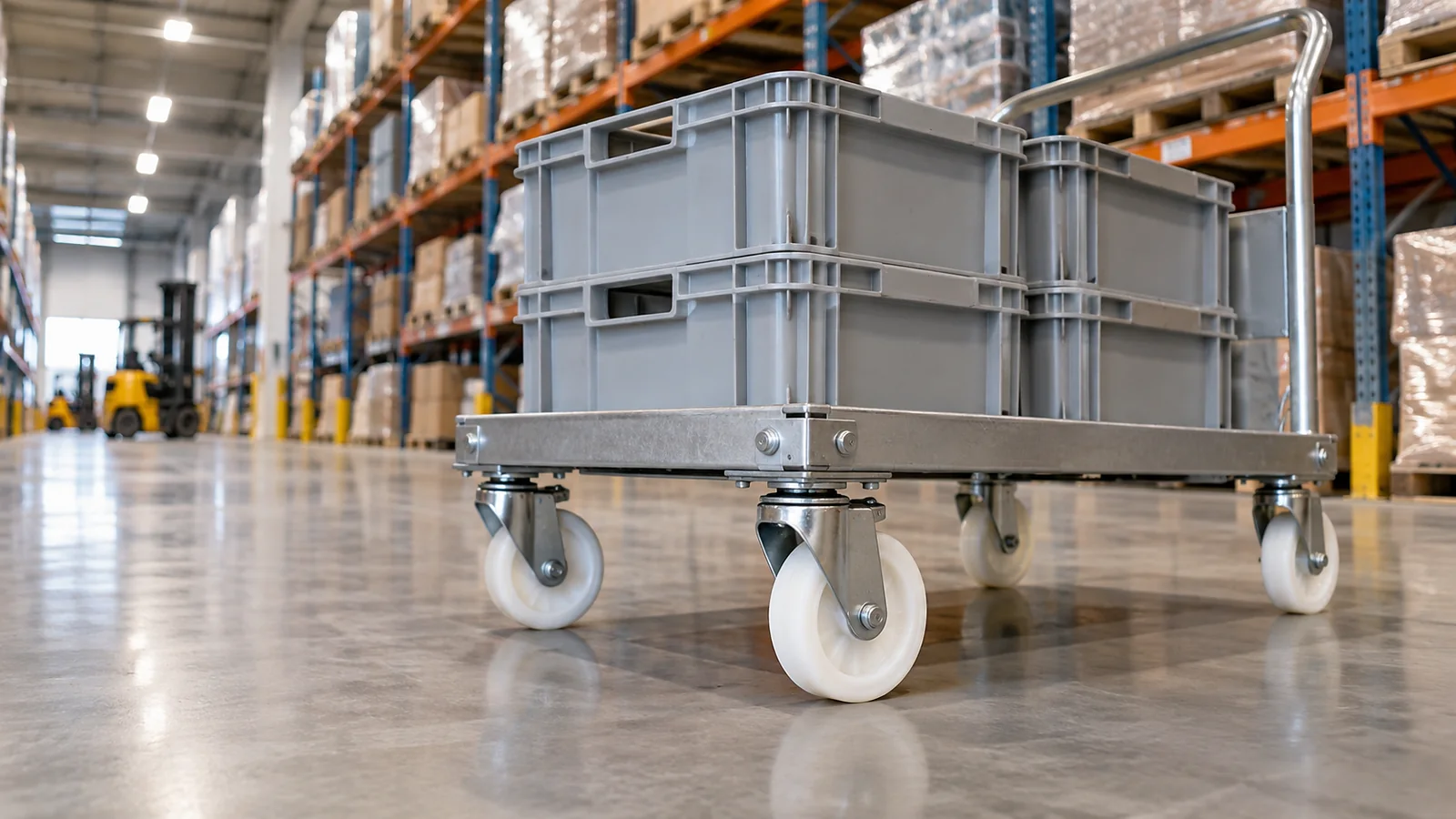
Wheels for Material Handling Equipment
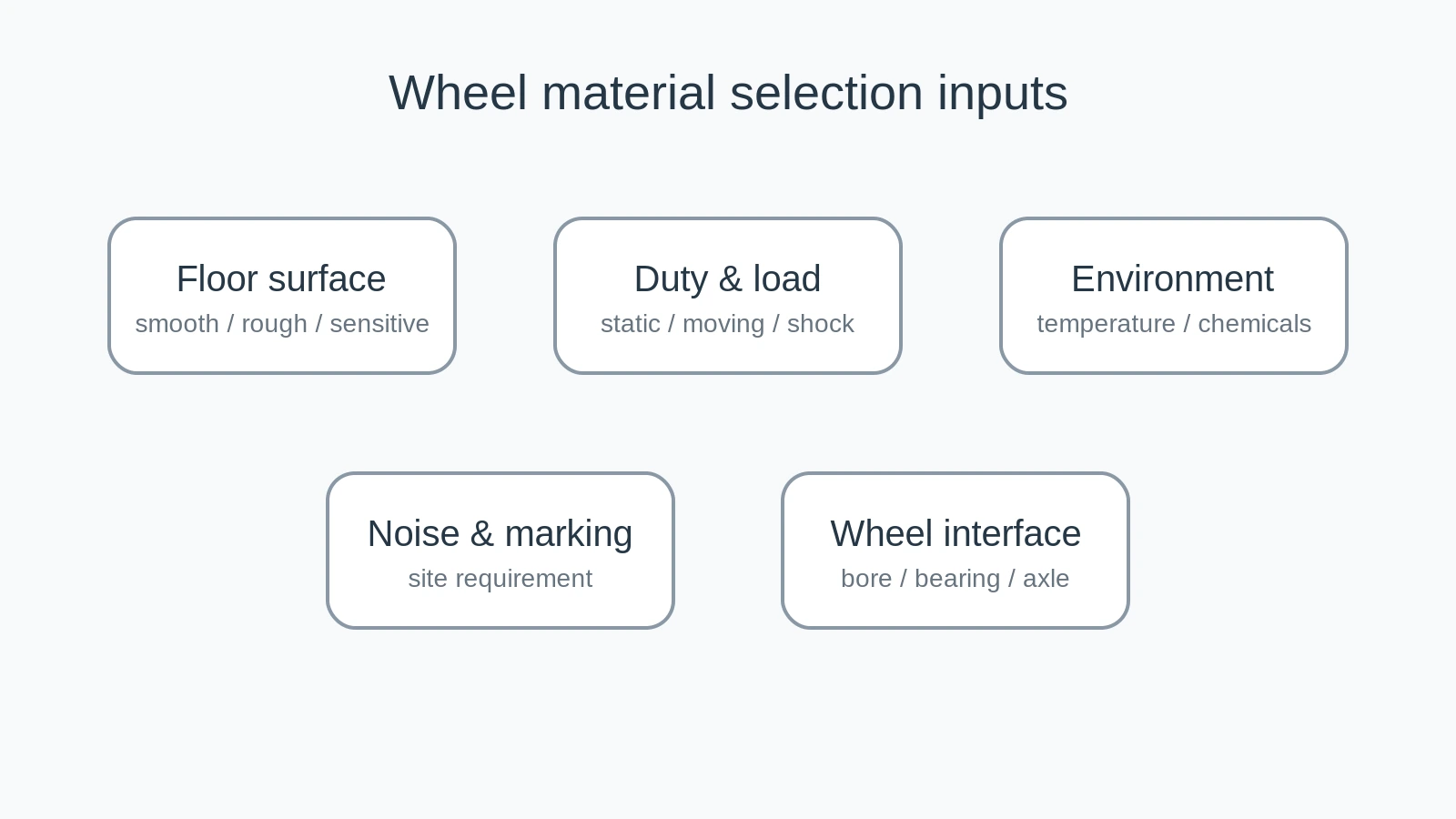
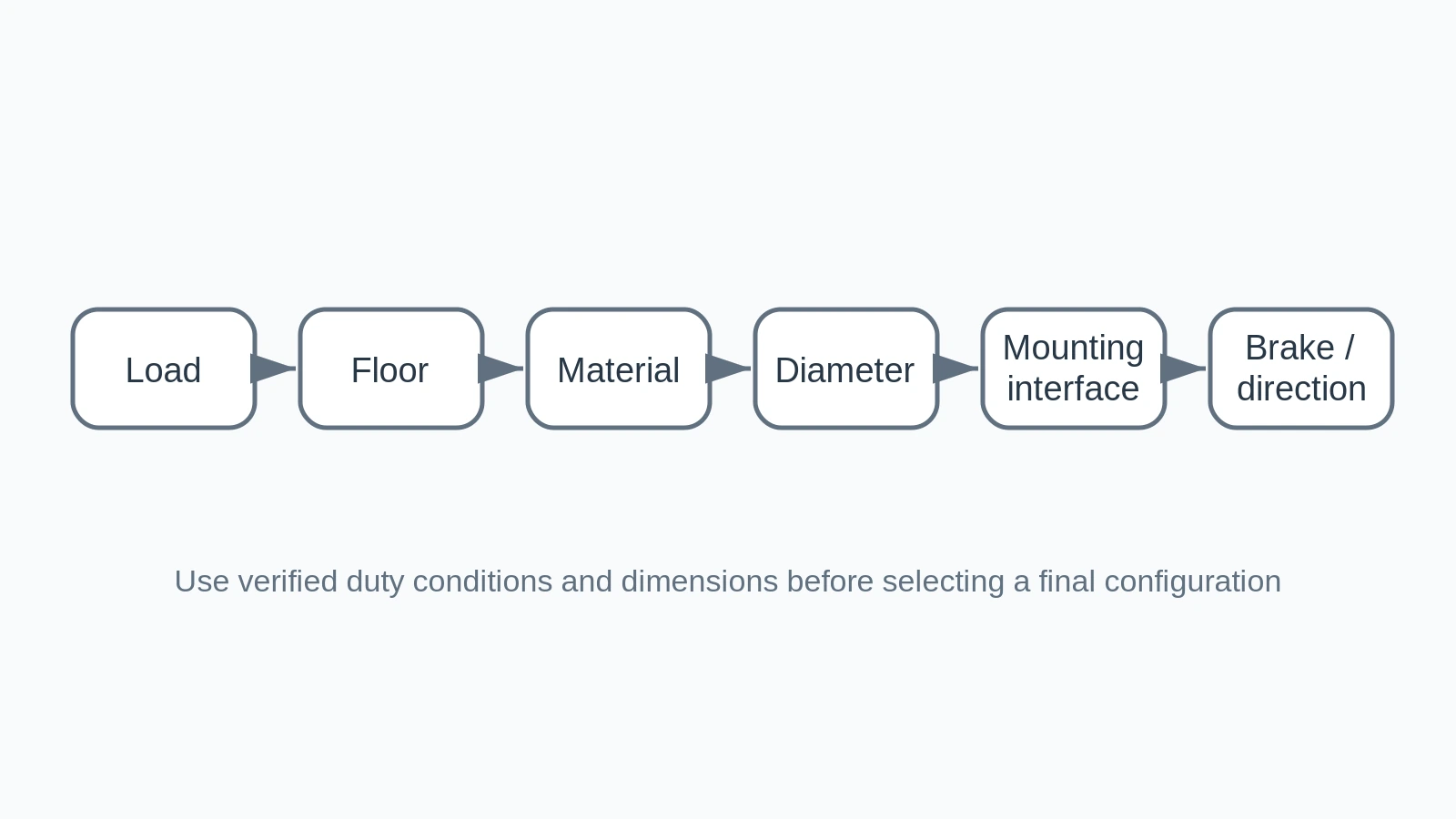
Selecting wheels for wheels for material handling equipment requires load, floor, mounting and manoeuvring details to be considered together.
Start from the equipment, not the catalogue name
Procurement teams often encounter Wheels for Material Handling Equipment as a catalogue term, but the purchasing decision becomes clearer when the term is converted into measurable operating requirements.
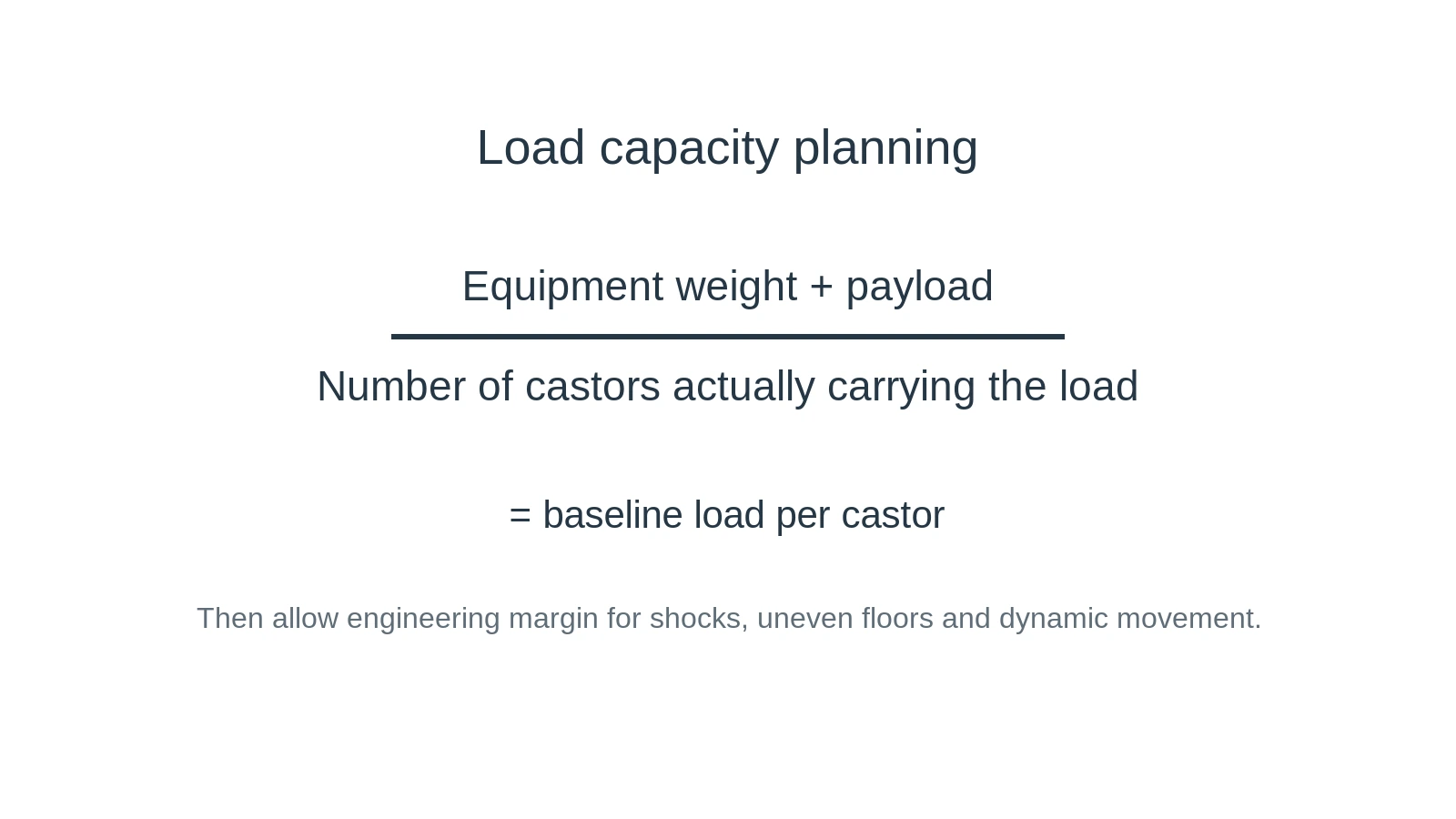
In wheels for material handling equipment, the selection should therefore start with dead weight, maximum carried load and the number of supporting points. That keeps a dimensional or material choice connected to the job it must perform rather than to a generic product description.
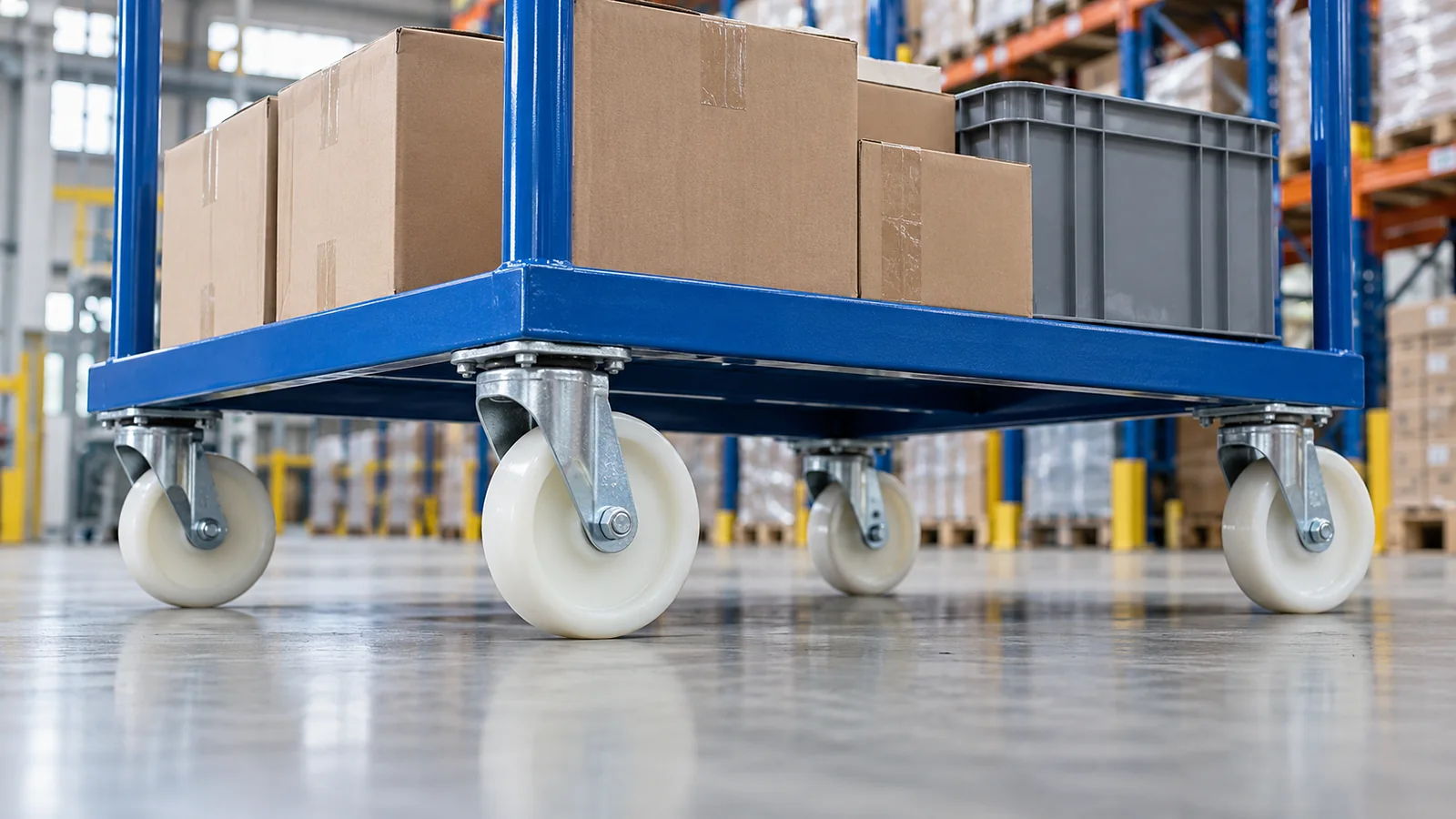
The common failure is to treat one attractive parameter as the whole specification. Dynamic impacts, uneven floor contact or frame twist can concentrate load on fewer wheels than expected. A better purchasing note captures equipment weight, payload, wheel count, travel speed, floor transitions and turning pattern, so suppliers can compare like with like and flag missing dimensions instead of guessing.
Floor and movement pattern
The same cart can behave differently on polished concrete, resin flooring, asphalt, paving or compacted ground. Record the longest travel distance, typical turning radius, thresholds and ramps. Hard wheels can roll efficiently on suitable smooth floors, while other material or geometry choices may be considered when noise, shock or surface protection is more important.
Do not hide an uneven floor behind an optimistic load calculation. If the frame can rock across joints, allow for imperfect load sharing and confirm that the bracket and wheel remain within the intended duty.
Mounting and clearance
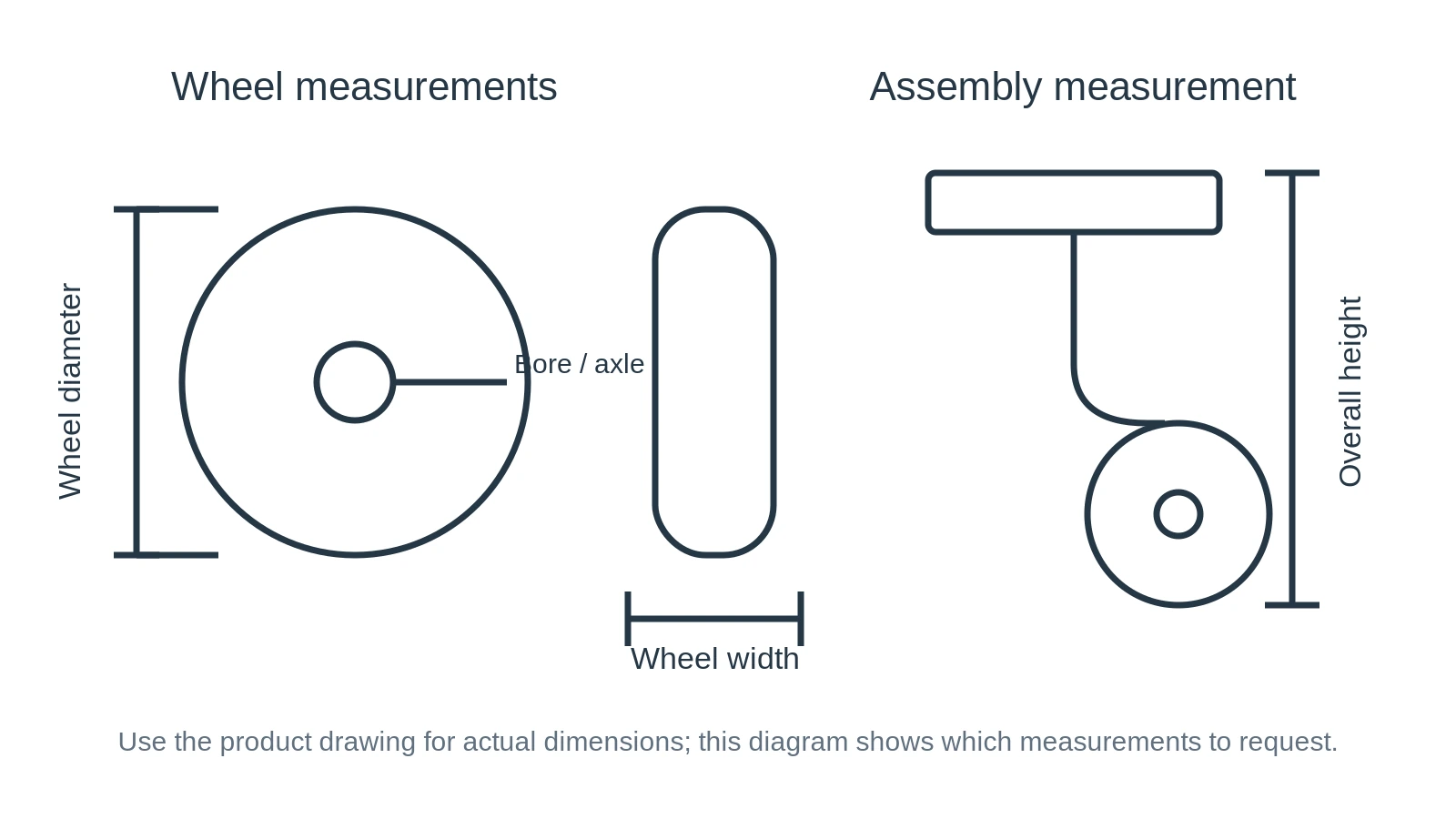
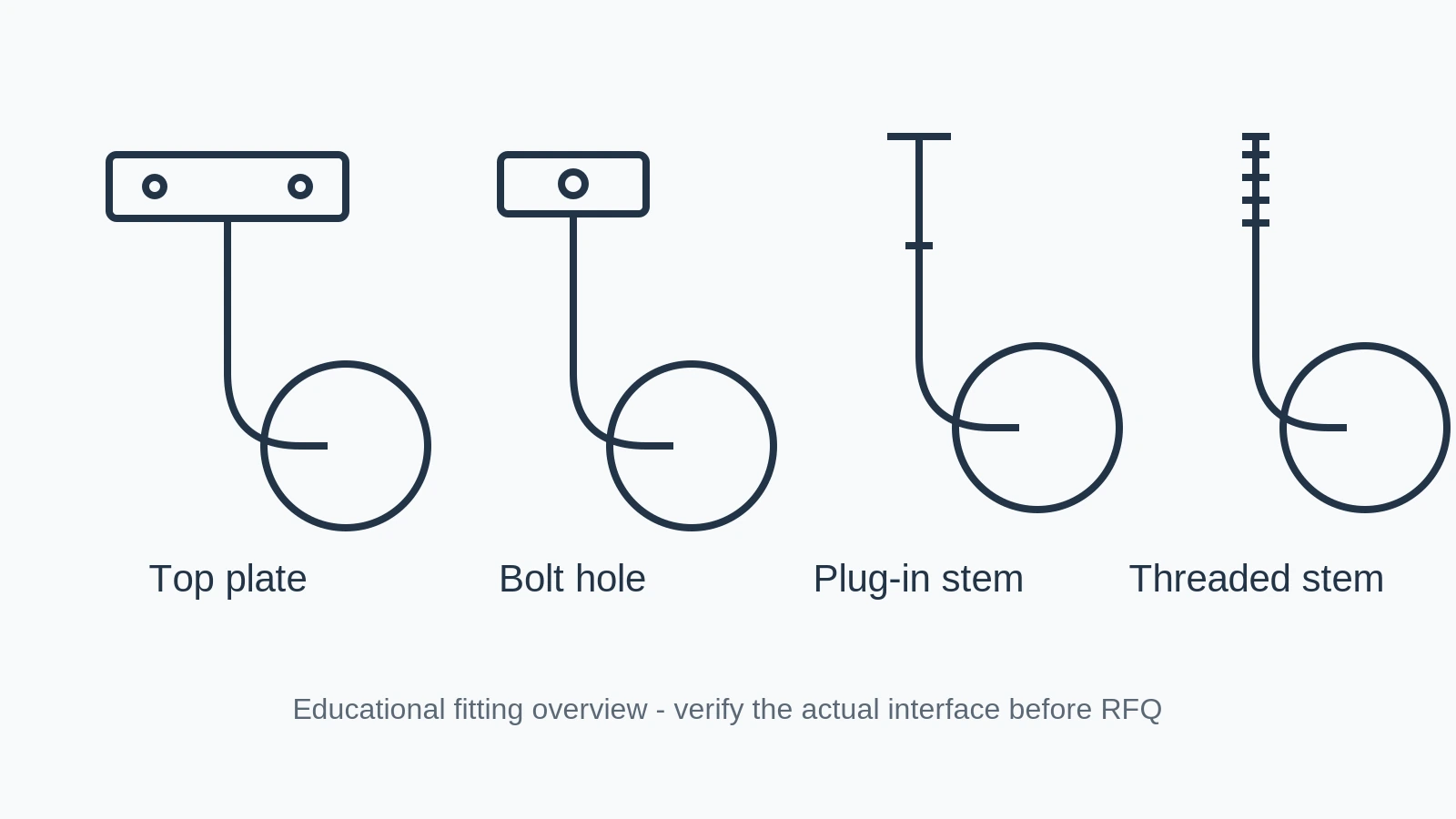
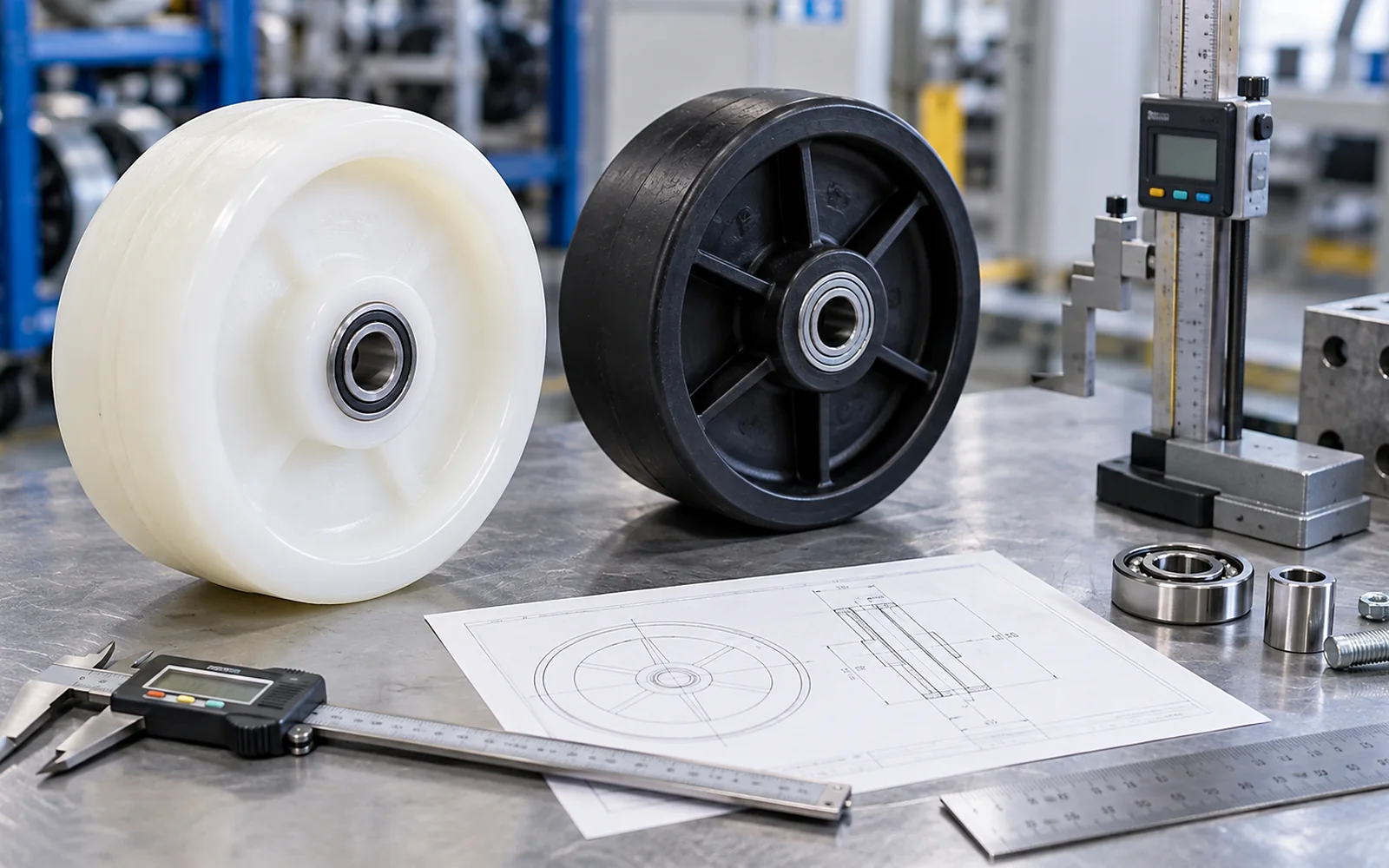
Measure the interface connecting the wheel or support assembly to the equipment. Plate hole spacing, bolt-hole diameter, threaded-stem dimensions, tube clamp size, axle/bore fit and installed height can determine compatibility. Also check the swept envelope when a wheel swivels or a jack folds.
Nearby guards, cable trays, trailer couplings and structural members should be shown on drawings or photographs. A component that fits on the bench may still collide when the equipment turns, retracts or passes over a ramp.
Wheel material and diameter
Material selection should connect the wheel to the real floor and environment. Nylon and polypropylene are hard thermoplastic families, but grade, bearing arrangement, contamination and temperature can change suitability. Larger diameter generally improves obstacle-crossing geometry and ground clearance, but may raise installed height or require a larger fork.
When comparing two diameters, check the entire assembly envelope rather than wheel size alone.
Integration review
| Check | Question to answer |
|---|---|
| Yük | What mass can one supporting point realistically see? |
| Travel | Is the equipment mostly stationary, hand-pushed, towed or frequently repositioned? |
| Floor | What joints, debris, ramps, water or chemicals are present? |
| Interface | Which dimensions control attachment and installed height? |
| Control | Is a wheel brake, swivel lock, directional lock or free movement needed? |
| Service | How can the wheel, bearing or assembly be inspected and replaced? |
RFQ preparation
- Overall equipment and payload mass
- Wheel/assembly count and layout
- Existing wheel diameter, width and installed height
- Mounting dimensions or drawing
- Floor/ground description and obstacle heights
- Movement pattern and braking needs
- Quantity and destination
Review the selection guide, compare available plastic wheels, or send details through the RFQ page.
Common questions
Why does a four-wheel frame sometimes load only three wheels?
Floor unevenness and frame stiffness can unload one corner, increasing load on the others.
Does a larger wheel always reduce pushing force?
Larger diameter can help with obstacles, but bearing, material, floor, load and alignment also influence effort.
What should a replacement photo show?
Show the equipment corner, wheel or assembly from the side, mounting face and a scale on critical dimensions.
When is a twin wheel useful?
Twin-wheel layouts change ground contact and package geometry, but are not automatically better; check load, surface and steering needs.
Commissioning and maintenance perspective
After installation, check the equipment at low speed and under controlled load before routine service. Observe steering response, wheel tracking, fastener seating and any contact with surrounding structure. Maintenance records should identify wheel position, configuration and reason for replacement so normal wear can be separated from recurring overload or alignment issues.
Translate the application into measurable inputs
For wheels for material handling equipment, focus on floor transitions, load distribution, wheel layout and repeated travel. These are the variables that change the practical selection even when two pieces of equipment appear similar. Record the worst normal operating condition, not only the easiest travel path, and note whether the equipment is moved continuously, intermittently or only during maintenance.
Where several wheels share a frame, confirm whether the frame and floor allow them to share load evenly. A nominal wheel count does not guarantee equal loading. Mounting surfaces, frame stiffness and floor level can concentrate load on fewer support points.
Commission the selected wheel on the real route
The first installation should be observed at low speed and under controlled load. Check straight travel, turning, clearance, wheel tracking, fastener seating and any contact with surrounding structure. Include the most demanding normal threshold, ramp or floor joint in the trial. For trailer support, include the surface used during parking and manual manoeuvring.
Record anything that requires adjustment before normal service. This creates a practical acceptance record and helps distinguish an application mismatch from ordinary wear later in the service life.
Keep application and purchasing records synchronized
When a wheel size, material, mounting detail or control feature changes, update the RFQ line and equipment record together. Do not let a revised photograph become the only description of the new configuration. A short controlled note of dimensions, duty and quantity makes repeat orders much easier to review and prevents old assumptions from following the equipment after its operating conditions change.
Create a repeatable handover for Wheels for Material Handling Equipment
Before the selected wheel or support assembly is released for wheels for material handling equipment, store the approved interface dimensions, load case, operating surface, quantity and application photos with the equipment record. If the installation is a replacement, also retain the original part until the first sample has been checked on the machine. This makes later purchasing decisions easier to reproduce and helps distinguish normal wear from a change in the equipment or operating route.
After commissioning, record any clearance limitation, steering behaviour, unusual impact point or maintenance observation that would matter to a repeat order. The objective is not to create a long inspection document; it is to preserve the few application facts that explain why the accepted configuration fits this equipment and where a future substitution would need fresh review.
Prepare a wheels for material handling equipment wheel RFQ
Başvuru formunu, miktarı ve bildiğiniz ölçüleri gönderin. Eksik olan, uyum açısından kritik öneme sahip detaylar, fiyat teklifi verilmeden önce incelenebilir.