Product Description
Company Profile
AI-Interroll (ZheJiang ) Automation Equipment Manufacturing Co.,Ltd is a professional manufacturer engaged in spray cooling sterilization machine, PET bottle inverted bottle sterilization machine, bottle lifting conveyor, endless mesh belt conveyor, food grade mesh belt drying machine lines, fruit and vegetable cleaning and sorting machines, packaging machinery, conveying equipment, electronic equipment, automation equipment.
We are a manufacturer integrating research and production, sales and installation.
Aixi equipment: horizontal, running, vertical, turning, screwing, clamping, hanging, flipping, rotating and other conveying lines, chain plates, chain nets, chains, belts, rollers, wind power and other conveying carriers.
Product Description
The flexible chain plate conveyor equipment is an important mechanical foundation with a wide range of applications. It is mainly used in the working conditions of high speed, heavy load, low noise and large center distance. Its transmission performance is better than that of toothed belt transmission, gear transmission and Sub-chain transmission, in order to become 1 of the transmission forms of many industries, can be divided into internal meshing toothed chain, external meshing toothed chain and internal and external composite meshing toothed chain according to the meshing form. The noise of the internal and external composite meshing toothed chain is the lowest. Small and widely used.
The endless mesh belt conveyor is used to transport aquatic products. The whole frame of the modular mesh belt conveyor is made of stainless steel. The conveyor belt adopts the modular plastic mesh belt, which is waterproof and rust-proof.
The endless mesh belt conveyor is a revolution to the traditional belt conveyor. It overcomes the difficulty of maintaining the belt conveyor, and the belt is easily torn, punctured and corroded. It provides customers with a safe, fast and simple maintenance mode of delivery.
Curved belt conveyors are widely used in food, beverage, electric, tobacco and other industries. We can choose a smaller diameter roller to make the corner connection more convenient.
Standard conveyor belt widths are 400, 500, 600, 700, 800, 1000, 1200mm, etc. Other special specifications can also be used according to customer needs. The standard turning radius of the turning belt conveyor is R600, R800, R1000, R1200mm, etc. Other special specifications can also be adopted according to customer needs.
Plastic mesh belt conveyor equipment assembles injection-molded plastic modules into interlocking units with plastic hinge pins that extend across the entire width of the belt. This “brick-laying” method increases the strength of the conveyor belt, and each conveyor belt can be customized and assembled into any desired width and length. The baffles and side panels can also be interlocked with hinge pins and become 1 of the integral parts of the conveyor belt.
Telescopic belt conveyor, it can freely expand and contract in the length direction, and control the length of the conveyor at any time. It can convey materials in 2 directions, and can be used in conjunction with other conveying equipment and material sorting systems to realize automatic production of materials in and out of storage or vehicle loading and unloading, and has been widely used in various industries.
Packaging & Shipping
We can choose the most suitable transportation method according to your needs!
Our Advantages
We have a professional product and equipment research and development team as well as mature technology and rich experience.
We are the direct factory will supply you with high-quality product & quote the most competitive prices.
High effciency is our business philosophy.
FAQ
Are you a trading company or a manufacturer?
We are a manufacturer.
Can you design according to our requirement?
Of course, we can design automation solution according to your technical drawing and requirement. Please tell us your requirement and production process.
How to choose the most suitable Mechanical Equipment?
Our professional team will give you the best suggestion as long as you tell us what kind of test you need to do andthe required specification.
| After-sales Service: | Warranty |
|---|---|
| Warranty: | One Year |
| Type: | Conveyor |
| Voltage: | 220V |
| Power: | 1.5KW |
| Customized: | Customized |
| Customization: |
Available
| Customized Request |
|---|
Importance of Wall Thickness in Injection Molded Parts
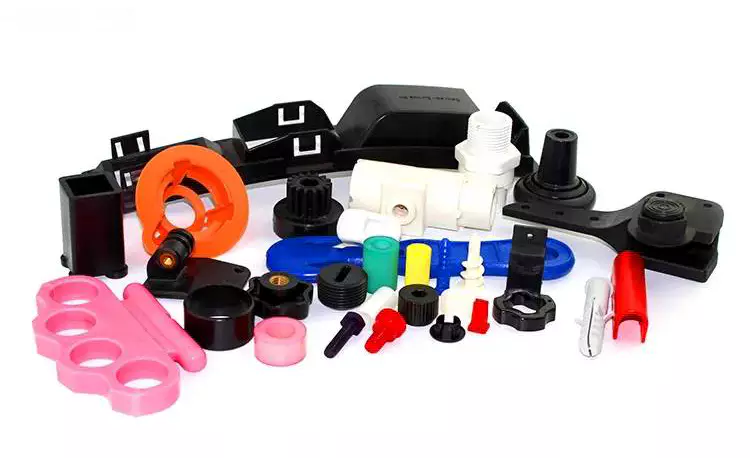
When designing injection molded parts, it is important to keep the wall thickness uniform. Uneven wall thickness can lead to warping and sinking. To minimize these problems, injection molded parts should have a wall thickness of 40 to 60 percent of the adjacent wall. The thickness of the wall should also fit within the range recommended for the resin that is being used. If the wall thickness is too thick, it should be cored out. Unnecessary wall thickness alters the dimensions of the part, reduces its strength, and may require post-process machining.
Designing out sharp corners on injection molded parts
Designing out sharp corners on injection molded components can be a challenging process. There are several factors to consider that impact how much corner radius you need to design out. A general rule is to use a radius that is about 0.5 times the thickness of the adjacent wall. This will prevent sharp corners from occurring on a part that is manufactured from injection molding.
Sharp corners can obstruct the flow of plastic melt into the mold and create flaws on parts. They can also cause stress concentration, which can compromise the strength of the part. To avoid this, sharp corners should be designed out. Adding radii to the corners is also an effective way to avoid sharp angles.
Another common problem is the presence of overhangs. Injection molding parts with overhangs tend to have side-action cores, which enter from the top or bottom. As a result, the cost of making these parts goes up quickly. Moreover, the process of solidification and cooling takes up more than half of the injection molding cycle. This makes it more cost-effective to design parts with minimal overhangs.
Undercuts on injection molded parts should be designed with a greater radius, preferably one or two times the part’s wall thickness. The inside radius of corners should be at least 0.5 times the wall thickness and the outside radius should be 1.5 times the wall thickness. This will help maintain a consistent wall thickness throughout the part. Avoiding undercuts is also important for easy ejection from the mold. If undercuts are present, they can cause a part to stick inside the mold after it has cooled.
Keeping wall thickness uniform is another important issue when designing plastic parts. Inconsistent wall thickness will increase the chance of warping and other defects.
Adding inserts to injection molded parts
Adding inserts to injection molded parts can be a cost-effective way to enhance the functionality of your products. Inserts are usually manufactured from a wide range of materials, including stainless steel, brass, aluminum, bronze, copper, Monel, nickel/nickel alloy, and more. Selecting the right material for your parts depends on the application. Choosing the correct material can help prevent defects and keep production cycles short. The insert material should be durable and resist deformation during the injection molding process. It must also be thin enough to provide the desired grip and have a proper mold depth.
The benefits of adding inserts to injection molded parts include the ability to design parts with unique shapes. These parts can be aesthetically pleasing, while still remaining durable and resistant to wear and tear. In addition, insert molding allows products to have a good external finish. In addition to being cost-effective, insert molding is considered a more efficient manufacturing method than other conventional methods.
Adding inserts to injection molded parts is an excellent way to enhance the strength and performance of your products. There are many different types of inserts, including threaded nuts, bushings, pins, and blades. Some types are even available with knurled outer surfaces that help them adhere to plastic.
In addition to being cost-effective, insert molding is environmentally friendly and compatible with many types of materials. Typical inserts are made of metal or plastic. Depending on the application, stiffening inserts may also be made from wood.
Importance of uniform wall thickness
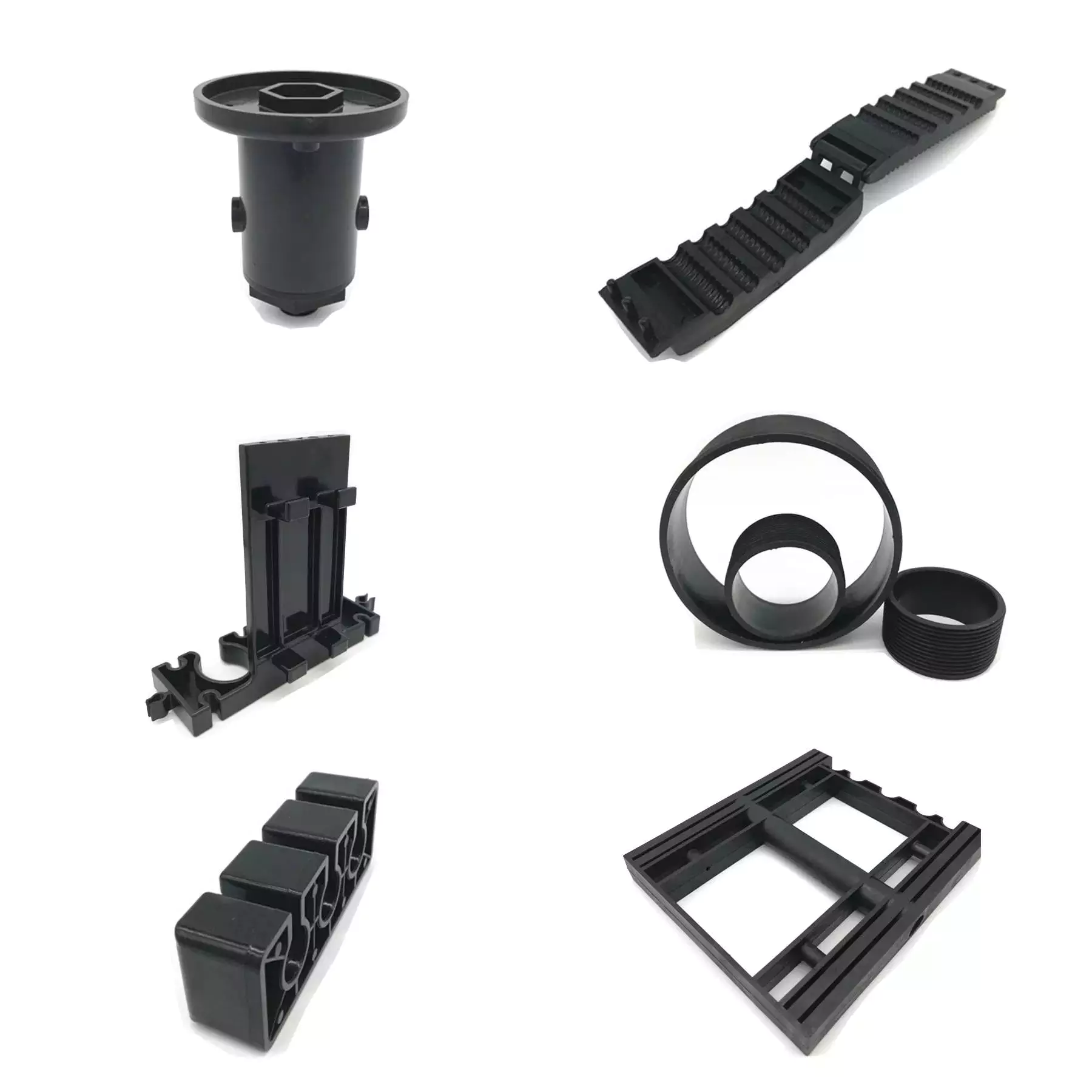 The uniformity of wall thickness is an essential factor in the plastic injection molding process. It not only provides the best processing results, but also ensures that the molded part is consistently balanced. This uniformity is especially important for plastics, since they are poor heat conductors. Moreover, if the wall thickness of an injection molded part varies, air will trap and the part will exhibit a poorly balanced filling pattern.
Uniform wall thickness also helps reduce shrinkage. Different materials have different shrinkage rates. For instance, thick parts take longer time to cool than thin ones. As the part’s thickness increases, cooling time doubles. This relationship is due to the one-dimensional heat conduction equation, which shows that heat flows from the center of the part toward the cooling channel. However, this relationship does not hold for all types of plastics.
The general rule for maintaining uniform wall thickness in injection molded parts is that walls should be no thicker than 3mm. In some cases, thicker walls can be used, but they will significantly increase production time and detract from the part’s aesthetic appeal and functionality. Furthermore, the thickness of adjacent walls should be no thicker than 40-60% of each other.
The uniformity of wall thickness is critical to the overall quality and efficiency of the injection molding process. An uneven wall thickness can cause twisting, warping, cracking, and even collapse. A uniform wall thickness also reduces residual stress and shrinkage. Injection molded parts are more stable when the wall thickness is uniform.
An injection molded part with thick walls can be problematic, especially when the molded parts are shaped like a cube. A non-uniform wall thickness can result in problems and costly retooling. Fortunately, there are solutions to this problem. The first step is to understand the problem areas and take action.
Using 3D printing to fabricate molds
 The use of 3D printed molds allows manufacturers to manufacture a wide range of injection molded parts. However, 3D-printed molds are not as strong as those made from metallic materials. This means that they do not withstand high temperatures, which can degrade them. As such, they are not suitable for projects that require smooth finishing. In order to reduce this risk, 3D-printed molds can be treated with ceramic coatings.
Using 3D printing to fabricate injection molds can help reduce costs and lead times, allowing manufacturers to bring their products to market faster. This process also has the advantage of being highly efficient, as molds made using 3D printing can be designed to last for many years.
The first step in fabricating an injection mold is to design a design. This design can be complex or simple, depending on the part. The design of the mold can be intricate. A simple example of a mold would be a red cup, with an interior and exterior. The interior portion would have a large cone of material protruding from the other side.
Injection molding is an effective way to produce thousands of parts. However, many engineering companies do not have access to expensive 3D printers. To solve this problem, companies should consider using outside suppliers. In addition to speeding up the manufacturing process, 3D printing can reduce the cost of sample parts.
Plastic injection molding still remains the most popular method for high volume production. However, this process requires a large up-front capital investment and takes a while to adapt. Its advantages include the ability to use multiple molds at once, minimal material wastage, and precision dosing. With an increasing number of materials available, 3D printing can be a smart option for companies looking to manufacture a variety of plastic parts.

editor by CX 2023-11-15