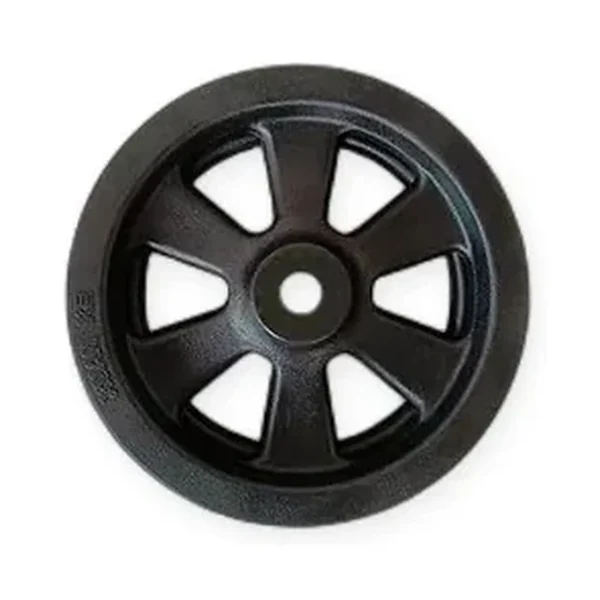
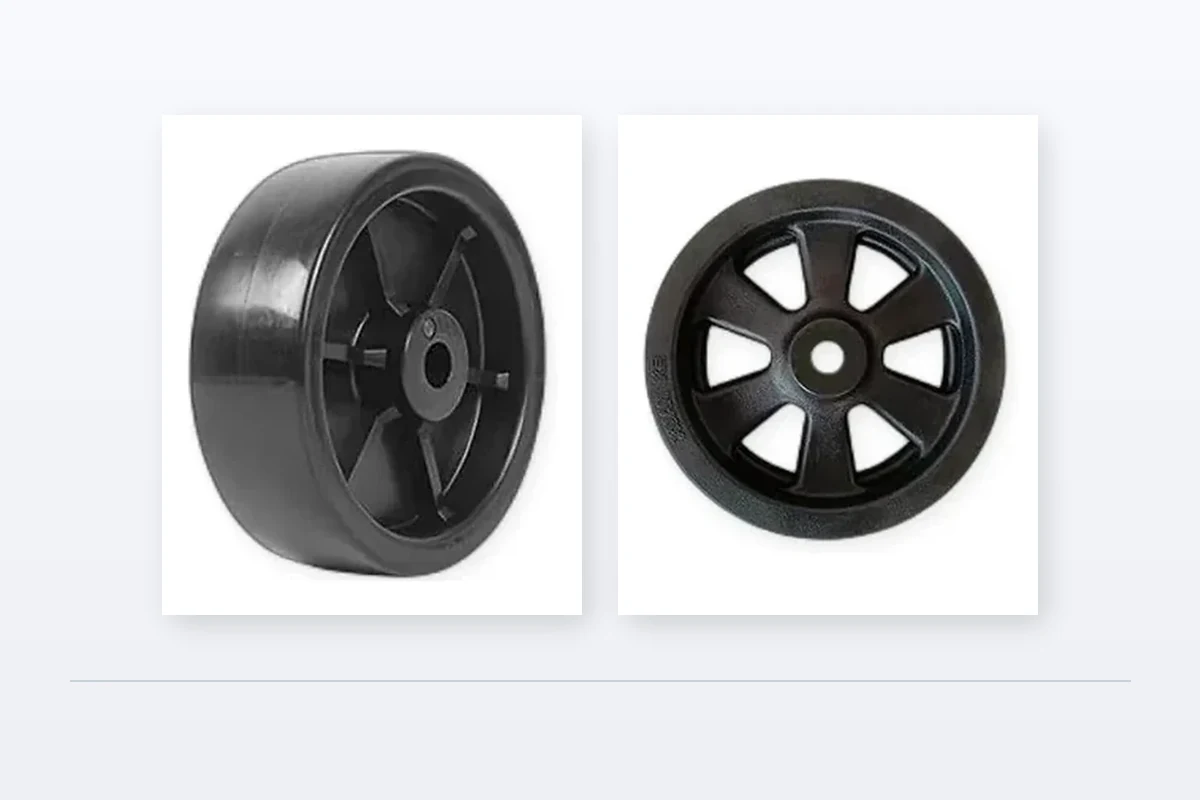
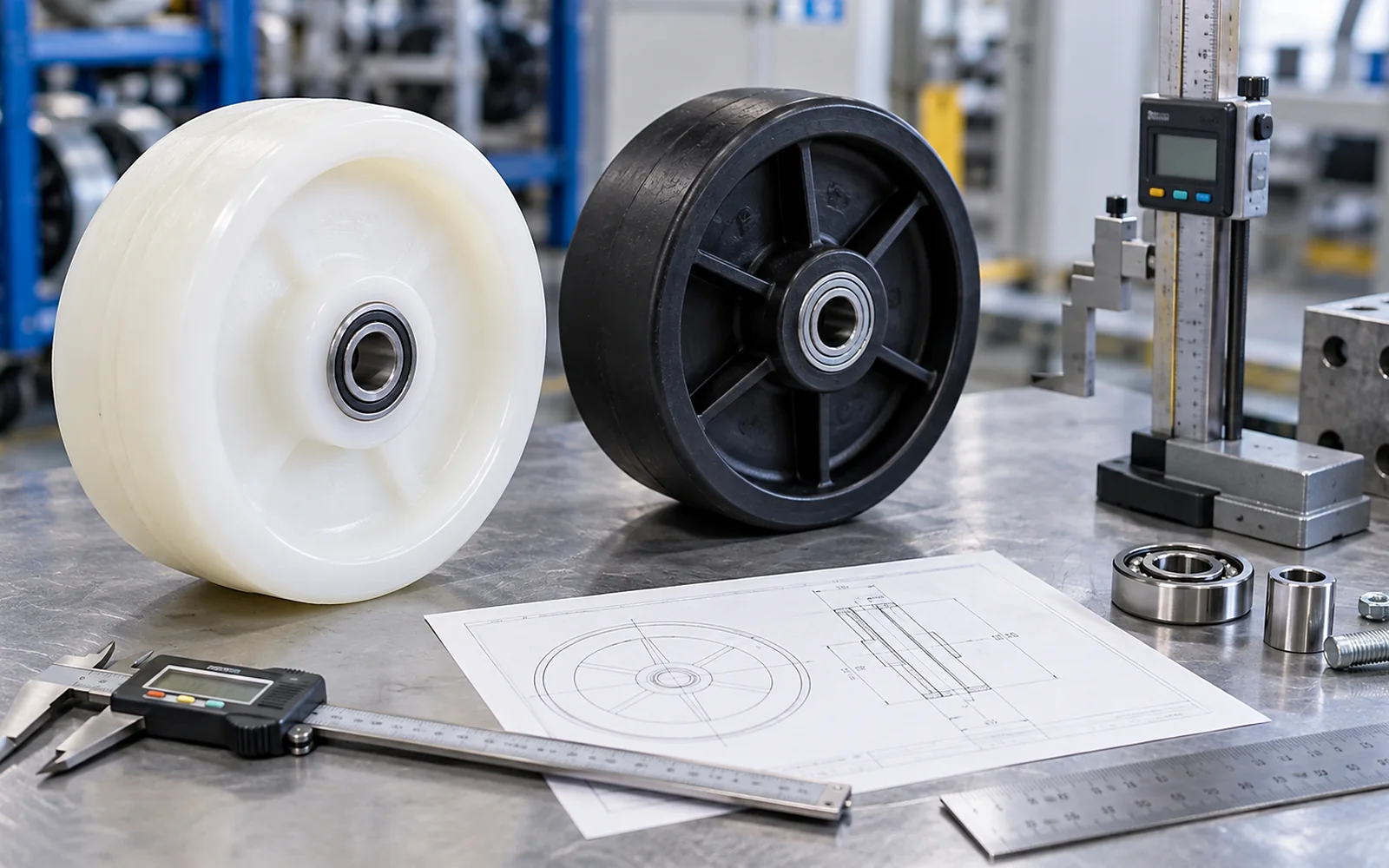
200 mm / 8 Inch Nylon Wheel
200 mm / 8 Inch Nylon Wheel for B2B equipment or trailer support projects. Specify the fit-controlling interface, duty and quantity for quotation.

200 mm (8 in nominal)
50 mm
Nylon
Wheel only
Where this configuration fits
The practical value of 200 mm / 8 Inch Nylon Wheel appears only when the specification is tied to the equipment that must move, the floor it runs on and the interface that carries the load.
Within larger-diameter replacement and support-wheel applications where floor joints or clearance make diameter important, the actual carried load, wheel/ground contact and attachment geometry should be treated as the first engineering checkpoint. Once that is known, wheel diameter, width, material, bearing arrangement and mounting details can be reviewed in a rational order.
Avoid assuming that a larger wheel, harder polymer or heavier bracket automatically solves the problem. A wheel can fit visually and still fail to match the axle, bracket, stowed envelope or duty cycle. The safest RFQ therefore records total equipment weight, supporting points, floor condition, axle or bracket measurements, expected manoeuvring and quantity before a configuration is released for quotation.

Configuration overview
200 mm / 8 Inch Nylon Wheel is presented as a procurement-ready configuration rather than a one-number commodity. Verified details for this item include wheel diameter: 200 mm (8 in nominal), wheel width: 50 mm, material: Nylon. Any interface or performance value that is not listed should be confirmed against the equipment before quotation.
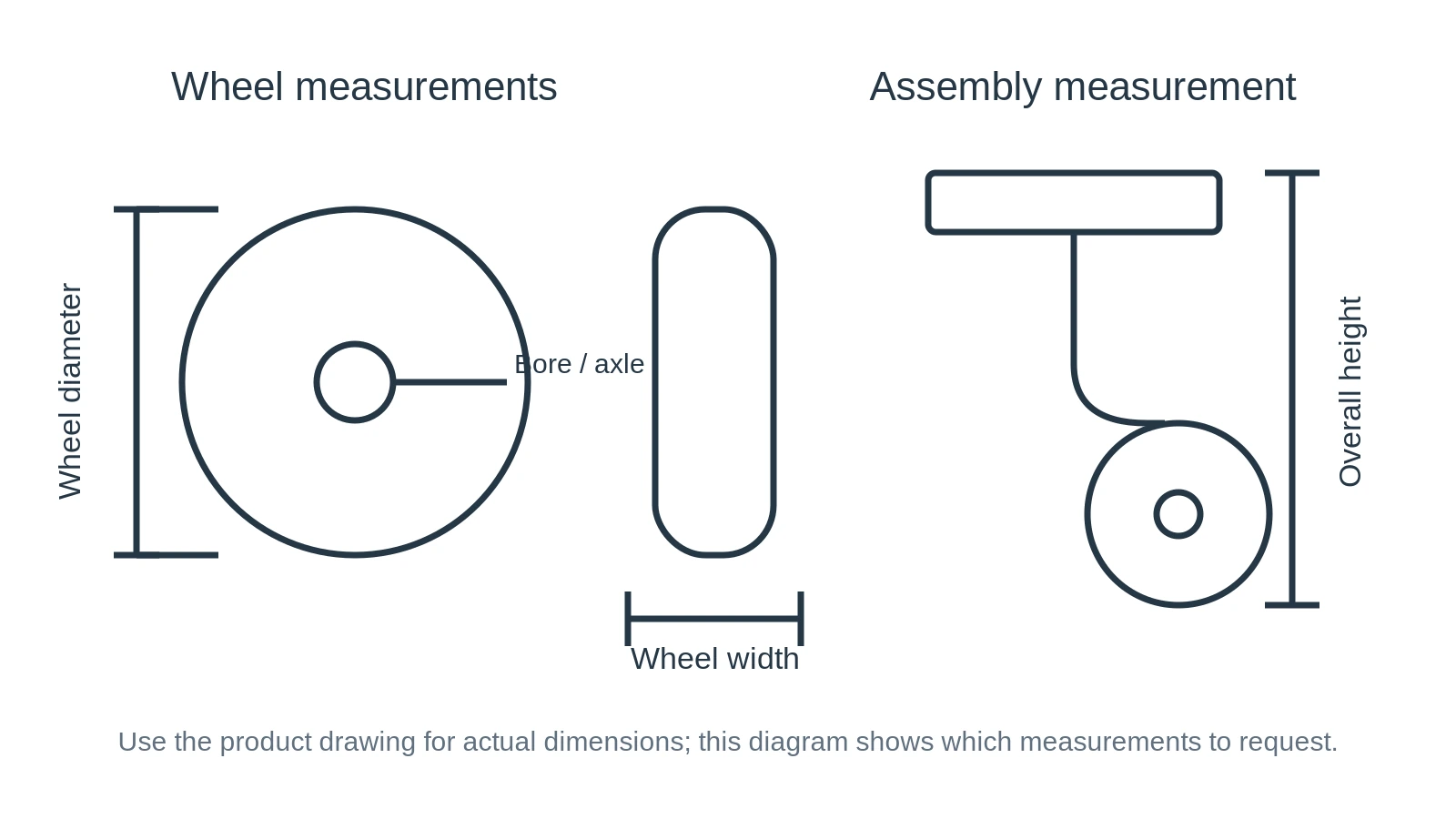
For replacement work, photograph the existing assembly from the side and mounting face, then record wheel diameter, wheel width, hub or axle dimensions, overall installed height and nearby clearance. For a new design, include the drawing or mounting envelope.

Technical specifications
The table separates current configuration facts from items that need project confirmation. An unlisted number creates more risk than a clearly marked confirmation point.
| Parameter | Current configuration |
|---|---|
| Diametro della ruota | 200 mm (8 in nominal) |
| Larghezza della ruota | 50 mm |
| Materiale | Nylon |
| Configuration | Wheel only |
| Mounting interface | Confirm axle/bore requirement in RFQ |
Application and duty conditions
Larger-diameter replacement and support-wheel applications where floor joints or clearance make diameter important. Selection should still account for floor joints, ramps, side loads, impacts and periods of stationary load. Where the wheel is part of a trailer support assembly, separate the vertical support task from manoeuvring effort and check that the jack can retract or fold without striking the drawbar, coupling or ground.
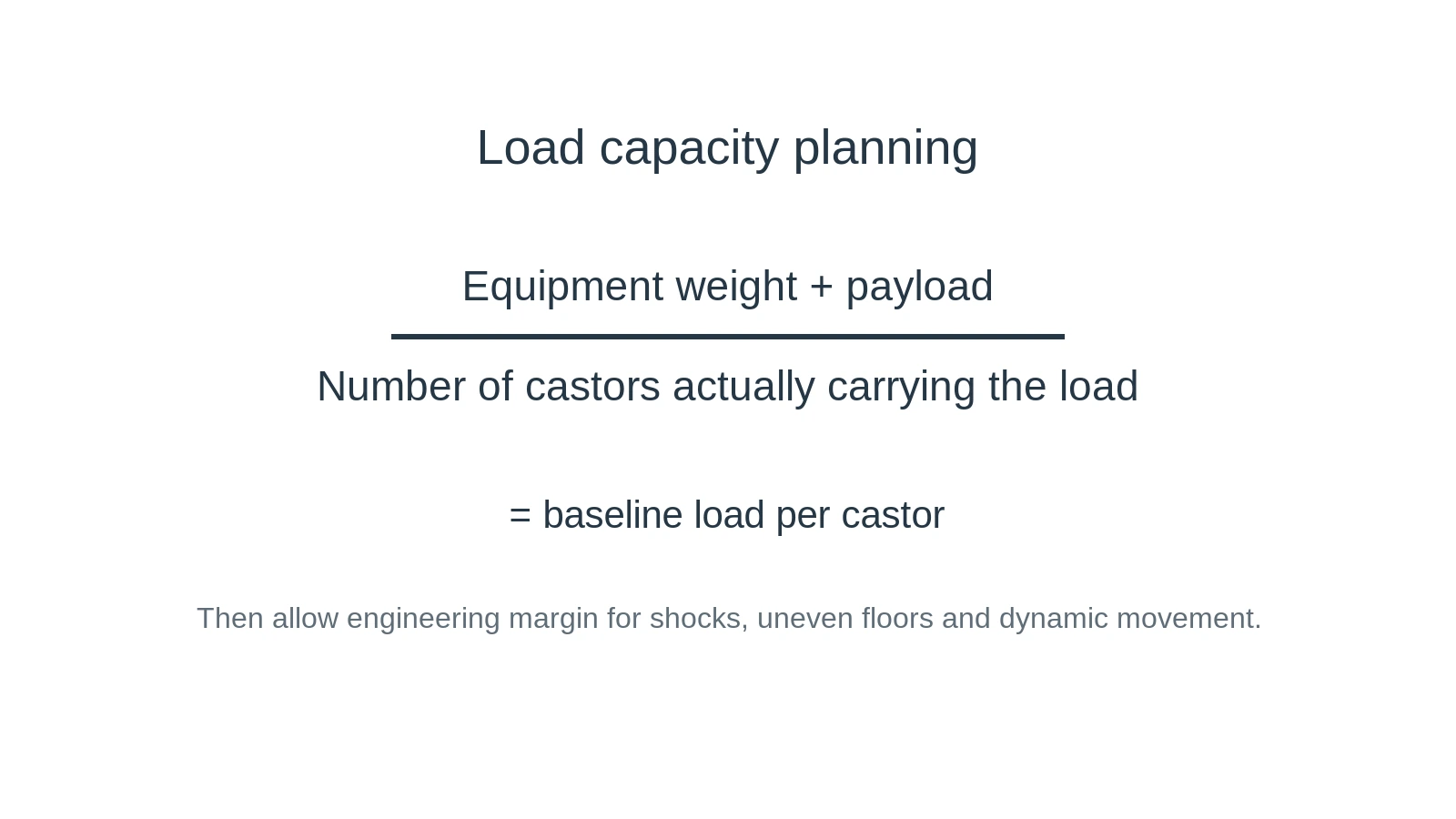
For equipment carts, usable load per wheel may not equal total load divided by wheel count if the floor is uneven or the frame is not perfectly rigid.

Load and mobility review
Start with equipment dead weight, maximum payload and the number of wheels that reliably support the frame. Add an application-appropriate allowance for uneven load sharing, floor transitions and impact. For trailer jacks, distinguish the static nose or drawbar load from the effort required to manoeuvre the trailer.
Wheel diameter influences obstacle crossing and clearance, while material and bearing choice influence rolling behaviour. None of those variables substitutes for the actual rating of the selected assembly.

Installation interface
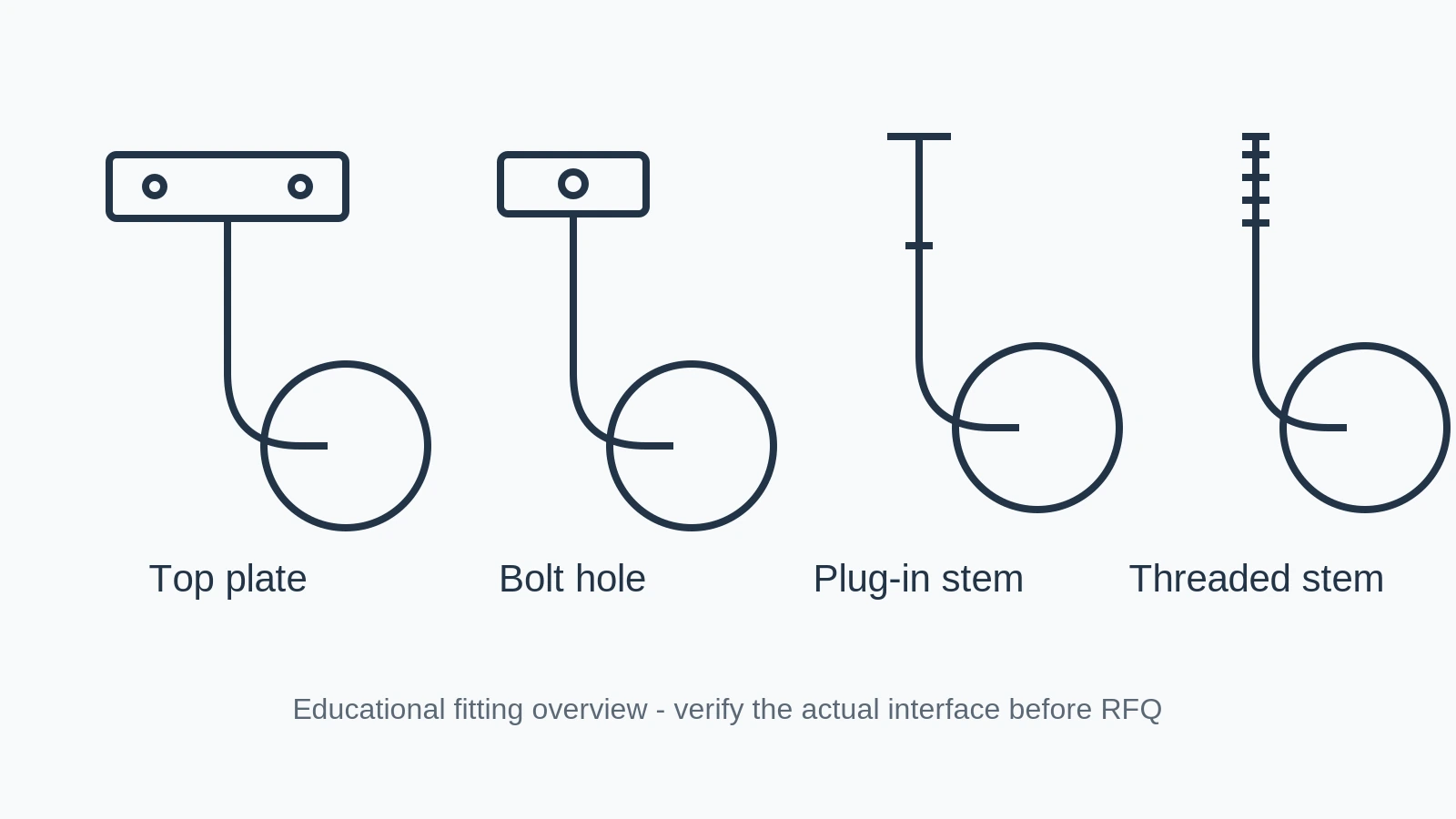
Before release, compare the mounting interface against the equipment. For a loose wheel this means bore or bearing type, axle diameter, hub length, spacers and side clearance. For a jockey or guide-wheel assembly it also includes tube diameter, clamp or plate geometry, fastener access, crank clearance, retracted height and the path used when the assembly swivels or folds.
Do not force a near-fit with improvised spacers unless the joint has been engineered for it. Misalignment can create bearing side load, rubbing and premature wear.

Material and surface considerations
Polymer wheel material should be considered together with floor, contamination, cleaning chemicals, noise expectations and temperature. Nylon and polypropylene are hard thermoplastic families, but exact grade and operating environment still matter. Where the listed configuration specifies a galvanized bracket or tube, that finish applies to the stated configuration only.
If floor marking, wash-down chemistry, electrical properties or unusual temperature matter, state them explicitly. Those requirements should not be inferred from wheel colour.

Inspection points before installation
On receipt, compare the product against approved dimensions and configuration. Check that the wheel rotates without binding, the bore or bearing seats correctly, fasteners are present where specified and the fork or bracket is free from visible deformation. For a jack assembly, operate the crank through usable travel without load first and confirm folding or swivel movement clears the equipment.
During commissioning, observe the assembly on the real floor at low speed. Look for rubbing, unusual side movement, loose hardware, wheel wobble and interference with guards or frames.

RFQ details that speed up review
- Product name or existing model reference when available
- Wheel diameter, width, bore/bearing and hub length for loose wheels
- Tube, clamp, plate, bolt-hole or axle dimensions for complete assemblies
- Maximum equipment weight, payload and number of supporting wheels
- Floor or ground, obstacles, chemicals and brake requirement
- Required quantity, destination and any drawing or photo
For broader selection guidance, review the castor and wheel selection guide, the guida alle misurazioni and the related product family.
Questions buyers commonly ask
Can you quote from a photo only?
A photo helps identification, but reliable quotation normally needs the dimensions controlling fit plus load and quantity.
Can the wheel material be changed?
Material changes may be possible for some families, but grade, load, floor and process minimums must be reviewed.
How should replacement fit be checked?
Measure the existing unit before removal when possible and compare installed height and clearance as well as wheel size.
Is one rated load enough to select the product?
No. Load is essential, but mounting, floor, wheel material, diameter, bearing arrangement and duty cycle also matter.
Bore, hub and axle fit control the replacement
200 mm / 8 Inch Nylon Wheel is a wheel-only configuration, so the axle interface deserves the same attention as outside diameter and width. Confirm bore or bearing type, axle diameter, hub length, spacer arrangement and side clearance. If the old wheel uses a shoulder, sleeve or retained bearing, photograph both sides before removal so the assembly sequence is not lost.
A wheel that matches diameter but not hub geometry can bind, move laterally or force improvised spacers. Treat the interface as a controlled dimension set and keep it with the equipment record for future replacements.

Evaluate the running surface on the real floor
The listed configuration is Wheel diameter: 200 mm (8 in nominal), Wheel width: 50 mm, Material: Nylon, Configuration: Wheel only, Mounting interface: Confirm axle/bore requirement in RFQ. Those product details still need to be reviewed against the floor, load and movement pattern. Hard thermoplastic wheels can behave differently on smooth concrete, joints, ramps or contaminated surfaces, and a larger diameter changes obstacle crossing as well as installed clearance.
For a fleet replacement, trial the wheel on the route that generates the highest normal impact or steering effort, not only on a clean workshop floor.

Acceptance checks for a wheel-only item
Before installation, compare diameter, width and interface with the approved requirement. Rotate the wheel on the intended axle or bearing arrangement and check free movement, side clearance and contact with guards or brackets. After installation, move the equipment slowly under controlled load and watch for rubbing, wobble or unexpected noise.
Record the accepted dimensions, material and equipment group with the purchasing reference. This creates a reliable baseline for repeat orders without turning the product name into a substitute for the application data.

Order data to keep on one line
For quotation and repeat purchasing, keep wheel diameter, width, material, bore or bearing arrangement, hub length, quantity and destination on the same line item. If several wheel sizes or colours are required, separate them so the interface and quantity of one configuration cannot be copied into another during revision.
Protect the accepted interface until 200 mm / 8 Inch Nylon Wheel is installed
Keep loose wheels clean and dry before installation, with bores and bearings protected from dust, loose metal chips and impact. Do not stack heavy components on tread edges or use the wheel as a support block during workshop assembly. If bearings or sleeves are supplied separately, keep them identified with the correct wheel line item.
Before fitting, compare the new wheel with the approved sample and check both sides of the hub. Confirm that spacers, washers and retainers are available before the old wheel is removed from production equipment. This simple staging step reduces the temptation to improvise hardware when a replacement is dimensionally close but not identical.
Build a replacement record around the equipment, not only 200 mm / 8 Inch Nylon Wheel
For equipment fleets, link the accepted wheel to the machine or cart group where it was validated. Keep a photo of the installed arrangement, the axle hardware sequence, the normal floor route and any recurring wear observation. A wheel can be dimensionally correct yet behave differently when side loading, floor joints or contamination change.
When a replacement sample is approved, record the approval date, purchasing description and the measured interface values that controlled fit. That record is more useful for later sourcing than relying on wheel colour or an informal nickname, especially where similar-looking moulded wheels share the same outside diameter.

Release dimensions for 200 mm / 8 Inch Nylon Wheel before repeat ordering
A repeat order should not be released from the product name alone. For 200 mm / 8 Inch Nylon Wheel, keep 200 mm (8 in nominal) and 50 mm together with the confirmed bore or bearing arrangement, hub length, spacer stack and axle retention method. The current material designation is Nylon; any change in resin, colour or bearing construction should be treated as a configuration change rather than a cosmetic substitution.
A useful receiving drawing shows the wheel in side and section views, with all fit-controlling dimensions referenced from stable surfaces. Record tolerances only where they matter to assembly or operation. This prevents an old dimension copied from another wheel family from becoming an unintended purchasing requirement.

Request a quote for 200 mm / 8 Inch Nylon Wheel
Send your dimensions, application and quantity so fit-critical details can be reviewed before quotation.