What the question is really asking — Single vs Twin Jockey Wheels
軟弱地盤におけるシングルジョッキーホイールとツインジョッキーホイールの実用的な価値は、仕様が移動させる必要のある機器、機器が走行する床、および荷重を支えるインターフェースと結びついている場合にのみ明らかになる。
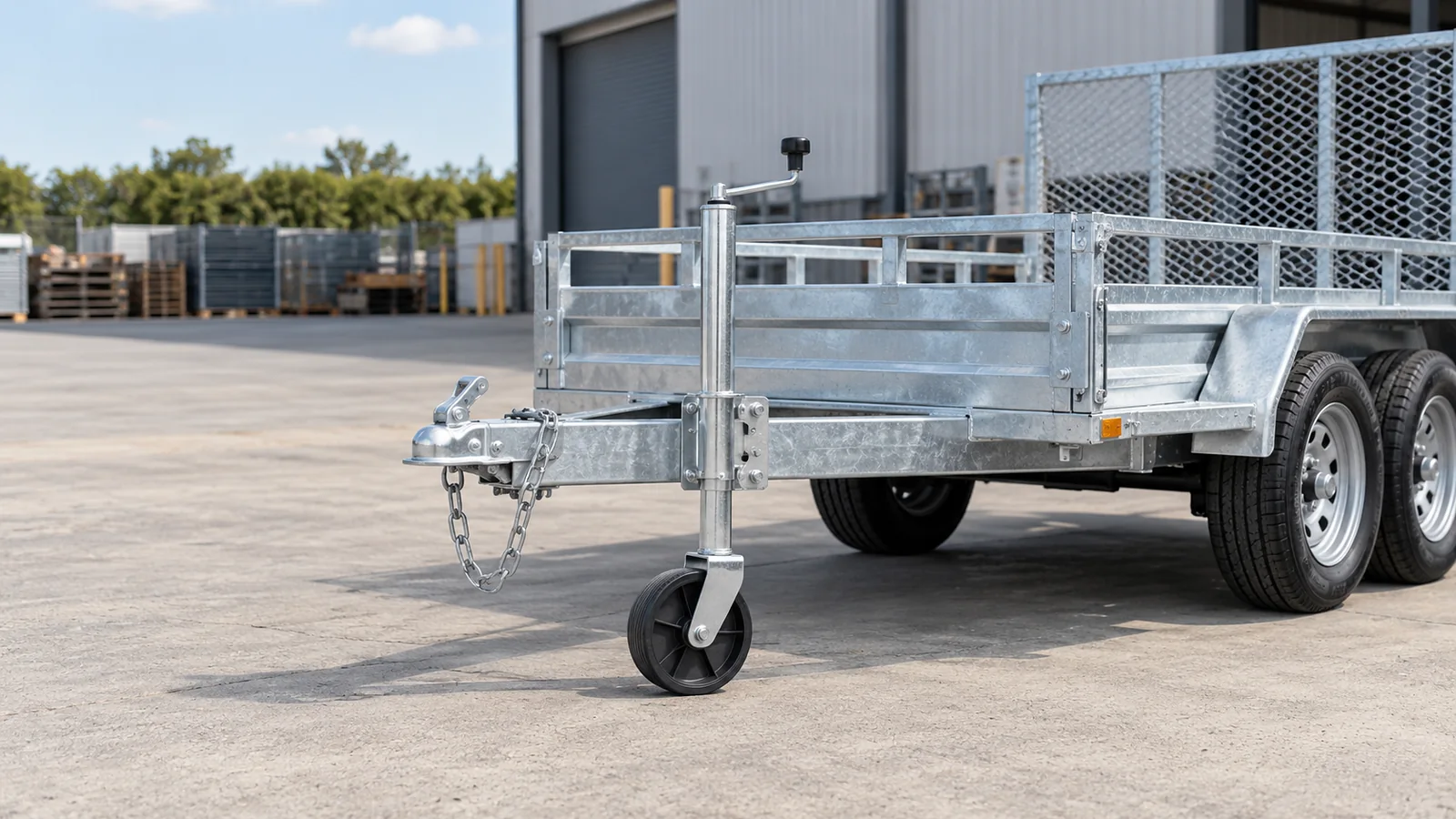
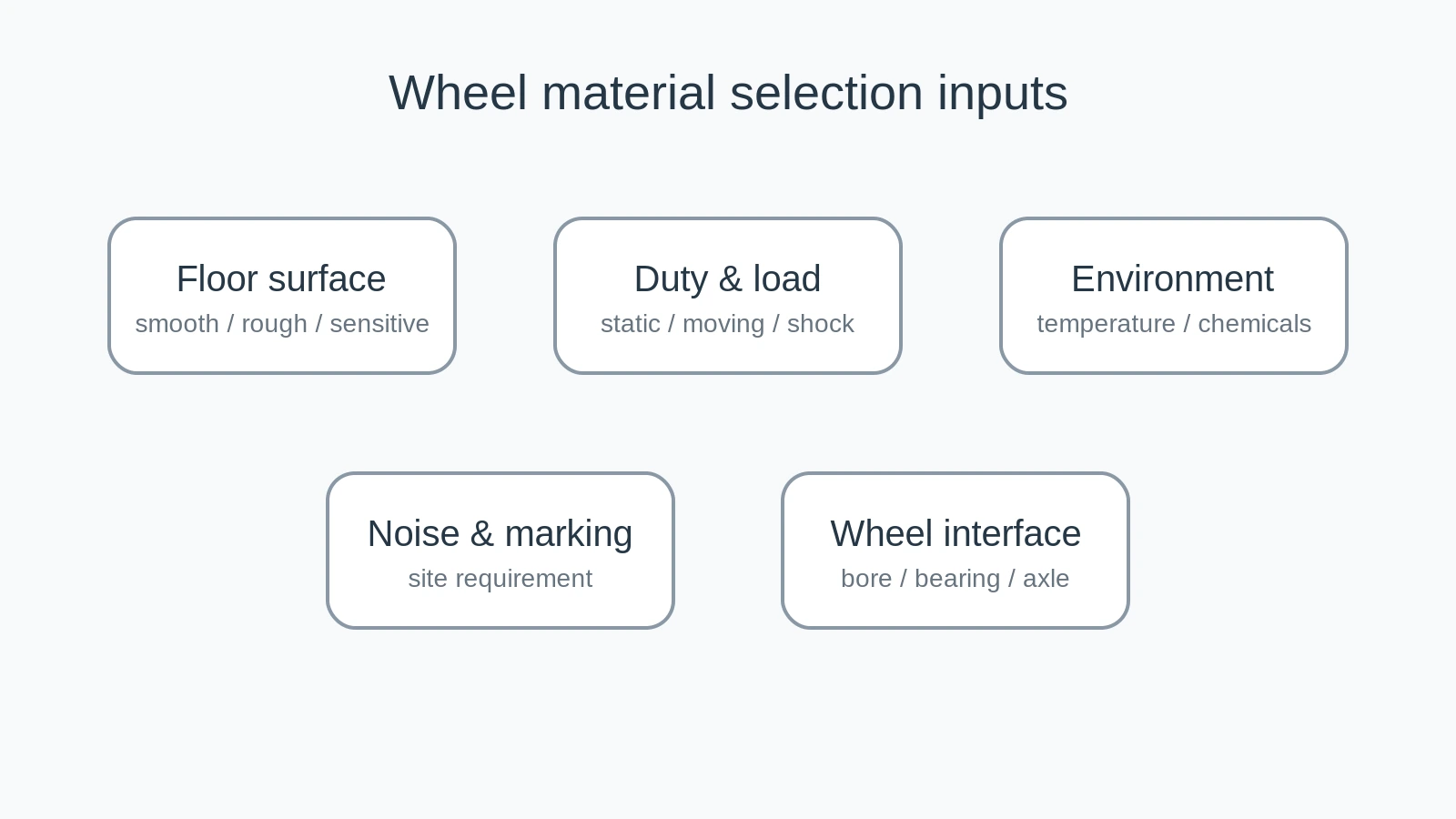
トレーラーのドローバー内、駐車中のトレーラー、短距離の手動操作においては、ドローバー/支持部の荷重、地面の状態、車輪の直径/幅、チューブまたはクランプの嵌合状態、ストローク、および収納時のクリアランスを最初のエンジニアリングチェックポイントとして扱うべきです。これらが把握できたら、車輪の直径、幅、材質、ベアリングの配置、および取り付けの詳細を合理的な順序で検討することができます。
より大きなホイール、より硬いポリマー、またはより重いブラケットを使えば自動的に問題が解決すると思い込まないでください。ホイールはスムーズに回転するかもしれませんが、ジャッキがクランプの直径、格納高さ、または折りたたみ範囲に合っていない可能性があります。したがって、最も安全な見積依頼書(RFQ)では、構成を見積依頼する前に、支持点における垂直荷重、地面の状態、ホイールサイズ、チューブ/クランプの寸法、移動量、および数量を記録してください。
Build the operating envelope before comparing products — Single vs Twin Jockey Wheels
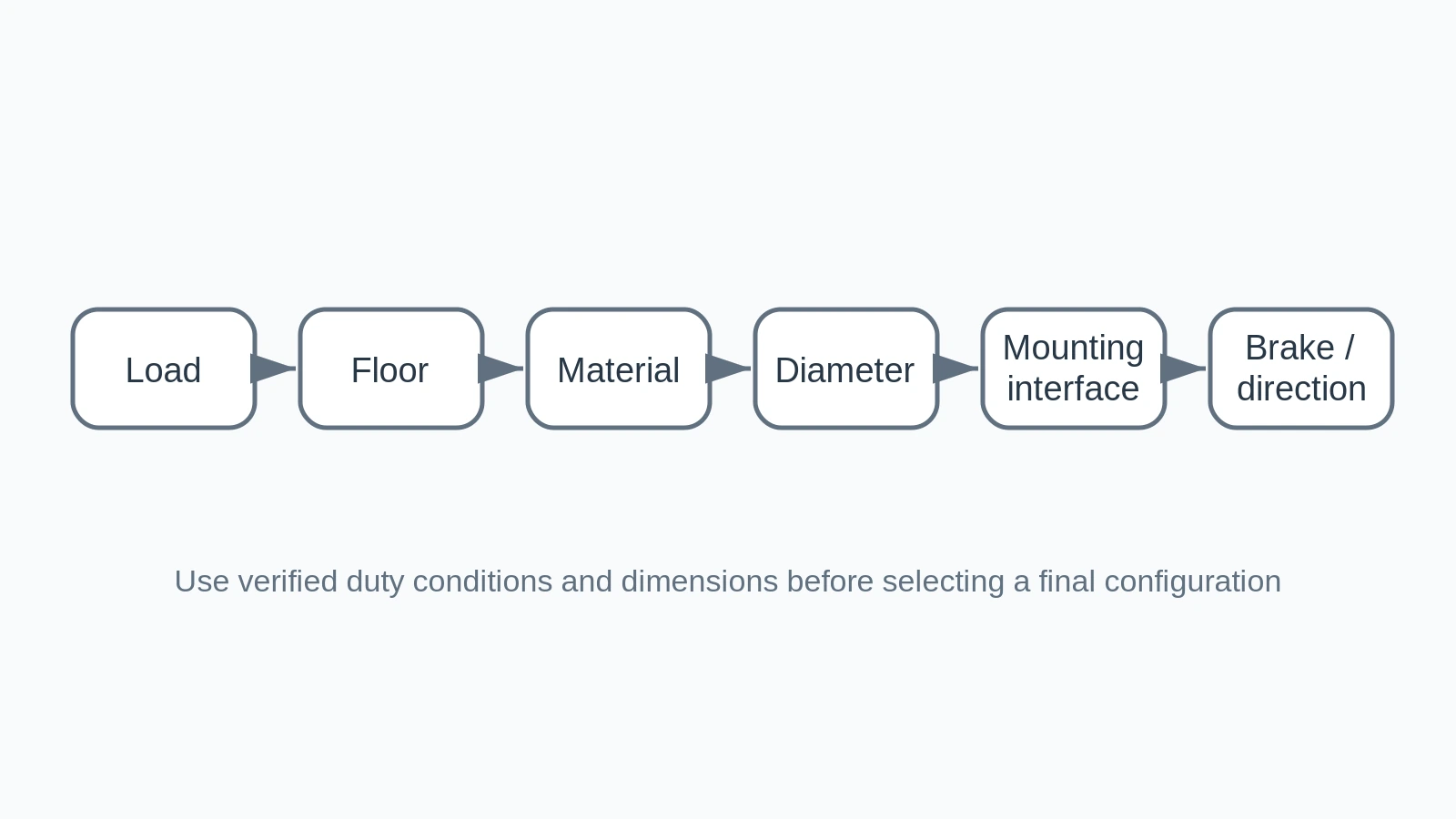
製品を比較する前に、機器の用途を1文で記述してください。何を移動させる必要があるのか、どのような荷重を運ぶのか、どこを移動するのか、そしてどのくらいの頻度で位置を変えるのか、といった点を明確にしましょう。この記述によって、軟弱地盤におけるシングルジョッキーホイールとツインジョッキーホイールの比較検討に必要な情報が得られ、一つのパラメータを普遍的なルールとして捉える必要がなくなります。
For trailer drawbars, parked trailers and short-distance manual manoeuvring, the first review should cover drawbar/support load, ground surface, wheel diameter/width, tube or clamp fit, travel and stowed clearance. If a value is not known, mark it for measurement rather than substituting a typical number. The purpose of the RFQ is to close gaps, not hide them. When applying this to Single vs Twin Jockey Wheels on Gravel, compare candidates against the same equipment record so material, size and interface changes are reviewed consistently.
Measure the interface that can make or break the replacement — Single vs Twin Jockey Wheels
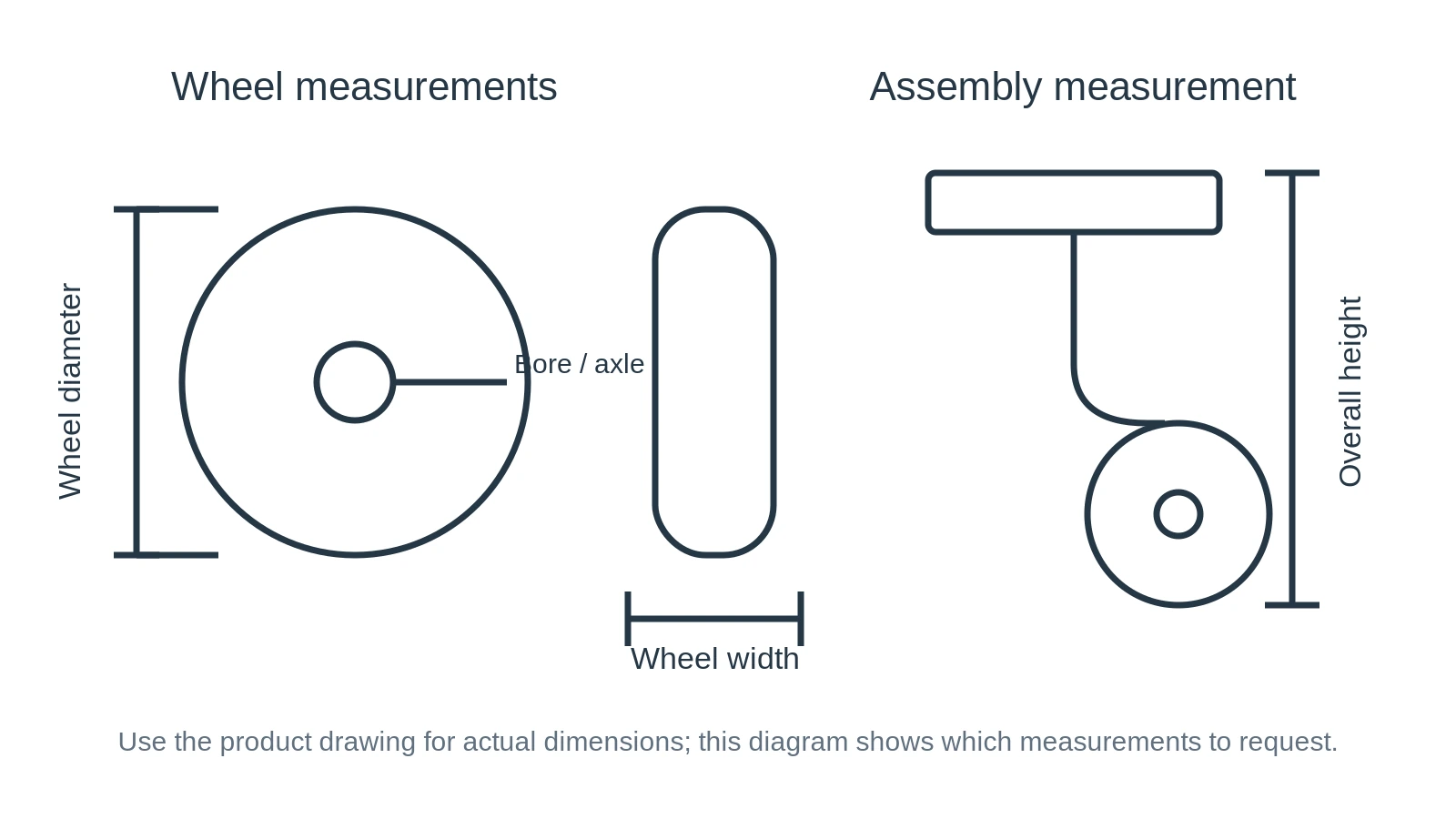
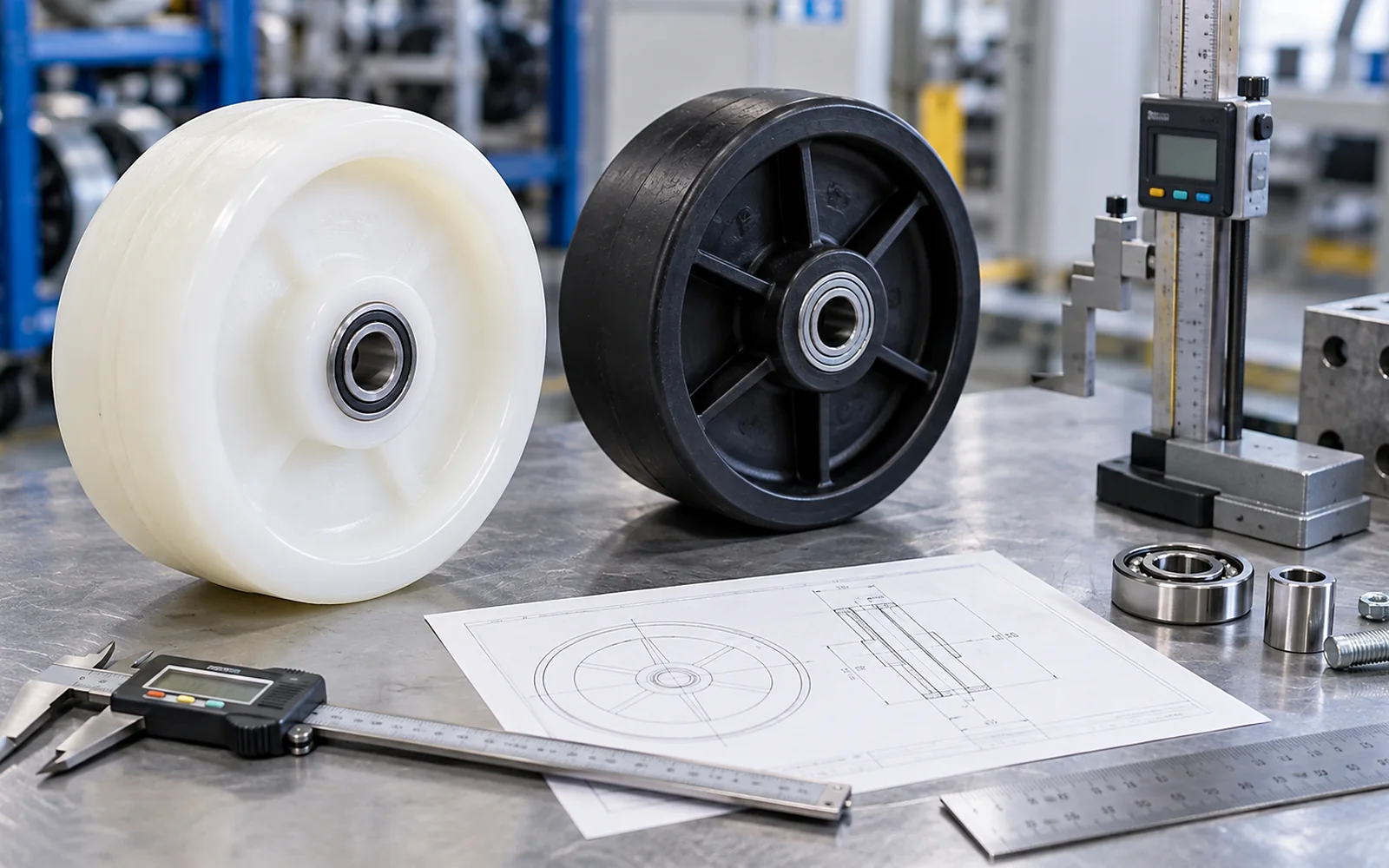
Replacement work benefits from a consistent measurement routine. Record wheel diameter and width, then move inward to the hub: bore or bearing type, axle diameter, hub length and spacers. For complete assemblies, add installed height and mounting geometry. Photograph the measurement tool in place when a dimension is difficult to describe. When applying this to Single vs Twin Jockey Wheels on Gravel, compare candidates against the same equipment record so material, size and interface changes are reviewed consistently.
Do not use worn tread as the only reference if original diameter matters. A heavily worn wheel can make the replacement appear too large when the real issue is material loss. Likewise, a bent fork or improvised spacer can change apparent offset. When applying this to Single vs Twin Jockey Wheels on Gravel, compare candidates against the same equipment record so material, size and interface changes are reviewed consistently.
Why the same load behaves differently on different floors — Single vs Twin Jockey Wheels
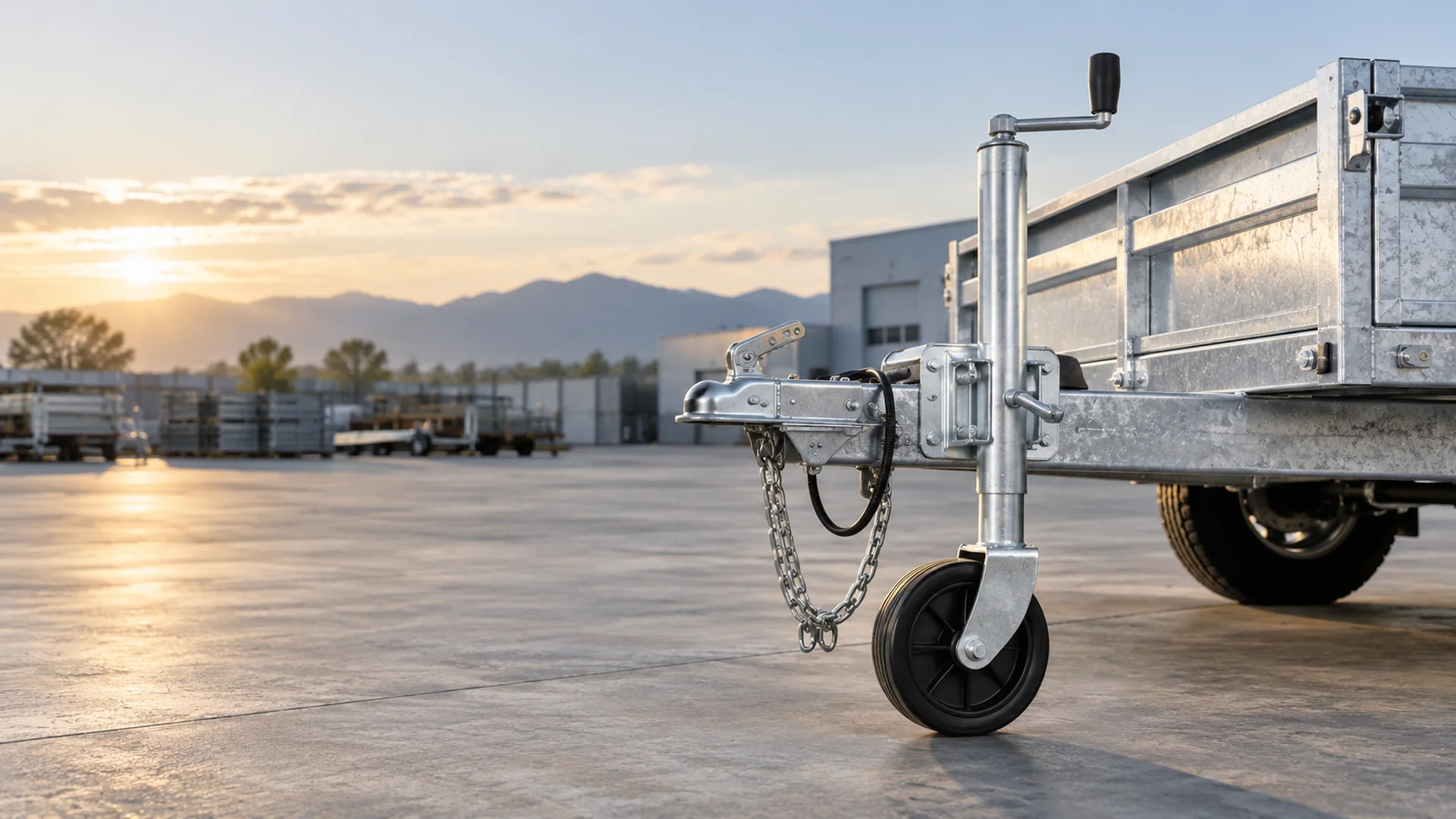
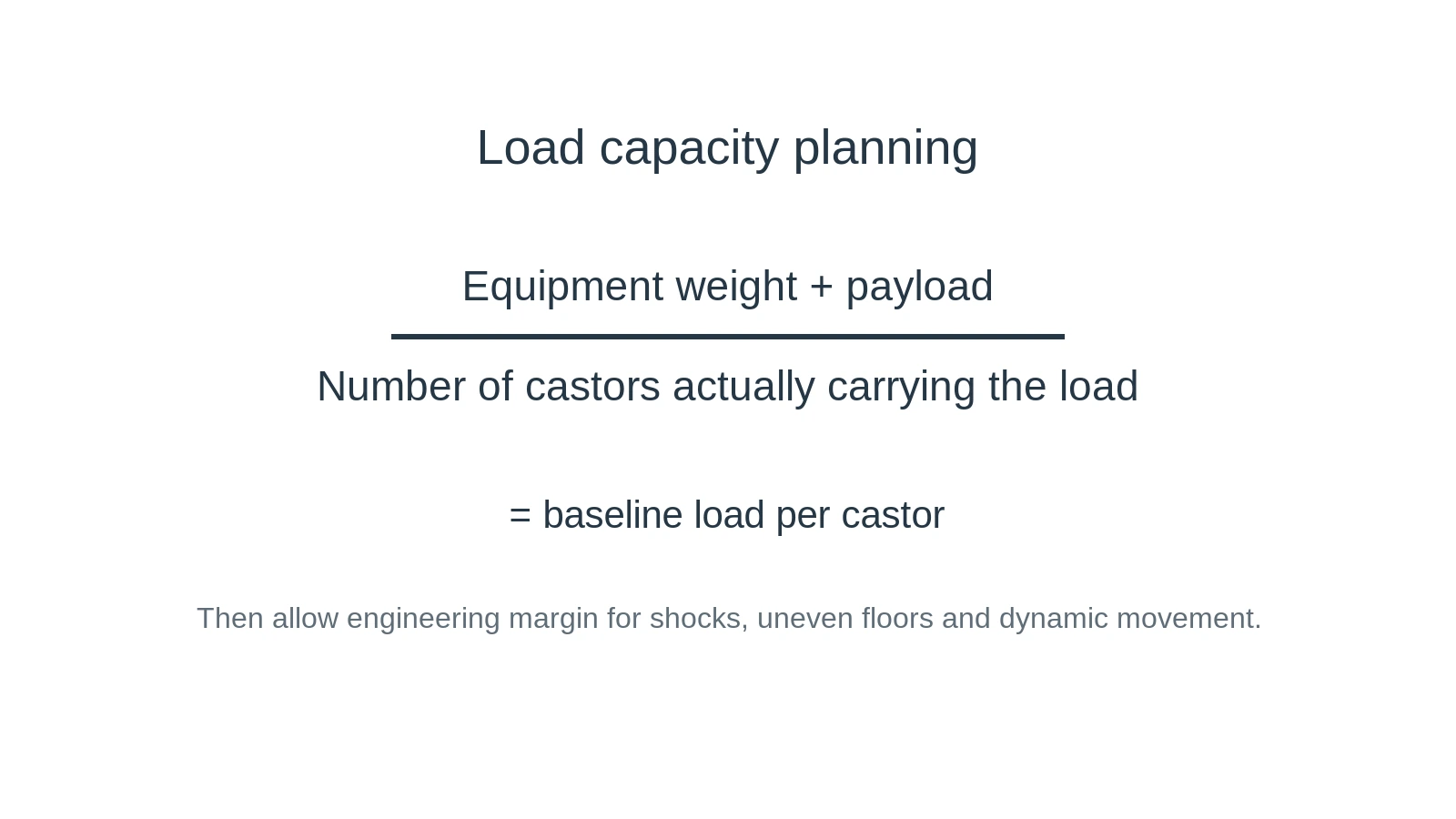
Load rating is not independent of how equipment moves. A cart crossing a threshold can create impact forces absent in a static parking condition. An uneven floor can shift load from four nominal support points to three. A trailer jockey wheel may carry a modest vertical drawbar load yet require substantial manoeuvring effort on loose ground. When applying this to Single vs Twin Jockey Wheels on Gravel, compare candidates against the same equipment record so material, size and interface changes are reviewed consistently.
最大通常荷重、特殊荷重、床面または地面、走行距離、および障害物頻度を記録します。これらの組み合わせにより、単一の総重量よりも優れた選定基準が得られます。
Jockey-wheel selection needs two load conversations — Single vs Twin Jockey Wheels
The vertical load carried by the jack is one issue; the effort needed to manoeuvre the trailer is another. Ground, diameter and width can dominate the second. A configuration satisfactory on paving may be difficult on gravel even when vertical load is unchanged. When applying this to Single vs Twin Jockey Wheels on Gravel, compare candidates against the same equipment record so material, size and interface changes are reviewed consistently.
また、チューブ/クランプの直径、昇降距離、収納時の高さ、およびアセンブリを折り畳んだり回転させたりするために必要なスペースも確認してください。
Failure patterns to watch in single vs twin jockey wheels on gravel
A wheel may roll well but the jack can still be wrong for clamp diameter, retracted height or folding envelope. Similar symptoms can also come from loose fasteners, worn bearings, misalignment, contaminated floors or a frame that is no longer square. Before blaming wheel material, inspect the mounting and compare wear patterns across positions. When applying this to Single vs Twin Jockey Wheels on Gravel, compare candidates against the same equipment record so material, size and interface changes are reviewed consistently.
If only one corner wears rapidly, investigate that corner’s load and alignment. If all wheels show the same damage, review duty, floor and material specification. If wear accelerates after a process change, record the new contaminant, cleaning agent, temperature or travel pattern. When applying this to Single vs Twin Jockey Wheels on Gravel, compare candidates against the same equipment record so material, size and interface changes are reviewed consistently.
Write the requirement so another buyer can reproduce it — Single vs Twin Jockey Wheels
Use one line per configuration and write the requirement so another engineer can understand it without the original conversation. Include vertical load at support point, ground condition, wheel size, tube/clamp dimensions, travel and quantity. Attach the correct drawing or photo set. If an interface dimension is unknown, say “measurement pending” instead of using a guessed value. When applying this to Single vs Twin Jockey Wheels on Gravel, compare candidates against the same equipment record so material, size and interface changes are reviewed consistently.
複数モデルを注文する場合は、数量を分けて管理し、共通する寸法を特定してください。
Single vs Twin Jockey Wheels on Gravel decision checklist
- 最大垂直荷重は既知ですか?
- 支持輪は荷重を均等に分担できますか?
- 実際の床面/地面の状態は説明されていますか?
- ホイールとインターフェースの寸法は測定されていますか?
- 制御機能は明確ですか?
- 特別な材料/仕上げ/環境に関する要件は明記されていますか?
- 数量は正しいモデルに紐づいていますか?
続けて プライマリ選択ページ、 比較する 現在の製品ファミリーまたは、 見積依頼書.
Translate the technical question into a practical field check — Single vs Twin Jockey Wheels
以下の項目では、一般的な製品ラベルを完全な仕様として扱うことなく、測定、設置、現場観察に記事のテーマを適用します。
Keep one approved reference — Single vs Twin Jockey Wheels
Once a configuration is accepted, retain the approved drawing, model reference and key dimensions together. Future subsequent orders should still confirm that equipment and duty have not changed, but the approved reference reduces ambiguity. When applying this to Single vs Twin Jockey Wheels on Gravel, compare candidates against the same equipment record so material, size and interface changes are reviewed consistently.
Maintenance records that matter for single vs twin jockey wheels on gravel
車輪の位置、設置日、使用状況、交換理由、および床面での異常事象を記録してください。シングルまたはツインのジョッキーホイールを使用する軟弱地盤対策プログラムでは、この簡単な履歴記録によって、摩耗がランダムなのか、特定の位置に起因するものなのか、あるいは環境の変化と関連しているのかを特定するのに役立ちます。特定のコーナーで繰り返し故障する車輪は、一般的な材料の問題ではなく、荷重の集中、アライメント、または局所的な汚染を示している可能性があります。
Inspect axle, spacers, bearings, bracket and fasteners when the old wheel is removed. Keep measurements that relate directly to vertical load at support point, ground condition, wheel size, tube/clamp dimensions, travel and quantity. If a component has been modified in service, photograph the change before installing the new item and decide whether the modified condition should become part of the official equipment specification. When applying this to Single vs Twin Jockey Wheels on Gravel, compare candidates against the same equipment record so material, size and interface changes are reviewed consistently.
What to observe when applying single vs twin jockey wheels on gravel
通常運転の前に、軟弱地盤において、シングルまたはツインのジョッキーホイール構成を新規または交換用に調整し、負荷と低速を制御してテストしてください。摩擦、ブラケットの接触、ホイールのぐらつき、ステアリングの不安定性、ファスナーの動き、デッキまたはドローバーの高さの変化がないかを確認してください。目的は、ホイールが回転することを確認するだけでなく、選定時に想定した事項を検証することです。
For trailer drawbars, parked trailers and short-distance manual manoeuvring, include the most demanding normal floor or ground transition in the initial trial. If the system must cross a threshold, ramp or rough joint, observe it there. Document the result with the same model reference used in the RFQ so future subsequent orders have a useful baseline instead of relying on memory. When applying this to Single vs Twin Jockey Wheels on Gravel, compare candidates against the same equipment record so material, size and interface changes are reviewed consistently.
Start with the operating envelope — Single vs Twin Jockey Wheels
「砂利や軟弱地盤におけるシングルジョッキーホイールとツインジョッキーホイールのどちらが実用的か」という問いに対する答えは、一概にイエスかノーで答えられるものではありません。重要なのは、その問いが発生する機器や用途です。ドローバーの支持荷重、ホイールサイズ、チューブまたはクランプの嵌合、リフトストローク、格納時の高さ、折りたたみまたは旋回時のクリアランス、地面の状態、操作頻度などを書き留めてください。これらの項目をまとめて記録することで、製品の識別に関する質問と技術的な選定に関する質問を区別でき、見た目が似ている部品が自動的に互換性があるとみなされることを防ぐことができます。
Use the most demanding normal condition rather than a best-case description. If the equipment sometimes crosses a threshold, works outdoors, carries an uneven payload or is manoeuvred only after long periods of static load, include that condition. The objective is a repeatable requirement that another engineer or buyer can understand without seeing the original component. When applying this to Single vs Twin Jockey Wheels on Gravel, compare candidates against the same equipment record so material, size and interface changes are reviewed consistently.
Measure from stable datums — Single vs Twin Jockey Wheels
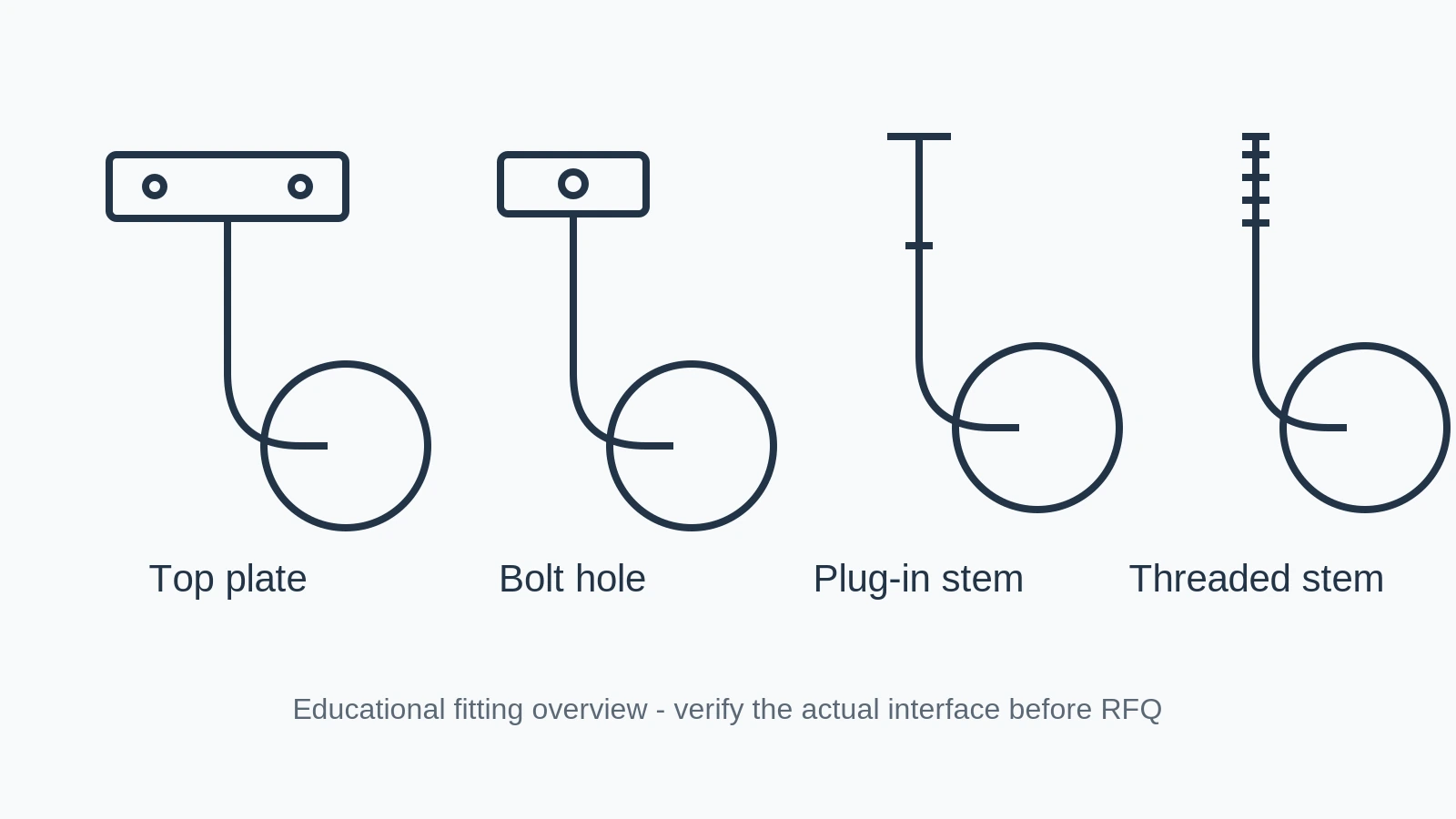
For this topic, record drawbar support load, wheel size, tube or clamp fit, lifting travel, closed height, folding or swivel clearance, ground condition and manoeuvring frequency. Use dimensioned photographs where a drawing is unavailable and show the reference points used for each measurement. If the old part is worn, bent or repaired, flag the affected dimension instead of treating the damaged geometry as the design target. When applying this to Single vs Twin Jockey Wheels on Gravel, compare candidates against the same equipment record so material, size and interface changes are reviewed consistently.
A comparison sheet works best with one configuration per column or row. Keep measured values, required values and optional preferences separate. That simple separation reduces the chance that a supplier proposal or an old catalogue value is copied into the required specification without review. It also makes later quotation revisions easier to audit. When applying this to Single vs Twin Jockey Wheels on Gravel, compare candidates against the same equipment record so material, size and interface changes are reviewed consistently.
Trial the assumption instead of the photograph — Single vs Twin Jockey Wheels
After a candidate is installed, raise and lower the jack through its usable travel, confirm the wheel carries the support point without interference, then manoeuvre on the normal yard surface and verify the stowed position clears the drawbar and coupling. The first trial should be slow enough to observe the wheel and mounting rather than merely prove that the equipment can move. Look for rubbing, unexpected side movement, fastener movement, wheel wobble, interference and a change in operator effort. When applying this to Single vs Twin Jockey Wheels on Gravel, compare candidates against the same equipment record so material, size and interface changes are reviewed consistently.
If the result is unsatisfactory, record the symptom before changing several variables at once. One controlled change—such as wheel diameter, material, mounting alignment or steering layout—gives more useful information than changing the whole assembly and losing the cause of the original problem. When applying this to Single vs Twin Jockey Wheels on Gravel, compare candidates against the same equipment record so material, size and interface changes are reviewed consistently.
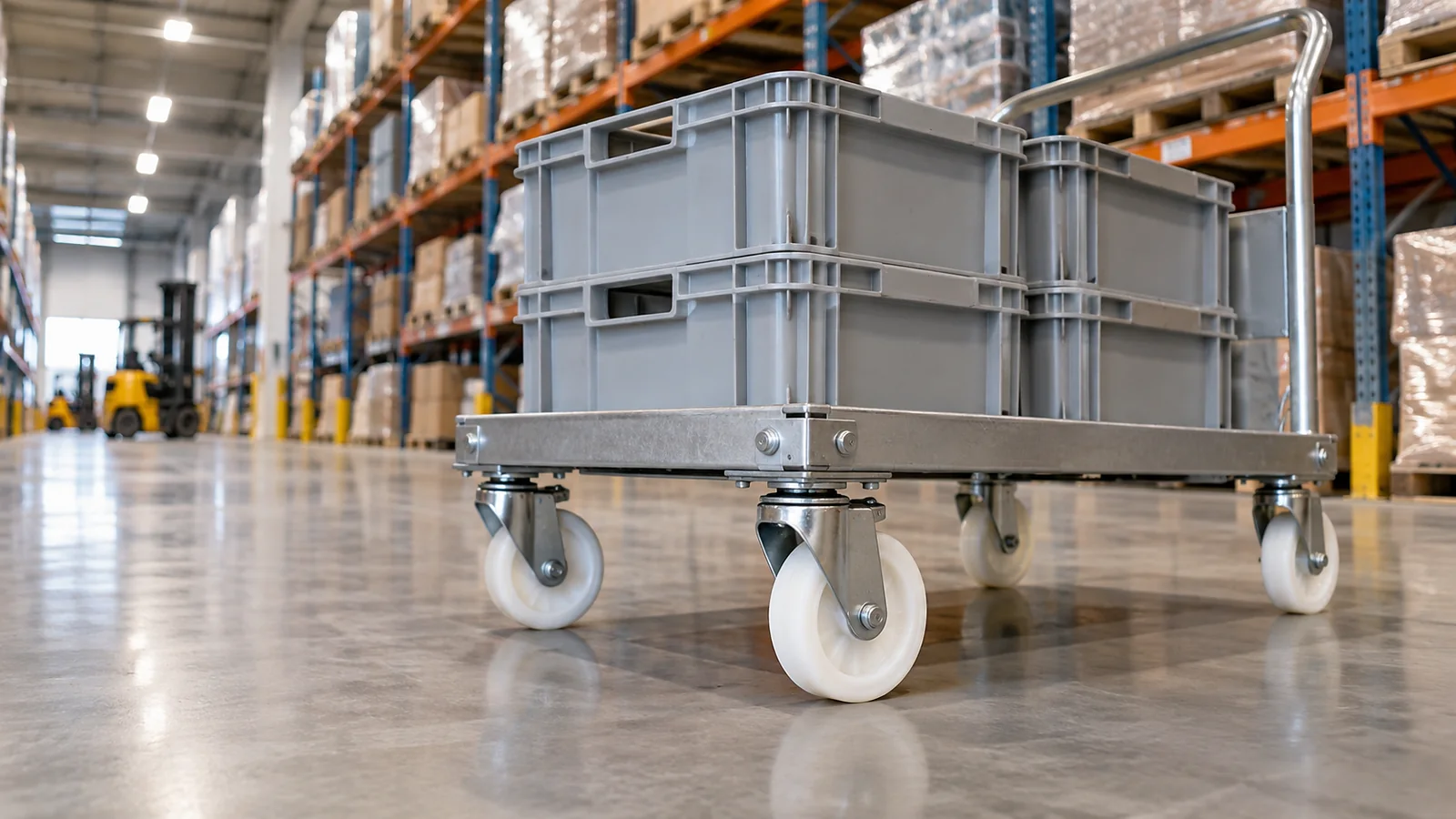
実際の駐車場路面で「砂利や軟弱地盤におけるシングルジョッキーホイールとツインジョッキーホイールの比較」の決定を検証する
After installation, make a controlled low-speed manoeuvring check on the surface that normally creates the greatest effort. Observe steering, wheel scrub, fork clearance and any tendency for the mounting to twist or slip. If the trailer is routinely moved across gravel, pavers or drainage channels, include those conditions rather than testing only on workshop concrete. When applying this to Single vs Twin Jockey Wheels on Gravel, compare candidates against the same equipment record so material, size and interface changes are reviewed consistently.
A short documented trial provides much more useful purchasing information than a generic statement that one wheel is “better.” Record the accepted configuration, the trailer group, the load condition and any clearance limitation so a later subsequent orders can be checked against the same operating basis. When applying this to Single vs Twin Jockey Wheels on Gravel, compare candidates against the same equipment record so material, size and interface changes are reviewed consistently.
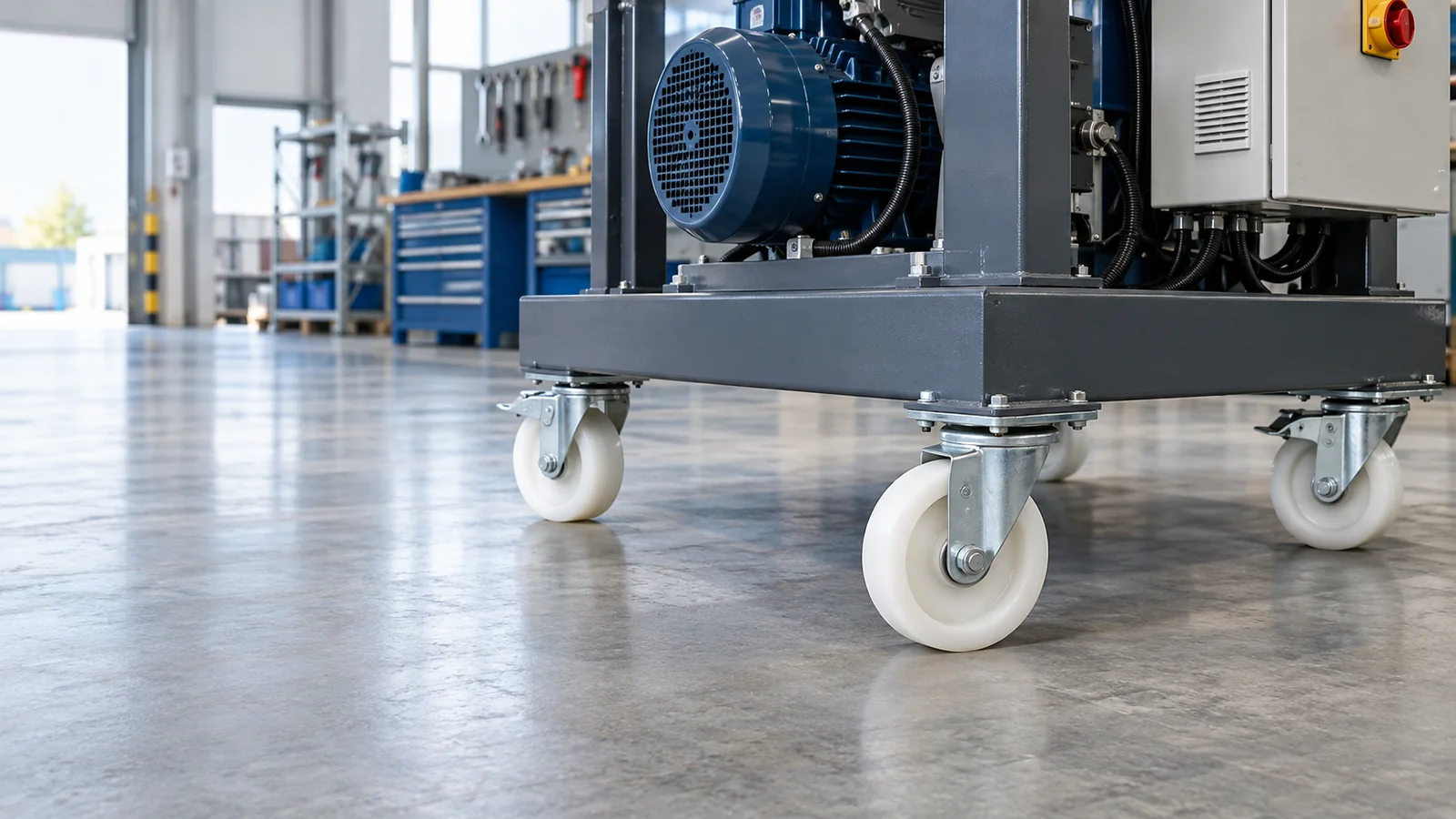
「砂利や軟弱地盤におけるシングルジョッキーホイールとツインジョッキーホイールの比較」を適用する際には、設置された範囲を記録してください。
A jockey wheel must fit more than the nominal tyre diameter. Record tube or clamp size, closed height, required lift, wheel/fork envelope, crank clearance and the path the assembly takes if it folds or swivels for travel. Include the trailer’s actual drawbar load condition and the ground where uncoupled manoeuvring occurs. When applying this to Single vs Twin Jockey Wheels on Gravel, compare candidates against the same equipment record so material, size and interface changes are reviewed consistently.
For replacement work, inspect the clamp, tube and mounting area for deformation or previous modification before assuming the old configuration should be copied exactly. If the supplier’s stated load refers to a jack family, do not use it as a substitute for measuring the real application requirement. When applying this to Single vs Twin Jockey Wheels on Gravel, compare candidates against the same equipment record so material, size and interface changes are reviewed consistently.
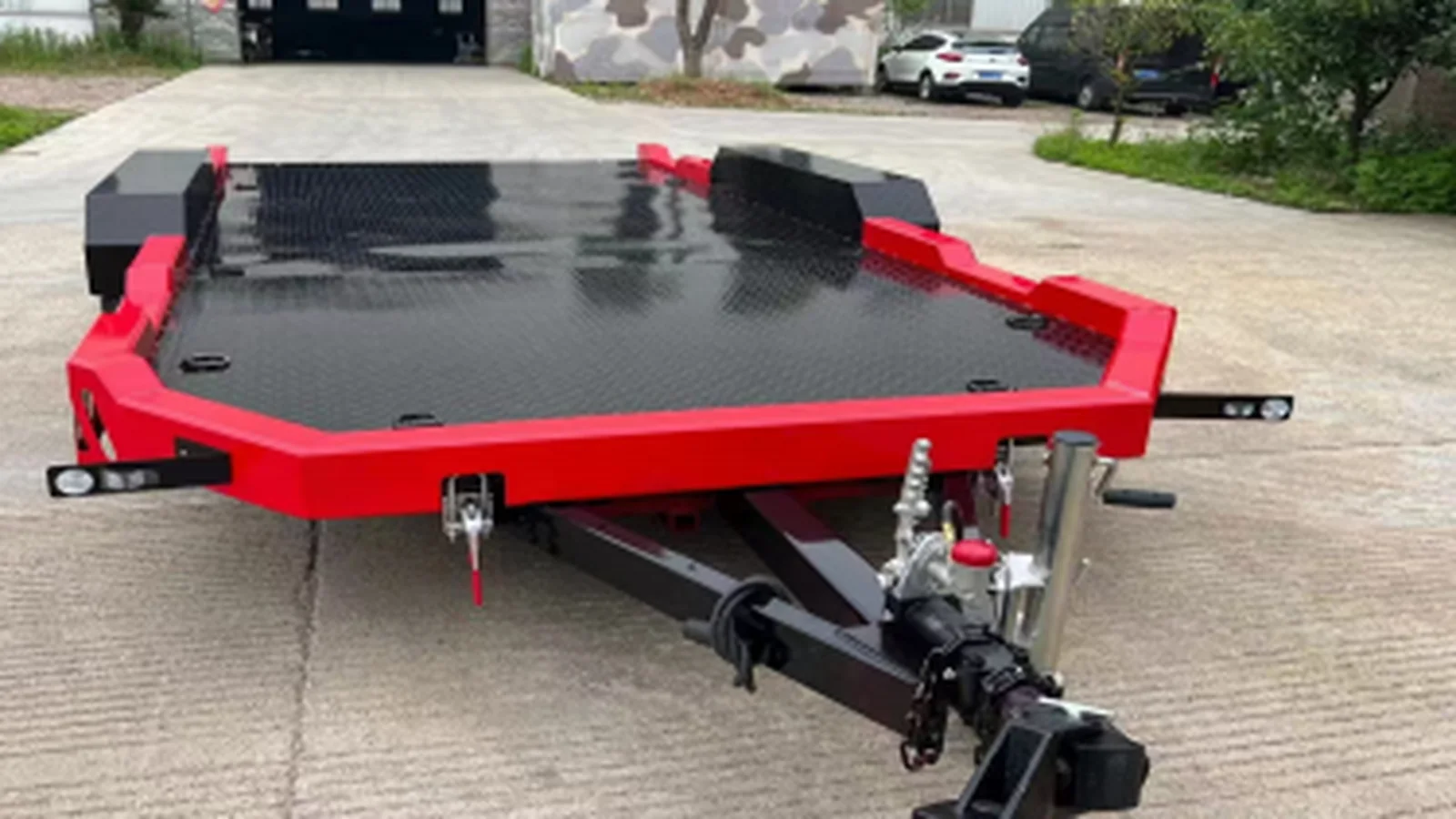
Turn the trailer-support question into four comparable inputs — Single vs Twin Jockey Wheels
Trailer-support questions become easier to resolve when load, ground, interface and operating travel are written down separately. A catalogue title can identify a family, but it cannot describe how the support wheel is loaded, how the trailer is manoeuvred or how much space the mechanism has around the drawbar. When applying this to Single vs Twin Jockey Wheels on Gravel, compare candidates against the same equipment record so material, size and interface changes are reviewed consistently.
| 入力 | 何を記録すべきか |
|---|---|
| Support condition | State the actual nose or support load and whether the wheel is used only for parking, for hand manoeuvring, or for both. |
| Ground | Describe concrete, paving, gravel, soft ground, joints and slopes that occur in normal use. |
| インタフェース | Record tube, clamp, bracket or plate dimensions plus the position of nearby coupling and frame members. |
| Operating envelope | Measure closed height, useful travel, crank access and the path required for folding or swivelling where relevant. |
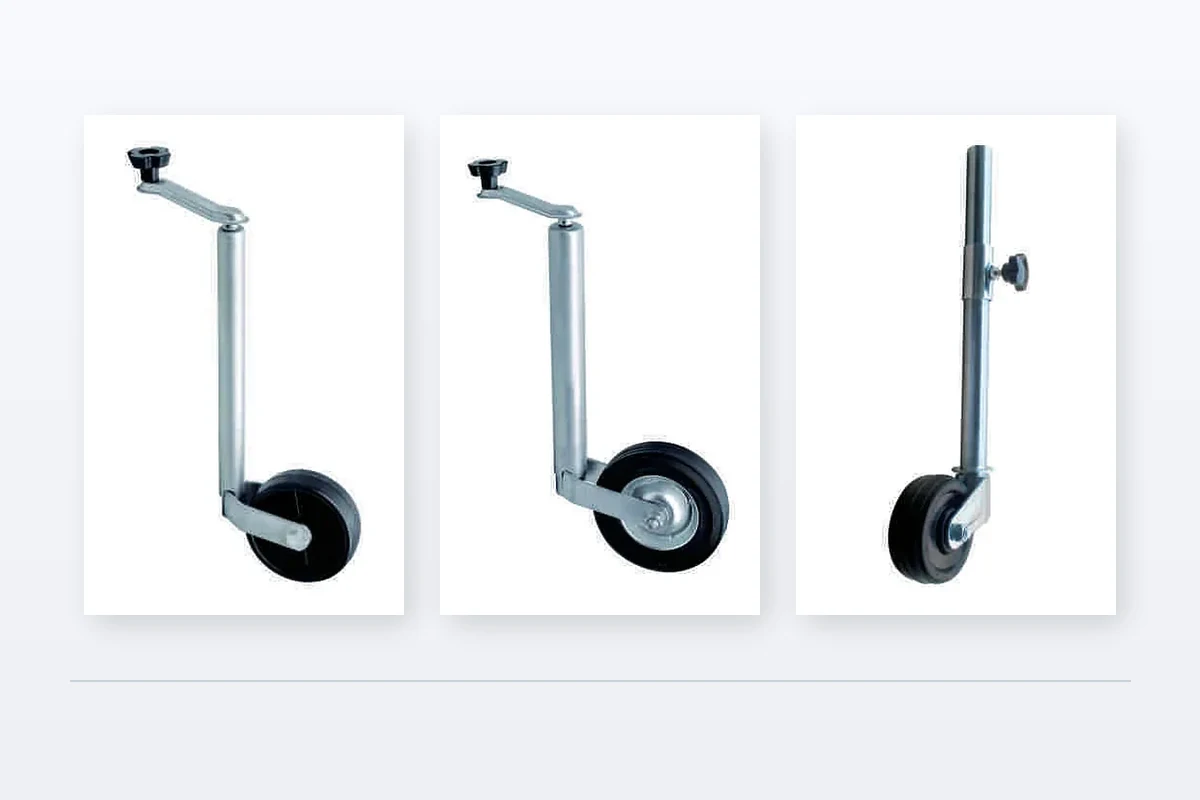
Use these inputs to compare alternatives under the same conditions. A larger wheel may improve obstacle geometry but can also change stored clearance. A stronger-looking bracket may still be unsuitable if the clamp or tube does not match. When a brake, swivel or twin-wheel arrangement is involved, describe the function that the operator actually needs rather than requesting a feature from appearance alone. When applying this to Single vs Twin Jockey Wheels on Gravel, compare candidates against the same equipment record so material, size and interface changes are reviewed consistently.
For replacement work, photograph the assembly before removal and include a side view that shows the mounting relationship. If the existing part is damaged, identify which dimensions are still trustworthy. During the first controlled installation, operate the mechanism through its usable travel without rushing the test, then load the trailer gradually and confirm that the wheel, handle and structure remain clear through normal manoeuvring. When applying this to Single vs Twin Jockey Wheels on Gravel, compare candidates against the same equipment record so material, size and interface changes are reviewed consistently.
How single vs twin jockey wheels on gravel changes the RFQ
For “Single vs Twin Jockey Wheels on Gravel and Soft Ground”, the RFQ should state the operating fact that drives the question rather than only repeating the product term. Name the equipment, describe the normal and maximum duty, record the fit-controlling dimensions and identify the symptom or objective that prompted the review. If the decision concerns load, include equipment mass and supporting points; if it concerns material, describe floor and environment; if it concerns mounting, provide the interface geometry; and if it concerns a trailer support wheel, include the support condition, ground and available travel.
Keep required values separate from open questions. A supplier can respond much more usefully to “confirm bore and hub length against attached sketch” than to a guessed dimension presented as final. The same principle applies to load ratings, material grades, brake functions and mounting details. Where a value is verified, label it clearly; where it is not, ask for confirmation. That keeps the quotation aligned with the real equipment and makes later technical review easier without adding another repetitive approval or subsequent orders section to the page. When applying this to Single vs Twin Jockey Wheels on Gravel, compare candidates against the same equipment record so material, size and interface changes are reviewed consistently.
Single vs Twin Jockey Wheels on Gravel FAQ
軟弱地盤におけるシングルジョッキーホイールとツインジョッキーホイールの見分け方で、最初に確認すべきことは何ですか?
まずは、牽引力/支持荷重、接地面、車輪の直径/幅、チューブまたはクランプの適合性、ストローク、および収納時のクリアランスから始めましょう。そうすることで、残りの選択項目に測定可能な基準が与えられます。
写真は寸法測定の代わりになるだろうか?
写真は識別に役立ちますが、適合性が重要な寸法は、やはり測定するか、承認済みの図面から取得する必要があります。
購入者は積載量に安全率を加算すべきでしょうか?
A safety allowance is commonly used to address unequal load sharing and operating effects, but the appropriate value depends on the application and does not replace the product rating. When applying this to Single vs Twin Jockey Wheels on Gravel, compare candidates against the same equipment record so material, size and interface changes are reviewed consistently.
材料が不明な場合はどうなるでしょうか?
作業現場と環境を明記し、サンプルまたは写真を提供してください。また、色から推測するのではなく、材料を確認項目として扱ってください。
軟弱地盤におけるシングルジョッキーホイールとツインジョッキーホイールの要件についてご相談ください
申請書、積載量、適合性を判断するための寸法、数量、および関連する写真や図面をお送りください。これらの情報をもとに、推測に頼ることなく製品群を絞り込みます。