
ジョッキーホイール
1BJY-JW-04 ダブルジャッキ交換用ホイール
モデル1BJY-JW-04構成ダブル交換用ジャッキホイール
1BJY-JW-04 ダブルジャッキ交換用ホイールは、B2B機器またはトレーラーサポートプロジェクト向けです。適合制御インターフェース、デューティ、および…を指定してください。
設定を表示 →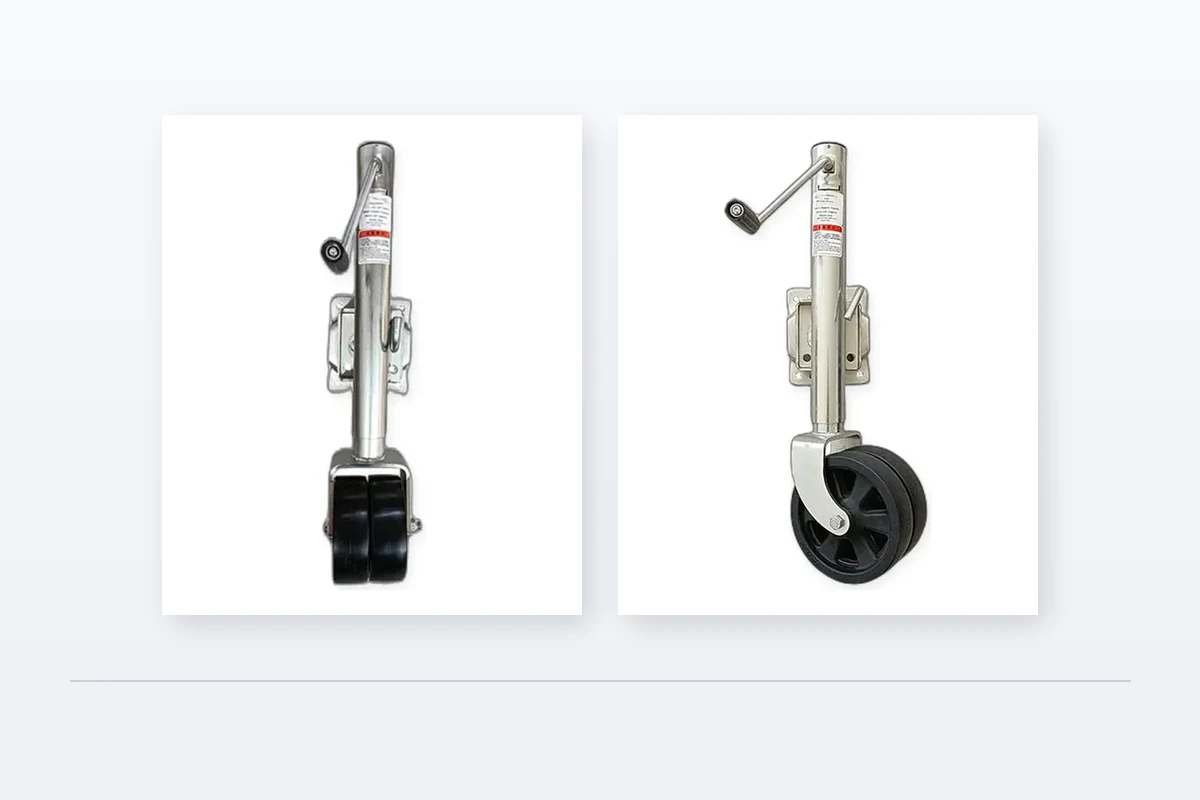
ツインホイールジョッキーアセンブリの実用的な価値は、仕様が移動させる必要のある機器、それが走行する床面、および荷重を支えるインターフェースと結びついている場合にのみ明らかになります。
二輪トレーラーの支持構造においては、まず実際の荷重と適合性を制御する寸法を最初の技術的チェックポイントとして扱うべきである。それが明確になれば、車輪の直径、幅、材質、ベアリング配置、および取り付けの詳細を合理的な順序で検討することができる。
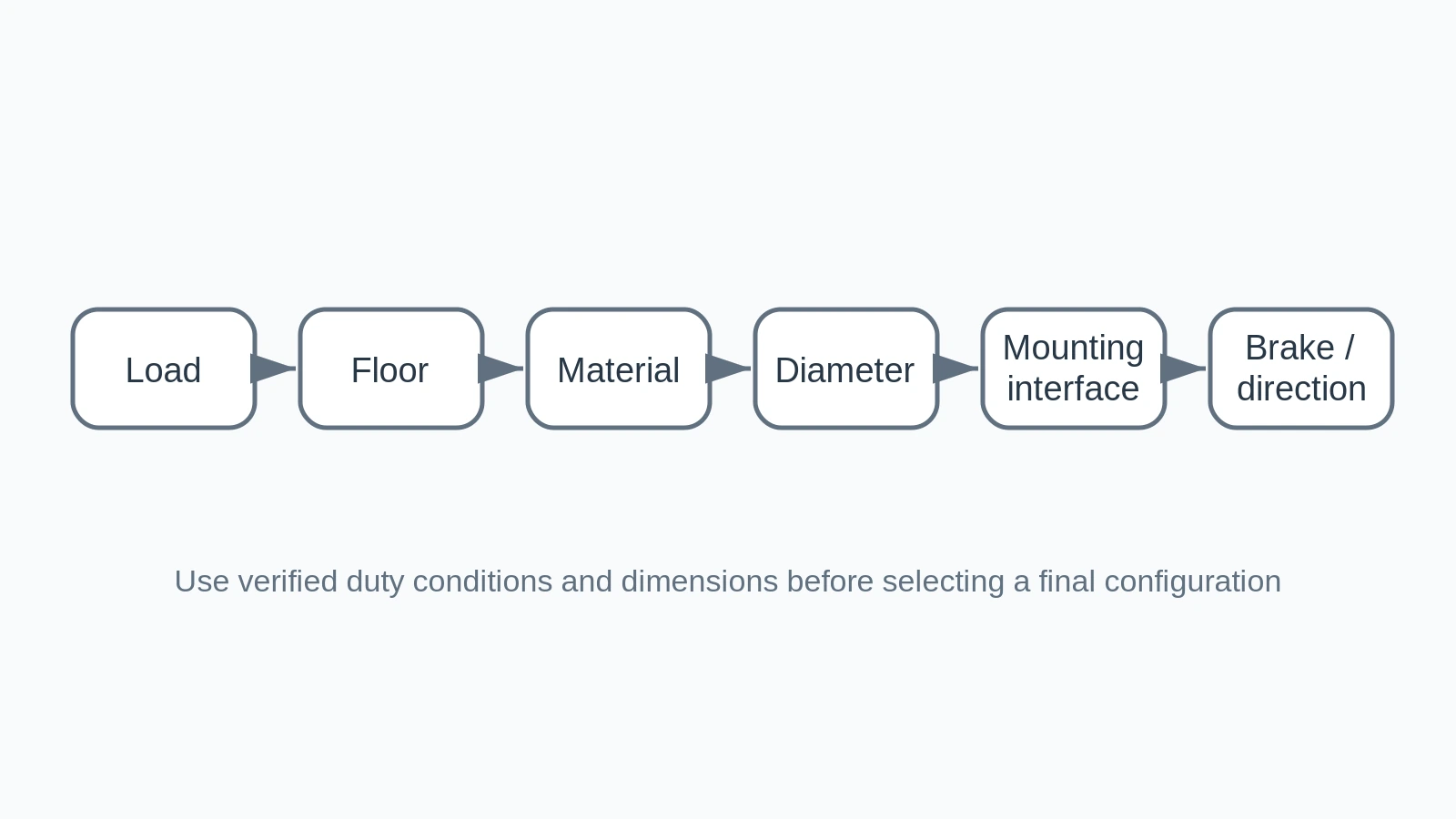
より大きなホイール、より硬いポリマー、またはより重いブラケットを使用すれば自動的に問題が解決すると安易に考えてはいけません。材質やホイールサイズのラベルだけでは互換性を確認することはできません。そのため、最も安全な見積依頼書(RFQ)では、構成を見積依頼する前に、荷重、床面、ホイールの直径/幅、取り付けインターフェース、ブレーキの必要性、および数量を記録してください。ツインホイールジョッキーアセンブリの場合、個々の構成を機器に適合させる前に、この点を利用してファミリーレベルの選択肢を絞り込んでください。
下記の製品一覧表には、このサイトに掲載されている現在の構成が表示されています。この一覧表を出発点として、外観だけで選択するのではなく、取り付け方法や使用条件を正確に比較検討してください。ツインホイールジョッキーアセンブリの場合は、個々の構成が機器に適合するかどうかを検討する前に、この一覧表を参考に製品ファミリーレベルでの選択肢を絞り込んでください。
1BJY-JW-04 ダブルジャッキ交換用ホイールは、B2B機器またはトレーラーサポートプロジェクト向けです。適合制御インターフェース、デューティ、および…を指定してください。
設定を表示 →
B2B機器またはトレーラーサポートプロジェクト向けの6インチツインホイール1500ポンドジョッキージャッキ。適合制御を指定してください…
設定を表示 →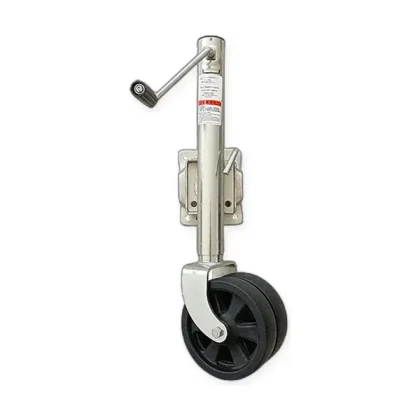
B2B機器またはトレーラーサポートプロジェクト向けの8インチツインホイール2000ポンドジョッキージャッキ。適合制御を指定してください…
設定を表示 →
JW1605 1500ポンド 6インチ ダブルソリッドホイールジャッキ。B2B機器またはトレーラーサポートプロジェクト向け。仕様を指定してください…
設定を表示 →このファミリーを絞り込むには、すべての候補を同じ用途説明と比較するのが最も確実です。カタログ名や写真を比較する前に、ホイールの直径、幅、材質、内径またはベアリング配置、ハブの長さ、および支持点ごとの実際の荷重を記録してください。これにより、決定は単一の魅力的な特徴ではなく、機器そのものに基づいて行われます。ツインホイールジョッキーアセンブリの場合は、個々の構成を機器に適合するかどうかを検討する前に、この点を使用してファミリーレベルの選択肢を絞り込んでください。
交換作業の場合は、床の状態、継ぎ目または敷居、車軸保持、ブラケットまたはフレーム内の側面クリアランスの量を追加してください。既存の部品が摩耗、曲がり、または修理されている場合は、意図した形状を表していない可能性のある寸法を特定してください。目に見える摩耗を設計目標として扱うよりも、実測図面または寸法入りの写真の方が役立ちます。ツインホイールジョッキーアセンブリの場合は、個々の構成を機器に適合させる前に、この点を使用してファミリーレベルの選択肢を絞り込んでください。
複数の構成を比較する場合は、必須値とオプションの希望値を別々の列に記入してください。適合性を判断するための数値が利用できない場合は、他のサイズやシリーズから値を借りるのではなく、見積依頼書(RFQ)の確認項目として残してください。ツインホイールジョッキーアセンブリの場合は、個々の構成を機器に適合するかどうかを検討する前に、この点を利用してファミリーレベルの選択肢を絞り込んでください。
個々の構成を比較する前に、ツインホイールジョッキーアセンブリのページを使用して、材質と形状を絞り込んでください。ホイールのみのアイテムの場合、最終的な選択は、機器側の車軸またはベアリングのインターフェース、ハブのスペース、および床面の経路に依存します。同じ積載荷重で、ジョイント、ランプ、破片、および操縦に関する同じ仮定に基づいて、候補を比較してください。特定の構成について材質特性、ベアリング配置、または耐荷重が表示されていない場合は、ファミリーの説明をその範囲のすべてのホイールの仕様として扱うのではなく、見積依頼の確認ポイントとして保管してください。
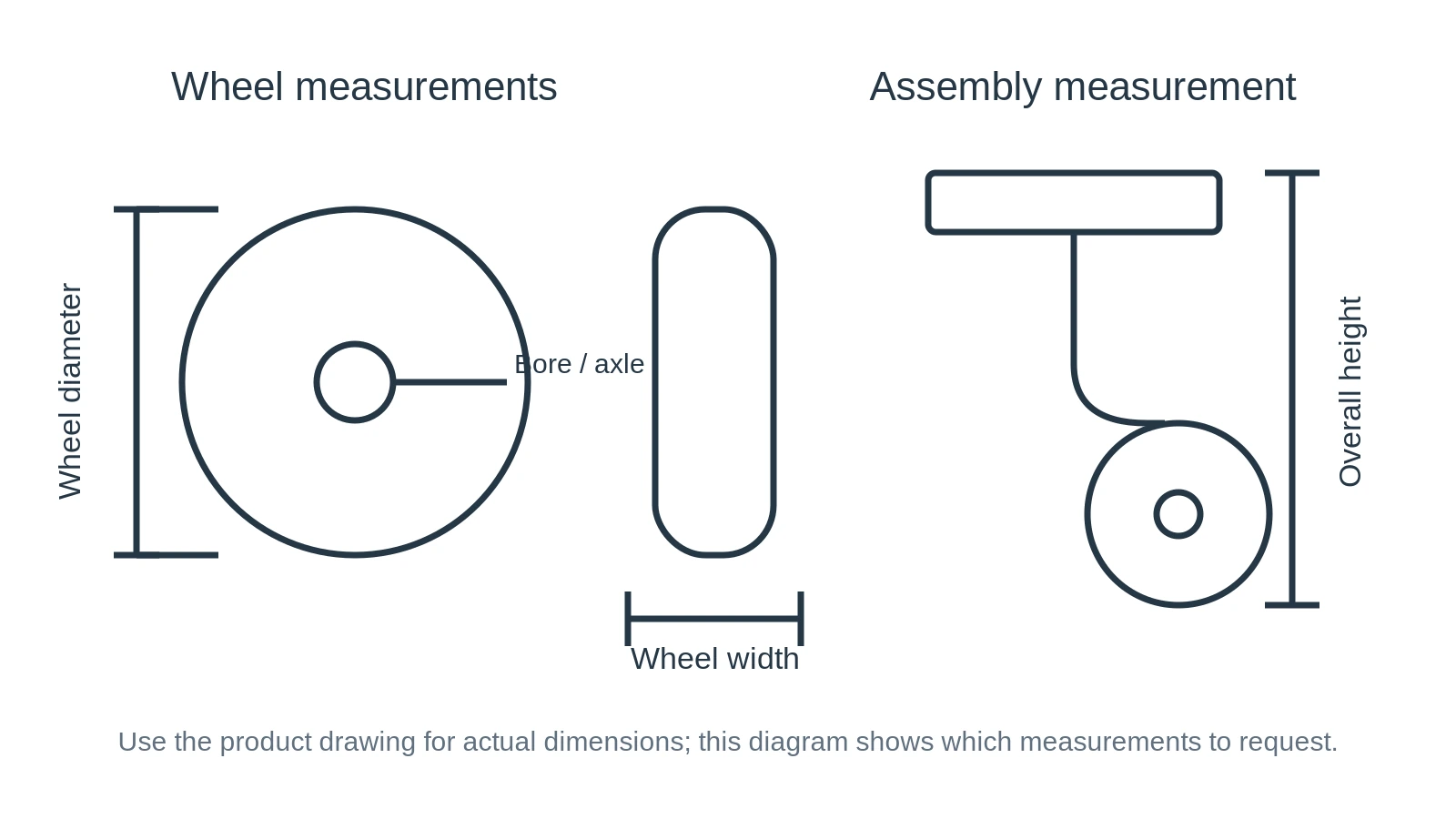
| 変数 | なぜそれが重要なのか |
|---|---|
| 支持点ごとの荷重 | フレームは、特に床が不均一な場合、必ずしも全体の質量を均等に分散させるとは限りません。 |
| ホイール直径 | 最低地上高と障害物走破性の形状を変更します。 |
| ホイール幅 | 接触面積が変化するため、柔らかい地面では影響が出る可能性がある。 |
| 材料 | 硬度、床との相互作用、および環境適合性に影響します。 |
| ボア/ベアリング/アクスル | 横方向の負荷や即席のスペーサーを使用せずに、ホイールのみの取り付けを制御します。 |
| ブラケット/チューブ/プレート | 組み立て全体の適合性と周囲のクリアランスを制御します。 |
| ブレーキ/ロック機能 | 実際の駐車または方向制御の要件に合致している必要があります。 |
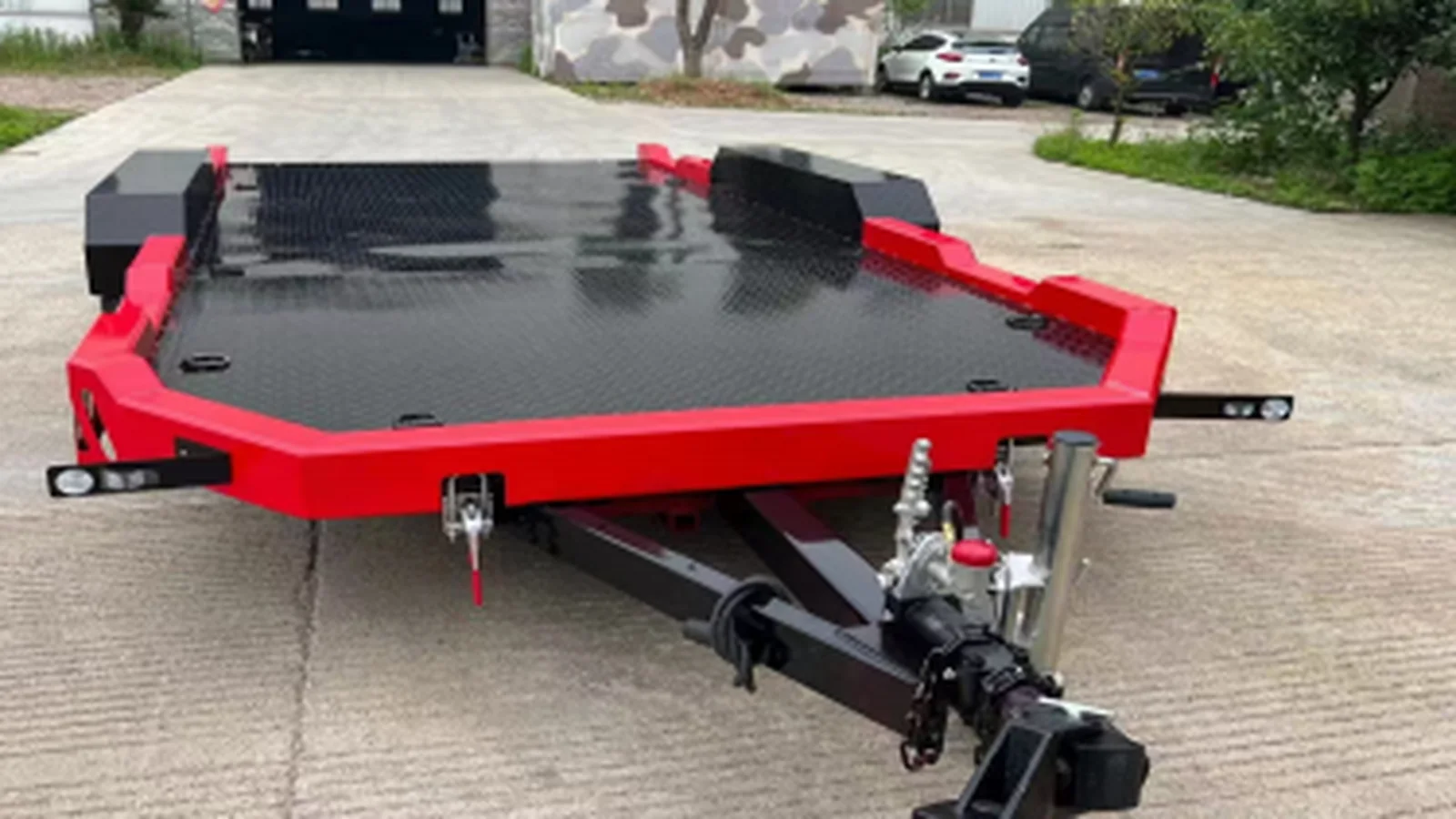
ツインホイールジョッキーアセンブリは、ツインホイールトレーラーのサポートに用いられることがありますが、最適な構成は常に用途によって異なります。マテリアルハンドリング機器は、ほとんどの時間を滑らかなコンクリート上で走行しますが、トレーラーのサポートホイールは、短い操縦距離のために舗装路、締固められた地面、または砂利の上を走行することがあります。これらは異なる設計条件です。
お問い合わせの際は、スロープ、床の継ぎ目、洗浄、ゴミの有無、屋外での使用状況、想定される走行経路についてご説明ください。機器が既に稼働している場合は、静止画では分からない干渉や操舵挙動などを短い動画で確認できる場合があります。ツインホイールジョッキーアセンブリの場合は、個々の構成を機器に適合させる前に、この点を参考にファミリーレベルの選択肢を絞り込んでください。
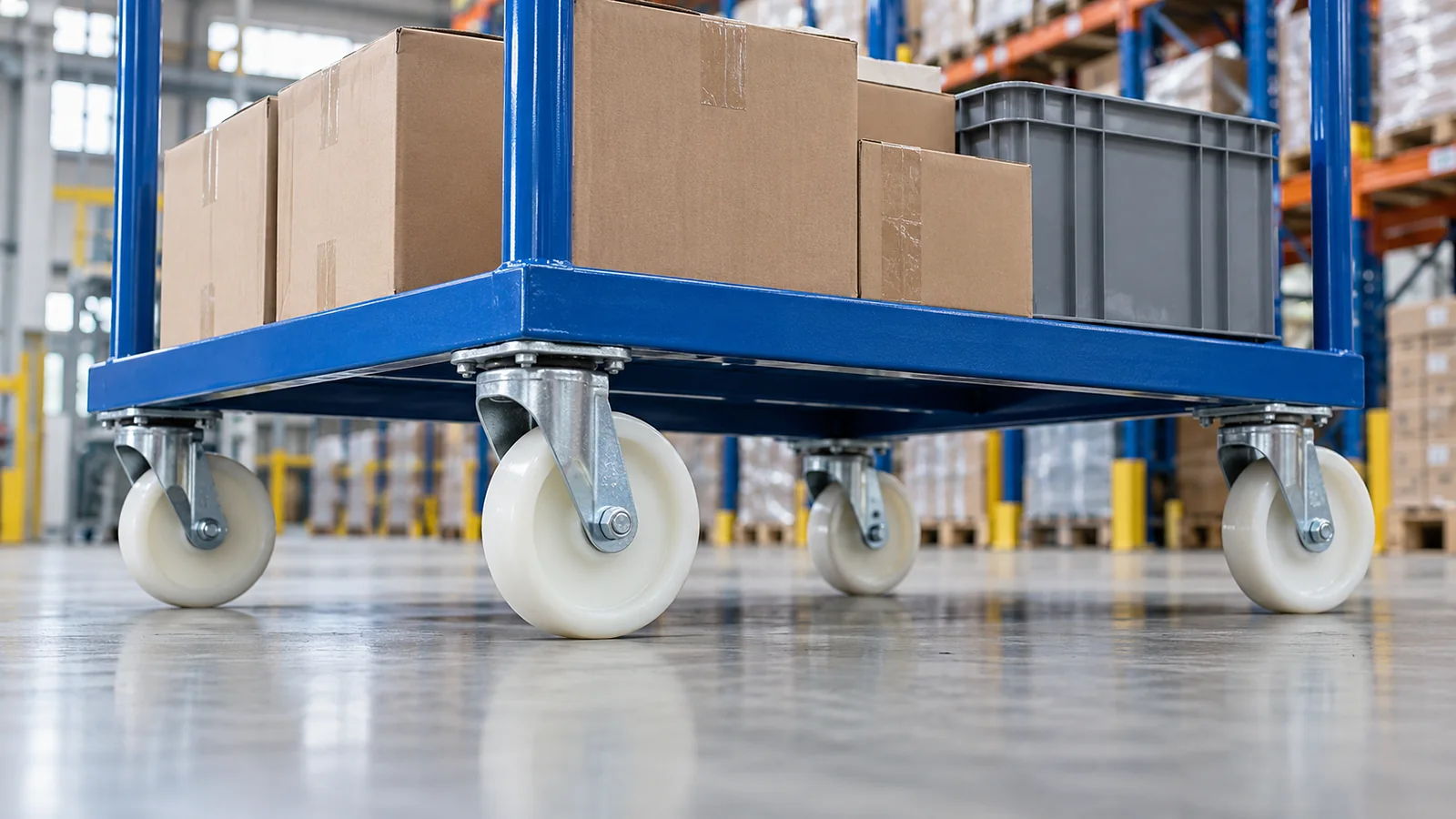
ポリマーを選ぶ際は、色だけで判断しないでください。必要な材料ファミリーを確認し、化学物質への曝露や異常な温度が問題となる場合は、環境を明記して、適切なグレードを検討できるようにしてください。ホイールのみの交換の場合、車軸とハブの接合部は直径と同様に重要です。完全なアセンブリの場合、プレート、チューブ、またはクランプの寸法によって、製品を安全に取り付けられるかどうかが決まります。ツインホイールジョッキーアセンブリの場合は、この点を利用してファミリーレベルの選択肢を絞り込み、個々の構成が機器に適合するかどうかを検討してください。
特注構成が必要な場合は、既存の図面または寸法入りのスケッチをお送りください。寸法入りのお問い合わせは、見た目が似ている製品のリクエストよりも迅速に評価できます。ツインホイールジョッキーアセンブリの場合、個々の構成を機器に適合させる前に、この点を利用してファミリーレベルの選択肢を絞り込んでください。
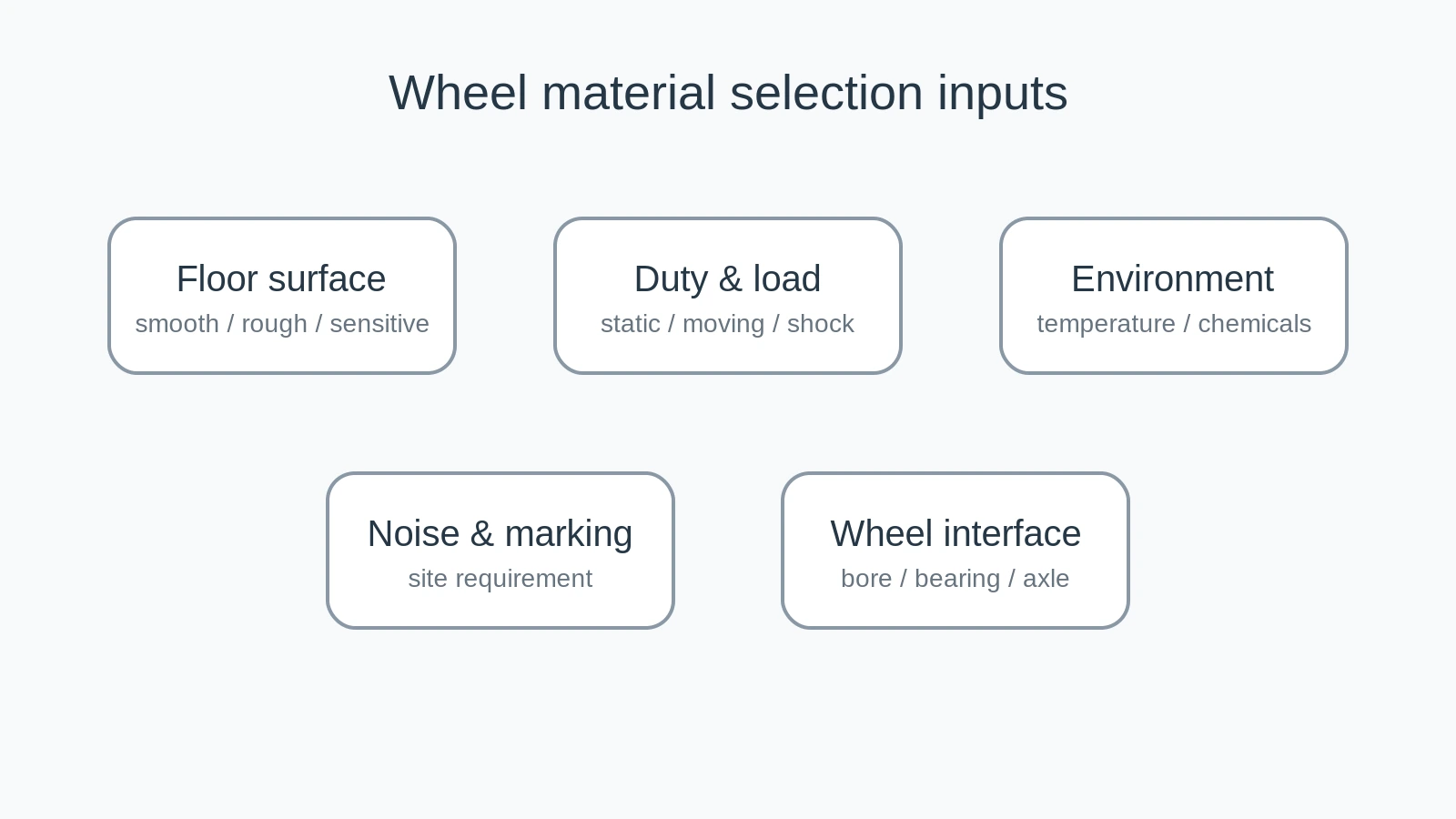
より広範な方法については、 ホイール選択ガイド そして 測定ガイドトレーラーに特化した作業の場合、 トレーラー申請ページ 地上および格納時のクリアランスチェックを追加します。
いいえ。荷重、幅、材質、ベアリング/車軸またはブラケットの接合部、および使用条件については、引き続き検討が必要です。
床の写真と、床の状態、荷重、使用環境について説明を添えてお送りください。色から材質を推測しないでください。
複数のモデルを組み合わせた場合は、商業的な観点から検討できます。各構成ごとに、数量と寸法を記載した別々の行を作成してください。
このサイトは、1~2個の小売購入ではなく、B2Bのプロジェクトおよび生産に関するお問い合わせを対象としています。新規プロジェクトについては、有料の評価サンプルをご検討いただけます。
既にお分かりの仕様、数量、寸法をお送りください。適合性に関わる詳細情報が不足している場合は、お見積もり前に確認させていただきます。