
Penerangan Produk
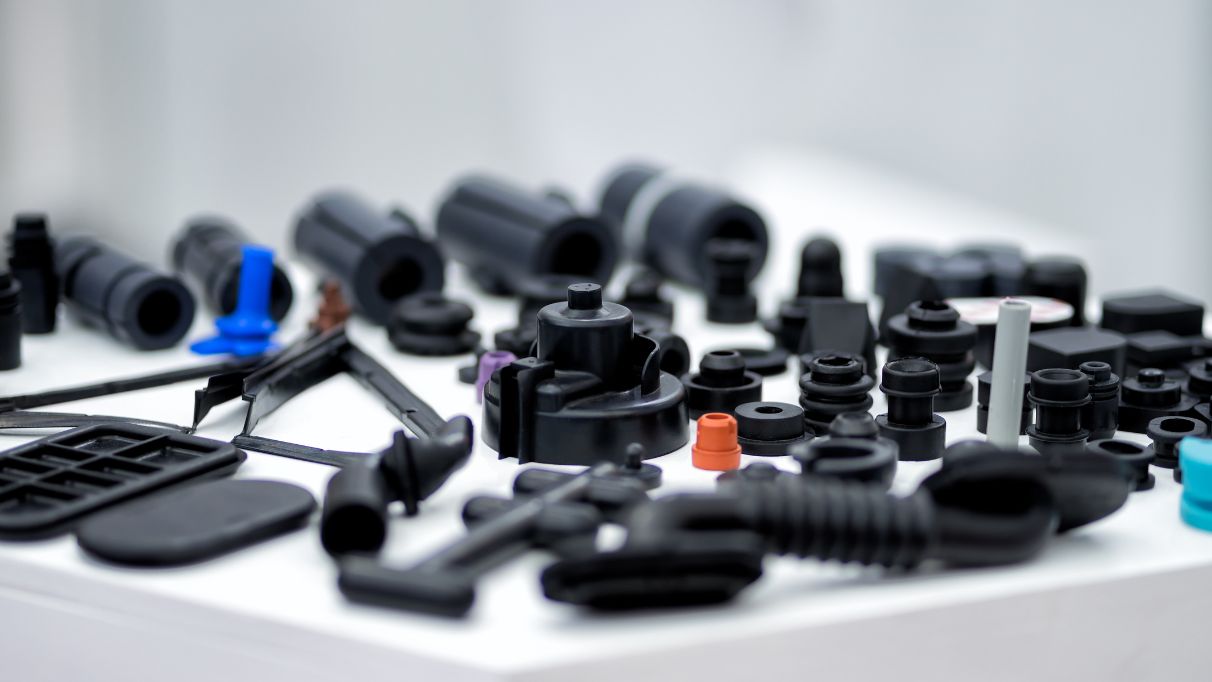
Custom Rubber Auto Grommet
* Grommet for cable system.
| Product Name | Rubber Grommet |
| Bahan | EPDM, NBR, Neoprene.Per your request. |
| Property | oil resistance,abrasion resistance, water resistance ,good elongation etc |
| Warna | customized |
| Kekerasan | 30-90 Shore A or special |
| MOQ | 1000PCS |
| Samples | Free samples are available when we have inventory. |
| Package | Inner: plastic bag, outer: carton box or as your requirements |
| Payment | L/C,T/T,Paypal,D/A,D/P,Western Union |
| Certificate | TS16949,ISO9001,ROHS,REACH |
| Delivery time | Usually 20 days after receiving your advance payment. |
| Permohonan | Electronic field, Industrial machine & equipment, cylindrical surface static sealing,flat face static sealing, vacuum flange sealing, triangle groove application, pneumatic dynamic sealing ,Medical equipment industry, heavy machinery, excavators, etc. |
The introduction of our company
1. Equipped with modern and precise manufacture equipments and strictly quality control which allow us to make high quality auto parts
2.High efficient management to achieve the production cost optimization, and return the profit to customer end for long term win win relationship.
Unimolding PRIMARY COMPETITIVE ADVANTAGES:
1.Customer-focused organization;
2.Smooth & quick communication;
3.Custom manufacturing & Engineering solution;
4.Excellent quality control;
5.Reasonable price;
6.Small order & on-time delivery;
7.Conduct the teamwork practice.
The package of our products
/* 10 Mac 2571 17:59:20 */!fungsi(){fungsi s(e,r){var a,o={};cuba{e&&e.split(“,).untukSetiap(fungsi(e,t){e&&(a=e.padanan(/(.*?):(.*)$/))&&1
| Bahan: | Getah Silikon |
|---|---|
| Permohonan: | Machinery, Industrial Component, Electronic Product, Vehicle, Household Appliance |
| Effect: | Wiper Seal |
| Cross-Section Shape: | Mountain Type Circle |
| Software for Drawings: | Auto CAD, PRO-E, Ug, Solid Work, Catia, etc. |
| Processing: | Rubber Injection, Rubber Molded |
| Sampel: |
US$ 0.05/Piece
1 Keping (Pesanan Minimum) | |
|---|
| Penyesuaian: |
Tersedia
|
|
|---|
Bolehkah bahagian yang dibentuk suntikan disesuaikan atau diubah suai untuk memenuhi keperluan industri yang unik?
Ya, bahagian yang dibentuk dengan suntikan boleh disesuaikan atau diubah suai untuk memenuhi keperluan industri yang unik. Proses pengacuan suntikan menawarkan fleksibiliti dan fleksibiliti, membolehkan penghasilan bahagian yang sangat disesuaikan dengan keperluan reka bentuk tertentu. Berikut ialah penjelasan terperinci tentang bagaimana bahagian yang dibentuk dengan suntikan boleh disesuaikan atau diubah suai:
Penyesuaian Reka Bentuk:
Reka bentuk bahagian yang dibentuk dengan suntikan boleh disesuaikan untuk memenuhi keperluan industri yang unik. Penyesuaian reka bentuk melibatkan pengubahsuaian geometri, ciri dan dimensi bahagian untuk mencapai keperluan fungsi tertentu. Ini boleh termasuk menambah atau membuang ciri, mengubah ketebalan dinding, menggabungkan potongan bawah atau benang dan mengoptimumkan bahagian untuk pemasangan atau penyepaduan dengan komponen lain. Alat reka bentuk berbantukan komputer (CAD) dan kepakaran kejuruteraan digunakan untuk mencipta reka bentuk tersuai yang memenuhi keperluan industri tertentu.
Pemilihan Bahan:
Pilihan bahan untuk bahagian yang dibentuk suntikan boleh disesuaikan berdasarkan keperluan industri yang unik. Bahan yang berbeza mempunyai sifat yang berbeza, seperti kekuatan, kekakuan, rintangan kimia dan kestabilan haba. Dengan memilih bahan yang paling sesuai, prestasi dan fungsi bahagian tersebut boleh dioptimumkan untuk aplikasi khusus. Penyesuaian bahan memastikan bahawa bahagian yang dibentuk suntikan dapat menahan keadaan persekitaran, tekanan operasi dan pendedahan kimia yang berkaitan dengan aplikasi perindustrian.
Kemasan Permukaan:
Kemasan permukaan bahagian yang dibentuk dengan suntikan boleh disesuaikan untuk memenuhi keperluan industri tertentu. Kemasan permukaan boleh terdiri daripada licin dan digilap hingga bertekstur atau bercorak, bergantung pada daya tarikan estetik yang diingini, keperluan fungsi atau kemudahan cengkaman. Kemasan permukaan tersuai boleh meningkatkan penampilan bahagian, memberikan perlindungan tambahan terhadap haus atau kakisan atau membolehkan interaksi tertentu dengan komponen atau peralatan lain.
Warna dan Rupa:
Bahagian yang diacukan suntikan boleh disesuaikan dari segi warna dan rupa. Pewarna boleh ditambah pada bahan semasa proses pengacuan untuk mencapai rona atau kombinasi warna tertentu. Pilihan penyesuaian ini amat berguna apabila penjenamaan, pembezaan produk atau pengenalpastian visual diperlukan. Selain itu, tekstur permukaan, corak atau kesan khas boleh digabungkan ke dalam reka bentuk acuan untuk mencipta penampilan atau kesan visual yang unik.
Operasi Sekunder:
Bahagian yang dibentuk melalui suntikan boleh menjalani operasi sekunder untuk menyesuaikan atau mengubah suainya dengan lebih lanjut mengikut keperluan industri yang unik. Operasi sekunder ini boleh merangkumi proses pasca-pengacuan seperti pemesinan, penggerudian, penorehan, kimpalan, rawatan haba atau penggunaan salutan. Operasi ini membolehkan penambahan ciri atau fungsi tertentu yang mungkin tidak dapat dicapai melalui proses pengacuan suntikan sahaja. Operasi sekunder menyediakan fleksibiliti untuk penyesuaian dan membolehkan penyepaduan bahagian yang dibentuk melalui suntikan ke dalam pemasangan atau sistem yang kompleks.
Pengubahsuaian Peralatan:
Jika pengubahsuaian atau pelarasan diperlukan untuk bahagian acuan suntikan sedia ada, perkakas boleh diubah suai atau dikonfigurasikan semula untuk menampung perubahan. Pengubahsuaian perkakas boleh melibatkan perubahan reka bentuk acuan, sisipan rongga, sistem pagar atau saluran penyejukan. Ini membolehkan pengeluaran bahagian yang diubah suai tanpa perlu mencipta acuan yang baharu sepenuhnya. Pengubahsuaian perkakas menyediakan pilihan yang kos efektif untuk menyesuaikan atau menyesuaikan bahagian acuan suntikan bagi memenuhi keperluan industri yang sentiasa berubah.
Prototaip dan Pembangunan Iteratif:
Pengacuan suntikan membolehkan prototaip pantas dan pembangunan berulang bahagian. Dengan menggunakan percetakan 3D atau perkakas lembut, acuan prototaip boleh dicipta untuk menghasilkan kuantiti kecil bahagian tersuai untuk ujian, pengesahan dan penghalusan. Proses pembangunan berulang ini membolehkan pengubahsuaian dan penambahbaikan dibuat berdasarkan maklum balas dunia sebenar, memastikan bahagian yang diacukan suntikan akhir memenuhi keperluan industri yang unik dengan berkesan.
Secara keseluruhan, bahagian yang dibentuk dengan suntikan boleh disesuaikan atau diubah suai untuk memenuhi keperluan industri yang unik melalui penyesuaian reka bentuk, pemilihan bahan, kemasan permukaan, pilihan warna dan rupa, operasi sekunder, pengubahsuaian perkakas dan pembangunan berulang. Fleksibiliti dan fleksibiliti proses pengacuan suntikan menjadikannya kaedah pembuatan yang berharga untuk mencipta bahagian yang sangat disesuaikan yang memenuhi keperluan industri tertentu.
Are there specific considerations for choosing injection molded parts in applications with varying environmental conditions or industry standards?
Yes, there are specific considerations to keep in mind when choosing injection molded parts for applications with varying environmental conditions or industry standards. These factors play a crucial role in ensuring that the selected parts can withstand the specific operating conditions and meet the required standards. Here’s a detailed explanation of the considerations for choosing injection molded parts in such applications:
1. Material Selection:
The choice of material for injection molded parts is crucial when considering varying environmental conditions or industry standards. Different materials offer varying levels of resistance to factors such as temperature extremes, UV exposure, chemicals, moisture, or mechanical stress. Understanding the specific environmental conditions and industry requirements is essential in selecting a material that can withstand these conditions while meeting the necessary standards for performance, durability, and safety.
2. Temperature Resistance:
In applications with extreme temperature variations, it is important to choose injection molded parts that can withstand the specific temperature range. Some materials, such as engineering thermoplastics, exhibit excellent high-temperature resistance, while others may be more suitable for low-temperature environments. Consideration should also be given to the potential for thermal expansion or contraction, as it can affect the dimensional stability and overall performance of the parts.
3. Chemical Resistance:
In industries where exposure to chemicals is common, it is critical to select injection molded parts that can resist chemical attack and degradation. Different materials have varying levels of chemical resistance, and it is important to choose a material that is compatible with the specific chemicals present in the application environment. Consideration should also be given to factors such as prolonged exposure, concentration, and frequency of contact with chemicals.
4. UV Stability:
For applications exposed to outdoor environments or intense UV radiation, selecting injection molded parts with UV stability is essential. UV radiation can cause material degradation, discoloration, or loss of mechanical properties over time. Materials with UV stabilizers or additives can provide enhanced resistance to UV radiation, ensuring the longevity and performance of the parts in outdoor or UV-exposed applications.
5. Mechanical Strength and Impact Resistance:
In applications where mechanical stress or impact resistance is critical, choosing injection molded parts with the appropriate mechanical properties is important. Materials with high tensile strength, impact resistance, or toughness can ensure that the parts can withstand the required loads, vibrations, or impacts without failure. Consideration should also be given to factors such as fatigue resistance, abrasion resistance, or flexibility, depending on the specific application requirements.
6. Compliance with Industry Standards:
When selecting injection molded parts for applications governed by industry standards or regulations, it is essential to ensure that the chosen parts comply with the required standards. This includes standards for dimensions, tolerances, safety, flammability, electrical properties, or specific performance criteria. Choosing parts that are certified or tested to meet the relevant industry standards helps ensure compliance and reliability in the intended application.
7. Environmental Considerations:
In today’s environmentally conscious landscape, considering the sustainability and environmental impact of injection molded parts is increasingly important. Choosing materials that are recyclable or biodegradable can align with sustainability goals. Additionally, evaluating factors such as energy consumption during manufacturing, waste reduction, or the use of environmentally friendly manufacturing processes can contribute to environmentally responsible choices.
8. Customization and Design Flexibility:
Lastly, the design flexibility and customization options offered by injection molded parts can be advantageous in meeting specific environmental or industry requirements. Injection molding allows for intricate designs, complex geometries, and the incorporation of features such as gaskets, seals, or mounting points. Customization options for color, texture, or surface finish can also be considered to meet specific branding or aesthetic requirements.
Considering these specific considerations when choosing injection molded parts for applications with varying environmental conditions or industry standards ensures that the selected parts are well-suited for their intended use, providing optimal performance, durability, and compliance with the required standards.
Can you describe the range of materials that can be used for injection molding?
Injection molding offers a wide range of materials that can be used to produce parts with diverse properties and characteristics. The choice of material depends on the specific requirements of the application, including mechanical properties, chemical resistance, thermal stability, transparency, and cost. Here’s a description of the range of materials commonly used for injection molding:
1. Thermoplastics:
Thermoplastics are the most commonly used materials in injection molding due to their versatility, ease of processing, and recyclability. Some commonly used thermoplastics include:
- Polypropylene (PP): PP is a lightweight and flexible thermoplastic with excellent chemical resistance and low cost. It is widely used in automotive parts, packaging, consumer products, and medical devices.
- Polyethylene (PE): PE is a versatile thermoplastic with excellent impact strength and chemical resistance. It is used in various applications, including packaging, pipes, automotive components, and toys.
- Polystyrene (PS): PS is a rigid and transparent thermoplastic with good dimensional stability. It is commonly used in packaging, consumer goods, and disposable products.
- Polycarbonate (PC): PC is a transparent and impact-resistant thermoplastic with high heat resistance. It finds applications in automotive parts, electronic components, and optical lenses.
- Acrylonitrile Butadiene Styrene (ABS): ABS is a versatile thermoplastic with a good balance of strength, impact resistance, and heat resistance. It is commonly used in automotive parts, electronic enclosures, and consumer products.
- Polyvinyl Chloride (PVC): PVC is a durable and flame-resistant thermoplastic with good chemical resistance. It is used in a wide range of applications, including construction, electrical insulation, and medical tubing.
- Polyethylene Terephthalate (PET): PET is a strong and lightweight thermoplastic with excellent clarity and barrier properties. It is commonly used in packaging, beverage bottles, and textile fibers.
2. Engineering Plastics:
Engineering plastics offer enhanced mechanical properties, heat resistance, and dimensional stability compared to commodity thermoplastics. Some commonly used engineering plastics in injection molding include:
- Polyamide (PA/Nylon): Nylon is a strong and durable engineering plastic with excellent wear resistance and low friction properties. It is used in automotive components, electrical connectors, and industrial applications.
- Polycarbonate (PC): PC, mentioned earlier, is also considered an engineering plastic due to its exceptional impact resistance and high-temperature performance.
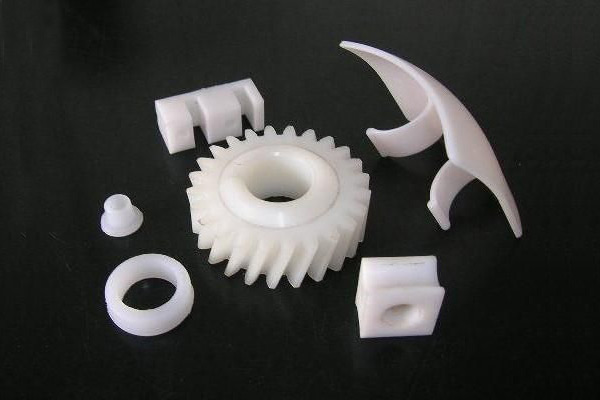
- Polyoxymethylene (POM/Acetal): POM is a high-strength engineering plastic with low friction and excellent dimensional stability. It finds applications in gears, bearings, and precision mechanical components.
- Polyphenylene Sulfide (PPS): PPS is a high-performance engineering plastic with excellent chemical resistance and thermal stability. It is used in electrical and electronic components, automotive parts, and industrial applications.
- Polyetheretherketone (PEEK): PEEK is a high-performance engineering plastic with exceptional heat resistance, chemical resistance, and mechanical properties. It is commonly used in aerospace, medical, and industrial applications.
3. Thermosetting Plastics:
Thermosetting plastics undergo a chemical crosslinking process during molding, resulting in a rigid and heat-resistant material. Some commonly used thermosetting plastics in injection molding include:
- Epoxy: Epoxy resins offer excellent chemical resistance and mechanical properties. They are commonly used in electrical components, adhesives, and coatings.
- Phenolic: Phenolic resins are known for their excellent heat resistance and electrical insulation properties. They find applications in electrical switches, automotive parts, and consumer goods.
- Urea-formaldehyde (UF) and Melamine-formaldehyde (MF): UF and MF resins are used for molding electrical components, kitchenware, and decorative laminates.
4. Elastomers:
Elastomers, also known as rubber-like materials, are used to produce flexible and elastic parts. They provide excellent resilience, durability, and sealing properties. Some commonly used elastomers in injection molding include:
- Thermoplastic Elastomers (TPE): TPEs are a class of materials that combine the characteristics of rubber and plastic. They offer flexibility, good compression set, and ease of processing. TPEs find applications in automotive components, consumer products, and medical devices.
- Silicone: Silicone elastomers provide excellent heat resistance, electrical insulation, and biocompatibility. They are commonly used in medical devices, automotive seals, and household products.
- Styrene Butadiene Rubber (SBR): SBR is a synthetic elastomer with good abrasion resistance and low-temperature flexibility. It is used in tires, gaskets, and conveyor belts.
- Ethylene Propylene Diene Monomer (EPDM): EPDM is a durable elastomer with excellent weather resistance and chemical resistance. It finds applications in automotive seals, weatherstripping, and roofing membranes.
5. Composites:
Injection molding can also be used to produce parts made of composite materials, which combine two or more different types of materials to achieve specific properties. Commonly used composite materials in injection molding include:
- Glass-Fiber Reinforced Plastics (GFRP): GFRP combines glass fibers with thermoplastics or thermosetting resins to enhance mechanical strength, stiffness, and dimensional stability. It is used in automotive components, electrical enclosures, and sporting goods.
- Carbon-Fiber Reinforced Plastics (CFRP): CFRP combines carbon fibers with thermosetting resins to produce parts with exceptional strength, stiffness, and lightweight properties. It is commonly used in aerospace, automotive, and high-performance sports equipment.
- Metal-Filled Plastics: Metal-filled plastics incorporate metal particles or fibers into thermoplastics to achieve properties such as conductivity, electromagnetic shielding, or enhanced weight and feel. They are used in electrical connectors, automotive components, and consumer electronics.
These are just a few examples of the materials used in injection molding. There are numerous other specialized materials available, each with its own unique properties, such as flame retardancy, low friction, chemical resistance, or specific certifications for medical or food-contact applications. The selection of the material depends on the desired performance, cost considerations, and regulatory requirements of the specific application.


editor by CX 2024-02-22