
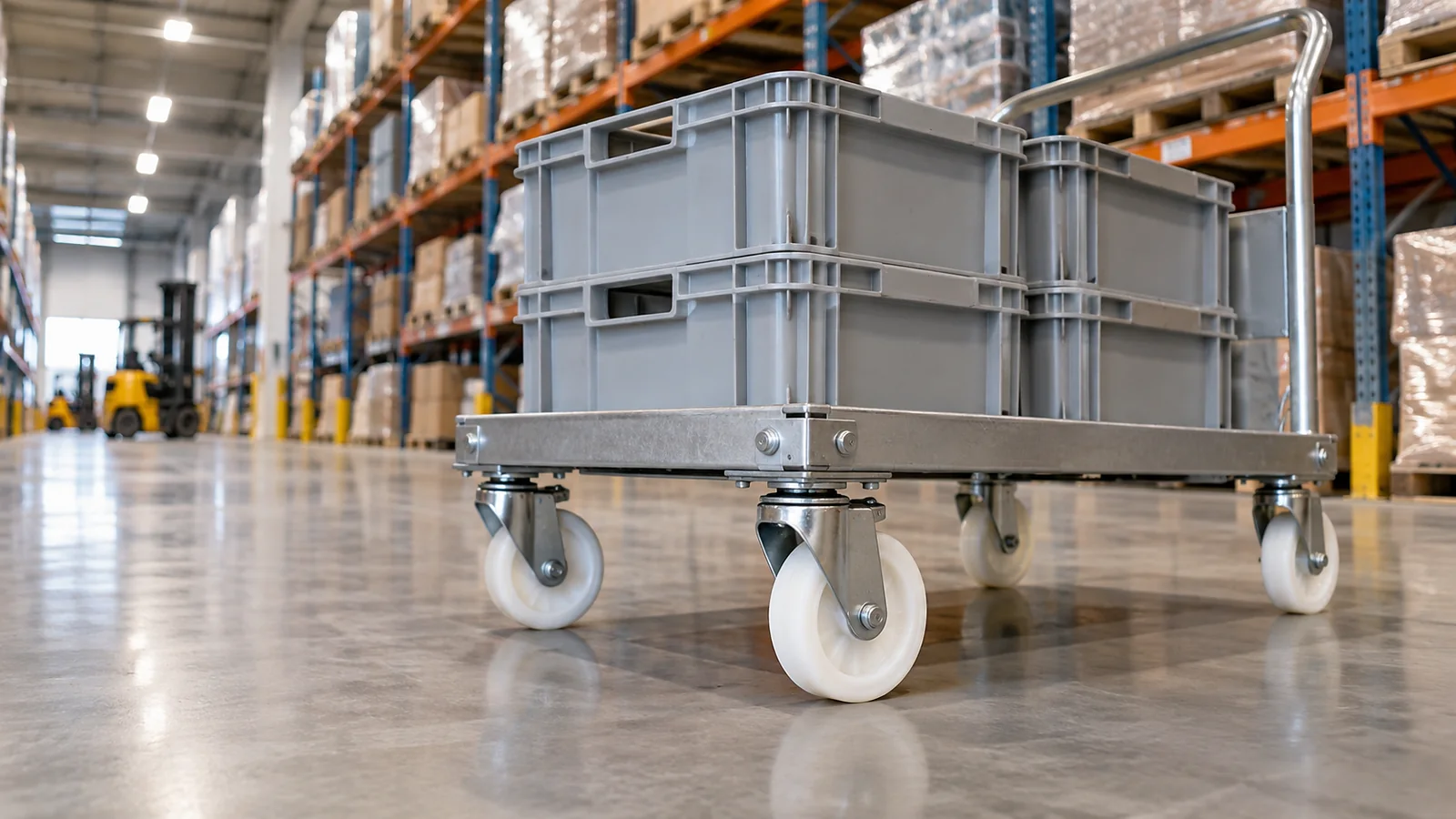
Wheels for Material Handling Equipment
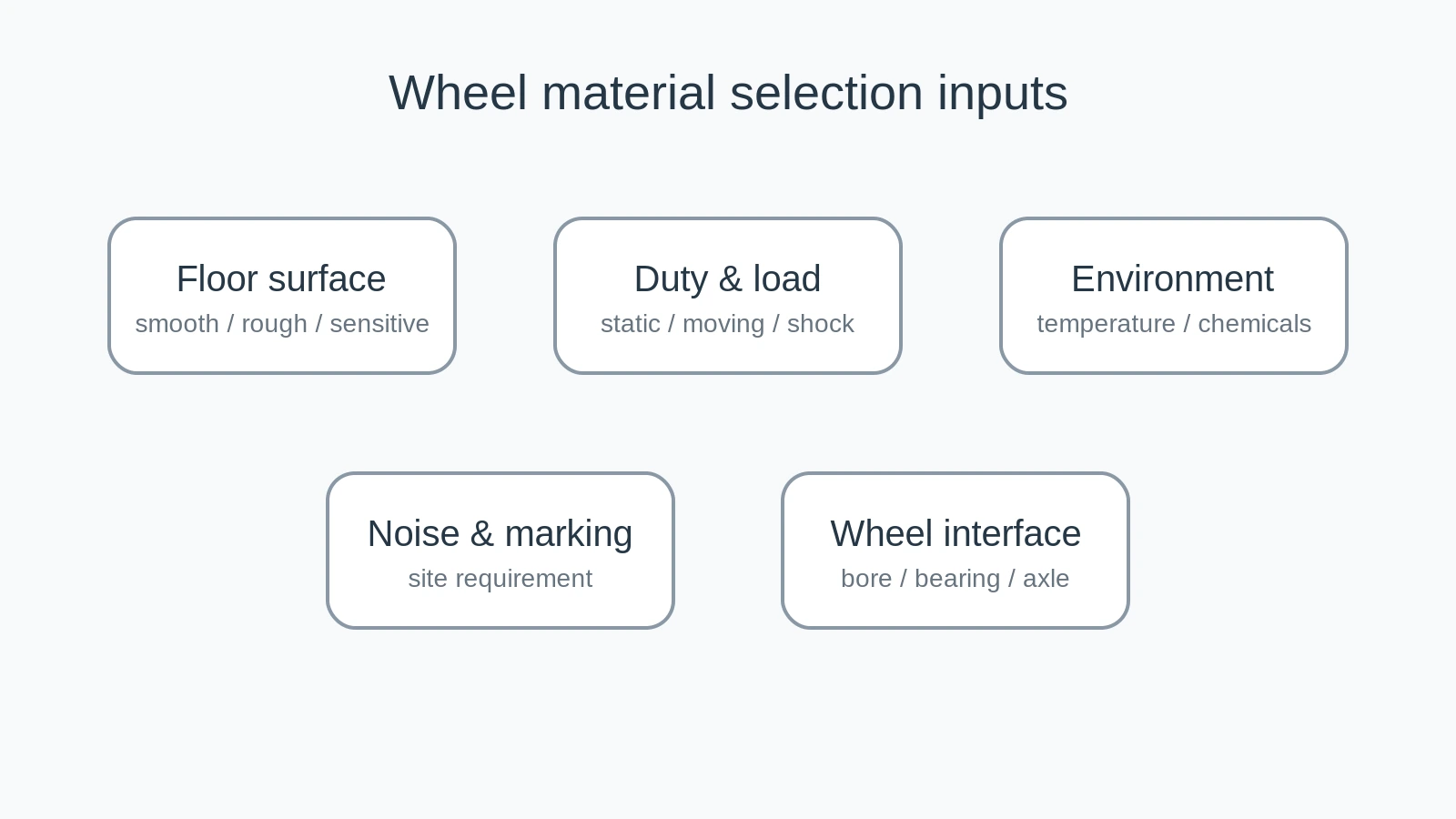
Selecting wheels for wheels for material handling equipment requires load, floor, mounting and manoeuvring details to be considered together.
Start from the equipment, not the catalogue name — Wheels for Material Handling Equipment
Procurement teams often encounter Wheels for Material Handling Equipment as a catalogue term, but the purchasing decision becomes clearer when the term is converted into measurable operating requirements.
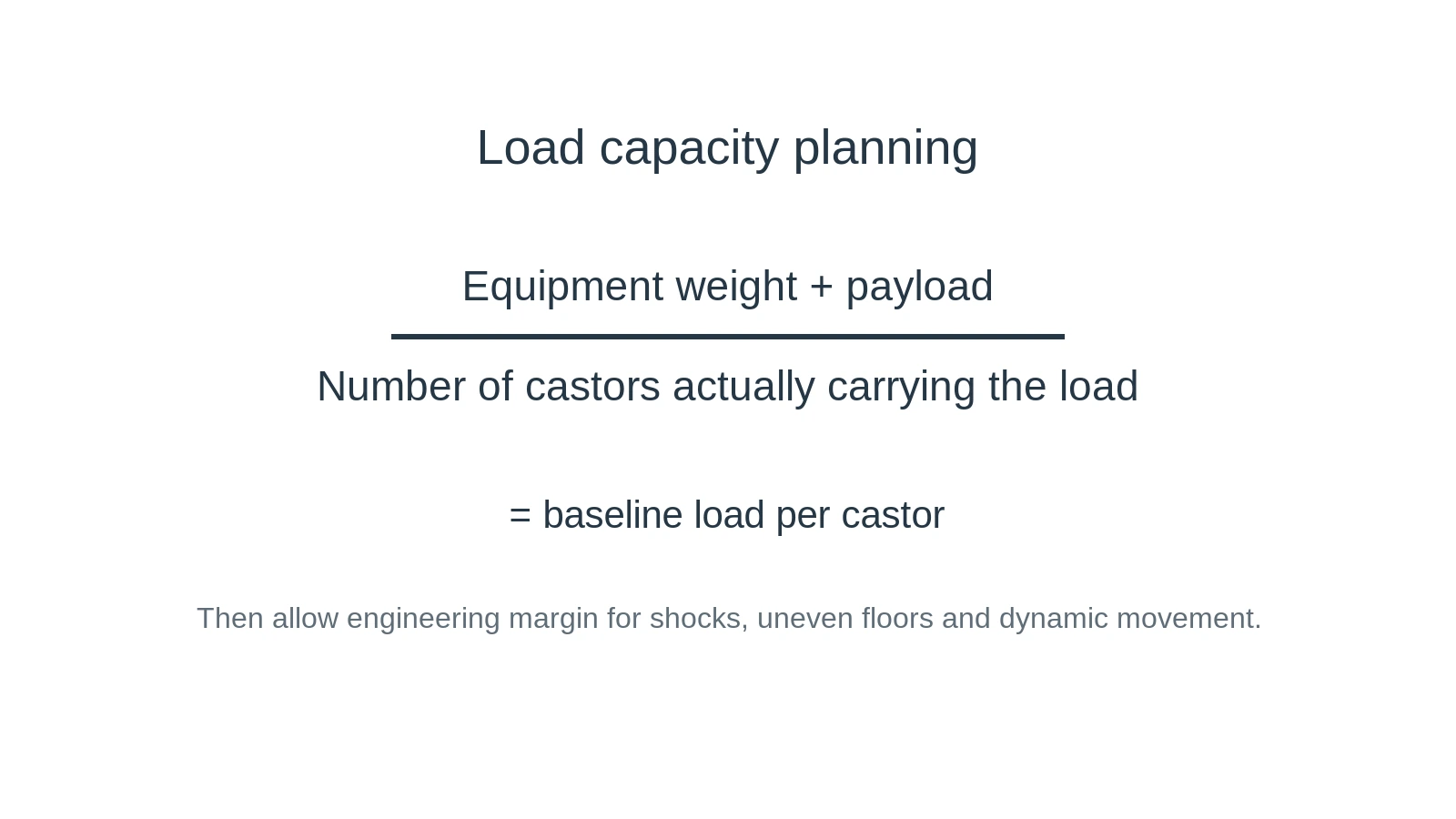
In wheels for material handling equipment, the selection should therefore start with dead weight, maximum carried load and the number of supporting points. That keeps a dimensional or material choice connected to the job it must perform rather than to a generic product description.
The common failure is to treat one attractive parameter as the whole specification. Dynamic impacts, uneven floor contact or frame twist can concentrate load on fewer wheels than expected. A better purchasing note captures equipment weight, payload, wheel count, travel speed, floor transitions and turning pattern, so suppliers can compare like with like and flag missing dimensions instead of guessing. On Wheels for Material Handling Equipment, use this point to narrow the family-level choice before treating any individual configuration as a fit for the equipment.
Floor and movement pattern — Wheels for Material Handling Equipment
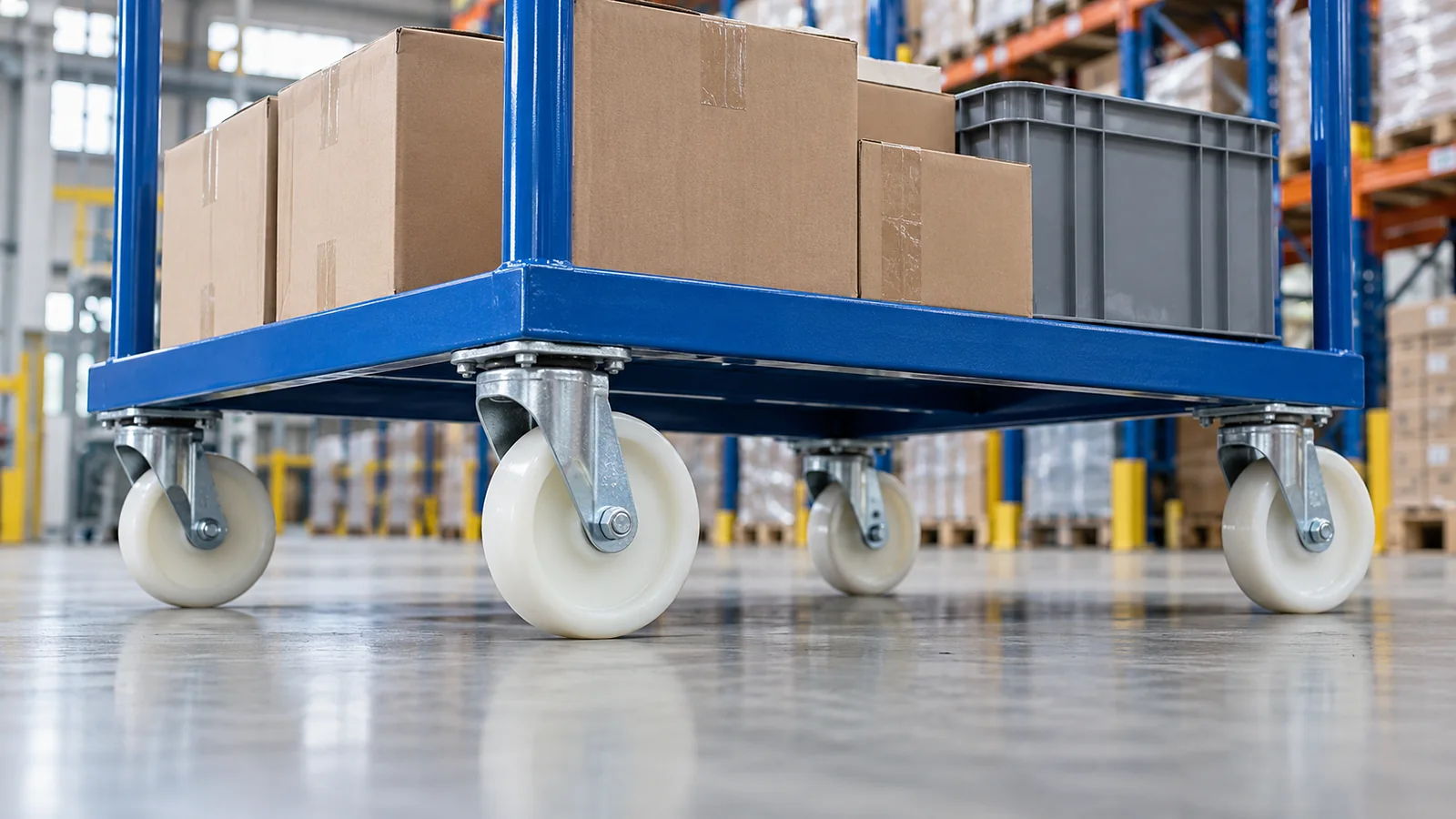
The same cart can behave differently on polished concrete, resin flooring, asphalt, paving or compacted ground. Record the longest travel distance, typical turning radius, thresholds and ramps. Hard wheels can roll efficiently on suitable smooth floors, while other material or geometry choices may be considered when noise, shock or surface protection is more important. On Wheels for Material Handling Equipment, use this point to narrow the family-level choice before treating any individual configuration as a fit for the equipment.
Do not hide an uneven floor behind an optimistic load calculation. If the frame can rock across joints, allow for imperfect load sharing and confirm that the bracket and wheel remain within the intended duty. On Wheels for Material Handling Equipment, use this point to narrow the family-level choice before treating any individual configuration as a fit for the equipment.
Mounting and clearance — Wheels for Material Handling Equipment
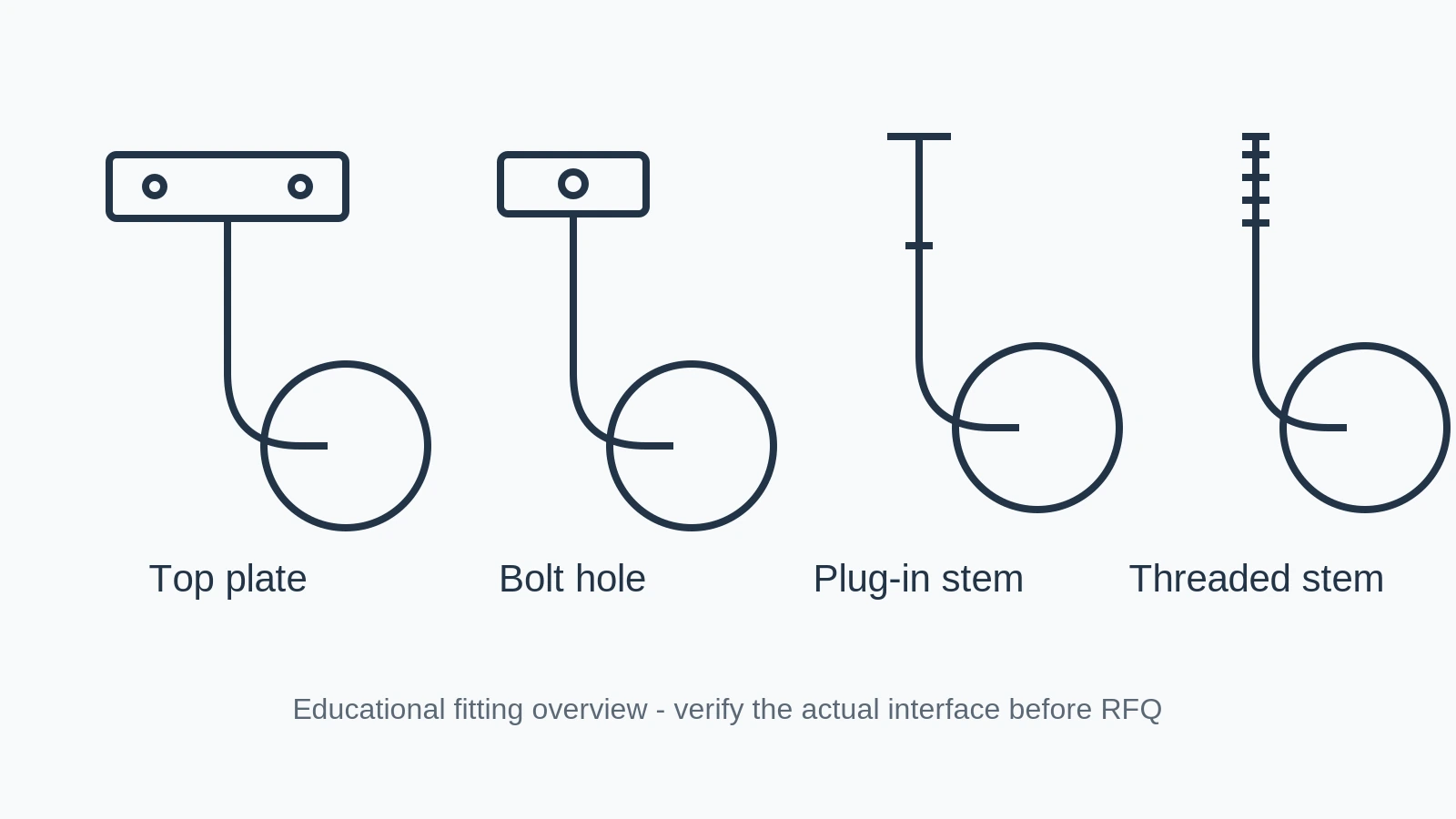
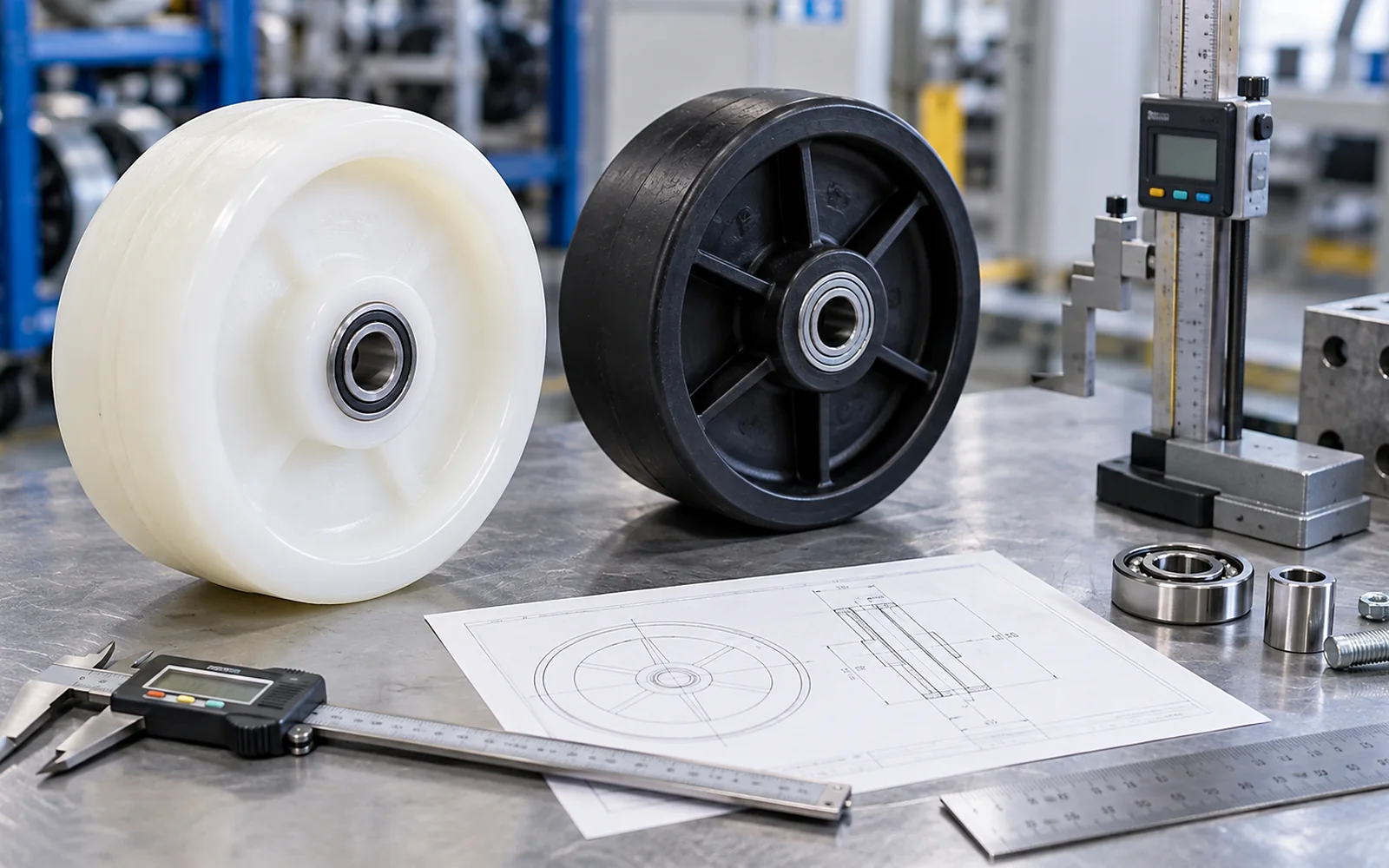
Measure the interface connecting the wheel or support assembly to the equipment. Plate hole spacing, bolt-hole diameter, threaded-stem dimensions, tube clamp size, axle/bore fit and installed height can determine compatibility. Also check the swept envelope when a wheel swivels or a jack folds. On Wheels for Material Handling Equipment, use this point to narrow the family-level choice before treating any individual configuration as a fit for the equipment.
Nearby guards, cable trays, trailer couplings and structural members should be shown on drawings or photographs. A component that fits on the bench may still collide when the equipment turns, retracts or passes over a ramp. On Wheels for Material Handling Equipment, use this point to narrow the family-level choice before treating any individual configuration as a fit for the equipment.
Wheel material and diameter — Wheels for Material Handling Equipment
Material selection should connect the wheel to the real floor and environment. Nylon and polypropylene are hard thermoplastic families, but grade, bearing arrangement, contamination and temperature can change suitability. Larger diameter generally improves obstacle-crossing geometry and ground clearance, but may raise installed height or require a larger fork. On Wheels for Material Handling Equipment, use this point to narrow the family-level choice before treating any individual configuration as a fit for the equipment.
При сравнении двух диаметров проверяйте весь узел целиком, а не только размер колеса.
Integration review — Wheels for Material Handling Equipment
| Проверять | Вопрос, на который нужно ответить |
|---|---|
| Нагрузка | Какую массу может реально выдержать одна опорная точка? |
| Путешествовать | Оборудование в основном стационарное, перемещается вручную, буксируется или часто переставляется? |
| Пол | Какие стыки, мусор, пандусы, вода или химические вещества присутствуют? |
| Интерфейс | Какие параметры определяют высоту крепления и установки? |
| Контроль | Необходимы ли тормоз колеса, фиксатор поворота, фиксатор направления движения или свобода перемещения? |
| Услуга | Как можно осмотреть и заменить колесо, подшипник или узел в сборе? |
RFQ preparation — Wheels for Material Handling Equipment
- Общая масса оборудования и полезной нагрузки
- Количество и компоновка колес/узлов
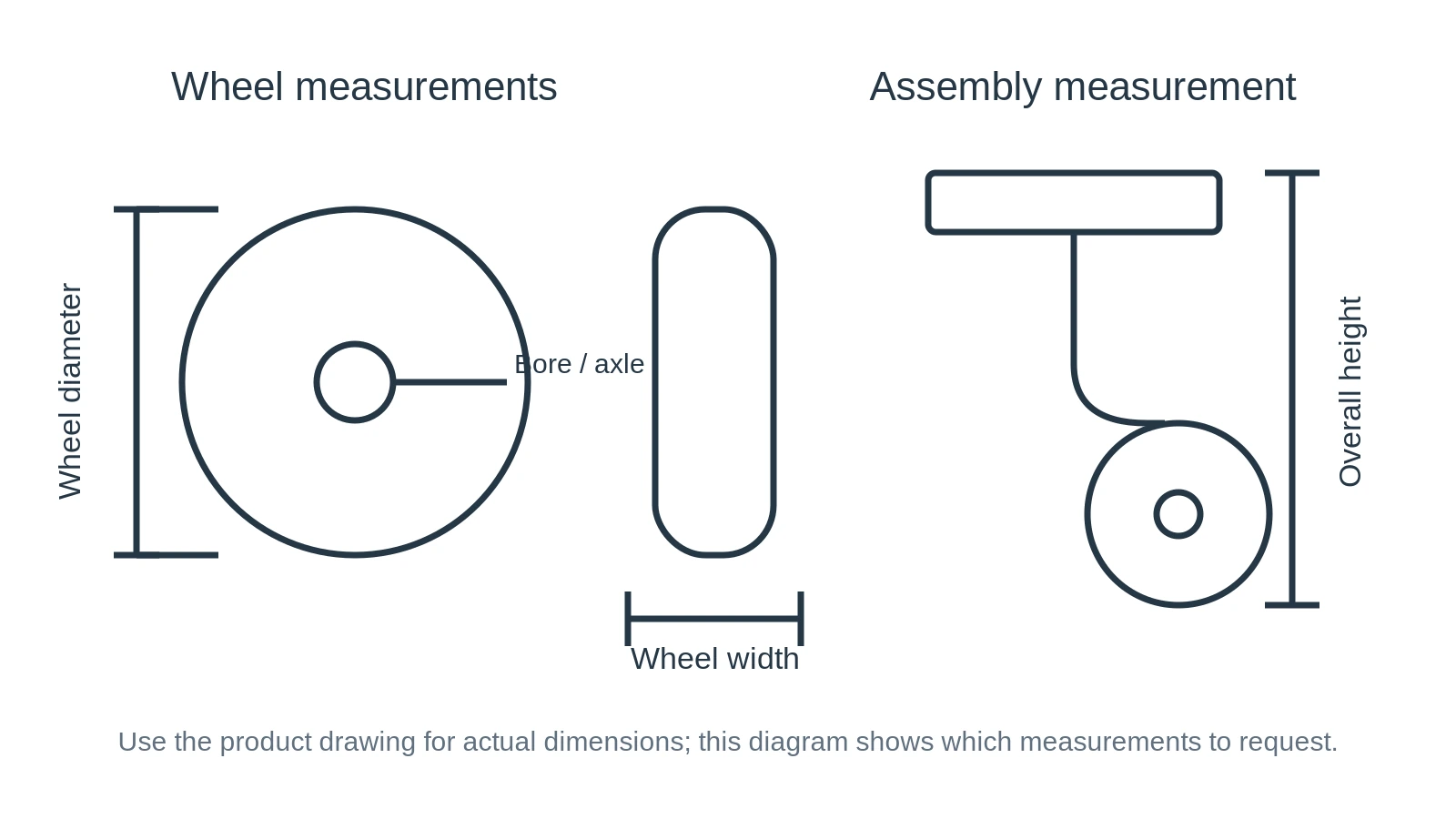
- Диаметр, ширина и высота установленного колеса
- Габаритные размеры или чертеж для монтажа
- Описание этажа/земли и высоты препятствий
- Схема движения и потребности в торможении
- Количество и пункт назначения
Просмотрите руководство по выбору, сравните доступные пластиковые колесаили отправьте подробности через Страница запроса коммерческого предложения.
Common questions — Wheels for Material Handling Equipment
Почему на раме с четырьмя колёсами иногда приходится нагружать только три колеса?
Неровности пола и жесткость рамы могут разгрузить один угол, увеличивая нагрузку на другие.
Всегда ли колесо большего диаметра уменьшает усилие, необходимое для толкания?
Больший диаметр может помочь при преодолении препятствий, но на усилие также влияют подшипник, материал, тип пола, нагрузка и соосность.
Что должно быть изображено на заменяющей фотографии?
Покажите угловой элемент оборудования, колесо или узел сбоку, с монтажной поверхности и шкалой критических размеров.
В каких случаях полезно двухколесное транспортное средство?
Двухколесная компоновка изменяет площадь контакта с дорогой и геометрию кузова, но не является автоматически лучшей; необходимо проверить требования к нагрузке, поверхности и управляемости.
Commissioning and maintenance perspective — Wheels for Material Handling Equipment
After installation, check the equipment at low speed and under controlled load before routine service. Observe steering response, wheel tracking, fastener seating and any contact with surrounding structure. Maintenance records should identify wheel position, configuration and reason for replacement so normal wear can be separated from recurring overload or alignment issues. On Wheels for Material Handling Equipment, use this point to narrow the family-level choice before treating any individual configuration as a fit for the equipment.
Translate the application into measurable inputs — Wheels for Material Handling Equipment
For wheels for material handling equipment, focus on floor transitions, load distribution, wheel layout and repeated travel. These are the variables that change the practical selection even when two pieces of equipment appear similar. Record the worst normal operating condition, not only the easiest travel path, and note whether the equipment is moved continuously, intermittently or only during maintenance.
Where several wheels share a frame, confirm whether the frame and floor allow them to share load evenly. A nominal wheel count does not guarantee equal loading. Mounting surfaces, frame stiffness and floor level can concentrate load on fewer support points. On Wheels for Material Handling Equipment, use this point to narrow the family-level choice before treating any individual configuration as a fit for the equipment.
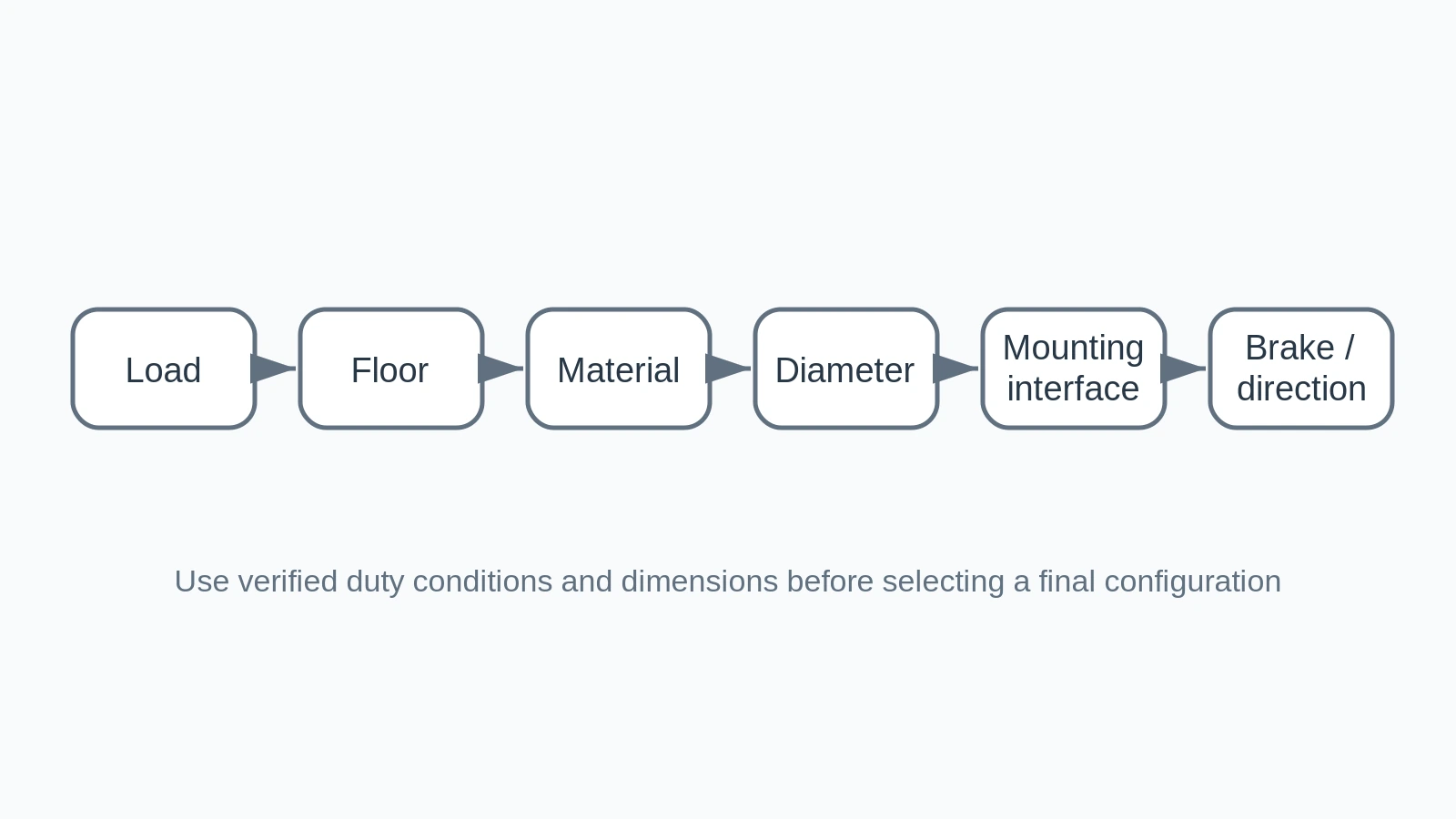
Commission the selected wheel on the real route — Wheels for Material Handling Equipment
The first installation should be observed at low speed and under controlled load. Check straight travel, turning, clearance, wheel tracking, fastener seating and any contact with surrounding structure. Include the most demanding normal threshold, ramp or floor joint in the trial. For trailer support, include the surface used during parking and manual manoeuvring. On Wheels for Material Handling Equipment, use this point to narrow the family-level choice before treating any individual configuration as a fit for the equipment.
Record anything that requires adjustment before normal service. This creates a practical acceptance record and helps distinguish an application mismatch from ordinary wear later in the service life. On Wheels for Material Handling Equipment, use this point to narrow the family-level choice before treating any individual configuration as a fit for the equipment.
Keep application and purchasing records synchronized — Wheels for Material Handling Equipment
When a wheel size, material, mounting detail or control feature changes, update the RFQ line and equipment record together. Do not let a revised photograph become the only description of the new configuration. A short controlled note of dimensions, duty and quantity makes subsequent orders much easier to review and prevents old assumptions from following the equipment after its operating conditions change. On Wheels for Material Handling Equipment, use this point to narrow the family-level choice before treating any individual configuration as a fit for the equipment.
Create a repeatable handover for Wheels for Material Handling Equipment
Before the selected wheel or support assembly is released for wheels for material handling equipment, store the approved interface dimensions, load case, operating surface, quantity and application photos with the equipment record. If the installation is a replacement, also retain the original part until the first sample has been checked on the machine. This makes later purchasing decisions easier to reproduce and helps distinguish normal wear from a change in the equipment or operating route.
After commissioning, record any clearance limitation, steering behaviour, unusual impact point or maintenance observation that would matter to a subsequent orders. The objective is not to create a long inspection document; it is to preserve the few application facts that explain why the accepted configuration fits this equipment and where a future substitution would need fresh review. On Wheels for Material Handling Equipment, use this point to narrow the family-level choice before treating any individual configuration as a fit for the equipment.
Prepare a wheels for material handling equipment wheel RFQ
Отправьте заявку, количество и известные вам размеры. Недостающие критически важные детали могут быть проверены перед составлением коммерческого предложения.