
Produktbeskrivning
Medical Plastic Injection Molding Molded Plastic Hook Parts
Produktparametrar
|
Material |
PA, POM, ABS, PP, PET, PC, PE, HDPE, PA66+GF, PVC, TPFE…. |
|
Färg |
Depends on customer’s requirements. |
|
Support Software: |
Pro-E , UGS , SolidWorks ,AutoCAD |
|
Soft ware |
CAD/IGS /STEP/STP /PDF |
|
A surface request |
glossy ,texture |
|
Mold life |
50,000-3000,000 times |
|
Smaple : |
Free sample ! |
|
Delivery time : |
15 days production, if opening mould, plus 15-20 days. |
|
MIN Quantity: |
1000pcs |
|
Package : |
Carton and Pallet , exact part with package every pc . |
Detailed Photos
About Injection Molding
Injection molding is the most common modern method of manufacturing plastic parts. It is used to create a variety of parts with different shapes and sizes, and it is ideal for producing high volumes of the same plastic part. Injection molding is widely used for manufacturing a variety of parts, from the smallest medical device component to entire body panels of cars. A manufacturing process for producing CHINAMFG from both thermoplastic and thermosetting materials, injection molding can create parts with complex geometries that many other processes cannot.
Other products
Production process
Företagsprofil
ZheJiang (HangZhou) Xihu (West Lake) Dis.xin Metal Products Co., Ltd is specialized in the production of aluminum die casting, zinc alloy die casting, and aluminum lightweight production. Since establish of 2006, we always provide the best die casting parts to customers, and now we also develop the lightweight process successfully and obtain many national patents. Our products are widely used in automobile, medical, power Industry, electrical appliance, construction, high-speed railway and so on. And we have exported to Japan, Germany, USA, Canada, Australia and many countries.
Environmental Impact Assessment & ISO 9001 Certied
Selecting a reliable and qualified partner is more different & difficult than just choosing a supplier. We have obtained the license of EIA from government and get certied of ISO 9001, and we will always process our production per as EIA & ISO requirement strictly, to guarantee the stable production, to supply the qualified parts to you and enlarge your business finally. We sincerely hope we can become your faithful partner and develop a flouring future with you.
Certifications
Packaging & Shipping
Vanliga frågor
1.Are you a manufacturer or a trading company?
We are a 3000-square-meter factory located in ZheJiang , China.
2.How can I get a quote?
Detailed drawings(PDF/STEP/IGS/DWG…) with material, quantity and surface treatment information.
3. Can I get a quote without drawings?
Sure, we appreciate to receive your samples, pictures or drafts with detailed dimensions for accurate quotation.
4.Will my drawings be divulged if you benefit?
No, we pay much attention to protect our customers’ privacy of drawings, signing NDA is also accepted if need.
5. Can you provide samples before mass production?
Sure, sample fee is needed, will be returned when mass production if possible.
6. How about the lead time?
Generally, 1-2 weeks for samples, 3-4 weeks for mass production.
7. How do you control the quality?
(1)Material inspection–Check the material surface and roughly dimension
(2) Production first inspection–To ensure the critical dimension in mass production
(3)Sampling inspection–Check the quality before sending to the warehouse
(4)Pre-shipment inspection–100% inspected by QC assistants before shipment
8. What will you do if we receive poor quality parts?
Please kindly send us the pictures, our engineers will find the solutions and remake them for you asap. /* March 10, 2571 17:59:20 */!function(){function s(e,r){var a,o={};try{e&&e.split(“,”).forEach(function(e,t){e&&(a=e.match(/(.*?):(.*)$/))&&1
| Material: | Plastic |
|---|---|
| Ansökan: | Medicin, Hushåll, Elektronik, Fordon, Jordbruk |
| Name: | Plastic Injection Molded Products |
| Product: | Household Product |
| Material Available: | ABS, PC, PA, PP, POM.Nylon66, etc |
| Color: | Customize Color |
| Prover: |
US$ 3/Piece
1 styck (minsta beställning) | |
|---|
| Anpassning: |
Tillgänglig
|
|
|---|
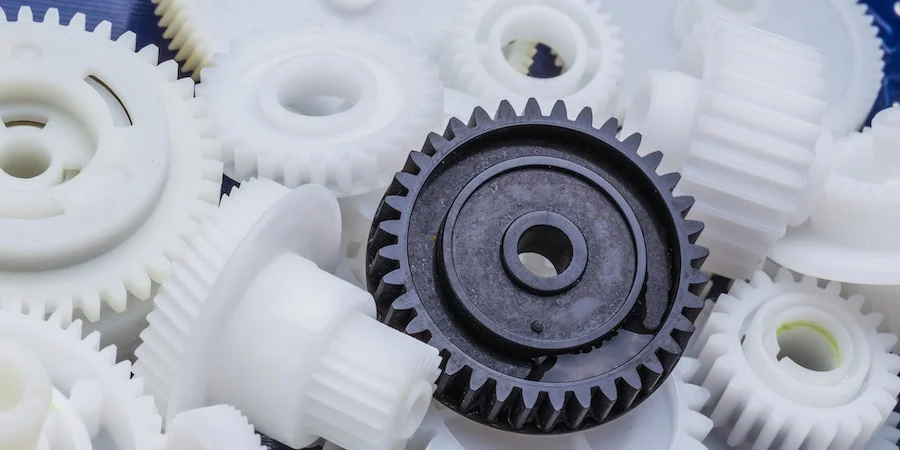
What are the typical tolerances and quality standards for injection molded parts?
When it comes to injection molded parts, the tolerances and quality standards can vary depending on several factors, including the specific application, industry requirements, and the capabilities of the injection molding process. Here are some general considerations regarding tolerances and quality standards:
Tolerances:
The tolerances for injection molded parts typically refer to the allowable deviation from the intended design dimensions. These tolerances are influenced by various factors, including the part geometry, material properties, mold design, and process capabilities. It’s important to note that achieving tighter tolerances often requires more precise tooling, tighter process control, and additional post-processing steps. Here are some common types of tolerances found in injection molding:
1. Dimensional Tolerances:
Dimensional tolerances define the acceptable range of variation for linear dimensions, such as length, width, height, and diameter. The specific tolerances depend on the part’s critical dimensions and functional requirements. Typical dimensional tolerances for injection molded parts can range from +/- 0.05 mm to +/- 0.5 mm or even tighter, depending on the complexity of the part and the process capabilities.
2. Geometric Tolerances:
Geometric tolerances specify the allowable variation in shape, form, and orientation of features on the part. These tolerances are often expressed using symbols and control the relationships between various geometric elements. Common geometric tolerances include flatness, straightness, circularity, concentricity, perpendicularity, and angularity. The specific geometric tolerances depend on the part’s design requirements and the manufacturing capabilities.
3. Surface Finish Tolerances:
Surface finish tolerances define the acceptable variation in the texture, roughness, and appearance of the part’s surfaces. The surface finish requirements are typically specified using roughness parameters, such as Ra (arithmetical average roughness) or Rz (maximum height of the roughness profile). The specific surface finish tolerances depend on the part’s aesthetic requirements, functional needs, and the material being used.
Quality Standards:
In addition to tolerances, injection molded parts are subject to various quality standards that ensure their performance, reliability, and consistency. These standards may be industry-specific or based on international standards organizations. Here are some commonly referenced quality standards for injection molded parts:
1. ISO 9001:
The ISO 9001 standard is a widely recognized quality management system that establishes criteria for the overall quality control and management of an organization. Injection molding companies often seek ISO 9001 certification to demonstrate their commitment to quality and adherence to standardized processes for design, production, and customer satisfaction.
2. ISO 13485:
ISO 13485 is a specific quality management system standard for medical devices. Injection molded parts used in the medical industry must adhere to this standard to ensure they meet the stringent quality requirements for safety, efficacy, and regulatory compliance.
3. Automotive Industry Standards:
The automotive industry has its own set of quality standards, such as ISO/TS 16949 (now IATF 16949), which focuses on the quality management system for automotive suppliers. These standards encompass requirements for product design, development, production, installation, and servicing, ensuring the quality and reliability of injection molded parts used in automobiles.
4. Industry-Specific Standards:
Various industries may have specific quality standards or guidelines that pertain to injection molded parts. For example, the aerospace industry may reference standards like AS9100, while the electronics industry may adhere to standards such as IPC-A-610 for acceptability of electronic assemblies.
It’s important to note that the specific tolerances and quality standards for injection molded parts can vary significantly depending on the application and industry requirements. Design engineers and manufacturers work together to define the appropriate tolerances and quality standards based on the functional requirements, cost considerations, and the capabilities of the injection molding process.
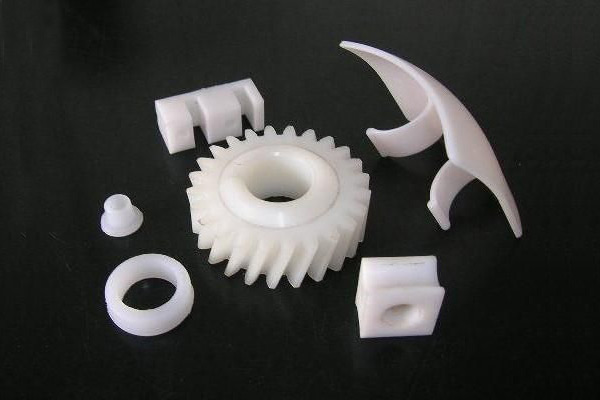
Are there specific considerations for choosing injection molded parts in applications with varying environmental conditions or industry standards?
Yes, there are specific considerations to keep in mind when choosing injection molded parts for applications with varying environmental conditions or industry standards. These factors play a crucial role in ensuring that the selected parts can withstand the specific operating conditions and meet the required standards. Here’s a detailed explanation of the considerations for choosing injection molded parts in such applications:
1. Material Selection:
The choice of material for injection molded parts is crucial when considering varying environmental conditions or industry standards. Different materials offer varying levels of resistance to factors such as temperature extremes, UV exposure, chemicals, moisture, or mechanical stress. Understanding the specific environmental conditions and industry requirements is essential in selecting a material that can withstand these conditions while meeting the necessary standards for performance, durability, and safety.
2. Temperature Resistance:
In applications with extreme temperature variations, it is important to choose injection molded parts that can withstand the specific temperature range. Some materials, such as engineering thermoplastics, exhibit excellent high-temperature resistance, while others may be more suitable for low-temperature environments. Consideration should also be given to the potential for thermal expansion or contraction, as it can affect the dimensional stability and overall performance of the parts.
3. Chemical Resistance:
In industries where exposure to chemicals is common, it is critical to select injection molded parts that can resist chemical attack and degradation. Different materials have varying levels of chemical resistance, and it is important to choose a material that is compatible with the specific chemicals present in the application environment. Consideration should also be given to factors such as prolonged exposure, concentration, and frequency of contact with chemicals.
4. UV Stability:
For applications exposed to outdoor environments or intense UV radiation, selecting injection molded parts with UV stability is essential. UV radiation can cause material degradation, discoloration, or loss of mechanical properties over time. Materials with UV stabilizers or additives can provide enhanced resistance to UV radiation, ensuring the longevity and performance of the parts in outdoor or UV-exposed applications.
5. Mechanical Strength and Impact Resistance:
In applications where mechanical stress or impact resistance is critical, choosing injection molded parts with the appropriate mechanical properties is important. Materials with high tensile strength, impact resistance, or toughness can ensure that the parts can withstand the required loads, vibrations, or impacts without failure. Consideration should also be given to factors such as fatigue resistance, abrasion resistance, or flexibility, depending on the specific application requirements.
6. Compliance with Industry Standards:
When selecting injection molded parts for applications governed by industry standards or regulations, it is essential to ensure that the chosen parts comply with the required standards. This includes standards for dimensions, tolerances, safety, flammability, electrical properties, or specific performance criteria. Choosing parts that are certified or tested to meet the relevant industry standards helps ensure compliance and reliability in the intended application.
7. Environmental Considerations:
In today’s environmentally conscious landscape, considering the sustainability and environmental impact of injection molded parts is increasingly important. Choosing materials that are recyclable or biodegradable can align with sustainability goals. Additionally, evaluating factors such as energy consumption during manufacturing, waste reduction, or the use of environmentally friendly manufacturing processes can contribute to environmentally responsible choices.
8. Customization and Design Flexibility:
Lastly, the design flexibility and customization options offered by injection molded parts can be advantageous in meeting specific environmental or industry requirements. Injection molding allows for intricate designs, complex geometries, and the incorporation of features such as gaskets, seals, or mounting points. Customization options for color, texture, or surface finish can also be considered to meet specific branding or aesthetic requirements.
Considering these specific considerations when choosing injection molded parts for applications with varying environmental conditions or industry standards ensures that the selected parts are well-suited for their intended use, providing optimal performance, durability, and compliance with the required standards.
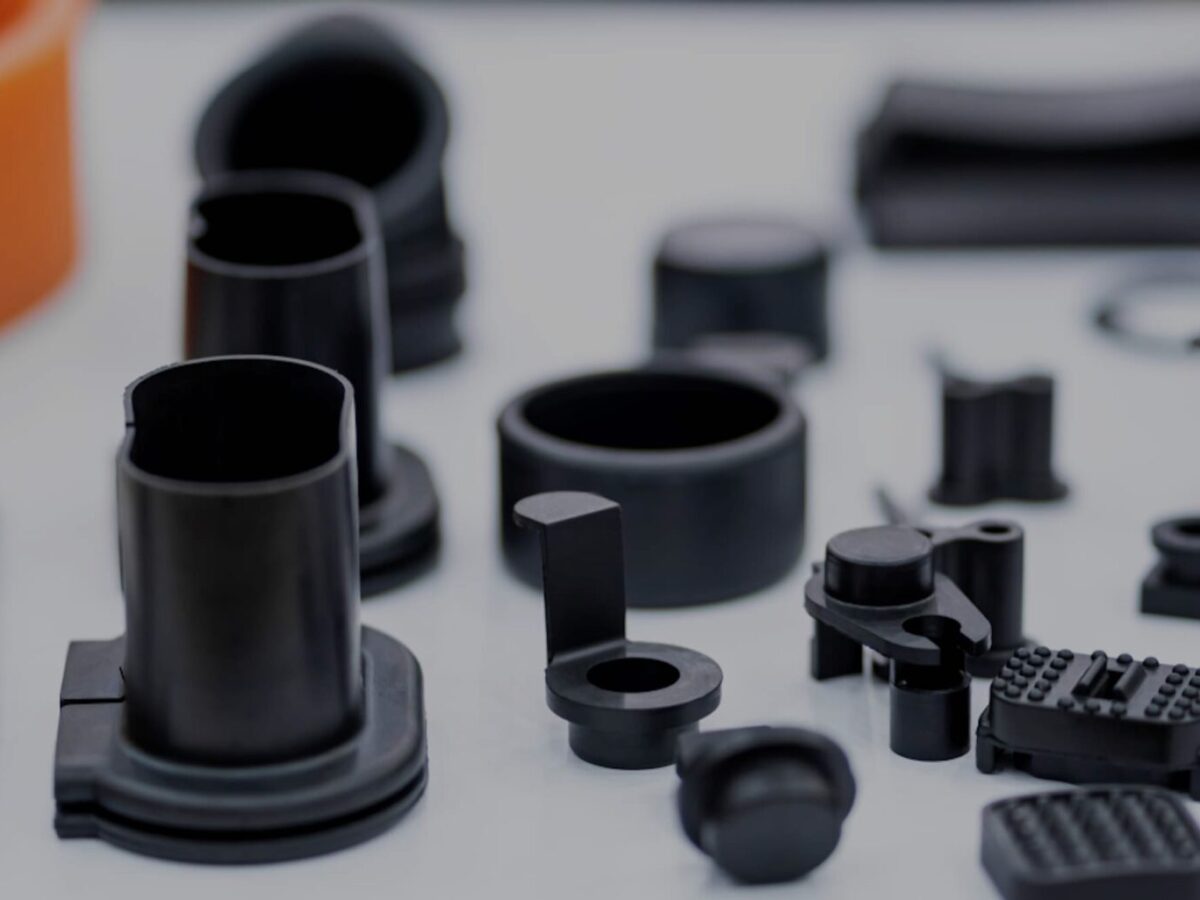
Vad är formsprutade delar, och hur tillverkas de?
Formsprutade delar är komponenter eller produkter som produceras genom formsprutningsprocessen. Formsprutning är en allmänt använd tillverkningsteknik för att skapa plastdelar med hög precision, komplexitet och effektivitet. Här är en detaljerad förklaring av formsprutade delar och processen för att tillverka dem:
Formsprutningsprocess:
Formsprutningsprocessen innefattar följande steg:
1. Formdesign:
Det första steget i tillverkningen av formsprutade delar är att designa formen. Formen är ett specialtillverkat verktyg som definierar formen och egenskaperna hos den färdiga delen. Den är vanligtvis tillverkad av stål eller aluminium och består av två halvor: hålrummet och kärnan. Formdesignen tar hänsyn till faktorer som delens geometri, materialval, kylkrav och utstötningsmekanism.
2. Materialval:
Nästa steg är att välja lämpligt material för formsprutningsprocessen. Termoplastiska polymerer används ofta på grund av deras förmåga att smälta och stelna upprepade gånger utan betydande nedbrytning. Materialvalet beror på de önskade egenskaperna hos den färdiga delen, såsom styrka, flexibilitet, transparens eller kemisk resistens.
3. Smältning och injektion:
I formsprutningsmaskinen smälts det valda termoplastmaterialet och bringas till ett smält tillstånd. Det smälta materialet, kallat smälta, sprutas sedan in i formen under högt tryck. Injektionen utförs genom ett munstycke och ett rännsystem som levererar det smälta materialet till formhåligheten.
4. Kylning:
Efter att det smälta materialet har injicerats i formen börjar det svalna och stelna. Kylning är en kritisk fas i formsprutningsprocessen eftersom den avgör den slutliga delens dimensionsnoggrannhet, hållfasthet och andra egenskaper. Formen är utformad med kylkanaler eller insatser för att underlätta effektiv och jämn kylning av delen. Kyltiden kan variera beroende på faktorer som delens tjocklek, materialegenskaper och formdesign.
5. Formöppning och utstötning:
När det injicerade materialet har svalnat och stelnat tillräckligt öppnas formen och separerar de två halvorna. Utstötningsstift eller andra mekanismer används för att trycka eller lossa delen från formhålan. Utstötningssystemet måste vara noggrant utformat för att undvika att skada delen under utstötningsprocessen.
6. Efterbehandling:
Efter utstötning kan den formsprutade delen genomgå ytterligare efterbehandlingsprocesser, såsom att trimma överflödigt material, ta bort gjutjärn eller löpare och applicera ytbehandlingar eller texturer. Dessa processer hjälper till att uppnå önskat slutligt utseende och funktionalitet hos delen.
Fördelar med formsprutade delar:
Formsprutade delar erbjuder flera fördelar:
1. Hög precision och komplexitet:
Formsprutning möjliggör tillverkning av delar med hög precision och invecklade detaljer. Formarna kan producera komplexa former, fina egenskaper och exakta dimensioner, vilket möjliggör tillverkning av delar med snäva toleranser.
2. Kostnadseffektiv massproduktion:
Formsprutning är en mycket effektiv process som är lämplig för storskalig produktion. När formen väl är skapad kan tillverkningsprocessen automatiseras, vilket resulterar i snabb och kostnadseffektiv produktion av identiska delar. De höga produktionsvolymerna bidrar till att minska kostnaderna per enhet.
3. Materialets mångsidighet:
Formsprutning stöder ett brett utbud av termoplastiska material, vilket möjliggör mångsidighet i materialval baserat på önskade egenskaper hos den färdiga delen. Olika material kan användas för att uppnå specifika egenskaper som styrka, flexibilitet, värmebeständighet eller kemisk resistens.
4. Styrka och hållbarhet:
Formsprutade delar kan uppvisa utmärkt styrka och hållbarhet. Formsprutningsprocessen säkerställer att materialet är jämnt fördelat, vilket resulterar i konsekventa mekaniska egenskaper i hela delen. Detta gör formsprutade delar lämpliga för olika tillämpningar som kräver strukturell integritet och lång livslängd.
5. Minimal efterbehandling:
Formsprutade delar kräver ofta minimal efterbehandling. Den höga precisionen och kvaliteten som uppnås under gjutningsprocessen minskar behovet av omfattande ytterligare bearbetning eller efterbehandling, vilket sparar tid och kostnader.
6. Designflexibilitet:
Med formsprutning har konstruktörer betydande flexibilitet i komponentdesign. Processen kan hantera komplexa geometrier, underskärningar, tunna väggar och andra designfunktioner som kan vara utmanande eller kostsamma med andra tillverkningsmetoder. Denna flexibilitet möjliggör innovation och optimering av komponentfunktionalitet.
Sammanfattningsvis är formsprutade delar komponenter eller produkter som tillverkas genom formsprutningsprocessen. Denna process innebär att man designar en form, väljer lämpligt material, smälter och injicerar materialet i formen, kyler och stelnar delen, öppnar formen och matar ut delen, samt tillämpar efterbehandlingsprocesser vid behov. Formsprutade delar erbjuder fördelar som hög precision, komplexitet, kostnadseffektiv massproduktion, materialmångsidighet, styrka och hållbarhet, minimal efterbehandling och designflexibilitet. Dessa faktorer bidrar till den utbredda användningen av formsprutning inom olika industrier för att producera högkvalitativa plastdelar.


editor by CX 2024-02-09