
Description du produit
Photos détaillées
Nos avantages
Our factory is specialized in the production of engineering plastic processing manufacturers, with rich experience and advanced equipment. All year round production injection molding, extrusion, rolling, casting CNC engineering CHINAMFG processing.The plastic products of our factory are carefully made of excellent raw materials, which are stable performance, long service life, reliable quality, good compression and impact resistance. Complete types of specifications and a variety of optional materials, which can turn your design into reality. Response speed, shipment speed, is your quality supplier. Contact us and Welcome to place order.
Certifications
| Description du produit | |
|
Products: |
pièces en plastique |
| Matériel: | ABS, AS, PA, PE, PP PVC, PC, PE, Nylon, EPDM, POM, EPT^ |
| Surface Treat:
|
Paint, texture |
| Taille | Customized |
| Couleur | Any color |
| 3D,CAD drawing | Accepted |
| Température | -40°C to+300°C |
| Dureté | 30-95 shore A |
| Logo | OEM & ODM orders are welcomed |
| Tolérance | 0.05mm |
| Emballer | Standard package or according to your request |
| Fonctionnalité | 1.CHINAMFG and Chemical resistance |
| 2. Anti-aging, good flexibility, good elasticity | |
| 3. Excellent oil resistance | |
| Application | Electronic field, industrial machine & equipment,house-hold appliance,tele-communication,automobile,medical equipment industry etc. |
| Delivery | 10 days-20 days |
| Note | 1.Models and Logos can be Customized according to your Requirement |
| 2.Designs and Specification are Accepted |
Profil de l'entreprise
After Sales Service
| Matériel: | ABS, PP, PEHD, PEBD, Nylon, POM, PC, HIPS, TPR etc. |
|---|---|
| Application: | Electronics |
| Certification : | ISO |
| Process: | Plastic Injection |
| Mould Life: | 500, 000-1, 000, 000 Shots |
| Transport Package: | Bags, Cartons, Pallets, Carton Box |
| Exemples : |
US$ 1/Piece
1 pièce (commande minimale) | |
|---|
| Personnalisation : |
Disponible
|
|
|---|
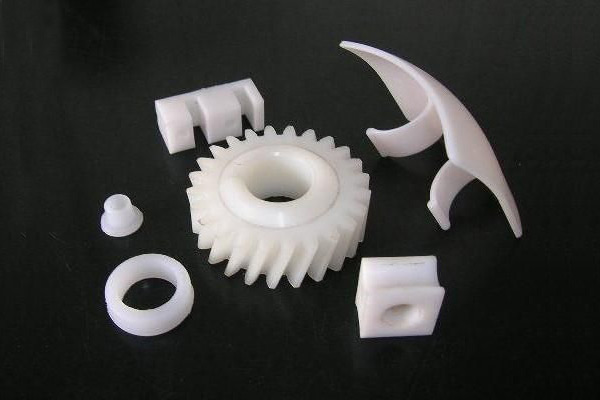
What is the impact of material selection on the performance and durability of injection molded parts?
The material selection for injection molded parts has a significant impact on their performance and durability. The choice of material influences various key factors, including mechanical properties, chemical resistance, thermal stability, dimensional stability, and overall part functionality. Here’s a detailed explanation of the impact of material selection on the performance and durability of injection molded parts:
Mechanical Properties:
The mechanical properties of the material directly affect the part’s strength, stiffness, impact resistance, and fatigue life. Different materials exhibit varying levels of tensile strength, flexural strength, modulus of elasticity, and elongation at break. The selection of a material with appropriate mechanical properties ensures that the injection molded part can withstand the applied forces, vibrations, and operational stresses without failure or deformation.
Chemical Resistance:
The material’s resistance to chemicals and solvents is crucial in applications where the part comes into contact with aggressive substances. Certain materials, such as engineering thermoplastics like ABS (Acrylonitrile Butadiene Styrene) or PEEK (Polyether Ether Ketone), exhibit excellent chemical resistance. Choosing a material with the appropriate chemical resistance ensures that the injection molded part maintains its integrity and functionality when exposed to specific chemicals or environments.
Thermal Stability:
The thermal stability of the material is essential in applications that involve exposure to high temperatures or thermal cycling. Different materials have varying melting points, glass transition temperatures, and heat deflection temperatures. Selecting a material with suitable thermal stability ensures that the injection molded part can withstand the anticipated temperature variations without dimensional changes, warping, or degradation of mechanical properties.
Dimensional Stability:
The dimensional stability of the material is critical in applications where precise tolerances and dimensional accuracy are required. Some materials, such as engineering thermoplastics or filled polymers, exhibit lower coefficients of thermal expansion, minimizing the part’s dimensional changes with temperature variations. Choosing a material with good dimensional stability helps ensure that the injection molded part maintains its shape, size, and critical dimensions over a wide range of operating temperatures.
Part Functionality:
The material selection directly impacts the functionality and performance of the injection molded part. Different materials offer unique properties that can be tailored to meet specific application requirements. For example, materials like polycarbonate (PC) or polypropylene (PP) offer excellent transparency, making them suitable for applications requiring optical clarity, while materials like polyamide (PA) or polyoxymethylene (POM) provide low friction and wear resistance, making them suitable for moving or sliding parts.
Cycle Time and Processability:
The material selection can also affect the cycle time and processability of injection molding. Different materials have different melt viscosities and flow characteristics, which influence the filling and cooling times during the molding process. Materials with good flow properties can fill complex mold geometries more easily, reducing the cycle time and improving productivity. It’s important to select a material that can be effectively processed using the available injection molding equipment and techniques.
Cost Considerations:
The material selection also impacts the overall cost of the injection molded part. Different materials have varying costs, and selecting the most suitable material involves considering factors such as material availability, tooling requirements, processing conditions, and the desired performance characteristics. Balancing the performance requirements with cost considerations is crucial in achieving an optimal material selection that meets the performance and durability requirements within the budget constraints.
Overall, material selection plays a critical role in determining the performance, durability, and functionality of injection molded parts. Careful consideration of mechanical properties, chemical resistance, thermal stability, dimensional stability, part functionality, cycle time, processability, and cost factors helps ensure that the chosen material meets the specific application requirements and delivers the desired performance and durability over the part’s intended service life.
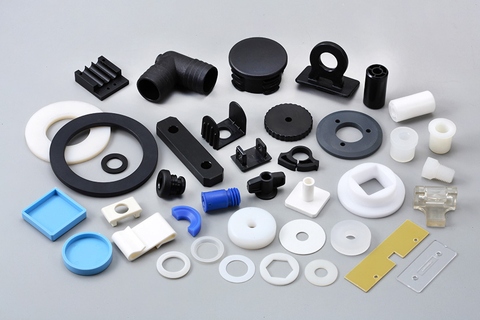
Can you describe the various post-molding processes, such as assembly or secondary operations, for injection molded parts?
Post-molding processes play a crucial role in the production of injection molded parts. These processes include assembly and secondary operations that are performed after the initial molding stage. Here’s a detailed explanation of the various post-molding processes for injection molded parts:
1. Assembly:
Assembly involves joining multiple injection molded parts together to create a finished product or sub-assembly. The assembly process can include various techniques such as mechanical fastening (screws, clips, or snaps), adhesive bonding, ultrasonic welding, heat staking, or solvent welding. Assembly ensures that the individual molded parts are securely combined to achieve the desired functionality and structural integrity of the final product.
2. Surface Finishing:
Surface finishing processes are performed to enhance the appearance, texture, and functionality of injection molded parts. Common surface finishing techniques include painting, printing (such as pad printing or screen printing), hot stamping, laser etching, or applying specialized coatings. These processes can add decorative features, branding elements, or improve the surface properties of the parts, such as scratch resistance or UV protection.
3. Machining or Trimming:
In some cases, injection molded parts may require additional machining or trimming to achieve the desired final dimensions or remove excess material. This can involve processes such as CNC milling, drilling, reaming, or turning. Machining or trimming is often necessary when tight tolerances, specific geometries, or critical functional features cannot be achieved solely through the injection molding process.
4. Welding or Joining:
Welding or joining processes are used to fuse or bond injection molded parts together. Common welding techniques for plastic parts include ultrasonic welding, hot plate welding, vibration welding, or laser welding. These processes create strong and reliable joints between the molded parts, ensuring structural integrity and functionality in the final product.
5. Insertion of Inserts:
Insertion involves placing metal or plastic inserts into the mold cavity before the injection molding process. These inserts can provide additional strength, reinforce threaded connections, or serve as mounting points for other components. Inserts can be placed manually or using automated equipment, and they become permanently embedded in the molded parts during the molding process.
6. Overmolding or Two-Shot Molding:
Overmolding or two-shot molding processes allow for the creation of injection molded parts with multiple layers or materials. In overmolding, a second material is molded over a pre-existing substrate, providing enhanced functionality, aesthetics, or grip. Two-shot molding involves injecting two different materials into different sections of the mold to create a single part with multiple colors or materials. These processes enable the integration of multiple materials or components into a single injection molded part.
7. Deflashing or Deburring:
Deflashing or deburring processes involve removing excess flash or burrs that may be present on the molded parts after the injection molding process. Flash refers to the excess material that extends beyond the parting line of the mold, while burrs are small protrusions or rough edges caused by the mold features. Deflashing or deburring ensures that the molded parts have smooth edges and surfaces, improving their appearance, functionality, and safety.
8. Inspection and Quality Control:
Inspection and quality control processes are performed to ensure that the injection molded parts meet the required specifications and quality standards. This can involve visual inspection, dimensional measurement, functional testing, or other specialized testing methods. Inspection and quality control processes help identify any defects, inconsistencies, or deviations that may require rework or rejection of the parts, ensuring that only high-quality parts are used in the final product or assembly.
9. Packaging and Labeling:
Once the post-molding processes are complete, the injection molded parts are typically packaged and labeled for storage, transportation, or distribution. Packaging can include individual part packaging, bulk packaging, or custom packaging based on specific requirements. Labeling may involve adding product identification, barcodes, or instructions for proper handling or usage.
These post-molding processes are vital in achieving the desired functionality, appearance, and quality of injection molded parts. They enable the integration of multiple components, surface finishing, dimensional accuracy, and assembly of the final products or sub-assemblies.
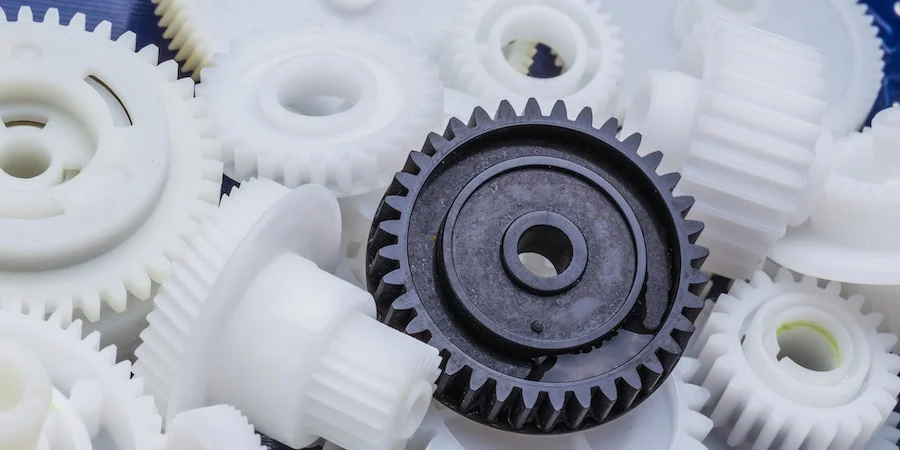
Comment les pièces moulées par injection se comparent-elles aux autres méthodes de fabrication en termes de coût et d'efficacité ?
Les pièces moulées par injection présentent des avantages indéniables par rapport aux autres méthodes de fabrication, notamment en termes de coût et d'efficacité. Le procédé de moulage par injection offre une efficacité et une rentabilité élevées, particulièrement pour la production à grande échelle. Voici une explication détaillée comparant les pièces moulées par injection aux autres méthodes de fabrication :
Comparaison des coûts :
Le moulage par injection peut être rentable par rapport à d'autres méthodes de fabrication pour plusieurs raisons :
1. Coûts d'outillage :
Le moulage par injection nécessite un investissement initial important pour la création des moules. Cependant, une fois réalisés, ces moules sont réutilisables pour la production en série de nombreuses pièces, ce qui permet de réduire le coût unitaire. L'amortissement des coûts d'outillage rend le moulage par injection plus rentable pour les productions en grande série.
2. Efficacité matérielle :
Le moulage par injection est très efficace en termes d'utilisation des matériaux. Ce procédé permet un contrôle précis de la quantité de matériau injectée dans le moule, minimisant ainsi les déchets. De plus, les excédents de matériau issus du moulage peuvent être recyclés et réutilisés, réduisant encore les coûts par rapport aux méthodes générant davantage de déchets.
3. Coûts de main-d'œuvre :
Le moulage par injection est un procédé hautement automatisé qui requiert une main-d'œuvre minimale comparé à d'autres méthodes de fabrication. Une fois les moules installés et les paramètres de processus définis, la presse à injecter fonctionne en continu, produisant des pièces avec une intervention humaine minimale. Cette automatisation réduit les coûts de main-d'œuvre et accroît l'efficacité globale.
Comparaison de l'efficacité :
Les pièces moulées par injection offrent plusieurs avantages en termes d'efficacité :
1. Cycle de production rapide :
Le moulage par injection est un procédé de fabrication rapide, capable de produire des pièces en un temps de cycle relativement court. Ce temps de cycle dépend de facteurs tels que la complexité de la pièce, les propriétés du matériau et le temps de refroidissement. Cependant, comparé à d'autres méthodes comme l'usinage ou le moulage, le moulage par injection permet de produire plusieurs pièces simultanément à chaque cycle, ce qui se traduit par des cadences de production plus élevées et une efficacité accrue.
2. Haute précision et constance :
Le moulage par injection permet de produire des pièces d'une grande précision et d'une grande régularité. Les moules utilisés sont conçus pour assurer un contrôle dimensionnel précis et reproductible. Cette précision garantit que chaque pièce répond aux spécifications requises, réduisant ainsi le besoin d'usinage ou de post-traitement. La capacité à produire de manière constante des pièces précises améliore l'efficacité et réduit les délais et les coûts liés aux retouches ou aux pièces rejetées.
3. Évolutivité :
Le moulage par injection est hautement adaptable, ce qui le rend idéal pour la production en petites et grandes séries. Une fois les moules créés, le processus de moulage par injection est facilement reproductible, permettant une production efficace de pièces identiques. La capacité d'adapter rapidement et efficacement la production fait du moulage par injection une méthode privilégiée pour répondre à l'évolution des demandes du marché.
4. Complexité de la conception :
Le moulage par injection permet la production de pièces aux géométries complexes et aux détails minutieux. Les moules peuvent être conçus pour intégrer des contre-dépouilles, des parois fines et des formes complexes, ce qui serait difficile ou coûteux avec d'autres méthodes de fabrication. Cette flexibilité de conception permet l'intégration de plusieurs composants en une seule pièce, réduisant ainsi les besoins d'assemblage et les risques de défaillance. La capacité à produire efficacement des conceptions complexes améliore l'efficacité et la fonctionnalité globales.
5. Polyvalence des matériaux :
Le moulage par injection prend en charge une vaste gamme de matériaux thermoplastiques, offrant une grande flexibilité dans le choix des matériaux en fonction des propriétés souhaitées de la pièce finale. Différents matériaux peuvent être sélectionnés pour obtenir des caractéristiques spécifiques telles que la résistance, la flexibilité, la résistance à la chaleur, la résistance chimique ou la transparence. Cette polyvalence des matériaux permet une personnalisation efficace et une optimisation des performances des pièces.
En résumé, le moulage par injection est une méthode rentable et efficace comparée à de nombreuses autres techniques de fabrication. Les coûts d'outillage initiaux sont compensés par la possibilité de produire un grand nombre de pièces à un coût unitaire inférieur. L'utilisation optimale des matériaux, l'automatisation de la production, la rapidité du cycle de production, la haute précision, l'adaptabilité, la complexité de conception et la polyvalence des matériaux contribuent à la rentabilité et à l'efficacité globales du moulage par injection. Ces avantages font de ce procédé une solution privilégiée pour diverses industries souhaitant produire des pièces de haute qualité de manière efficace et économique.


editor by CX 2023-11-23