
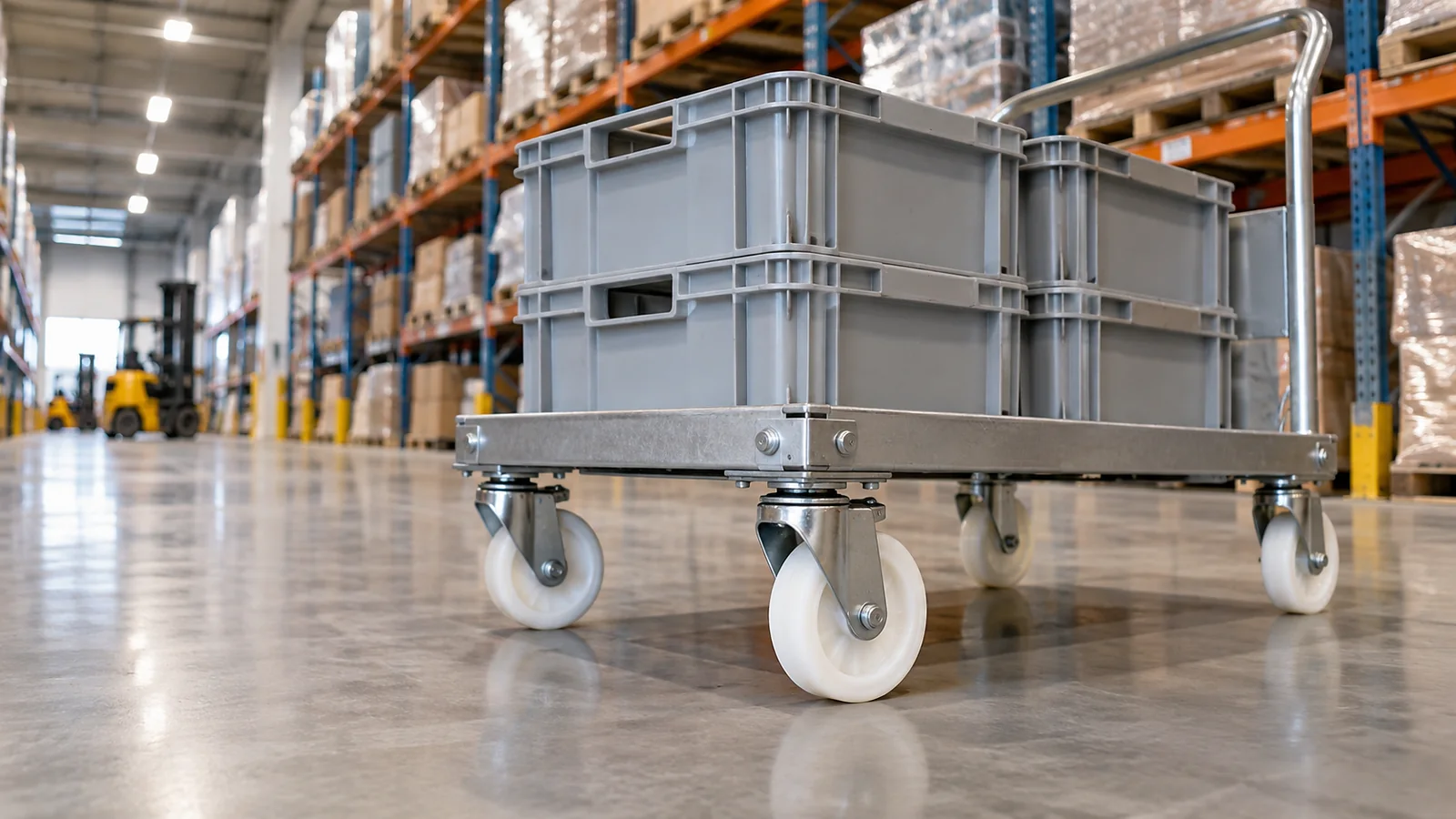
Materialtransportgeräte
Lastverteilung, wiederholte Fahrwege und Bodenübergänge.
Anwendung erkunden →
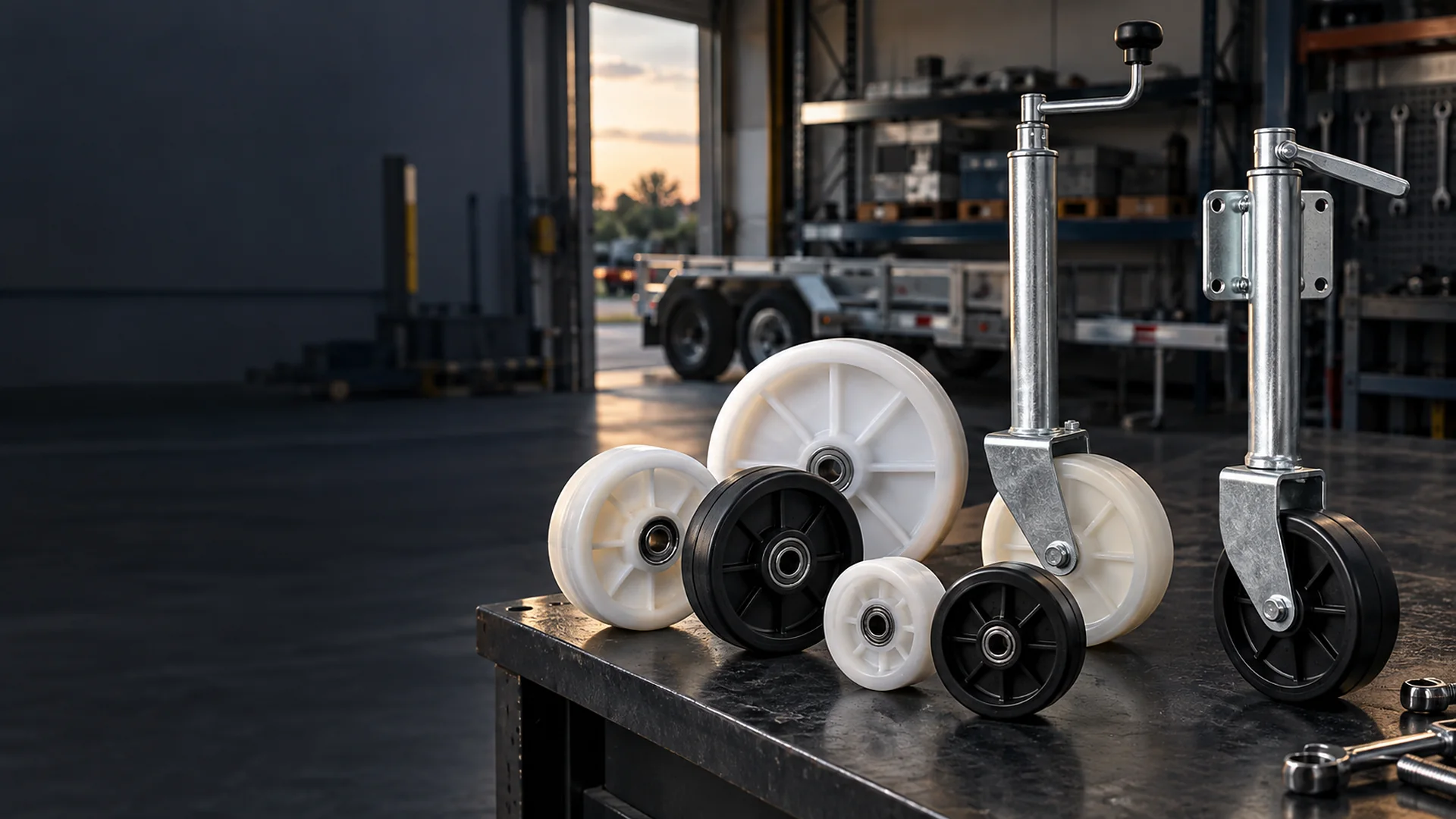
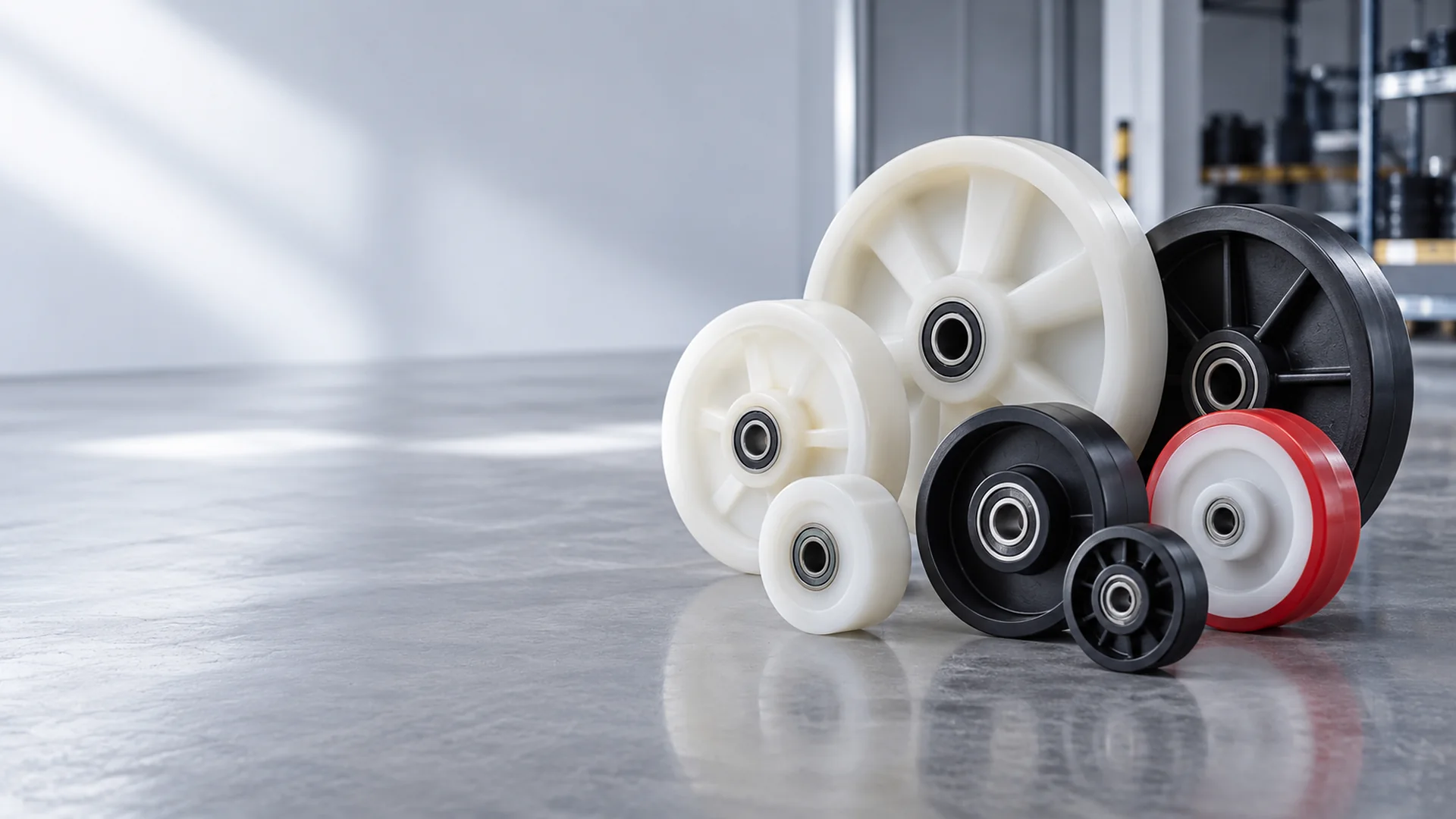
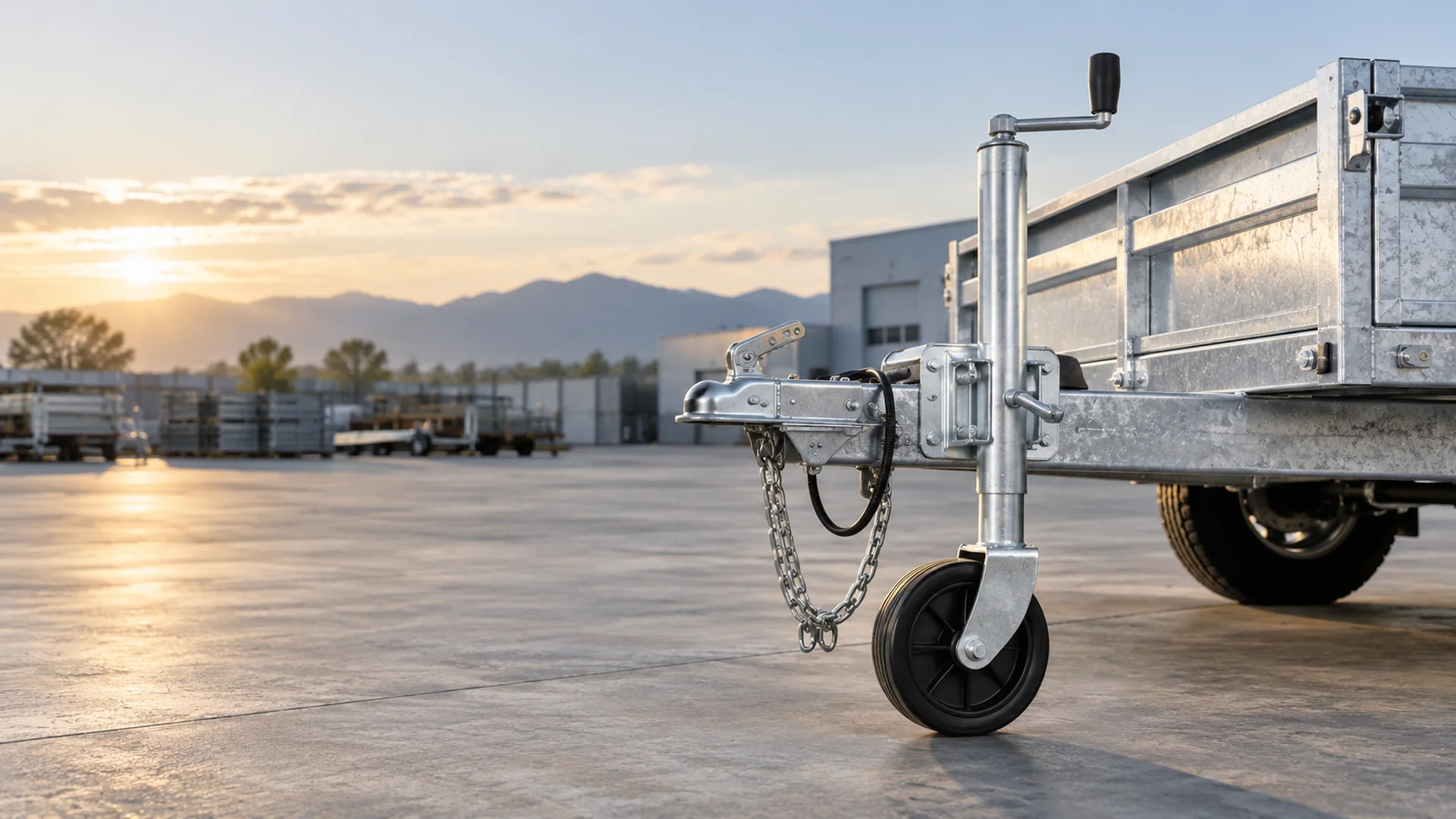
Industriekunden beginnen selten mit einer vollständigen Teilenummer. Der sinnvolle Ausgangspunkt sind in der Regel Material, Ausrüstung, Montageschnittstelle oder ein bereits im Einsatz befindliches Ersatzrad. Der Katalog orientiert sich an diesen Kaufentscheidungen und nicht an einer langen, statischen Modellliste.
Produktfamilienkarten helfen dabei, vom allgemeinen Bedarf zu einer überschaubaren Vorauswahl zu gelangen. Jede Landingpage erläutert die Auswahlkriterien, bevor die Produkte angezeigt werden, sodass die Produktübersicht Teil einer technischen Entscheidung bleibt und nicht die gesamte Seite einnimmt.
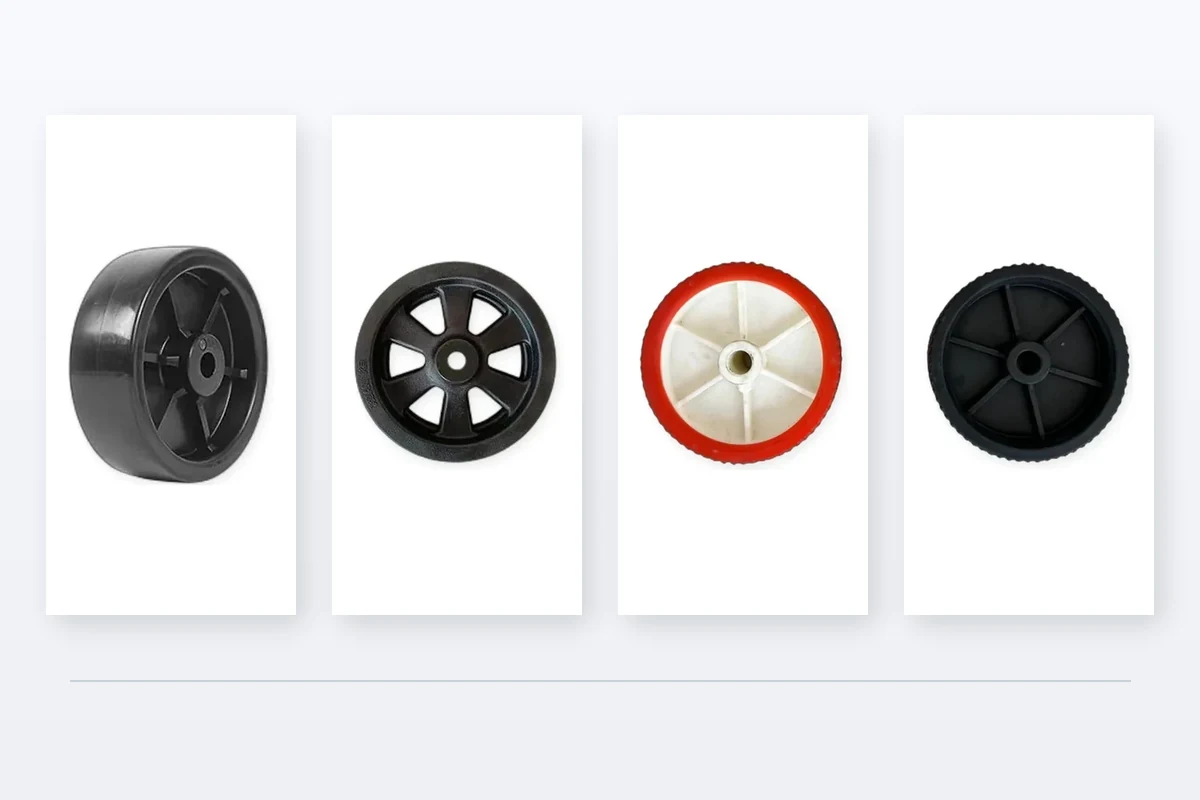
Rollenlager für Materialtransport, Ausrüstung und Austauschprojekte.
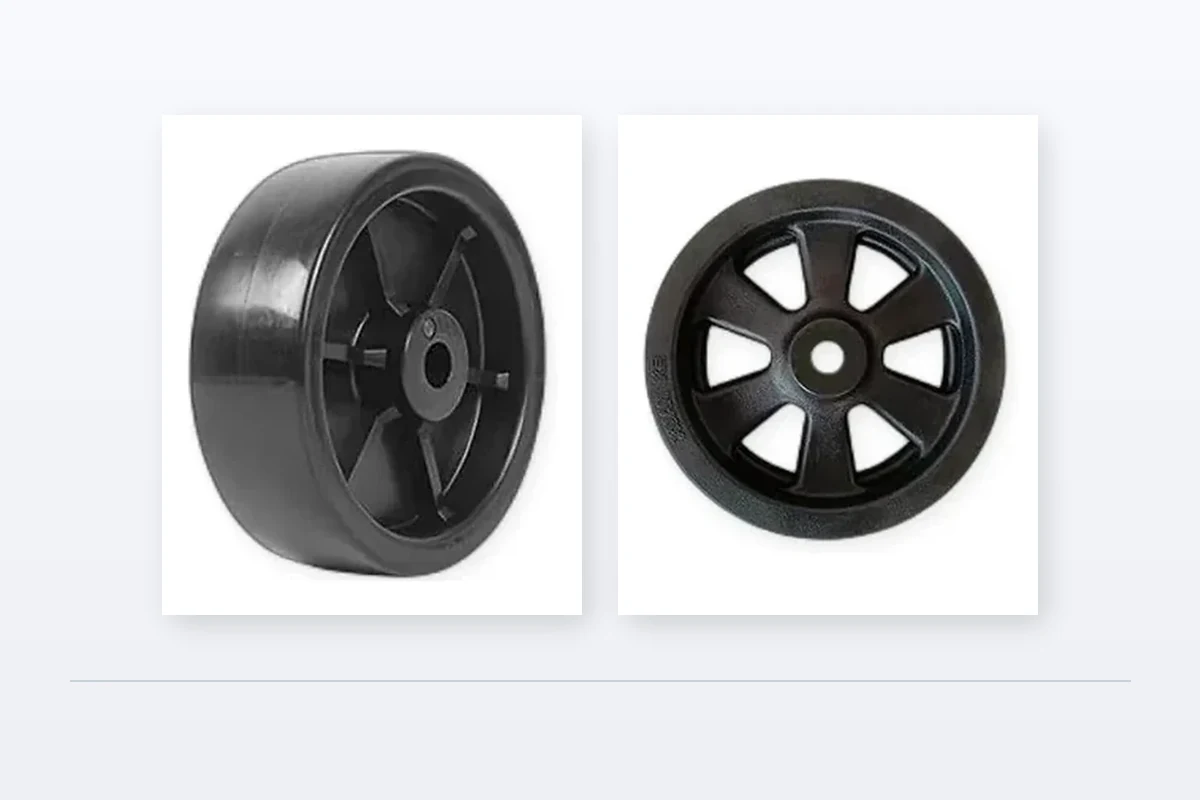
Harte thermoplastische Räder werden durch aktuelle Nylonradkonfigurationen repräsentiert.
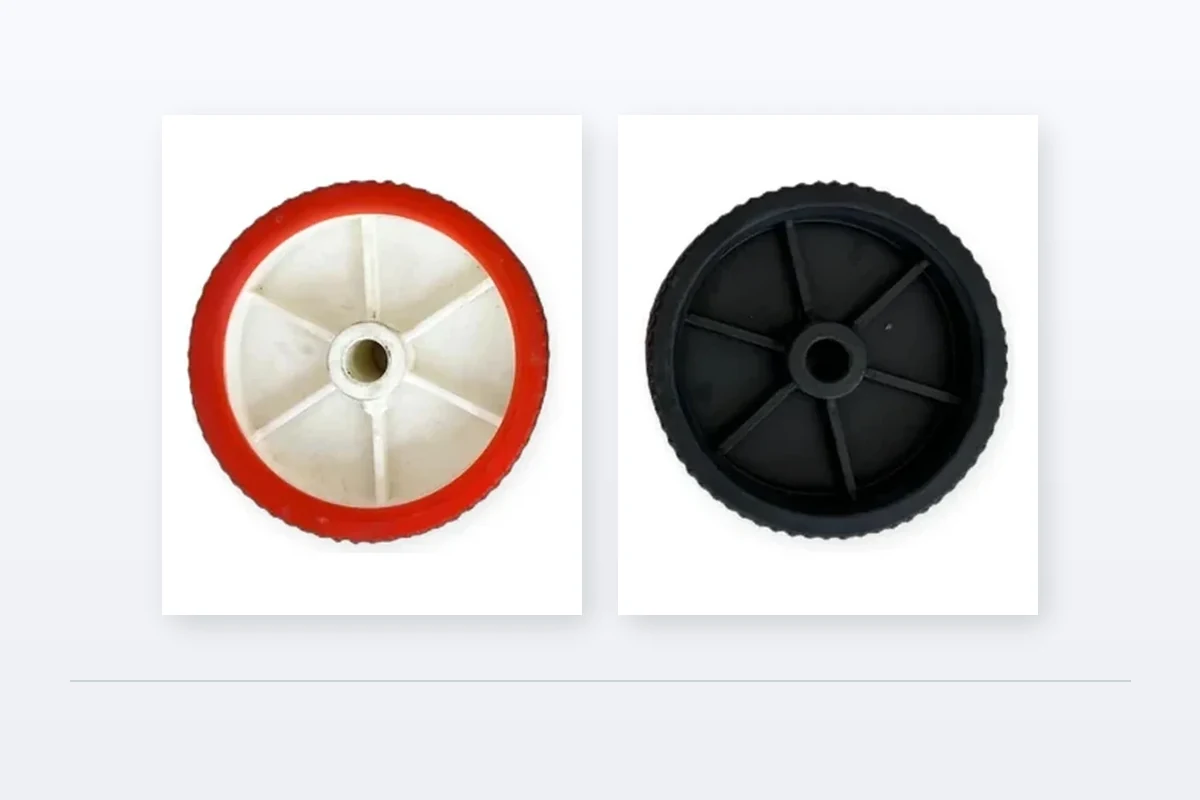
PP-Radkonfigurationen für Projekte zur Mobilität und zum Austausch von Ausrüstung.
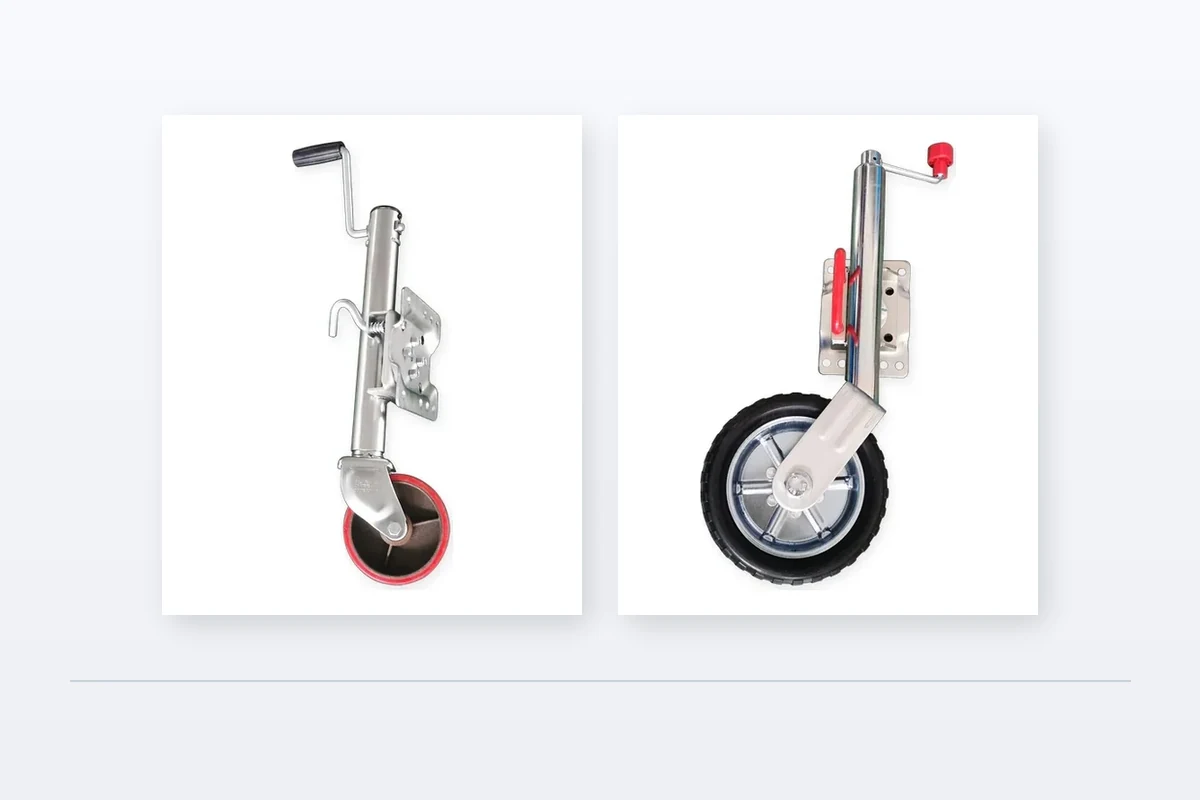
Führungsrollenbaugruppen für Anhänger- und mobile Gerätestützpositionen.
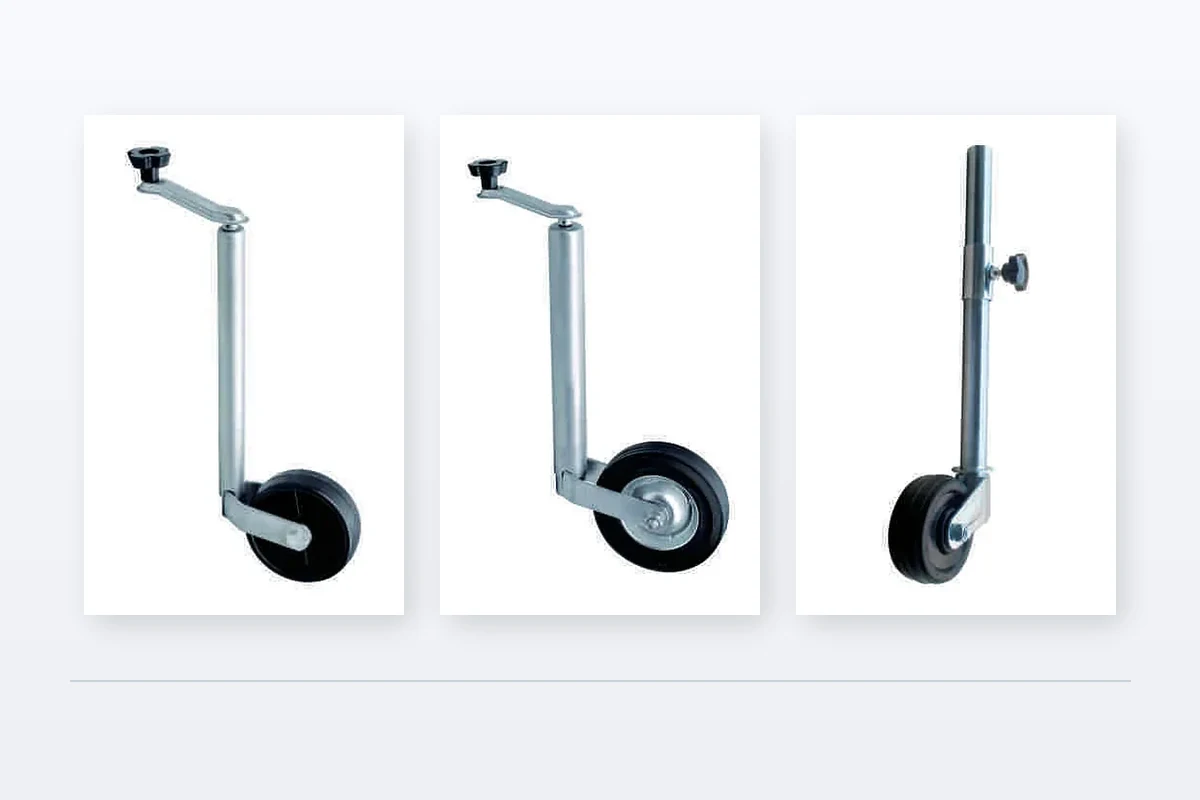
Einzel-, gebremste und Doppelrad-Stützradbaugruppen für die Anhängerhandhabung.
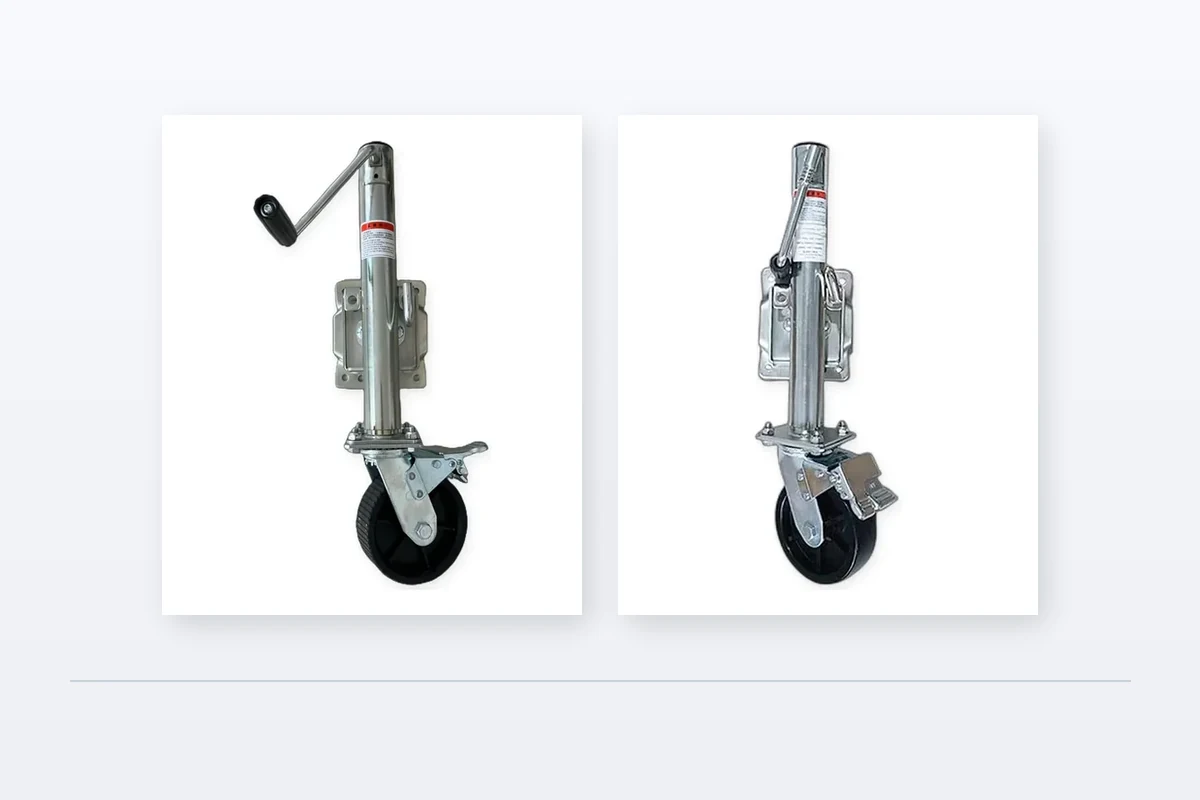
Bremsbare Stützradkonfigurationen aus Nylon und PP.
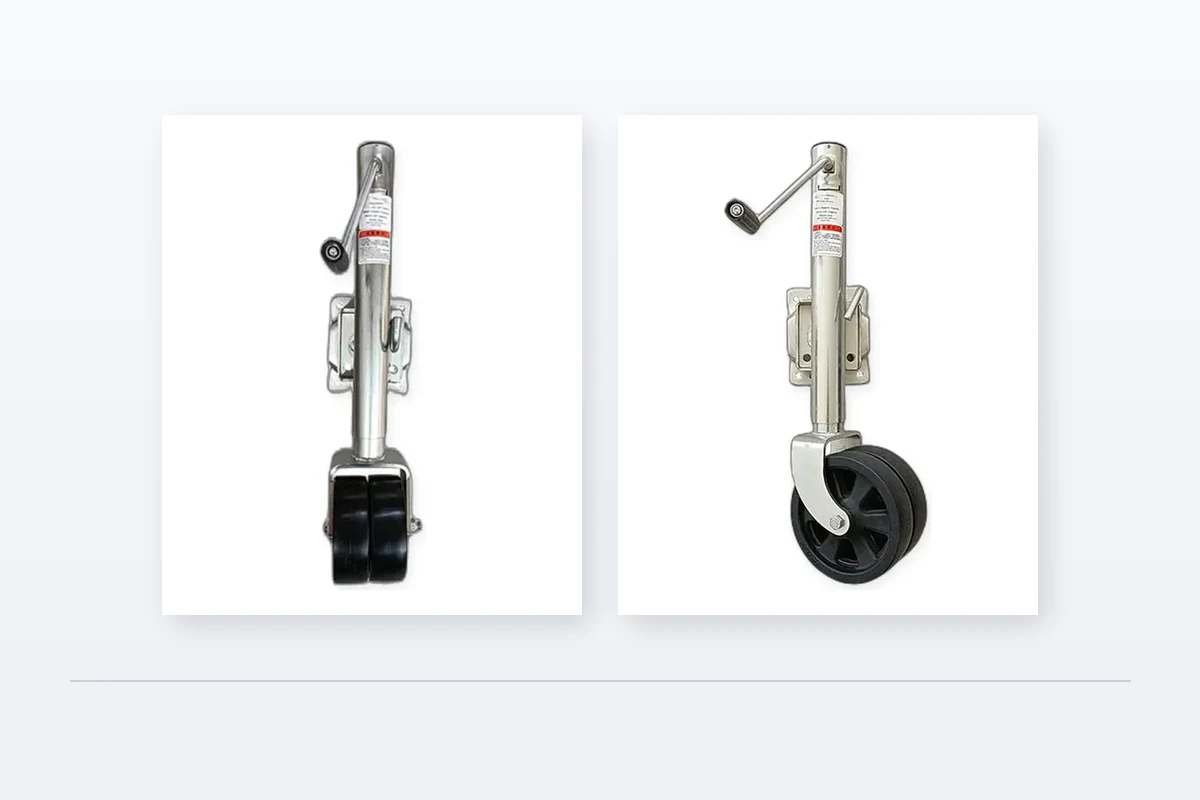
Doppelrad-Stützvorrichtungen für Stützrad- und Ersatzanwendungen.
Die Konfiguration der Stützräder wird anhand der Schnittstelle, des Untergrunds und der Arbeitsbedingungen ausgewählt.
Nylon und Polypropylen sind harte thermoplastische Radfamilien, die im aktuellen Katalog vertreten sind. Die endgültige Wahl hängt weiterhin von der Polymerqualität, dem Bodenzustand, der Belastung, den Radabmessungen, der Lager- oder Achsenschnittstelle und den Umwelteinflüssen ab.
Farbe darf nicht als Materialspezifikation verwendet werden. Falls Chemikalien, Reinigungsanforderungen, Markierungen, Temperatur oder Verunreinigungen relevant sind, geben Sie diese bitte an, damit die Materialanforderungen überprüft und nicht einfach angenommen werden können.
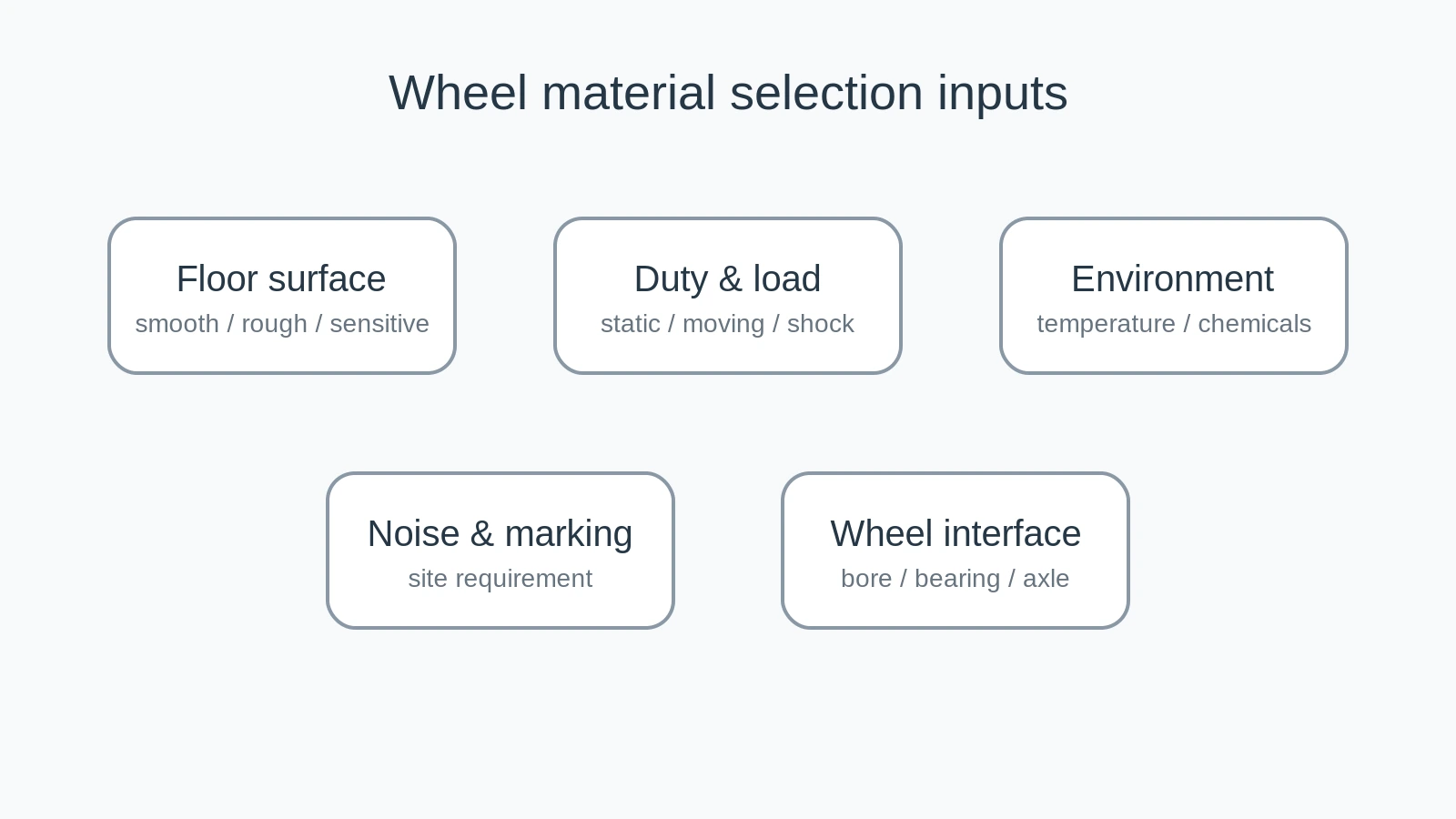
Die Wahl der Räder hängt von der jeweiligen Maschine ab. Ein handgeschobener Wagen auf glattem Beton stellt andere Anforderungen als ein Stützrad für einen Anhänger, das nur gelegentlich auf Schotter eingesetzt wird. Bei Gerätefundamenten spielen die Installationshöhe und die Zugänglichkeit für Wartungsarbeiten eine Rolle, während bei Materialtransportwagen die Lenkung, die Fugen im Boden und die häufigen Fahrten im Vordergrund stehen können.
Lastverteilung, wiederholte Fahrwege und Bodenübergänge.
Anwendung erkunden →
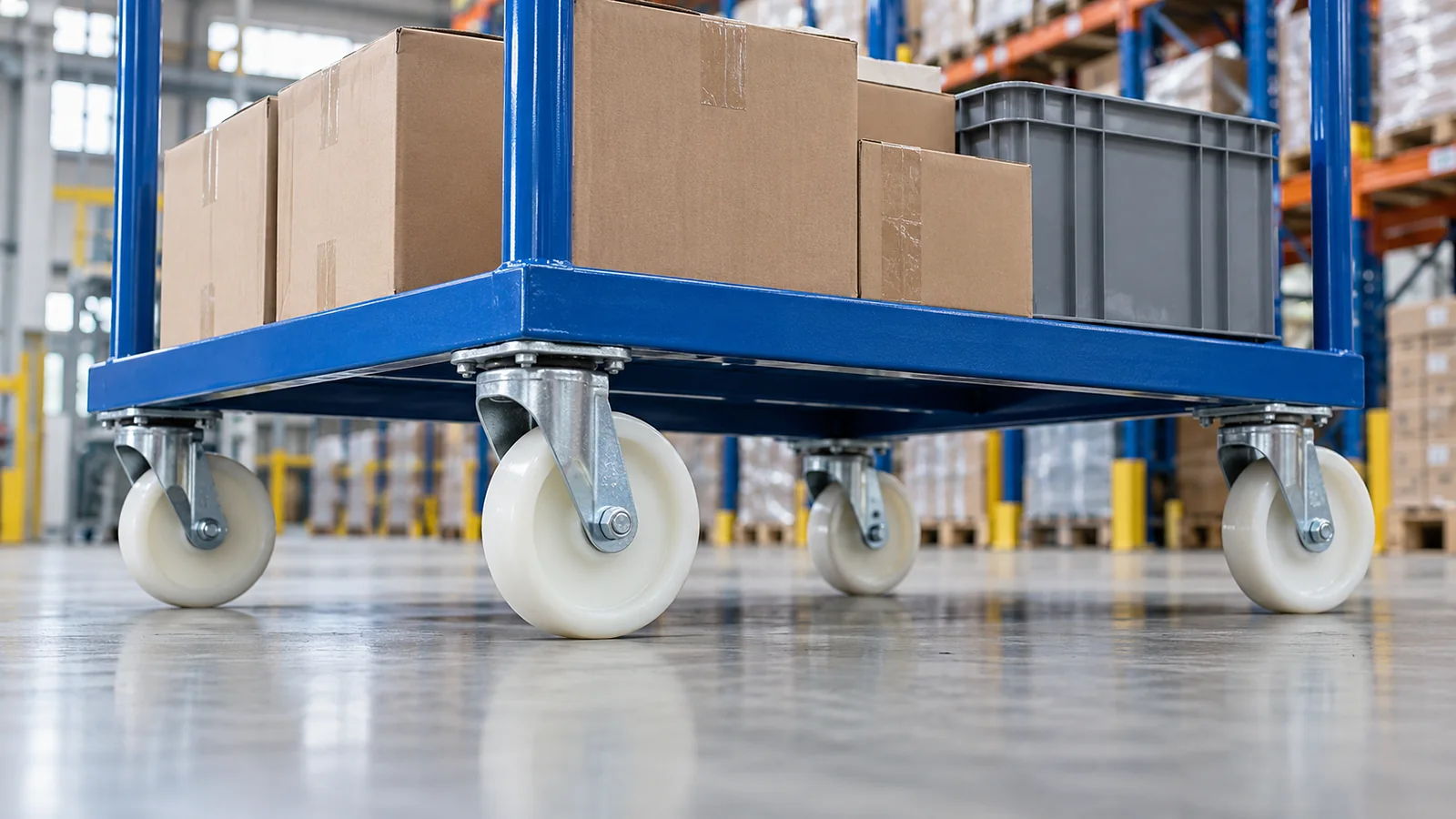
Radanordnung, Lenkverhalten, Schwellenwerte und Bedieneraufwand.
Anwendung erkunden →
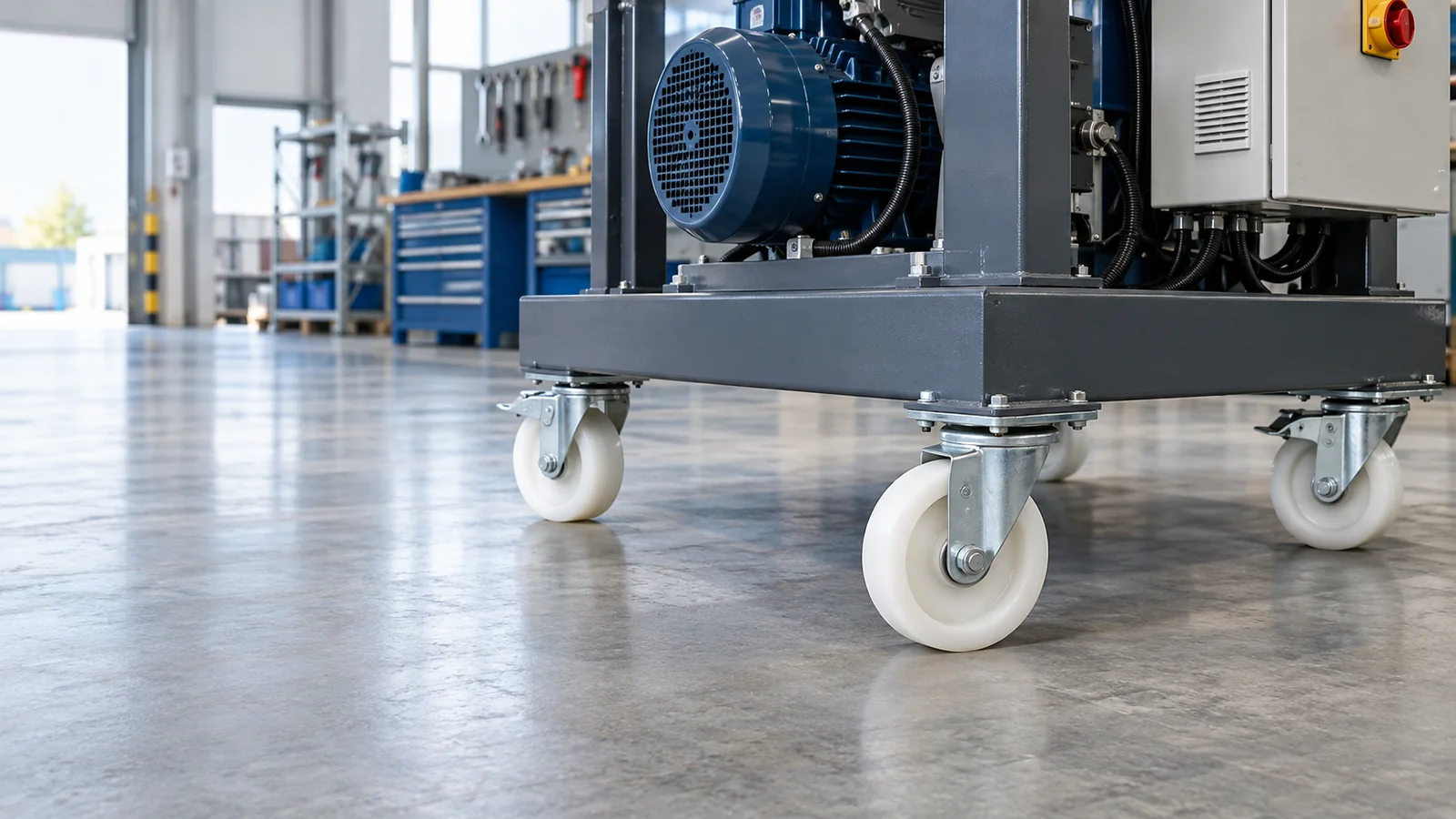
Einbauhöhe, Montageschnittstelle, Wartungszugang und Stabilität.
Anwendung erkunden →
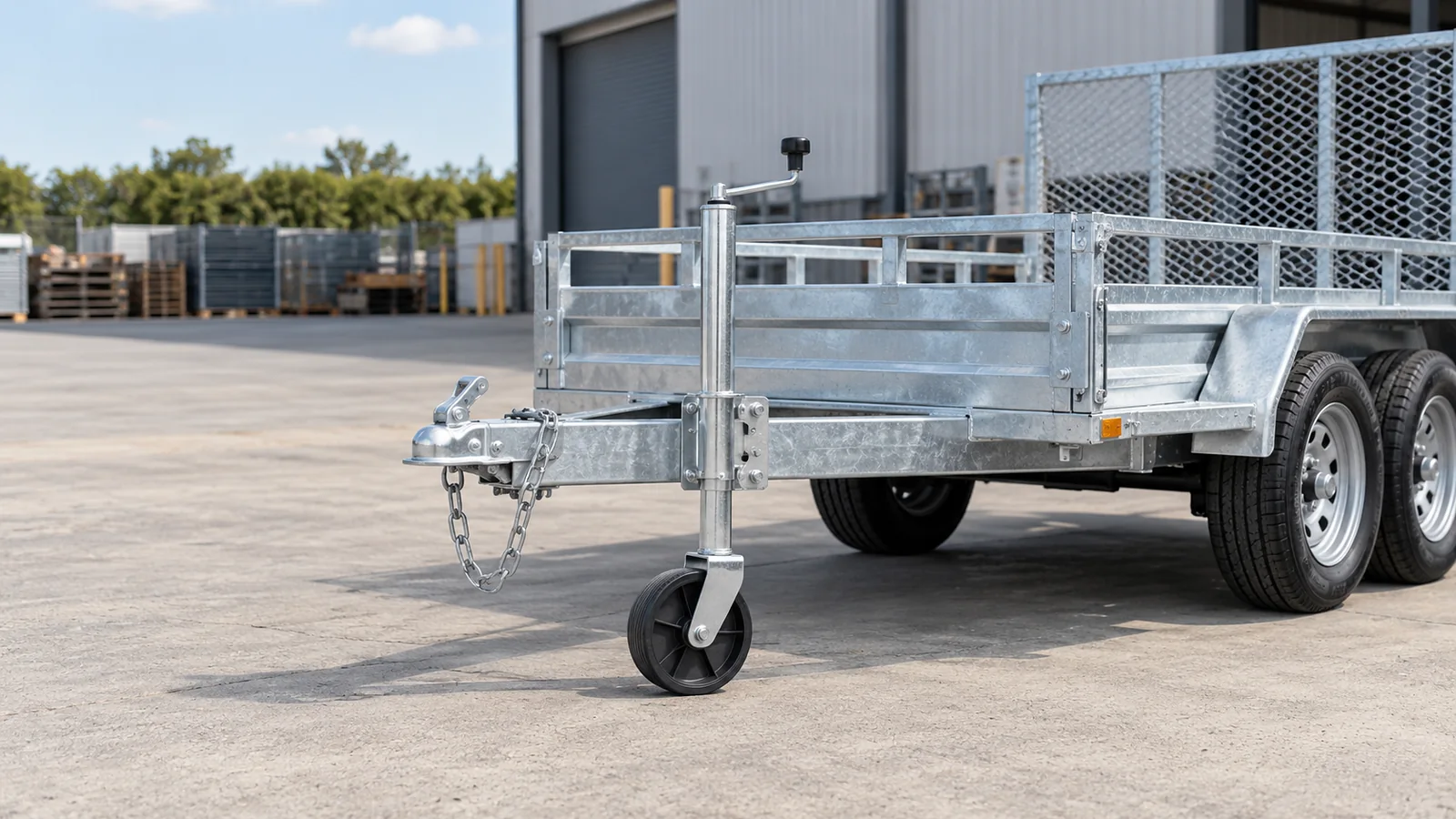
Zuglast, Bodenfreiheit, Fahrweg, Rohrpassung und Stauraumfreiheit.
Anwendung erkunden →
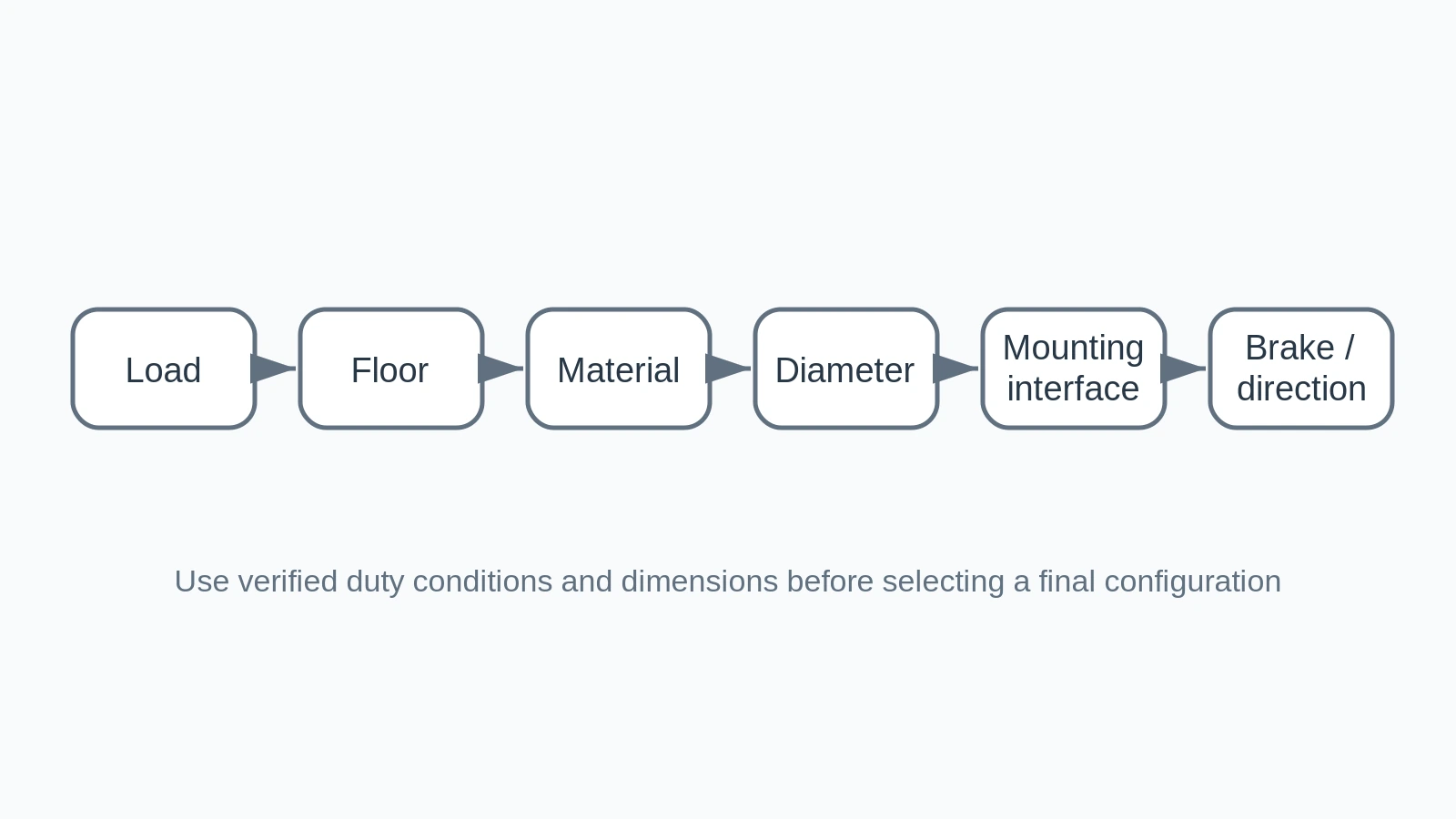
Beginnen Sie mit der Aufgabenstellung, nicht mit einem Foto des Rades. Definieren Sie Gewicht und Nutzlast der Ausrüstung und bestimmen Sie anschließend die lastverteilenden Auflagepunkte. Dokumentieren Sie den Untergrund, wählen Sie einen geeigneten Durchmesser, identifizieren Sie die Materialumgebung, messen Sie die Auflagefläche und entscheiden Sie erst dann, ob Brems-, Schwenk- oder Klappfunktionen benötigt werden.
Diese Reihenfolge macht die Angebotserstellung effizienter, da jede spätere Entscheidung auf Informationen beruht, die messbar oder beobachtbar sind.
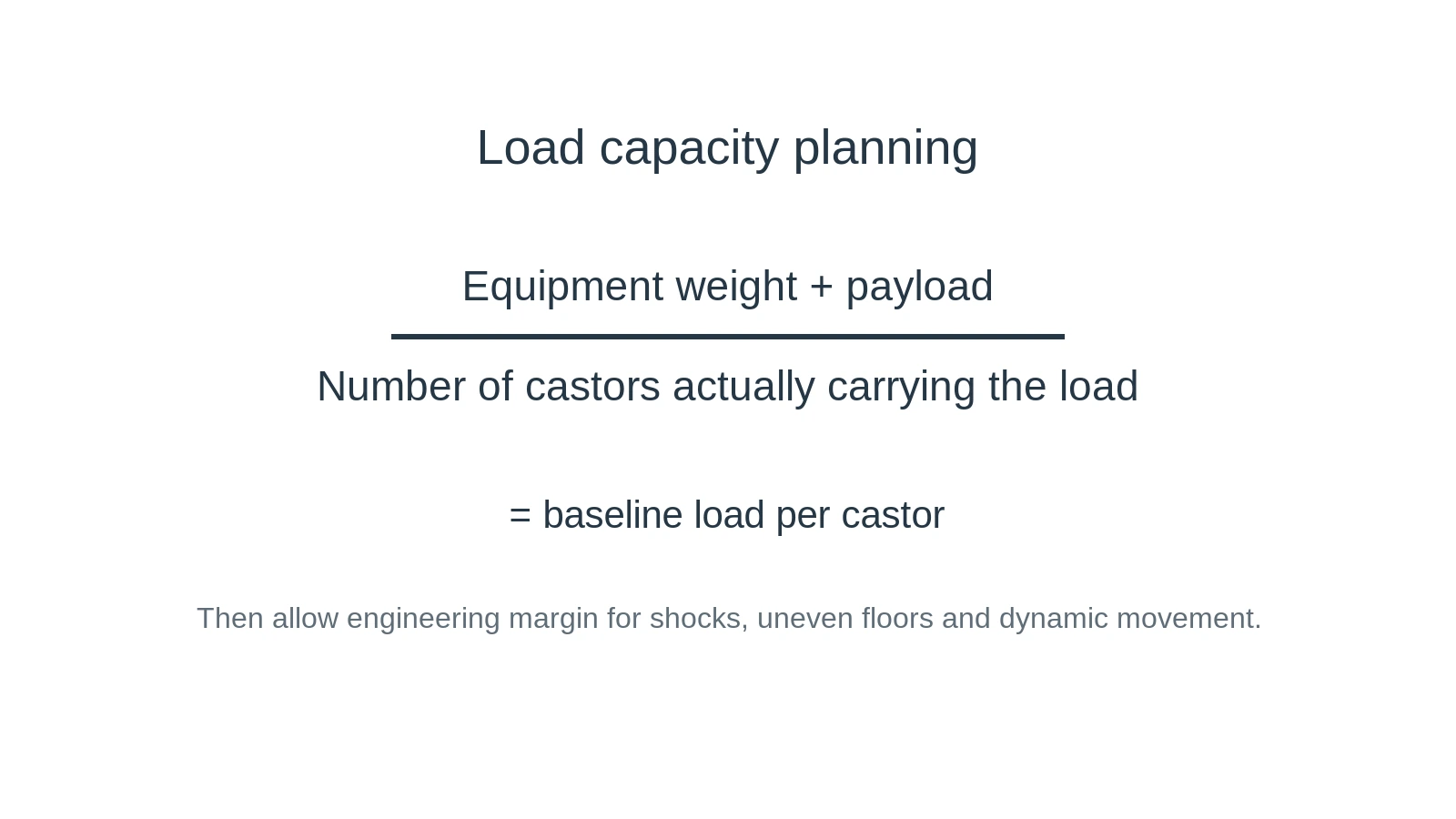
Eine erste Lastberechnung ist hilfreich, jedoch können unebene Böden und flexible Rahmen eine gleichmäßige Lastverteilung verhindern. Schwellen und Rampen erzeugen kurzzeitige Kräfte. Bei der Anhängerunterstützung ist die relevante Stützlast nicht mit der Gesamtmasse des Anhängers gleichzusetzen.
Für ein Ersatzrad werden Durchmesser, Breite, Nabenbohrung und Achseninformationen benötigt; für eine komplette Baugruppe zusätzlich Einbauhöhe, Geometrie der Halterung oder des Rohrs sowie der Bewegungsspielraum. Diese Diagramme helfen Einkäufern, diese Maße vor der Angebotsanfrage zu erfassen.
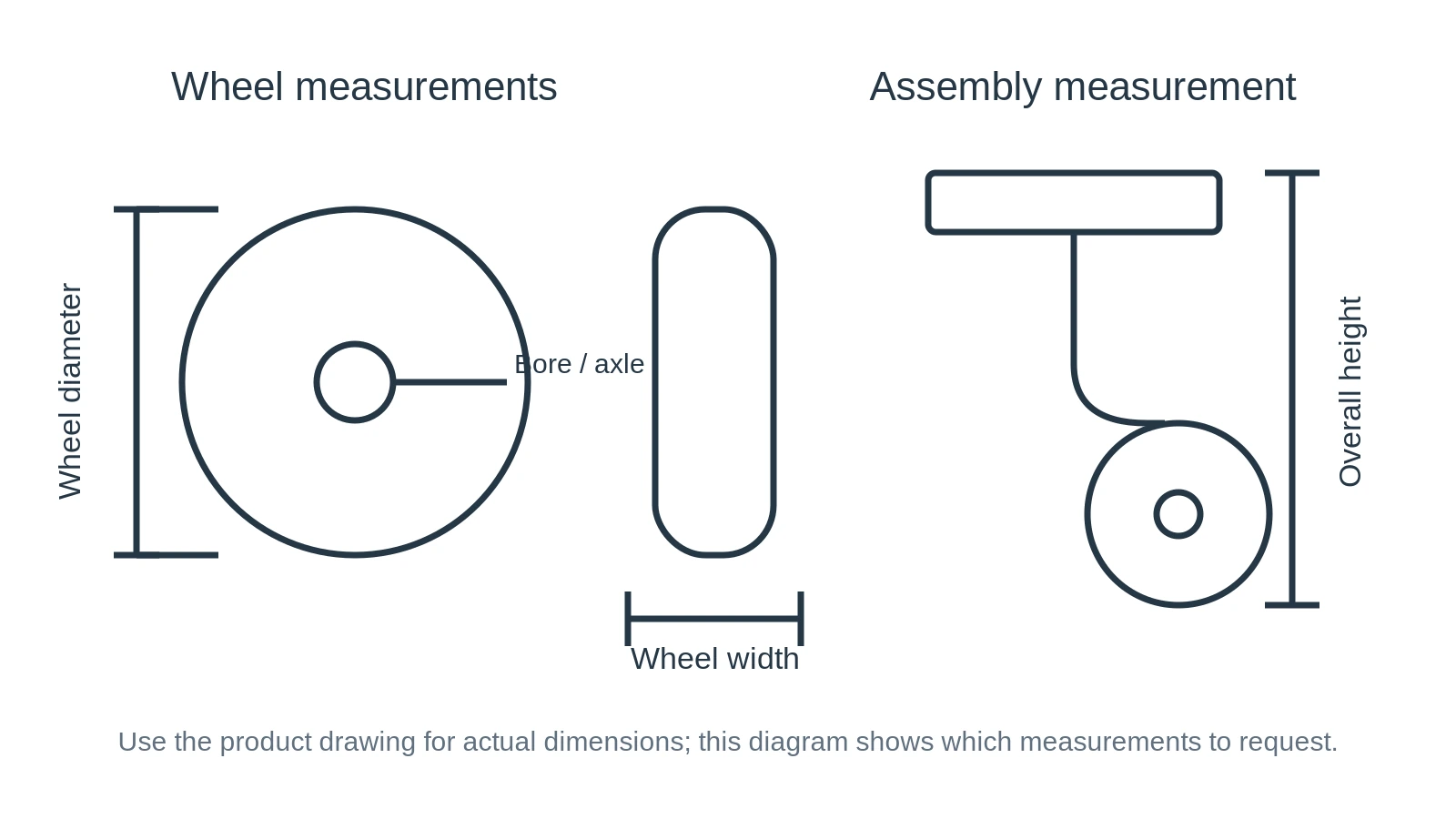
Eine gute Anfrage muss keine fertige technische Zeichnung sein. Sie sollte bekannte Fakten von Annahmen unterscheiden. Senden Sie, falls bekannt, ein vorhandenes Modell, aussagekräftige Fotos, passgenaue Maße, maximale Belastung, Bodenbeschaffenheit, zu erwartende Bewegungen, Menge und spezielle Material- oder Oberflächenanforderungen.
Bei Projekten mit mehreren Modellen sollte jede Konfiguration in einer eigenen Linie geführt werden. Muster zur Eignungs- oder Materialprüfung für Neukunden können besprochen werden, während Produktionsmengen und Sonderprozesse den jeweiligen Mindestvorgaben des Herstellers folgen.
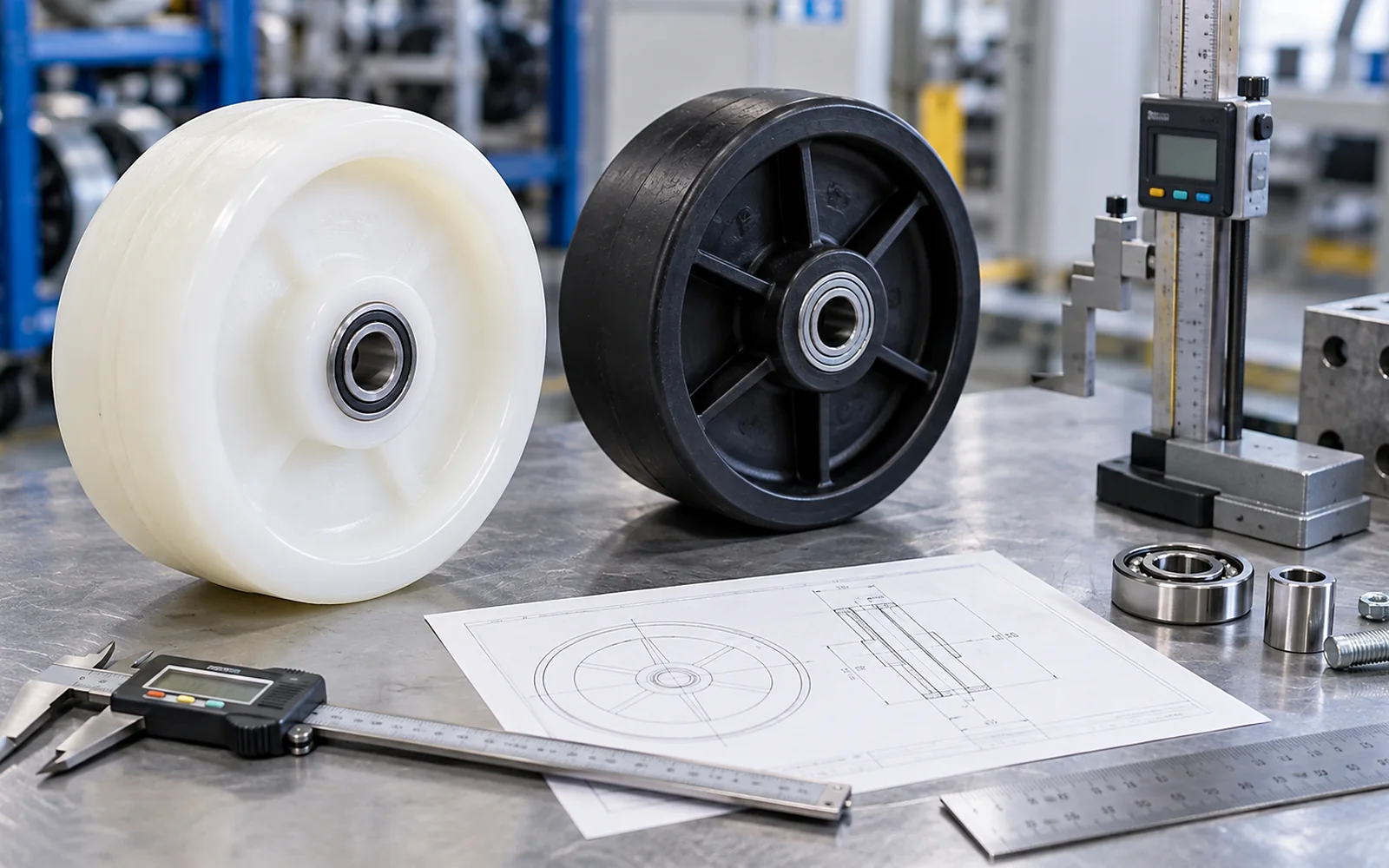
Nutzen Sie die technische Bibliothek, um von einer allgemeinen Produktbezeichnung zu messbaren Last-, Material-, Montage- und Ersatzteilpassungsentscheidungen zu gelangen.
Wählen Sie Lenkrollen systematisch nach Belastung, Bodenbeschaffenheit, Material, Durchmesser, Montageart, Bewegung, Brems- und Lageranforderungen aus.
Leitfaden öffnen →Vergleichen Sie Nylon- und Polypropylenräder hinsichtlich Rollverhalten, Bodenbeschaffenheit, Umgebungsbedingungen, Kostenaspekten und verfügbaren Konfigurationen.
Leitfaden öffnen →Lernen Sie die grundlegende Berechnung der Last pro Rolle und die praktischen Auswirkungen von unebenen Böden, dynamischen Lasten, Stößen und der tatsächlichen Anzahl der Stützräder kennen.
Leitfaden öffnen →Vor dem Austausch oder der Angebotsanfrage müssen Raddurchmesser, Laufflächenbreite, Achsbohrung, Nabenlänge, Gesamthöhe und Montagedetails korrekt gemessen werden.
Leitfaden öffnen →
Technischer Hinweis: Was Sie in einer Angebotsanfrage für Kunststoffräder oder Stützräder angeben sollten – Ein praktischer Leitfaden für Käufer von Kunststoffrädern mit Checkliste, der sich auf messbare Betriebsdaten konzentriert…
Leitfaden lesen →Technischer Hinweis: Wie man das Radlagerspiel vor dem Einbau prüft. Ein praktischer Leitfaden für Käufer zur Prüfung des Radlagerspiels mit Fokus auf messbare Betriebsbedingungen und anfragegerechte Informationen…
Leitfaden lesen →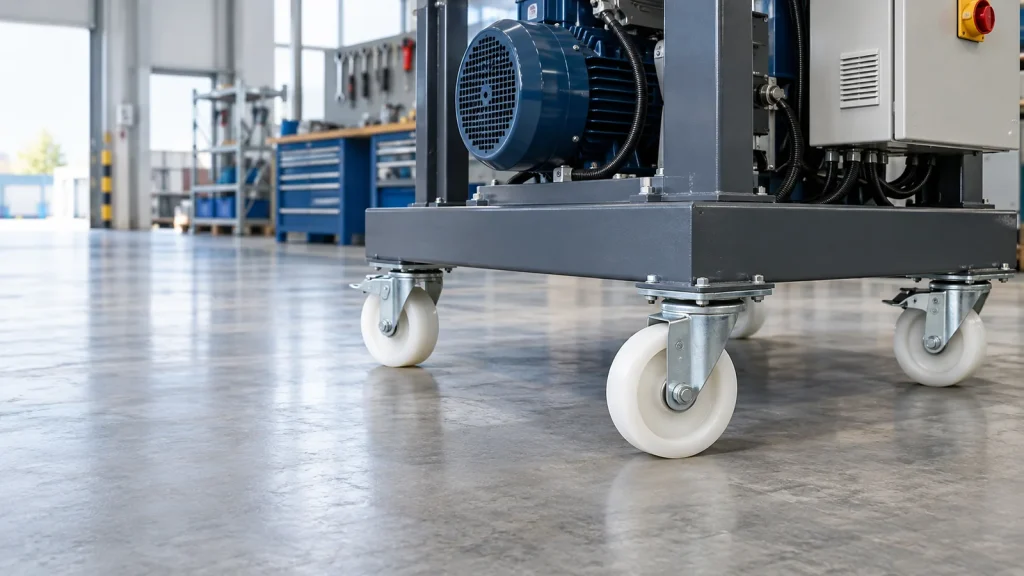
Technischer Hinweis: Warum Lenkrollen unter Last wackeln oder wandern können. Ein praktischer Leitfaden für Käufer zu den Ursachen von Lenkrollenwackeln, mit Fokus auf messbare Betriebsbedingungen und…
Leitfaden lesen →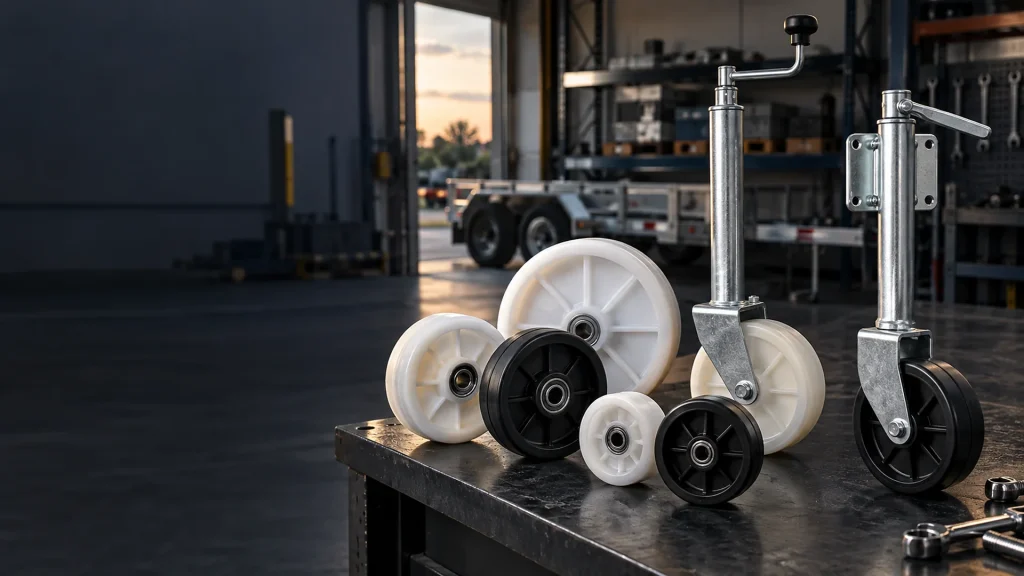
Technischer Hinweis: Häufige Ursachen für ungleichmäßigen Radverschleiß an Industriewagen. Ein praktischer Leitfaden für Käufer zum Thema ungleichmäßiger Radverschleiß an Industriewagen, mit Fokus auf messbare Betriebsbedingungen…
Leitfaden lesen →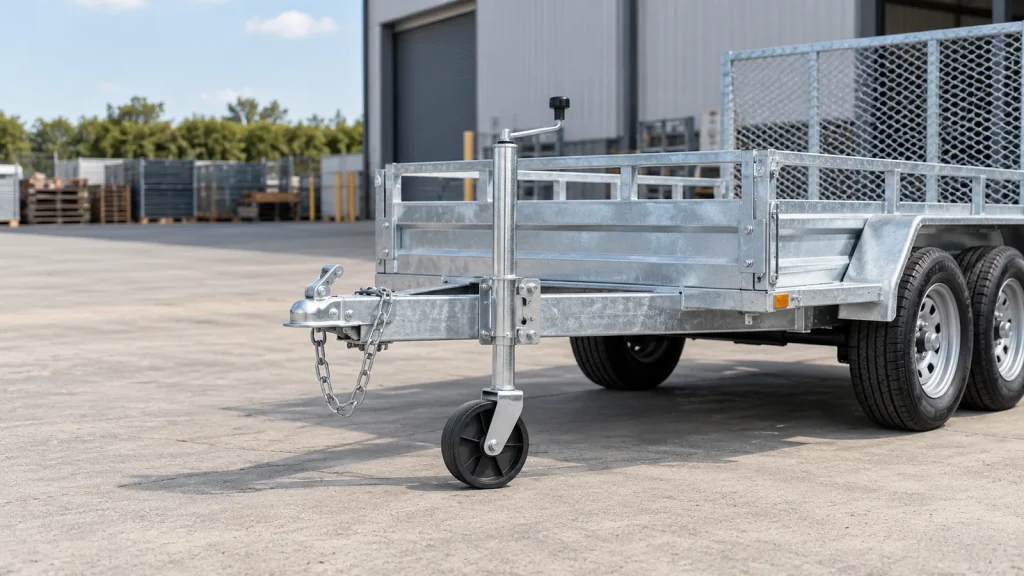
Technischer Hinweis: Rohrdurchmesser und Klemmpassung – Eine Überprüfung beim Austausch des Stützrads. Ein praktischer Leitfaden für Käufer zur Überprüfung des Rohrdurchmessers und der Klemmpassung des Stützrads, mit Fokus auf messbare…
Leitfaden lesen →Technischer Hinweis: Wie viel Freiraum benötigt ein klappbares Stützrad? Ein praktischer Einkaufsratgeber zum Freiraum von klappbaren Stützrädern, mit Fokus auf messbare Betriebsbedingungen…
Leitfaden lesen →Eine sinnvolle Ersatzteilanfrage beginnt mit dem Teil, das die Passgenauigkeit maßgeblich bestimmt. Bei einem losen Rad sind dies üblicherweise Durchmesser, Breite, Bohrung oder Lageranordnung, Nabenlänge und Achsendetails. Bei einer Trägerbaugruppe kommen Rohr- oder Plattenbefestigung, Einbauhöhe, Kurbel- oder Schwenkspielraum und die Art der Lagerung hinzu. Die Dokumentation dieser Daten vor der Entsorgung des alten Bauteils verhindert, dass ein optisch ähnliches Teil versehentlich als Ersatz verwendet wird.
Dieselbe Vorgehensweise ist auch bei der Entwicklung neuer Ausrüstungsprojekte hilfreich. Beginnen Sie mit der Belastung der Auflagepunkte, dem Untergrund, der Fahrfrequenz, Hindernissen und dem verfügbaren Platz um das Rad herum. Erst dann sollten Sie Material, Durchmesser und Steuerungselemente genauer betrachten. Diese Vorgehensweise hält die Diskussion praxisnah und ermöglicht dem Einkauf einen Vergleich der Angebote anhand der Spezifikationen.
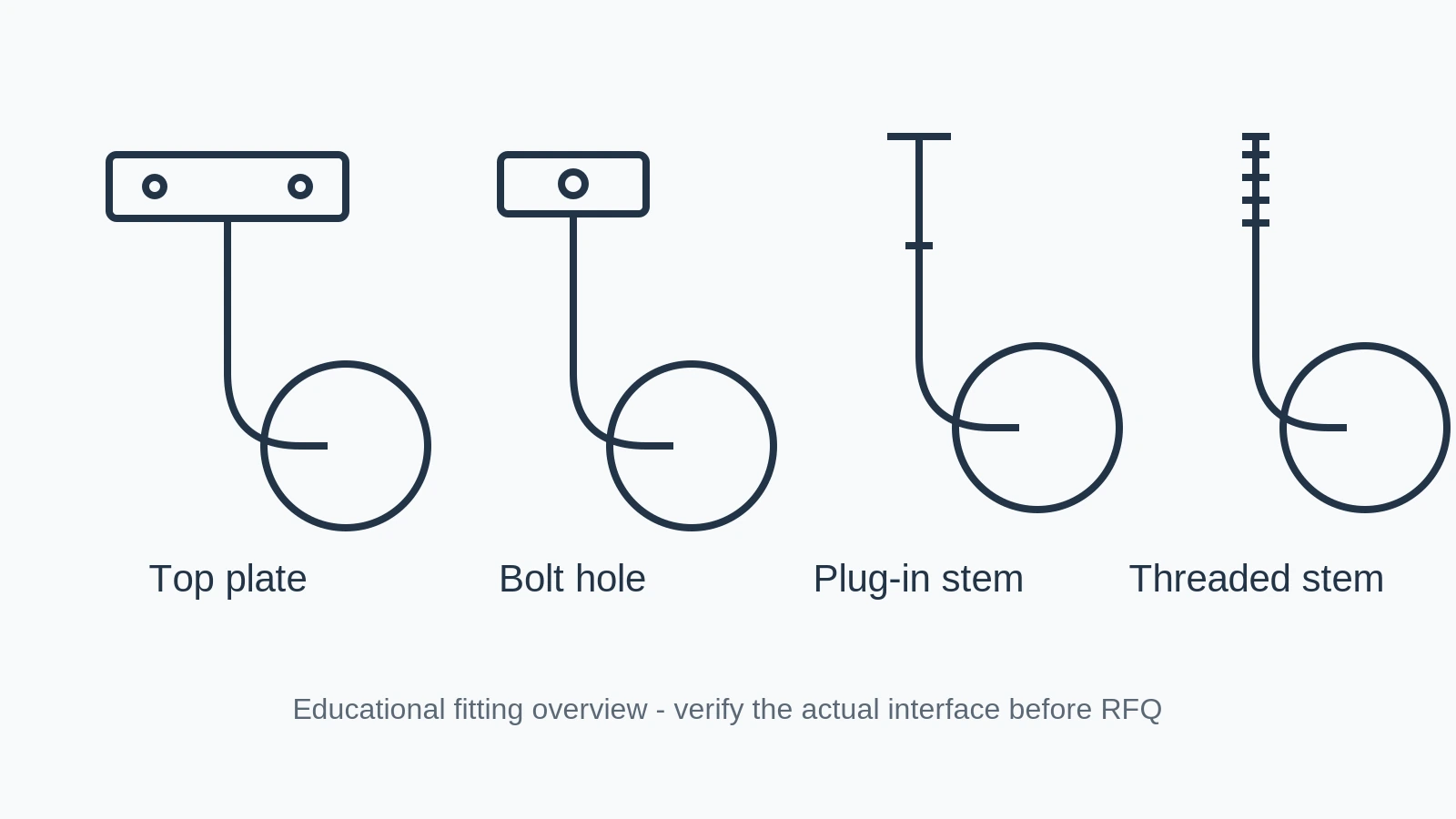
Radmaterial und -durchmesser lösen nur einen Teil des Mobilitätsproblems. Eine komplette Lenk- oder Stützradbaugruppe berücksichtigt zusätzlich die Schwenkgeometrie, die Steifigkeit der Halterung, die Montageabmessungen, den Hubweg, die Parkkontrolle und den Freiraum um den Rahmen. Indem man die Anforderungen an das Rad selbst von den Anforderungen an die Baugruppe trennt, lässt sich leichter erkennen, welche Abmessungen tatsächlich übereinstimmen müssen und welche Merkmale je nach Anwendung ausgewählt werden können.
Bei Anhängern und mobilen Unterstützungsgeräten ist die vertikale Abstützung von der manuellen Manövrierbarkeit zu unterscheiden. Ein Rad, das die geparkte Deichsel trägt, muss über den realen Hofboden rollen und ein- oder ausklappen können, ohne die Kupplung, das Fahrgestell oder den Boden zu berühren. Diese Prüfungen sind zu dokumentieren, bevor ein Muster oder eine Produktionsmenge freigegeben wird.
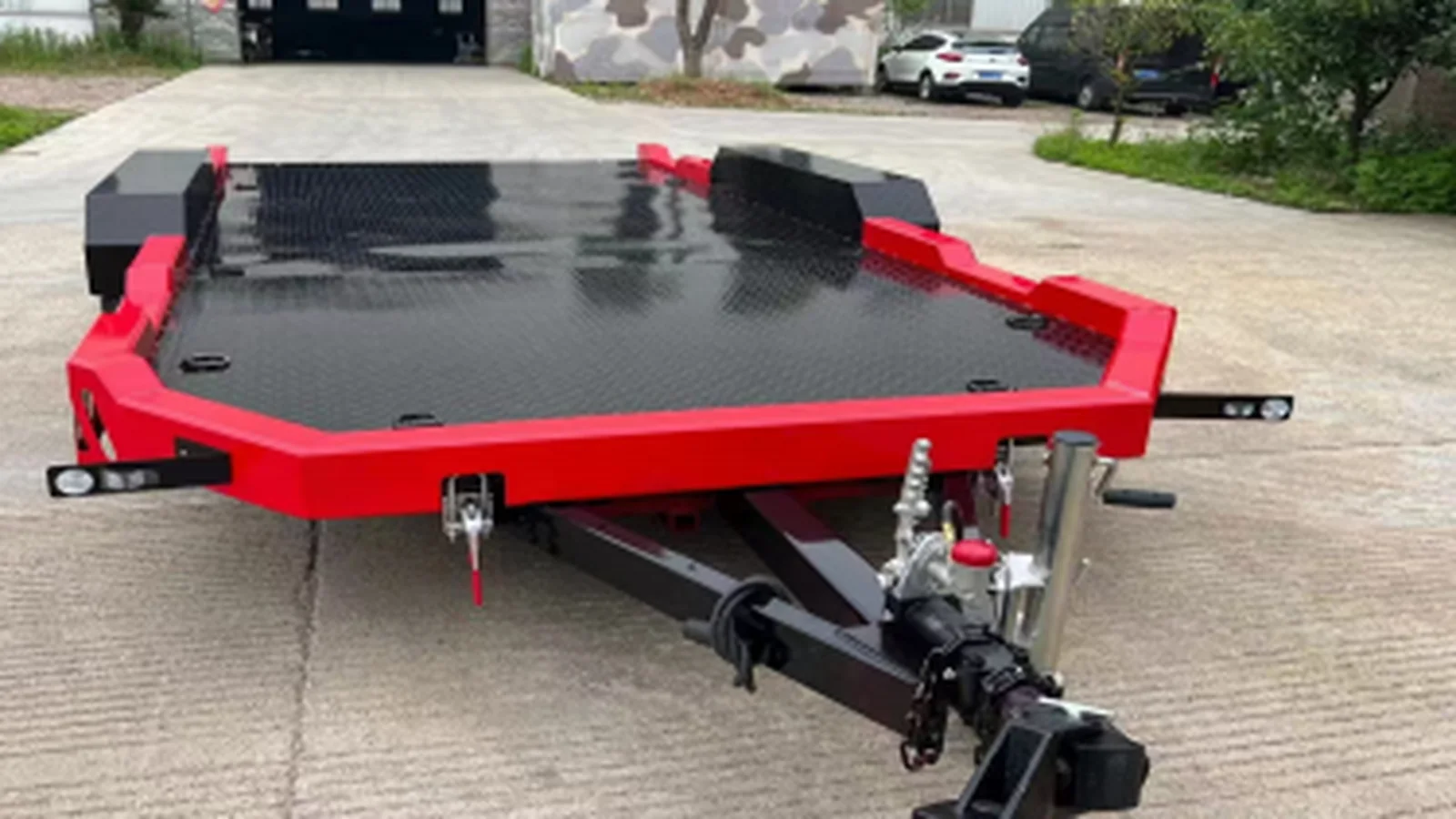
Eine übersichtliche Angebotsanfrage (RFQ) benötigt in der Regel weniger E-Mails als eine ausführliche Produktbeschreibung. Geben Sie die Art des Geräts oder Anhängers, das Gesamtgewicht bzw. die Traglast, den Raddurchmesser und die Radbreite (falls bekannt), die Montage- bzw. Achsabmessungen, den Untergrund, die Brems- bzw. Klappanforderungen, die Menge und den Bestimmungsort an. Fügen Sie Fotos von der Seite und der Montagefläche sowie ein Lineal oder eine Zeichnung hinzu, falls die Abmessungen schwer zu beschreiben sind.
Wenn mehrere Modelle benötigt werden, sollte jede Konfiguration in einer eigenen Zeile stehen. Dadurch bleibt das Verhältnis zwischen Abmessungen, Material, Ausführung und Menge erhalten und spätere Änderungen lassen sich deutlich einfacher nachverfolgen.
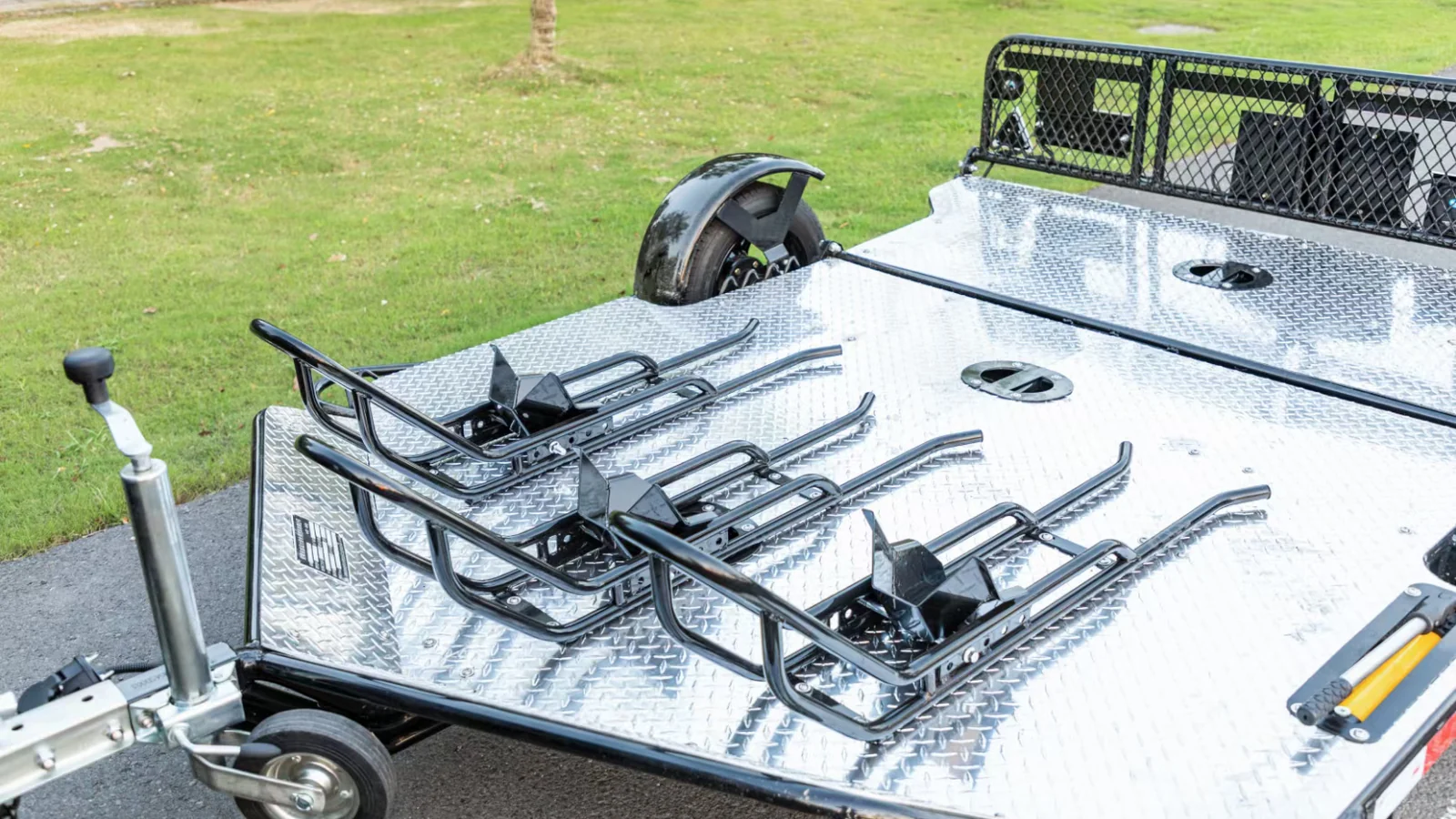
Bitte senden Sie uns Ihre Bewerbung, die Lastangaben, die Abmessungen, die Menge sowie ein Foto oder eine Zeichnung. Fehlende, passgenaue Details können wir vor der Angebotserstellung klären.