
Description du produit
Item: Custom Plastic Injection Molded Parts OEM Made per Drawing or Sample
Workshop View
| Matériau de moule | S45C, S50C, P20, 718H, 738H, NAK80, S136, S136H |
| Mold Life Time | Life time warrange,you pay mold cost once and we will be responsible for all quality production |
| Product Material | PC, ABS,PP,PC+ABS,PA, HIPS, PVC, PE, PS, POM, Acrylic,TPE,PET,GF filled PA etc |
| Surface | Smooth, Glossy, Textured, Matte/Sandblasting |
| Couleur | Any Pantone or RAL color code is workable |
| Format de dessin | STEP/IGS/X_T,DWG,PDF |
| Secondary Service | Painting,Printing,Chrome Plating,Assembly etc. |
| Délai de livraison | 2 to 8 weeks depending on order size |
Careful Working
Example of What We Do
Company Introduction
Q: Are you a factory or trading company ?
A: We are a factory specializing in custom plastic injection molding parts,together with rubber parts and after-treatment of CHINAMFG such as painting,printing ,assembly etc .
Q:What info do you need if I want to get a quote for a custom plastic part ?
A: 3D drawing in IGS/STEP/X-T format is preferred .Otherwise as long as other format can provide equivellent info ,it would be fine too ,such as CAD drawing with weight info provideded ,or samples sent to us for checking .
Also please state other related info such as what quantity you need,if there are any special requirements such as painting,printing,assembly etc .
Q:What material you can handle ?
A:We can make CHINAMFG in various kind of materials such as PC/PP/ABS/Nylon/PA6/PA66/TPE/PVC/PBT/Nylon with Glass Fiber/Polycarbonate with Glass Fiber/AS/PS etc and subber parts in NBR/Silicone etc .
Q:I have a custom plastic part to make ,I have the design but I am not familar with injection so I am not sure if this part may shrink or not working with injection,can you advise ?
A:YES,we have an engineering team who is not only familar with part design but also familar with injection feasiblity ,once we receive the drawing ,we will check the feasiblity for injection and potential problems in the design.For example,if the part is designed with unnecessary plastic which will not only add cost but also cause sink parts at the surface of the part,we will feedback you before proceeding .
Q:What colors can you do with my plastic part?
A :We can make any color that is in Pantone and RAL color system .
Q:What’s your lead time for mold and for production ?
A:Usually we can send samples in 30-35 days from mold order . Production lead time is 2 to 8 weeks depending on order size .
Q:What’s the mold life gurantee ?
A:We provide lifetime gurantee .For example,usually a mold would start to age after like 500,000 shots ,but if quantity can reach this level ,we will make a new mold at our expense to keep the stable production going on . So you pay mold cost once and we will be responsible for all production from this model .
Q:Is mold our property after we pay it in full ?
A:Yes,mold is the customer’s property after the customer pays it in full .We only keep it well in house to serve the customer’s production needs . The mold won’t be changed unless with customer’s permission .We will not produce from this mold for any third party unless we have the customer’s permission .
Q:What’s your delivery terms ?
A:It’s EXW price for air shipment and FOB HangZhou for sea shipment .HangZhou is our nearest port as we are located in HangZhou ,we can also coordinate to ship to other ports or locations if needed with negotiable price .
/* 10 mars 2571 17:59:20 */!function(){function s(e,r){var a,o={};try{e&&e.split(“,”).forEach(function(e,t){e&&(a=e.match(/(.*?):(.*)$/))&&1
| Matériel: | PP, ABS.PC, PA, Nylon, PE, PVC, PS, POM etc |
|---|---|
| Application: | Médical, Articles ménagers, Électronique, Automobile, Agriculture |
| Shaping Mode: | Injection Mould |
| Installation: | Fixed |
| Customized: | Customized |
| Mould Cavity: | Single or Mutlti Cavity |
| Personnalisation : |
Disponible
|
|
|---|
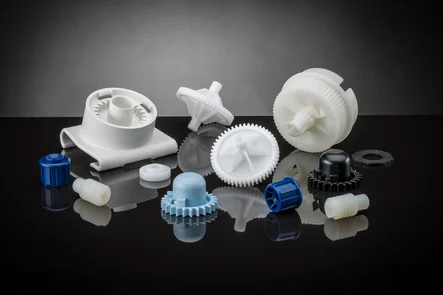
Can you provide examples of products or equipment that incorporate injection molded parts?
Yes, there are numerous products and equipment across various industries that incorporate injection molded parts. Injection molding is a widely used manufacturing process that enables the production of complex and precise components. Here are some examples of products and equipment that commonly incorporate injection molded parts:
1. Electronics and Consumer Devices:
– Mobile phones and smartphones: These devices typically have injection molded plastic casings, buttons, and connectors.
– Computers and laptops: Injection molded parts are used for computer cases, keyboard keys, connectors, and peripheral device housings.
– Appliances: Products such as televisions, refrigerators, washing machines, and vacuum cleaners often incorporate injection molded components for their casings, handles, buttons, and control panels.
– Audio equipment: Speakers, headphones, and audio players often use injection molded parts for their enclosures and buttons.
2. Automotive Industry:
– Cars and Trucks: Injection molded parts are extensively used in the automotive industry. Examples include dashboard panels, door handles, interior trim, steering wheel components, air vents, and various under-the-hood components.
– Motorcycle and Bicycle Parts: Many motorcycle and bicycle components are manufactured using injection molding, including fairings, handle grips, footrests, instrument panels, and engine covers.
– Automotive Lighting: Headlights, taillights, turn signals, and other automotive lighting components often incorporate injection molded lenses, housings, and mounts.
3. Médical et soins de santé :
– Medical Devices: Injection molding is widely used in the production of medical devices such as syringes, IV components, surgical instruments, respiratory masks, implantable devices, and diagnostic equipment.
– Laboratory Equipment: Many laboratory consumables, such as test tubes, petri dishes, pipette tips, and specimen containers, are manufactured using injection molding.
– Dental Equipment: Dental tools, orthodontic devices, and dental prosthetics often incorporate injection molded components.
4. Packaging Industry:
– Bottles and Containers: Plastic bottles and containers used for food, beverages, personal care products, and household chemicals are commonly produced using injection molding.
– Caps and Closures: Injection molded caps and closures are widely used in the packaging industry for bottles, jars, and tubes.
– Thin-Walled Packaging: Injection molding is used to produce thin-walled packaging products such as trays, cups, and lids for food and other consumer goods.
5. Toys and Games:
– Many toys and games incorporate injection molded parts. Examples include action figures, building blocks, puzzles, board game components, and remote-controlled vehicles.
6. Industrial Equipment and Tools:
– Industrial machinery: Injection molded parts are used in various industrial equipment and machinery, including components for manufacturing machinery, conveyor systems, and robotic systems.
– Power tools: Many components of power tools, such as housing, handles, switches, and guards, are manufactured using injection molding.
– Hand tools: Injection molded parts are incorporated into a wide range of hand tools, including screwdrivers, wrenches, pliers, and cutting tools.
These are just a few examples of products and equipment that incorporate injection molded parts. The versatility of injection molding allows for its application in a wide range of industries, enabling the production of high-quality components with complex geometries and precise specifications.
Pouvez-vous me conseiller sur le choix des matériaux de moulage par injection en fonction des exigences de l'application ?
Oui, je peux vous conseiller sur le choix des matériaux de moulage par injection en fonction des exigences de votre application. Le choix du matériau est crucial pour déterminer les performances, la durabilité et la fonctionnalité des pièces moulées. Voici une explication détaillée des facteurs à prendre en compte et des conseils pour choisir le matériau approprié :
1. Propriétés mécaniques :
Il convient de prendre en compte les propriétés mécaniques requises pour l'application, telles que la résistance, la rigidité, la résistance aux chocs et à l'usure. Les caractéristiques mécaniques varient selon les matériaux ; il est donc essentiel de choisir un matériau aux propriétés adaptées. Par exemple, les thermoplastiques techniques comme l'ABS, le PC ou le nylon offrent une résistance élevée et une bonne résistance aux chocs, tandis que des matériaux comme le PEEK ou l'ULTEM offrent des performances mécaniques exceptionnelles à haute température.
2. Résistance chimique :
Si la pièce est exposée à des produits chimiques, tenez compte de la résistance chimique du matériau. Certains matériaux, comme le PVC ou le PTFE, présentent une excellente résistance à une large gamme de produits chimiques, tandis que d'autres peuvent être sensibles à la dégradation ou au gonflement. Assurez-vous que le matériau choisi résiste aux produits chimiques spécifiques auxquels il sera exposé dans l'environnement d'utilisation.
3. Propriétés thermiques :
Évaluez la plage de températures de fonctionnement de l'application et choisissez un matériau aux propriétés thermiques adaptées. Des matériaux comme le PPS, le PEEK ou le LCP offrent une excellente résistance à la chaleur, tandis que d'autres peuvent présenter des performances thermiques limitées. Prenez en compte des facteurs tels que la température maximale, la stabilité thermique, le coefficient de dilatation thermique et les exigences de transfert thermique de la pièce.
4. Propriétés électriques :
Pour les applications électriques ou électroniques, il convient de tenir compte des propriétés électriques du matériau. Certains matériaux, comme le PBT ou le PPS, offrent de bonnes propriétés d'isolation électrique, tandis que d'autres peuvent présenter des caractéristiques conductrices ou dissipatives. Il est donc nécessaire de déterminer la rigidité diélectrique, la conductivité électrique, la résistivité de surface et les autres propriétés électriques pertinentes pour l'application.
5. Conditions environnementales :
Évaluez les conditions environnementales auxquelles la pièce sera exposée, telles que l'humidité, les UV, les intempéries ou les températures extrêmes. Certains matériaux, comme l'ASA ou le PEHD, présentent une excellente résistance aux intempéries et aux UV, tandis que d'autres peuvent se dégrader ou devenir cassants dans des conditions difficiles. Choisissez un matériau capable de résister aux facteurs environnementaux spécifiques afin de garantir une performance et une durabilité optimales à long terme.
6. Conformité réglementaire :
Tenez compte des exigences réglementaires et des normes industrielles auxquelles le matériau doit se conformer. Certaines applications, notamment dans les secteurs médical et agroalimentaire, peuvent exiger des matériaux approuvés par la FDA ou conformes à des certifications spécifiques. Assurez-vous que le matériau sélectionné respecte les normes réglementaires et de sécurité requises pour l'application prévue.
7. Considérations relatives aux coûts :
Évaluez les implications financières liées au choix des matériaux. Le coût des différents matériaux varie, et le choix doit être en adéquation avec le budget du projet. Prenez en compte non seulement le coût unitaire du matériau, mais aussi des facteurs tels que les frais d'outillage, l'efficacité de la production et le coût total du cycle de vie de la pièce.
8. Disponibilité et traitement des matériaux :
Vérifiez la disponibilité du matériau et son aptitude au moulage par injection. Assurez-vous qu'il est facilement disponible auprès des fournisseurs et qu'il convient aux paramètres spécifiques du procédé de moulage par injection, tels que l'indice de fluidité, la moulabilité et la compatibilité avec l'équipement de moulage choisi.
9. Essais et validation des matériaux :
Effectuer des essais et une validation des matériaux afin de garantir que le matériau sélectionné réponde aux spécifications et critères de performance requis. Réaliser des essais mécaniques, thermiques, chimiques et électriques pour vérifier les propriétés et le comportement du matériau dans les conditions spécifiques de l'application.
Il est conseillé de consulter des fournisseurs de matériaux, des ingénieurs ou des experts en moulage par injection afin d'obtenir des conseils et des recommandations adaptés aux exigences spécifiques de votre application. Leur expertise et leur connaissance des normes et des meilleures pratiques du secteur leur permettront d'apporter un éclairage précieux sur le choix des matériaux.
En tenant compte de ces facteurs et de ces recommandations, vous pourrez sélectionner le matériau le plus approprié pour le moulage par injection, répondant aux exigences spécifiques de l'application, et garantissant ainsi des performances, une durabilité et une fonctionnalité optimales des pièces moulées.
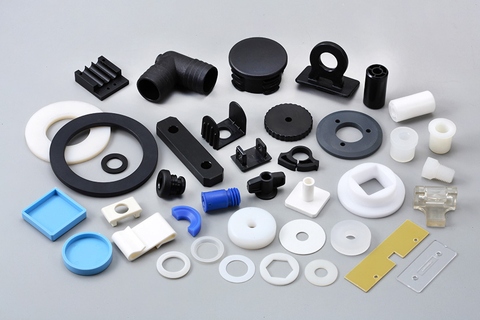
Can you explain the advantages of using injection molding for producing parts?
Injection molding offers several advantages as a manufacturing process for producing parts. It is a widely used technique for creating plastic components with high precision, efficiency, and scalability. Here’s a detailed explanation of the advantages of using injection molding:
1. Haute précision et complexité :
Injection molding allows for the production of parts with high precision and intricate details. The molds used in injection molding are capable of creating complex shapes, fine features, and precise dimensions. This level of precision enables the manufacturing of parts with tight tolerances, ensuring consistent quality and fit.
2. Production de masse rentable :
Injection molding is a highly efficient process suitable for large-scale production. Once the initial setup, including mold design and fabrication, is completed, the manufacturing process can be automated. Injection molding machines can produce parts rapidly and continuously, resulting in fast and cost-effective production of identical parts. The ability to produce parts in high volumes helps reduce per-unit costs, making injection molding economically advantageous for mass production.
3. Polyvalence des matériaux :
Injection molding supports a wide range of thermoplastic materials, providing versatility in material selection based on the desired properties of the final part. Various types of plastics can be used in injection molding, including commodity plastics, engineering plastics, and high-performance plastics. Different materials can be chosen to achieve specific characteristics such as strength, flexibility, heat resistance, chemical resistance, or transparency.
4. Solidité et durabilité :
Injection molded parts can exhibit excellent strength and durability. During the injection molding process, the molten material is uniformly distributed within the mold, resulting in consistent mechanical properties throughout the part. This uniformity enhances the structural integrity of the part, making it suitable for applications that require strength and longevity.
5. Post-traitement minimal :
Injection molded parts often require minimal post-processing. The high precision and quality achieved during the molding process reduce the need for extensive additional machining or finishing operations. The parts typically come out of the mold with the desired shape, surface finish, and dimensional accuracy, reducing time and costs associated with post-processing activities.
6. Flexibilité de conception :
Injection molding offers significant design flexibility. The process can accommodate complex geometries, intricate details, undercuts, thin walls, and other design features that may be challenging or costly with other manufacturing methods. Designers have the freedom to create parts with unique shapes and functional requirements. Injection molding also allows for the integration of multiple components or features into a single part, reducing assembly requirements and potential points of failure.
7. Rapid Prototyping:
Injection molding is also used for rapid prototyping. By quickly producing functional prototypes using the same process and materials as the final production parts, designers and engineers can evaluate the part’s form, fit, and function early in the development cycle. Rapid prototyping with injection molding enables faster iterations, reduces development time, and helps identify and address design issues before committing to full-scale production.
8. Environmental Considerations:
Injection molding can have environmental advantages compared to other manufacturing processes. The process generates minimal waste as the excess material can be recycled and reused. Injection molded parts also tend to be lightweight, which can contribute to energy savings during transportation and reduce the overall environmental impact.
In summary, injection molding offers several advantages for producing parts. It provides high precision and complexity, cost-effective mass production, material versatility, strength and durability, minimal post-processing requirements, design flexibility, rapid prototyping capabilities, and environmental considerations. These advantages make injection molding a highly desirable manufacturing process for a wide range of industries, enabling the production of high-quality plastic parts efficiently and economically.


editor by CX 2024-01-30