
Description du produit
CNC OEM Plastic Injection Molded Parts Customized Plastic Molding Auto Car Part Motorcycle Injection Mould Parts
Company Profile
Our mother company, SUMINO KOGYO CO., LTD., joined management of HangZhou Ogasawara Electronic Component Company (QOC) in 2004, which was established in October, 1995 located in HangZhou Economic & Development Zone. In the year 2007, SUMINO and Chinese capital investor amicably agreed transfer of Chinese holdings to SUMINO and QOC was renamed to HangZhou SUMINO STAMPING CO., LTD. (QSS). So we have been taking the first step as an independent firm. And in the year 2013, QSS has been renamed to SUMINO PRECISION MANUFACTURING (HangZhou) LIMITED (SPQ) in order to reform our corporate image and adapt to our development prospects. From then on, we have been taking the new developing step. SPQ places emphasis on combining QOC and QSS’s stamping technology cultivated through electronic area and SUMINO’s stamping skills long experienced on automotive business. We aim to be a company where high technology, high quality and low cost can always be offered to customers.
Paramètres du produit
| Model NO. | Sumino001 | Runner | Hot Runner |
| Design Software | UG | Installation | Fixed |
| Standard | DME | Customized | Customized |
| Durée de vie du moule | 500,000 Shots | Base du moule | Lkm,Hasco,Dme |
| Shape | Oval,Round,Square | Capacity | 1L,5L,10L,18L,20L |
| Sample Time | 45 Days | Design | 3D or 2D |
| Mould Steel | P20 | Die Life | 500, 000 Shots |
|
Tolérance |
+-0.01mm | Name | Round Shape Plastic Paint Bucket Mould |
| Transport Package | Wooden Case | Specification | SGS |
| Trademark | sumino | Origin | HangZhou China |
| HS Code | 848571090 | Production Capacity | 200 Sets/Per Year |
Description du produit
Packaging & Shipping
Certifications
Our Clients
OEM Precision Mould Stamping Car Stamping Parts And Stamping Bending Machinery Parts
/* January 22, 2571 19:08:37 */!function(){function s(e,r){var a,o={};try{e&&e.split(“,”).forEach(function(e,t){e&&(a=e.match(/(.*?):(.*)$/))&&1
| Warranty: | 1 |
|---|---|
| Application: | Household Appliances, Electronic, Hardware, Car, Commodity, Home Use |
| Matériel: | High Carbon High Chromium Tool Steel |
| Processing Method: | Punching and Shearing Mould |
| Technics: | Drawing Die |
| Process Combination: | Progressive Die |
| Exemples : |
US$ 10/Piece
1 pièce (commande minimale) | |
|---|
| Personnalisation : |
Disponible
|
|
|---|
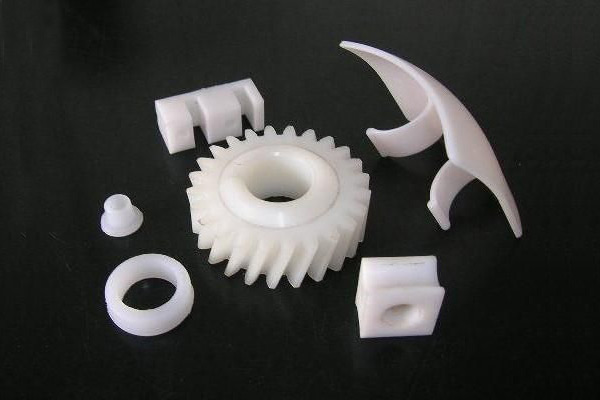
What is the impact of material selection on the performance and durability of injection molded parts?
The material selection for injection molded parts has a significant impact on their performance and durability. The choice of material influences various key factors, including mechanical properties, chemical resistance, thermal stability, dimensional stability, and overall part functionality. Here’s a detailed explanation of the impact of material selection on the performance and durability of injection molded parts:
Mechanical Properties:
The mechanical properties of the material directly affect the part’s strength, stiffness, impact resistance, and fatigue life. Different materials exhibit varying levels of tensile strength, flexural strength, modulus of elasticity, and elongation at break. The selection of a material with appropriate mechanical properties ensures that the injection molded part can withstand the applied forces, vibrations, and operational stresses without failure or deformation.
Chemical Resistance:
The material’s resistance to chemicals and solvents is crucial in applications where the part comes into contact with aggressive substances. Certain materials, such as engineering thermoplastics like ABS (Acrylonitrile Butadiene Styrene) or PEEK (Polyether Ether Ketone), exhibit excellent chemical resistance. Choosing a material with the appropriate chemical resistance ensures that the injection molded part maintains its integrity and functionality when exposed to specific chemicals or environments.
Thermal Stability:
The thermal stability of the material is essential in applications that involve exposure to high temperatures or thermal cycling. Different materials have varying melting points, glass transition temperatures, and heat deflection temperatures. Selecting a material with suitable thermal stability ensures that the injection molded part can withstand the anticipated temperature variations without dimensional changes, warping, or degradation of mechanical properties.
Dimensional Stability:
The dimensional stability of the material is critical in applications where precise tolerances and dimensional accuracy are required. Some materials, such as engineering thermoplastics or filled polymers, exhibit lower coefficients of thermal expansion, minimizing the part’s dimensional changes with temperature variations. Choosing a material with good dimensional stability helps ensure that the injection molded part maintains its shape, size, and critical dimensions over a wide range of operating temperatures.
Part Functionality:
The material selection directly impacts the functionality and performance of the injection molded part. Different materials offer unique properties that can be tailored to meet specific application requirements. For example, materials like polycarbonate (PC) or polypropylene (PP) offer excellent transparency, making them suitable for applications requiring optical clarity, while materials like polyamide (PA) or polyoxymethylene (POM) provide low friction and wear resistance, making them suitable for moving or sliding parts.
Cycle Time and Processability:
The material selection can also affect the cycle time and processability of injection molding. Different materials have different melt viscosities and flow characteristics, which influence the filling and cooling times during the molding process. Materials with good flow properties can fill complex mold geometries more easily, reducing the cycle time and improving productivity. It’s important to select a material that can be effectively processed using the available injection molding equipment and techniques.
Cost Considerations:
The material selection also impacts the overall cost of the injection molded part. Different materials have varying costs, and selecting the most suitable material involves considering factors such as material availability, tooling requirements, processing conditions, and the desired performance characteristics. Balancing the performance requirements with cost considerations is crucial in achieving an optimal material selection that meets the performance and durability requirements within the budget constraints.
Overall, material selection plays a critical role in determining the performance, durability, and functionality of injection molded parts. Careful consideration of mechanical properties, chemical resistance, thermal stability, dimensional stability, part functionality, cycle time, processability, and cost factors helps ensure that the chosen material meets the specific application requirements and delivers the desired performance and durability over the part’s intended service life.
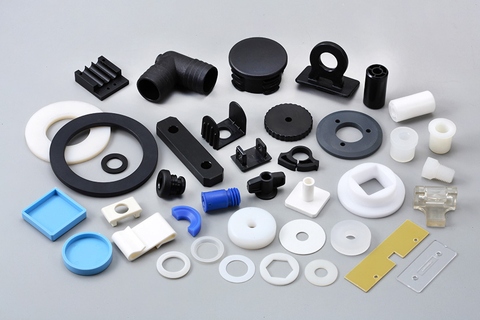
Can you describe the various post-molding processes, such as assembly or secondary operations, for injection molded parts?
Post-molding processes play a crucial role in the production of injection molded parts. These processes include assembly and secondary operations that are performed after the initial molding stage. Here’s a detailed explanation of the various post-molding processes for injection molded parts:
1. Assembly:
Assembly involves joining multiple injection molded parts together to create a finished product or sub-assembly. The assembly process can include various techniques such as mechanical fastening (screws, clips, or snaps), adhesive bonding, ultrasonic welding, heat staking, or solvent welding. Assembly ensures that the individual molded parts are securely combined to achieve the desired functionality and structural integrity of the final product.
2. Surface Finishing:
Surface finishing processes are performed to enhance the appearance, texture, and functionality of injection molded parts. Common surface finishing techniques include painting, printing (such as pad printing or screen printing), hot stamping, laser etching, or applying specialized coatings. These processes can add decorative features, branding elements, or improve the surface properties of the parts, such as scratch resistance or UV protection.
3. Machining or Trimming:
In some cases, injection molded parts may require additional machining or trimming to achieve the desired final dimensions or remove excess material. This can involve processes such as CNC milling, drilling, reaming, or turning. Machining or trimming is often necessary when tight tolerances, specific geometries, or critical functional features cannot be achieved solely through the injection molding process.
4. Welding or Joining:
Welding or joining processes are used to fuse or bond injection molded parts together. Common welding techniques for plastic parts include ultrasonic welding, hot plate welding, vibration welding, or laser welding. These processes create strong and reliable joints between the molded parts, ensuring structural integrity and functionality in the final product.
5. Insertion of Inserts:
Insertion involves placing metal or plastic inserts into the mold cavity before the injection molding process. These inserts can provide additional strength, reinforce threaded connections, or serve as mounting points for other components. Inserts can be placed manually or using automated equipment, and they become permanently embedded in the molded parts during the molding process.
6. Overmolding or Two-Shot Molding:
Overmolding or two-shot molding processes allow for the creation of injection molded parts with multiple layers or materials. In overmolding, a second material is molded over a pre-existing substrate, providing enhanced functionality, aesthetics, or grip. Two-shot molding involves injecting two different materials into different sections of the mold to create a single part with multiple colors or materials. These processes enable the integration of multiple materials or components into a single injection molded part.
7. Deflashing or Deburring:
Deflashing or deburring processes involve removing excess flash or burrs that may be present on the molded parts after the injection molding process. Flash refers to the excess material that extends beyond the parting line of the mold, while burrs are small protrusions or rough edges caused by the mold features. Deflashing or deburring ensures that the molded parts have smooth edges and surfaces, improving their appearance, functionality, and safety.
8. Inspection and Quality Control:
Inspection and quality control processes are performed to ensure that the injection molded parts meet the required specifications and quality standards. This can involve visual inspection, dimensional measurement, functional testing, or other specialized testing methods. Inspection and quality control processes help identify any defects, inconsistencies, or deviations that may require rework or rejection of the parts, ensuring that only high-quality parts are used in the final product or assembly.
9. Packaging and Labeling:
Once the post-molding processes are complete, the injection molded parts are typically packaged and labeled for storage, transportation, or distribution. Packaging can include individual part packaging, bulk packaging, or custom packaging based on specific requirements. Labeling may involve adding product identification, barcodes, or instructions for proper handling or usage.
These post-molding processes are vital in achieving the desired functionality, appearance, and quality of injection molded parts. They enable the integration of multiple components, surface finishing, dimensional accuracy, and assembly of the final products or sub-assemblies.
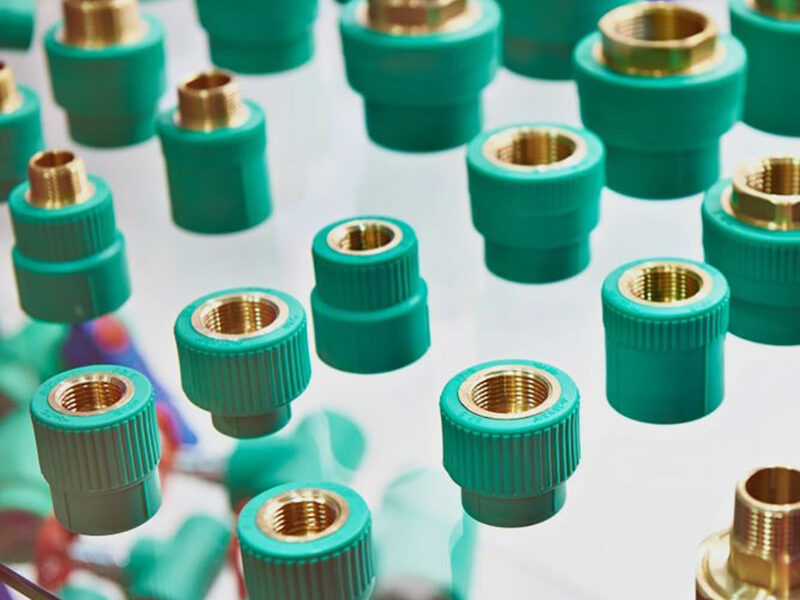
Existe-t-il différents types de pièces moulées par injection, comme des composants automobiles ou des dispositifs médicaux ?
Oui, il existe différents types de pièces moulées par injection, conçues spécifiquement pour divers secteurs et applications. Le moulage par injection est un procédé de fabrication polyvalent permettant de produire des pièces complexes et précises avec une grande efficacité et une excellente reproductibilité. Voici quelques exemples de différents types de pièces moulées par injection :
1. Composants automobiles :
Le moulage par injection joue un rôle essentiel dans l'industrie automobile, où il est utilisé pour fabriquer une vaste gamme de composants. Voici quelques exemples de pièces automobiles moulées par injection :
- Éléments intérieurs : panneaux de tableau de bord, poignées de porte, garnitures, blocs d’instruments et consoles centrales.
- Éléments extérieurs : pare-chocs, calandres, panneaux de carrosserie, coques de rétroviseurs et enjoliveurs.
- Composants situés sous le capot : couvercles de moteur, collecteurs d’admission d’air, pièces du système de refroidissement et boîtiers de batterie.
- Composants électriques : connecteurs, interrupteurs, boîtiers de capteurs et faisceaux de câbles.
- Éléments de sièges : armatures de sièges, appuie-têtes, accoudoirs et composants de ceintures de sécurité.
2. Dispositifs médicaux :
L'industrie médicale recourt au moulage par injection pour la production d'une vaste gamme de dispositifs et de composants médicaux. Ces pièces exigent souvent une grande précision, une biocompatibilité et une stérilisabilité. Exemples de dispositifs médicaux moulés par injection :
- Seringues et stylos injecteurs
- Dispositifs implantables : cathéters, composants de stimulateurs cardiaques, implants orthopédiques et instruments chirurgicaux.
- Matériel de diagnostic : tubes à essai, récipients pour échantillons et consommables de laboratoire.
- Produits médicaux à usage unique : composants pour perfusion intraveineuse, masques respiratoires, tubes de prélèvement sanguin et produits de soins des plaies.
3. Produits de consommation :
Le moulage par injection est largement utilisé dans la production de biens de consommation en raison de sa capacité à produire en série des pièces avec une grande efficacité. Exemples de biens de consommation moulés par injection :
- Appareils électroménagers : composants de téléviseurs et d’équipements audio, pièces de réfrigérateurs et composants d’aspirateurs.
- Électronique : étuis pour téléphones portables, claviers et souris d'ordinateur, composants d'appareils photo et adaptateurs secteur.
- Jouets et jeux : figurines, blocs de construction, puzzles et éléments de jeux de société.
- Produits de soins personnels : brosses à dents, manches de rasoir, contenants cosmétiques et composants de sèche-cheveux.
- Produits pour l'amélioration de l'habitat : plaques d'interrupteurs, poignées de porte, boîtiers d'outils électriques et boîtes de rangement.
4. Emballage :
Le moulage par injection est largement utilisé dans l'industrie de l'emballage pour produire une grande variété de contenants, bouchons, fermetures et composants d'emballage en plastique. En voici quelques exemples :
- Bouteilles et contenants pour aliments, boissons, produits de soins personnels et produits chimiques ménagers.
- Bouchons et fermetures pour bouteilles et bocaux.
- Emballages à parois minces pour produits alimentaires tels que barquettes, gobelets et couvercles.
- Emballages blister et emballages à clapet pour les produits de vente au détail.
- Inserts d'emballage et composants de mousse de protection.
5. Composants électroniques et électriques :
Le moulage par injection est largement utilisé dans l'industrie électronique pour la production de divers composants et boîtiers. Exemples :
- Connecteurs et boîtiers pour appareils électriques et électroniques.
- Interrupteurs, boutons et panneaux de commande.
- Composants et boîtiers de circuits imprimés (PCB).
- Composants et luminaires à DEL (diode électroluminescente).
- Adaptateurs secteur et chargeurs.
Voici quelques exemples des différents types de pièces moulées par injection. La polyvalence du moulage par injection permet de produire des pièces pour divers secteurs, de l'automobile au médical, en passant par les biens de consommation, l'emballage, l'électronique, etc. Les exigences de conception et les performances spécifiques de chaque pièce déterminent le choix des matériaux, de l'outillage et des procédés de fabrication pour le moulage par injection.


editor by CX 2024-03-23