Deskripsi Produk
CNC OEM Plastic Injection Molded Parts Customized Plastic Molding Auto Car Part Motorcycle Injection Mould Parts
Profil Perusahaan
Our mother company, SUMINO KOGYO CO., LTD., joined management of HangZhou Ogasawara Electronic Component Company (QOC) in 2004, which was established in October, 1995 located in HangZhou Economic & Development Zone. In the year 2007, SUMINO and Chinese capital investor amicably agreed transfer of Chinese holdings to SUMINO and QOC was renamed to HangZhou SUMINO STAMPING CO., LTD. (QSS). So we have been taking the first step as an independent firm. And in the year 2013, QSS has been renamed to SUMINO PRECISION MANUFACTURING (HangZhou) LIMITED (SPQ) in order to reform our corporate image and adapt to our development prospects. From then on, we have been taking the new developing step. SPQ places emphasis on combining QOC and QSS’s stamping technology cultivated through electronic area and SUMINO’s stamping skills long experienced on automotive business. We aim to be a company where high technology, high quality and low cost can always be offered to customers.
Parameter Produk
| Model NO. | Sumino001 | Runner | Hot Runner |
| Design Software | UG | Installation | Fixed |
| Standar | DME | Customized | Customized |
| Masa Pakai Cetakan | 500,000 Shots | Dasar Cetakan | Lkm,Hasco,Dme |
| Membentuk | Oval,Round,Square | Capacity | 1L,5L,10L,18L,20L |
| Sample Time | 45 Days | Design | 3D or 2D |
| Mould Steel | P20 | Die Life | 500, 000 Shots |
|
Toleransi |
+-0.01mm | Nama | Round Shape Plastic Paint Bucket Mould |
| Transport Package | Wooden Case | Spesifikasi | SGS |
| Trademark | sumino | Asal | HangZhou China |
| HS Code | 848571090 | Production Capacity | 200 Sets/Per Year |
Deskripsi Produk
Pengemasan & Pengiriman
Sertifikasi
Our Clients
OEM Precision Mould Stamping Car Stamping Parts And Stamping Bending Machinery Parts
/* January 22, 2571 19:08:37 */!function(){function s(e,r){var a,o={};try{e&&e.split(“,”).forEach(function(e,t){e&&(a=e.match(/(.*?):(.*)$/))&&1
| Warranty: | 1 |
|---|---|
| Aplikasi: | Household Appliances, Electronic, Hardware, Car, Commodity, Home Use |
| Bahan: | High Carbon High Chromium Tool Steel |
| Processing Method: | Punching and Shearing Mould |
| Technics: | Drawing Die |
| Process Combination: | Progressive Die |
| Contoh: |
US$ 10/Piece
1 Buah (Minimum Pemesanan) | |
|---|
| Kustomisasi: |
Tersedia
|
|
|---|
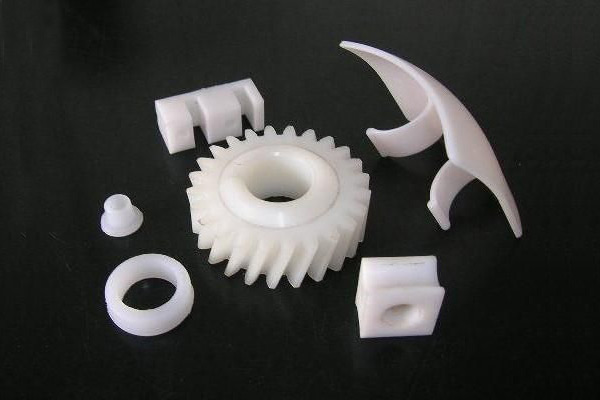
What is the impact of material selection on the performance and durability of injection molded parts?
The material selection for injection molded parts has a significant impact on their performance and durability. The choice of material influences various key factors, including mechanical properties, chemical resistance, thermal stability, dimensional stability, and overall part functionality. Here’s a detailed explanation of the impact of material selection on the performance and durability of injection molded parts:
Mechanical Properties:
The mechanical properties of the material directly affect the part’s strength, stiffness, impact resistance, and fatigue life. Different materials exhibit varying levels of tensile strength, flexural strength, modulus of elasticity, and elongation at break. The selection of a material with appropriate mechanical properties ensures that the injection molded part can withstand the applied forces, vibrations, and operational stresses without failure or deformation.
Chemical Resistance:
The material’s resistance to chemicals and solvents is crucial in applications where the part comes into contact with aggressive substances. Certain materials, such as engineering thermoplastics like ABS (Acrylonitrile Butadiene Styrene) or PEEK (Polyether Ether Ketone), exhibit excellent chemical resistance. Choosing a material with the appropriate chemical resistance ensures that the injection molded part maintains its integrity and functionality when exposed to specific chemicals or environments.
Thermal Stability:
The thermal stability of the material is essential in applications that involve exposure to high temperatures or thermal cycling. Different materials have varying melting points, glass transition temperatures, and heat deflection temperatures. Selecting a material with suitable thermal stability ensures that the injection molded part can withstand the anticipated temperature variations without dimensional changes, warping, or degradation of mechanical properties.
Dimensional Stability:
The dimensional stability of the material is critical in applications where precise tolerances and dimensional accuracy are required. Some materials, such as engineering thermoplastics or filled polymers, exhibit lower coefficients of thermal expansion, minimizing the part’s dimensional changes with temperature variations. Choosing a material with good dimensional stability helps ensure that the injection molded part maintains its shape, size, and critical dimensions over a wide range of operating temperatures.
Part Functionality:
The material selection directly impacts the functionality and performance of the injection molded part. Different materials offer unique properties that can be tailored to meet specific application requirements. For example, materials like polycarbonate (PC) or polypropylene (PP) offer excellent transparency, making them suitable for applications requiring optical clarity, while materials like polyamide (PA) or polyoxymethylene (POM) provide low friction and wear resistance, making them suitable for moving or sliding parts.
Cycle Time and Processability:
The material selection can also affect the cycle time and processability of injection molding. Different materials have different melt viscosities and flow characteristics, which influence the filling and cooling times during the molding process. Materials with good flow properties can fill complex mold geometries more easily, reducing the cycle time and improving productivity. It’s important to select a material that can be effectively processed using the available injection molding equipment and techniques.
Cost Considerations:
The material selection also impacts the overall cost of the injection molded part. Different materials have varying costs, and selecting the most suitable material involves considering factors such as material availability, tooling requirements, processing conditions, and the desired performance characteristics. Balancing the performance requirements with cost considerations is crucial in achieving an optimal material selection that meets the performance and durability requirements within the budget constraints.
Overall, material selection plays a critical role in determining the performance, durability, and functionality of injection molded parts. Careful consideration of mechanical properties, chemical resistance, thermal stability, dimensional stability, part functionality, cycle time, processability, and cost factors helps ensure that the chosen material meets the specific application requirements and delivers the desired performance and durability over the part’s intended service life.
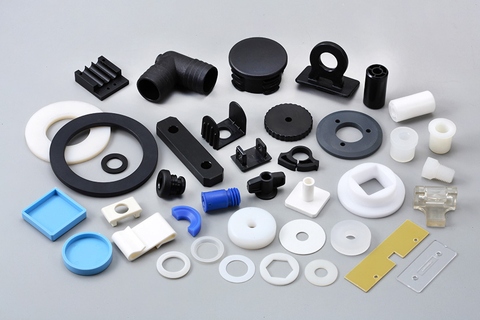
Bisakah Anda menjelaskan berbagai proses pasca-pencetakan, seperti perakitan atau operasi sekunder, untuk komponen yang dicetak dengan metode injeksi?
Proses pasca-pencetakan memainkan peran penting dalam produksi komponen cetakan injeksi. Proses ini meliputi perakitan dan operasi sekunder yang dilakukan setelah tahap pencetakan awal. Berikut penjelasan rinci tentang berbagai proses pasca-pencetakan untuk komponen cetakan injeksi:
1. Perakitan:
Perakitan melibatkan penggabungan beberapa bagian cetakan injeksi untuk menciptakan produk jadi atau sub-rakitan. Proses perakitan dapat mencakup berbagai teknik seperti pengikatan mekanis (sekrup, klip, atau kancing), pengikatan perekat, pengelasan ultrasonik, pengikatan panas, atau pengelasan pelarut. Perakitan memastikan bahwa bagian-bagian cetakan individual digabungkan dengan aman untuk mencapai fungsionalitas dan integritas struktural yang diinginkan dari produk akhir.
2. Penyelesaian Permukaan:
Proses penyelesaian permukaan dilakukan untuk meningkatkan penampilan, tekstur, dan fungsionalitas komponen hasil cetakan injeksi. Teknik penyelesaian permukaan yang umum meliputi pengecatan, pencetakan (seperti pencetakan pad atau sablon), pencetakan panas, pengukiran laser, atau penerapan lapisan khusus. Proses-proses ini dapat menambahkan fitur dekoratif, elemen branding, atau meningkatkan sifat permukaan komponen, seperti ketahanan terhadap goresan atau perlindungan UV.
3. Pemesinan atau Pemangkasan:
Dalam beberapa kasus, komponen hasil cetakan injeksi mungkin memerlukan pengerjaan mesin atau pemangkasan tambahan untuk mencapai dimensi akhir yang diinginkan atau menghilangkan kelebihan material. Hal ini dapat melibatkan proses seperti penggilingan CNC, pengeboran, pelebaran lubang, atau pembubutan. Pengerjaan mesin atau pemangkasan seringkali diperlukan ketika toleransi yang ketat, geometri spesifik, atau fitur fungsional penting tidak dapat dicapai hanya melalui proses pencetakan injeksi.
4. Pengelasan atau Penyambungan:
Proses pengelasan atau penyambungan digunakan untuk menggabungkan atau merekatkan bagian-bagian yang dicetak dengan metode injeksi. Teknik pengelasan umum untuk bagian plastik meliputi pengelasan ultrasonik, pengelasan pelat panas, pengelasan getaran, atau pengelasan laser. Proses-proses ini menciptakan sambungan yang kuat dan andal antara bagian-bagian yang dicetak, memastikan integritas struktural dan fungsionalitas pada produk akhir.
5. Penyisipan Sisipan:
Penyisipan melibatkan penempatan sisipan logam atau plastik ke dalam rongga cetakan sebelum proses pencetakan injeksi. Sisipan ini dapat memberikan kekuatan tambahan, memperkuat sambungan berulir, atau berfungsi sebagai titik pemasangan untuk komponen lain. Sisipan dapat ditempatkan secara manual atau menggunakan peralatan otomatis, dan sisipan tersebut akan tertanam secara permanen di dalam bagian yang dicetak selama proses pencetakan.
6. Overmolding atau Two-Shot Molding:
Proses overmolding atau two-shot molding memungkinkan pembuatan komponen cetakan injeksi dengan banyak lapisan atau material. Dalam overmolding, material kedua dicetak di atas substrat yang sudah ada sebelumnya, sehingga memberikan fungsionalitas, estetika, atau daya cengkeram yang lebih baik. Two-shot molding melibatkan penyuntikan dua material berbeda ke bagian cetakan yang berbeda untuk menciptakan satu bagian dengan banyak warna atau material. Proses ini memungkinkan integrasi beberapa material atau komponen ke dalam satu komponen cetakan injeksi.
7. Menghilangkan sisa cetakan atau gerinda:
Proses penghilangan sisa material atau gerinda melibatkan penghilangan sisa material berlebih atau gerinda yang mungkin ada pada bagian cetakan setelah proses pencetakan injeksi. Sisa material berlebih mengacu pada material berlebih yang melampaui garis pemisah cetakan, sedangkan gerinda adalah tonjolan kecil atau tepi kasar yang disebabkan oleh fitur cetakan. Penghilangan sisa material atau gerinda memastikan bahwa bagian cetakan memiliki tepi dan permukaan yang halus, sehingga meningkatkan penampilan, fungsionalitas, dan keamanannya.
8. Inspeksi dan Kontrol Mutu:
Proses inspeksi dan kontrol kualitas dilakukan untuk memastikan bahwa komponen hasil cetakan injeksi memenuhi spesifikasi dan standar kualitas yang dibutuhkan. Hal ini dapat meliputi inspeksi visual, pengukuran dimensi, pengujian fungsional, atau metode pengujian khusus lainnya. Proses inspeksi dan kontrol kualitas membantu mengidentifikasi setiap cacat, ketidaksesuaian, atau penyimpangan yang mungkin memerlukan pengerjaan ulang atau penolakan komponen, sehingga memastikan bahwa hanya komponen berkualitas tinggi yang digunakan dalam produk atau perakitan akhir.
9. Pengemasan dan Pelabelan:
Setelah proses pasca-pencetakan selesai, komponen hasil cetakan injeksi biasanya dikemas dan diberi label untuk penyimpanan, transportasi, atau distribusi. Pengemasan dapat mencakup pengemasan komponen individual, pengemasan massal, atau pengemasan khusus berdasarkan persyaratan tertentu. Pemberian label dapat mencakup penambahan identifikasi produk, kode batang, atau instruksi untuk penanganan atau penggunaan yang tepat.
Proses pasca-pencetakan ini sangat penting dalam mencapai fungsionalitas, tampilan, dan kualitas yang diinginkan dari komponen hasil cetakan injeksi. Proses ini memungkinkan integrasi berbagai komponen, penyelesaian permukaan, akurasi dimensi, dan perakitan produk akhir atau sub-rakitan.
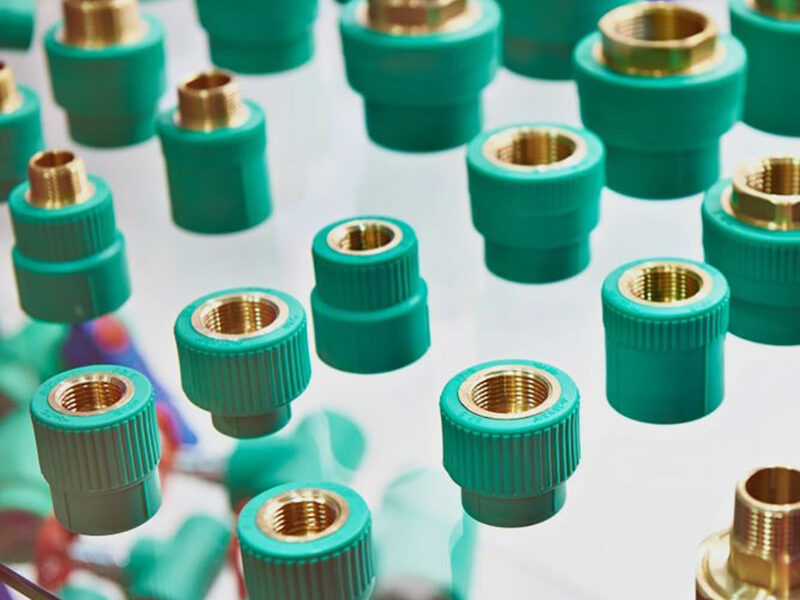
Apakah ada berbagai jenis komponen hasil cetakan injeksi, seperti komponen otomotif atau perangkat medis?
Ya, ada berbagai jenis komponen cetakan injeksi yang dirancang khusus untuk berbagai industri dan aplikasi. Pencetakan injeksi adalah proses manufaktur serbaguna yang mampu menghasilkan komponen kompleks dan presisi dengan efisiensi dan pengulangan yang tinggi. Berikut beberapa contoh berbagai jenis komponen cetakan injeksi:
1. Komponen Otomotif:
Pencetakan injeksi memainkan peran penting dalam industri otomotif, di mana ia digunakan untuk memproduksi berbagai macam komponen. Beberapa komponen otomotif yang umum dibuat dengan pencetakan injeksi meliputi:
- Komponen interior: Panel dasbor, gagang pintu, trim, panel instrumen, dan konsol tengah.
- Komponen eksterior: Bumper, gril, panel bodi, rumah kaca spion, dan penutup roda.
- Komponen di bawah kap mesin: Penutup mesin, manifold saluran masuk udara, bagian sistem pendingin, dan wadah baterai.
- Komponen listrik: Konektor, sakelar, rumah sensor, dan rangkaian kabel.
- Komponen tempat duduk: Rangka tempat duduk, sandaran kepala, sandaran lengan, dan komponen sabuk pengaman.
2. Perangkat Medis:
Industri medis bergantung pada pencetakan injeksi untuk produksi berbagai macam perangkat dan komponen medis. Bagian-bagian ini seringkali membutuhkan presisi tinggi, biokompatibilitas, dan kemampuan sterilisasi. Contoh perangkat medis yang dicetak dengan injeksi meliputi:
- Jarum suntik dan pena injeksi
- Perangkat implan: Kateter, komponen alat pacu jantung, implan ortopedi, dan instrumen bedah.
- Peralatan diagnostik: Tabung reaksi, wadah spesimen, dan bahan habis pakai laboratorium.
- Produk medis sekali pakai: komponen infus, masker pernapasan, tabung pengumpul darah, dan produk perawatan luka.
3. Produk Konsumen:
Pencetakan injeksi banyak digunakan dalam produksi produk konsumen karena kemampuannya untuk memproduksi komponen secara massal dengan efisiensi tinggi. Contoh produk konsumen yang dicetak dengan metode injeksi meliputi:
- Peralatan rumah tangga: Komponen televisi dan peralatan audio, suku cadang lemari es, dan komponen penyedot debu.
- Elektronik: Casing ponsel, keyboard dan mouse komputer, komponen kamera, dan adaptor daya.
- Mainan dan permainan: Figur aksi, balok susun, teka-teki, dan komponen permainan papan.
- Produk perawatan pribadi: Sikat gigi, gagang pisau cukur, wadah kosmetik, dan komponen pengering rambut.
- Produk perbaikan rumah: Penutup sakelar lampu, gagang pintu, wadah perkakas listrik, dan wadah penyimpanan.
4. Pengemasan:
Pencetakan injeksi banyak digunakan dalam industri pengemasan untuk memproduksi berbagai macam wadah plastik, tutup, penutup, dan komponen pengemasan. Beberapa contohnya meliputi:
- Botol dan wadah untuk makanan, minuman, produk perawatan pribadi, dan bahan kimia rumah tangga.
- Tutup dan penutup untuk botol dan toples.
- Kemasan berdinding tipis untuk produk makanan seperti nampan, gelas, dan tutup.
- Kemasan blister dan kemasan clamshell untuk produk ritel.
- Sisipan kemasan dan komponen busa pelindung.
5. Elektronik dan Komponen Listrik:
Pencetakan injeksi banyak digunakan dalam industri elektronik untuk produksi berbagai komponen dan wadah. Contohnya meliputi:
- Konektor dan wadah untuk perangkat listrik dan elektronik.
- Sakelar, tombol, dan panel kontrol.
- Komponen dan wadah PCB (Papan Sirkuit Cetak).
- Komponen dan perlengkapan lampu LED (Light-Emitting Diode).
- Adaptor daya dan pengisi daya.
Ini hanyalah beberapa contoh dari berbagai jenis komponen yang dicetak dengan metode injeksi. Fleksibilitas pencetakan injeksi memungkinkan produksi komponen di berbagai industri, mulai dari otomotif dan medis hingga produk konsumen, pengemasan, elektronik, dan banyak lagi. Persyaratan desain spesifik dan karakteristik kinerja setiap komponen menentukan pilihan material, perkakas, dan proses manufaktur untuk pencetakan injeksi.


editor by CX 2024-03-23